Pests
Aphids
Plants:104
Topics:106
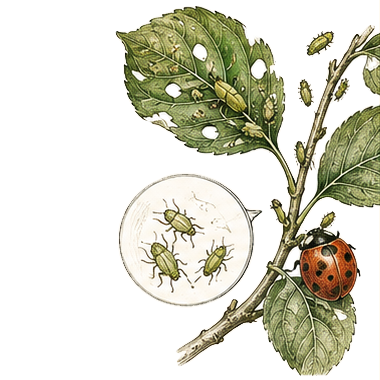
Sticky leaves Small, sap-sucking insects that colonize young shoots and undersides of leaves, weakening the plant and potentially transmitting viruses.
Open guideDiagnosis
30 topics with symptoms, affected plants, prevention, and organic actions. Examples: Aphids, Spider mites, Slugs, Flea beetles, Cabbage White Butterfly.
Overview
Garden pests often show up first through chewing damage, sticky residue, distorted shoots, visible larvae, or insects on young growth. Early checks matter: once you know the affected plant and the likely pest, gentle measures such as hand-picking, rinsing, beneficial insects, netting, or better companion planting often work best.
Pests
Sticky leaves Small, sap-sucking insects that colonize young shoots and undersides of leaves, weakening the plant and potentially transmitting viruses.
Open guidePests
Fine webbing on the underside of leaves Tiny arachnids that colonize the underside of leaves and suck plant sap. They prefer dry, warm conditions and form fine webs.
Open guidePests
Eaten leaves and fruits Consume leaves and young shoots, especially after rain or humid nights.
Open guidePests
Small beetles that chew characteristic small holes in the leaves. They jump when disturbed. Many small holes in young leaves (shothole symptom)
Open guidePests
Feeds on leaves and heads Caterpillar feeding
Open guidePests
Larvae feed on roots, causing growth disturbances. Stunted growth
Open guidePests
Small, flying insects that settle on the underside of leaves and suck plant sap. They leave behind honeydew, which can lead to sooty mold. In sheltered, warm locations or greenhouses, whiteflies can appear and weaken plants.
Open guidePests
Wilting and yellowing of leaves Onion fly larvae feed on the roots and base of leeks, which can lead to plant death. Young plants are particularly vulnerable.
Open guidePests
Larvae mine leaves, leaving characteristic trails. Reduces photosynthesis. Light-colored winding tunnels in leaves
Open guidePests
Feed holes in the underground pods The larvae of various click beetle species that live in the soil and feed on the tubers and roots of the potato plant. They cause small, round holes in the tubers.
Open guidePests
Larvae bore into fruits, causing worm damage. Wormy fruits
Open guidePests
A moth whose larvae bore into the fruit, destroying it from the inside. Larvae bore into fruits, causing worm damage.
Open guidePests
Sticky honeydew Stationary insects that suck sap and excrete honeydew. Often found on stems and branches.
Open guidePests
A small fly whose larvae hollow out cherries from the inside, making them inedible. Maggots in fruit
Open guidePests
Window-pane feeding on leaves by small green caterpillars Windowpane-like feeding damage on the undersides of leaves
Open guidePests
A common spider mite species found on many fruit trees. It causes fine webbing and yellowish speckling on leaves. Tiny mites that feed on the underside of leaves, forming fine webs. Occur particularly in dry, warm weather.
Open guidePests
Feeding tunnels (mines) in the leaves Blister-like mines in the leaves
Open guidePests
Small, slender insects that suck plant sap, leaving silvery speckles on the leaves. Small, slender insects that feed on plant sap. They cause silvery speckles and distortions on leaves and flowers.
Open guidePests
Eaten or missing berries just before ripening Eat ripe fruits, often before they are fully mature.
Open guidePests
Bent flower stems Beetle lays eggs in flower buds and nips the stem, causing the bud to wilt and die.
Open guidePests
Holes eaten in leaves and blossoms in spring Caterpillars feed on buds and young leaves in spring, which can lead to defoliation.
Open guidePests
The cucumber beetle feeds on leaves and stems and transmits bacteria causing wilt diseases. Particularly dangerous for young plants. Small beetles that feed on leaves, flowers, and fruits, and can transmit diseases like bacterial wilt.
Open guidePests
A winged beetle whose larvae and adults feed voraciously on the leaves of Solanaceae plants, causing significant damage. A winged beetle that feeds on the leaves of the potato plant. Both the larvae and adult beetles can cause significant damage by eating the leaves and weakening
Open guidePests
Sucks sap from leaves and shoots, causing distortion, yellowing, and honeydew, which attracts sooty mold. Sticky leaf surfaces (honeydew)
Open guidePests
The larvae of the squash fly mine in the fruits and stems, leading to rot and wilting. Larvae bore into stems and fruit set, leading to wilting and death of the plant.
Open guide