Guide
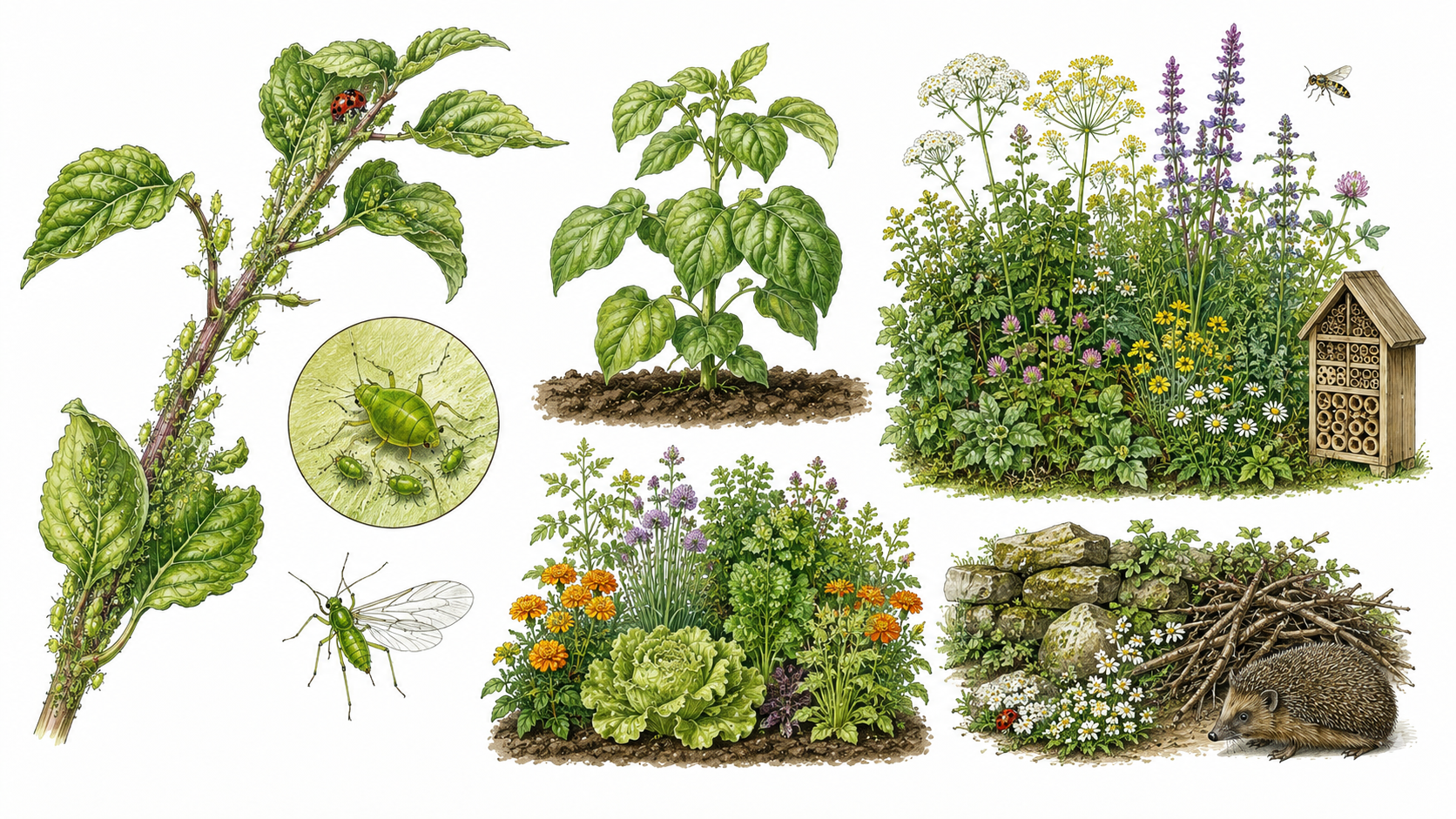
Preventing Aphids Naturally with Companion Planting
Learn how to reduce aphids naturally with resilient plants, beneficial insects, diverse beds, and companion planting.
Updated:2026-05-21
Season:April - September
Diagnosis
Plant health overview: 127 topics for pests, diseases, deficiencies, growing problems, and symptoms.
Plant health starts with careful observation: visible symptoms, affected plant parts, weather, site, and season together form the diagnosis.
All topics
Pests
Chewed leaves, feeding damage, sticky residue, webbing, or visible insects are often the first signs of pests. The key question is not only what is causing the damage, but whether growth, flowering, or harvest are actually affected.
Start here if you notice insects, larvae, eggs, webbing, slime trails, or recurring feeding patterns.
Diseases
Leaf spots, coatings, wilting, and rot can look similar while having very different causes. Weather, humidity, site conditions, and plant species all help narrow down the most likely explanation.
Use this category for spots, coatings, wilting, rot, or unusually fast-spreading damage.
Deficiencies
Yellow leaves do not automatically mean a lack of fertilizer. Soil conditions, waterlogging, drought stress, and root damage can all limit nutrient uptake. The affected plant parts and symptom pattern provide important clues.
This section helps interpret yellowing, weak growth, leaf changes, necrosis, and fruit-development issues.
Problems
Not every plant issue is caused by a pest or disease. Frost, heat, drought, waterlogging, wind, or pollination problems can produce very similar symptoms. Effective diagnosis always considers weather, care, and site conditions.
Start here when the symptoms seem more closely linked to water, weather, site conditions, flowering, or cultivation.
Symptom pages
When the cause is unclear, visible symptoms are often the best starting point. Yellow leaves, holes, wilting, brown spots, or sticky residue can help narrow down possible explanations.
These pages connect symptoms with matching pests, diseases, deficiencies, and growing problems.
Diagnosis
Check which plant parts are affected: leaf, shoot, root, flower, or fruit.
Compare crop, timing, weather, and the usual problems of the season.
Rule out pests, diseases, nutrient deficiencies, and care mistakes step by step.
Prioritize prevention, plant strength, and organic or mechanical action first.
Guides
Guide
Learn how to reduce aphids naturally with resilient plants, beneficial insects, diverse beds, and companion planting.
Guide
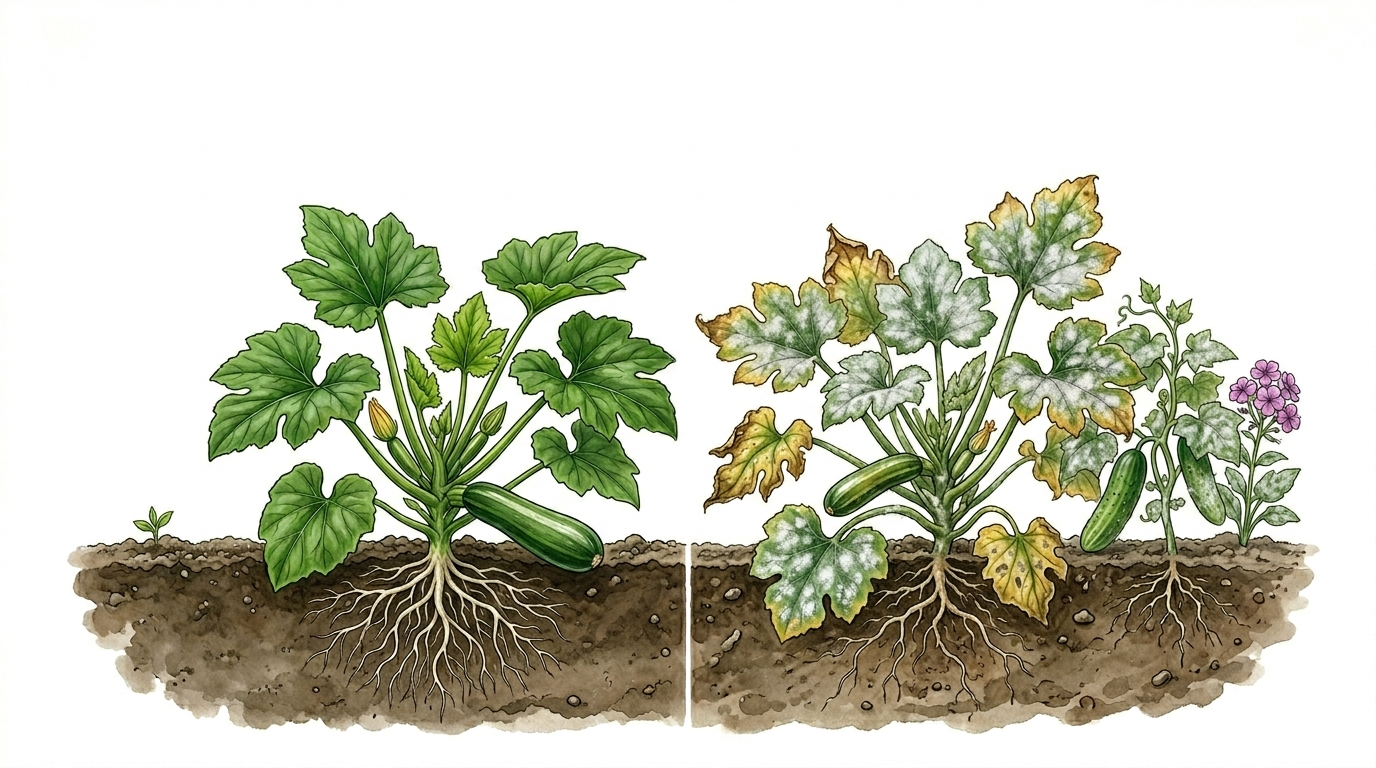
Learn how to recognize powdery mildew early, improve airflow, and care for affected vegetables in the garden.
Guide
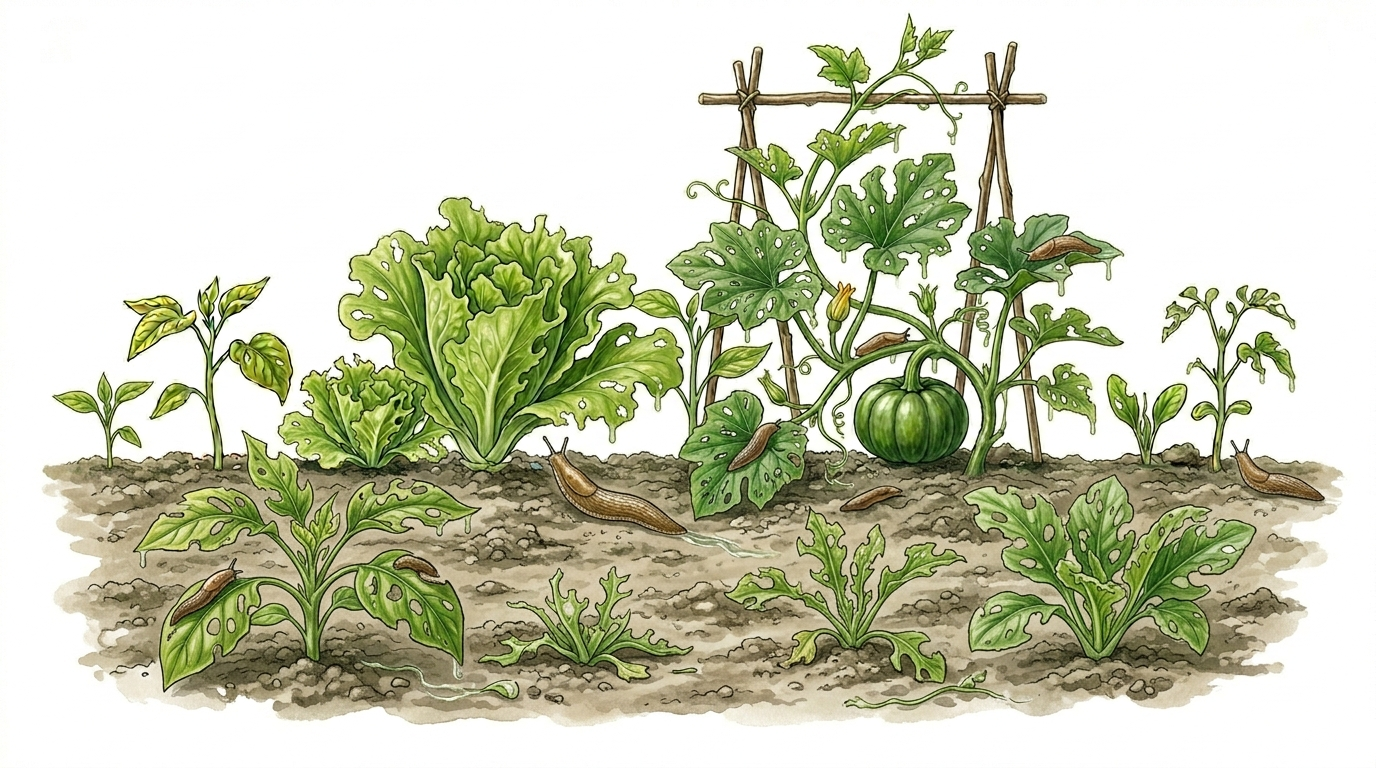
Learn how to protect vegetables from slugs, recognize feeding damage early, and plan beds to reduce slug pressure.