Plant Profile
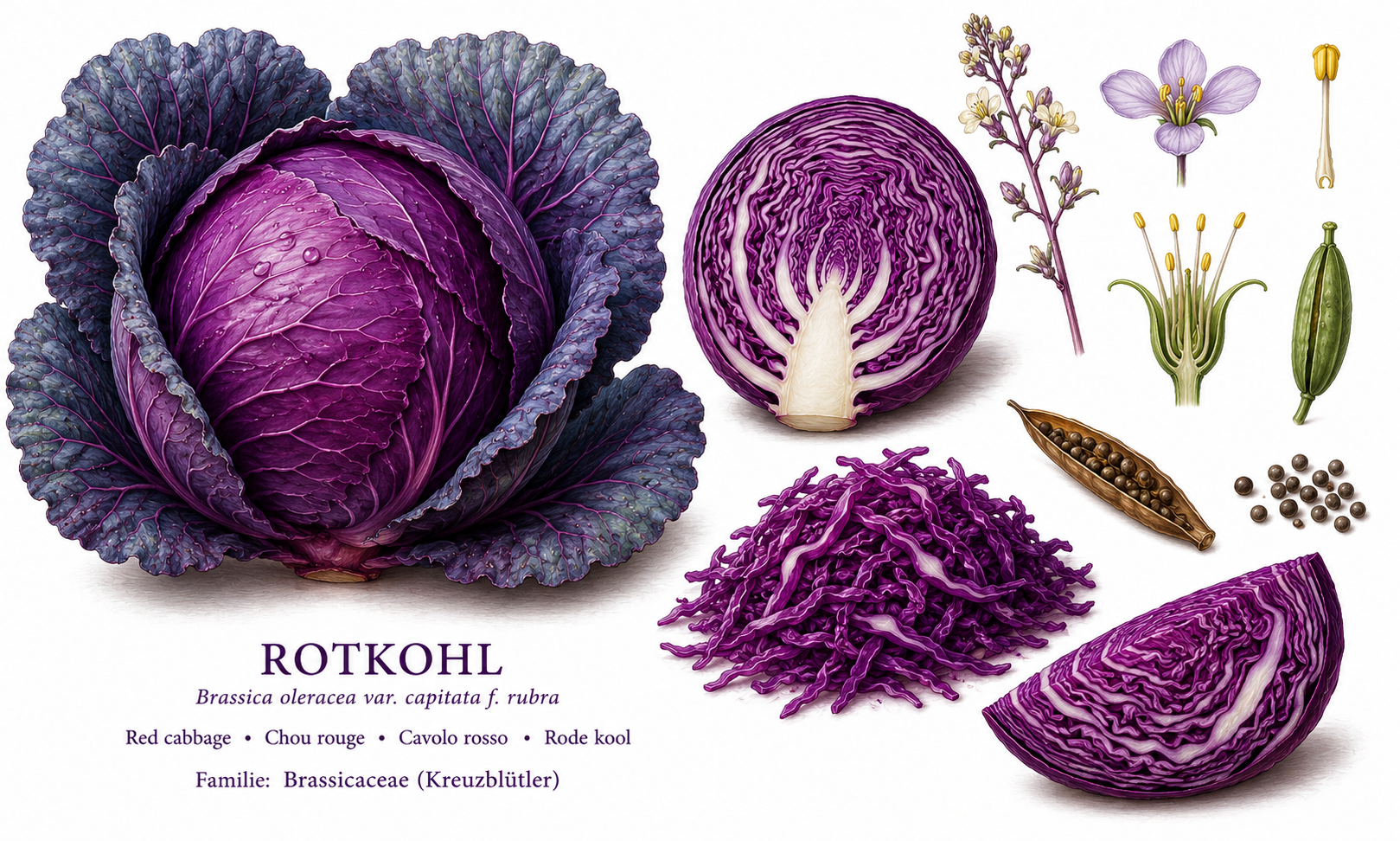
red cabbageBrassica oleracea var. capitata f. rubra
A classic cabbage vegetable with firm, intensely colored heads, rich in vitamins and versatile in the kitchen.
Quick profile
Key data
Suitable growing locations:
Avoid
StrawberryOther Brassicas (e.g., broccoli, cauliflower, kohlrabi)
Indoor & direct sowing
red cabbage: Sowing and germination
For early varieties from March, for late varieties until May.
Direct sowing for autumn and winter harvest.
Planting & site
red cabbage: Planting and spacing
Plant out pre-grown seedlings after the last frosts.
Temperature & frost
red cabbage: Temperature and site
Water & nutrients
red cabbage: Water, nutrients and care
Container & growth
red cabbage: Container, support and growth
Year plan
red cabbage Calendar
From summer to late autumn, red cabbage offers an abundant harvest for fresh dishes and winter storage.
Relevant now
June
- Continue direct sowingFor a staggered harvest.
- Plant out late varietiesLast planting for winter storage.
- Water regularlyEspecially important during head formation.
Next up
July
- First harvestEarly varieties are ready for harvest.
- Water sufficientlyConsistent moisture promotes head development.
- Pest controlWatch out for cabbage white butterflies and other pests.
Monthly tasks
Single tasks from monthly data; repeated seasonal windows are shown in the overview above.
January
Quiet month
February
Quiet month
March
Direct sowing
- Start pre-cultivationFor early varieties in seed trays at approx. 15-20°C.
April
Direct sowing
- Continue pre-cultivationFor mid-early varieties.
Planting
- Plant out early varietiesHarden off seedlings and plant outdoors after the last expected frosts.
May
Direct sowing
- Direct sowingSow directly outdoors for autumn and winter harvest.
- Pre-cultivate late varietiesFor late varieties to be harvested in autumn.
Planting
- Plant out seedlingsPlant pre-grown plants into the bed.
June
Direct sowing
- Continue direct sowingFor a staggered harvest.
Planting
- Plant out late varietiesLast planting for winter storage.
Growing
- Water regularlyEspecially important during head formation.
August
Harvest
- Harvest regularlyMid-early varieties are ready for harvest.
Growing
- Top-dressTop-dress with compost or organic fertilizer if needed.
- Water wellImportant for head development and to prevent splitting.
September
Harvest
- Main harvest seasonMany varieties reach maturity now.
Plant health
- Pest controlContinue to monitor for pests, especially cabbage root fly.
October
Harvest
- Harvest late varietiesHarvest heads before heavy frost and store.
Growing
- Prepare for storageharvested: Hang heads with root ball in a cool, frost-free place or store in sand.
November
Harvest
- Last harvestHarvest all remaining heads before the first heavy frost.
December
Quiet month
Flowering & pollination
red cabbage Flowering & pollination
Self-fertility
partially_self_incompatible
Pollinator needed
yes
Overview
Red cabbage is insect-pollinated, mainly by bees and other pollinators.
Notes
For good seed production, cross-pollination by insects is necessary. Different cabbage varieties can cross-pollinate.
Companion guide
red cabbage Companion guide
Avoid
StrawberryOther Brassicas (e.g., broccoli, cauliflower, kohlrabi)
Use & storage
red cabbage Use & storage
Depending on variety and sowing time, from summer to late autumn.
Storage
Cool storage vegetable
Storage life
Whole heads: 2-5 months in a cool cellar; Cut/Cooked: 3-5 days in the refrigerator; Fermented: several months to over a year.
Flavor
Earthy, slightly peppery, sweetens when cooked, slightly bitter raw.
Harvest
Depending on variety and sowing time, from summer to late autumn.
Culinary uses
Processing
After harvest
Remove outer, damaged, or dirty leaves. Do not cut the stem too short to improve storage life.
Edibility & safety
red cabbage Edibility & safety
For people
In brief: which parts are edible, which parts remain risky, and whether raw consumption makes sense.
Safety notes
No known toxic properties. Excessive raw consumption may cause flatulence in sensitive individuals.
Animal safety
For many animals, this plant is generally low-risk: 9 animal types are rated suitable or mostly suitable. Quantity, plant part, and individual tolerance still matter.
Each row shows which parts are more suitable and which parts are critical.
Companion animals
 Dog
DogHead (leaves), Young leaves
No risk parts listed
Head (leaves), Young leaves
No risk parts listed
Excessive raw consumption, Sensitive gastrointestinal tract
Gastrointestinal upset with overconsumption
observe
Red cabbage is safe for dogs in small amounts as a treat. Consumption of large quantities may cause gas and gastrointestinal upset. No known toxic compounds in the edible parts.
Open animal page Cat
CatHead (leaves), Young leaves
No risk parts listed
Head (leaves), Young leaves
No risk parts listed
Excessive raw consumption, Sensitive gastrointestinal tract
Gas in sensitive animals
observe
Red cabbage is safe for cats in small amounts as a treat. Excessive consumption may cause gas. No known toxic compounds. Feed only leaves, avoid core.
Open animal page Rabbit
Head (leaves), Young leaves
No risk parts listed
Head (leaves), Young leaves
No risk parts listed
Excessive raw consumption, Sudden diet change
Bloating, Diarrhea from overfeeding
observe
Red cabbage is suitable for rabbits in small amounts as a treat. Due to its high water and fiber content, excessive consumption may cause bloating or diarrhea. Introduce gradually.
Open animal page Guinea pig
Head (leaves), Young leaves
No risk parts listed
Head (leaves), Young leaves
No risk parts listed
Excessive raw consumption
Gas/bloat from excessive consumption
usually no action needed
Red cabbage is suitable for guinea pigs in small amounts as a treat due to its vitamin C content. Due to the risk of gas/bloat, it should only be fed occasionally. No known toxic compounds in the edible parts.
Open animal page Hamster
Head (leaves), Young leaves
No risk parts listed
Head (leaves), Young leaves
No risk parts listed
Excessive raw consumption
Gas/bloating from excessive consumption
usually no action needed
Red cabbage is suitable for hamsters in small amounts as a treat. Excessive consumption may cause gas/bloating. No known toxic compounds.
Open animal page Budgie
No suitable parts listed
No risk parts listed
No suitable parts listed
No risk parts listed
Farm animals
 Horse
HorseHead (leaves), Young leaves
Tough core, Heavily damaged or yellowed outer leaves
Head (leaves), Young leaves
Tough core, Heavily damaged or yellowed outer leaves
Excessive consumption, Raw consumption in sensitive animals
Flatulence, Gastrointestinal discomfort
observe
Red cabbage is suitable for horses in small amounts as a treat. The tough core and damaged outer leaves should be avoided as they are difficult to digest and may cause gastrointestinal discomfort. When fed normally as part of a balanced diet, red cabbage is safe. Excessive consumption may lead to flatulence. If symptoms occur, a veterinarian should be consulted.
Open animal page Chicken
Head (leaves), Young leaves
No risk parts listed
Head (leaves), Young leaves
No risk parts listed
Excessive consumption
Excessive consumption may cause flatulence
usually no action needed
Red cabbage is suitable for chickens in moderation as a treat. The leaves are nutritious and generally well-tolerated. Excessive amounts may cause flatulence, so feed only occasionally. No known toxic compounds identified for chickens.
Open animal page Duck
DuckHead (leaves), Young leaves
Tough core, Heavily damaged or yellowed outer leaves
Head (leaves), Young leaves
Tough core, Heavily damaged or yellowed outer leaves
Excessive raw consumption, Sensitive individuals
Flatulence, Digestive discomfort
observe
No direct species-specific source was found for ducks. This is a cautious inference from the geese profile and the known plant-part risks.
Open animal page Goose
GooseHead (leaves), Young leaves
Tough core, Heavily damaged or yellowed outer leaves
Head (leaves), Young leaves
Tough core, Heavily damaged or yellowed outer leaves
Excessive raw consumption, Sensitive individuals
Flatulence, Digestive discomfort
observe
Red cabbage is suitable for geese in small amounts as an occasional treat. The leaves are safe, while the tough core and damaged outer leaves should be avoided due to potential digestive discomfort. No known toxic compounds. Excessive consumption may cause flatulence.
Open animal page Sheep
SheepNo suitable parts listed
No risk parts listed
No suitable parts listed
No risk parts listed
 Goat
GoatNo suitable parts listed
No risk parts listed
No suitable parts listed
No risk parts listed
Bloating with excessive consumption
unknown
['Red cabbage is safe for goats in moderation and is often fed as a treat. The leaves are nutritious and palatable, but excessive consumption can cause bloating. The tough core should be removed as it is difficult to digest.']
Open animal page Cattle
No suitable parts listed
No risk parts listed
No suitable parts listed
No risk parts listed
Flatulence, Gastrointestinal upset
unknown
['Red cabbage is suitable for cattle in small amounts as supplemental feed. The leaves are digestible, while the tough core and damaged outer leaves should be avoided due to poor digestibility. Excessive consumption may cause flatulence.']
Open animal page Pig
PigNo suitable parts listed
No risk parts listed
No suitable parts listed
No risk parts listed
Flatulence with excessive consumption
unknown
Red cabbage is suitable for pigs in small amounts as a treat. Excessive consumption may cause flatulence. No known toxic compounds.
Open animal pageThese guidelines are for general information only and do not replace veterinary diagnosis. If critical plant parts were ingested or the animal shows unusual behaviour or symptoms, seek veterinary advice.
Max risk
unknown
Highest status
not established
Urgency
unknown
Saving seed
red cabbage Saving seed
Seed saving
yes
Seed viability
4 - 5 years
Isolation
At least 800 meters from other Brassica oleracea varieties (cabbage, broccoli, cauliflower, etc.) to prevent cross-pollination.
Practical tips
red cabbage Practical tips
Common beginner mistakes
Success pattern
High-impact tips
Grower observations
Plant Profile
Additional plant images
Health
Pests, Diseases
Plant health
Diagnosis help
red cabbage Diagnosis help
Pest groups
Disease groups
Prevention
Diagnosis
Look for discolorations, feeding damage, deformities, or growths on leaves, stems, and roots. Also check the undersides of leaves for pests. If wilting occurs despite sufficient moisture, inspect the roots.
Cultural prevention
Monitoring
First response
Diagnostic rules
Large holes in leaves, often with caterpillar droppings
Possible causes: Cabbage White Butterfly
- Check undersides of leaves for caterpillars and eggs
Wilting, stunted growth, club-like swellings on roots when inspected
Possible causes: Clubroot
- Carefully dig up plant and check roots
- Measure soil pH
Plant prematurely forms a flower stalk, no firm head
Possible causes: Bolting
- Check weather conditions (cold stress?)
- Check variety for bolting tendency
Head splits open
Possible causes: Platzen der koepfe
- Check watering over the last few days (large fluctuations?)
FAQ
Why is my red cabbage head splitting?
Head splitting is often caused by inconsistent watering, especially when plants absorb a lot of water suddenly after a dry spell. Ensure consistent soil moisture, particularly during head formation.
Can I grow red cabbage in a pot?
Yes, red cabbage can be grown in pots, especially more compact varieties. Choose a sufficiently large container (at least 20 liters volume, 30 cm depth and diameter) with good drainage and ensure regular water and nutrient supply.
How do I protect red cabbage from the cabbage white butterfly?
The most effective protection is a fine-mesh insect net (mesh size under 1.0 mm) applied immediately after planting. Companion planting with aromatic herbs or regularly hand-picking caterpillars and eggs also helps.
Why isn't my red cabbage turning red?
The color of red cabbage depends on the soil's pH. In acidic soils, it tends to be redder; in alkaline soils, it turns bluish-purple. A sunny location also promotes intense red coloration. In the kitchen, you can stabilize the color with vinegar or lemon juice.
Is red cabbage safe for Dog?
red cabbage is classified as moderation only for Dog. Risk: unknown. Urgency: observe. Red cabbage is safe for dogs in small amounts as a treat. Consumption of large quantities may cause gas and gastrointestinal upset. No known toxic compounds in the edible parts.
Is red cabbage safe for Cat?
red cabbage is classified as moderation only for Cat. Risk: unknown. Urgency: observe. Red cabbage is safe for cats in small amounts as a treat. Excessive consumption may cause gas. No known toxic compounds. Feed only leaves, avoid core.
Is red cabbage safe for Rabbit?
red cabbage is classified as moderation only for Rabbit. Risk: unknown. Urgency: observe. Red cabbage is suitable for rabbits in small amounts as a treat. Due to its high water and fiber content, excessive consumption may cause bloating or diarrhea. Introduce gradually.
Is red cabbage safe for Guinea pig?
red cabbage is classified as moderation only for Guinea pig. Risk: unknown. Urgency: usually no action needed. Red cabbage is suitable for guinea pigs in small amounts as a treat due to its vitamin C content. Due to the risk of gas/bloat, it should only be fed occasionally. No known toxic compounds in the edible parts.
Guides
Related guides
Guide
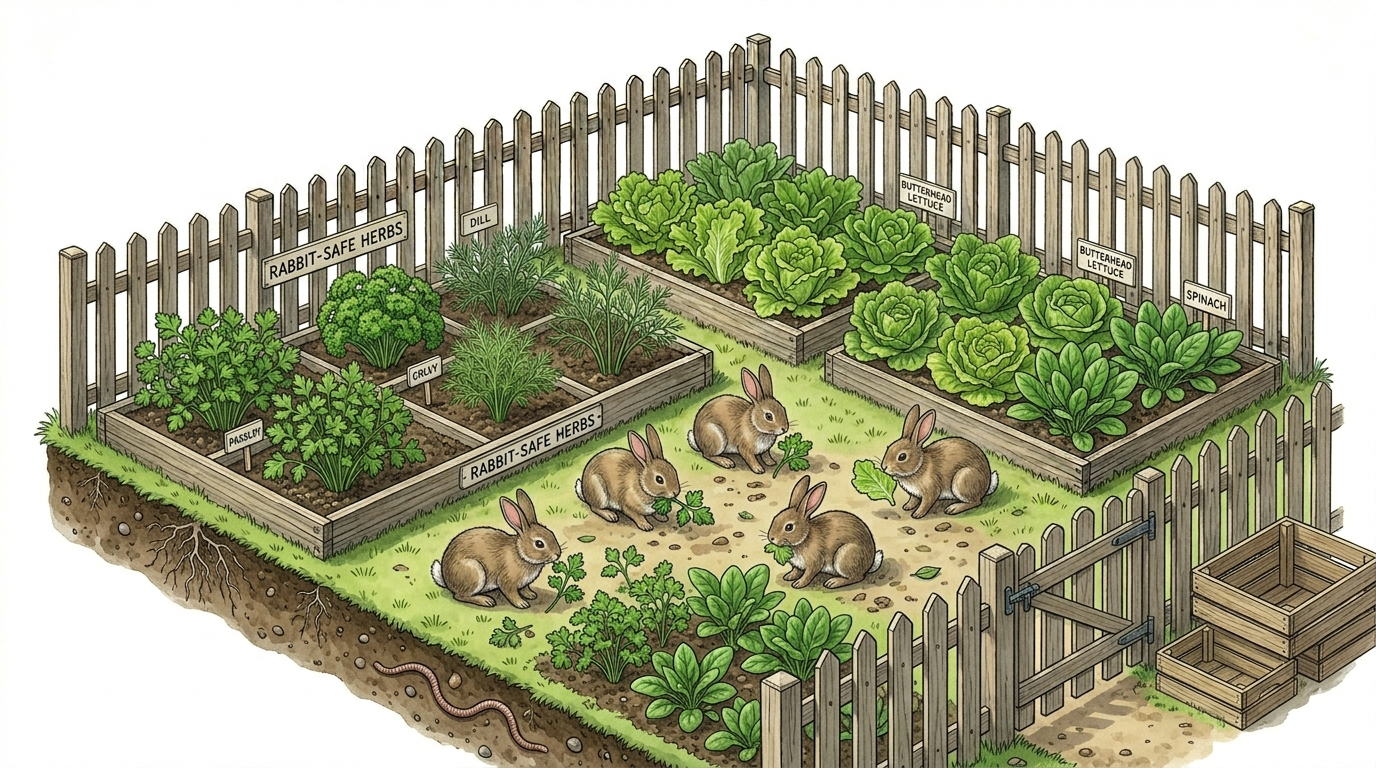
Rabbits in the Garden: Herbs and Vegetables
Learn how to choose suitable herbs and vegetables for rabbits, grow feeding plants, and plan a rabbit-friendly garden.
Guide
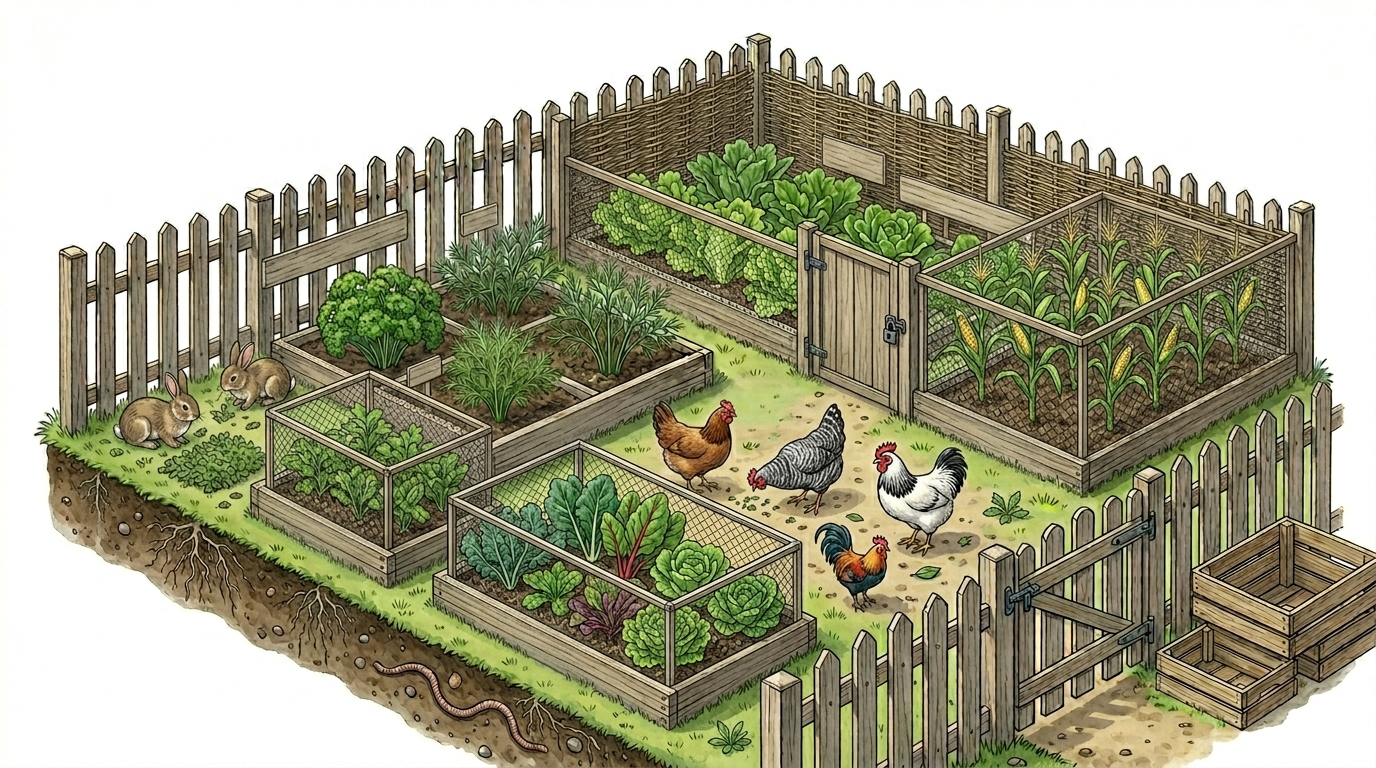
Chickens in the Garden: Safe Plants and Zones
Learn how to design a chicken-friendly garden with suitable plants, protected beds, and well-planned activity areas.
Guide
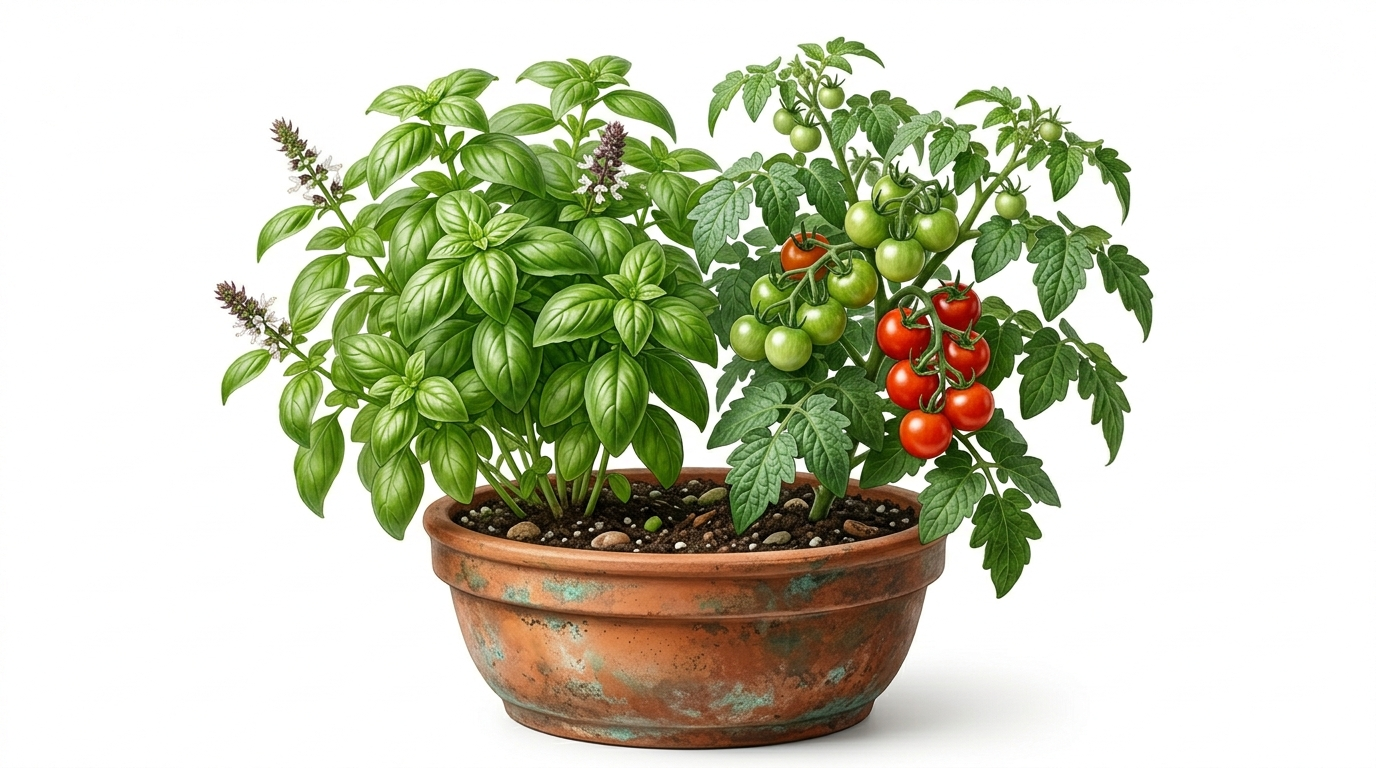
Growing Basil: Site, Watering and Harvesting
Learn how to grow basil successfully with the right site, steady watering, regular harvesting, and tips to delay flowering.
Guide
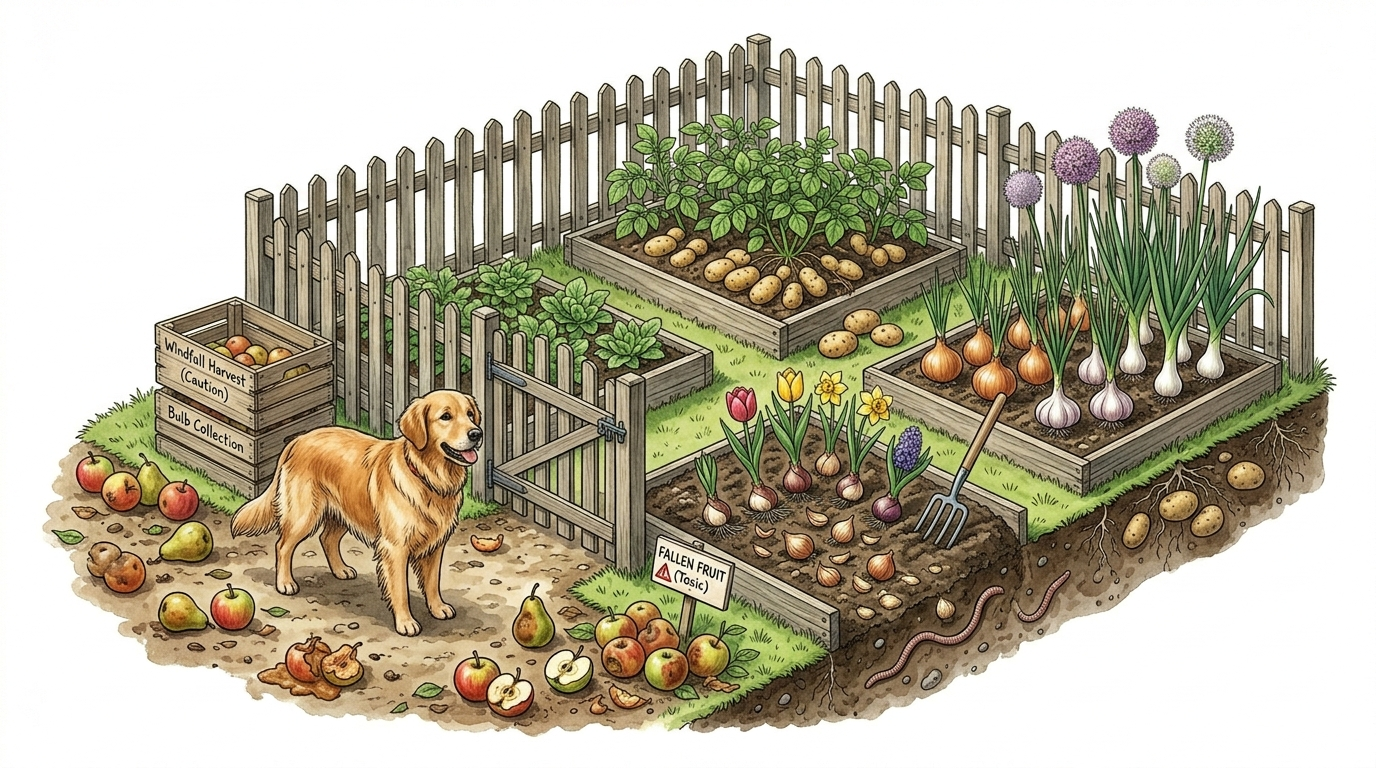
Dogs in the Garden: Windfall Fruit and Risks
Keep your garden dog-safe by managing windfall fruit, seeds, stored crops, and potentially problematic plant parts.
Internal links
Related plants
cauliflower
Both are varieties of Brassica oleracea.
Closely related, belongs to the same species (Brassica oleracea).
broccoli
Both are varieties of Brassica oleracea.
Closely related, belongs to the same species (Brassica oleracea).
kohlrabi
Both are varieties of Brassica oleracea.
Closely related, belongs to the same species (Brassica oleracea).
Cabbage White Butterfly
Typical pest for all cabbage varieties.
Cabbage Root Fly
Typical pest for all cabbage varieties.
Clubroot
Typical fungal disease for all Brassicas.
Black Rot
Typical bacterial disease for all Brassicas.
Sources
Public sources
- Wikidata entity
Wikidata · 2026-05-15
- GBIF species match
GBIF · 2026-05-15
- Deutschsprachige Wikipedia: Rotkohl
Wikipedia · 2026-05-15
- English Wikipedia: Red cabbage
Wikipedia · 2026-05-15