Plant Profile
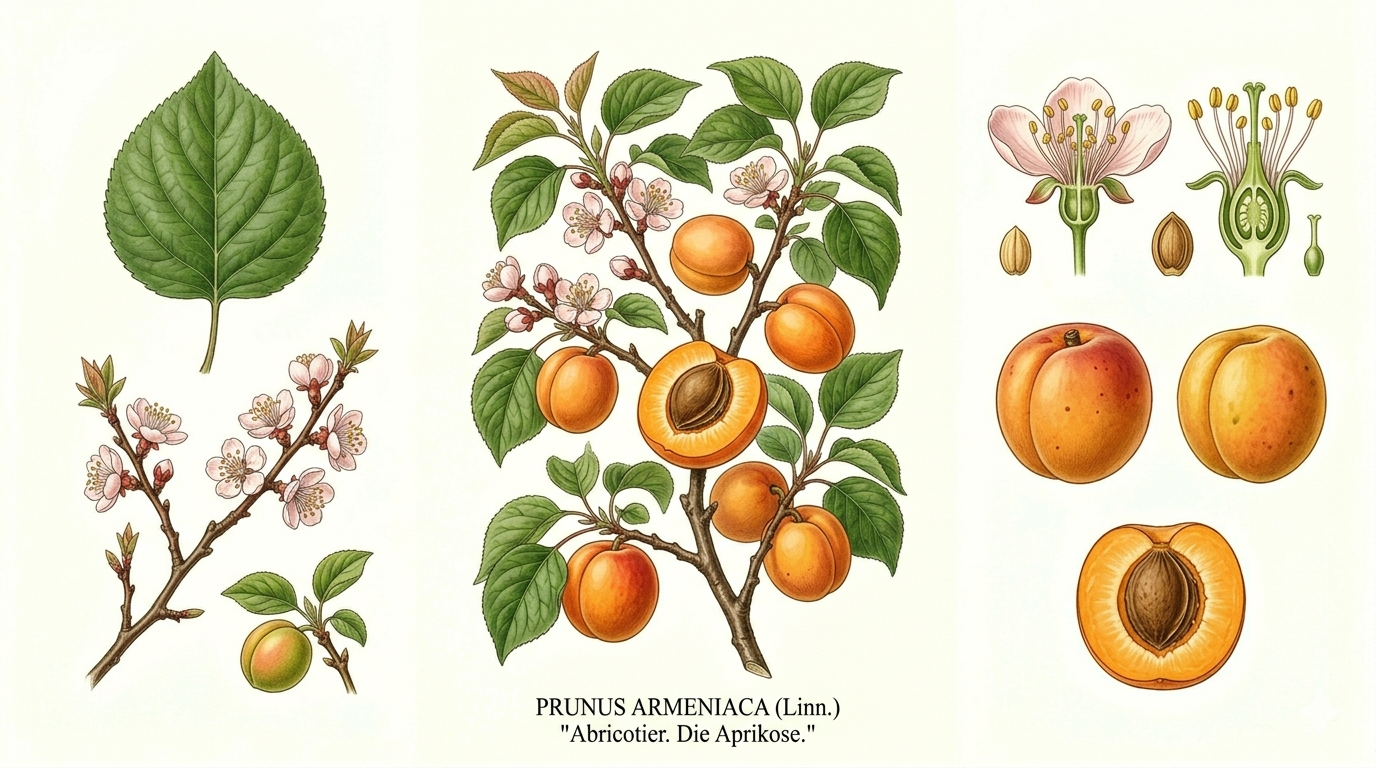
ApricotPrunus armeniaca
Popular stone fruit with sweet, aromatic flesh. Requires a warm, sheltered location and regular care.
Quick profile
Key data
Suitable growing locations:
Good neighbors
StrawberryBeansHerbs (e.g., Thyme, Rosemary)
Avoid
RosesCherryEuropean Plum
Indoor & direct sowing
Apricot: Sowing and germination
Apricots are generally not started indoors.
Direct sowing is unusual and not recommended for apricots.
Planting & site
Apricot: Planting and spacing
Plant young trees outdoors after the last frosts.
Site & practical notes
Temperature & frost
Apricot: Temperature and site
Water & nutrients
Apricot: Water, nutrients and care
Container & growth
Apricot: Container, support and growth
Year plan
Apricot Calendar
The early flowering in March makes apricots susceptible to late frosts, so a sheltered location is essential.
Recurring tasks
Relevant now
June
- Fruit thinningYoung fruit development: Remove excess fruits to promote the development of remaining fruits and prevent branch breakage.
Next up
July
- No additional single task
Monthly tasks
Single tasks from monthly data; repeated seasonal windows are shown in the overview above.
January
Quiet month
February
Quiet month
March
Pruning
- PruningDormant season: Formative and thinning cuts while the tree is still dormant.
April
Growing
- FertilizingStart of growth: First fertilization to support growth and fruit set.
May
Plant health
- Pest and disease controlActive growth: Regular checks for pests like aphids and diseases like brown rot. Take appropriate action if necessary.
June
Growing
- Fruit thinningYoung fruit development: Remove excess fruits to promote the development of remaining fruits and prevent branch breakage.
August
Growing
- WateringDry periods: Water sufficiently during prolonged dry spells, especially during fruit development.
September
Harvest
- Post-harvest careAfter harvest: Remove fallen fruit and leaves to prevent diseases.
October
Quiet month
November
Quiet month
December
Quiet month
Flowering & pollination
Apricot Flowering & pollination
Self-fertility
self-fertile
Pollinator needed
yes
Overview
Apricots are predominantly self-fertile, but cross-pollination by insects improves fruit set and quality.
Notes
Bees and other insects are important pollinators. A sunny, warm location encourages pollinator activity.
Pruning & care
Apricot Pruning & care
Pruning timing
Main pruning in late winter/early spring (February-March) before bud break. Summer pruning to encourage fruit formation and thinning.
Pruning type
Mixed pruning (formative, fruiting, renewal)
Notes
Apricots bloom and fruit on one- and two-year-old wood. Excessive pruning can reduce fruit production. Summer pruning is important to remove competing shoots and promote fruiting on the fruiting wood.
Pruning timing
Main pruning, formative pruning, removal of dead/diseased wood, thinning of dense areas. Perform before bud break, while the tree is still dormant. This minimizes stress and promotes rapid healing.
Thinning of water sprouts, removal of competing shoots, shortening of overly vigorous new growth to encourage fruiting wood. Targeted pruning to direct growth and improve fruit quality. Do not thin too heavily to avoid sunburn.
Removal of any remaining diseased wood, light thinning if necessary, preparing the tree for winter. Only if necessary, to prevent infections. Main pruning should be avoided.
Remove
Preserve
Avoid
Tools and hygiene
Clean and disinfect saw blades and shears before and after each use to prevent disease transmission.
Companion guide
Apricot Companion guide
Good neighbors
StrawberryBeansHerbs (e.g., Thyme, Rosemary)
Avoid
RosesCherryEuropean Plum
Use & storage
Apricot Use & storage
Harvest time varies depending on variety and ripeness.
Storage
Short-term storage at cool temperatures, ideal for immediate consumption or processing.
Storage life
Fresh: 2-5 days at cool temperatures (approx. 5-10°C).
Harvest
Harvest time varies depending on variety and ripeness.
Processing
After harvest
Pick fruits carefully to avoid bruising. Do not wash; store cool and dry until consumption.
Notes
Freshly harvested apricots have a short shelf life of only a few days. Processing methods are necessary for longer storage.
Edibility & safety
Apricot Edibility & safety
For people
In brief: which parts are edible, which parts remain risky, and whether raw consumption makes sense.
Safety notes
The stone is toxic and should not be consumed. Small amounts are generally harmless, but caution is advised.
Animal safety
For animals, the specific plant part matters here: some parts may be suitable, while others should be avoided. At least one critical rating is listed for 4 animal types.
Each row shows which parts are more suitable and which parts are critical.
Companion animals
 Dog
DogFlesh (without the stone)
Stones (seeds), Leaves, Stems
Flesh (without the stone)
Stones (seeds), Leaves, Stems
Ingestion of stones/seeds, leaves, or stems, Wilting plant material (increases toxicity)
Brick red mucous membranes, Dilated pupils, Difficulty breathing
contact a vet if ingested
Apricot flesh is safe for dogs in small amounts as an occasional treat. However, the stones (seeds), leaves, and stems contain cyanogenic glycosides, which are toxic and can lead to cyanide poisoning. Wilting plant material is particularly dangerous.
Open animal page Cat
CatNo suitable parts listed
Stems, Leaves, Seeds (Apricot stone)
No suitable parts listed
Stems, Leaves, Seeds (Apricot stone)
Ingestion of stems, leaves, or seeds (especially wilted material), Animal curiosity
Brick red mucous membranes, Dilated pupils, Difficulty breathing
emergency vet immediately
Specifically, stems, leaves, and seeds (apricot stones) contain cyanogenic glycosides, which can lead to cyanide poisoning if ingested. The fruit flesh itself does not contain these toxins in significant amounts but is not suitable as food for cats and can cause digestive upset if consumed excessively.
Open animal page Rabbit
Ripe fruit flesh (without stone)
Leaves, Stems, Bark
Ripe fruit flesh (without stone)
Leaves, Stems, Bark
Access to leaves, stems, or stones, Consumption of wilted plant material, Large quantities
Brick red mucous membranes, Dilated pupils, Difficulty breathing
emergency vet immediately
Apricot fruit flesh can be offered in very small quantities as an occasional treat. All other plant parts, especially leaves, stems, and the stone, contain cyanogenic glycosides, which are toxic to rabbits and can lead to cyanide poisoning. Wilted material is particularly dangerous. Seek emergency veterinary care immediately if toxic parts are suspected to have been ingested.
Open animal page Guinea pig
Fruit flesh (without stone)
Leaves, Stems, Stones
Fruit flesh (without stone)
Leaves, Stems, Stones
Access to the plant (leaves, stems), Ingestion of stones or seeds, Wilting plant material (increases toxicity)
Cyanide poisoning: Brick red mucous membranes, Dilated pupils, Difficulty breathing
contact a vet if ingested
Apricot fruit flesh can be offered in very small quantities as an occasional treat. Leaves, stems, and especially the stones contain cyanogenic glycosides and are toxic. Wilting plant material is particularly dangerous.
Open animal page Hamster
Fruit flesh (without stone)
Stone/Seed, Leaves, Stems
Fruit flesh (without stone)
Stone/Seed, Leaves, Stems
Ingestion of stones, leaves, or stems, Small body size of hamsters increases risk upon exposure
Brick red mucous membranes, Dilated pupils, Difficulty breathing
contact a vet if symptoms appear
Apricot fruit flesh can be offered to hamsters in very small quantities as an occasional treat. However, it is crucial to ensure that the toxic stone, as well as leaves and stems, are completely removed, as these contain cyanogenic glycosides that can release cyanide.
Open animal page Budgie
Fruit flesh (without stone/pit)
Stone/Pit, Leaves, Stems
Fruit flesh (without stone/pit)
Stone/Pit, Leaves, Stems
Ingestion of stones/pits, leaves, or stems, Ingestion of wilted plant material (increased toxicity)
Brick red mucous membranes, Dilated pupils, Difficulty breathing
contact a vet if symptoms appear
Apricot fruit flesh can be offered in small amounts as an occasional treat. However, stones/pits, leaves, and stems contain cyanogenic glycosides and are toxic. These parts must be completely removed before offering the fruit.
Open animal pageFarm animals
 Horse
HorseNo suitable parts listed
Stems, Leaves, Seeds/Stones
No suitable parts listed
Stems, Leaves, Seeds/Stones
Ingestion of stems, leaves, or seeds/stones, Wilting plant material is particularly toxic
Brick red mucous membranes, Dilated pupils, Difficulty breathing
emergency vet immediately
Apricot plants, especially stems, leaves, and seeds/stones, contain cyanogenic glycosides which are toxic to horses. Wilting plant material is particularly dangerous.
Open animal page Chicken
Ripe flesh (without stone)
Stones, Leaves, Stems
Ripe flesh (without stone)
Stones, Leaves, Stems
Ingestion of stones, leaves, or stems, Ingestion of wilted plant material
Brick red mucous membranes, dilated pupils, difficulty breathing
contact a vet if symptoms appear
Ripe apricot flesh can be offered to chickens in moderation as a treat, provided the toxic stone, leaves, and stems are completely removed. These plant parts contain cyanogenic glycosides, which can lead to poisoning symptoms if ingested. Wilted plant material is particularly dangerous.
Open animal page Duck
DuckFruit flesh (without stone)
Leaves, Stems, Bark
Fruit flesh (without stone)
Leaves, Stems, Bark
Access to the whole plant, ingestion of stones or wilted leaves, large quantities
Brick red mucous membranes, dilated pupils, difficulty breathing
contact a vet if symptoms appear
Apricot fruit flesh is safe for ducks in moderation as a treat. All other plant parts, especially leaves, stems, and the stone, contain cyanogenic glycosides and are toxic. Wilted plant material is particularly dangerous.
Open animal page Goose
GooseFruit flesh (without stone)
Leaves, Stems, Stones
Fruit flesh (without stone)
Leaves, Stems, Stones
Consumption of leaves, stems, or stones/seeds, Consumption of wilted plant material
Brick red mucous membranes, Dilated pupils, Difficulty breathing
contact a vet if symptoms appear
While apricot fruit flesh may be safe in moderation as a treat for geese, leaves, stems, and stones/seeds contain cyanogenic glycosides, which are toxic. Geese with access to whole plants or fallen fruit with stones are at risk. Wilted material is particularly dangerous.
Open animal page Sheep
SheepFlesh (in very small amounts as a treat, but not recommended)
Leaves, Stems, Seeds
Flesh (in very small amounts as a treat, but not recommended)
Leaves, Stems, Seeds
Consumption of leaves, stems, or stone, Consumption of wilting plant material, Contamination of feed with plant parts
Difficulty breathing, Panting, Shock
contact a vet if ingested
While the flesh of apricots is safe for human consumption, the leaves, stems, and especially the stone contain cyanogenic glycosides, which can cause poisoning in ruminants like sheep. The risk is particularly high when the plant material is wilting. Feeding sheep apricot plants is not recommended.
Open animal page Goat
GoatFlesh (in small amounts)
Stone, Leaves, Stems
Flesh (in small amounts)
Stone, Leaves, Stems
Consumption of the stone, Consumption of leaves or stems, Consumption of wilted plant parts
Difficulty breathing, Panting, Shock
contact a vet if ingested
The stone, leaves, and stems of Prunus armeniaca contain cyanogenic glycosides, which can lead to cyanide poisoning if ingested. The flesh is safe in small amounts as a treat, but the stone should never be consumed. Wilted plant parts are particularly dangerous.
Open animal page Cattle
Flesh (in very small amounts as a treat, but not recommended)
Leaves, Stems, Seeds
Flesh (in very small amounts as a treat, but not recommended)
Leaves, Stems, Seeds
Consumption of leaves, stems, or stone, Consumption of wilting plant material, Contamination of feed with plant parts
Difficulty breathing, Panting, Shock
contact a vet if ingested
No direct species-specific source was found for cattle. This is a cautious inference from the sheep profile and the known plant-part risks.
Open animal page Pig
PigFlesh
Stone, Leaves, Stems
Flesh
Stone, Leaves, Stems
Consumption of stones, leaves, or wilted material, Consumption of large quantities of flesh
Difficulty breathing, Panting, Shock
contact a vet if ingested
The flesh of ripe apricots is safe for pigs in moderation. However, the stones, leaves, and stems contain cyanogenic glycosides and are toxic. Wilted plant parts, in particular, can be dangerous. Care should be taken to prevent consumption of these parts.
Open animal pageThese guidelines are for general information only and do not replace veterinary diagnosis. If critical plant parts were ingested or the animal shows unusual behaviour or symptoms, seek veterinary advice.
Max risk
4 / 5
Highest status
toxic
Urgency
emergency vet immediately
Practical tips
Apricot Practical tips
Common beginner mistakes
Success pattern
High-impact tips
Grower observations
Health
Pests, Diseases
Pests
Aphids
Small, sucking insects that colonize young shoots and leaves, feeding on plant sap. Cause deformities and can transmit viruses.
Fruit tree red spider mite
Tiny mites that feed on the underside of leaves, forming fine webs. Occur particularly in dry, warm weather.
Plum aphid
Specialized aphid species that feeds on plums and related species. Causes severe curling and honeydew.
Oriental fruit moth
The caterpillars bore into the fruits, causing tunnels. Infested fruits often drop prematurely.
Diseases
Brown rot (Monilinia spp.)
Fungal disease affecting both young shoots (wither tip) and fruits (fruit rot). Characterized by grey spore masses on affected plant parts.
Shothole disease (Gnomonia erythrostoma)
Fungal disease causing shot-holes in the leaves. Affected leaves drop prematurely, impairing photosynthesis.
Bacterial canker (Xanthomonas arboricola pv. pruni)
Bacterial disease affecting leaves, shoots, and fruits. Causes spots, bark necrosis, and fruit deformities.
Deficiencies
Potassium deficiency
Marginal leaf yellowing (chlorosis) spreading to the leaf edge, which can become necrotic. Reduced fruit size and quality.
Magnesium deficiency
Interveinal chlorosis (yellowing between the leaf veins) while the veins remain green. Often occurs on older leaves.
Plant health
Diagnosis help
Apricot Diagnosis help
Pest groups
Disease groups
Prevention
Diagnosis
Accurate diagnosis often requires observing symptoms on different plant parts (leaves, shoots, fruits) and considering weather conditions. Seek professional help if uncertain or if infestation is severe.
Cultural prevention
Monitoring
First response
Diagnostic rules
Blossoms and young shoots wilt and die back, often with brown discoloration.
Possible causes: Brown rot
- Check for grey spore masses on shoots and blossoms.
- Consider weather conditions of the past weeks.
Leaves show red spots that later tear out, leaving holes.
Possible causes: Shothole disease
- Observe premature leaf drop in summer.
- Check for fungal spores.
Small, dark spots on leaves and fruits, bark necrosis on shoots.
Possible causes: Bacterial canker
- Look for canker-like wounds on shoots.
- Consider wet weather during the growing season.
FAQ
Can apricots be grown in pots?
Apricots are generally not suitable for container cultivation, as they require ample space and deep roots. For small gardens or balconies, dwarf varieties like 'Garden Annie' or 'Homedale' can be grown in large pots with good drainage.
What is the best planting time for apricots?
The best planting time for young apricot trees is autumn (October–November) or spring (March–April), after the last frosts. Trees planted in autumn have time to root before spring.
How often should apricots be watered?
Apricots require regular watering, especially during flowering and fruit development. In dry periods, the soil should be kept evenly moist without causing waterlogging.
How to recognize ripe apricots?
Ripe apricots have a bright orange-yellow color, are soft (but not mushy), and have a sweet, fruity fragrance. They detach easily from the branch.
How to protect apricots from late frost?
Blossoms are sensitive to frost. In case of late frost risk, use fleece, special frost protection sprays, or choose late-blooming varieties. A warm, sheltered location reduces the risk.
Which fertilizers are suitable for apricots?
Apricots benefit from balanced fertilization with compost or organic multi-nutrient fertilizers in spring. Over-fertilization, especially with nitrogen, should be avoided, as it leads to soft wood and increased susceptibility to diseases.
How to prune an apricot tree correctly?
The main pruning is done in late winter (February–March) before bud break. The goal is to thin the crown, remove diseased wood, and promote fruiting wood. Summer pruning is for thinning and promoting fruit formation.
Why do apricot fruits drop?
Fruit drop can be caused by insufficient pollination, nutrient deficiency, drought, or late frost. Dense fruit set also leads to competition and premature drop.
Can apricot kernels be eaten?
No, apricot kernels are toxic as they contain amygdalin, which can break down into cyanide. The flesh is edible and tastes best when fully ripe.
How to store fresh apricots best?
Fresh apricots have a short shelf life of only a few days. They should be stored cool (approx. 5–10°C) and dry. For longer storage, processing methods like canning, freezing, or drying are suitable.
Is Apricot safe for Dog?
Apricot is classified as selected parts only for Dog. Risk: 3 / 5. Urgency: contact a vet if ingested. Apricot flesh is safe for dogs in small amounts as an occasional treat. However, the stones (seeds), leaves, and stems contain cyanogenic glycosides, which are toxic and can lead to cyanide poisoning. Wilting plant material is particularly dangerous.
Is Apricot safe for Cat?
Apricot is classified as toxic for Cat. Risk: 4 / 5. Urgency: emergency vet immediately. Specifically, stems, leaves, and seeds (apricot stones) contain cyanogenic glycosides, which can lead to cyanide poisoning if ingested. The fruit flesh itself does not contain these toxins in significant amounts but is not suitable as food for cats and can cause digestive upset if consumed excessively.
Is Apricot safe for Rabbit?
Apricot is classified as selected parts only for Rabbit. Risk: 3 / 5. Urgency: emergency vet immediately. Apricot fruit flesh can be offered in very small quantities as an occasional treat. All other plant parts, especially leaves, stems, and the stone, contain cyanogenic glycosides, which are toxic to rabbits and can lead to cyanide poisoning. Wilted material is particularly dangerous. Seek emergency veterinary care immediately if toxic parts are suspected to have been ingested.
Is Apricot safe for Horse?
Apricot is classified as toxic for Horse. Risk: 4 / 5. Urgency: emergency vet immediately. Apricot plants, especially stems, leaves, and seeds/stones, contain cyanogenic glycosides which are toxic to horses. Wilting plant material is particularly dangerous.
Guides
Related guides
Guide
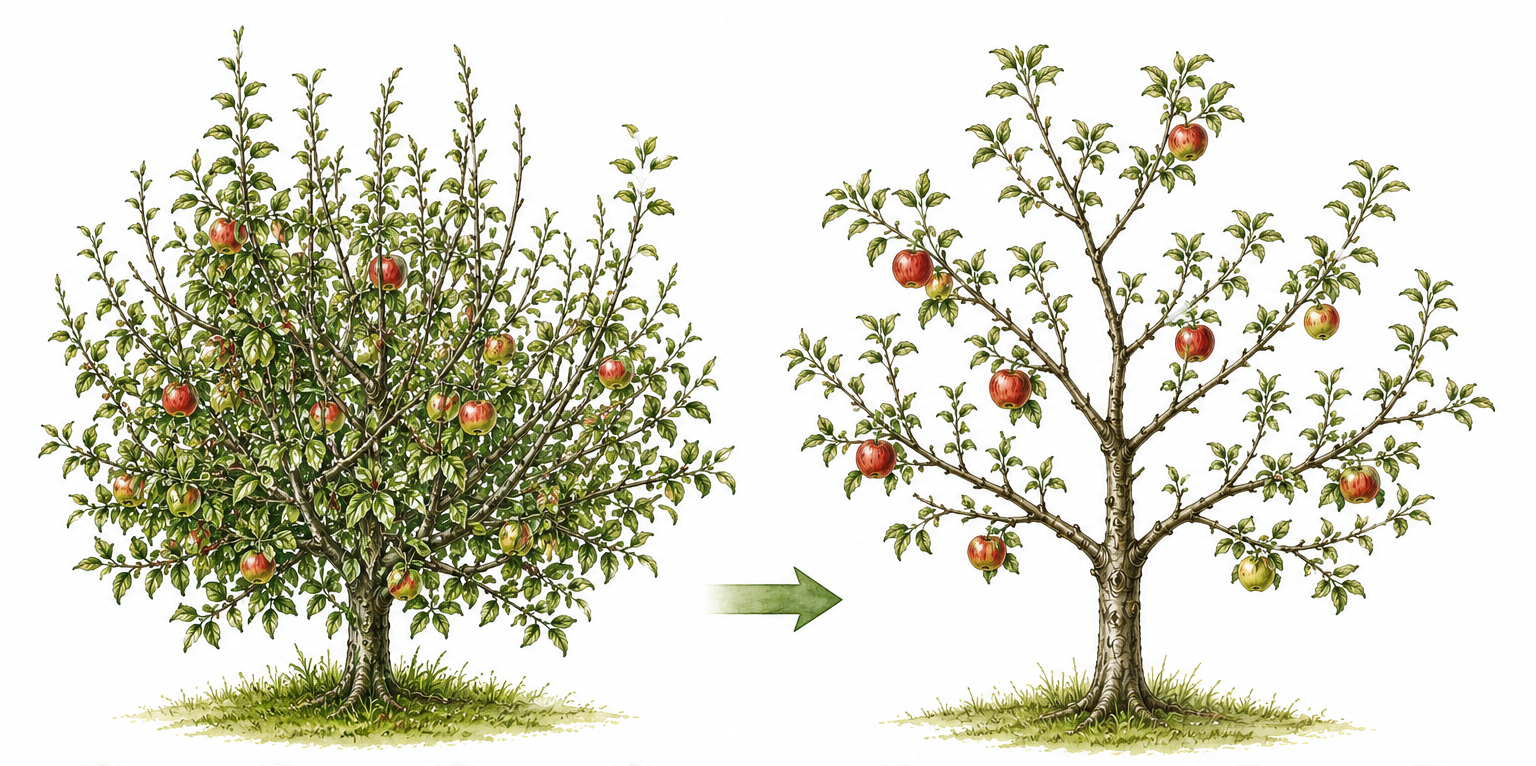
Pruning Apple Trees: Timing, Techniques, and Common Mistakes
Learn when and how to prune apple trees properly, including winter pruning, summer pruning, training cuts, and maintenance tips for healthy, productive…
Guide
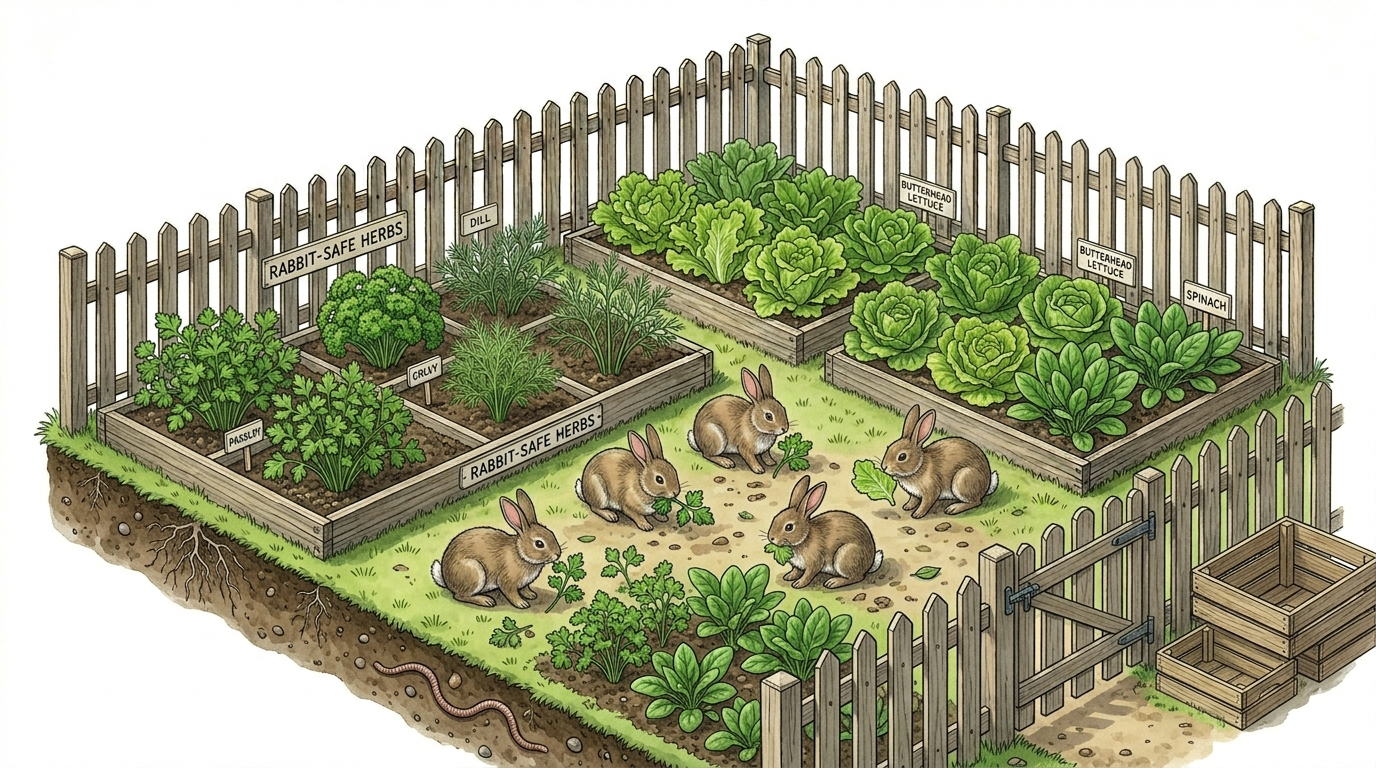
Rabbits in the Garden: Herbs and Vegetables
Learn how to choose suitable herbs and vegetables for rabbits, grow feeding plants, and plan a rabbit-friendly garden.
Guide
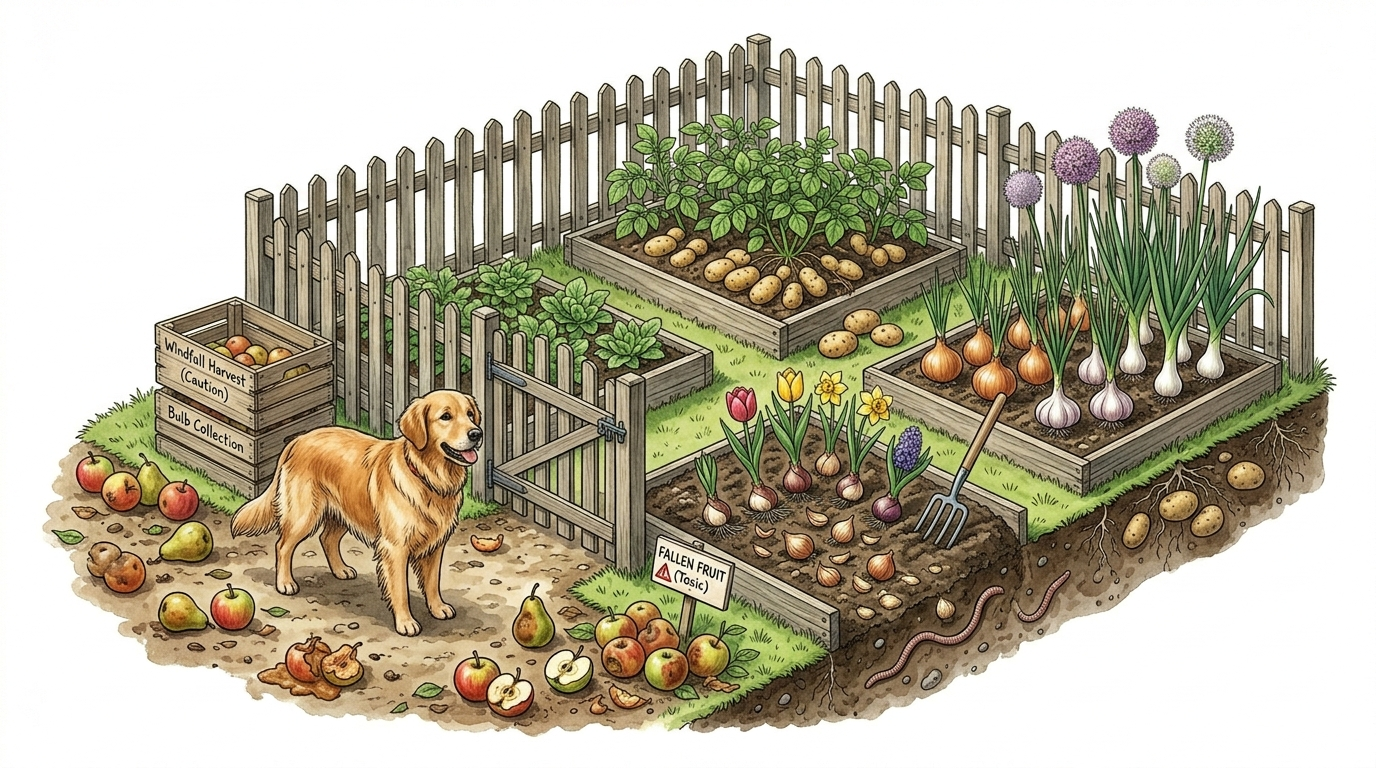
Dogs in the Garden: Windfall Fruit and Risks
Keep your garden dog-safe by managing windfall fruit, seeds, stored crops, and potentially problematic plant parts.
Guide
Horse Pastures and Garden Plants: Safety Checks
Learn how to identify risks near horse pastures, fences, turnout areas, fruit trees, and garden planting zones.
Internal links
Related plants
Peach
Both belong to the genus Prunus and the Rose family (Rosaceae).
Both are stone fruits with similar cultivation and care requirements.
European Plum
Belongs to the same family and shares some diseases and pests.
Shares some diseases and pests, but less sensitive to frost.
Cherry
Belongs to the same family, but with different care requirements and harvest times.
Related stone fruit, but with different harvest times and care requirements.
Brown rot (fruit rot)
Brown rot affects apricots as well as other stone fruits like cherries and plums.
Bacterial canker
Bacterial canker can affect apricots and related stone fruits.
Sources
Public sources
- Wikidata entity
Wikidata · 2026-05-11
- GBIF species match
GBIF · 2026-05-11
- Deutschsprachige Wikipedia: Aprikose
Wikipedia · 2026-05-11
- English Wikipedia: Prunus armeniaca
Wikipedia · 2026-05-11