Plant Profile
Allium ramosumAllium ramosum
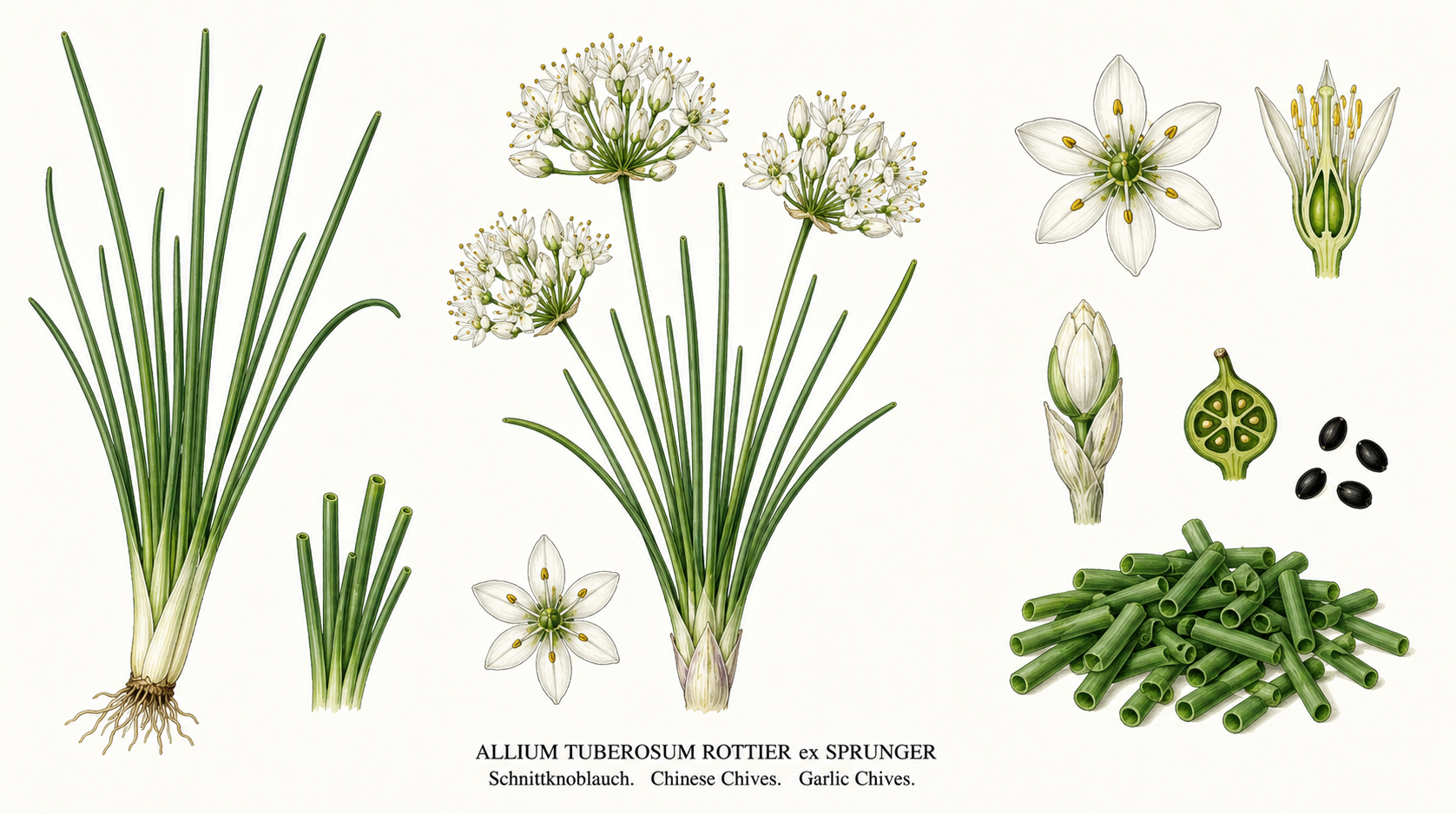
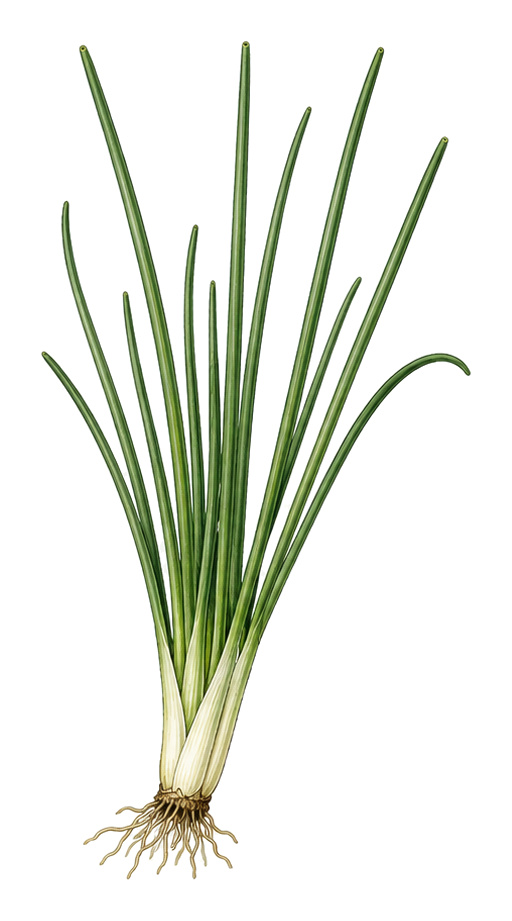
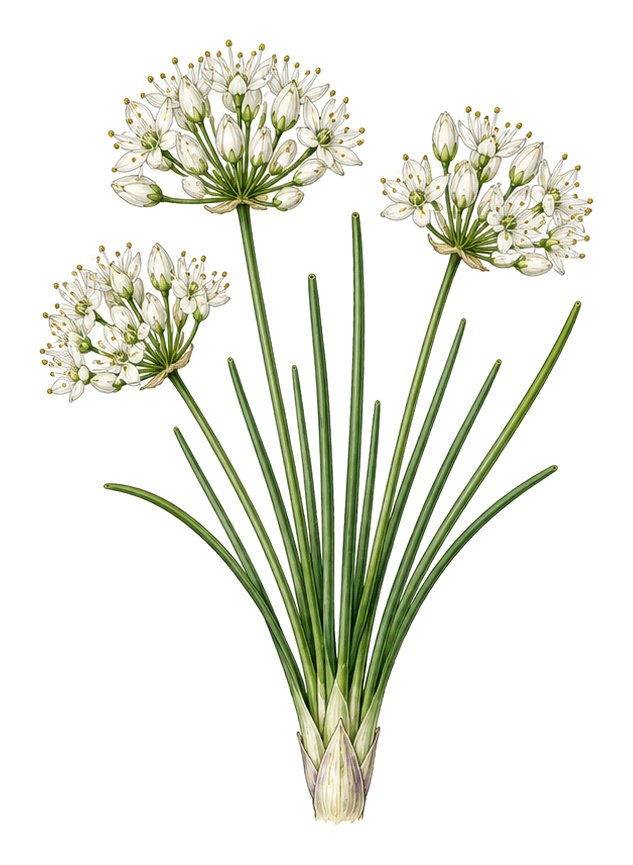
Cut-leaf garlic (Allium ramosum) is a perennial herbaceous plant characterized by its mild garlic aroma. Both the leaves and the star-shaped flowers are edible and enhance salads, soups, and warm dishes. The plant is easy to care for, vigorous, and well-suited for cultivation in gardens and on balconies. Regular sowing ensures a continuous harvest throughout the entire season.
Quick profile
Key data
Suitable growing locations:
Good neighbors
StrawberryCarrotLettuceCucumber
Avoid
BeanPea
Indoor & direct sowing
Allium ramosum: Sowing and germination
Not recommended for indoor sowing.
Direct sowing is possible once the soil has warmed. Multiple sowings for continuous harvest.
Planting & site
Allium ramosum: Planting and spacing
Sown directly from seed outdoors.
Site & practical notes
Cut-leaf garlic is a very rewarding plant for the garden and balcony. Sowing is simple and can be done multiple times a year to ensure continuous harvest. Ensure consistent moisture, but avoid waterlogging. Harvesting the leaves stimulates further growth. The edible flowers are an attractive feature and a culinary enhancement.
Temperature & frost
Allium ramosum: Temperature and site
Water & nutrients
Allium ramosum: Water, nutrients and care
Container & growth
Allium ramosum: Container, support and growth
Year plan
Allium ramosum Calendar
From spring to autumn, you can continuously harvest fresh leaves and even decorative flowers in summer.
Recurring tasks
Relevant now
June
- No additional single task
Next up
July
- No additional single task
Monthly tasks
Single tasks from monthly data; repeated seasonal windows are shown in the overview above.
January
Quiet month
February
Quiet month
March
Direct sowing
- Sow seeds outdoorsSoil workable and warming.: As soon as the soil is warm and workable.
April
Harvest
- Harvest leavesPlants established.: Start harvesting once leaves have reached a good size.
May
No additional single task
June
No additional single task
August
No additional single task
September
Harvest
- Sow seeds outdoors for a late harvestEarly September: The last sowing for a harvest before winter.
October
Harvest
- Harvest leavesPlants still growing.: Harvest as long as leaves are fresh and edible. Frost may end the harvest.
November
Quiet month
December
Quiet month
Flowering & pollination
Allium ramosum Flowering & pollination
Self-fertility
self-fertile
Pollinator needed
no
Overview
Allium ramosum is self-pollinating but benefits from insect pollination for better seed set.
Notes
Bees and other insects visit the flowers and can aid in pollination.
Companion guide
Allium ramosum Companion guide
Good neighbors
StrawberryCarrotLettuceCucumberCabbage
Avoid
BeanPea
Use & storage
Allium ramosum Use & storage
Leaves can be harvested continuously. Flowers can also be used.
Storage
Store cool and dry to maintain freshness.
Storage life
Fresh: a few days in the refrigerator. Frozen: several months. Dried: up to 1 year.
Flavor
Mildly garlicky, fresh, slightly pungent.
Harvest
Leaves can be harvested continuously. Flowers can also be used.
Processing
After harvest
Use harvested leaves and flowers immediately or store them cool. Sort out damaged leaves.
Edibility & safety
Allium ramosum Edibility & safety
For people
In brief: which parts are edible, which parts remain risky, and whether raw consumption makes sense.
Safety notes
No known toxicity with normal consumption. As with all Allium species, digestive upset may occur in sensitive individuals.
Animal safety
For animals, the specific plant part matters here: some parts may be suitable, while others should be avoided. At least one critical rating is listed for 1 animal types.
Each row shows which parts are more suitable and which parts are critical.
Companion animals
 Dog
DogLeaves, Flowers
No risk parts listed
Leaves, Flowers
No risk parts listed
Sensitivity to Allium compounds, Excessive consumption
Gastrointestinal upset
observe
Leaves and flowers of Allium ramosum are edible for dogs in small amounts but may cause gastrointestinal upset in sensitive animals. No known severe toxicity.
Open animal page Cat
CatNo suitable parts listed
Leaves, Flowers, Bulbs
No suitable parts listed
Leaves, Flowers, Bulbs
Sensitivity to Allium compounds, Excessive consumption, Small body mass
Vomiting, Diarrhea, Gastrointestinal upset
emergency vet immediately
Schnittknoblauch (Allium ramosum) contains sulfur compounds that can cause gastrointestinal upset in cats. While no cat-specific sources are available, toxicity is known in Allium species for both dogs and cats. The bulbs and tubers are particularly problematic and can lead to hemolytic anemia in cats. Caution is advised, especially with repeated ingestion or larger amounts.
Open animal page Rabbit
Leaves, Flowers
Bulbs, Stems
Leaves, Flowers
Bulbs, Stems
Sensitivity to sulfur compounds, Excessive consumption
Gastrointestinal upset, Bloating, Diarrhea
observe
Leaves and flowers of Schnittknoblauch can be offered to rabbits in small amounts as a treat, but sensitive individuals may experience gastrointestinal upset due to sulfur compounds. Other plant parts (bulb, stem) should be avoided as they may contain higher concentrations of potentially irritating compounds.
Open animal page Guinea pig
Leaves, Flowers
Bulbs
Leaves, Flowers
Bulbs
Sensitivity to Allium compounds, Excessive consumption
Gastrointestinal upset, Diarrhea
contact a vet if symptoms appear
Leaves and flowers of Schnittknoblauch may be suitable as an occasional treat for guinea pigs in small amounts, but there is a risk of gastrointestinal upset due to disulfide and thiosulfate compounds, especially in sensitive animals or with overconsumption. No species-specific toxicity studies are available, but a conservative classification is made based on general Allium properties and similar reactions in other…
Open animal page Hamster
Leaves, Flowers
Bulbs
Leaves, Flowers
Bulbs
Sensitivity to Allium compounds, Excessive consumption
Gastrointestinal upset, Diarrhea
contact a vet if symptoms appear
No direct species-specific source was found for hamsters. This is a cautious inference from the guinea pigs profile and the known plant-part risks.
Open animal page Budgie
Leaves, Flowers
Bulbs
Leaves, Flowers
Bulbs
Sensitivity to Allium compounds, Excessive consumption
Gastrointestinal upset (with excessive consumption)
observe
Leaves and flowers of Allium ramosum can be offered as an occasional treat in small amounts, but there is a low risk of gastrointestinal upset in sensitive budgies. Other plant parts (bulbs) should be avoided.
Open animal pageFarm animals
 Horse
HorseLeaves, Flowers
Bulbs, Tubers
Leaves, Flowers
Bulbs, Tubers
Sensitive animals, Overconsumption
Gastrointestinal upset, Diarrhea
observe
Leaves and flowers are edible and can be fed in moderation. As with all Allium species, digestive upset may occur in sensitive horses. No evidence of hemolytic anemia as seen with onion or garlic.
Open animal page Chicken
Leaves, Flowers
Bulbs, Tubers
Leaves, Flowers
Bulbs, Tubers
Sensitivity to Allium compounds, Excessive consumption
Gastrointestinal upset (with excessive consumption)
observe
Leaves and flowers of Allium ramosum are edible for chickens in small amounts and are occasionally consumed as a treat. Due to sulfur compound content, excessive consumption may lead to gastrointestinal upset. Bulbs and tubers are not recommended as they may contain higher concentrations of potentially irritating compounds.
Open animal page Duck
DuckLeaves, Flowers
Bulbs, Tubers
Leaves, Flowers
Bulbs, Tubers
Sensitivity to sulfur compounds, Excessive consumption
Gastrointestinal upset (with excessive consumption)
observe
Leaves and flowers of Allium ramosum are edible for ducks in moderation and are occasionally consumed as a treat. As with all Allium species, sensitive individuals may experience gastrointestinal upset, particularly with excessive consumption. No evidence of severe toxicity in ducks, but caution is advised due to sulfur compound content.
Open animal page Goose
GooseLeaves, Flowers
Bulbs, Tubers
Leaves, Flowers
Bulbs, Tubers
Sensitivity to sulfur compounds, Excessive consumption
Gastrointestinal upset (with excessive consumption)
observe
No direct species-specific source was found for geese. This is a cautious inference from the ducks profile and the known plant-part risks.
Open animal page Sheep
SheepLeaves, Flowers
Bulbs, Tubers
Leaves, Flowers
Bulbs, Tubers
Sensitive animals, Excessive consumption
Gastrointestinal upset (with excessive consumption)
observe
Leaves and flowers of Allium ramosum are edible for sheep in small amounts, but contain sulfur compounds that may cause gastrointestinal upset if consumed excessively. No evidence of severe toxicity in sheep, but caution is warranted due to its Allium nature.
Open animal page Goat
GoatLeaves, Flowers
Bulbs, Tubers
Leaves, Flowers
Bulbs, Tubers
Overconsumption, Individual sensitivity
Gastrointestinal upset (with excessive consumption)
observe
Allium ramosum is generally safe in moderation but may cause gastrointestinal upset in sensitive goats or with excessive consumption. Leaves and flowers should be offered as treats in small quantities.
Open animal page Cattle
Leaves, Flowers
Bulbs, Tubers
Leaves, Flowers
Bulbs, Tubers
Sensitive animals, Excessive consumption
Gastrointestinal upset (with excessive consumption)
observe
Leaves and flowers are edible and can be fed in small amounts, but sensitive animals may experience gastrointestinal upset due to thiosulfates and disulfides, which are typical of Allium species. Overconsumption should be avoided.
Open animal page Pig
PigLeaves, Flowers
Bulbs, Tubers
Leaves, Flowers
Bulbs, Tubers
Sensitivity to sulfur compounds, Overconsumption
Gastrointestinal upset (with excessive consumption)
contact a vet if symptoms appear
Leaves and flowers are edible in moderation, bulbs and tubers contain Allium-typical disulfides that can cause gastrointestinal irritation in pigs. Not suitable as primary feed.
Open animal pageThese guidelines are for general information only and do not replace veterinary diagnosis. If critical plant parts were ingested or the animal shows unusual behaviour or symptoms, seek veterinary advice.
Max risk
unknown
Highest status
do not feed
Urgency
emergency vet immediately
Saving seed
Allium ramosum Saving seed
Seed viability
2 - 3 years
Notes
Cross-pollination with other Allium species can occur. Ensure isolation for pure varieties.
Practical tips
Allium ramosum Practical tips
Common beginner mistakes
Success pattern
High-impact tips
Grower observations
Plant Profile
Additional plant images
Health
Pests, Diseases
Pests
Onion fly
The larvae of the onion fly (Delia antiqua) bore into the bulbs and roots, causing stunted growth and rot. Adult flies lay eggs near the soil.
Thrips
Small, slender insects that feed on plant sap. They cause silvery speckles and distortions on leaves and flowers.
Aphids
Small, sap-sucking insects that colonize young shoots and leaves. They extract plant sap and can transmit viruses.
Diseases
Downy mildew
Fungal disease that spreads in humid weather. Causes yellowish spots on the upper leaf surface and a grayish-brown to purplish sporulation on the underside.
Rust
Fungal disease characterized by small, pustule-like spots on leaves and stems. The pustules contain spores that are red, brown, or orange depending on the species.
Deficiencies
Nitrogen deficiency
Leads to general growth inhibition and a paling of the leaves, often starting from older leaves and progressing upwards.
Potassium deficiency
Can lead to poorer water regulation and increased susceptibility to diseases. Leaf margins may turn yellowish and die back.
Plant health
Diagnosis help
Allium ramosum Diagnosis help
Pest groups
Disease groups
Fungal diseases (Downy mildew, Rust)
Prevention
Diagnosis
Symptoms like yellowing leaves can indicate nutrient deficiency (nitrogen) or diseases (downy mildew). Look for specific patterns and accompanying signs such as sporulation or pests.
Cultural prevention
Monitoring
First response
Diagnostic rules
Yellowish spots on the upper leaf surface, grayish-brown to purplish coating on the underside.
Possible causes: Downy mildew
- Check humidity
- Assess temperature and ventilation
- Examine leaf underside for spores
Small, raised pustules (red, brown, orange) on leaves and stems.
Possible causes: Rust
- Check plants for general vitality
- Assess environmental conditions (humidity, ventilation)
- Isolate affected plant parts
Wilting plants, yellowing leaves, visible larvae in the soil.
Possible causes: Onion fly
- Search soil for larvae
- Examine root area
- Check row covers
FAQ
When is the best time to sow cut-leaf garlic?
The best time for direct sowing outdoors is once the soil has warmed, typically from April to September. Multiple sowings a few weeks apart allow for continuous harvest.
Can cut-leaf garlic also be grown on a balcony?
Yes, cut-leaf garlic is very well-suited for growing in pots and balcony boxes. Ensure adequate drainage and regular watering.
How do you harvest cut-leaf garlic?
The leaves can be harvested continuously once they reach a usable length. Cut the outer leaves or trim the entire clump about 5-10 cm above the ground. The flowers are also edible and can be harvested.
What diseases or pests can affect cut-leaf garlic?
Common problems include onion flies, thrips, and aphids. Fungal diseases like downy mildew or rust can occur in damp weather. Prevention through good cultural practices is important.
Is Allium ramosum safe for Dog?
Allium ramosum is classified as moderation only for Dog. Risk: unknown. Urgency: observe. Leaves and flowers of Allium ramosum are edible for dogs in small amounts but may cause gastrointestinal upset in sensitive animals. No known severe toxicity.
Is Allium ramosum safe for Cat?
Allium ramosum is classified as do not feed for Cat. Risk: unknown. Urgency: emergency vet immediately. Schnittknoblauch (Allium ramosum) contains sulfur compounds that can cause gastrointestinal upset in cats. While no cat-specific sources are available, toxicity is known in Allium species for both dogs and cats. The bulbs and tubers are particularly problematic and can lead to hemolytic anemia in cats. Caution is advised, especially with repeated ingestion or larger amounts.
Is Allium ramosum safe for Rabbit?
Allium ramosum is classified as moderation only for Rabbit. Risk: unknown. Urgency: observe. Leaves and flowers of Schnittknoblauch can be offered to rabbits in small amounts as a treat, but sensitive individuals may experience gastrointestinal upset due to sulfur compounds. Other plant parts (bulb, stem) should be avoided as they may contain higher concentrations of potentially irritating compounds.
Is Allium ramosum safe for Guinea pig?
Allium ramosum is classified as moderation only for Guinea pig. Risk: unknown. Urgency: contact a vet if symptoms appear. Leaves and flowers of Schnittknoblauch may be suitable as an occasional treat for guinea pigs in small amounts, but there is a risk of gastrointestinal upset due to disulfide and thiosulfate compounds, especially in sensitive animals or with overconsumption. No species-specific toxicity studies are available, but a conservative classification is made based on general Allium properties and similar reactions in other…
Guides
Related guides
Guide
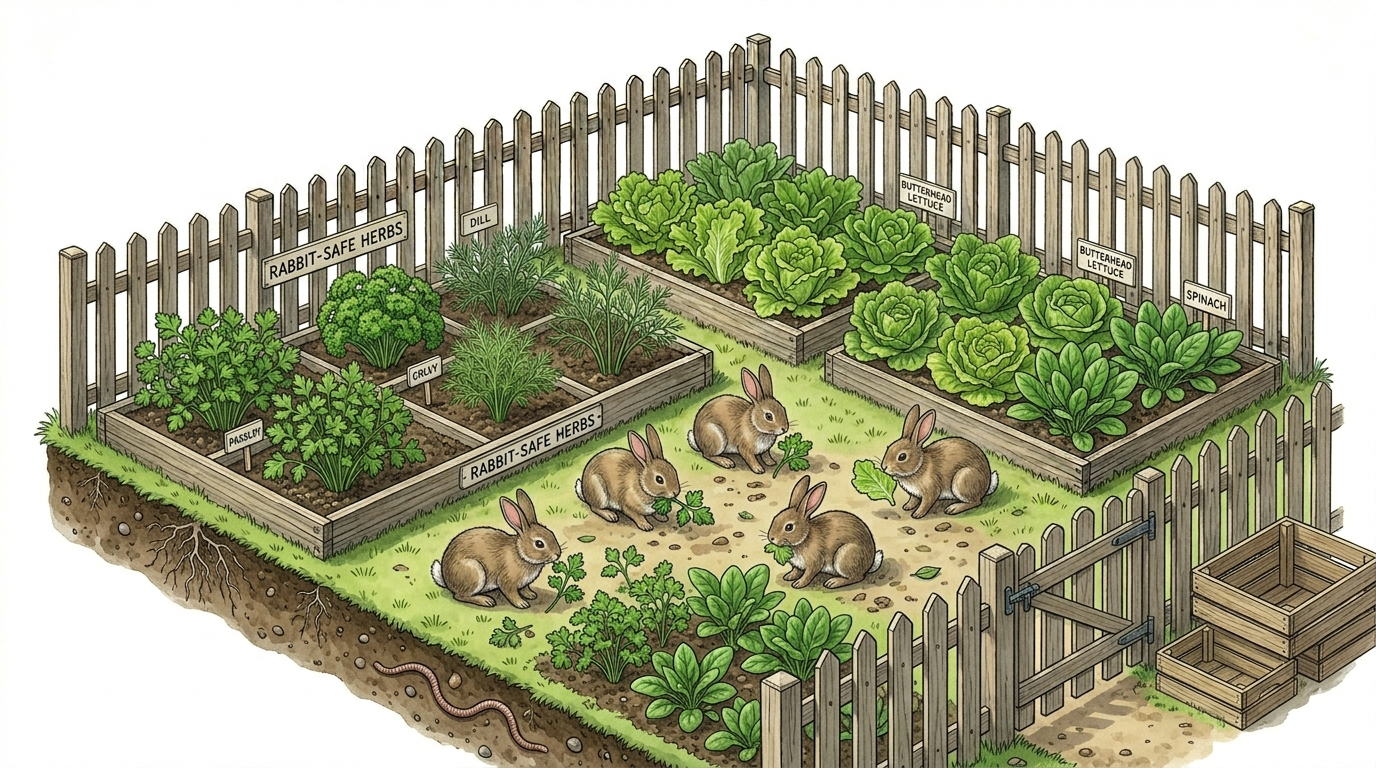
Rabbits in the Garden: Herbs and Vegetables
Learn how to choose suitable herbs and vegetables for rabbits, grow feeding plants, and plan a rabbit-friendly garden.
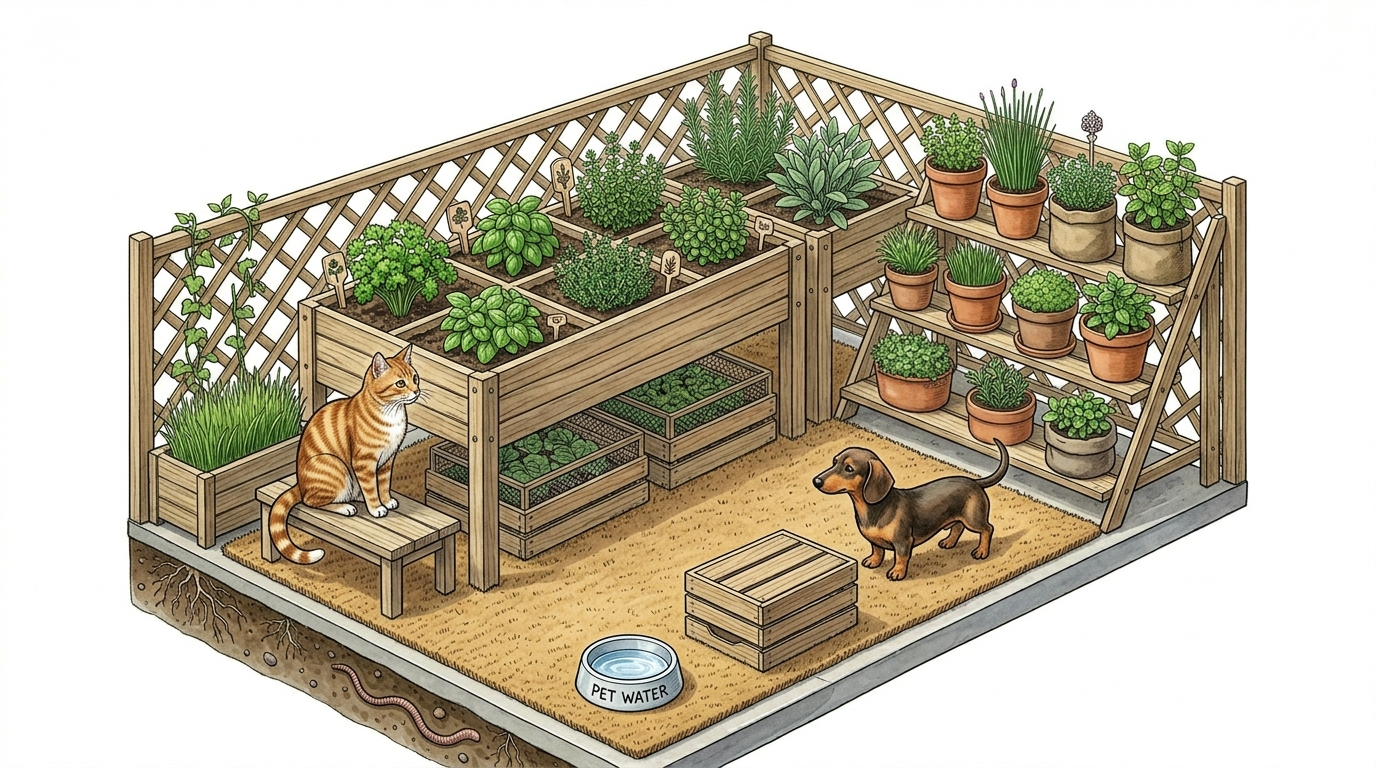
Guide
Pet-Safe Herb Gardens for Balconies and Beds
Learn how to create a pet-safe herb garden with suitable herbs, thoughtful layouts, and practical maintenance strategies.
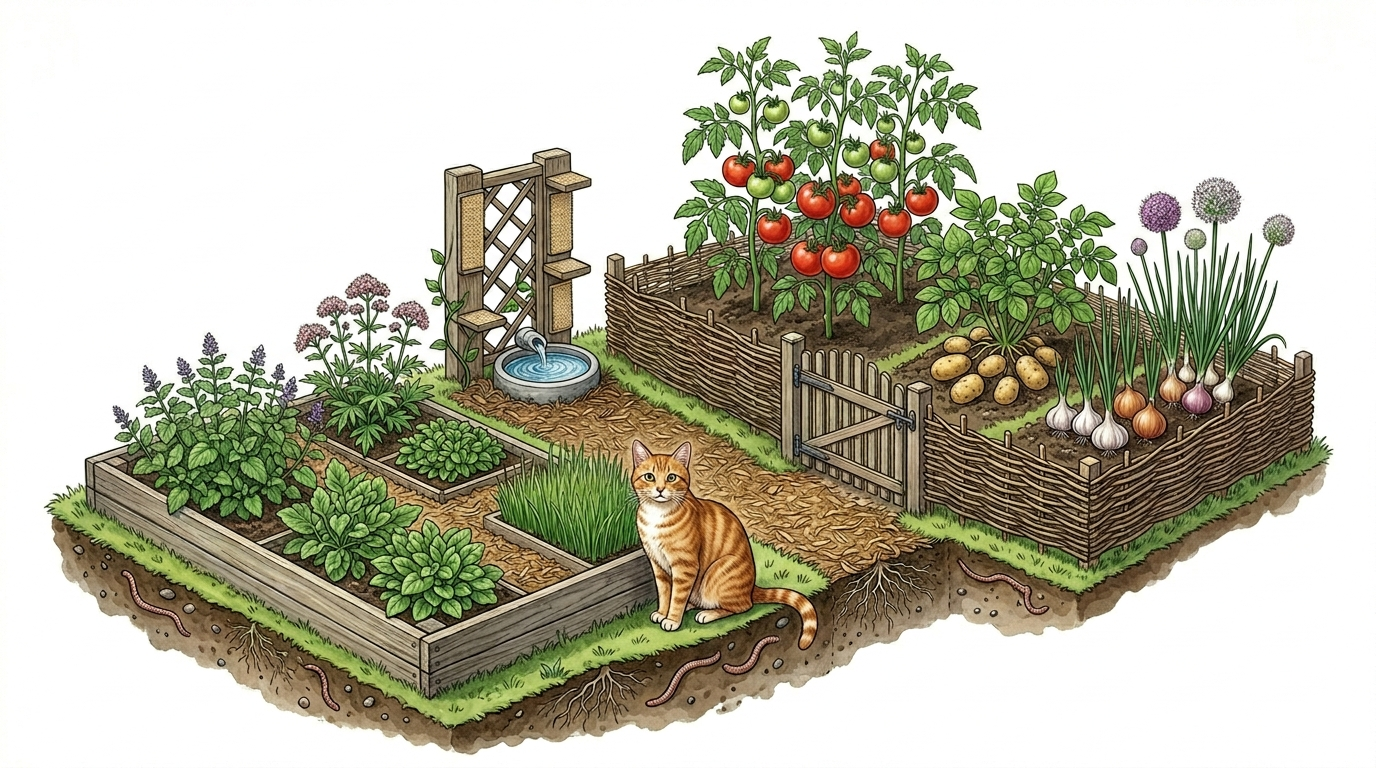
Guide
Toxic Garden Plants for Cats: Safer Planning
Learn which garden plants can be risky for cats, how to plan safer beds, and what to do if a cat eats a toxic plant.
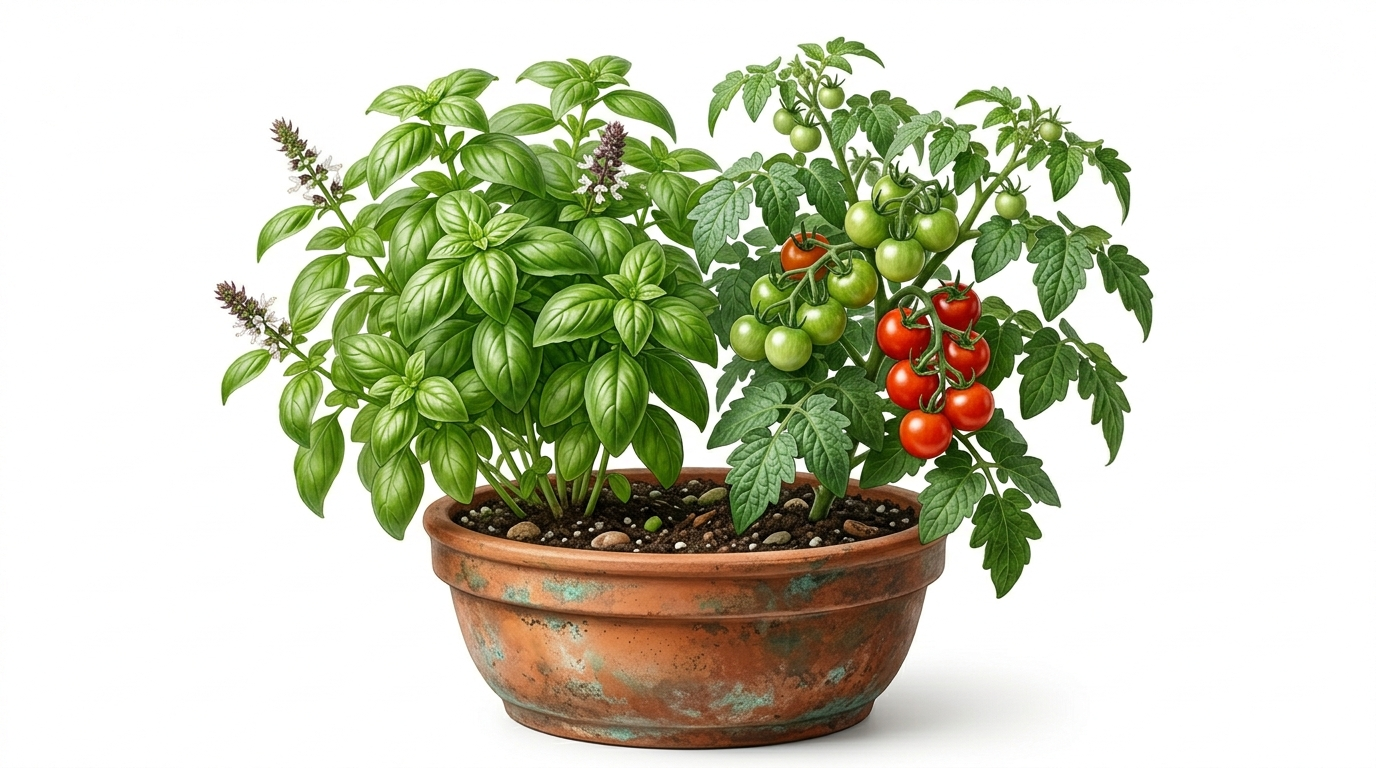
Guide
Growing Basil: Site, Watering and Harvesting
Learn how to grow basil successfully with the right site, steady watering, regular harvesting, and tips to delay flowering.
Internal links
Related plants
Amaryllis family
Belongs to the Amaryllis family.
Aromatic herbs
Primarily cultivated for its aroma and flavor.
Vegetables
Requires moderate nutrients, similar to many leafy vegetables.
Leafy greens
Requires consistent moisture for optimal leaf growth.
Onion
Belongs to the same family (Amaryllidaceae) and genus (Allium).
Leek
Belongs to the same genus (Allium) and has similar culinary applications.
Amaryllis
Both belong to the Amaryllis family (Amaryllidaceae).
Daffodil
Both belong to the Amaryllis family (Amaryllidaceae).
Sources
Public sources
- Wikidata entity
Wikidata · 2026-05-15
- GBIF species match
GBIF · 2026-05-15
- Deutschsprachige Wikipedia: Duft-Lauch
Wikipedia · 2026-05-15
- English Wikipedia: Allium ramosum
Wikipedia · 2026-05-15