Deficiencies
Nitrogen deficiency
Plants:83
Topics:84
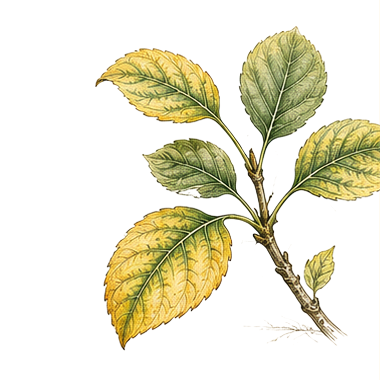
Leaves turn pale green to yellow, growth is stunted. Visible especially on older leaves. Yellowing leaves
Open guideDiagnosis
8 topics with symptoms, affected plants, prevention, and organic actions. Examples: Nitrogen deficiency, Potassium deficiency, Magnesium deficiency, Iron…
Overview
Nutrient deficiencies usually show through leaf color, growth, flowering, and fruit development. Yellow leaves do not always mean nitrogen deficiency: pH, waterlogging, drought stress, cold soil, or damaged roots can also block nutrients. Always check site and care before fertilizing.
Deficiencies
Leaves turn pale green to yellow, growth is stunted. Visible especially on older leaves. Yellowing leaves
Open guideDeficiencies
Stunted growth Lack of potassium, important for water balance and fruit development.
Open guideDeficiencies
Yellowing (chlorosis) between the leaf veins Magnesium is a central component of chlorophyll. Deficiency leads to reduced photosynthetic performance.
Open guideDeficiencies
Yellowing of leaves, especially younger ones, while the veins remain green. Caused by iron deficiency in the soil or poor availability. Chlorosis of younger leaves, where leaf veins remain green while the tissue between them turns yellow. Often occurs with high pH or waterlogging
Open guideDeficiencies
A lack of calcium can lead to growth disorders and problems with fruit development. Lack of calcium, which can lead to physiological disorders such as bitter pit.
Open guideDeficiencies
Leaves turn dark green to bluish, growth is severely stunted. Visible especially in cool temperatures. Dark green to purplish discoloration of leaves
Open guideDeficiencies
Stunted growth Hyssop is a light feeder, but in very poor soils or with long-term cultivation without nutrient replenishment, deficiencies can occur, often manifesting as general yellowing and weak growth.
Open guide