Plant Profile
MedlarMespilus germanica
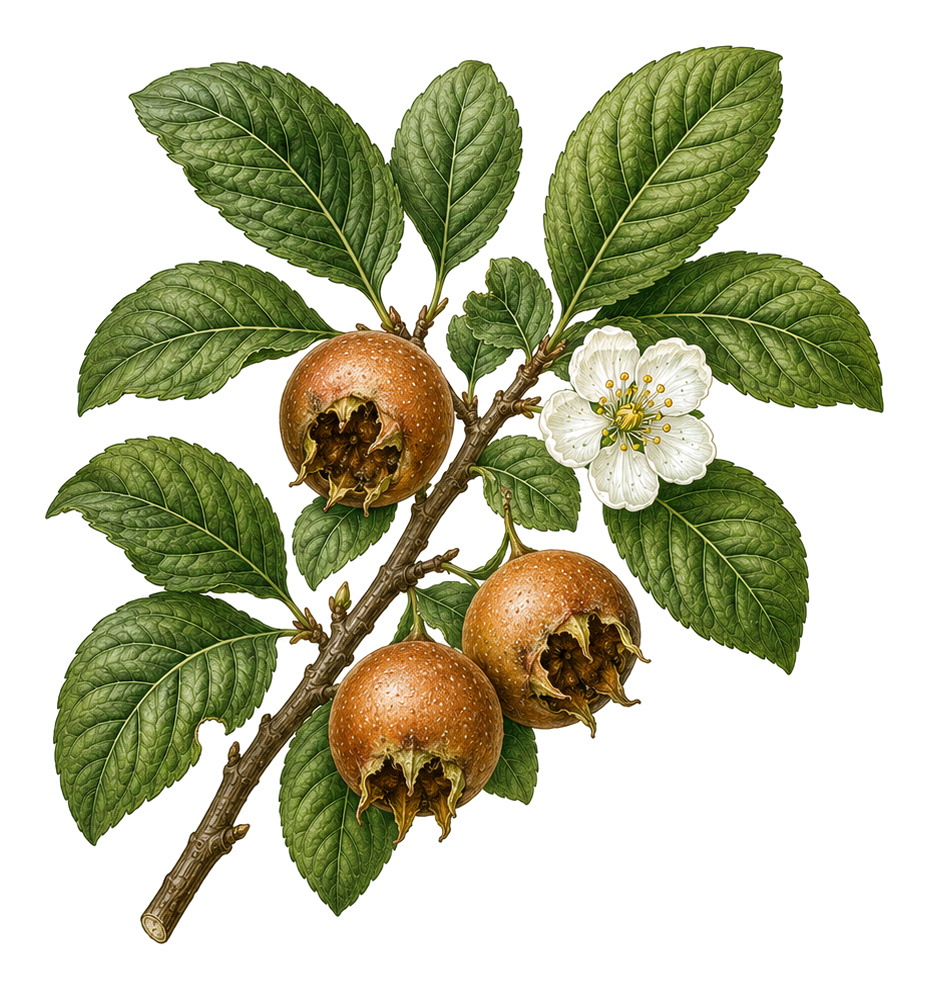
The medlar (Mespilus germanica) is a fascinating fruit tree known for its unique fruits, which only become edible after the first frost. It is robust, undemanding, and an asset to any nature-oriented garden.
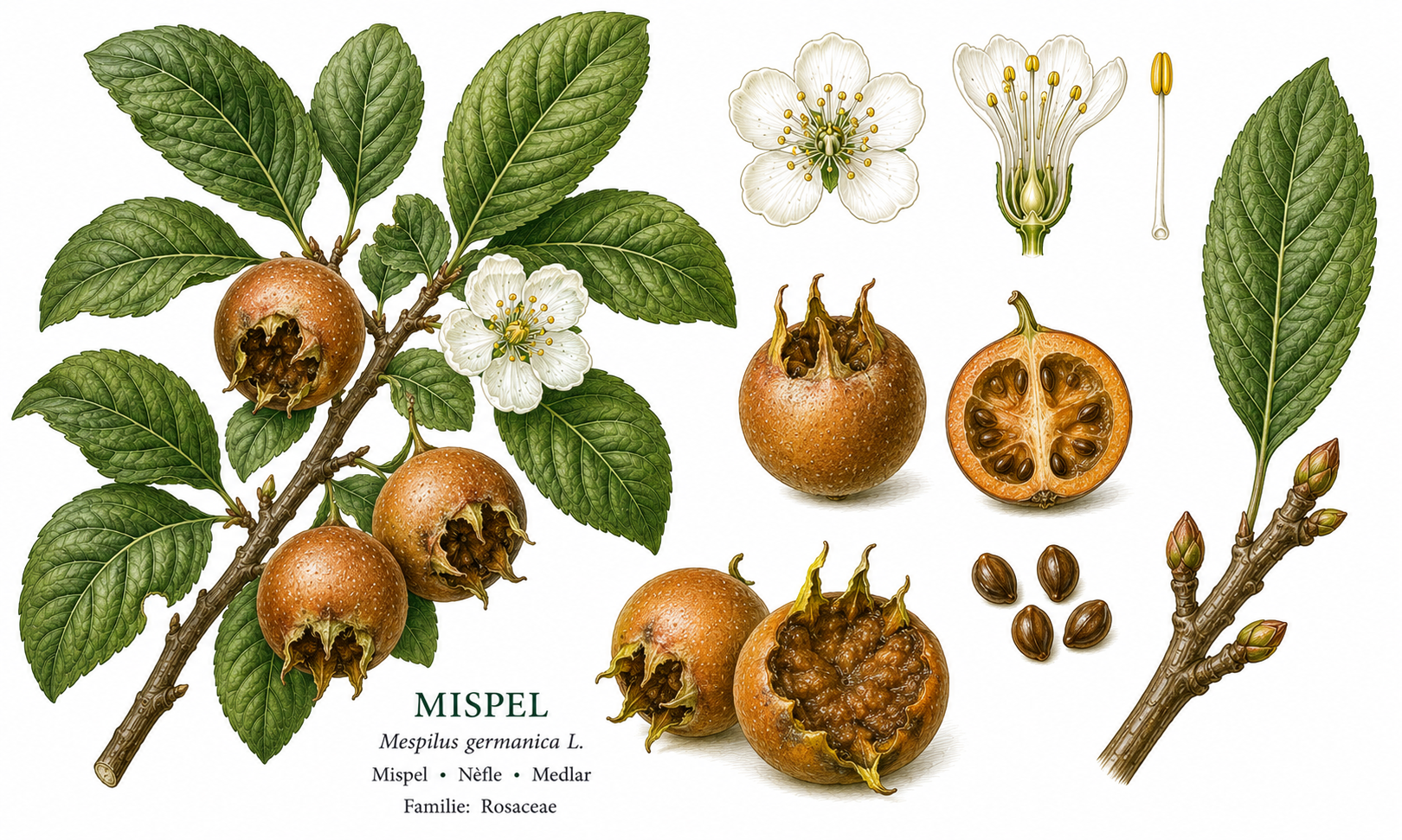
Quick profile
Key data
Suitable growing locations:
Good neighbors
ComfreyDaffodilsChivesMarigolds
Avoid
No data
Indoor & direct sowing
Medlar: Sowing and germination
Medlar is generally not sown indoors. Seeds require cold stratification.
Seeds require cold stratification. Direct sowing in autumn allows for natural stratification. Sow in spring after artificial stratification.
Planting & site
Medlar: Planting and spacing
Young trees (often grafted) are planted in autumn or early spring before bud break.
Site & practical notes
Temperature & frost
Medlar: Temperature and site
Water & nutrients
Medlar: Water, nutrients and care
Container & growth
Medlar: Container, support and growth
Year plan
Medlar Calendar
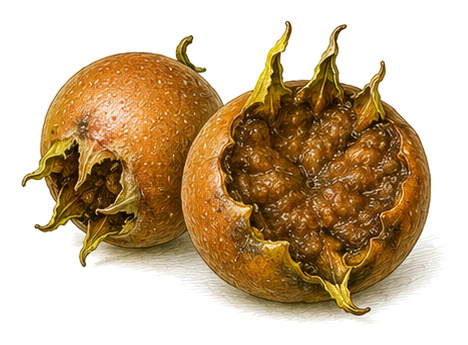
Fruits are harvested only after the first frost and require post-ripening (bletting).
Recurring tasks
Relevant now
June
- Thinning pruning (if necessary)Bei zu dichter Krone: If necessary, remove some branches to thin out the crown and improve air circulation.
Next up
July
- No additional single task
Monthly tasks
Single tasks from monthly data; repeated seasonal windows are shown in the overview above.
January
Quiet month
February
Quiet month
March
No additional single task
April
No additional single task
May
Quiet month
June
Pruning
- Thinning pruning (if necessary)Bei zu dichter Krone: If necessary, remove some branches to thin out the crown and improve air circulation.
August
Quiet month
September
Harvest
- Prepare for harvestFrüchte beginnen sich zu verfärben: Regularly check fruits for ripeness and await the first frost.
October
No additional single task
November
No additional single task
December
Quiet month
Flowering & pollination
Medlar Flowering & pollination
Self-fertility
self-fertile
Pollinator needed
no
Overview
The medlar is predominantly self-fertile but benefits from cross-pollination by insects for better fruit set and larger fruits.
Notes
Bees, bumblebees, and other insects visit the flowers. Good insect pollination can improve yield and quality.
Pruning & care
Medlar Pruning & care
Pruning type
renewal_pruning_and_formative_pruning
Notes
Medlar responds well to pruning. Annual pruning keeps the tree healthy and promotes yield. The best time is late winter or early spring before bud break.
Pruning timing
Main pruning time for training and thinning Before bud break, when the harshest frosts have passed. Allows for good wound healing and encourages new growth.
Removal of water sprouts and thinning Only if necessary, to keep the crown airy and support fruit development. Prevents excessive shoot growth.
Remove
Preserve
Avoid
Tools and hygiene
Use sharp and clean tools. Disinfect tools after each cut or when cutting through diseased wood (e.g., with alcohol).
Companion guide
Medlar Companion guide
Good neighbors
ComfreyDaffodilsChivesMarigoldsClover
Avoid
No data
Use & storage
Medlar Use & storage
Fruits are harvested after the first frost, when they soften (bletting).
Storage
Cool and dark, after bletting
Storage life
A few weeks after bletting at cool temperatures (approx. 0-4°C).
Harvest
Fruits are harvested after the first frost, when they soften (bletting).
Processing
After harvest
Fruits require post-ripening (bletting). They can continue to ripen at room temperature after harvest or be stored in the refrigerator until soft. Handle gently as they are delicate.
Notes
Fruits are only storable after bletting and should then be stored cool and dark.
Edibility & safety
Medlar Edibility & safety
For people
In brief: which parts are edible, which parts remain risky, and whether raw consumption makes sense.
Safety notes
The seeds are slightly toxic and should not be eaten. The fruit is safe after bletting.
Animal safety
For many animals, this plant is generally low-risk: 14 animal types are rated suitable or mostly suitable. Quantity, plant part, and individual tolerance still matter.
Each row shows which parts are more suitable and which parts are critical.
Companion animals
 Dog
DogFruit (after bletting)
Seeds
Fruit (after bletting)
Seeds
Consumption of unripe fruit, Consumption of seeds
Vomiting, Diarrhea, Gastrointestinal upset
observe
The fruit of the medlar is suitable for dogs in small amounts as a treat after bletting. The seeds contain cyanogenic glycosides and should be avoided. Consumption of large amounts or seeds may cause gastrointestinal upset.
Open animal page Cat
CatFruit (after bletting)
Seeds
Fruit (after bletting)
Seeds
Consumption of unripe or unbletted fruit, Consumption of seeds
Vomiting, Diarrhea, Gastrointestinal upset
observe
The fruit of the medlar is safe for cats in small amounts as a treat after bletting. The seeds contain cyanogenic glycosides and should be avoided. Consumption of seeds or large amounts may cause gastrointestinal upset. Consult a veterinarian if symptoms occur.
Open animal page Rabbit
Fruit (after bletting)
Seeds
Fruit (after bletting)
Seeds
Consumption of unripe fruit, Consumption of seeds
Gastrointestinal upset, Diarrhea
contact a vet if symptoms appear
The fruit of the medlar is suitable for rabbits in small amounts as a treat after bletting. The seeds contain cyanogenic glycosides and should be avoided. Overconsumption may cause gastrointestinal upset.
Open animal page Guinea pig
Fruit (after bletting)
Seeds
Fruit (after bletting)
Seeds
Consumption of unripe fruit, Consumption of seeds
Gastrointestinal upset, Diarrhea
contact a vet if symptoms appear
The fruit of the medlar is suitable for guinea pigs in small amounts as a treat after bletting. The seeds contain cyanogenic glycosides and should be avoided. Overconsumption may cause gastrointestinal upset.
Open animal page Hamster
Fruit (after bletting)
Seeds
Fruit (after bletting)
Seeds
Consumption of seeds, Unripe fruit
Gastrointestinal upset, Diarrhea
contact a vet if symptoms appear
The fruit of the medlar is suitable for hamsters in small amounts as a treat after bletting. The seeds contain cyanogenic glycosides and should be avoided. Consumption of seeds or unripe fruit may cause gastrointestinal upset.
Open animal page Budgie
Fruit (after bletting)
Seeds
Fruit (after bletting)
Seeds
Consumption of seeds, Unripe fruit
Gastrointestinal upset, Vomiting
observe
The fruit of the medlar is suitable for budgies in small amounts as a treat after bletting. The seeds contain cyanogenic glycosides and should not be fed. Consumption of seeds may cause gastrointestinal upset. Consult a veterinarian if uncertain.
Open animal pageFarm animals
 Horse
HorseFruit (after bletting)
Seeds
Fruit (after bletting)
Seeds
Consumption of unripe fruit, Consumption of seeds
Gastrointestinal upset, Colic
observe
The fruit of the medlar is suitable for horses in small amounts as a treat after bletting. The seeds contain cyanogenic glycosides and should be avoided. Overconsumption may cause gastrointestinal upset.
Open animal page Chicken
Fruit (after bletting)
Seeds
Fruit (after bletting)
Seeds
Consumption of unripe or unbletted fruit, Chewing of seeds
Gastrointestinal upset, Vomiting, Diarrhea
observe
The fruit of the medlar tree is suitable for chickens in small amounts as a treat after bletting. The seeds contain cyanogenic glycosides and should not be fed. Ingestion of seeds may lead to mild poisoning symptoms. Monitoring is recommended. If symptoms persist, a veterinarian should be consulted.
Open animal page Duck
DuckFruit (after bletting)
Seeds
Fruit (after bletting)
Seeds
Consumption of unripe fruit, Consumption of seeds
Vomiting, Gastrointestinal upset
observe
The fruit of the medlar is suitable for ducks in small amounts as a treat after bletting. The seeds contain cyanogenic glycosides and should be avoided. Overconsumption may cause gastrointestinal upset.
Open animal page Goose
GooseFruit (after bletting)
Seeds
Fruit (after bletting)
Seeds
Consumption of unripe fruit, Consumption of seeds
Vomiting, Diarrhea, Abdominal pain
observe
The fruit of the medlar is suitable for geese in small amounts as a treat after bletting. The seeds contain cyanogenic glycosides and should be avoided. Overconsumption may cause gastrointestinal upset. No evidence of severe poisoning in poultry known.
Open animal page Sheep
SheepFruit (after bletting)
Seeds
Fruit (after bletting)
Seeds
Consumption of unripe or unbletted fruit, Consumption of seeds
Gastrointestinal upset, Diarrhea, Abdominal pain
contact a vet if symptoms appear
The fruit of the medlar tree is suitable for sheep in small amounts as a treat after bletting. The seeds contain cyanogenic glycosides and should not be consumed. Overconsumption may cause gastrointestinal upset.
Open animal page Goat
GoatFruit (after bletting)
Seeds, Leaves, Bark
Fruit (after bletting)
Seeds, Leaves, Bark
Consumption of unripe fruit, Consumption of seeds, Consumption of large amounts
Gastrointestinal upset, Diarrhea, Breathing difficulties
contact a vet if symptoms appear
The fruit of the medlar is edible after bletting and can be fed to goats in small amounts as a treat. Seeds, leaves, and bark contain cyanogenic glycosides and are toxic. Overfeeding may lead to gastrointestinal distress.
Open animal page Cattle
Fruit (after bletting)
Seeds
Fruit (after bletting)
Seeds
Consumption of seeds
Gastrointestinal upset
observe
The fruit of the medlar is suitable for cattle in small amounts as a treat after bletting. The seeds contain cyanogenic glycosides and should not be fed. Consumption of seeds may cause gastrointestinal upset. Poisoning is unlikely with normal feeding of the fruit pulp.
Open animal page Pig
PigFruit (after bletting)
Seeds
Fruit (after bletting)
Seeds
Consumption of unripe fruit, Consumption of seeds
Vomiting, Diarrhea, Abdominal pain
contact a vet if symptoms appear
The fruit of the medlar is edible after bletting and can be given to pigs as a treat. The seeds contain cyanogenic glycosides and should not be fed. Overconsumption of the fruit may cause gastrointestinal distress. No specific pig studies found, but based on the general toxicity of seeds and the edibility of fruit for humans and similar livestock, a conservative assessment is made.
Open animal pageThese guidelines are for general information only and do not replace veterinary diagnosis. If critical plant parts were ingested or the animal shows unusual behaviour or symptoms, seek veterinary advice.
Max risk
unknown
Highest status
moderation only
Urgency
contact a vet if symptoms appear
Saving seed
Medlar Saving seed
Seed saving
yes
Seed viability
2 - 4 years
Practical tips
Medlar Practical tips
Common beginner mistakes
Success pattern
High-impact tips
Grower observations
Plant Profile
Additional plant images
Health
Pests, Diseases
Plant health
Diagnosis help
Medlar Diagnosis help
Pest groups
Disease groups
Prevention
Diagnosis
Observe changes in leaves, shoots, and fruits. Compare symptoms with known disease patterns and consider weather conditions.
Cultural prevention
Monitoring
First response
Diagnostic rules
Wilting, black discolored blossoms and shoots
Possible causes: Fire blight, Monilia, Late frost damage
- Is there bacterial ooze?
- Are shoot tips shepherd's crook-shaped?
- Were there late frosts?
Yellow leaves with green veins
Possible causes: Iron deficiency
- Check soil pH
- Check soil for waterlogging
White, powdery coating on leaves
Possible causes: Powdery mildew
- Check air circulation
- Check plant density
FAQ
When are medlars harvested?
Medlars are harvested after the first frost, when they become soft and edible. This usually happens in October or November.
How do you eat medlars?
Medlars must ripen after harvest (bletting) until they are soft and mushy. Then they can be eaten raw or processed into jam, jelly, or purée.
Does the medlar need a pollinator?
The medlar is predominantly self-fertile but benefits from insect pollination for better fruit set.
Is the medlar winter hardy?
Yes, the medlar is very winter hardy and tolerates temperatures down to about -25°C. However, young trees should be protected from severe frost in the first few years.
Is Medlar safe for Dog?
Medlar is classified as moderation only for Dog. Risk: unknown. Urgency: observe. The fruit of the medlar is suitable for dogs in small amounts as a treat after bletting. The seeds contain cyanogenic glycosides and should be avoided. Consumption of large amounts or seeds may cause gastrointestinal upset.
Is Medlar safe for Cat?
Medlar is classified as moderation only for Cat. Risk: unknown. Urgency: observe. The fruit of the medlar is safe for cats in small amounts as a treat after bletting. The seeds contain cyanogenic glycosides and should be avoided. Consumption of seeds or large amounts may cause gastrointestinal upset. Consult a veterinarian if symptoms occur.
Is Medlar safe for Rabbit?
Medlar is classified as moderation only for Rabbit. Risk: unknown. Urgency: contact a vet if symptoms appear. The fruit of the medlar is suitable for rabbits in small amounts as a treat after bletting. The seeds contain cyanogenic glycosides and should be avoided. Overconsumption may cause gastrointestinal upset.
Is Medlar safe for Guinea pig?
Medlar is classified as moderation only for Guinea pig. Risk: unknown. Urgency: contact a vet if symptoms appear. The fruit of the medlar is suitable for guinea pigs in small amounts as a treat after bletting. The seeds contain cyanogenic glycosides and should be avoided. Overconsumption may cause gastrointestinal upset.
Guides
Related guides
Guide
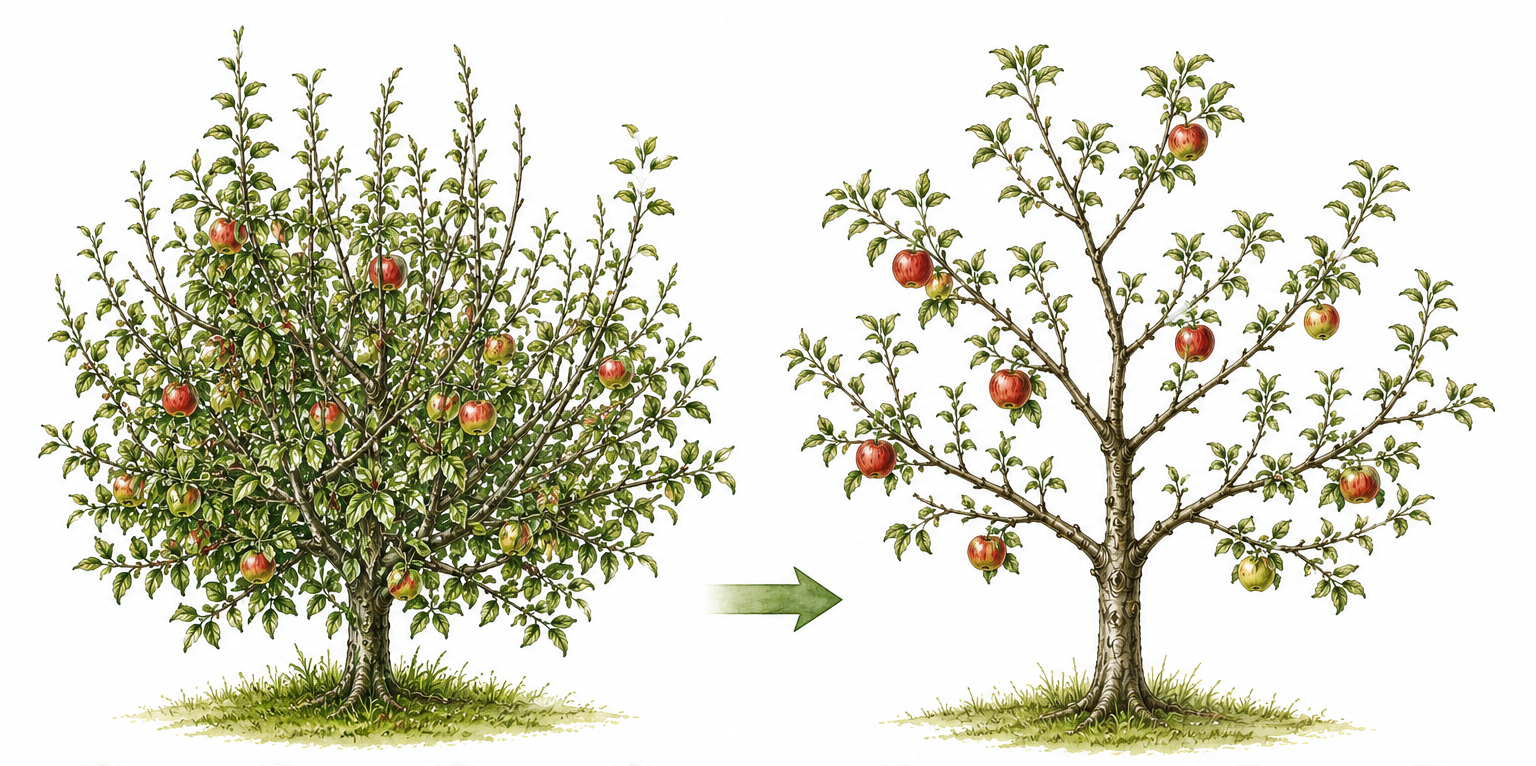
Pruning Apple Trees: Timing, Techniques, and Common Mistakes
Learn when and how to prune apple trees properly, including winter pruning, summer pruning, training cuts, and maintenance tips for healthy, productive…
Guide
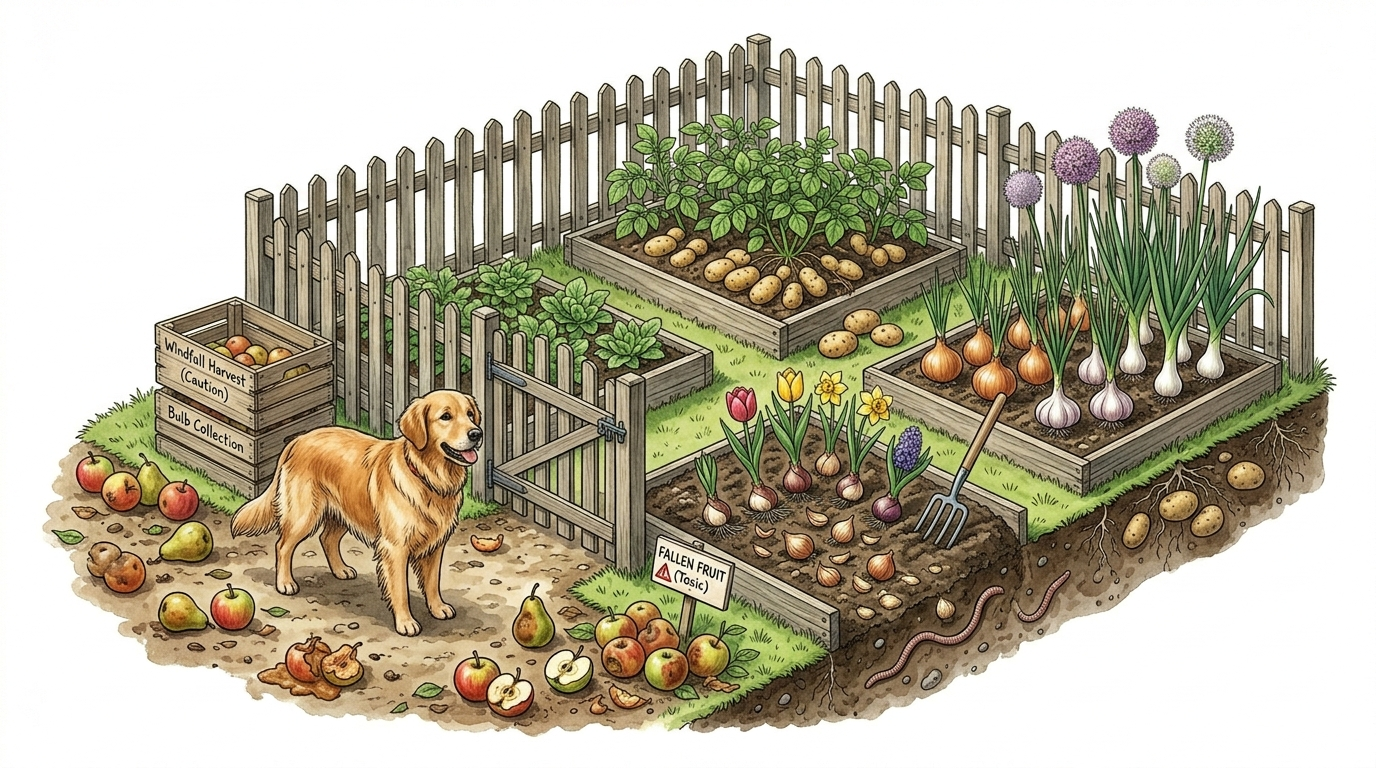
Dogs in the Garden: Windfall Fruit and Risks
Keep your garden dog-safe by managing windfall fruit, seeds, stored crops, and potentially problematic plant parts.
Guide
Horse Pastures and Garden Plants: Safety Checks
Learn how to identify risks near horse pastures, fences, turnout areas, fruit trees, and garden planting zones.
Guide
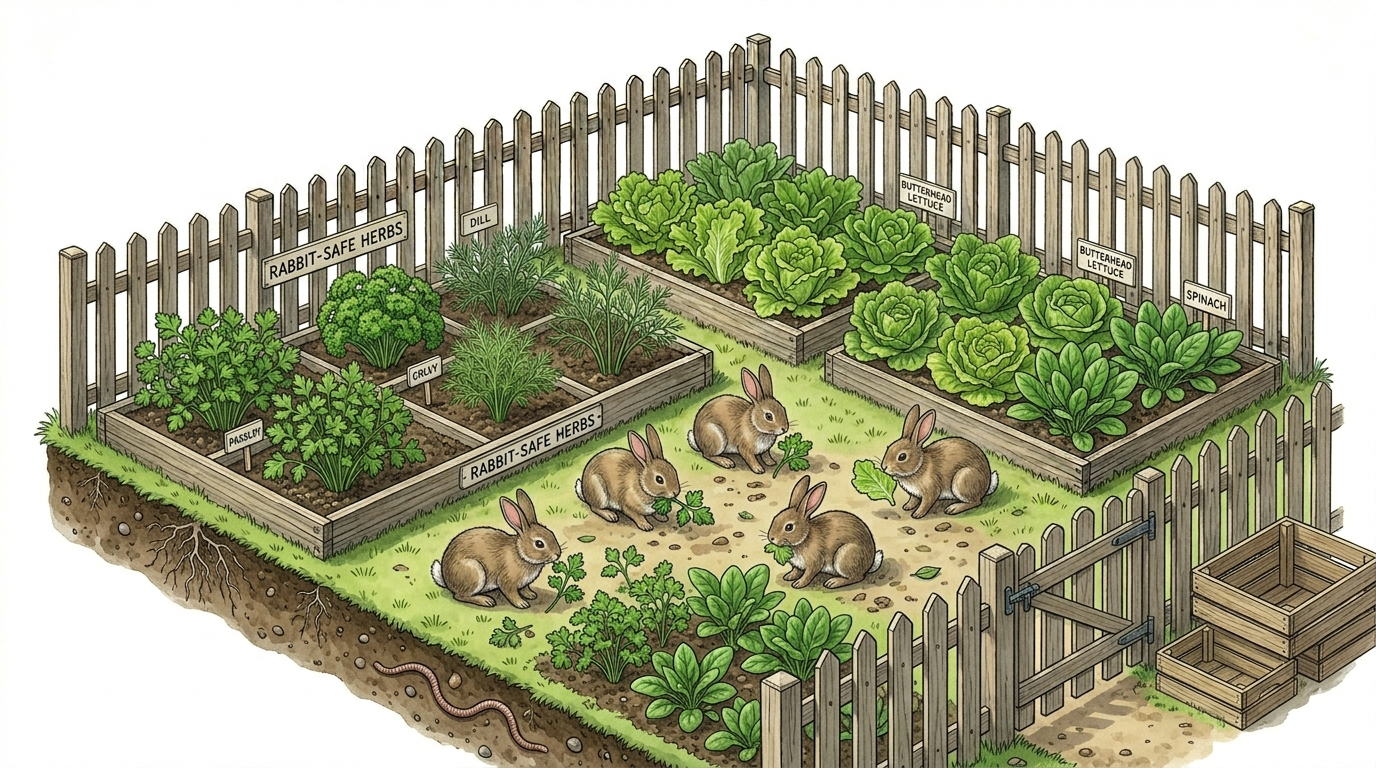
Rabbits in the Garden: Herbs and Vegetables
Learn how to choose suitable herbs and vegetables for rabbits, grow feeding plants, and plan a rabbit-friendly garden.
Internal links
Related plants
Quince
Both are pome fruits and are processed similarly.
Belongs to the Rosaceae family and Pyrinae subfamily.
Cherry
Both belong to the Rosaceae family.
Arnebia
Both are old, traditional fruit varieties.
Cotoneaster
Similar name, but different genus and fruits are not edible.
Sources
Public sources
- Wikidata entity
Wikidata · 2026-05-14
- GBIF species match
GBIF · 2026-05-14
- Deutschsprachige Wikipedia: Mispel
Wikipedia · 2026-05-14
- English Wikipedia: Mespilus germanica
Wikipedia · 2026-05-14