Profile
GarlicAllium sativum
Aromatic bulb vegetable that should not be missing in any garden. Easy to grow and versatile in the kitchen.
Quick profile
Key data
Harvest
Jun, Jul, Aug
Water
medium
Good neighbors
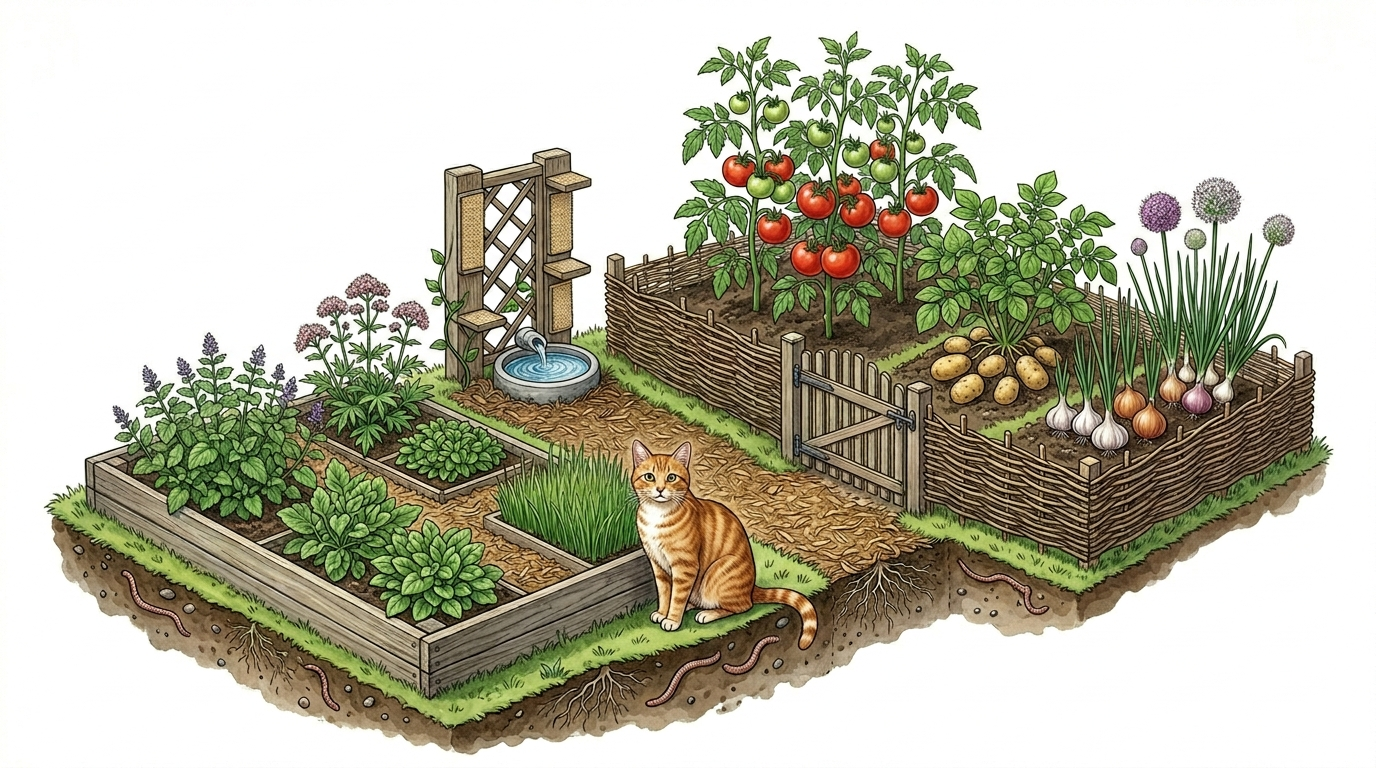
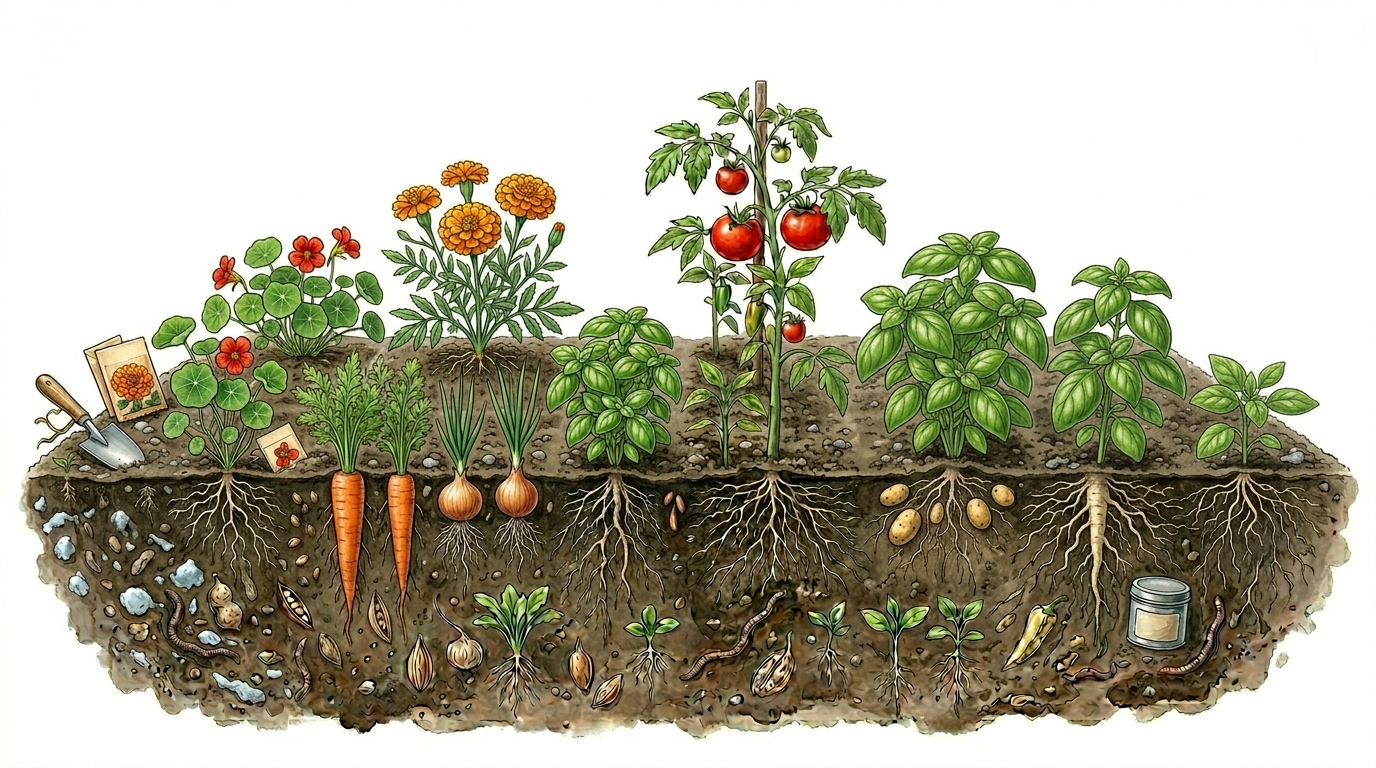
CarrottomatoRoseStrawberry
Growing data
Garlic Growing data
Seed depth
5 - 10 cm
Plant spacing
10 - 15 cm
Row spacing
20 - 30 cm
Sowing and germination
Planting and spacing
Temperature and site
Water, nutrients and care
Container, support and growth
Year plan
Garlic Calendar
Indoor sowing
Garlic is typically not pre-cultivated from seeds but planted directly as cloves.
Direct sowing
Winter garlic is planted in autumn (September-November), summer garlic in spring (February-April).
Planting
Garlic is planted directly into the bed as cloves; transplanting is not relevant.
Harvest
Harvest when the leaves start to yellow and bend over. For winter garlic, this is usually in June/July; for summer garlic, in July/August.
Year plan
- Plant summer garlic
- Loosen soil and mulch
- Plant summer garlic
- Water regularly
- Water regularly
- Weed regularly
- Water regularly
- Harvest winter garlic
- Harvest garlic
- Dry and store garlic
- Harvest late summer garlic
- Dry and store garlic
- Plant winter garlic
- Prepare soil
- Plant winter garlic
- Mulch for winter protection
- Plant late winter garlic
Growing
Garlic Site, soil and care
Spacing
10 - 15 cm
Storage
Storage method: Store in a cool, dry, dark place, ideally hanging in nets or braids for good air circulation., Storage duration: 6-12 months, depending on variety and curing, Notes: Proper curing after harvest is crucial for storage longevity. High humidity or warmth will shorten storage time and can lead to sprouting or rotting.

Pruning
Garlic Pruning
not_applicable
Goal
not_applicable
Tools and hygiene
Not applicable for woody pruning. General garden hygiene is always recommended.
Companion guide
Garlic Companion guide
Good neighbors
CarrottomatoRoseStrawberryCabbageApple tree
Health
Pests, Diseases
Plant health
FAQ
When do you plant garlic?
Winter garlic is planted in autumn (September to November), and summer garlic in spring (February to April) as soon as the soil is frost-free.
How deep should garlic be planted?
Plant individual cloves about 5-10 cm deep in the soil, with the pointed end facing up.
When is garlic ready to harvest?
Garlic is ready for harvest when the lower leaves turn yellow and the upper leaves are still partially green. This usually occurs between June and August.
Can you grow garlic in pots?
Yes, garlic can be successfully grown in pots. Ensure sufficiently large pots (at least 3-5 liters volume per plant) with good drainage.
Why are my garlic bulbs not growing large?
Common causes include lack of water during bulb formation, nutrient deficiency, too close spacing, too much nitrogen, or a too shady location.
Related plants
Onion fly
A common pest for all alliums.
Garlic rust
A specific fungal disease affecting alliums.
Downy mildew
A fungal disease affecting many alliums.
White rot
A serious soil-borne disease for alliums.
Carrot
Both are medium feeders and benefit from balanced fertilization.
Both require consistent moisture during the growth phase.
Internal links
Related plants
Sources
Public sources
- Wikidata entity
Wikidata · 2026-05-13
- GBIF species match
GBIF · 2026-05-13
- Deutschsprachige Wikipedia: Knoblauch
Wikipedia · 2026-05-13
- English Wikipedia: Garlic
Wikipedia · 2026-05-13
Details
More public plant data
Names
Common
Garlic
Plural
Garlic
Scientific synonyms
- Allium sativum var. controversum
- Porrum ophioscorodon
- Allium sativum var. subrotundum
- Allium pekinense
- Allium ophioscorodon
- Allium sativum var. ophioscorodon
- Allium sativum f. sagittatum
- Allium sativum f. vulgare
- Allium scorodoprasum var. multibulbillosum
- Allium sativum subsp. ophioscorodon
- Allium sativum var. pekinense
- Allium scorodoprasum var. viviparum
- Porrum sativum
- Allium sativum subsp. controversum
- Allium controversum
- Allium sativum f. asiae-mediae
- Allium sativum var. vulgare
- Allium sativum subsp. subrotundum
- Allium sativum subsp. asiae-mediae
- Allium scorodoprasum subsp. viviparum
- Allium longicuspis
- Allium sativum f. pekinense
Synonyms
- garlic plant
- allium sativum
- hardneck garlic
- softneck garlic
- garlic
Common synonyms
- garlic plant
- allium sativum
- hardneck garlic
- softneck garlic
- garlic
Regional names
Historical names
Market names
Misspellings
Search terms
- Garlic
- garlic plant
- allium sativum
- hardneck garlic
- softneck garlic
Taxonomy
Family
Amaryllidaceae
Related crops
- zwiebel
- schalotte
- lauch
- schnittlauch
- winterheckzwiebel
- schnittknoblauch
Classification
Edible parts
- Bulb
- Leaves
- Scapes
Calendar
Sowing indoor
Notes
Garlic is typically not pre-cultivated from seeds but planted directly as cloves.
Sowing outdoor
Months
- 2
- 3
- 4
- 9
- 10
- 11
Notes
Winter garlic is planted in autumn (September-November), summer garlic in spring (February-April).
Planting out
Notes
Garlic is planted directly into the bed as cloves; transplanting is not relevant.
Harvest
Months
- 6
- 7
- 8
Notes
Harvest when the leaves start to yellow and bend over. For winter garlic, this is usually in June/July; for summer garlic, in July/August.
Month tasks
2
Plant summer garlic (utilize frost-free days)
3
Plant summer garlic
Loosen soil and mulch
4
Plant summer garlic
Water regularly during dry periods
Weed regularly
5
Water regularly
Weed regularly
Remove flower stalks from hardneck varieties (harvest scapes)
6
Water regularly (important for bulb development)
First harvest of winter garlic
7
Harvest winter and summer garlic
Dry and store garlic
8
Late harvest of summer garlic
Dry and store garlic
9
Plant winter garlic
Prepare soil
10
Plant winter garlic
Mulch for winter protection
11
Plant late winter garlic
Check winter protection
Month tasks structured
2
- Taskplant_cloves
Label
Plant summer garlic
PriorityhighMonths
- 2
- 3
- 4
Conditionfrostfreier BodenEstimated effortmediumNotes
Utilize the first frost-free days to plant summer garlic.
3
- Taskplant_cloves
Label
Plant summer garlic
PriorityhighMonths
- 2
- 3
- 4
Conditionfrostfreier BodenEstimated effortmediumNotes
The main planting time for summer garlic.
- Tasksoil_care
Label
Loosen soil and mulch
PrioritymediumMonths
- 3
- 4
Conditionnach dem PflanzenEstimated effortmediumNotes
A layer of mulch helps retain moisture and suppress weeds.
4
- Taskplant_cloves
Label
Plant summer garlic
PrioritymediumMonths
- 2
- 3
- 4
Conditionfrostfreier BodenEstimated effortmediumNotes
Last chance for summer garlic planting, resulting in a later harvest.
- Taskwatering
Label
Water regularly
PrioritymediumMonths
- 4
- 5
- 6
Conditionbei TrockenheitEstimated effortlowNotes
Especially important during the growth phase.
- Taskweed_control
Label
Weed regularly
PrioritymediumMonths
- 4
- 5
- 6
Conditionnach BedarfEstimated effortlowNotes
Avoid competition from weeds.
5
- Taskwatering
Label
Water regularly
PriorityhighMonths
- 4
- 5
- 6
Conditionbei TrockenheitEstimated effortlowNotes
Bulb formation begins; sufficient moisture is crucial.
- Taskweed_control
Label
Weed regularly
PrioritymediumMonths
- 4
- 5
- 6
Conditionnach BedarfEstimated effortlowNotes
Keep the bed weed-free.
- Taskremove_scapes
Label
Remove flower stalks (scapes)
PrioritymediumMonths
- 5
- 6
Conditionbei HartnackensortenEstimated effortlowNotes
Removing the flower stalks (scapes) redirects energy into bulb development.
6
- Taskwatering
Label
Water regularly
PriorityhighMonths
- 4
- 5
- 6
Conditionwährend der KnollenentwicklungEstimated effortlowNotes
Bulbs need plenty of water now. Reduce watering 2-3 weeks before harvest.
- Taskharvest
Label
Harvest winter garlic
PriorityhighMonths
- 6
- 7
ConditionBlätter beginnen zu welkenEstimated effortmediumNotes
Harvest when the lower leaves turn yellow and the upper leaves are still green.
7
- Taskharvest
Label
Harvest garlic
PriorityhighMonths
- 7
- 8
ConditionBlätter welkenEstimated effortmediumNotes
Peak time for garlic harvest. Look for wilting leaves.
- Taskpost_harvest_care
Label
Dry and store garlic
PriorityhighMonths
- 7
- 8
Conditionnach der ErnteEstimated effortmediumNotes
Allow to dry in an airy, shaded place, then store in a cool, dry location.
8
- Taskharvest
Label
Harvest late summer garlic
PrioritymediumMonths
- 8
ConditionBlätter welkenEstimated effortmediumNotes
Final harvest for summer garlic.
- Taskpost_harvest_care
Label
Dry and store garlic
PriorityhighMonths
- 7
- 8
Conditionnach der ErnteEstimated effortmediumNotes
Careful drying is crucial for storage longevity.
9
- Taskplant_cloves
Label
Plant winter garlic
PriorityhighMonths
- 9
- 10
- 11
ConditionBoden vorbereitetEstimated effortmediumNotes
The ideal time to plant winter garlic for an early harvest next year.
- Tasksoil_preparation
Label
Prepare soil
PriorityhighMonths
- 9
Conditionvor dem PflanzenEstimated effortmediumNotes
Loosen the soil deeply and enrich with compost.
10
- Taskplant_cloves
Label
Plant winter garlic
PriorityhighMonths
- 9
- 10
- 11
ConditionBoden vorbereitetEstimated effortmediumNotes
Good planting time for winter garlic.
- Taskwinter_protection
Label
Mulch for winter protection
PrioritymediumMonths
- 10
- 11
Conditionnach dem PflanzenEstimated effortlowNotes
A layer of mulch protects the cloves from severe frost and keeps the soil moist.
11
- Taskplant_cloves
Label
Plant late winter garlic
PrioritymediumMonths
- 9
- 10
- 11
ConditionBoden noch bearbeitbarEstimated effortmediumNotes
Winter garlic can still be planted in late autumn as long as the soil is not frozen.
- Taskwinter_protection
Label
Check winter protection
PrioritylowMonths
- 11
- 12
Conditionvor WintereinbruchEstimated effortlowNotes
Ensure the mulch layer is sufficient.
12
- Taskwinter_protection
Label
Check winter protection
PrioritylowMonths
- 11
- 12
Conditionbei BedarfEstimated effortlowNotes
Additional cover may be beneficial during severe frost.
Book content
Introduction
Garlic is an indispensable crop in any vegetable garden, known for its intense aroma and versatile use in the kitchen. It is relatively easy to care for and rewards the gardener with healthy, aromatic bulbs.
Structured month tasks
2
- Taskplant_cloves
Label
Plant summer garlic
PriorityhighMonths
- 2
- 3
- 4
Conditionfrostfreier BodenEstimated effortmediumNotes
Utilize the first frost-free days to plant summer garlic.
3
- Taskplant_cloves
Label
Plant summer garlic
PriorityhighMonths
- 2
- 3
- 4
Conditionfrostfreier BodenEstimated effortmediumNotes
The main planting time for summer garlic.
- Tasksoil_care
Label
Loosen soil and mulch
PrioritymediumMonths
- 3
- 4
Conditionnach dem PflanzenEstimated effortmediumNotes
A layer of mulch helps retain moisture and suppress weeds.
4
- Taskplant_cloves
Label
Plant summer garlic
PrioritymediumMonths
- 2
- 3
- 4
Conditionfrostfreier BodenEstimated effortmediumNotes
Last chance for summer garlic planting, resulting in a later harvest.
- Taskwatering
Label
Water regularly
PrioritymediumMonths
- 4
- 5
- 6
Conditionbei TrockenheitEstimated effortlowNotes
Especially important during the growth phase.
- Taskweed_control
Label
Weed regularly
PrioritymediumMonths
- 4
- 5
- 6
Conditionnach BedarfEstimated effortlowNotes
Avoid competition from weeds.
5
- Taskwatering
Label
Water regularly
PriorityhighMonths
- 4
- 5
- 6
Conditionbei TrockenheitEstimated effortlowNotes
Bulb formation begins; sufficient moisture is crucial.
- Taskweed_control
Label
Weed regularly
PrioritymediumMonths
- 4
- 5
- 6
Conditionnach BedarfEstimated effortlowNotes
Keep the bed weed-free.
- Taskremove_scapes
Label
Remove flower stalks (scapes)
PrioritymediumMonths
- 5
- 6
Conditionbei HartnackensortenEstimated effortlowNotes
Removing the flower stalks (scapes) redirects energy into bulb development.
6
- Taskwatering
Label
Water regularly
PriorityhighMonths
- 4
- 5
- 6
Conditionwährend der KnollenentwicklungEstimated effortlowNotes
Bulbs need plenty of water now. Reduce watering 2-3 weeks before harvest.
- Taskharvest
Label
Harvest winter garlic
PriorityhighMonths
- 6
- 7
ConditionBlätter beginnen zu welkenEstimated effortmediumNotes
Harvest when the lower leaves turn yellow and the upper leaves are still green.
7
- Taskharvest
Label
Harvest garlic
PriorityhighMonths
- 7
- 8
ConditionBlätter welkenEstimated effortmediumNotes
Peak time for garlic harvest. Look for wilting leaves.
- Taskpost_harvest_care
Label
Dry and store garlic
PriorityhighMonths
- 7
- 8
Conditionnach der ErnteEstimated effortmediumNotes
Allow to dry in an airy, shaded place, then store in a cool, dry location.
8
- Taskharvest
Label
Harvest late summer garlic
PrioritymediumMonths
- 8
ConditionBlätter welkenEstimated effortmediumNotes
Final harvest for summer garlic.
- Taskpost_harvest_care
Label
Dry and store garlic
PriorityhighMonths
- 7
- 8
Conditionnach der ErnteEstimated effortmediumNotes
Careful drying is crucial for storage longevity.
9
- Taskplant_cloves
Label
Plant winter garlic
PriorityhighMonths
- 9
- 10
- 11
ConditionBoden vorbereitetEstimated effortmediumNotes
The ideal time to plant winter garlic for an early harvest next year.
- Tasksoil_preparation
Label
Prepare soil
PriorityhighMonths
- 9
Conditionvor dem PflanzenEstimated effortmediumNotes
Loosen the soil deeply and enrich with compost.
10
- Taskplant_cloves
Label
Plant winter garlic
PriorityhighMonths
- 9
- 10
- 11
ConditionBoden vorbereitetEstimated effortmediumNotes
Good planting time for winter garlic.
- Taskwinter_protection
Label
Mulch for winter protection
PrioritymediumMonths
- 10
- 11
Conditionnach dem PflanzenEstimated effortlowNotes
A layer of mulch protects the cloves from severe frost and keeps the soil moist.
11
- Taskplant_cloves
Label
Plant late winter garlic
PrioritymediumMonths
- 9
- 10
- 11
ConditionBoden noch bearbeitbarEstimated effortmediumNotes
Winter garlic can still be planted in late autumn as long as the soil is not frozen.
- Taskwinter_protection
Label
Check winter protection
PrioritylowMonths
- 11
- 12
Conditionvor WintereinbruchEstimated effortlowNotes
Ensure the mulch layer is sufficient.
12
- Taskwinter_protection
Label
Check winter protection
PrioritylowMonths
- 11
- 12
Conditionbei BedarfEstimated effortlowNotes
Additional cover may be beneficial during severe frost.
Cultivation specs
Seed
Spacing
Spacing notes
Plant cloves about 5-10 cm deep, with the pointed end facing up.
Growth dimensions
Final size notes
Height varies depending on the variety and whether flower stalks (scapes) are removed.
Temperature
Temperature notes
Winter garlic requires a cold period for bulb formation. Summer garlic is less cold-tolerant.
Water
Critical water phases
- Bulb development
Water notes
Consistent moisture is important during the growth phase. Absolutely avoid waterlogging. Reduce watering before harvest.
Nutrition
Nutrition notes
Garlic benefits from good basic fertilization with compost before planting. Avoid fresh manure. A light top dressing in spring can be beneficial.
Container
Container notes
Ensure good drainage and sufficient depth for bulb development.
Support
Support notes
Garlic does not require support.
Cultivation modes
Yield density
Yield notes
Each planted clove forms a new bulb. Bulb size depends on variety, soil, and care.
Site
Sun exposure
- Full sun
Wind exposure
- Sheltered
- Moderate wind
Notes
A sunny location is crucial for good bulb development. Good air circulation helps prevent fungal diseases.
Soil
Soil type
- Loamy-sandy
- Humus-rich
Soil structure
- Loose
- Crumbly
Notes
Garlic prefers deep, loose, and well-drained soils. Heavy, waterlogged soils must be avoided as they lead to rot.
Watering
Frequency
Regularly during the growth phase, reduce before harvest
Method
Ground-level watering
Notes
Consistent water supply is crucial, especially during bulb formation. Waterlogging is garlic's biggest enemy.
Nutrition
Fertilization schedule
Basic fertilization with compost before planting; light top dressing in spring if needed
Notes
Garlic is a medium feeder. Over-fertilization with nitrogen leads to excessive foliage and small bulbs. Fresh manure should be avoided.
Cultivation planning
Succession sowing
Bed planning notes
Garlic should not be grown in beds where other alliums have been grown in the last 3-4 years. Good preceding crops include legumes or cucurbits.
Crop rotation
Preceding crops good
- Legumes
- Cucurbits
- Lettuce
- Spinach
Preceding crops bad
- Other alliums (onions, leeks, chives)
- Potatoes
Following crops good
- Heavy feeders (e.g., cabbage, tomatoes)
- Cucurbits
Following crops bad
- Other alliums
Notes
Garlic should not be grown in the same bed or after other alliums for at least 4 years to prevent the spread of soil-borne diseases and pests.
Deficiencies
Common deficiencies
- Slugstickstoffmangel
Name
Nitrogen Deficiency
Symptoms
- General lightening and yellowing of older leaves, starting at the tips
- Severely stunted growth
- Small, pale bulbs
Causes
- Nutrient-poor soil
- Leaching due to heavy rain
- Insufficient organic matter
Remedies
- Organic fertilizers (compost, horn meal)
- Liquid fertilizers with nitrogen (e.g., nettle slurry)
Severitymedium - Slugkaliummangel
Name
Potassium Deficiency
Symptoms
- Yellow-brown margins on older leaves, later becoming necrotic
- Weak plants
- Poor bulb development and storage quality
Causes
- Potassium-poor soil
- Imbalance with other nutrients
Remedies
- Potassium-rich organic fertilizers (wood ash, comfrey slurry)
- Sulphate of potash
Severitymedium - Slugschwefelmangel
Name
Sulfur deficiency
Symptoms
- General lightening of younger leaves (similar to nitrogen deficiency, but on young leaves)
- Severely stunted growth
- Reduced flavor development of bulbs
Causes
- Sulfur-poor soil
- Low humus content
Remedies
- Organic fertilizers (compost, manure)
- Epsom salts (magnesium sulfate) can help if magnesium is also deficient
Severitylow
Problems
Common problems
- Slugkleine_knollen
Name
Small bulbs
Causes
- Lack of water during bulb formation
- Nutrient deficiency (especially potassium and phosphorus)
- Too much nitrogen (promotes leaf growth over bulb)
- Too close spacing
- Premature harvest
- Shade
Solutions
- Consistent watering
- Balanced fertilization
- Correct spacing
- Harvest at the right time
- Sunny location
Severitymedium - Slugaufgeplatzte_knollen
Name
Splitting bulbs
Causes
- Irregular watering (drought followed by heavy moisture)
- Late harvest
Solutions
- Consistent watering
- Harvest at the right time (when lower leaves yellow)
Severitylow - Slugfaule_knollen
Name
Rotting bulbs
Causes
- Waterlogging
- Heavy, impermeable soils
- Fungal diseases (e.g., white rot, Penicillium rot)
- Damage to bulbs during planting or cultivation
Solutions
- Ensure good soil drainage
- Use loose, humus-rich soil
- Crop rotation
- Careful handling of bulbs
Severityhigh - Slugvorzeitiges_schossen
Name
Premature bolting
Causes
- Stress due to temperature fluctuations (especially for winter garlic)
- Planting cloves that are too small
- Certain varieties are more prone to bolting
Solutions
- Plant large, healthy cloves
- Choose suitable varieties
- Create consistent growing conditions
- Remove flower stalks (scapes) as soon as they appear
Severitymedium
Problem management
Common pest groups
- Flies (onion fly)
- Thrips (onion thrips)
- Nematodes (stem nematode)
Common disease groups
- Fungal diseases (rust, downy mildew, white rot, Penicillium rot)
Prevention principles
- Adhere to a wide crop rotation (at least 4 years, 8-10 years for white rot)
- Use healthy, certified planting material
- Ensure good soil drainage and loose soil structure
- Adequate plant spacing for good air circulation
- Balanced nutrient supply, avoid nitrogen excess
- Regular weed control
- Removal and proper disposal of infected plant debris (do not compost)
Diagnosis notes
Look for leaf discolorations (yellow, brown, silvery), wilting or distorted shoots, visible fungal growth or pests, and soft or rotting bulbs. Early diagnosis is crucial for successful control.
Disease graph
Profiles
- SlugweissfaeuleSeverityhigh
Conditions
- Cool, moist soils
- High humidity
- Soil contamination by sclerotia
Affected parts
- Roots
- Bulb base
- Leaves (wilting)
Prevention
- Very long crop rotation (8-10 years)
- Healthy planting material
- Soil hygiene
Organic control
- Remove infected plants with soil and dispose of
- Soil solarization
- SlugknoblauchrostSeveritymedium
Conditions
- Humid, warm weather
- High humidity
- Poor air circulation
Affected parts
- Leaves
- Stems
Prevention
- Adequate plant spacing
- Good air circulation
- Avoid overhead watering
- Resistant varieties
Organic control
- Remove affected leaves
- Horsetail decoction
- Plant strengthening
- Slugfalscher_mehltauSeveritymedium
Conditions
- Cool, moist conditions
- High humidity
- Dew on leaves
Affected parts
- Leaves
Prevention
- Good air circulation
- Avoid overhead watering
- Crop rotation
- Healthy planting material
Organic control
- Remove infected plants
- Plant fortifiers
Diagnostic rules
Symptom
Leaves turn yellow and wilt, starting at the tip or base.
Possible causes
- stickstoffmangel
- wassermangel
- zwiebelfliege
- weissfaeule
- knoblauchrost
- falscher_mehltau
First checks
- Check soil moisture
- Examine leaves for pustules or growth
- Check bulb base for rot
Symptom
White, cottony fungal growth at the bulb base, bulbs rotting.
Possible causes
- weissfaeule
- faule_knollen
First checks
- Carefully dig up plant and check bulb base
- Look for small black sclerotia
Symptom
Orange-brown pustules on leaves and stems.
Possible causes
- knoblauchrost
First checks
- Examine leaves closely, especially in humid weather
Symptom
Silvery spots/streaks on leaves, distorted growth.
Possible causes
- zwiebelthrips
First checks
- Check leaves for small, mobile insects (use a magnifying glass)
Symptom
Leaves and stems thickened or swollen, bulbs rotting from the inside.
Possible causes
- stangelaelchen
First checks
- Dig up plant and check bulb and roots for damage
Prevention strategy
Cultural
- Adhere to a wide crop rotation (at least 4 years, 8-10 years for white rot)
- Use healthy, certified planting material
- Ensure good soil drainage and loose soil structure
- Adequate plant spacing for good air circulation
- Balanced nutrient supply, avoid nitrogen excess
- Regular weed control
- Removal and proper disposal of infected plant debris (do not compost)
- Avoid overhead watering
Monitoring
- Regular inspection of plants for early signs of pests or diseases, especially in humid weather
- Inspect bulbs during planting and before storage
Organic first response
- Manual removal of pests (e.g., rinsing off thrips)
- Remove and dispose of infected plant parts or entire plants
- Use of plant fortifiers (e.g., horsetail decoction)
- In case of severe infestation: use neem oil or beneficial insects (e.g., nematodes against onion fly)
Notes
The best strategy is prevention through appropriate cultivation practices and hygiene. If diseases or pests occur, prompt action is required.
Phenology
Stages
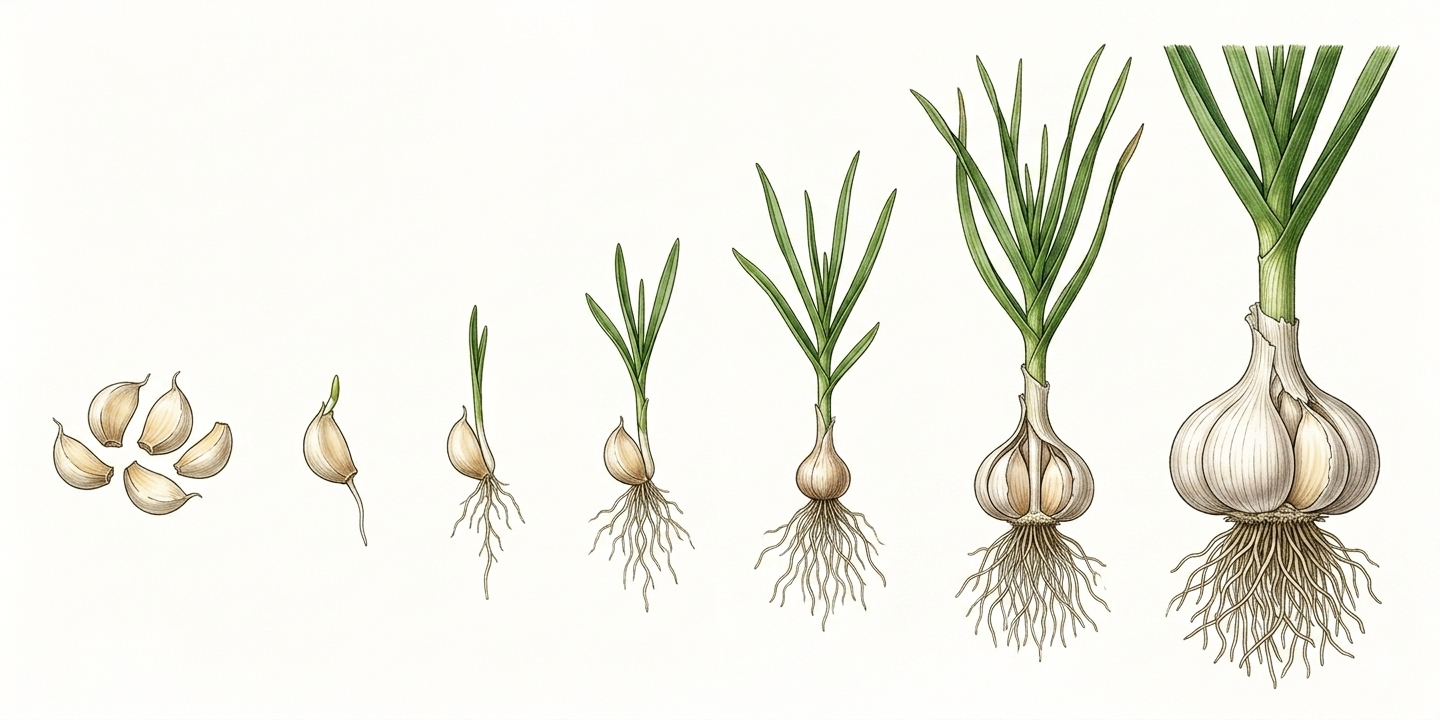
- Clove planting
- Leaf growth
- Bulb formation
- Scape development (for hardneck varieties)
- Maturation and leaf senescence
- Harvest
Notes
After planting, garlic undergoes a vegetative growth phase, followed by bulb formation. Hardneck varieties produce a flower stalk (scape), which can be removed to promote bulb development.
Flowering pollination
Flowering period
May - July (for hardneck varieties, if scapes are not removed)
Flower description
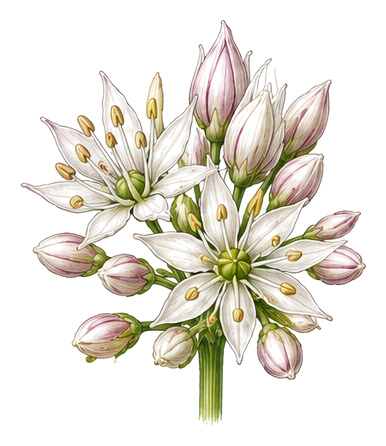
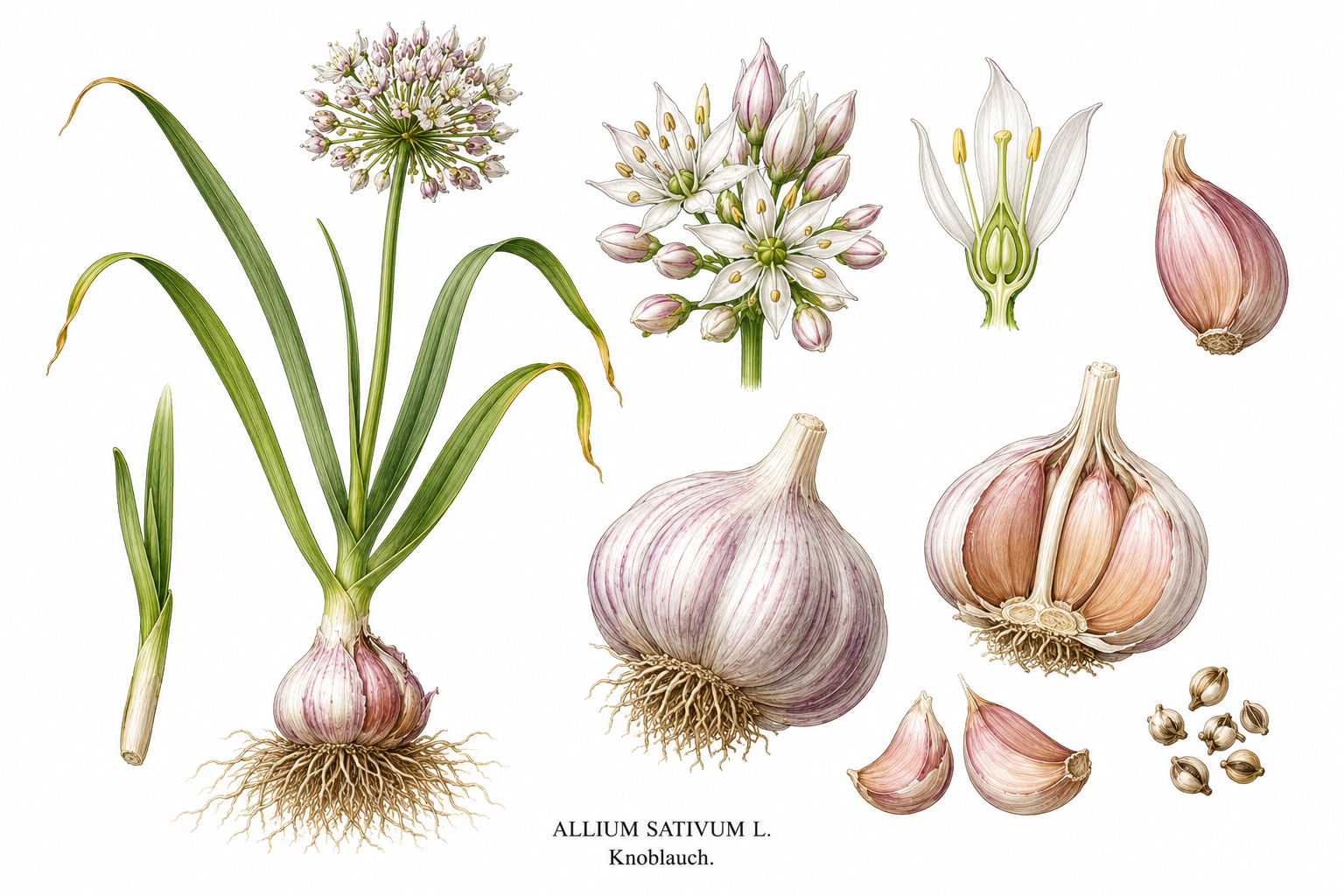
Small, whitish-green to pink flowers in a spherical umbel, often interspersed with small bulbils.
Notes
Most garlic varieties, especially commercially available ones, propagate vegetatively via cloves and rarely or never produce viable seeds. Hardneck varieties produce flower stalks (scapes) with bulbils that can be used for propagation.
Harvest
Harvest months
- 6
- 7
- 8
Harvest parts
- Bulbs
- Leaves
- Flower stalks (Scapes)
Notes
Young leaves can be harvested in spring as green garlic. Flower stalks (scapes) from hardneck varieties are harvested in late spring/early summer before they fully uncurl, to promote bulb development. The main bulb is harvested when the lower leaves turn yellow and the upper leaves are still partially green.
Harvest details
Harvest frequency
Leaves and scapes as needed; bulbs once annually
Harvest indicators
- Lower leaves turn yellow and begin to bend over
- Upper leaves are still partially green
- For scapes: stalk begins to curl or unroll
Post harvest handling
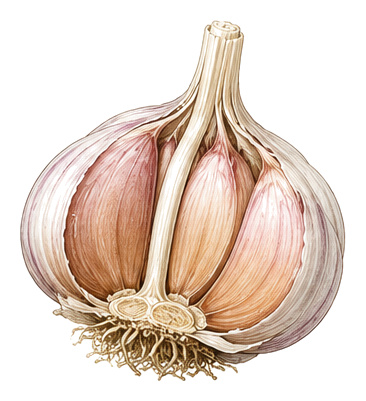
After harvest, carefully pull or dig the bulbs from the soil. Roughly remove soil, but do not wash. Allow garlic to dry (cure) in an airy, shaded place (e.g., under a roof overhang) for 2-4 weeks until the outer wrappers are dry and the stalks rustle. Afterwards, roots and excess leaves can be trimmed.
Storage
Storage method
Store in a cool, dry, dark place, ideally hanging in nets or braids for good air circulation.
Storage duration
6-12 months, depending on variety and curing
Notes
Proper curing after harvest is crucial for storage longevity. High humidity or warmth will shorten storage time and can lead to sprouting or rotting.
Storage details
General storage category
Cool, dry storage
Storage life
6-12 months (whole bulbs, well-cured)
Processing options
- Freezing (chopped or as a paste)
- Drying (as granules or powder)
- Preserving in oil (short-term, refrigerate)
- Fermenting
- Pickling
Processing use
Processing methods
- Use fresh
- Drying
- Powdering
- Pickling
- Fermenting
- Roasting
Notes
Garlic can be processed in various ways to extend its shelf life or achieve new flavor profiles. When preserving in oil, ensure proper hygiene to avoid botulism; always refrigerate and consume quickly.
Kitchen usage
Culinary uses
- Seasoning dishes
- Raw in salads and dips
- Cooked in sauces, soups, stews
- Fried or roasted as a side dish
- Ingredient in marinades and spice blends
Flavor profile
Pungent, spicy, aromatic, sweet and mild when cooked
Notes
Garlic is a versatile seasoning in many cuisines worldwide. It is most pungent raw, developing a milder, sweeter note when cooked or roasted. Young leaves and scapes can be used like chives.
Safety and edibility
Edible parts
- Bulbs (cloves)
- Young leaves
- Flower stalks (scapes)
- Bulbils
Inedible or caution parts
Toxicity notes
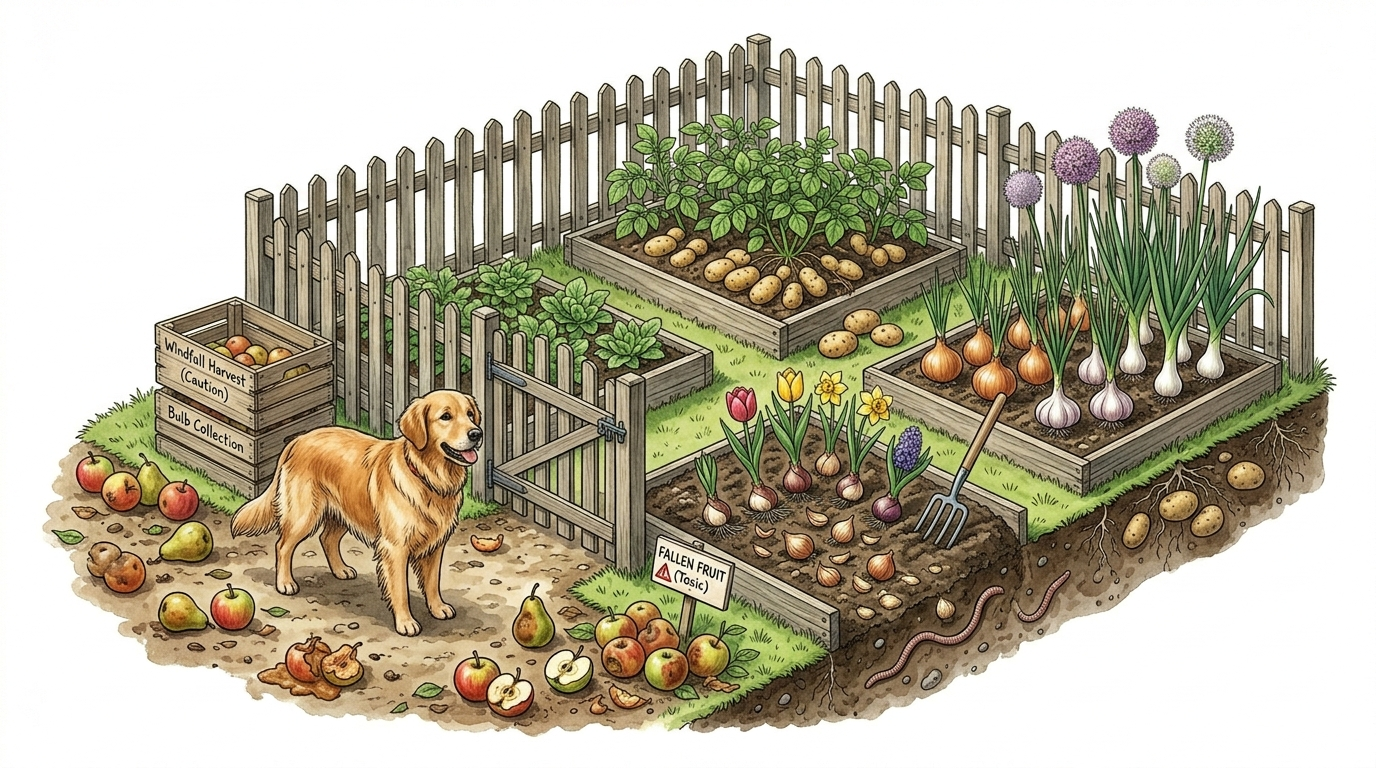
Garlic is toxic to dogs, cats, horses, and some other animals, and can lead to anemia. For humans, it is safe in normal quantities, but excessive consumption can cause gastrointestinal discomfort.
Raw consumption
Yes, very common and popular, especially in dips, salads, and as a spread.
Seed saving
Method
Garlic is generally not propagated from seeds, as the flowers are often sterile or only produce bulbils. Propagation occurs vegetatively via the cloves of the bulb or via bulbils.
Notes
True seeds are extremely rare and found only in a few varieties under specific conditions. Propagation via cloves or bulbils is the common and reliable method to obtain true-to-type plants.
Seed saving advanced
Challenges
- Sterility of flowers
- Low viability of rare seeds
- Long development time from seed to harvestable bulb (several years)
Alternative propagation
- Propagation via cloves (vegetative)
- Propagation via bulbils (small bulbs from the flower head)
Notes
For home gardeners, propagation via cloves or bulbils is the only practical method. Bulbils take 2-3 years to form harvestable bulbs, while cloves produce a bulb in one season.
Woody crop details
Notes
Garlic is a herbaceous plant and has no relevant details regarding woody pruning, grafting, or specific training systems.
Ecology
Biodiversity notes
Garlic flowers may be visited by insects, but contribute little to pollination due to often sterile flowers and vegetative propagation. Garlic is unsuitable or even toxic for many wild animals.