Plant Profile
HorseradishArmoracia rusticana
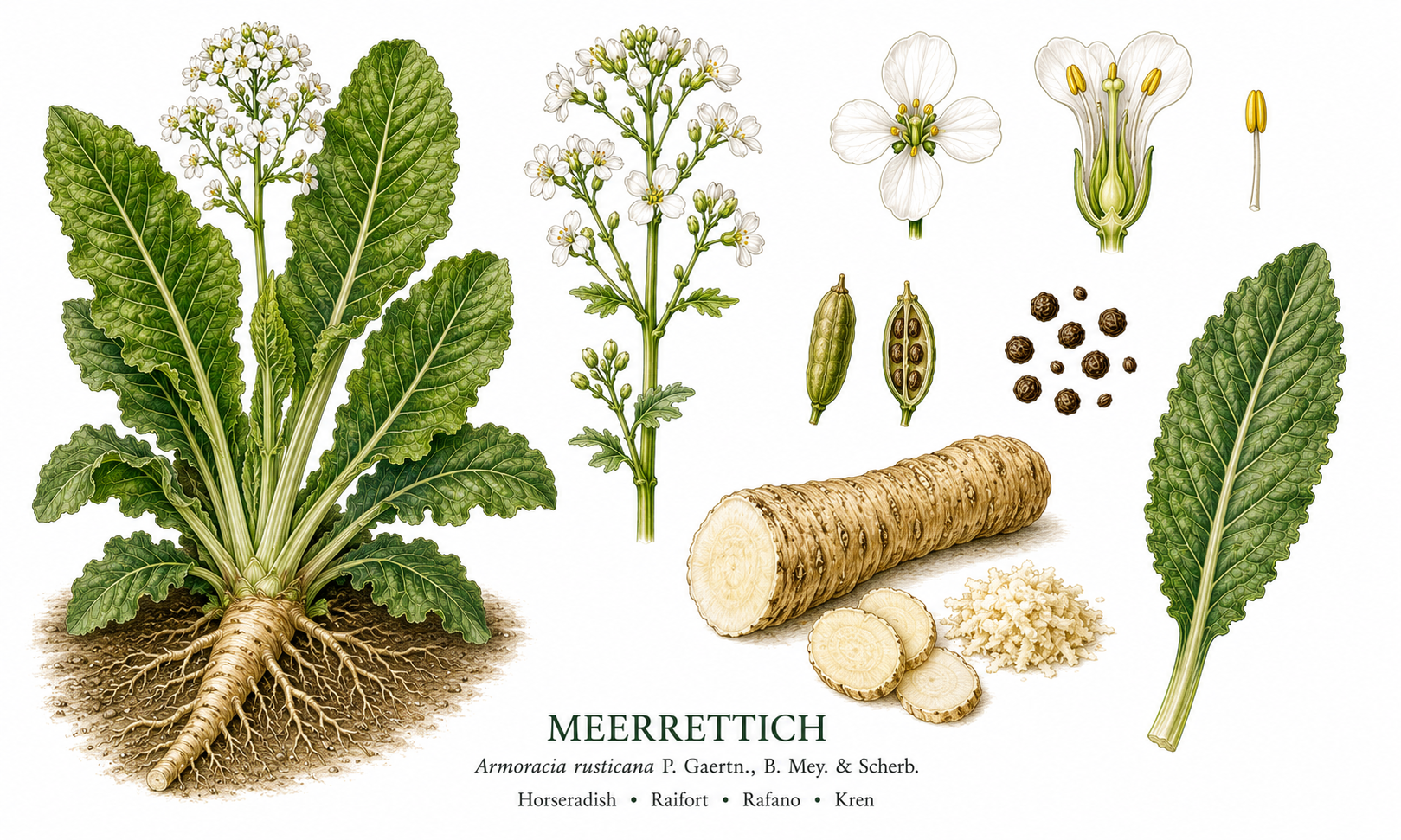
Horseradish is a robust, perennial spice plant whose pungent root is versatile in the kitchen. It is easy to care for but requires a root barrier to control its spread.
Quick profile
Key data
Suitable growing locations:
Good neighbors
potatoFruit tree
Avoid
No data
Indoor & direct sowing
Horseradish: Sowing and germination
Horseradish is typically not grown from seed but planted from root cuttings (Fechser).
Horseradish is typically not grown from seed but planted from root cuttings (Fechser).
Planting & site
Horseradish: Planting and spacing
Planting of root cuttings (Fechser) in early spring.
Temperature & frost
Horseradish: Temperature and site
Water & nutrients
Horseradish: Water, nutrients and care
Container & growth
Horseradish: Container, support and growth
Year plan
Horseradish Calendar
Horseradish only develops its full aroma after the first frost, making it an ideal crop for late autumn and winter harvest.
Recurring tasks
Relevant now
June
- No additional single task
Next up
July
- No additional single task
Monthly tasks
Single tasks from monthly data; repeated seasonal windows are shown in the overview above.
January
Quiet month
February
Quiet month
March
Harvest
- Harvest rootsvor dem Neuaustrieb: Last harvest before strong new growth.
April
No additional single task
May
Quiet month
June
Quiet month
August
Quiet month
September
Quiet month
October
Harvest
- Harvest rootsnach dem ersten Frost: Flavor becomes more intense after the first frost.
November
Harvest
- Harvest rootsfrostfreier Boden: Flavor becomes more intense after the first frost.
December
Quiet month
Flowering & pollination
Horseradish Flowering & pollination
Flowering period
June - August
Flower type
Small, four-petaled flowers in panicles
Flower color
White
Self-fertility
self-fertile
Pollinator needed
no
Overview
Horseradish flowers are pollinated by insects.
Notes
Horseradish rarely flowers in garden cultivation, as energy is directed to root development. If it does flower, the blossoms are inconspicuous.
Companion guide
Horseradish Companion guide
Good neighbors
potatoFruit tree
Avoid
No data
Use & storage
Horseradish Use & storage
Harvest roots in autumn after the first frost or in early spring before new growth. Roots can also remain in the ground over winter and be harvested as needed.
Storage
Store in a cool, dark, and moist place, ideally buried in damp sand or moist soil in a cellar or root cellar. Freezing grated horseradish is also an option.
Storage life
Fresh roots: 3-6 months; Grated and frozen: up to 12 months.
Flavor
Pungent, spicy, piquant, with a slightly earthy note. The pungency is volatile and dissipates when cooked.
Harvest
Harvest roots in autumn after the first frost or in early spring before new growth. Roots can also remain in the ground over winter and be harvested as needed.
Culinary uses
Processing
After harvest
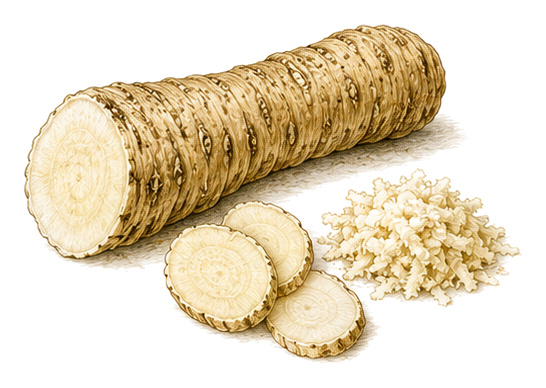
Clean harvested roots of soil, separate fine side roots (Fechser) for propagation, and prepare main roots for storage. Do not wash if they are to be stored.
Edibility & safety
Horseradish Edibility & safety
For people
In brief: which parts are edible, which parts remain risky, and whether raw consumption makes sense.
Safety notes
Horseradish contains glucosinolates, which are responsible for its pungency. In large quantities or for sensitive individuals, these can cause gastrointestinal discomfort. The fumes released during grating can irritate eyes and mucous membranes.
Animal safety
For animals, the specific plant part matters here: some parts may be suitable, while others should be avoided. At least one critical rating is listed for 8 animal types.
Each row shows which parts are more suitable and which parts are critical.
Companion animals
 Dog
DogNo suitable parts listed
All plant parts (especially in large quantities), Fumes during grating
No suitable parts listed
All plant parts (especially in large quantities), Fumes during grating
Consumption of large quantities, Sensitive animals, Inhalation of fumes during grating
Gastrointestinal upset (if large quantities consumed), Eye and mucous membrane irritation (from fumes)
observe
The pungent glucosinolates can cause GI irritation in dogs, especially if large amounts are consumed. Fumes can irritate eyes and respiratory tract.
Open animal page Cat
CatNo suitable parts listed
All plant parts (especially in large quantities), Fumes during grating
No suitable parts listed
All plant parts (especially in large quantities), Fumes during grating
Consumption of large quantities, Sensitive animals, Inhalation of fumes during grating
Gastrointestinal upset (if large quantities are consumed), Eye and mucous membrane irritation (from fumes)
observe
The glucosinolates are responsible for the pungency and can lead to GI issues in sensitive animals or in large quantities. No species-specific data for cats, but general plant information suggests low risk if not consumed excessively.
Open animal page Rabbit
No suitable parts listed
All plant parts (especially in large quantities), Fumes during grating
No suitable parts listed
All plant parts (especially in large quantities), Fumes during grating
Consumption of large quantities, Sensitive animals, Inhalation of fumes during grating
Gastrointestinal upset (if large quantities are consumed or in sensitive animals), Eye and mucous membrane irritation (from fumes)
observe
Horseradish is not classified as toxic for rabbits, but the glucosinolates can cause gastrointestinal upset if consumed in excess. The pungency may be unpleasant for rabbits. There is no specific data on rabbit safety, so a conservative classification is made.
Open animal page Guinea pig
Root (rhizome, very small amounts)
Leaves, Stems, Large amounts of the root
Root (rhizome, very small amounts)
Leaves, Stems, Large amounts of the root
Consumption of large quantities, Consumption of leaves or stems, Individual sensitivity
Gastrointestinal upset (bloating, diarrhea), Mucous membrane irritation (with very high doses or sensitive animals)
observe
Horseradish root can be offered in very small amounts as a treat. The glucosinolates can cause gastrointestinal issues if consumed excessively. Leaves and stems are not suitable.
Open animal page Hamster
Root (rhizome, very small amounts)
Leaves, Stems, Large amounts of the root
Root (rhizome, very small amounts)
Leaves, Stems, Large amounts of the root
Consumption of large quantities, Consumption of leaves or stems, Individual sensitivity
Gastrointestinal upset (bloating, diarrhea), Mucous membrane irritation (with very high doses or sensitive animals)
observe
No direct species-specific source was found for hamsters. This is a cautious inference from the guinea pigs profile and the known plant-part risks.
Open animal page Budgie
No suitable parts listed
All plant parts (especially in large quantities), Fumes during grating
No suitable parts listed
All plant parts (especially in large quantities), Fumes during grating
Consumption of large quantities, Sensitive individuals, Inhalation of fumes during grating
Gastrointestinal upset, Eye irritation (fumes), Mucous membrane irritation (fumes)
observe
No specific data available for budgies. Glucosinolates can cause gastrointestinal upset in birds. The pungency and irritation from fumes should also be considered.
Open animal pageFarm animals
 Horse
HorseNo suitable parts listed
All plant parts (especially in large quantities), Fumes during grating
No suitable parts listed
All plant parts (especially in large quantities), Fumes during grating
Ingestion of large quantities, Individual sensitivity, Inhalation of fumes during grating
Gastrointestinal upset (if large quantities ingested), Eye and mucous membrane irritation (from fumes)
observe
There are no specific reports of poisoning in horses, but caution is advised, especially with the leaves and stems.
Open animal page Chicken
No suitable parts listed
All plant parts (especially in large quantities), Fumes during grating
No suitable parts listed
All plant parts (especially in large quantities), Fumes during grating
Consumption of large quantities, Sensitive animals, Inhalation of fumes during grating
Gastrointestinal upset (if large quantities consumed), Eye and mucous membrane irritation (from fumes)
observe
No specific data found for chickens. Glucosinolates can cause gastrointestinal upset if consumed in excess. The pungency may limit acceptance as feed.
Open animal page Duck
DuckNo suitable parts listed
All plant parts (especially in large quantities), Fumes during grating
No suitable parts listed
All plant parts (especially in large quantities), Fumes during grating
Consumption of large quantities, Sensitive animals, Inhalation of fumes during processing
Gastrointestinal upset (if large quantities consumed), Eye and mucous membrane irritation (from fumes)
observe
No specific data available for ducks. Glucosinolates can cause gastrointestinal irritation in poultry, especially if large quantities are consumed. Fumes can also be irritating.
Open animal page Goose
GooseNo suitable parts listed
All plant parts (especially in large quantities), Fumes during grating
No suitable parts listed
All plant parts (especially in large quantities), Fumes during grating
Large quantities of the plant, Sensitive animals, Inhalation of fumes during grating
Gastrointestinal upset (in large quantities), Eye and mucous membrane irritation (from fumes)
observe
No specific information found regarding the toxicity of horseradish for geese. Glucosinolates may cause gastrointestinal upset if consumed in excess. The plant is not known as a primary feed for poultry.
Open animal page Sheep
SheepRoot (rhizome), Young leaves (sparingly)
Older leaves, Large quantities of leaves
Root (rhizome), Young leaves (sparingly)
Older leaves, Large quantities of leaves
Overconsumption, Consumption of older leaves
Gastrointestinal upset (with overconsumption)
observe
No direct species-specific source was found for sheep. This is a cautious inference from the goats profile and the known plant-part risks.
Open animal page Goat
GoatRoot (rhizome), Young leaves (sparingly)
Older leaves, Large quantities of leaves
Root (rhizome), Young leaves (sparingly)
Older leaves, Large quantities of leaves
Overconsumption, Consumption of older leaves
Gastrointestinal upset (with overconsumption)
observe
Horseradish is safe for goats in moderation, especially the root. Large quantities or older leaves can cause gastrointestinal upset due to glucosinolates. The pungency itself is generally not an issue for goats, but quantity is key.
Open animal page Cattle
Root (rhizome), Young leaves (sparingly)
Older leaves, Large quantities of leaves
Root (rhizome), Young leaves (sparingly)
Older leaves, Large quantities of leaves
Overconsumption, Consumption of older leaves
Gastrointestinal upset (with overconsumption)
observe
No direct species-specific source was found for cattle. This is a cautious inference from the sheep profile and the known plant-part risks.
Open animal page Pig
PigRoot (rhizome) in small amounts
Leaves (in large quantities), Seeds, Large amounts of the root
Root (rhizome) in small amounts
Leaves (in large quantities), Seeds, Large amounts of the root
Consumption of large quantities, Consumption of leaves or seeds, Sensitive animals
Gastrointestinal upset (nausea, vomiting, diarrhea), Mucous membrane irritation (from fumes)
observe
The root (rhizome) of horseradish can be fed in small amounts as a treat. Large quantities or consumption of leaves and seeds can lead to gastrointestinal upset due to glucosinolates. The fumes released during grating can be irritating.
Open animal pageThese guidelines are for general information only and do not replace veterinary diagnosis. If critical plant parts were ingested or the animal shows unusual behaviour or symptoms, seek veterinary advice.
Max risk
unknown
Highest status
do not feed
Urgency
observe
Saving seed
Horseradish Saving seed
Seed saving
no
Practical tips
Horseradish Practical tips
Common beginner mistakes
Success pattern
High-impact tips
Grower observations
Plant Profile
Additional plant images

Health
Pests, Diseases
Plant health
Diagnosis help
Horseradish Diagnosis help
Pest groups
Disease groups
Prevention
Diagnosis
Look for changes in leaves (discoloration, holes, spots), stunted growth, and the condition of roots during harvest. If root rot is suspected, check the soil for waterlogging.
Cultural prevention
Monitoring
First response
Diagnostic rules
Small holes in leaves
Possible causes: Meerrettich blattkaefer
- Check plants for small, jumping beetles
Wilting leaves despite moist soil
Possible causes: Cabbage Root Fly, Root rot
- Check root area for tunnels or rot
- Check soil for waterlogging
White, pustule-like spots on underside of leaves
Possible causes: White blister
- Check humidity and plant spacing
Leaves light green to yellowish, especially older leaves
Possible causes: Nitrogen deficiency
- Soil analysis, check last fertilization
FAQ
How do you plant horseradish?
Horseradish is planted in spring from root cuttings (Fechser). These are placed diagonally into deep, loose, and humus-rich soil. A root barrier is strongly recommended to prevent uncontrolled spreading.
When do you harvest horseradish?
The main harvest takes place in late autumn after the first frost, as the flavor is more intense then. Alternatively, you can harvest in early spring before new growth. The roots can also remain in the bed over winter if the ground is not frozen.
How do you prevent horseradish from spreading too much?
To prevent uncontrolled spreading, using a deep root barrier (at least 60 cm) is essential. Alternatively, horseradish can also be grown in large, sturdy containers.
Can you grow horseradish in a pot?
Yes, horseradish can be grown in a pot, but due to its vigorous root growth, it requires a very large container (at least 20-30 liters volume and 40 cm depth) with good drainage.
Why is my horseradish woody?
Fibrous or woody roots can result from plants being left in the ground too long, drought stress, nutrient deficiency, or overly heavy, compacted soils. Regular harvesting and good soil care prevent this.
Is Horseradish safe for Dog?
Horseradish is classified as do not feed for Dog. Risk: unknown. Urgency: observe. The pungent glucosinolates can cause GI irritation in dogs, especially if large amounts are consumed. Fumes can irritate eyes and respiratory tract.
Is Horseradish safe for Cat?
Horseradish is classified as do not feed for Cat. Risk: unknown. Urgency: observe. The glucosinolates are responsible for the pungency and can lead to GI issues in sensitive animals or in large quantities. No species-specific data for cats, but general plant information suggests low risk if not consumed excessively.
Is Horseradish safe for Rabbit?
Horseradish is classified as do not feed for Rabbit. Risk: unknown. Urgency: observe. Horseradish is not classified as toxic for rabbits, but the glucosinolates can cause gastrointestinal upset if consumed in excess. The pungency may be unpleasant for rabbits. There is no specific data on rabbit safety, so a conservative classification is made.
Is Horseradish safe for Budgie?
Horseradish is classified as do not feed for Budgie. Risk: unknown. Urgency: observe. No specific data available for budgies. Glucosinolates can cause gastrointestinal upset in birds. The pungency and irritation from fumes should also be considered.
Guides
Related guides
Guide
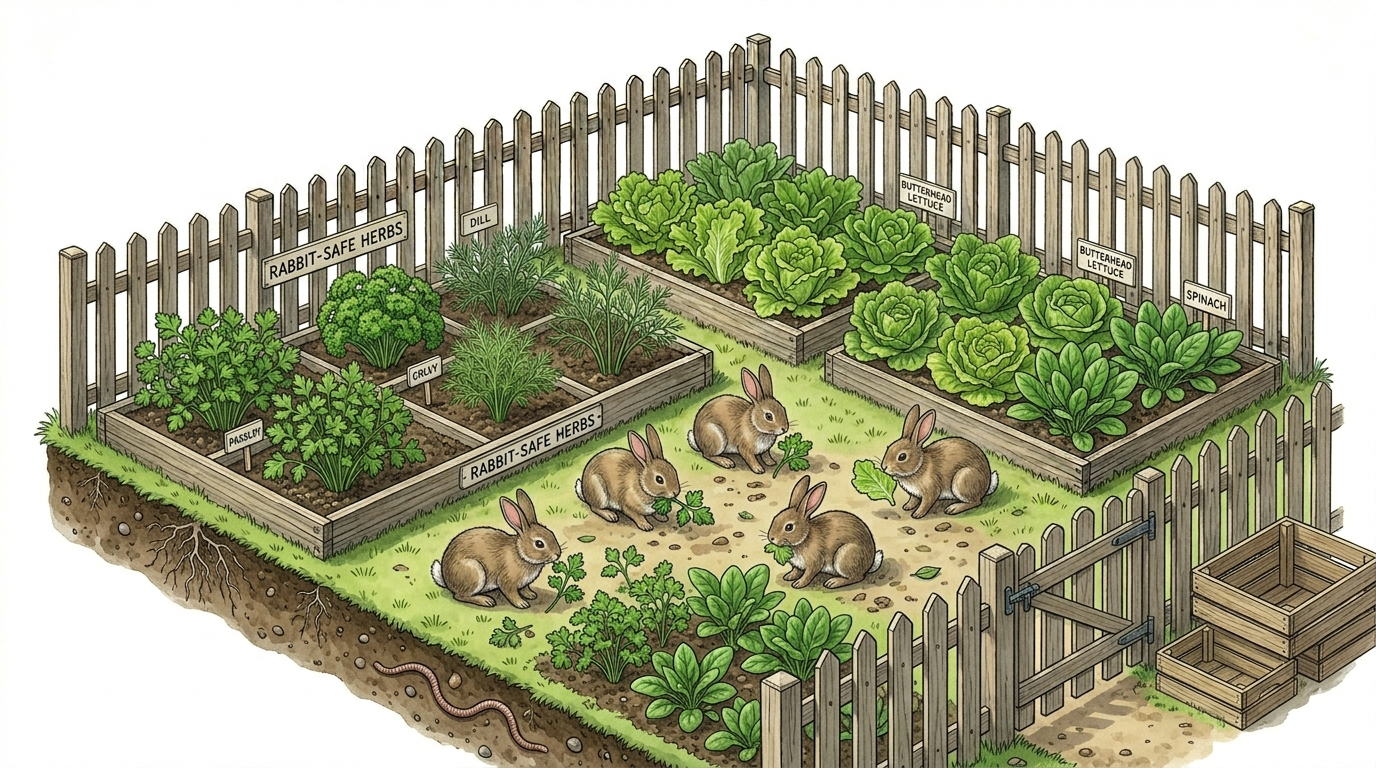
Rabbits in the Garden: Herbs and Vegetables
Learn how to choose suitable herbs and vegetables for rabbits, grow feeding plants, and plan a rabbit-friendly garden.
Guide
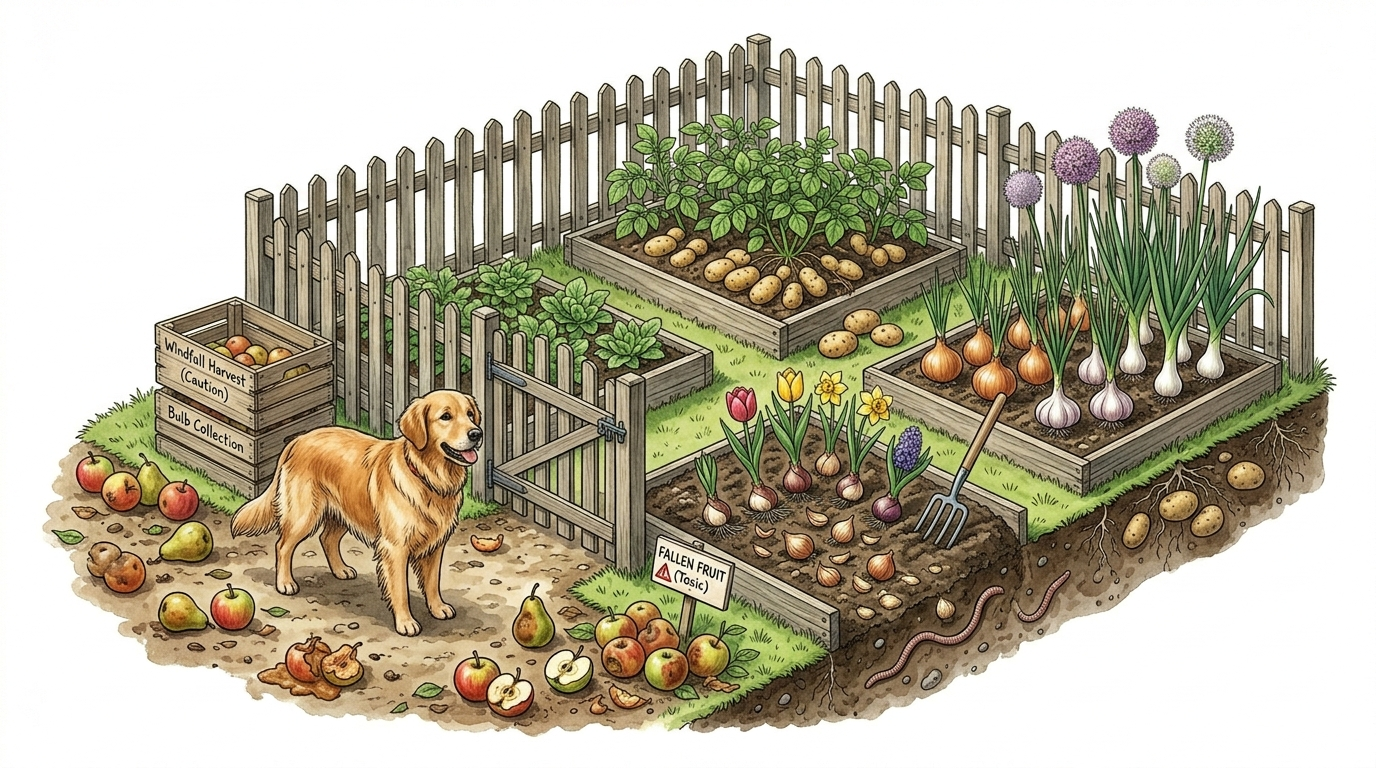
Dogs in the Garden: Windfall Fruit and Risks
Keep your garden dog-safe by managing windfall fruit, seeds, stored crops, and potentially problematic plant parts.
Guide
Horse Pastures and Garden Plants: Safety Checks
Learn how to identify risks near horse pastures, fences, turnout areas, fruit trees, and garden planting zones.
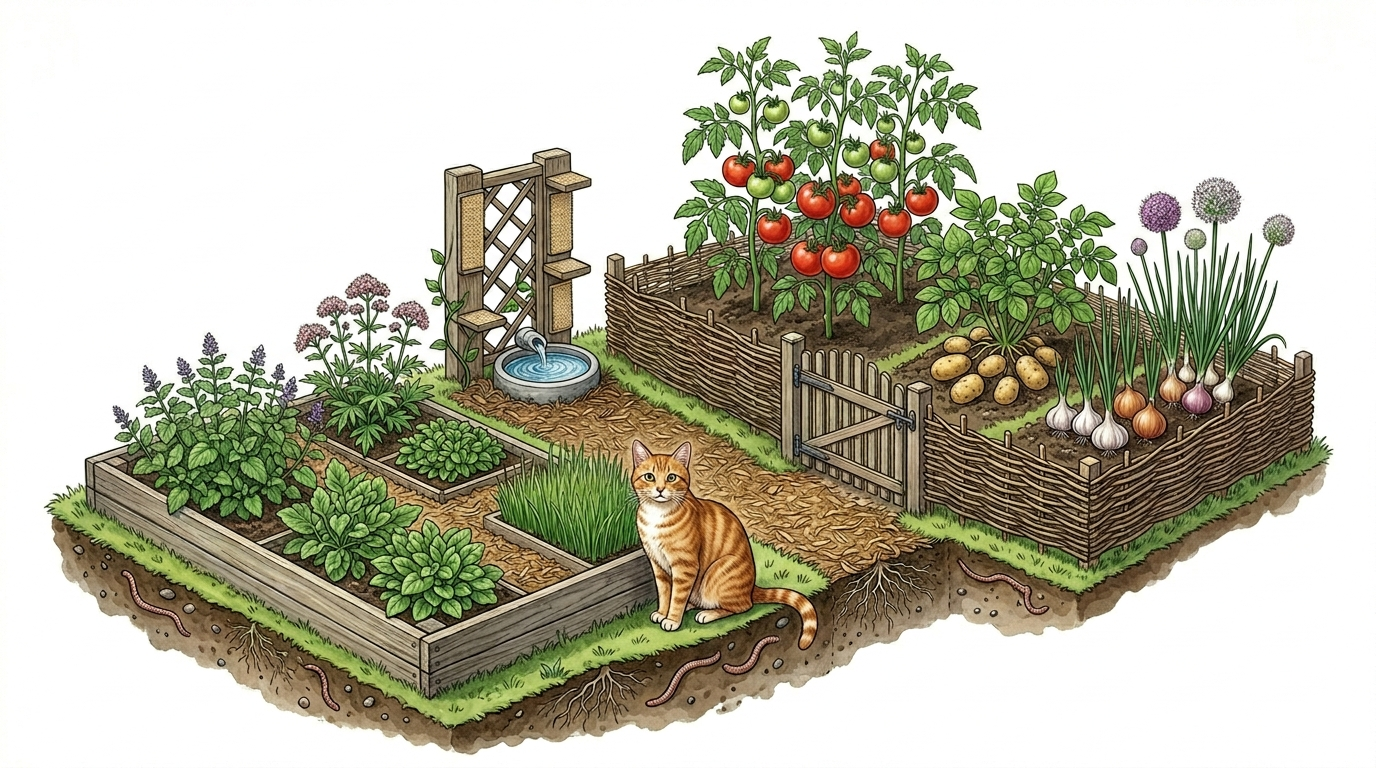
Guide
Toxic Garden Plants for Cats: Safer Planning
Learn which garden plants can be risky for cats, how to plan safer beds, and what to do if a cat eats a toxic plant.
Internal links
Related plants
Radish
Belongs to the Brassicaceae family.
Both belong to the Brassicaceae family and have a pungent root.
Cabbage
Belongs to the Brassicaceae family.
Both are medium to heavy feeders.
Mustard
Belongs to the Brassicaceae family.
Belongs to the same plant family (Brassicaceae) and has similar pungent compounds.
White Rust
Typical disease for Brassicaceae.
Cabbage Root Fly
Pest that also affects other brassicas.
Celery
Also requires consistent soil moisture.
Wasabi
Also used as a pungent root.
Sources
Public sources
- Wikidata entity
Wikidata · 2026-05-14
- GBIF species match
GBIF · 2026-05-14
- Deutschsprachige Wikipedia: Meerrettich
Wikipedia · 2026-05-14
- English Wikipedia: Horseradish
Wikipedia · 2026-05-14