Profile

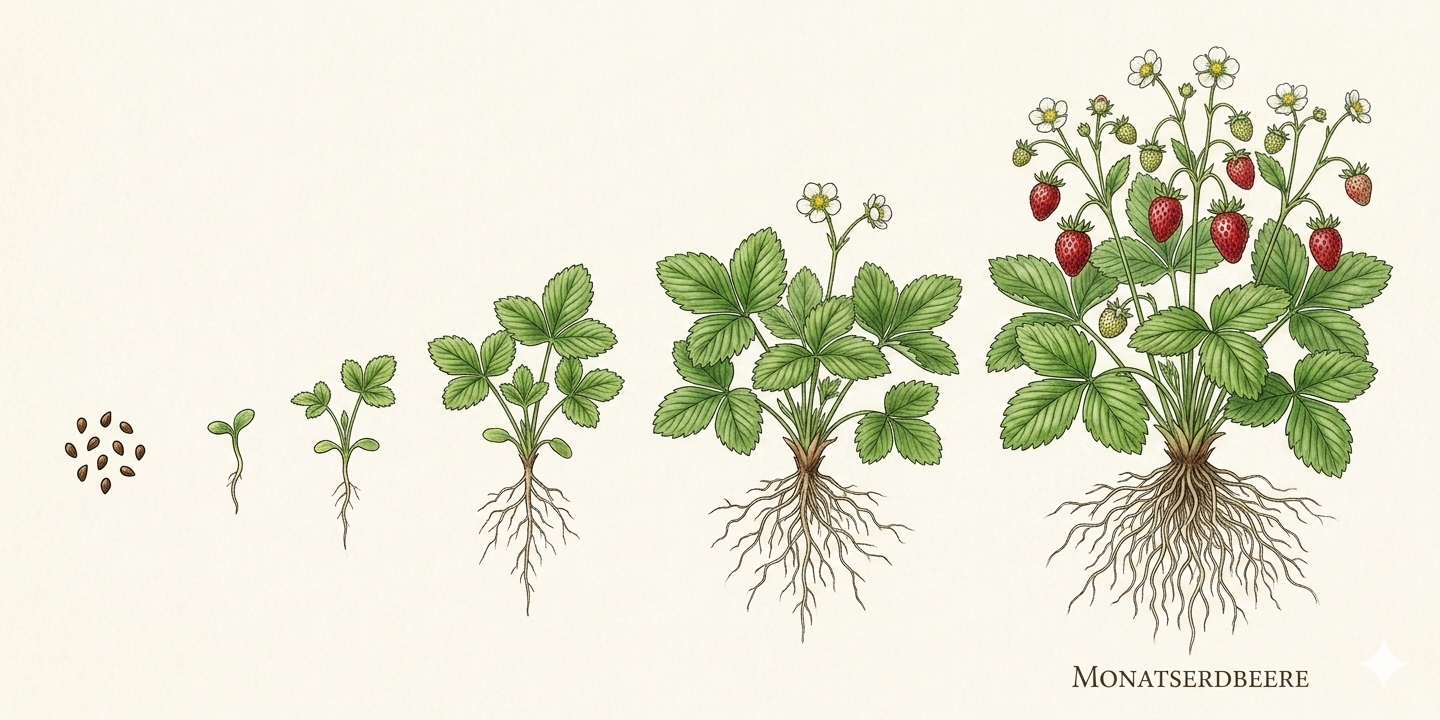
Wild StrawberryFragaria vesca

The Alpine strawberry (Fragaria vesca) is the perennial, everbearing cultivated form of the woodland strawberry. Unlike large-fruited garden strawberries, it impresses with an incomparable aroma and an extremely long harvest season from May until the first frost. It often produces few to no runners, making it ideal for edging garden beds or for container gardening on balconies.
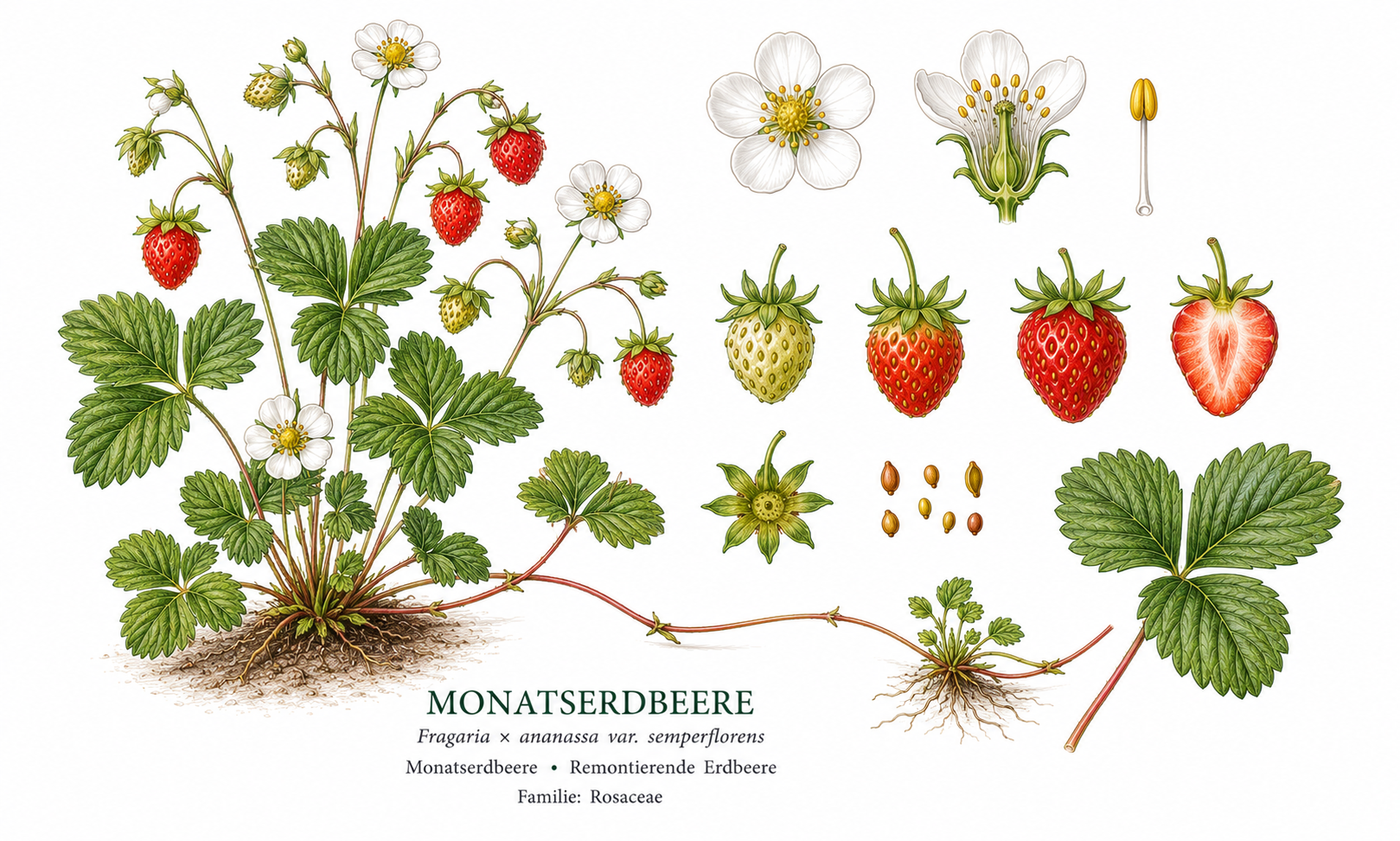
Wild Strawberry (Fragaria vesca): plant portrait for plant portrait - Fruit, Rose family, Full sun to partial shade
Wild Strawberry: plant portrait. harvest: May, Jun, Jul, Aug, Sep, Oct.

Quick profile

Key data

Planting

Apr, May, Jun, Sep

Harvest

May, Jun, Jul, Aug, Sep, Oct

Light

Full sun to partial shade

Water

medium

Good neighbors

Bush BeanborageLettuceSpinach

Avoid

Cabbage (general)potatoGladiolus

Growing data

Wild Strawberry Growing data

Seed depth

0.5 - 1 cm

Plant spacing

20 - 30 cm

Row spacing

30 - 40 cm

Germination temp

18 - 22 °C

Sowing and germination

Seed depth0.5 - 1 cm
Germination temp18 - 22 °C
Germination time14 - 28 days
Seed viability2 - 3 years
Light germinatorNo
Dark germinatorYes
Cold germinatorNo
Stratification neededNo
Pre-soaking recommendedNo
Direct sowing possibleYes
Pre-culture recommendedYes

Planting and spacing

Plant spacing20 - 30 cm
Row spacing30 - 40 cm
Plants per m²8 - 12 per m²
Bed widthfrom 60 cm
Spacing3 plants per square foot

Temperature and site

Soil temperature18 - 20 °C
Growing temperaturefrom 10 °C
Optimal temperature15 - 25 °C
Frost sensitiveNo
Late frost sensitiveNo
Heat tolerancemedium
Cold tolerancehigh

Water, nutrients and care

Watermedium
Critical water phasesFlowering, Fruit development
Watering methodSoaking the soil
Droughtmedium
Waterlogging sensitiveYes
Mulching recommendedYes
Nutrient needlight_feeder
Compost recommendedYes
Fertilizer sensitivitylow

Container, support and growth

Container suitableYes
Pot sizeVolume: from 5 l; Recommended: from 10 l; Diameter: from 20 cm; Depth: from 15 cm
SupportNo
Height10 - 20 cm
Width20 - 30 cm
Root depth15 - 25 cm
Yield50 - 150 g

Year plan

Wild Strawberry Calendar

All plants
Indoor sowingDirect sowingPlantingHarvest

Indoor sowing

No data

Not common for this species.

Direct sowing

MarAprMaySep

Sow in spring or late summer/autumn. Autumn sowing can lead to earlier flowering in the following year.

Planting

AprMayJunSep

Plant out young plants after the last frost. Ensure adequate watering.

Harvest

MayJunJulAugSepOct

Harvest time can vary depending on variety and climate. Regular harvesting encourages the formation of new fruits.

Year plan
  1. Sow strawberries
  2. Prepare soil for strawberries
  3. Plant out strawberry young plants
  4. Mulch strawberry beds
  5. Water strawberries
  6. Harvest strawberries
  7. Harvest strawberries
  8. Remove spent strawberry blossoms
  9. Harvest strawberries
  10. Manage strawberry runners
  11. Harvest strawberries
  12. Prepare for autumn planting/sowing
  13. Plant/sow strawberries (Autumn)
  14. Soil care for strawberries
  15. Final strawberry harvest
  16. Winterize strawberry plants
  17. Let strawberry plants rest
  18. Maintain garden tools

Growing

Wild Strawberry Site, soil and care

Light

Full sun to partial shade

Wind

Sheltered

Spacing

20 - 30 cm

Storage

Storage conditions: Cool and dry, ideally in the refrigerator in a shallow container, do not wash before storage., Storage duration: Very short-term, 1-2 days

General: Regular picking encourages the formation of new flowers and fruits., Maintenance: Remove old foliage in spring to prevent fungal infections.

Cultivation timeline for Wild Strawberry (Fragaria vesca) with sowing, planting, care, and harvest months
Wild Strawberry: cultivation timeline. calendar: Mar, Apr, May, Jun, Jul, Aug, Sep, Oct.

Pruning

Wild Strawberry Pruning

not_applicable_woody_pruning

Goal

not_applicable_woody_pruning

Tools and hygiene

General garden hygiene is always recommended.

Companion guide

Wild Strawberry Companion guide

Companion guide

Good neighbors

Bush BeanborageLettuceSpinachOnionGarlicThymus

Avoid

Cabbage (general)potatoGladiolus

Health

Pests, Diseases

FAQ

Why are my Alpine strawberries not producing fruit?

Possible reasons include lack of water during flowering, late frost damage, or nutrient deficiency. Older plants also produce less.

Related plants

Garden Strawberry

Same family

Rubus

Shared diseases

Both susceptible to grey mould (Botrytis).

Herbs

Similar nutrient needs

Both do well with moderate nutrient supplies.

Lettuce

Similar water needs

Sources

Public sources

  1. Wikidata entity

    Wikidata · 2026-05-14

  2. GBIF species match

    GBIF · 2026-05-14

  3. Deutschsprachige Wikipedia: Wald-Erdbeere

    Wikipedia · 2026-05-14

  4. English Wikipedia: Fragaria vesca

    Wikipedia · 2026-05-14

Details

More public plant data

Names
Common

Wild Strawberry

Plural

Wild Strawberries

BotanicalFragaria vesca
Botanical authorL.
Synonyms
  1. Woodland strawberry
  2. Alpine strawberry
  3. European strawberry
Common synonyms
  1. Woodland strawberry
  2. Alpine strawberry
  3. European strawberry
Regional names
  1. Rotbeere
  2. Buscherdbeere
Historical names
Market names
Misspellings
  1. Monatserdbeere
Search terms
  1. Fragaria vesca
  2. wild strawberry
  3. woodland strawberry
  4. Alpine strawberry
Taxonomy
KingdomPlantae
Clades
  1. Tracheophytes
  2. Angiosperms
  3. Eudicots
  4. Rosids
OrderRosales
Family botanicalRosaceae
Family

Rose family

Family idrosaceae
TribePotentilleae
GenusFragaria
Speciesvesca
Hybrid statusnot_hybrid
Classification
Main groupFruit
Sub groupBerry
Crop groupStrawberry
Life cyclePerennial
Perennialyes
Woodyno
Treeno
Shrubno
Edible parts
  1. Fruits
Nutrient groupFruit
Calendar
Sowing indoor
Notes

Not common for this species.

Sowing outdoor
Months
  1. 3
  2. 4
  3. 5
  4. 9
Earliest month3
Latest month9
Notes

Sow in spring or late summer/autumn. Autumn sowing can lead to earlier flowering in the following year.

Planting out
Months
  1. 4
  2. 5
  3. 6
  4. 9
Earliest month4
Latest month9
Notes

Plant out young plants after the last frost. Ensure adequate watering.

Harvest
Months
  1. 5
  2. 6
  3. 7
  4. 8
  5. 9
  6. 10
Earliest month5
Latest month10
Notes

Harvest time can vary depending on variety and climate. Regular harvesting encourages the formation of new fruits.

Month tasks
3
  1. Sow strawberries

  2. Prepare soil for strawberries

4
  1. Plant out strawberry young plants

  2. Mulch strawberry beds

5
  1. Water strawberries

  2. Harvest strawberries

6
  1. Harvest strawberries

  2. Remove spent strawberry blossoms

7
  1. Harvest strawberries

  2. Manage strawberry runners

8
  1. Harvest strawberries

  2. Prepare for autumn planting/sowing

9
  1. Plant/sow strawberries (Autumn)

  2. Soil care for strawberries

10
  1. Final strawberry harvest

  2. Winterize strawberry plants

11
  1. Let strawberry plants rest

  2. Maintain garden tools

12
  1. Let strawberry plants rest

  2. Maintain garden tools

Month tasks structured
3
  1. TaskAussaat von Erdbeeren im Freiland oder Vorziehen im Haus.
    Label

    Sow strawberries

    Prioritymedium
    Months
    1. 3
    ConditionBoden frostfrei
    Estimated effortlow
    Notes

    For indoor sowing: sow seeds in seed trays.

  2. TaskBoden vorbereiten: Kompost einarbeiten, Unkraut entfernen.
    Label

    Prepare soil for strawberries

    Priorityhigh
    Months
    1. 3
    ConditionBoden frostfrei
    Estimated effortmedium
    Notes

    Prefers well-drained, humus-rich soil.

4
  1. TaskPflanzen von Erdbeerjungpflanzen ins Freiland.
    Label

    Plant out strawberry young plants

    Priorityhigh
    Months
    1. 4
    2. 5
    ConditionNach letztem Frost
    Estimated effortmedium
    Notes

    Observe recommended planting distance.

  2. TaskMulchen zur Feuchtigkeitserhaltung und Unkrautunterdrückung.
    Label

    Mulch strawberry beds

    Prioritymedium
    Months
    1. 4
    2. 5
    ConditionNach dem Pflanzen
    Estimated effortlow
    Notes

    Use straw, wood chips, or special mulch films.

5
  1. TaskRegelmäßig gießen, besonders während Trockenperioden.
    Label

    Water strawberries

    Priorityhigh
    Months
    1. 5
    2. 6
    3. 7
    4. 8
    ConditionTrockenheit
    Estimated effortmedium
    Notes

    Best to water in the morning or evening to minimize evaporation.

  2. TaskErste Früchte ernten.
    Label

    Harvest strawberries

    Priorityhigh
    Months
    1. 5
    2. 6
    3. 7
    4. 8
    5. 9
    6. 10
    ConditionFrüchte reif
    Estimated effortmedium
    Notes

    Pick ripe fruits carefully to avoid damage.

6
  1. TaskFortlaufende Ernte.
    Label

    Harvest strawberries

    Priorityhigh
    Months
    1. 5
    2. 6
    3. 7
    4. 8
    5. 9
    6. 10
    ConditionFrüchte reif
    Estimated effortmedium
    Notes

    Regular harvesting stimulates the plant to produce more fruit.

  2. TaskVerblühte Blütenstände entfernen, um die Fruchtbildung zu fördern.
    Label

    Remove spent strawberry blossoms

    Prioritylow
    Months
    1. 6
    2. 7
    ConditionBlüten verblüht
    Estimated effortlow
    Notes

    This directs the plant's energy into fruit development.

7
  1. TaskErnte fortsetzen.
    Label

    Harvest strawberries

    Priorityhigh
    Months
    1. 5
    2. 6
    3. 7
    4. 8
    5. 9
    6. 10
    ConditionFrüchte reif
    Estimated effortmedium
    Notes

    Watch for signs of diseases or pests.

  2. TaskAusläufer bei Bedarf entfernen oder zur Vermehrung nutzen.
    Label

    Manage strawberry runners

    Prioritylow
    Months
    1. 7
    2. 8
    ConditionAusläuferbildung
    Estimated effortlow
    Notes

    Remove excess runners to conserve the mother plant's energy, or direct them into pots for propagation.

8
  1. TaskErnte fortsetzen.
    Label

    Harvest strawberries

    Priorityhigh
    Months
    1. 5
    2. 6
    3. 7
    4. 8
    5. 9
    6. 10
    ConditionFrüchte reif
    Estimated effortmedium
    Notes

    Monitor plants for signs of fungal diseases, especially in wet weather.

  2. TaskVorbereitung für die Herbstpflanzung oder Aussaat.
    Label

    Prepare for autumn planting/sowing

    Prioritymedium
    Months
    1. 8
    2. 9
    ConditionBoden vorbereiten
    Estimated effortmedium
    Notes

    Ensure soil is well-prepared and fertilized.

9
  1. TaskAussaat oder Pflanzung von Herbstsetzlingen.
    Label

    Plant/sow strawberries (Autumn)

    Priorityhigh
    Months
    1. 9
    ConditionBoden feucht und warm genug
    Estimated effortmedium
    Notes

    Allows for an earlier harvest next year.

  2. TaskBoden für das nächste Jahr vorbereiten.
    Label

    Soil care for strawberries

    Prioritymedium
    Months
    1. 9
    2. 10
    ConditionNach der Ernte
    Estimated effortmedium
    Notes

    Incorporating compost or well-rotted manure improves soil structure.

10
  1. TaskLetzte Ernte.
    Label

    Final strawberry harvest

    Prioritymedium
    Months
    1. 10
    ConditionFrüchte reif
    Estimated effortlow
    Notes

    Harvest all remaining ripe fruits before the first hard frost.

  2. TaskPflanzen für den Winter vorbereiten: Mulchen, Schutz vor starkem Frost.
    Label

    Winterize strawberry plants

    Priorityhigh
    Months
    1. 10
    2. 11
    ConditionVor starkem Frost
    Estimated effortmedium
    Notes

    A layer of mulch (e.g., straw) protects the roots from frost damage.

11
  1. TaskPflanzen ruhen lassen.
    Label

    Let strawberry plants rest

    Prioritylow
    Months
    1. 11
    2. 12
    3. 1
    4. 2
    ConditionWinter
    Estimated effortvery_low
    Notes

    Plants are in winter dormancy.

  2. TaskGartengeräte reinigen und warten.
    Label

    Maintain garden tools

    Prioritylow
    Months
    1. 11
    2. 12
    ConditionWinterpause
    Estimated effortlow
    Notes

    Clean, sharpen, and oil tools for the next season.

12
  1. TaskPflanzen ruhen lassen.
    Label

    Let strawberry plants rest

    Prioritylow
    Months
    1. 11
    2. 12
    3. 1
    4. 2
    ConditionWinter
    Estimated effortvery_low
    Notes

    Plants are in winter dormancy.

  2. TaskGartengeräte reinigen und warten.
    Label

    Maintain garden tools

    Prioritylow
    Months
    1. 11
    2. 12
    ConditionWinterpause
    Estimated effortlow
    Notes

    Clean, sharpen, and oil tools for the next season.

Book content
Overview

The Alpine strawberry (Fragaria vesca) is the perennial, everbearing cultivated form of the woodland strawberry. Unlike large-fruited garden strawberries, it impresses with an incomparable aroma and an extremely long harvest season from May until the first frost. It often produces few to no runners, making it ideal for edging garden beds or for container gardening on balconies.

Structured month tasks
3
  1. TaskAussaat von Erdbeeren im Freiland oder Vorziehen im Haus.
    Label

    Sow strawberries

    Prioritymedium
    Months
    1. 3
    ConditionBoden frostfrei
    Estimated effortlow
    Notes

    For indoor sowing: sow seeds in seed trays.

  2. TaskBoden vorbereiten: Kompost einarbeiten, Unkraut entfernen.
    Label

    Prepare soil for strawberries

    Priorityhigh
    Months
    1. 3
    ConditionBoden frostfrei
    Estimated effortmedium
    Notes

    Prefers well-drained, humus-rich soil.

4
  1. TaskPflanzen von Erdbeerjungpflanzen ins Freiland.
    Label

    Plant out strawberry young plants

    Priorityhigh
    Months
    1. 4
    2. 5
    ConditionNach letztem Frost
    Estimated effortmedium
    Notes

    Observe recommended planting distance.

  2. TaskMulchen zur Feuchtigkeitserhaltung und Unkrautunterdrückung.
    Label

    Mulch strawberry beds

    Prioritymedium
    Months
    1. 4
    2. 5
    ConditionNach dem Pflanzen
    Estimated effortlow
    Notes

    Use straw, wood chips, or special mulch films.

5
  1. TaskRegelmäßig gießen, besonders während Trockenperioden.
    Label

    Water strawberries

    Priorityhigh
    Months
    1. 5
    2. 6
    3. 7
    4. 8
    ConditionTrockenheit
    Estimated effortmedium
    Notes

    Best to water in the morning or evening to minimize evaporation.

  2. TaskErste Früchte ernten.
    Label

    Harvest strawberries

    Priorityhigh
    Months
    1. 5
    2. 6
    3. 7
    4. 8
    5. 9
    6. 10
    ConditionFrüchte reif
    Estimated effortmedium
    Notes

    Pick ripe fruits carefully to avoid damage.

6
  1. TaskFortlaufende Ernte.
    Label

    Harvest strawberries

    Priorityhigh
    Months
    1. 5
    2. 6
    3. 7
    4. 8
    5. 9
    6. 10
    ConditionFrüchte reif
    Estimated effortmedium
    Notes

    Regular harvesting stimulates the plant to produce more fruit.

  2. TaskVerblühte Blütenstände entfernen, um die Fruchtbildung zu fördern.
    Label

    Remove spent strawberry blossoms

    Prioritylow
    Months
    1. 6
    2. 7
    ConditionBlüten verblüht
    Estimated effortlow
    Notes

    This directs the plant's energy into fruit development.

7
  1. TaskErnte fortsetzen.
    Label

    Harvest strawberries

    Priorityhigh
    Months
    1. 5
    2. 6
    3. 7
    4. 8
    5. 9
    6. 10
    ConditionFrüchte reif
    Estimated effortmedium
    Notes

    Watch for signs of diseases or pests.

  2. TaskAusläufer bei Bedarf entfernen oder zur Vermehrung nutzen.
    Label

    Manage strawberry runners

    Prioritylow
    Months
    1. 7
    2. 8
    ConditionAusläuferbildung
    Estimated effortlow
    Notes

    Remove excess runners to conserve the mother plant's energy, or direct them into pots for propagation.

8
  1. TaskErnte fortsetzen.
    Label

    Harvest strawberries

    Priorityhigh
    Months
    1. 5
    2. 6
    3. 7
    4. 8
    5. 9
    6. 10
    ConditionFrüchte reif
    Estimated effortmedium
    Notes

    Monitor plants for signs of fungal diseases, especially in wet weather.

  2. TaskVorbereitung für die Herbstpflanzung oder Aussaat.
    Label

    Prepare for autumn planting/sowing

    Prioritymedium
    Months
    1. 8
    2. 9
    ConditionBoden vorbereiten
    Estimated effortmedium
    Notes

    Ensure soil is well-prepared and fertilized.

9
  1. TaskAussaat oder Pflanzung von Herbstsetzlingen.
    Label

    Plant/sow strawberries (Autumn)

    Priorityhigh
    Months
    1. 9
    ConditionBoden feucht und warm genug
    Estimated effortmedium
    Notes

    Allows for an earlier harvest next year.

  2. TaskBoden für das nächste Jahr vorbereiten.
    Label

    Soil care for strawberries

    Prioritymedium
    Months
    1. 9
    2. 10
    ConditionNach der Ernte
    Estimated effortmedium
    Notes

    Incorporating compost or well-rotted manure improves soil structure.

10
  1. TaskLetzte Ernte.
    Label

    Final strawberry harvest

    Prioritymedium
    Months
    1. 10
    ConditionFrüchte reif
    Estimated effortlow
    Notes

    Harvest all remaining ripe fruits before the first hard frost.

  2. TaskPflanzen für den Winter vorbereiten: Mulchen, Schutz vor starkem Frost.
    Label

    Winterize strawberry plants

    Priorityhigh
    Months
    1. 10
    2. 11
    ConditionVor starkem Frost
    Estimated effortmedium
    Notes

    A layer of mulch (e.g., straw) protects the roots from frost damage.

11
  1. TaskPflanzen ruhen lassen.
    Label

    Let strawberry plants rest

    Prioritylow
    Months
    1. 11
    2. 12
    3. 1
    4. 2
    ConditionWinter
    Estimated effortvery_low
    Notes

    Plants are in winter dormancy.

  2. TaskGartengeräte reinigen und warten.
    Label

    Maintain garden tools

    Prioritylow
    Months
    1. 11
    2. 12
    ConditionWinterpause
    Estimated effortlow
    Notes

    Clean, sharpen, and oil tools for the next season.

12
  1. TaskPflanzen ruhen lassen.
    Label

    Let strawberry plants rest

    Prioritylow
    Months
    1. 11
    2. 12
    3. 1
    4. 2
    ConditionWinter
    Estimated effortvery_low
    Notes

    Plants are in winter dormancy.

  2. TaskGartengeräte reinigen und warten.
    Label

    Maintain garden tools

    Prioritylow
    Months
    1. 11
    2. 12
    ConditionWinterpause
    Estimated effortlow
    Notes

    Clean, sharpen, and oil tools for the next season.

Cultivation specs
Seed
Seed depth cm min.0.5
Seed depth cm max.1
Light germinatorno
Dark germinatoryes
Cold germinatorno
Stratification neededno
Pre soaking recommendedno
Germination temperature c min.18
Germination temperature c max.22
Germination days min.14
Germination days max.28
Seed lifespan years min.2
Seed lifespan years max.3
Direct sowing possibleyes
Pre culture recommendedyes
Spacing
Plant spacing cm min.20
Plant spacing cm max.30
Row spacing cm min.30
Row spacing cm max.40
Recommended density per sqm min.8
Recommended density per sqm max.12
Min. bed width60 cm
Square foot gardening spacing3 plants per square foot
Spacing notes

Do not plant too densely to ensure air circulation and prevent fungal diseases.

Growth dimensions
Height cm min.10
Height cm max.20
Width cm min.20
Width cm max.30
Root depth cm min.15
Root depth cm max.25
Growth speedmedium
Final size notes

Forms runners and spreads low to the ground.

Temperature
Min. growing temperature10 °C
Optimal temperature c min.15
Optimal temperature c max.25
Max. heat tolerance30 °C
Soil temperature for sowing c min.18
Soil temperature for sowing c optimal20
Frost sensitiveno
Late frost sensitiveno
Heat tolerancemedium
Cold tolerancehigh
Temperature notes

Prefers temperate conditions. Extreme heat can affect fruit set.

Water
Water needmedium
Critical water phases
  1. Flowering
  2. Fruit development
Drought tolerantno
Drought sensitivitymedium
Waterlogging sensitiveyes
Mulching recommendedyes
Water notes

Consistent soil moisture is important for fruit quality and yield. Avoid waterlogging at all costs.

Nutrition
Nutrient grouplight_feeder
Heavy feederno
Medium feederno
Light feederyes
Nitrogen needlow
Phosphorus needmedium
Potassium needmedium
Calcium needlow
Magnesium needlow
Compost recommendedyes
Mulching recommendedyes
Fertilizer sensitivitylow
Nutrition notes

Does not require heavy fertilization. Over-fertilization can lead to reduced fruiting. Compost and organic fertilizers are ideal.

Container
Container suitableyes
Min. pot volume5 l
Recommended pot volume10 l
Min. pot depth15 cm
Min. pot diameter20 cm
Plants per container min.1
Plants per container max.3
Drainage requiredyes
Repotting neededyes
Container notes

Repotting every 2-3 years is recommended to maintain plant health.

Support
Needs supportno
Support recommendedno
Climbingno
Viningno
Trellis recommendedno
Training requiredno
Support notes

No special support needed, spreads low to the ground.

Cultivation modes
Outdoor bed suitableyes
Raised bed suitableyes
Container suitableyes
Balcony suitableyes
Greenhouse suitableno
Polytunnel suitableno
Indoor suitableno
Windowsill suitableno
Hydroponic possibleno
Permaculture suitableyes
No dig suitableyes
Yield density
Yield per plant min.50
Yield per plant max.150
Yield unitg
Yield per sqm min.500
Yield per sqm max.1000
Yield reliabilitymedium
Yield notes

Yields can vary depending on variety, location, and care. Wild strawberries fruit over a longer period.

Site
Sun

Full sun to partial shade

Wind

Sheltered

Notes

A location with good air circulation is beneficial to prevent fungal diseases.

Soil
Type

Humus-rich, loose, well-drained, slightly acidic to neutral

PH min.5.5
PH max.6.5
Fertility

Medium to high

Notes

Avoid heavy, clay soils that tend to waterlog.

Watering
Water needmedium
Frequency

Regularly, keep soil lightly moist

Method

Best at the root zone to avoid leaf diseases.

Notes

Especially important during flowering and fruiting. Avoid waterlogging.

Nutrition
Fertilizer type

Organic, compost, well-rotted manure

Frequency

Once in spring, if needed in summer after harvest

Notes

Avoid over-fertilization, as this can lead to reduced fruiting and softer fruits.

Cultivation planning
Succession sowing
Possibleno
Bed planning notes

Well-suited for beds, raised beds, containers, and as ground cover.

Rotation prioritylow
Interplanting potentialhigh
Mechanization relevancelow
Notes

Can spread vigorously via runners. Regular thinning may be beneficial.

Crop rotation
Rotation group

Strawberries

Rotation interval years min.3
Rotation interval years max.5
Recommended break years3
Notes

As perennials, strawberries remain in one spot for 3-5 years. Afterwards, a break of at least 3 years should be observed to prevent soil fatigue and diseases. Do not plant after other Rosaceae.

Recommended next crops
  1. Slugbohne-busch
    Name

    Bush Bean

  2. Slugerbse
    Name

    Pea

  3. Slugsalat
    Name

    Lettuce

Deficiencies
Common deficiencies
  1. Slugstickstoffmangel
    Name

    Nitrogen Deficiency

    Symptoms
    1. Pale green to yellowish leaves
    2. Stunted growth
    3. Poor fruit set
    Causes
    1. Nutrient-poor soil
    2. Leaching during heavy rain
    Management
    1. Incorporate organic fertilizer with nitrogen (e.g., compost, horn meal).
    2. Liquid fertilizer for quick effect.
  2. Slugkaliummangel
    Name

    Potassium Deficiency

    Symptoms
    1. Leaf margins yellow and turn brown (necrosis)
    2. Weak fruits
    3. Reduced winter hardiness
    Causes
    1. Potassium-poor soil
    2. Imbalance with other nutrients
    Management
    1. Use potassium-rich organic fertilizer (e.g., wood ash, comfrey tea).
    2. Sulfate of potash (for severe deficiency).
  3. Slugeisenmangel
    Name

    Iron Deficiency

    Symptoms
    1. Young leaves show yellowing between veins (interveinal chlorosis)
    2. Veins remain green
    Causes
    1. High soil pH (iron becomes insoluble)
    2. Calcareous soil
    Management
    1. Lower soil pH (e.g., with rhododendron soil or acidic mulch).
    2. Apply iron chelate fertilizer.
Notes

Balanced nutrient supply is crucial for healthy strawberry plants and good yields. A soil test can help identify deficiencies.

Problems
Common problems
  1. Sluggeringer_fruchtansatz
    Name

    Poor Fruit Set

    Description

    Few or no fruits despite flowering.

    Causes
    1. Lack of pollination (few insects, rain during flowering)
    2. Late frost damage to flowers
    3. Extreme temperatures (heat or cold)
    Management
    1. Attract pollinators (plant flowers nearby).
    2. Protect blossoms from late frost (fleece).
    3. Ensure consistent watering.
  2. Slugkleine_fruechte
    Name

    Small Fruits

    Description

    Fruits remain small and do not develop fully.

    Causes
    1. Lack of water
    2. Nutrient deficiency
    3. Overaged plants
    4. Too many runners/plants per area
    Management
    1. Water regularly and sufficiently.
    2. Fertilize balancedly.
    3. Renew plants after 3-4 years.
    4. Regularly remove runners or use for propagation.
  3. Slugsonnenbrand
    Name

    Sunscald on Fruits

    Description

    White or brown patches on fruits that become hard and dry.

    Causes
    1. Intense sun exposure, especially after rain or watering
    Management
    1. Mulch to keep fruits off the ground.
    2. Avoid watering plants in direct midday sun.
    3. Provide light shade during extreme heat.
Notes

Many problems can be avoided through good site selection, appropriate watering, and regular care.

Problem management
Common pest groups
  1. Chewing pests (slugs, birds, beetle larvae)
  2. Sucking pests (aphids, spider mites)
Common disease groups
  1. Fungal diseases (grey mould, powdery mildew, root rot)
  2. Viral diseases (transmitted by sucking pests)
Prevention principles
  1. Site selection: Full sun to partial shade, sheltered, good air circulation.
  2. Soil care: Humus-rich, well-drained, slightly acidic to neutral soil.
  3. Watering: Keep evenly moist, avoid waterlogging, water in the morning.
  4. Mulching: Use straw or wood chips for moisture regulation and fruit cleanliness.
  5. Planting distance: Sufficient space for good ventilation.
  6. Crop rotation: Change location after 3-5 years.
  7. Hygiene: Immediately remove affected plant parts.
  8. Beneficial insect promotion: Create habitat for ladybugs, lacewings, etc.
Diagnosis notes

Look for changes in leaves, flowers, and fruits. Yellowing, spots, deformities, or mold are initial signs. Also check the underside of leaves for pests.

Disease graph
Scopecommon_strawberry_issues
Profiles
  1. Sluggrauschimmel
    Severityhigh
    Conditions
    1. High humidity
    2. Wet leaves and fruits
    3. Dense planting
    4. Rainy periods
    Affected parts
    1. Fruits
    2. Flowers
    3. Leaves
    4. Stems
    Prevention
    1. Maintain adequate plant spacing.
    2. Mulch with straw to keep fruits off the ground.
    3. Water in the morning so plants can dry during the day.
    4. Regularly remove weeds and dead plant material.
    Organic control
    1. Immediately remove and dispose of affected fruits and leaves in household waste (do not compost).
    2. Spray with horsetail decoction to strengthen plants.
    3. Use biological fungicides based on microorganisms (e.g., Bacillus subtilis).
  2. Slugechter_mehltau
    Severitymedium
    Conditions
    1. Dry, warm days followed by cool, humid nights
    2. Poor air circulation
    Affected parts
    1. Leaves (upper and lower side)
    2. Flowers
    3. Fruits
    Prevention
    1. Choose resistant varieties.
    2. Ensure good air circulation through adequate plant spacing.
    3. Balanced fertilization (do not overdo nitrogen).
    Organic control
    1. Remove affected leaves.
    2. Spray with a milk-water mixture (1:8) or baking soda solution (1 tsp per 1 liter water with a little oil/soap).
    3. Sulfur preparations (organically approved).
  3. Slugschnecken
    Severityhigh
    Conditions
    1. Damp weather
    2. Mulch layers providing shelter
    3. Dense vegetation
    Affected parts
    1. Fruits
    2. Leaves
    Prevention
    1. Keep beds clean, reduce hiding places.
    2. Regular hand-picking, especially in the evening or after rain.
    3. Slug barriers (copper tape, sawdust, eggshells).
    Organic control
    1. Organic slug pellets (iron phosphate).
    2. Beer traps.
    3. Encourage beneficial predators (hedgehogs, toads, ground beetles).
  4. Slugerdbeerbluetenstecher
    Severitymedium
    Conditions
    1. Spring, when flower buds appear
    Affected parts
    1. Flower buds
    Prevention
    1. Early covering of beds with fine mesh netting.
    2. Regular inspection and removal of beetles and affected buds.
    Organic control
    1. Remove and destroy affected buds.
    2. Encourage beneficial insects like parasitic wasps.
Diagnostic rules
  1. Symptom

    Grey, fuzzy mold on fruits

    Possible causes
    1. grauschimmel
    First checks
    1. Check humidity
    2. Check plant spacing
    3. Remove affected fruits
  2. Symptom

    White, powdery coating on leaves

    Possible causes
    1. echter_mehltau
    First checks
    1. Improve air circulation
    2. Remove affected leaves
  3. Symptom

    Holes in fruits or leaves, slime trails

    Possible causes
    1. schnecken
    First checks
    1. Look for slugs in the evening
    2. Check slug barriers
  4. Symptom

    Bent, withered flower buds

    Possible causes
    1. erdbeerbluetenstecher
    First checks
    1. Look for beetles
    2. Check buds for puncture marks
  5. Symptom

    Leaves pale green/yellowish, stunted growth

    Possible causes
    1. stickstoffmangel
    First checks
    1. Soil test
    2. Check fertilization
  6. Symptom

    Leaf margins yellow/brown

    Possible causes
    1. kaliummangel
    First checks
    1. Soil test
    2. Check fertilization
  7. Symptom

    Young leaves yellow between green veins

    Possible causes
    1. eisenmangel
    First checks
    1. Check soil pH
    2. Check lime content
Prevention strategy
Cultural
  1. Maintain adequate plant spacing for good air circulation.
  2. Mulch with straw to keep fruits clean and dry.
  3. Regularly remove weeds and dead plant material.
  4. Practice crop rotation and change location every 3-5 years.
  5. Water in the morning directly at the base to keep leaves dry.
Monitoring
  1. Regularly inspect plants for first signs of pests or diseases.
  2. Pay special attention during flowering and fruiting.
  3. Check undersides of leaves for aphids and spider mites.
Organic first response
  1. Immediately remove affected plant parts.
  2. Hand-pick slugs and beetles.
  3. Introduce beneficial insects (ladybugs, lacewings).
  4. Spray with plant strengtheners (e.g., horsetail) or organic remedies (neem oil, insecticidal soap).
Notes

A healthy, vigorous plant is best equipped to resist diseases and pests. Good growing conditions and care are the best prevention.

Diagnosis
Notes

For detailed diagnosis of plant problems, consult the profiles under 'disease_graph' and the diagnostic rules listed there.

Phenology
Stages
  1. Germination
  2. Seedling stage
  3. Vegetative growth
  4. Flowering
  5. Fruiting
  6. Harvest
  7. Dormancy
Notes

Wild strawberries are everbearing, meaning they flower and fruit over a long period from May until the first frost.

Flowering pollination
Flowering period

May to October

Flower color

White

Flower description

Small, white flowers with five petals, often arranged in loose cymes.

Pollination type

Insect pollination (mainly bees), self-fertile

Notes

Although self-fertile, insect pollination increases fruit set and fruit quality.

Harvest
Harvest period

May to October

Harvest method

Hand-picking of ripe fruits

Yield notes

Yields can vary depending on variety, location, and care. Wild strawberries fruit over a longer period.

Harvest details
Harvest frequency

Regularly, every 1-3 days, as fruits ripen continuously.

Harvest indicators
  1. Fruits are fully red
  2. Fruits are soft and yield to gentle pressure
  3. Fruits detach easily from the stem
Post harvest handling

Strawberries are very delicate. Pick carefully and avoid stacking. Best consumed or processed immediately.

Storage
Storage conditions

Cool and dry, ideally in the refrigerator in a shallow container, do not wash before storage.

Storage duration

Very short-term, 1-2 days

Storage details
General storage category

Highly perishable

Storage life

1-2 days in the refrigerator

Processing options
  1. Freezing (whole or pureed)
  2. Jams and jellies
  3. Syrup
  4. Drying (for tea or granola)
  5. Liqueur or vinegar
Processing use
Primary processing

Fresh consumption, jams, jellies

Secondary processing

Desserts, cakes, sauces, beverages (smoothies, syrup, liqueur)

Notes

The small fruits of wild strawberries have a more intense flavor than cultivated strawberries and are excellent for delicate desserts and preserves.

Kitchen usage
Culinary uses
  1. Fresh as a snack
  2. In fruit salads
  3. As a garnish for desserts
  4. In yogurt or granola
  5. For jams, jellies, and preserves
  6. In cakes and tarts
  7. For sauces with game or poultry
  8. In smoothies and shakes
  9. For syrups and liqueurs
  10. Leaves for herbal teas
Flavor profile

Intensely sweet, highly aromatic, with a slightly tart note, typical 'wild strawberry' flavor.

Pairing suggestions
  1. Cream and vanilla ice cream
  2. Yogurt and quark
  3. Chocolate
  4. Mint and basil
  5. Sparkling wine or Prosecco
  6. Goat cheese (in salads)
Notes

The small but intensely flavored fruits are a delicacy and versatile in the kitchen. The leaves can be used fresh or dried for a healthy tea.

Safety and edibility
Edible parts
  1. Fruits
  2. Leaves (for tea)
Inedible or caution parts
Toxicity notes

Wild strawberry is non-toxic, and all mentioned parts are edible.

Raw consumption

The fruits are excellent for raw consumption. The leaves can be steeped fresh or dried for tea.

Seed saving
Seed saving possibleyes
Method

Extract seeds from ripe fruits by crushing, washing, and drying them. Alternatively, seeds can also be obtained through fermentation.

Notes

Wild strawberries are generally open-pollinated, meaning offspring will be true to type. Ensure to select seeds from healthy, vigorous plants.

Seed saving advanced
Isolation distance100 m
Pollination control methods

For maintaining varietal purity, an isolation distance of at least 100 meters from other strawberry varieties (Fragaria spp.) is recommended. In home gardens, this is often difficult, but self-pollination reduces the risk of cross-pollination.

Seed viability test

Germination test on moist paper towel: lay out 10-20 seeds and keep moist. Determine germination rate after 2-4 weeks.

Seed storage conditions

Store cool, dry, and dark, ideally in airtight containers in the refrigerator or freezer to extend viability.

Seed longevity years3
Notes

Wild strawberry seeds may exhibit dormancy, which can be broken by cold stratification or fermentation of the fruits before seed extraction. However, this is not always strictly necessary.

Woody crop details
Rootstock relevancenot_applicable
Renewal pruning relevancenot_applicable
Notes

Wild strawberry is a herbaceous perennial and is not cultivated as a woody plant. The concepts relevant to woody plants are therefore not applicable here.

Ecology
Pollinator valuehigh
Wildlife valuehigh
Biodiversity notes

Important nectar source for wild bees and hoverflies. The fruits are prized by birds and small mammals.

Practical notes
General

Regular picking encourages the formation of new flowers and fruits.

Maintenance

Remove old foliage in spring to prevent fungal infections.

Seasonal content
Spring

Cleaning the beds and first fertilization.

Summer

Main harvest time and daily water check.

Autumn

Final harvest and pruning of withered leaves.

Winter

Frost protection recommended for container culture.