Plant Profile
MulberryMorus
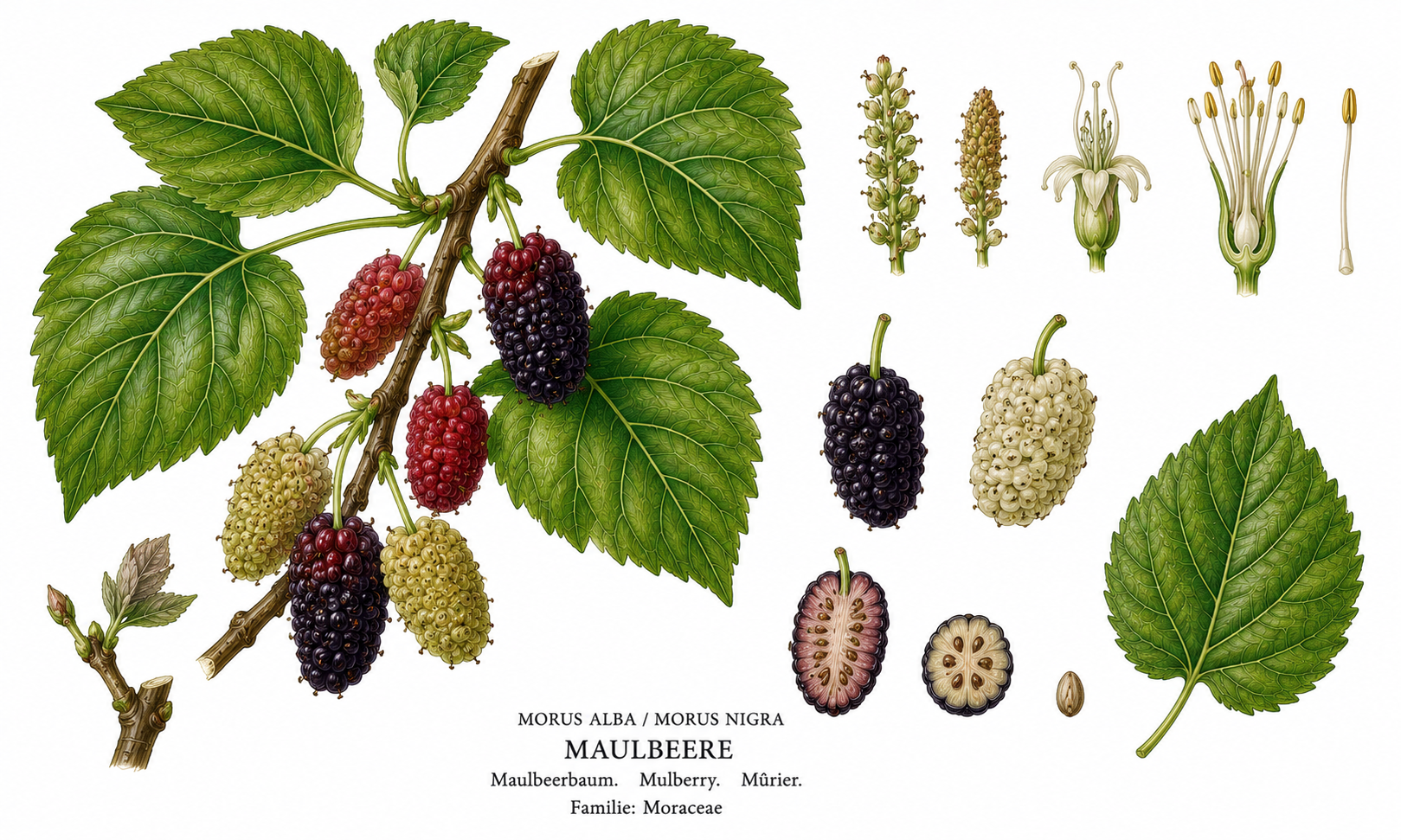
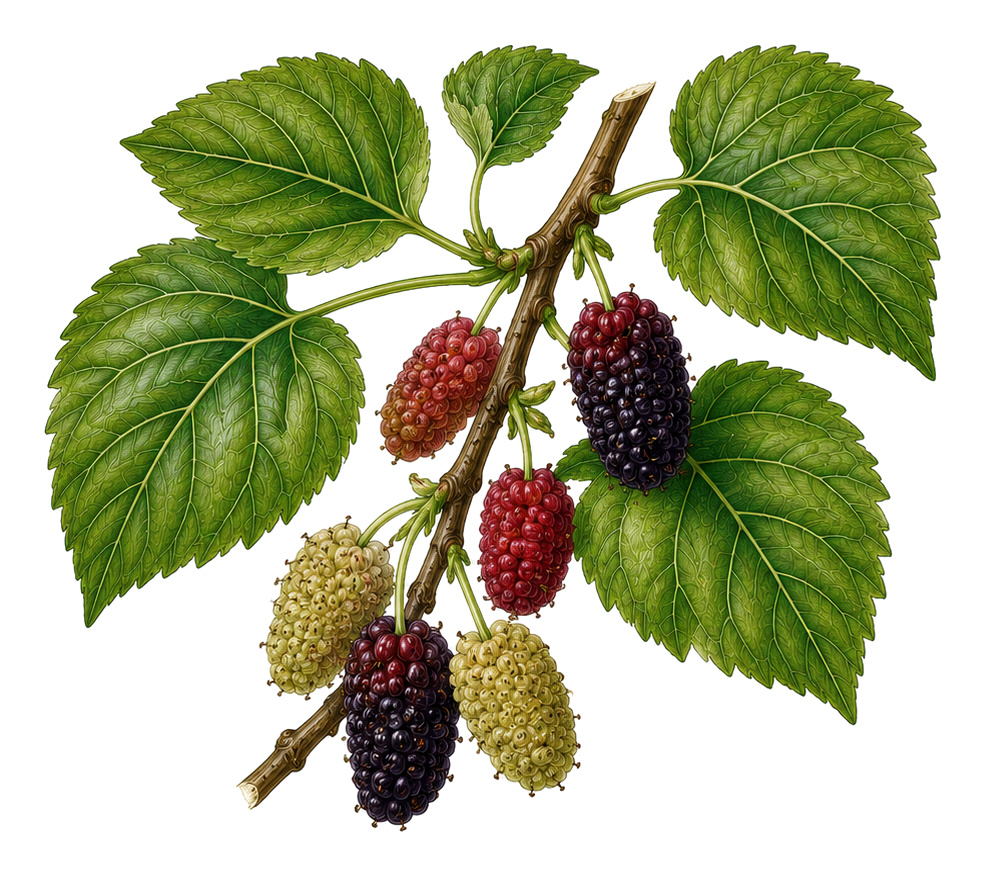
Mulberries are fascinating fruit trees with a long history. Their sweet fruits are a valuable addition to any garden.
Quick profile
Key data
Suitable growing locations:
Good neighbors
ComfreyWild Garlic
Avoid
Walnut
Indoor & direct sowing
Mulberry: Sowing and germination
Sowing under glass at 20°C; cold stratification often necessary for Morus nigra.
Direct sowing outdoors uncommon; propagation from saplings preferred.
Planting & site
Mulberry: Planting and spacing
Spring planting recommended for young trees in frost-prone areas.
Temperature & frost
Mulberry: Temperature and site
Water & nutrients
Mulberry: Water, nutrients and care
Container & growth
Mulberry: Container, support and growth
Year plan
Mulberry Calendar
From June to September, fruits ripen sequentially, offering a long harvest period.
Recurring tasks
Relevant now
June
- No additional single task
Next up
July
- No additional single task
Monthly tasks
Single tasks from monthly data; repeated seasonal windows are shown in the overview above.
January
Quiet month
February
No additional single task
March
No additional single task
April
No additional single task
May
Quiet month
June
No additional single task
August
No additional single task
September
No additional single task
October
No additional single task
November
No additional single task
December
Quiet month
Flowering & pollination
Mulberry Flowering & pollination
Flowering period
May to June
Flower type
Inconspicuous catkins
Self-fertility
self-fertile
Pollinator needed
no
Overview
Mulberries are primarily wind-pollinated, but insects can also contribute to pollination. Many varieties are self-fertile.
Notes
Mulberry trees are mostly monoecious (male and female flowers on the same plant). Some species are dioecious.
Pruning & care
Mulberry Pruning & care
Pruning type
Mulberries generally require little pruning. The focus is on training young trees and maintenance pruning for older specimens.
Pruning timing
Formative pruning for young trees, removal of dead or diseased wood. Only perform on frost-free days. Winter pruning should be done before sap rise to avoid heavy bleeding. For Morus nigra, very late winter pruning (just before bud break) or summer pruning is often better.
Light corrective and thinning pruning after harvest to limit growth and promote air circulation. Removal of water shoots. Summer pruning is less stressful for the tree and reduces bleeding. Ideal for size control and shaping.
Remove
Preserve
Avoid
Tools and hygiene
Clean and disinfect pruning tools before and after use to prevent disease transmission.
Companion guide
Mulberry Companion guide
Good neighbors
ComfreyWild Garlic
Avoid
Walnut
Use & storage
Mulberry Use & storage
Fruits ripen sequentially; harvest by shaking onto laid-out tarps.
Storage
Very short-term fresh, well-preserved when processed
Storage life
Only a few days fresh, significantly longer when frozen or processed.
Flavor
Sweet, slightly tart, aromatic; flavor varies from mild (white mulberry) to intense (black mulberry) depending on the variety.
Harvest
Fruits ripen sequentially; harvest by shaking onto laid-out tarps.
Culinary uses
Processing
After harvest
Mulberries are very delicate and spoil quickly. They should be refrigerated immediately after harvest and consumed or processed within a few days.
Notes
Mulberries are versatile and a healthy addition to many dishes. They can also be used to make vinegar or wine.
Edibility & safety
Mulberry Edibility & safety
For people
In brief: which parts are edible, which parts remain risky, and whether raw consumption makes sense.
Safety notes
Unripe mulberries contain a milky sap that can be mildly laxative and cause stomach upset. Ripe fruits are harmless.
Animal safety
This plant is not simply safe or unsafe for animals. 14 animal types have restrictions, so quantity, access, and plant part matter.
Each row shows which parts are more suitable and which parts are critical.
Companion animals
 Dog
DogRipe fruits
Unripe fruits, Leaves, Milky sap (in unripe fruits and other plant parts)
Ripe fruits
Unripe fruits, Leaves, Milky sap (in unripe fruits and other plant parts)
Ingestion of unripe fruits, Ingestion of leaves or other plant parts, Consumption of large quantities
Gastrointestinal upset, Vomiting, Diarrhea (mild laxative effect)
contact a vet if symptoms appear
Ripe mulberries are considered non-toxic for dogs and can be offered in moderation as a treat. However, unripe fruits, leaves, and the milky sap can cause gastrointestinal upset such as vomiting and diarrhea. These symptoms are generally mild and not life-threatening.
Open animal page Cat
CatRipe fruits
Unripe fruits, Leaves, Milky sap
Ripe fruits
Unripe fruits, Leaves, Milky sap
Consumption of unripe fruits, Consumption of large quantities (even ripe fruits)
Stomach upset, mild laxative effect (from unripe fruits)
observe
Ripe mulberries are generally safe for cats and can be given occasionally as a treat. Unripe fruits and other plant parts can cause stomach upset.
Open animal page Rabbit
Ripe fruits
Unripe fruits, Leaves, Milky sap
Ripe fruits
Unripe fruits, Leaves, Milky sap
Consumption of unripe fruit, Consumption of leaves, Consumption of milky sap
Stomach upset, mild laxative effect
observe
Ripe mulberry fruits are safe for rabbits as an occasional treat. Unripe fruits, leaves, and the milky sap can cause stomach upset.
Open animal page Guinea pig
Ripe fruits
Unripe fruits, Leaves, Milky sap
Ripe fruits
Unripe fruits, Leaves, Milky sap
Consumption of unripe fruit, Consumption of leaves
Stomach upset, mild laxative effect
observe
Ripe mulberries are safe for guinea pigs and can be given in moderation as a treat. Unripe fruits and leaves should be avoided as they can cause stomach upset.
Open animal page Hamster
Ripe fruits
Unripe fruits, Leaves, Milky sap
Ripe fruits
Unripe fruits, Leaves, Milky sap
Consumption of unripe fruit, Consumption of leaves, Consumption of milky sap
Stomach upset, mild laxative effect
observe
Ripe mulberries are suitable as an occasional treat for hamsters. Unripe fruits and other plant parts can cause stomach upset.
Open animal page Budgie
Ripe fruits
Unripe fruits, Leaves, Milky sap
Ripe fruits
Unripe fruits, Leaves, Milky sap
Consumption of unripe fruits or leaves
Stomach upset, mild laxative effect
observe
Ripe mulberries are safe for budgies as an occasional treat. Unripe fruits and leaves can cause stomach upset.
Open animal pageFarm animals
 Horse
HorseRipe fruits
Unripe fruits, Leaves, Milky sap
Ripe fruits
Unripe fruits, Leaves, Milky sap
Consumption of unripe fruits, Consumption of leaves
Stomach upset, mild laxative effect
usually no action needed
Ripe mulberry fruits are generally safe for horses and can be fed as an occasional treat. Unripe fruits and leaves may cause stomach upset.
Open animal page Chicken
Ripe fruits
Unripe fruits, Leaves, Milky sap
Ripe fruits
Unripe fruits, Leaves, Milky sap
Consumption of unripe fruits, Consumption of leaves, Overconsumption of ripe fruits
Stomach upset, Diarrhea
observe
Ripe mulberry fruits are generally safe for chickens and can be offered as treats. Unripe fruits and leaves may cause stomach upset. Overconsumption of ripe fruits can lead to diarrhea.
Open animal page Duck
DuckRipe fruits
Unripe fruits, Leaves, Milky sap
Ripe fruits
Unripe fruits, Leaves, Milky sap
Consumption of unripe fruits, Consumption of leaves
Stomach upset, mild laxative effect
usually no action needed
Ripe mulberries are suitable for ducks as an occasional treat. Unripe fruits and leaves may cause stomach upset.
Open animal page Goose
GooseRipe fruits
Unripe fruits, Leaves, Milky sap
Ripe fruits
Unripe fruits, Leaves, Milky sap
Consumption of unripe fruits, Consumption of leaves, Overconsumption of ripe fruits
Stomach upset, mild laxative effect
observe
Ripe mulberry fruits are safe for geese in moderation. Unripe fruits and leaves can cause stomach upset. Quantity should be limited to avoid digestive issues.
Open animal page Sheep
SheepRipe fruits
Unripe fruits, Leaves, Milky sap
Ripe fruits
Unripe fruits, Leaves, Milky sap
Consumption of unripe fruits, Consumption of leaves, Overconsumption of ripe fruits
Stomach upset, mild laxative effect
observe
Ripe mulberries are generally safe for sheep and can be offered as an occasional treat or part of the diet. Unripe fruits and leaves may cause stomach upset. Overconsumption of ripe fruits can lead to digestive issues.
Open animal page Goat
GoatRipe fruits, Leaves (in moderation)
Unripe fruits, Milky sap
Ripe fruits, Leaves (in moderation)
Unripe fruits, Milky sap
Consumption of unripe fruit, Consumption of milky sap
Gastrointestinal upset, mild laxative effect
observe
Ripe mulberry fruits are safe for goats and can be offered as treats or a supplement to the normal diet. Unripe fruits and the milky sap can cause mild gastrointestinal upset. Leaves are palatable in moderation.
Open animal page Cattle
Ripe fruits
Unripe fruits, Leaves, Milky sap
Ripe fruits
Unripe fruits, Leaves, Milky sap
Consumption of unripe fruits, Consumption of leaves
Stomach upset, mild laxative effect
observe
Ripe mulberry fruits are safe for cattle and can be offered as an occasional treat or supplement to the normal feed ration. Unripe fruits and leaves may cause stomach upset.
Open animal page Pig
PigRipe fruits
Unripe fruits, Leaves, Milky sap
Ripe fruits
Unripe fruits, Leaves, Milky sap
Consumption of unripe fruit, Consumption of leaves
Stomach upset, mild laxative effect
observe
Ripe mulberry fruits are suitable for pigs as an occasional treat. Unripe fruits and leaves may cause stomach upset.
Open animal pageThese guidelines are for general information only and do not replace veterinary diagnosis. If critical plant parts were ingested or the animal shows unusual behaviour or symptoms, seek veterinary advice.
Max risk
unknown
Highest status
selected parts only
Urgency
contact a vet if symptoms appear
Saving seed
Mulberry Saving seed
Seed saving
yes
Seed viability
1 - 2 years
Notes
Propagation from seeds is possible for mulberries but is less common in home gardens than vegetative propagation (cuttings, grafting) to ensure true-to-type plants.
Practical tips
Mulberry Practical tips
Common beginner mistakes
Success pattern
High-impact tips
Grower observations
Plant Profile
Additional plant images

Health
Pests, Diseases
Pests
Bark beetle
Exit holes in the bark, wilting symptoms in weakened trees.
Fall webworm
Webbing nests in branches, defoliation of leaves.
Diseases
Leaf spot disease
Dark, sunken spots on leaves, premature leaf drop.
Bacterial blight
Black spots on shoot tips, dieback of young twigs.
Deficiencies
Iron deficiency (Chlorosis)
Yellow leaves with green veins, especially on very calcareous soils.
Plant health
Diagnosis help
Mulberry Diagnosis help
Pest groups
Disease groups
Prevention
Diagnosis
In case of wilting, first check soil moisture and root condition (suspicion of waterlogging).
Cultural prevention
Monitoring
First response
Diagnostic rules
Leaves turn yellow, veins stay green
Possible causes: Iron deficiency, High pH blockage
- Test soil pH
- Check for soil compaction
FAQ
When do mulberries bear fruit?
Mulberries typically start bearing fruit 2-3 years after planting, with full yields on mature trees.
How do I prune a mulberry tree?
Mulberries require minimal pruning. Focus on formative pruning for young trees and light maintenance pruning for older ones, preferably in summer after harvest or in late winter on frost-free days. Avoid heavy pruning in spring due to sap bleeding.
Can mulberries be grown in pots?
Yes, dwarf varieties like 'Mojo Berry' are well-suited for container cultivation, requiring a large pot (min. 30L) and good drainage.
Are mulberry fruits messy?
Yes, ripe mulberries can stain pavements and clothes heavily. It's advisable to plant them away from paths or use tarps during harvest.
Are all parts of the mulberry tree edible?
Only ripe fruits are recommended for human consumption. Unripe fruits and other plant parts contain a milky sap that can be mildly laxative.
Is Mulberry safe for Dog?
Mulberry is classified as selected parts only for Dog. Risk: unknown. Urgency: contact a vet if symptoms appear. Ripe mulberries are considered non-toxic for dogs and can be offered in moderation as a treat. However, unripe fruits, leaves, and the milky sap can cause gastrointestinal upset such as vomiting and diarrhea. These symptoms are generally mild and not life-threatening.
Is Mulberry safe for Cat?
Mulberry is classified as selected parts only for Cat. Risk: unknown. Urgency: observe. Ripe mulberries are generally safe for cats and can be given occasionally as a treat. Unripe fruits and other plant parts can cause stomach upset.
Is Mulberry safe for Rabbit?
Mulberry is classified as selected parts only for Rabbit. Risk: unknown. Urgency: observe. Ripe mulberry fruits are safe for rabbits as an occasional treat. Unripe fruits, leaves, and the milky sap can cause stomach upset.
Is Mulberry safe for Guinea pig?
Mulberry is classified as selected parts only for Guinea pig. Risk: unknown. Urgency: observe. Ripe mulberries are safe for guinea pigs and can be given in moderation as a treat. Unripe fruits and leaves should be avoided as they can cause stomach upset.
Guides
Related guides
Guide
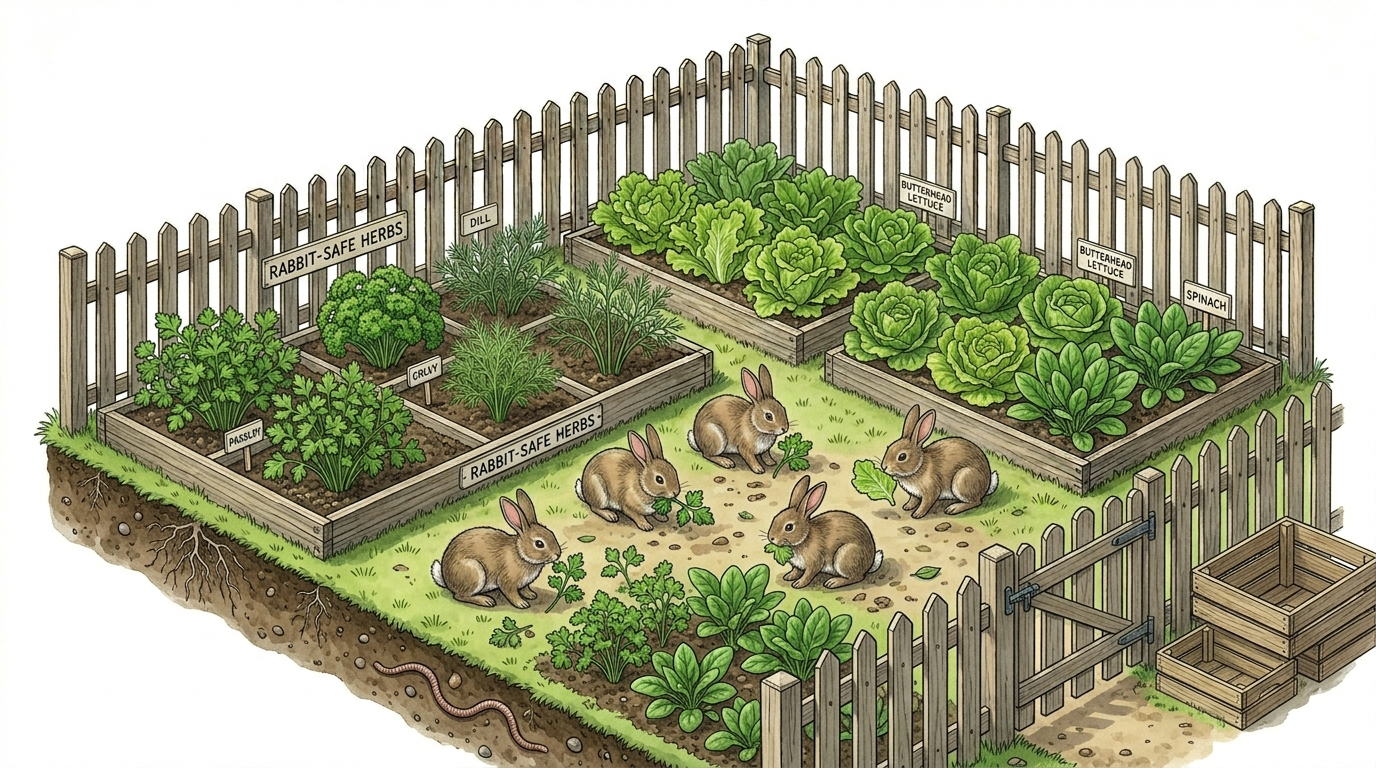
Rabbits in the Garden: Herbs and Vegetables
Learn how to choose suitable herbs and vegetables for rabbits, grow feeding plants, and plan a rabbit-friendly garden.
Guide
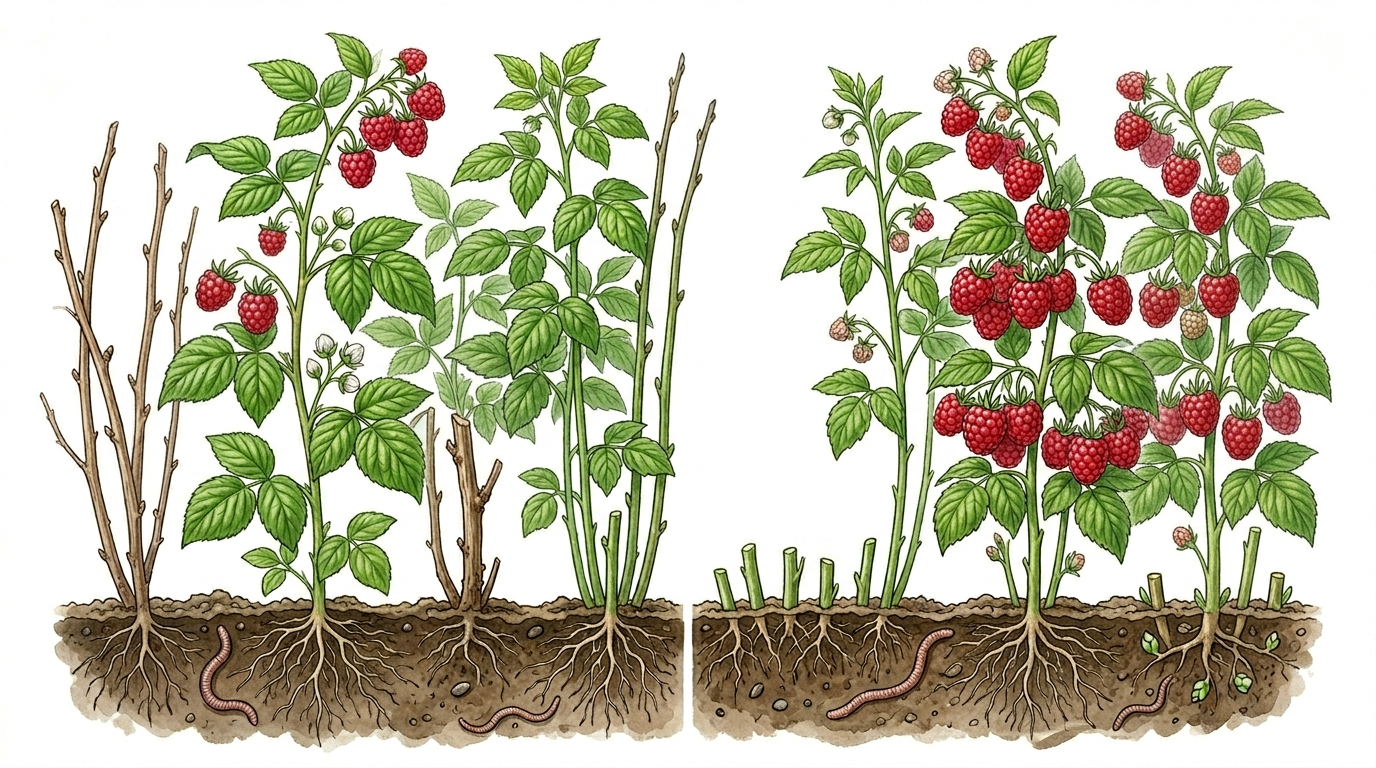
Pruning Raspberries: Summer and Autumn Types
Learn how to prune raspberries correctly by understanding the differences between summer-bearing and autumn-bearing types.
Guide
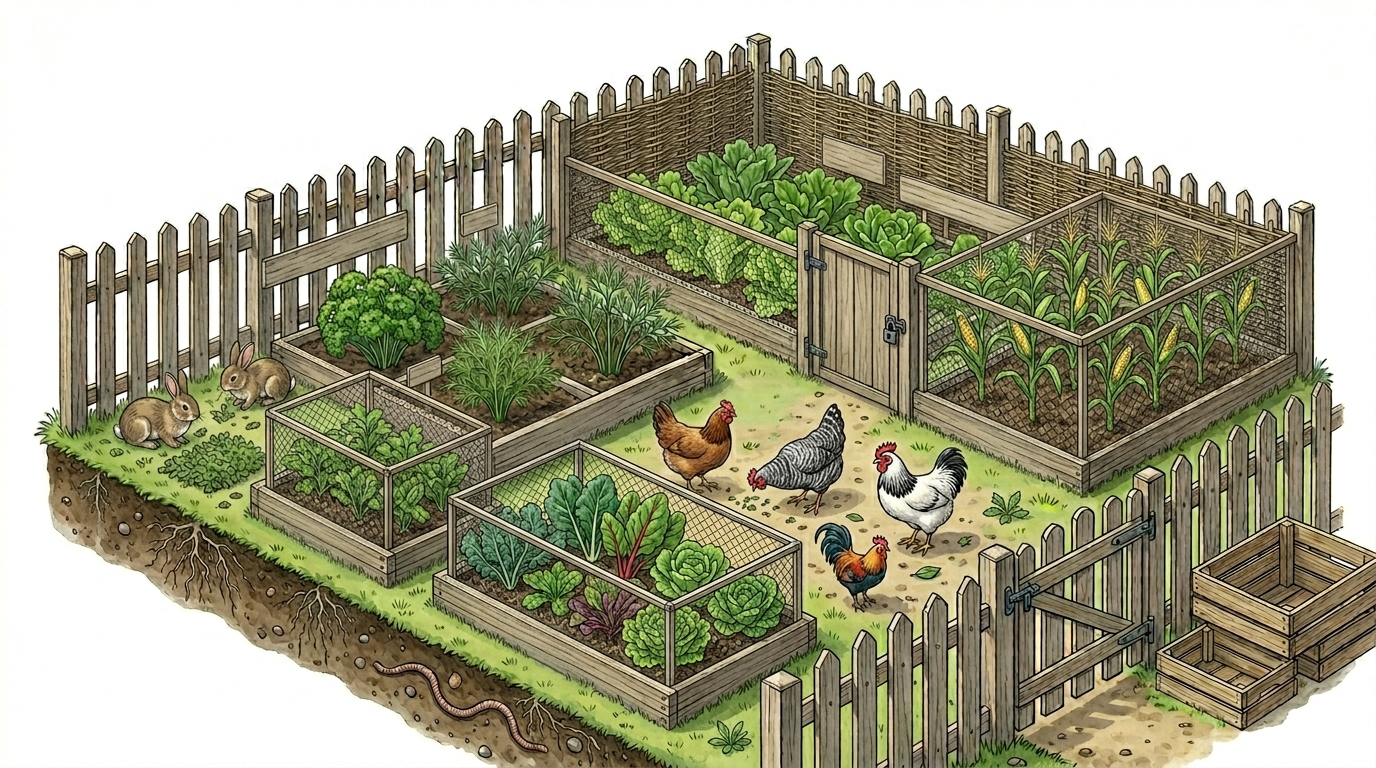
Chickens in the Garden: Safe Plants and Zones
Learn how to design a chicken-friendly garden with suitable plants, protected beds, and well-planned activity areas.
Guide
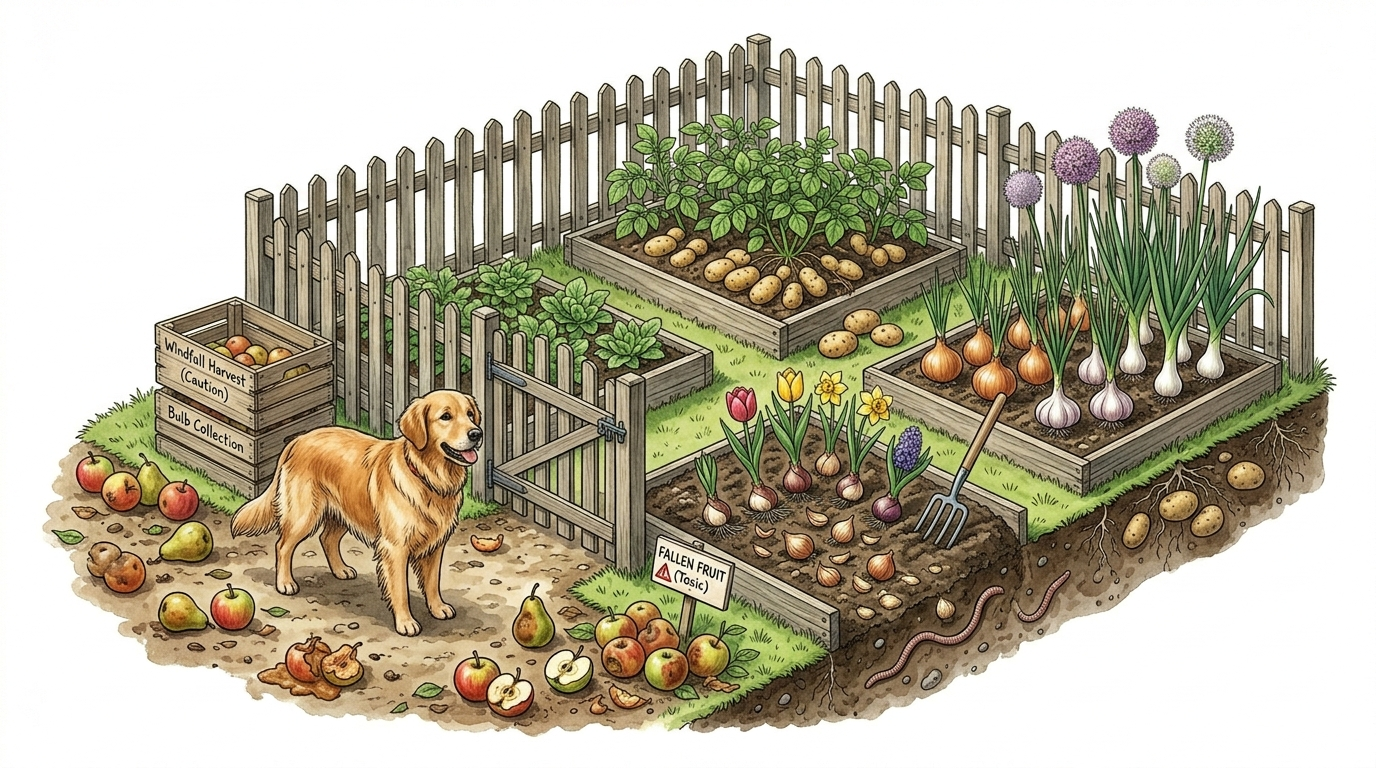
Dogs in the Garden: Windfall Fruit and Risks
Keep your garden dog-safe by managing windfall fruit, seeds, stored crops, and potentially problematic plant parts.
Internal links
Related plants
Fig
Both belong to the mulberry family (Moraceae).
Belongs to the same family (Moraceae) and is a fruit tree.
Paper Mulberry
Both belong to the mulberry family (Moraceae).
Closely related, belongs to the same family (Moraceae).
Leaf spot disease
Typical fungal disease for mulberries.
Bacterial blight
Can affect mulberries, especially in wet weather.
Raspberry
Fruits are consumed fresh or made into jam similarly.
Blackberry
Fruits are consumed fresh or made into jam similarly.
Mulberry (color)
The name 'mulberry' is also used for a color shade.
Sources
Public sources
- Wikidata entity
Wikidata · 2026-05-14
- GBIF species match
GBIF · 2026-05-14
- Deutschsprachige Wikipedia: Maulbeeren
Wikipedia · 2026-05-14
- English Wikipedia: Morus (plant)
Wikipedia · 2026-05-14