Plant Profile
watermelonCitrullus lanatus
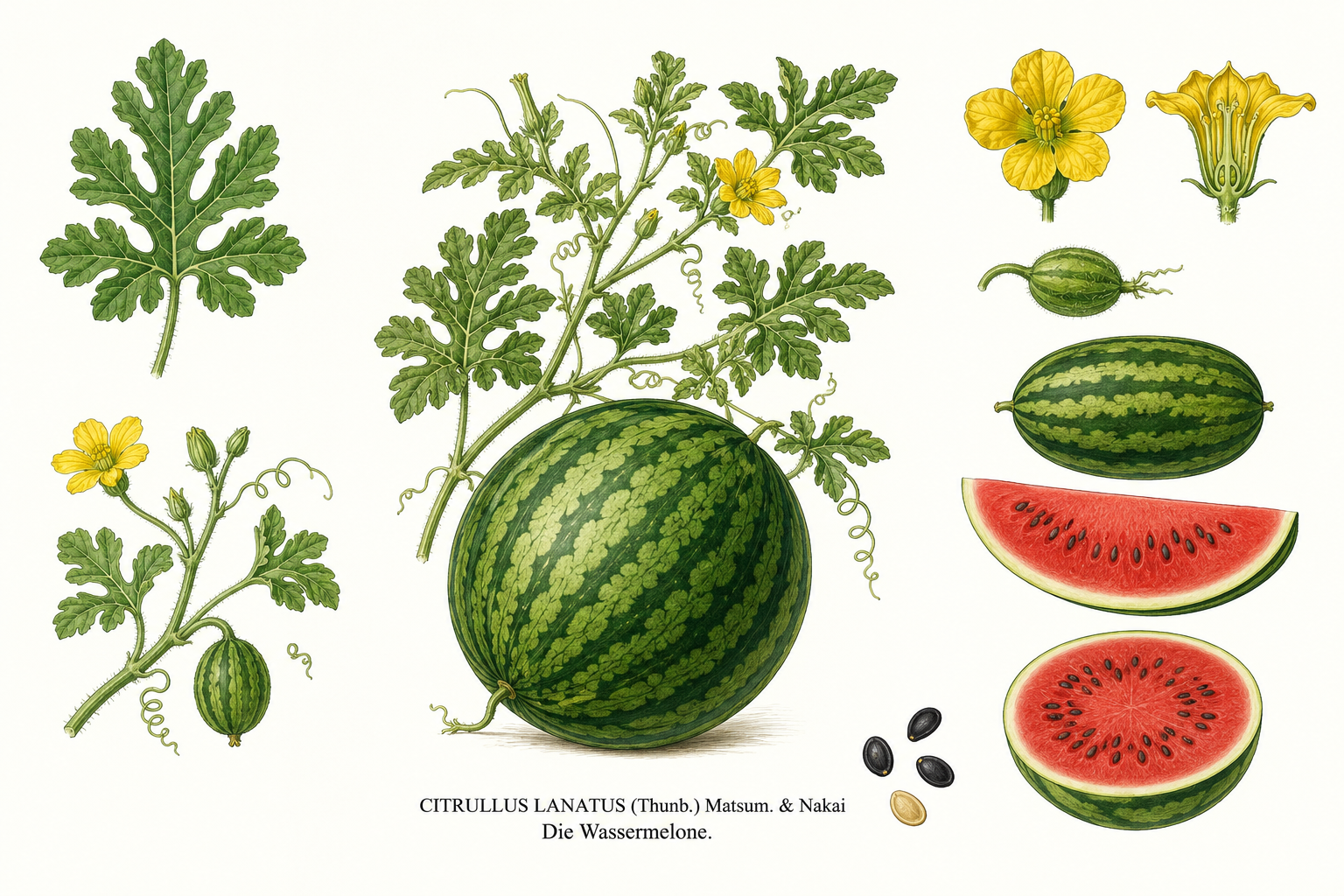
The watermelon (Citrullus lanatus) is a popular summer fruit that requires plenty of warmth and sun. It originates from Africa and belongs to the gourd family. With its sweet, juicy flesh, it is a refreshing delicacy on hot days. Cultivation requires patience and the right conditions, but rewards with a bountiful harvest.
Quick profile
Key data
Suitable growing locations:
Indoor & direct sowing
watermelon: Sowing and germination
Watermelons love warmth and should only be planted outdoors after the last frost. Pre-cultivation indoors is recommended.
Direct sowing is possible when the soil has warmed sufficiently (at least 15°C). This is usually only the case from mid-May onwards.
Planting & site
watermelon: Planting and spacing
Plant the pre-cultivated seedlings outdoors or in a greenhouse after the Ice Saints (mid-May), when there is no longer any risk of frost.
Site & practical notes
Temperature & frost
watermelon: Temperature and site
Water & nutrients
watermelon: Water, nutrients and care
Container & growth
watermelon: Container, support and growth
Year plan
watermelon Calendar
Enjoy the harvest in late summer when the fruits have reached their full sweetness.
Relevant now
June
- Watering and fertilizingActive growth: Water regularly and deeply, especially in hot weather. Fertilize with a balanced fertilizer.
- WeedingWeeds present: Keep the bed free of weeds to avoid competition.
Next up
July
- FertilizingFruit development: A second fertilization can be done if needed, preferably with a potassium-rich fertilizer.
- WateringDry weather: Especially important during fruit development. Avoid waterlogging.
Monthly tasks
Single tasks from monthly data; repeated seasonal windows are shown in the overview above.
January
Quiet month
February
Quiet month
March
Direct sowing
- Sowing indoorsSoil temperature at least 20-25°C: Watermelons are light germinators. Sow them in individual pots to avoid pricking out.
April
Growing
- Pricking outSeedlings have developed true leaves: If the seedlings are too crowded, prick them out into larger pots.
May
Planting
- Planting out into open ground/greenhouseNo risk of frost, soil temperature at least 15°C: Ensure sufficient planting distance (1-1.5 m). Provide protection from wind if necessary.
June
Growing
- Watering and fertilizingActive growth: Water regularly and deeply, especially in hot weather. Fertilize with a balanced fertilizer.
- WeedingWeeds present: Keep the bed free of weeds to avoid competition.
August
Plant health
- Pest and disease controlSymptoms observed: Watch for signs of powdery mildew, aphids, or spider mites.
September
Harvest
- HarvestingFruits ripe: Harvest ripe fruits. Protect them from heavy rain to prevent rot.
October
Harvest
- Final harvestBefore first frost: Harvest all remaining fruits before the first frost.
November
Quiet month
December
Quiet month
Flowering & pollination
watermelon Flowering & pollination
Self-fertility
self-fertile
Pollinator needed
yes

Overview
Although watermelons are self-fertile, cross-pollination by insects, especially bees, is essential for good fruit development and size.
Notes
Bees are the primary pollinators. One bee colony per 1-2 hectares of cultivation area is recommended. Avoid using insecticides during the flowering period.
Companion guide
watermelon Companion guide
Use & storage
watermelon Use & storage
Harvest time depends on the variety and weather conditions. Fruits are ripe when they sound dull when tapped and the tendril attachment becomes dry.
Storage
Cool and dark
Storage life
Whole fruits: 2-4 weeks under optimal conditions. Cut fruits: 3-5 days in the refrigerator.
Harvest
Harvest time depends on the variety and weather conditions. Fruits are ripe when they sound dull when tapped and the tendril attachment becomes dry.
Processing
After harvest
Carefully detach fruits from the stem to avoid injury. Do not wash unless consuming immediately, as this can affect shelf life. Protect from direct sunlight.
Edibility & safety
watermelon Edibility & safety
For people
In brief: which parts are edible, which parts remain risky, and whether raw consumption makes sense.
Safety notes
The fruit of Citrullus lanatus is non-toxic and safe for consumption. Some wild forms or unripe fruits may contain bitter compounds.
Animal safety
This plant is not simply safe or unsafe for animals. 14 animal types have restrictions, so quantity, access, and plant part matter.
Each row shows which parts are more suitable and which parts are critical.
Companion animals
 Dog
DogFlesh
Seeds, Rind
Flesh
Seeds, Rind
Excessive consumption of seeds or rind may cause gastrointestinal upset.
Gastrointestinal upset (if overconsumed)
usually no action needed
Watermelon flesh is safe for dogs in moderation and is commonly used as a treat. Seeds should be removed as they pose a choking hazard, although they are not toxic. The white rind between the flesh and hard shell is edible but often tough and tasteless, thus not recommended.
Open animal page Cat
CatFlesh
Seeds, Rind
Flesh
Seeds, Rind
Excessive consumption of seeds or rind may cause gastrointestinal upset.
Gastrointestinal upset (if overconsumed)
usually no action needed
Watermelon flesh is safe for cats in moderation and can be given as an occasional treat. Seeds and rind should be avoided as they are difficult to digest and may pose a choking hazard. Cats are obligate carnivores, so plant matter should only be offered in very small quantities.
Open animal page Rabbit
Flesh
Seeds, Leaves, Stems
Flesh
Seeds, Leaves, Stems
Excessive consumption of seeds or leaves, Unripe fruits with higher bitter compound levels
Gastrointestinal upset, Diarrhea
observe
Watermelon flesh is suitable for rabbits in small amounts as an occasional treat. Seeds, leaves, and stems contain potentially harmful cucurbitacins and should be avoided. Due to high water and sugar content, feed only occasionally.
Open animal page Guinea pig
Flesh
Seeds, Rind, Leaves
Flesh
Seeds, Rind, Leaves
Excessive consumption of seeds, rind, leaves, or stems., Unripe fruits with higher bitter compound levels.
Gastrointestinal upset (if green parts or unripe fruits are consumed)
observe
Watermelon flesh is suitable for guinea pigs in small amounts as an occasional treat. Seeds, rind, leaves, and stems should be avoided as they may contain potentially harmful cucurbitacins. Due to high water and sugar content, feed only occasionally.
Open animal page Hamster
Flesh
Seeds, Rind
Flesh
Seeds, Rind
Excessive consumption of seeds or rind., Unripe fruits with higher bitter compound levels.
Gastrointestinal upset (if seeds or rind are overconsumed)
observe
Watermelon flesh is suitable for hamsters in small amounts as an occasional treat. Seeds and rind should be avoided as they are difficult to digest and may contain potential cucurbitacins. Due to high water and sugar content, feed only occasionally.
Open animal page Budgie
Flesh (seedless)
Seeds, Leaves, Stems
Flesh (seedless)
Seeds, Leaves, Stems
Excessive consumption of seeds, leaves, or stems., Unripe fruits with higher bitter compound levels.
Gastrointestinal upset (if green parts or unripe fruits are consumed)
usually no action needed
Watermelon flesh (seedless) is safe for budgies in very small amounts as an occasional treat. Seeds, leaves, and stems should be avoided as they may contain potential cucurbitacins. Due to high water and sugar content, offer only in tiny amounts.
Open animal pageFarm animals
 Horse
HorseFlesh
Seeds in large quantities, Rind (if overconsumed)
Flesh
Seeds in large quantities, Rind (if overconsumed)
Overfeeding, Unripe or wild forms with bitter compounds, High sugar content
Gastrointestinal upset, Diarrhea if overconsumed
observe
Watermelon flesh is safe for horses in moderation and can serve as a treat. Due to high water and sugar content, it should only be fed occasionally. Seeds and rind may cause digestive issues if overconsumed. Wild or unripe forms may contain cucurbitacins, which are bitter and can cause gastrointestinal irritation. Seeds should be given only rarely and cooked due to potential intestinal blockage risk.
Open animal page Chicken
Flesh
Seeds, Leaves, Stems
Flesh
Seeds, Leaves, Stems
Excessive consumption of seeds or leaves, Unripe fruits with higher bitter compound levels
Gastrointestinal upset, Diarrhea, Vomiting
observe
Watermelon flesh is safe for chickens in small amounts as a treat. Seeds may cause gastrointestinal upset if consumed excessively. Leaves and stems contain potentially toxic cucurbitacins and should be avoided. Due to high water content, offer only in small amounts.
Open animal page Duck
DuckFlesh
Seeds, Leaves, Stems
Flesh
Seeds, Leaves, Stems
Overconsumption of seeds or green parts, Unripe fruits with higher bitter compound levels
Gastrointestinal upset, Diarrhea, Vomiting
observe
Watermelon flesh is suitable for ducks in small amounts as a treat. Seeds, leaves, and stems contain potentially toxic cucurbitacins and should be avoided. Overconsumption can lead to digestive issues. This is a cautious inference from the geese profile and the known plant-part risks.
Open animal page Goose
GooseFlesh
Seeds, Leaves, Stems
Flesh
Seeds, Leaves, Stems
Overconsumption of seeds or green parts, Unripe fruits with higher bitter compound levels
Gastrointestinal upset, Diarrhea, Vomiting
observe
Watermelon flesh is suitable for geese in small amounts as a treat, but seeds, leaves, and stems contain potentially toxic cucurbitacins and should be avoided. Overconsumption can lead to digestive issues. Young leaves and flowers are rarely used and may be tolerated in very small amounts but are not recommended.
Open animal page Sheep
SheepFlesh
Seeds in large quantities, unripe fruits
Flesh
Seeds in large quantities, unripe fruits
Excessive seed consumption, Feeding unripe fruits, Individual sensitivity
Gastrointestinal upset, Diarrhea, At high seed quantities: respiratory distress
observe
Watermelon flesh is generally safe for sheep as an occasional treat. Seeds contain low levels of cyanogenic compounds and should only be fed in very limited quantities. Unripe fruits may contain cucurbitacins that can cause gastrointestinal irritation. Sheep should not have access to wild forms or bitter-tasting melons. The high water and sugar content necessitates limited feeding to avoid digestive upset.
Open animal page Goat
GoatFlesh
Seeds in large quantities, Unripe fruits
Flesh
Seeds in large quantities, Unripe fruits
Excessive consumption of seeds, green parts, or unripe fruits., Individual sensitivity.
Gastrointestinal upset (if green parts or unripe fruits are consumed), Diarrhea
observe
Watermelon flesh is suitable for goats in small amounts as a treat. Seeds, green parts, and unripe fruits should be avoided as they may contain potentially harmful cucurbitacins. Overconsumption can lead to digestive issues. This is a cautious inference from the sheep profile and the known plant-part risks.
Open animal page Cattle
Flesh
Seeds in large quantities, unripe fruits
Flesh
Seeds in large quantities, unripe fruits
Excessive seed consumption, Feeding unripe fruits, Individual sensitivity
Gastrointestinal upset, Diarrhea, At high seed quantities: respiratory distress
observe
Watermelon flesh is safe for cattle in moderation and can serve as a treat. Seeds contain low levels of cyanogenic compounds and should only be fed in very limited quantities. Unripe fruits may contain cucurbitacins that can cause gastrointestinal irritation. The high water and sugar content necessitates limited feeding to avoid digestive upset. This is a cautious inference from the sheep profile and the known…
Open animal page Pig
PigFlesh
Seeds in large quantities, unripe fruits
Flesh
Seeds in large quantities, unripe fruits
Excessive consumption of seeds, green parts, or unripe fruits., Individual sensitivity.
Gastrointestinal upset (if green parts or unripe fruits are consumed), Diarrhea
observe
Watermelon flesh is suitable for pigs in small amounts as a treat. Seeds, green parts, and unripe fruits should be avoided as they may contain potentially harmful cucurbitacins. Overconsumption can lead to digestive issues. This is a cautious inference from the sheep profile and the known plant-part risks.
Open animal pageThese guidelines are for general information only and do not replace veterinary diagnosis. If critical plant parts were ingested or the animal shows unusual behaviour or symptoms, seek veterinary advice.
Max risk
unknown
Highest status
selected parts only
Urgency
observe
Saving seed
watermelon Saving seed
Seed viability
3 - 5 years
Practical tips
watermelon Practical tips
Common beginner mistakes
Success pattern
High-impact tips
Plant Profile
Additional plant images
Health
Pests, Diseases
Plant health
Diagnosis help
watermelon Diagnosis help
Pest groups
Disease groups
Prevention
Diagnosis
Accurate diagnosis of problems often requires observing symptoms on leaves, stems, and fruits, as well as considering cultivation conditions. When in doubt, it is advisable to consult specialized literature or experts.
Cultural prevention
Monitoring
First response
Diagnostic rules
White, powdery coating on leaves
Possible causes: Echter mehltau cucurbitaceen
- Witterung (warm, feucht)
- Luftzirkulation
Yellowish spots on leaves, grayish-blue coating on leaf underside
Possible causes: Falscher mehltau cucurbitaceen
- Weather conditions (cool, humid)
- leaf wetness overnight
Rapid wilting of vines or entire plant, even with moist soil
Possible causes: Bakterielle welke cucurbitaceen, Wurzelfaeule cucurbitaceen
- pest infestation (cucumber beetles)
- soil moisture and drainage
- cut through the stem (bacterial ooze test)
Wilting, stunted growth, mushy roots
Possible causes: Wurzelfaeule cucurbitaceen
- soil moisture and drainage
- Wurzeluntersuchung
FAQ
When is the best time to sow watermelons?
Sowing indoors is done about 4-6 weeks before the last frost, typically in March or April. Direct sowing outdoors is only possible from mid-May onwards, when the soil has reached at least 15°C.
How much space do watermelons need in the garden?
Watermelons are vigorous growers and require ample space. Plan for about 1 to 1.5 meters of space in all directions per plant to ensure good air circulation and prevent diseases.
How do I know if my watermelon is ripe?
Ripe watermelons sound dull and hollow when tapped. The tendril attachment, where the fruit hangs from the stem, becomes dry and woody. The underside of the fruit also changes color from whitish to yellowish.
Can watermelons be grown in containers?
Due to their vigorous growth and space requirements, watermelons are generally unsuitable for container cultivation. However, some dwarf varieties might be suitable for larger containers, but yields are often lower.
Why are my watermelons splitting?
Fruit splitting is usually caused by uneven watering. If the plant receives a sudden influx of water after a dry spell, the fruit can split. Ensure consistent soil moisture.
Is watermelon safe for Dog?
watermelon is classified as selected parts only for Dog. Risk: unknown. Urgency: usually no action needed. Watermelon flesh is safe for dogs in moderation and is commonly used as a treat. Seeds should be removed as they pose a choking hazard, although they are not toxic. The white rind between the flesh and hard shell is edible but often tough and tasteless, thus not recommended.
Is watermelon safe for Cat?
watermelon is classified as selected parts only for Cat. Risk: unknown. Urgency: usually no action needed. Watermelon flesh is safe for cats in moderation and can be given as an occasional treat. Seeds and rind should be avoided as they are difficult to digest and may pose a choking hazard. Cats are obligate carnivores, so plant matter should only be offered in very small quantities.
Is watermelon safe for Rabbit?
watermelon is classified as selected parts only for Rabbit. Risk: unknown. Urgency: observe. Watermelon flesh is suitable for rabbits in small amounts as an occasional treat. Seeds, leaves, and stems contain potentially harmful cucurbitacins and should be avoided. Due to high water and sugar content, feed only occasionally.
Is watermelon safe for Guinea pig?
watermelon is classified as selected parts only for Guinea pig. Risk: unknown. Urgency: observe. Watermelon flesh is suitable for guinea pigs in small amounts as an occasional treat. Seeds, rind, leaves, and stems should be avoided as they may contain potentially harmful cucurbitacins. Due to high water and sugar content, feed only occasionally.
Guides
Related guides
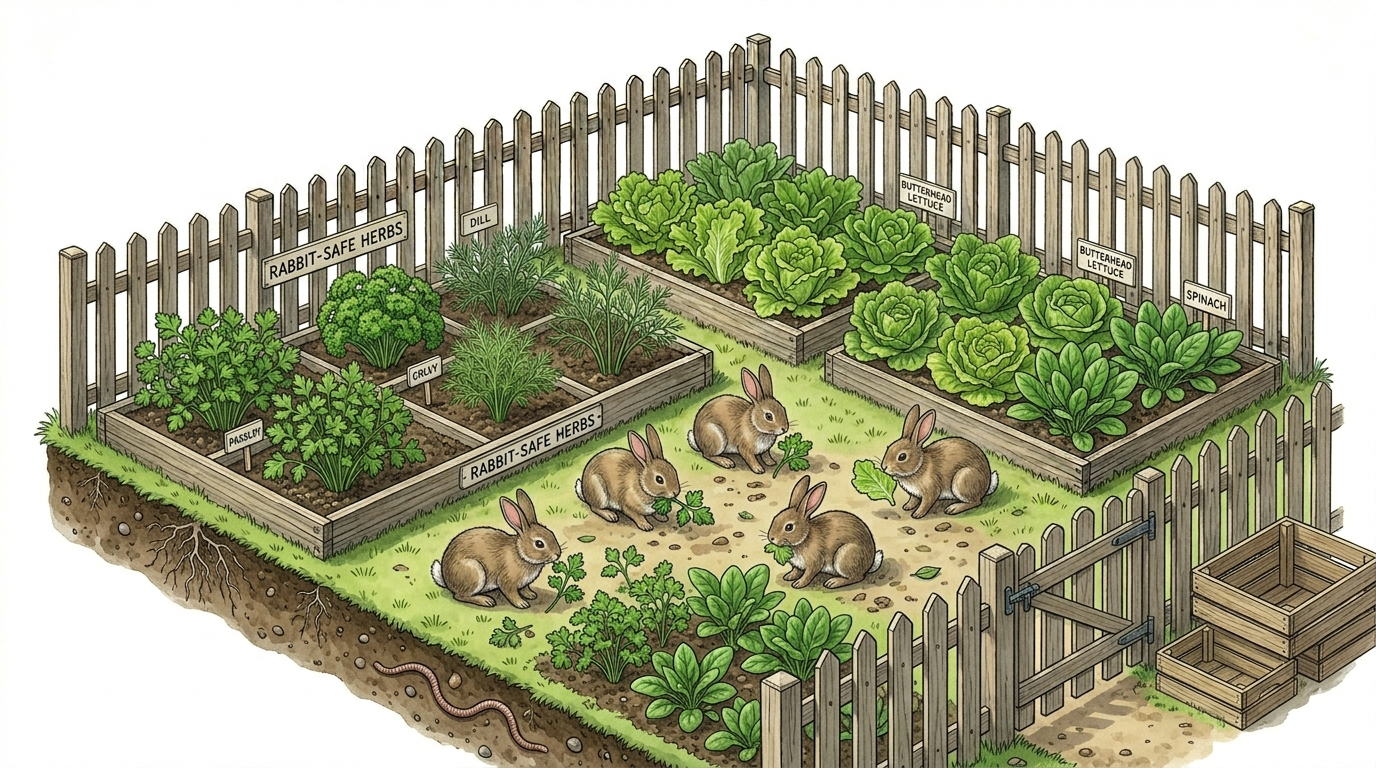
Guide
Rabbits in the Garden: Herbs and Vegetables
Learn how to choose suitable herbs and vegetables for rabbits, grow feeding plants, and plan a rabbit-friendly garden.
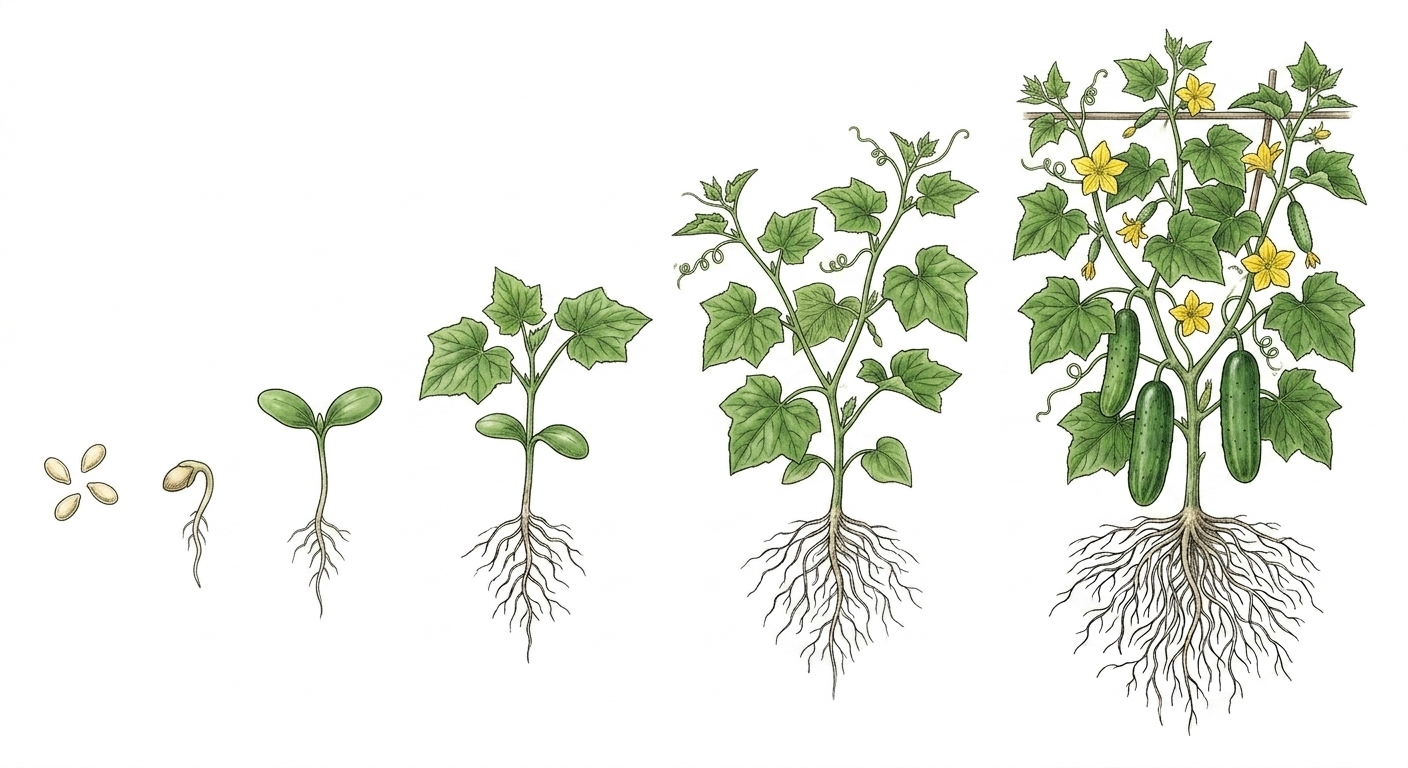
Guide
Growing Cucumbers: Starting, Supports and Harvest
Learn how to grow cucumbers successfully with indoor starting, transplanting, trellises, watering, and regular harvesting.
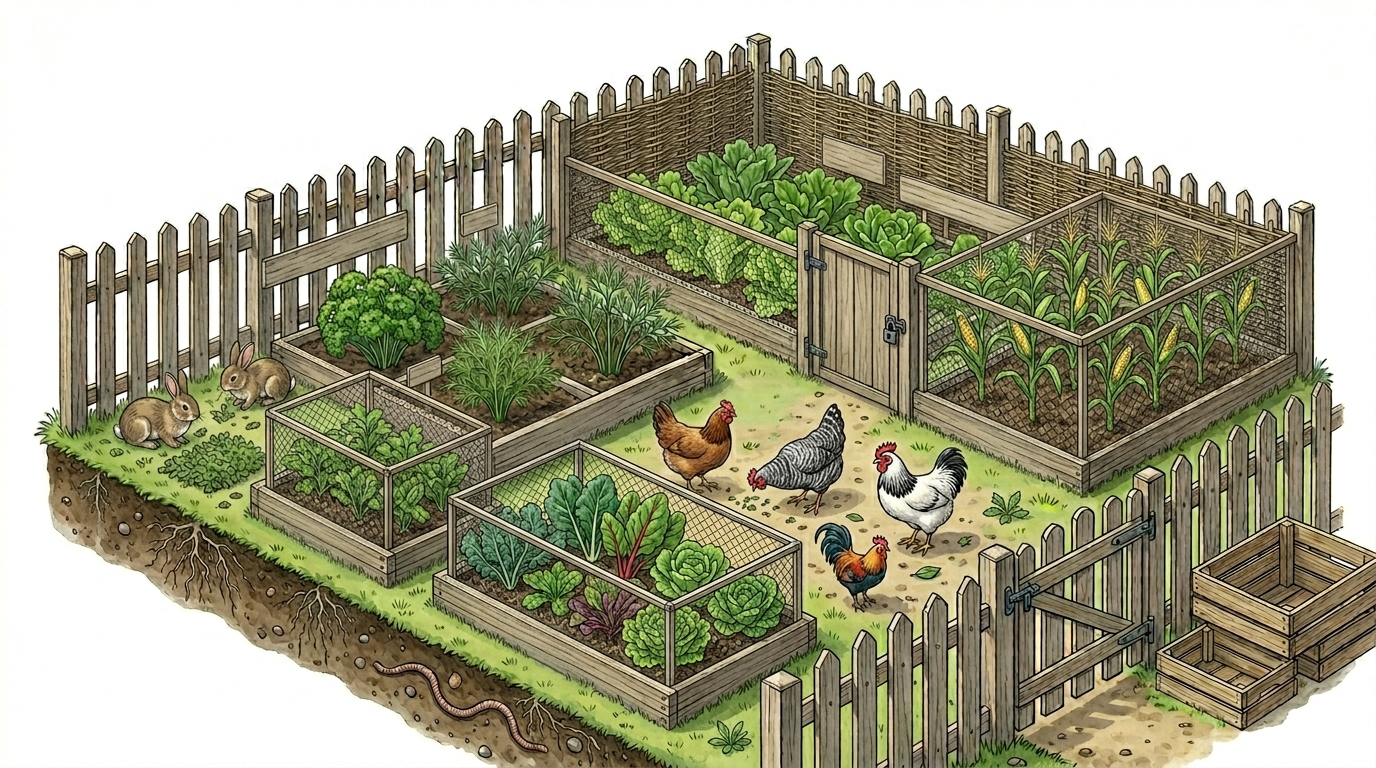
Guide
Chickens in the Garden: Safe Plants and Zones
Learn how to design a chicken-friendly garden with suitable plants, protected beds, and well-planned activity areas.
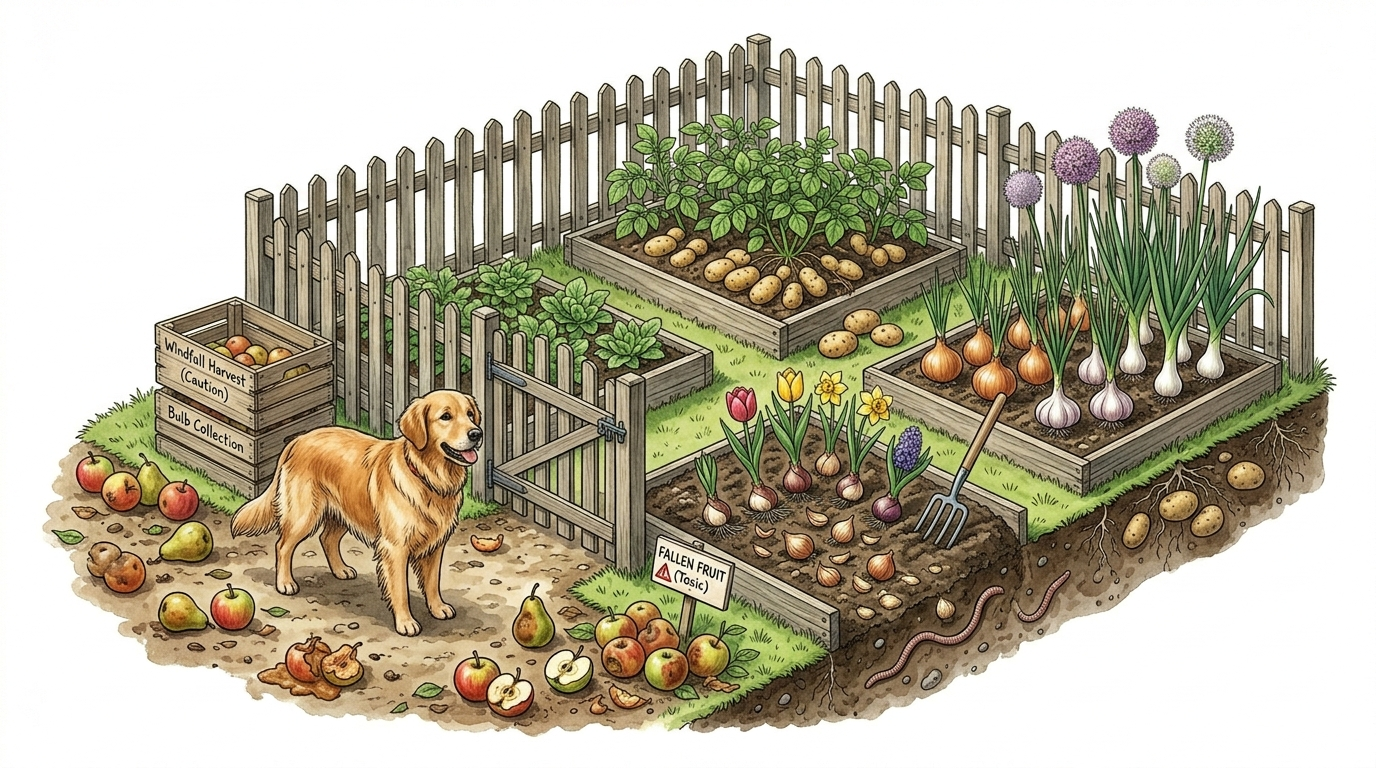
Guide
Dogs in the Garden: Windfall Fruit and Risks
Keep your garden dog-safe by managing windfall fruit, seeds, stored crops, and potentially problematic plant parts.
Internal links
Related plants
Pumpkin/Squash
Belong to the same family (Cucurbitaceae) and often share similar pests and diseases.
Both are heavy feeders and require good nutrient supply, especially potassium and phosphorus for fruit development.
Cucumber
Belong to the same family (Cucurbitaceae) and have similar growth requirements.
Both plants require consistent and adequate watering, especially during fruit development.
Honeydew melon
Both are sweet, juicy fruits belonging to the gourd family and prefer similar growing conditions.
Cantaloupe melon
Similar cultivation requirements (warmth, sun) and belong to the same plant family.
Powdery Mildew (Cucurbits)
Watermelons are susceptible to powdery mildew, a common fungal disease in cucurbits.
Downy Mildew (Cucurbits)
Watermelons can be affected by downy mildew, especially in humid weather.
Bacterial Wilt (Cucurbits)
Watermelons are susceptible to bacterial wilt, often transmitted by pests.
tomato
Similar need for potassium for fruit development and general nutrient supply.
Fruit salad
Watermelon is a popular ingredient in refreshing fruit salads.
Sources
Public sources
- Wikidata entity
Wikidata · 2026-05-15
- GBIF species match
GBIF · 2026-05-15
- Deutschsprachige Wikipedia: Wassermelone
Wikipedia · 2026-05-15
- English Wikipedia: Watermelon
Wikipedia · 2026-05-15
- Trefle API: Citrullus lanatus
Trefle · 2026-05-15
- Perenual API: Citrullus lanatus
Perenual · 2026-05-15