Profile
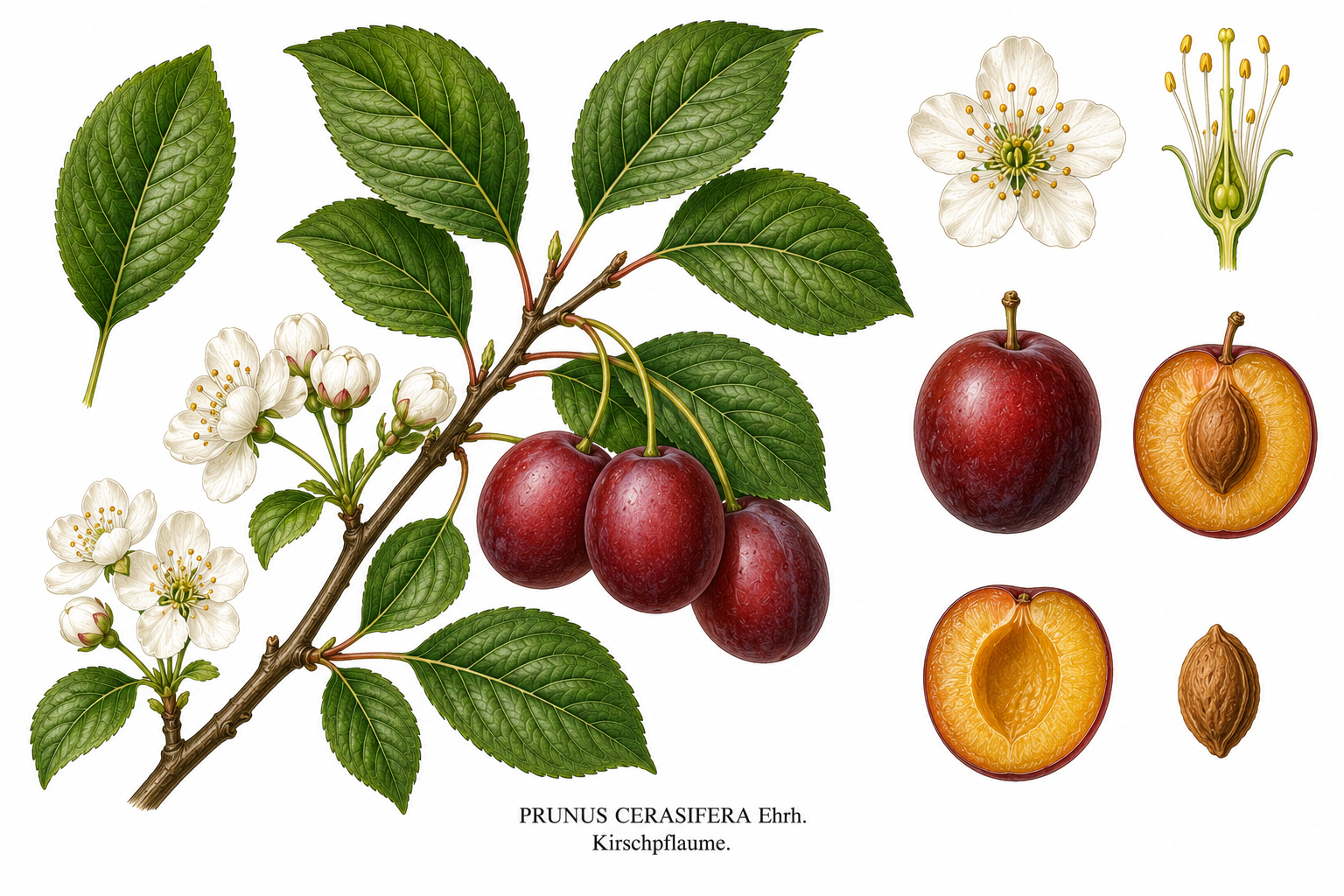
Cherry plumPrunus cerasifera
Robust fruit tree with early blossoms and sweet-tart fruits.
Quick profile
Key data
Planting
Mar, Apr, Oct, Nov
Harvest
Jun, Jul, Aug
Water
medium
Good neighbors
NasturtiumChivesGarlicComfrey
Avoid
Walnut treePotato
Growing data
Cherry plum Growing data
Seed depth
1 - 2 cm
Plant spacing
300 - 500 cm
Row spacing
300 - 500 cm
Germination temp
5 - 15 °C
Sowing and germination
Planting and spacing
Temperature and site
Water, nutrients and care
Container, support and growth
Year plan
Cherry plum Calendar
Indoor sowing
Not applicable for cherry plums. Cultivation is usually by grafting or planting young trees.
Direct sowing
Sowing seeds in autumn (for natural stratification) or in spring after artificial stratification. For home gardeners, planting young trees is more common.
Planting
Young trees are planted in autumn after leaf fall or in early spring before bud break.
Harvest
Fruits ripen from late June to August, depending on variety and location.
Year plan
- Winter Pruning
- Plant Young Trees
- Spring Fertilization
- Pest and Disease Control
- Watering during dry spells
- Mulching
- Start Harvest
- Main Harvest
- Summer Pruning
- End Harvest
- Soil Care
- Plant Young Trees
- Apply Winter Protection
Growing
Cherry plum Site, soil and care
Spacing
300 - 500 cm
Storage
Storage duration: Short-term (a few days), Storage conditions: Cool and dark, ideally in the refrigerator.
Pruning
Cherry plum Pruning
mixed_pruning
Goal
mixed_pruning
Pruning timing
winter
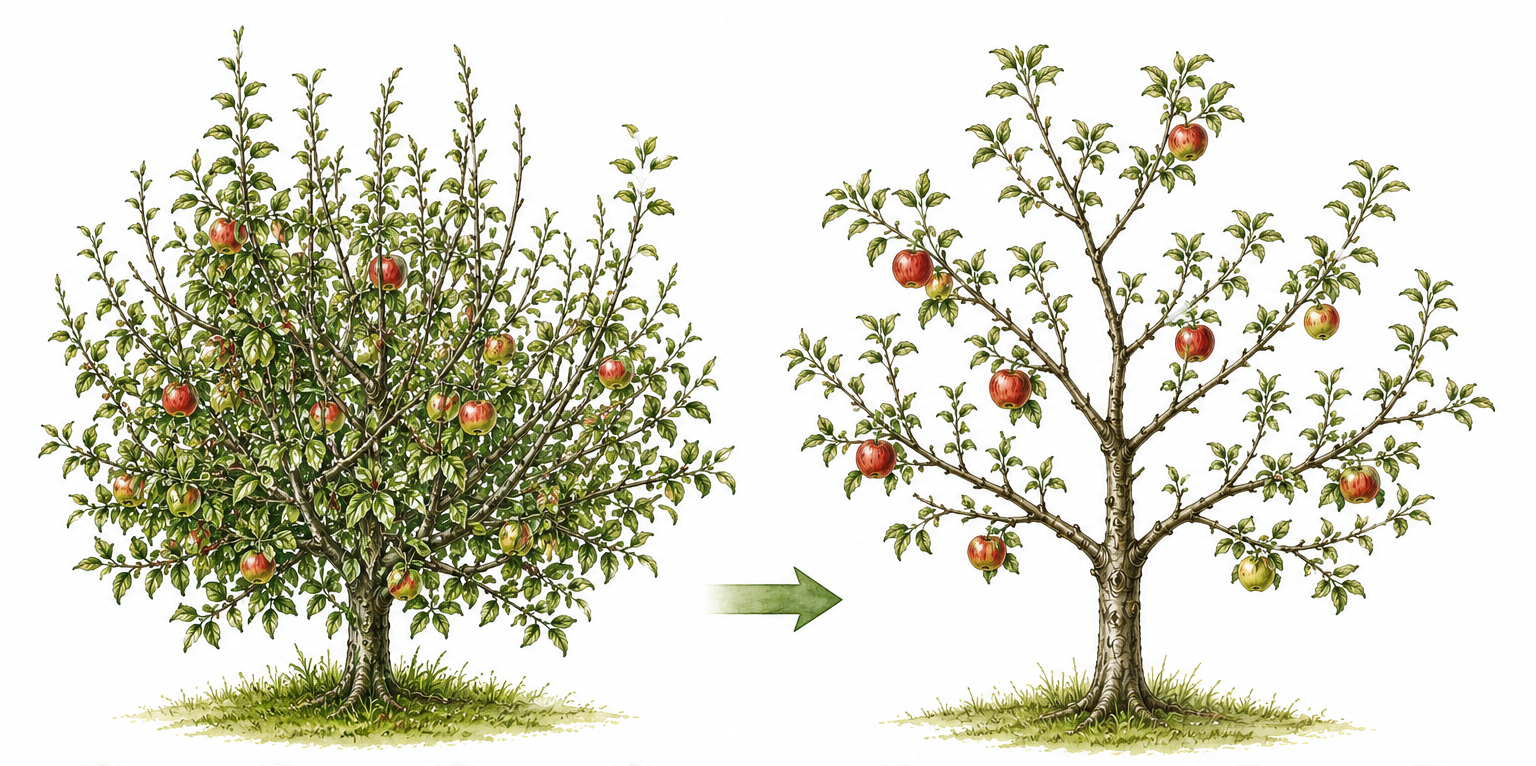
Formative and shaping pruning, major corrections Before bud break, on frost-free days. Promotes vigorous growth in spring. Use with caution for Prunus species to minimize diseases.
summer
Thinning, correction, growth reduction, promoting fruit ripening After harvest. Reduces the risk of gummosis and silver leaf disease. Promotes the formation of flower buds for the following year.
Remove
- Dead, diseased, or damaged wood
- Crossing or rubbing branches
- Inward-growing shoots
- Water shoots (vigorous, upright shoots without flower buds)
- Old, less productive fruiting wood
- Shoots that make the tree too dense and hinder ventilation
Preserve
- Well-positioned scaffold and lateral branches
- Young fruiting wood (one-year-old shoots and short fruit spurs)
- Shoots that contribute to the desired crown shape
- Sufficient space between branches for good light and air circulation
Avoid
- Large pruning wounds, especially in autumn and winter (increased risk of gummosis and fungal diseases)
- Pruning in wet weather (promotes fungal infections)
- Excessive pruning that weakens the tree
- Removing too much young fruiting wood
Tools and hygiene
Always use sharp and clean pruning tools. Disinfect tools between trees to prevent the spread of diseases.
Companion guide
Cherry plum Companion guide
Good neighbors
NasturtiumChivesGarlicComfreyDandelionStrawberriesYarrow
Avoid
Walnut treePotato
Health
Pests, Diseases
Plant health
FAQ
Is the cherry plum self-fertile?
Yes, the cherry plum is generally self-fertile. However, cross-pollination by another cherry plum or a compatible plum variety can improve the yield.
When is the best time to plant a cherry plum?
The best time to plant cherry plums is in autumn after leaf fall or in early spring before bud break, as long as the soil is frost-free.
What pests and diseases commonly affect cherry plums?
Common pests include aphids and the plum fruit moth. Common diseases are Monilia fruit rot and shot hole disease. Gummosis can also occur, often as a symptom of stress or injury.
Are cherry plum fruits edible?
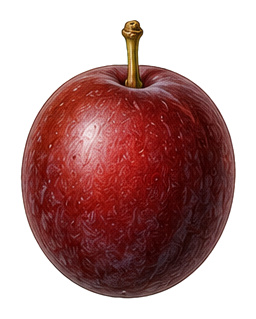
Yes, cherry plum fruits are edible and have a sweet-tart taste. They are excellent for fresh consumption and for processing into jam, jelly, or juice. However, the pits should not be eaten.
Related plants
Apple tree
Both belong to the rose family (Rosaceae).
Plum
Both belong to the genus Prunus.
Both are stone fruits and cultivated as fruit trees.
Peach
Both are stone fruits and cultivated as fruit trees.
Monilia Fruit Rot
Typical fungal disease for stone fruit.
Shot Hole Disease
Common in Prunus species.
Internal links
Related plants
Sources
Public sources
- Wikidata entity
Wikidata · 2026-05-13
- GBIF species match
GBIF · 2026-05-13
- Deutschsprachige Wikipedia: Kirschpflaume
Wikipedia · 2026-05-13
- English Wikipedia: Prunus cerasifera
Wikipedia · 2026-05-13
Details
More public plant data
Names
Common
Cherry plum
Plural
Cherry plums
Scientific synonyms
- Prunus orientalis
- Prunus myrobalana f. divaricata
- Prunus cerasifera var. atropurpurea
- Prunus cerasifera var. orientalis
- Prunus cerasifera subsp. georgica
- Prunus cerasifera subsp. caspica
- Prunus caspica
- Prunus cerasifera var. elegans
- Prunus divaricata f. purpusii
- Prunus cerasifera subsp. nairica
- Prunus orientalis var. pamiralaica
- Prunus sogdiana var. eximia
- Prunus divaricata f. woodii
- Prunus cerasifera var. myrobalana
- Prunus cerasifera f. woodii
- Prunus cerasifera subvar. pissardii
- Prunus cerasifera f. subglobosa-putaminata
- Prunus domestica subsp. cerasifera
- Prunus cerasifera var. ovaliputaminata
- Prunus pissardii
- Prunus cerasifera subsp. divaricata
- Prunus cerasifera var. moseri
- Prunus cerasifera var. crisica
- Prunus cerasifera var. luteocordata
- Prunus myrobalana var. serotina
- Prunus divaricata f. elegans
- Prunus myrobalana var. pissardii
- Prunus pissardii var. moseri
- Prunus cerasifera var. stenodrunacea
- Prunus divaricata subsp. nairica
- Prunus cerasifera var. szarvasiensis
- Prunus alpestris
- Prunus cerasifera var. pissardii
- Prunus cerasifera var. turcomanica
- Prunus cerasifera var. taurica
- Prunus sogdiana var. depruinosa
- Prunus cerasifera angustifolia
- Prunus sogdiana var. punicea
- Prunus cerasifera var. nigroglobata
- Prunus orientalis var. excelsior
- Prunus communis subsp. divaricata
- Armeniaca sogdiana
- Prunus cerasifera subsp. pontica
- Prunus cerasifera subsp. turcomanica
- Prunus cerasifera f. ovalidrupacea
- Prunus cerasifera woodii
- Prunus cerasifera var. iranica
- Prunus cerasifera var. csongradensis
- Prunus cerasifera f. purpusii
- Prunus sogdiana var. atrata
- Prunus cerasifera f. subglobosa-drupacea
- Prunus cerasifera var. divaricata
- Prunus myrobalana
- Prunus domestica var. myrobalana
- Prunus myrobalana f. purpurea
- Prunus myrobalana var. gigantea
- Prunus divaricata f. atropurpurea
- Prunus pissardii purpusii
- Prunus cerasifera f. spaethiana
- Prunus divaricata f. nigra
- Prunus cerasifera f. pendula
- Prunus cerasifera var. acutifolia
- Prunus sogdiana
- Prunus sogdiana subsp. conoidea
- Prunus orientalis var. flava
- Prunus sogdiana subsp. prunoidea
- Prunus cerasifera var. eucerasifera
- Prunus cerasifera f. nigra
- Prunus orientalis var. uzbekistanica
- Prunus myrobalana var. arbutifolia
- Prunus cerasifera elegans
- Prunus divaricata subsp. turcomanica
- Prunus mirobalanus
- Prunus monticola var. pubescens
- Prunus domestica var. myrobolana
- Prunus cerasifera purpurea
- Prunus cerasifera f. atropurpurea
- Prunus cerasifera f. stipitata
- Prunus cerasifera subsp. macrocarpa
- Prunus cerasifera subsp. borealicaucasica
- Prunus myrobalana roseaplena
- Prunus divaricata subsp. borealicaucasica
- Prunus cerasifera subsp. orientalis
- Prunus myrobalana var. ligustrifolia
- Prunus divaricata f. pendula
- Prunus cerasifera subsp. pissardii
- Prunus sogdiana var. citrina
- Prunus caspica subsp. foveata
- Prunus orientalis var. popovii
- Prunus myrobalana f. cerasifera
- Prunus cerasifera f. elegans
- Prunus domestica var. cerasifera
- Prunus cerasifera subsp. myrobalana
- Prunus cerasifera subsp. iranica
- Prunus divaricata var. pontica
- Prunus myrobolana var. pissardii
- Prunus cerasifera var. pumila
- Prunus cerasifera subsp. sogdiana
- Prunus cerasifera f. plano-subglobosa-drupacea
- Prunus monticola
- Prunus cerasifera moseri
- Prunus cerasifera var. bonamenta
- Prunus cerasifera var. luteoglobata
- Prunus myrobalana rubraplena
- Prunus sogdiana subsp. arkytensis
- Prunus cerasifera gracilis
- Prunus myrobalana f. pissardii
- Prunus divaricata subsp. caspica
- Prunus sogdiana var. mirabilis
- Prunus pissardii florepleno
- Prunus cerasifera var. georgica
- Prunus cerasifera var. pendula
- Prunus divaricata
- Prunus cerasifera subsp. taurica
- Prunus divaricata var. nairica
- Prunus cerasifera var. nairica
- Prunus mirabilis
- Prunus cerasifera subsp. myrobolana
Synonyms
- myrobalan plum
- myrobalan
Common synonyms
- myrobalan plum
- myrobalan
Regional names
- Türkenkirsche
- Türkische Kirsche
- Därgelkersch
- Sterninkel
- Kringelbaum
- Krete
- Wasserlatsche
- Kriacherl
Historical names
Market names
Misspellings
International names
Fr
- Prunier myrobalan
Es
- Ciruelo mirobolano
It
- Mirabolano
Pl
- Śliwa wiśniowa
Search terms
- Prunus cerasifera
- cherry plum
- myrobalan plum
- myrobalan
Taxonomy
Family
Rose family
Related crops
- Prunus domestica
Classification
Edible parts
- Fruit
Calendar
Sowing indoor
Notes
Not applicable for cherry plums. Cultivation is usually by grafting or planting young trees.
Sowing outdoor
Months
- 2
- 3
- 9
- 10
- 11
Notes
Sowing seeds in autumn (for natural stratification) or in spring after artificial stratification. For home gardeners, planting young trees is more common.
Planting out
Months
- 3
- 4
- 10
- 11
Notes
Young trees are planted in autumn after leaf fall or in early spring before bud break.
Harvest
Months
- 6
- 7
- 8
Notes
Fruits ripen from late June to August, depending on variety and location.
Month tasks
2
Perform winter pruning if necessary
3
Plant young trees
Fertilize with compost or organic fertilizer
Prune young trees (formative pruning)
4
Plant young trees
Check for pests and diseases
5
Water during dry periods
Mulch to conserve moisture
6
Harvest first fruits
Water during dry periods
7
Harvest fruits
Water during dry periods
Summer pruning (thinning, corrective)
8
Harvest fruits
Water during dry periods
9
Post-harvest pruning (if not done in summer)
10
Plant young trees
Remove fallen leaves and apply compost
11
Plant young trees
Apply winter protection for young trees
Month tasks structured
2
- Taskpruning
Label
Winter Pruning
PrioritymediumMonths
- 2
ConditionVor dem Austrieb, bei frostfreiem WetterEstimated effortmediumNotes
Thinning and shaping for older trees.
3
- Taskplanting
Label
Plant Young Trees
PriorityhighMonths
- 3
- 4
ConditionVor dem Austrieb, bei frostfreiem BodenEstimated effortmediumNotes
Water roots well before planting and prepare planting hole.
- Taskfertilizing
Label
Spring Fertilization
PrioritymediumMonths
- 3
ConditionVor dem AustriebEstimated effortlowNotes
Incorporate compost or organic all-purpose fertilizer into the root area.
- Taskpruning
Label
Formative Pruning
PrioritymediumMonths
- 3
ConditionBei jungen Bäumen, vor dem AustriebEstimated effortmediumNotes
For good crown development and fruit set.
4
- Taskpest_disease_control
Label
Pest and Disease Control
PrioritylowMonths
- 4
- 5
- 6
- 7
- 8
ConditionRegelmäßig während der WachstumsperiodeEstimated effortlowNotes
Pay special attention to aphids and fungal diseases.
5
- Taskwatering
Label
Watering during dry spells
PrioritymediumMonths
- 5
- 6
- 7
- 8
ConditionBei anhaltender Trockenheit, besonders für junge Bäume und während der FruchtentwicklungEstimated effortmediumNotes
Water deeply to reach the roots.
- Taskmulching
Label
Mulching
PrioritylowMonths
- 5
ConditionNach dem AustriebEstimated effortmediumNotes
Helps retain soil moisture and suppress weeds.
6
- Taskharvest
Label
Start Harvest
PriorityhighMonths
- 6
ConditionFrüchte sind reif und lösen sich leicht vom StielEstimated effortmediumNotes
Harvest regularly to avoid overripe fruits.
7
- Taskharvest
Label
Main Harvest
PriorityhighMonths
- 7
ConditionFrüchte sind reifEstimated efforthighNotes
Ideal for fresh consumption, jam, or juice.
- Taskpruning
Label
Summer Pruning
PrioritylowMonths
- 7
- 8
ConditionNach der ErnteEstimated effortmediumNotes
Thinning and corrections to keep the crown open.
8
- Taskharvest
Label
End Harvest
PriorityhighMonths
- 8
ConditionAlle reifen Früchte geerntetEstimated effortmediumNotes
Process remaining fruits.
9
- Tasksoil_care
Label
Soil Care
PrioritylowMonths
- 9
- 10
ConditionNach der ErnteEstimated effortlowNotes
Remove fallen leaves and possibly sow a green manure.
10
- Taskplanting
Label
Plant Young Trees
PriorityhighMonths
- 10
- 11
ConditionNach dem Laubfall, vor dem ersten FrostEstimated effortmediumNotes
Autumn planting promotes good establishment in spring.
11
- Taskwinter_protection
Label
Apply Winter Protection
PrioritymediumMonths
- 11
ConditionVor dem ersten starken Frost, besonders für junge BäumeEstimated effortlowNotes
Protect trunk from frost cracks and animal browsing.
Book content
Introduction
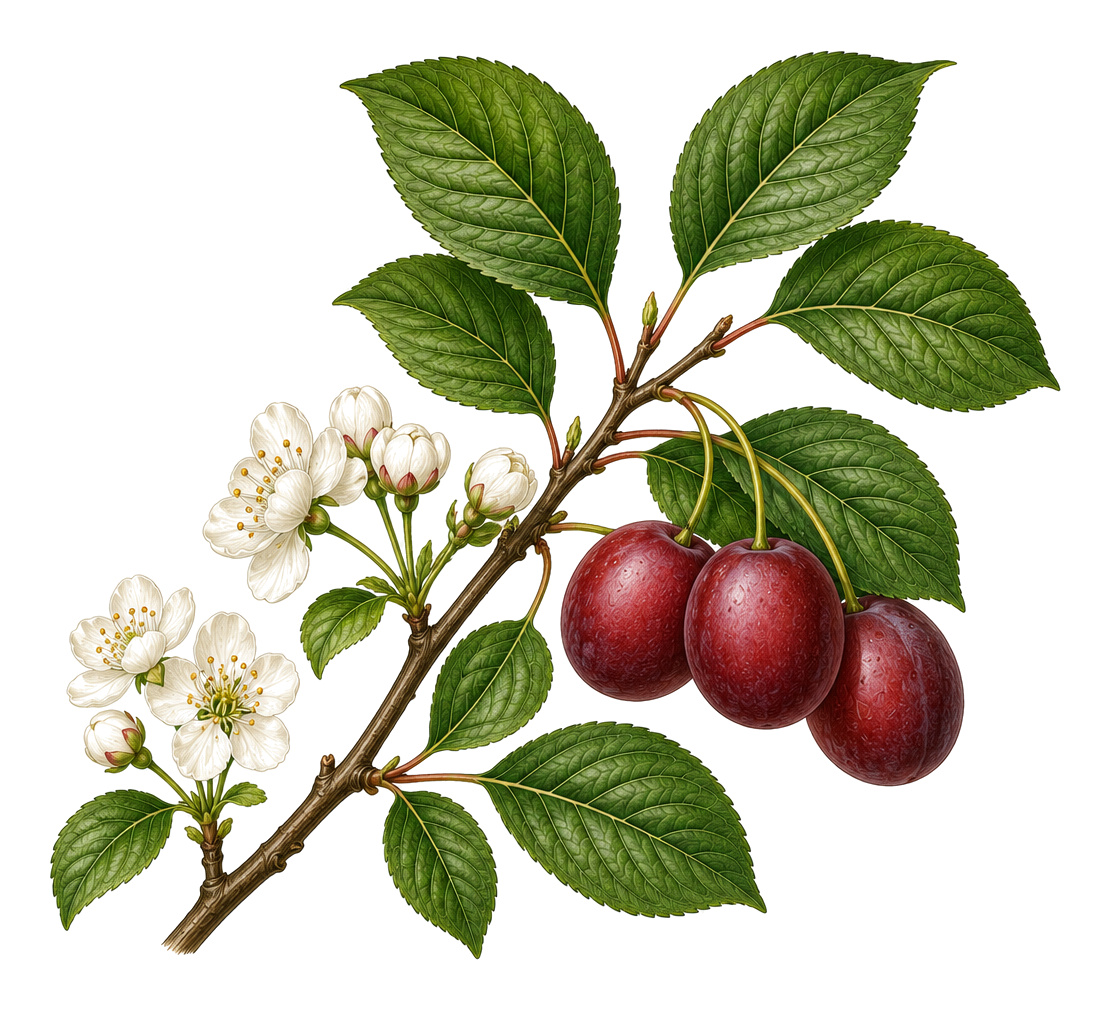
The cherry plum (Prunus cerasifera), also known as myrobalan plum, is a versatile fruit tree that makes a good impression in the garden both as a robust fruit producer and as an attractive ornamental shrub or hedge. Its early and abundant spring blossoms are an important nectar source for bees, and its small, sweet-tart fruits are a welcome addition to the kitchen.
Cultivation overview
Cherry plum is undemanding and grows in many soils, but prefers sunny locations with deep, well-drained soil. It is very winter hardy, but late frosts can damage early blossoms and reduce fruit set. Regular pruning promotes the health and yield of the tree.
Harvest and use
Cherry plums are harvested from June to August. Ripe fruits detach easily from the stem and are ideal for fresh consumption, but also excellent for jams, jellies, juices, and compotes. The pits should not be consumed.
Structured month tasks
2
- Taskpruning
Label
Winter Pruning
PrioritymediumMonths
- 2
ConditionVor dem Austrieb, bei frostfreiem WetterEstimated effortmediumNotes
Thinning and shaping for older trees.
3
- Taskplanting
Label
Plant Young Trees
PriorityhighMonths
- 3
- 4
ConditionVor dem Austrieb, bei frostfreiem BodenEstimated effortmediumNotes
Water roots well before planting and prepare planting hole.
- Taskfertilizing
Label
Spring Fertilization
PrioritymediumMonths
- 3
ConditionVor dem AustriebEstimated effortlowNotes
Incorporate compost or organic all-purpose fertilizer into the root area.
- Taskpruning
Label
Formative Pruning
PrioritymediumMonths
- 3
ConditionBei jungen Bäumen, vor dem AustriebEstimated effortmediumNotes
For good crown development and fruit set.
4
- Taskpest_disease_control
Label
Pest and Disease Control
PrioritylowMonths
- 4
- 5
- 6
- 7
- 8
ConditionRegelmäßig während der WachstumsperiodeEstimated effortlowNotes
Pay special attention to aphids and fungal diseases.
5
- Taskwatering
Label
Watering during dry spells
PrioritymediumMonths
- 5
- 6
- 7
- 8
ConditionBei anhaltender Trockenheit, besonders für junge Bäume und während der FruchtentwicklungEstimated effortmediumNotes
Water deeply to reach the roots.
- Taskmulching
Label
Mulching
PrioritylowMonths
- 5
ConditionNach dem AustriebEstimated effortmediumNotes
Helps retain soil moisture and suppress weeds.
6
- Taskharvest
Label
Start Harvest
PriorityhighMonths
- 6
ConditionFrüchte sind reif und lösen sich leicht vom StielEstimated effortmediumNotes
Harvest regularly to avoid overripe fruits.
7
- Taskharvest
Label
Main Harvest
PriorityhighMonths
- 7
ConditionFrüchte sind reifEstimated efforthighNotes
Ideal for fresh consumption, jam, or juice.
- Taskpruning
Label
Summer Pruning
PrioritylowMonths
- 7
- 8
ConditionNach der ErnteEstimated effortmediumNotes
Thinning and corrections to keep the crown open.
8
- Taskharvest
Label
End Harvest
PriorityhighMonths
- 8
ConditionAlle reifen Früchte geerntetEstimated effortmediumNotes
Process remaining fruits.
9
- Tasksoil_care
Label
Soil Care
PrioritylowMonths
- 9
- 10
ConditionNach der ErnteEstimated effortlowNotes
Remove fallen leaves and possibly sow a green manure.
10
- Taskplanting
Label
Plant Young Trees
PriorityhighMonths
- 10
- 11
ConditionNach dem Laubfall, vor dem ersten FrostEstimated effortmediumNotes
Autumn planting promotes good establishment in spring.
11
- Taskwinter_protection
Label
Apply Winter Protection
PrioritymediumMonths
- 11
ConditionVor dem ersten starken Frost, besonders für junge BäumeEstimated effortlowNotes
Protect trunk from frost cracks and animal browsing.
Cultivation specs
Seed
Spacing
Spacing notes
As a tree or large shrub, the cherry plum requires sufficient space for development.
Growth dimensions
Final size notes
Can grow up to 10 meters as a tree, but is often cultivated as a shrub or small tree.
Temperature
Temperature notes
Cherry plum is very winter hardy, but its early blossoms are susceptible to late frosts, which can affect fruit set.
Water
Critical water phases
- Flowering
- Fruit set
- Fruit development
Water notes
Established trees are relatively drought-tolerant, but require additional watering during dry spells and fruit development. Avoid waterlogging at all costs.
Nutrition
Nutrition notes
An annual application of compost or organic all-purpose fertilizer in spring is sufficient. Avoid over-fertilization.
Container
Container notes
Due to its size and deep roots, the cherry plum is not suitable for permanent container cultivation, except as a very young plant or in special dwarf forms.
Support
Support types
- stake
Support notes
Young trees require a stake for the first few years. Formative pruning is important for good crown shape and fruit development.
Cultivation modes
Yield density
Yield notes
Yield can vary greatly depending on tree age, variety, and location. Cherry plums are generally very productive.
Site
Sunlight
Full sun to partial shade
Notes
A sunny location promotes fruit development and ripening. Partial shade is tolerated but may reduce yield.
Wind exposure
Sheltered to moderately windy
Aspect
Open, sunny
Soil
Soil type
Deep, loamy-humus
PH notes
Prefers slightly acidic to neutral soils.
Structure
Loose, well-drained
Drainage
Good
Notes
Cherry plum is adaptable but thrives best in nutrient-rich, deep soils without waterlogging.
Watering
Water need
Medium to high
Frequency
Regularly during dry periods
Method
Deep watering
Notes
Especially important for young trees and during fruit development. Mulching helps retain soil moisture.
Nutrition
Nutrient group
Medium feeder
Fertilizer type
Compost, organic all-purpose fertilizer
Frequency
Annually in spring
Notes
Balanced nutrient supply promotes growth and fruit formation. Avoid over-fertilization.
Cultivation planning
Succession sowing
Bed planning notes
As a perennial fruit tree, the cherry plum is not part of crop rotation in vegetable beds.
Deficiencies
Profiles
- Slugiron_deficiency
Name
Iron Deficiency
Description
Young leaves turn yellow, while veins remain green (chlorosis).
SeveritylowAffected parts
- Young leaves
Conditions
- High soil pH
- Calcareous soils
- Waterlogging
Prevention
- Maintain soil pH in optimal range
- Ensure good drainage
Organic control
- Foliar feeding with iron chelate
- Improve soil with acidic compost or rhododendron soil
Notes
Often a problem of availability in the soil, not a lack of iron itself.
- Slugnitrogen_deficiency
Name
Nitrogen Deficiency
Description
Leaves turn pale green to yellowish, growth is stunted, fruits remain small.
SeveritymediumAffected parts
- Older leaves
- Entire plant
- Fruits
Conditions
- Nutrient-poor soil
- Leaching during heavy rain
Prevention
- Regular organic fertilization (compost, horn meal)
- Green manure
Organic control
- Quick application of organic nitrogen fertilizer (e.g., nettle liquid manure)
- Incorporate compost
Notes
A slight deficiency is often unproblematic, severe deficiency reduces yield.
Notes
Soil analysis can help accurately determine nutrient deficiencies. Organic fertilization prevents many deficiencies.
Problems
Profiles
- Sluglate_frost_damage
Name
Late Frost Damage to Blossoms
Description
Early blossoms freeze during late frosts, leading to low or no fruit set.
SeverityhighAffected parts
- Blossoms
- Young fruits
Conditions
- Early flowering period
- Sudden frost after warm periods
Prevention
- Site selection (sheltered)
- Choose late-flowering varieties
- In case of announced frost: fleece cover or sprinkling
Organic control
- No direct cure, only prevention and damage limitation
Notes
Cherry plum blossoms very early, making it susceptible to late frosts.
- Slugpoor_fruit_set
Name
Poor Fruit Set
Description
Few or no fruits develop despite flowering.
SeveritymediumAffected parts
- Fruits
Conditions
- Late frost
- Lack of pollination (missing bees)
- Nutrient deficiency
- Water shortage
Prevention
- Attract pollinators (flowering plants)
- Adequate water and nutrient supply
- Late frost protection
Organic control
- See prevention measures
Notes
Often a combination of several factors. Good site selection and care are crucial.
Notes
Many problems can be avoided through optimal site conditions and adapted care.
Problem management
Common pest groups
- Sucking insects (aphids)
- Fruit pests (moths)
- Leaf-eating caterpillars (winter moth)
Common disease groups
- Fungal diseases (Monilia, Shot hole)
- Physiological disorders (Gummosis)
Prevention principles
- Site-appropriate planting
- Balanced nutrient supply
- Regular, professional pruning
- Good garden hygiene (removing fallen leaves and infected plant parts)
- Promoting beneficial insects
- Avoiding stress factors (drought, waterlogging)
Diagnosis notes
Observe the plant regularly for changes in leaves, shoots, blossoms, and fruits. Look for the presence of pests or unusual discolorations and growth patterns. If unsure, photos and a precise description of symptoms can aid in diagnosis.
Disease graph
Profiles
- SlugaphidsSeveritymedium
Conditions
Affected parts
- Leaves
- Young shoots
- Fruits
Prevention
- Promote beneficial insects (ladybugs, lacewings)
- Balanced fertilization (avoid excess nitrogen)
- Regular inspection
Organic control
- Rinsing with strong water jet
- Neem oil
- Soapy water
- Introduction of beneficial insects
- Slugplum_fruit_mothSeverityhigh
Conditions
Affected parts
- Fruits
Prevention
- Pheromone traps for monitoring
- Remove and destroy infested fruits early
- Promote beneficial insects (earwigs)
Organic control
- Use of Trichogramma wasps
- Spraying with Bacillus thuringiensis (against young larvae)
- Slugwinter_mothSeveritymedium
Conditions
Affected parts
- Buds
- Leaves
- Blossoms
Prevention
- Apply sticky bands (October/November) to prevent females from climbing
- Promote beneficial insects (birds)
Organic control
- Hand-picking caterpillars for minor infestations
- Spraying with Bacillus thuringiensis
- Slugmonilia_fruit_rotSeverityhigh
Conditions
- Humid weather
- Fruit injuries
Affected parts
- Fruits
Prevention
- Remove and destroy infected fruits early
- Adequate thinning for good ventilation
- Avoid fruit injuries
Organic control
- Remove all infected plant parts
- Spraying with horsetail broth for strengthening
- Slugshot_hole_diseaseSeveritymedium
Conditions
- Humid weather
- Poor ventilation
Affected parts
- Leaves
- Fruits
- Shoots
Prevention
- Remove and destroy infected leaves
- Adequate thinning
- Choose resistant varieties
Organic control
- Spraying with copper preparations (limited in organic farming)
- Strengthening with plant decoctions (e.g., horsetail)
- SluggummosisSeveritymedium
Conditions
- Frost cracks
- Pruning wounds
- Bark beetle infestation
- Fungal infections
- Waterlogging
Affected parts
- Trunk
- Branches
- Twigs
Prevention
- Careful pruning
- Winter protection for young trees
- Good site selection
- Avoid waterlogging
Organic control
- Cleanly cut out affected areas to healthy wood
- Wound sealants (controversial)
- Address underlying cause (e.g., improve drainage)
- Sluglate_frost_damageSeverityhigh
Conditions
- Early flowering period
- Sudden frost after warm periods
Affected parts
- Blossoms
- Young fruits
Prevention
- Site selection (sheltered)
- Choose late-flowering varieties
- In case of announced frost: fleece cover or sprinkling
Organic control
- No direct cure, only prevention and damage limitation
- Slugpoor_fruit_setSeveritymedium
Conditions
- Late frost
- Lack of pollination (missing bees)
- Nutrient deficiency
- Water shortage
Affected parts
- Fruits
Prevention
- Attract pollinators (flowering plants)
- Adequate water and nutrient supply
- Late frost protection
Organic control
- See prevention measures
Diagnostic rules
Symptom
Leaves and young shoots are sticky, often covered with small green or black insects.
Possible causes
- aphids
First checks
- Check undersides of leaves and shoot tips.
- Look for ladybugs or their larvae.
Symptom
Fruits show brown, rotten spots with concentric spore cushions.
Possible causes
- monilia_fruit_rot
First checks
- Remove and examine infected fruits.
- Check for blossom blight on shoots.
Symptom
Leaves have small, reddish-brown spots that later fall out, leaving holes.
Possible causes
- shot_hole_disease
First checks
- Check leaves for typical spots and holes.
- Check ventilation of the tree crown.
Symptom
Resin exudation from trunk or branches.
Possible causes
- gummosis
- frost_cracks
- bark_beetle_infestation
- fungal_infections
First checks
- Examine the site of gum exudation for injuries or cracks.
- Check bark for boreholes or fungal infection.
Symptom
Blossoms are brown and withered, fall off, no fruit development.
Possible causes
- late_frost_damage
- monilia_blossom_blight
First checks
- Check weather data for flowering period (night frosts).
- Examine blossoms for fungal spores or discoloration.
Symptom
Despite abundant flowering, few or no fruits develop.
Possible causes
- poor_fruit_set
- late_frost_damage
- lack_of_pollination
- nutrient_deficiency
- water_stress
First checks
- Check weather conditions during flowering.
- Observe bee activity.
- Check soil for moisture and nutrients.
Prevention strategy
Cultural
- Site-appropriate variety selection (late-flowering in frost-prone areas)
- Regular thinning for good ventilation and light conditions
- Balanced fertilization and irrigation to strengthen the plant
- Promoting soil health through mulching and organic materials
Monitoring
- Regular inspection for first signs of pests and diseases, especially on young shoots, leaves, and fruits.
- Use of pheromone traps for plum fruit moth monitoring.
Organic first response
- Mechanical removal of pests (rinsing, hand-picking)
- Use of plant strengtheners (e.g., horsetail decoction)
- Application of neem oil or soapy water for pest infestations
- Removal and proper disposal of infected plant parts
Notes
A healthy, vigorous tree is best equipped to resist diseases and pests. Prevention is always better than cure.
Phenology
Stages
- Flowering (March-April)
- Fruit set (April-May)
- Fruit development (May-June)
- Fruit ripening (June-August)
Notes
Cherry plum flowers very early in the year, often before leafing out, which makes it susceptible to late frosts. Fruits ripen progressively over several weeks.
Flowering pollination
Flowering period
March to April
Flower color
White
Flower notes
The blossoms appear before the leaves and are often very numerous, making the tree an attractive sight in spring.
Harvest
Harvest period
June to August
Harvest method
Hand-picking, as fruits ripen progressively and fall easily when fully ripe.
Yield per plant
10-50 kg per tree, depending on age and variety.
Harvest details
Harvest frequency
Regularly over a period of 2-4 weeks, as fruits do not ripen simultaneously.
Harvest indicators
- Fruits are soft and yield to gentle pressure
- Detach easily from the stem
- Have an intense color (yellow, red, or purple, depending on variety)
- Sweet-sour aroma
Post harvest handling
Handle fruits carefully to avoid bruising. Cool quickly and process or store.
Storage
Storage duration
Short-term (a few days)
Storage conditions
Cool and dark, ideally in the refrigerator.
Storage details
General storage category
Short-term
Storage life
1-2 days at room temperature, up to a week in the refrigerator.
Processing options
- Jam
- Jelly
- Juice
- Compote
- Fruit puree
- Drying
- Freezing
- Preserving in alcohol
Processing use
Primary uses
- Jam and jelly
- Juice
- Compote
Secondary uses
- Fruit tarts
- Desserts
- Brandy
- Fruit wine
- Chutney
Kitchen usage
Culinary notes
Cherry plum has a refreshing, sweet-tart flavor that varies with ripeness and variety. It is versatile in the kitchen, both raw and cooked.
Flavor profile
Sweet-tart, aromatic, sometimes slightly astringent.
Texture profile
Juicy, soft flesh with firm skin.
Preparation methods
- Eat raw
- Cooking (jam, compote)
- Baking (cakes, crumbles)
- Juicing
Safety and edibility
Edible parts
- Fruit flesh
Inedible or caution parts
- Seeds (pits)
Toxicity notes
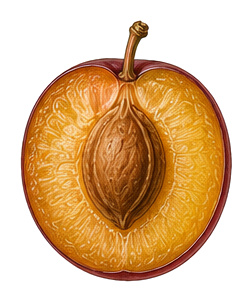
Cherry plum seeds contain small amounts of cyanogenic glycosides, which can release hydrogen cyanide if consumed in large quantities. They should not be eaten.
Raw consumption
Yes, ripe fruits can be eaten raw.
Seed saving
Method
Extract seeds from ripe fruits, clean thoroughly, and dry. Then subject to cold stratification.
Notes
Germination can be erratic and requires patience. Cherry plum often grows true from seed, but cultivated varieties are usually grafted.
Seed saving advanced
Stratification method
Cold-moist stratification for 2-4 months at 1-5°C (e.g., in moist sand in the refrigerator).
Germination notes
Sow in spring after stratification. Germination can take several weeks to months and is often not synchronous.
Varieties
- Slugmyrobalan
Name
Wild type (Myrobalan)
Description
The original form of cherry plum, often used as rootstock, but also valued for its small, aromatic fruits. Very robust and vigorous.
Fruit color
Yellow, Red, Purple
Ripening time
June to August
Self fertileyesPollinator requirednoNotes
Very adaptable and frost-hardy. Fruits are ideal for jam and juice.
- Slugpissardii
Name
Pissardii (Purple-leaf plum)
Description
Well-known ornamental variety with dark red foliage and pink blossoms. Fruits are small, dark red, and edible, but often less aromatic than the wild type.
Fruit color
Dark red to purple
Ripening time
July to August
Self fertileyesPollinator requirednoNotes
Primarily planted as an ornamental tree, the fruits are a welcome bonus. Provides attractive contrast in the garden.
- Slughollywood
Name
Hollywood
Description
A variety valued for both its attractive reddish foliage and its medium-sized, red fruits. Good fruit set.
Fruit color
Red
Ripening time
July
Self fertileyesPollinator requirednoNotes
Combines ornamental value with good fruit yield. Fruits are sweet-tart.
Rootstocks
- Slugprunus_cerasifera_myrobalan
Name
Prunus cerasifera (Myrobalan)
Description
Cherry plum itself is a very common and robust rootstock for plums, mirabelles, apricots, and peaches. It is vigorous and adaptable to various soils.
VigorvigorousCompatibility
- Plum
- Mirabelle
- Apricot
- Peach
Soil adaptability
Broad, including less demanding soils
Notes
Results in large trees with high life expectancy and yield. Good for traditional orchards and home gardens with sufficient space.
- Slugst_julien_a
Name
St. Julien A
Description
A semi-vigorous rootstock used for plums, mirabelles, and apricots. It is also suitable for cherry plums if a smaller tree is desired.
Vigorsemi_vigorousCompatibility
- Plum
- Mirabelle
- Apricot
- Cherry plum
Soil adaptability
Broad, prefers well-drained
Notes
Promotes early yields and is good for bush and half-standard forms. Often requires a stake in the first few years.
Woody crop details
Training systems to research
- bush_tree
- half_standard
- standard_tree
- fan_training
Notes
Cherry plum is a versatile woody plant that can be cultivated as a large shrub or a tree. The choice of rootstock and training system significantly influences size, growth habit, and yield.
Ecology
Biodiversity notes
The early and abundant blossoms of the cherry plum are an important food source for bees and other early-flying insects. The fruits serve as food for many bird species and small mammals. The tree also provides nesting sites and shelter.