Plant Profile
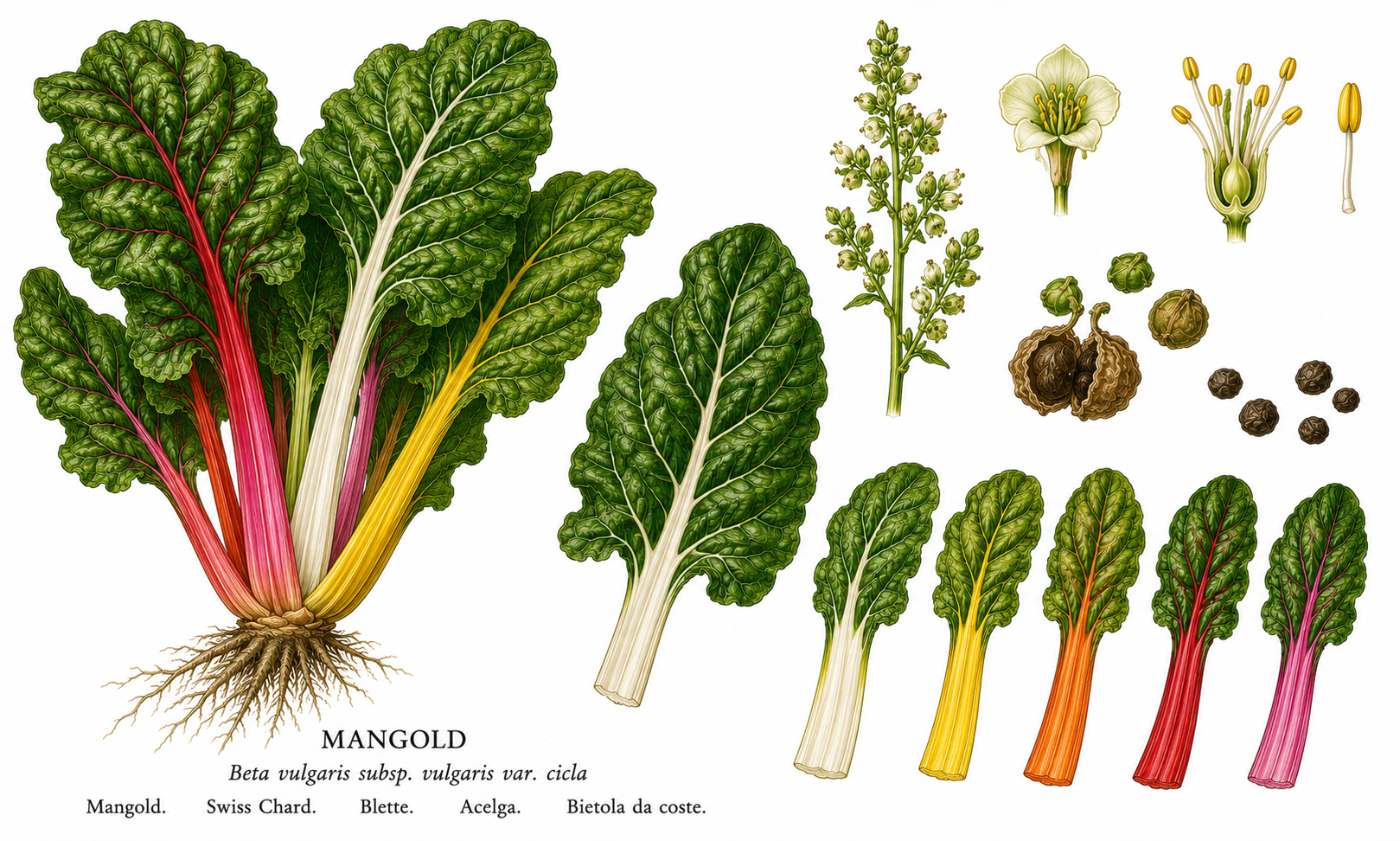
Swiss ChardBeta vulgaris subsp. vulgaris Cicla Group
Swiss chard is a versatile powerhouse in the vegetable garden. Whether grown as colorful stalk chard or delicate leaf beet, it provides fresh greens from spring until late autumn. Its robustness against light frosts makes it an ideal candidate for year-round self-sufficiency.
Quick profile
Key data
Suitable growing locations:
Good neighbors
CabbageOnionBush beans
Avoid
SpinachBeetroot
Indoor & direct sowing
Swiss Chard: Sowing and germination
Pre-culture possible for early harvest starting in April.
Direct sowing from mid-April; sow until August for overwintering.
Planting & site
Swiss Chard: Planting and spacing
Harden off before planting out; tolerates light frosts.
Site & practical notes
Cultivation tip: Sow chard in successions every 4 weeks to ensure tender young leaves throughout the summer.
Temperature & frost
Swiss Chard: Temperature and site
Water & nutrients
Swiss Chard: Water, nutrients and care
Container & growth
Swiss Chard: Container, support and growth
Year plan
Swiss Chard Calendar
Recurring tasks
Relevant now
June
- No additional single task
Next up
July
- No additional single task
Monthly tasks
Single tasks from monthly data; repeated seasonal windows are shown in the overview above.
January
Quiet month
February
No additional single task
March
No additional single task
April
No additional single task
May
No additional single task
June
No additional single task
August
No additional single task
September
No additional single task
October
No additional single task
November
No additional single task
December
Quiet month
Flowering & pollination
Swiss Chard Flowering & pollination
Flowering period
June to August (in the second year)
Flower type
Inconspicuous clustered flowers in long spikes
Flower color
Greenish to yellowish
Self-fertility
partially self-fertile
Pollinator needed
no
Overview
Primarily wind-pollinated; cross-pollination with other Beta beets is possible.
Notes
Insects visit the flowers occasionally but play a minor role in fruit set.
Pruning & care
Swiss Chard Pruning & care
Pruning type
continuous_outer_leaf_removal
Pruning timing
Continuous harvest and vitalization Regular picking encourages new growth from the heart.
Winter preparation Remove dead leaves to prevent rot during wintering.
Remove
Preserve
Avoid
Tools and hygiene
Use clean knives to minimize the transmission of leaf spot diseases.
Companion guide
Swiss Chard Companion guide
Good neighbors
CabbageOnionBush beans
Avoid
SpinachBeetroot
Use & storage
Swiss Chard Use & storage
Continuous harvest of outer leaves encourages new growth.
Storage
Short-term storage (fresh vegetable)
Storage life
2 to 4 days in the refrigerator
Primary use
Cooked vegetable
Harvest
Continuous harvest of outer leaves encourages new growth.
Processing
After harvest
Store leaves in a cool place after harvest or process immediately as they wilt quickly.
Edibility & safety
Swiss Chard Edibility & safety
For people
In brief: which parts are edible, which parts remain risky, and whether raw consumption makes sense.
Safety notes
Contains oxalic acid and nitrates; people prone to kidney stones should consume in moderation.
Animal safety
The evidence for this plant and animals is still limited. Check the detail rows before allowing access or feeding.
Each row shows which parts are more suitable and which parts are critical.
Companion animals
 Dog
DogNo suitable parts listed
No risk parts listed
No suitable parts listed
No risk parts listed
 Cat
CatNo suitable parts listed
No risk parts listed
No suitable parts listed
No risk parts listed
 Rabbit
No suitable parts listed
No risk parts listed
No suitable parts listed
No risk parts listed
 Guinea pig
No suitable parts listed
No risk parts listed
No suitable parts listed
No risk parts listed
 Hamster
No suitable parts listed
No risk parts listed
No suitable parts listed
No risk parts listed
 Budgie
No suitable parts listed
No risk parts listed
No suitable parts listed
No risk parts listed
Farm animals
 Horse
HorseNo suitable parts listed
No risk parts listed
No suitable parts listed
No risk parts listed
 Chicken
No suitable parts listed
No risk parts listed
No suitable parts listed
No risk parts listed
 Duck
DuckNo suitable parts listed
No risk parts listed
No suitable parts listed
No risk parts listed
 Goose
GooseNo suitable parts listed
No risk parts listed
No suitable parts listed
No risk parts listed
 Sheep
SheepNo suitable parts listed
No risk parts listed
No suitable parts listed
No risk parts listed
 Goat
GoatNo suitable parts listed
No risk parts listed
No suitable parts listed
No risk parts listed
 Cattle
No suitable parts listed
No risk parts listed
No suitable parts listed
No risk parts listed
 Pig
PigNo suitable parts listed
No risk parts listed
No suitable parts listed
No risk parts listed
These guidelines are for general information only and do not replace veterinary diagnosis. If critical plant parts were ingested or the animal shows unusual behaviour or symptoms, seek veterinary advice.
Max risk
unknown
Highest status
not established
Urgency
unknown
Saving seed
Swiss Chard Saving seed
Seed type
Seed ball (multiple seeds per fruit)
Seed viability
4 - 5 years
Practical tips
Swiss Chard Practical tips
Common beginner mistakes
Harvesting too deep: if the heart is damaged, the plant won't regrow.
Success pattern
Regularly picking the outer leaves leads to an almost inexhaustible harvest.
High-impact tips
A layer of mulch keeps the soil moist and suppresses weeds extremely effectively.
Grower observations
Red-stalked chard varieties tend to bolt more easily in dry summers than green varieties.
Plant Profile
Additional plant images

Health
Pests, Diseases
Plant health
Diagnosis help
Swiss Chard Diagnosis help
Pest groups
Disease groups
Prevention
Diagnosis
Spots on leaves are usually fungal; galleries inside leaves indicate leaf miners.
Cultural prevention
Monitoring
Weekly aphid checks starting in May
First response
Diagnostic rules
White or brown tunnels in leaves
Possible causes: Pegomya hyoscyami
- Check underside of leaves for egg clusters
FAQ
Can Swiss chard be left outside in winter?
Yes, chard is semi-hardy. With fleece or brushwood protection, it survives mild winters and regrows in early spring.
Why is my Swiss chard bolting so fast?
Often it's due to lack of water or heat spells. Cold stimuli shortly after germination can also trigger bolting.
Is Swiss Chard safe for Dog?
Swiss Chard is classified as not established for Dog. Risk: unknown. Urgency: unknown. No reliable species-specific assessment is available.
Is Swiss Chard safe for Cat?
Swiss Chard is classified as not established for Cat. Risk: unknown. Urgency: unknown. No reliable species-specific assessment is available.
Is Swiss Chard safe for Rabbit?
Swiss Chard is classified as not established for Rabbit. Risk: unknown. Urgency: unknown. No reliable species-specific assessment is available.
Is Swiss Chard safe for Guinea pig?
Swiss Chard is classified as not established for Guinea pig. Risk: unknown. Urgency: unknown. No reliable species-specific assessment is available.
Guides
Related guides
Guide
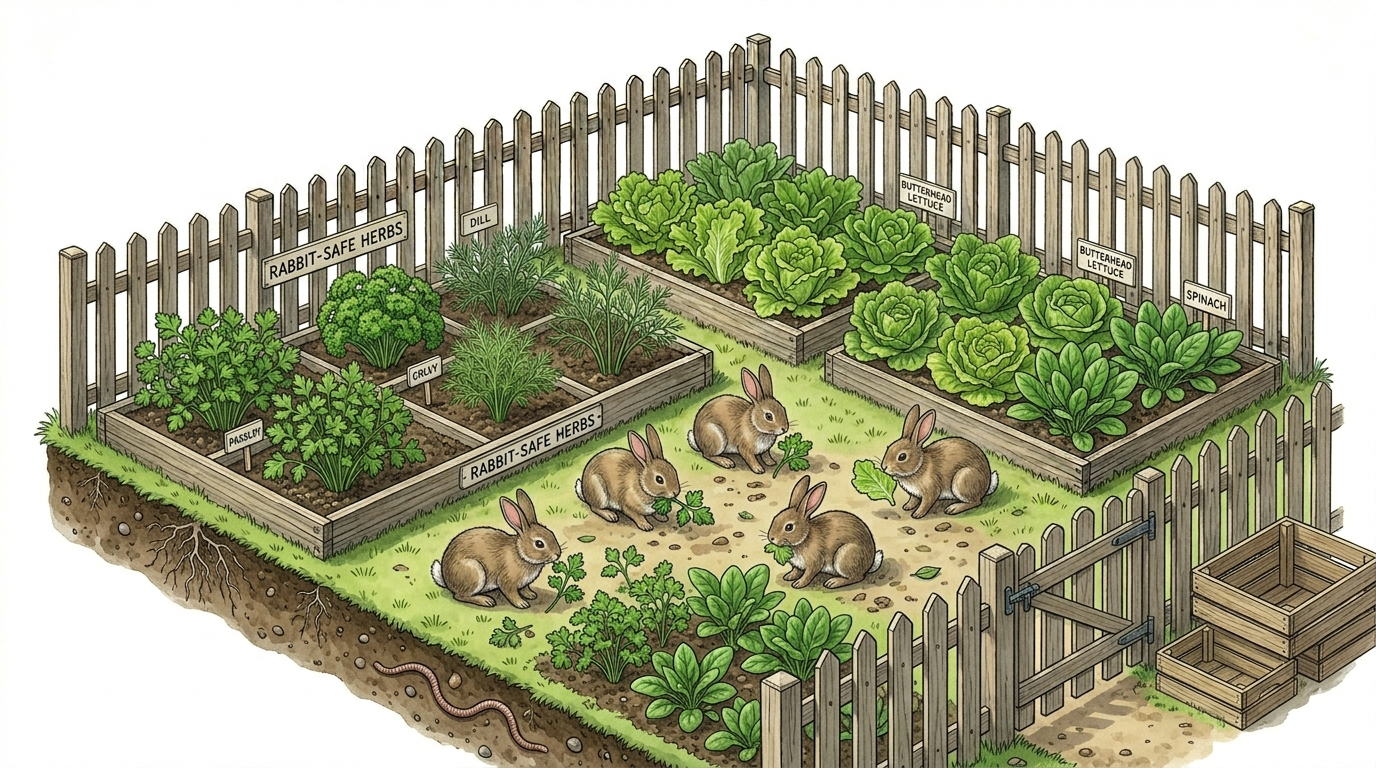
Rabbits in the Garden: Herbs and Vegetables
Learn how to choose suitable herbs and vegetables for rabbits, grow feeding plants, and plan a rabbit-friendly garden.
Guide
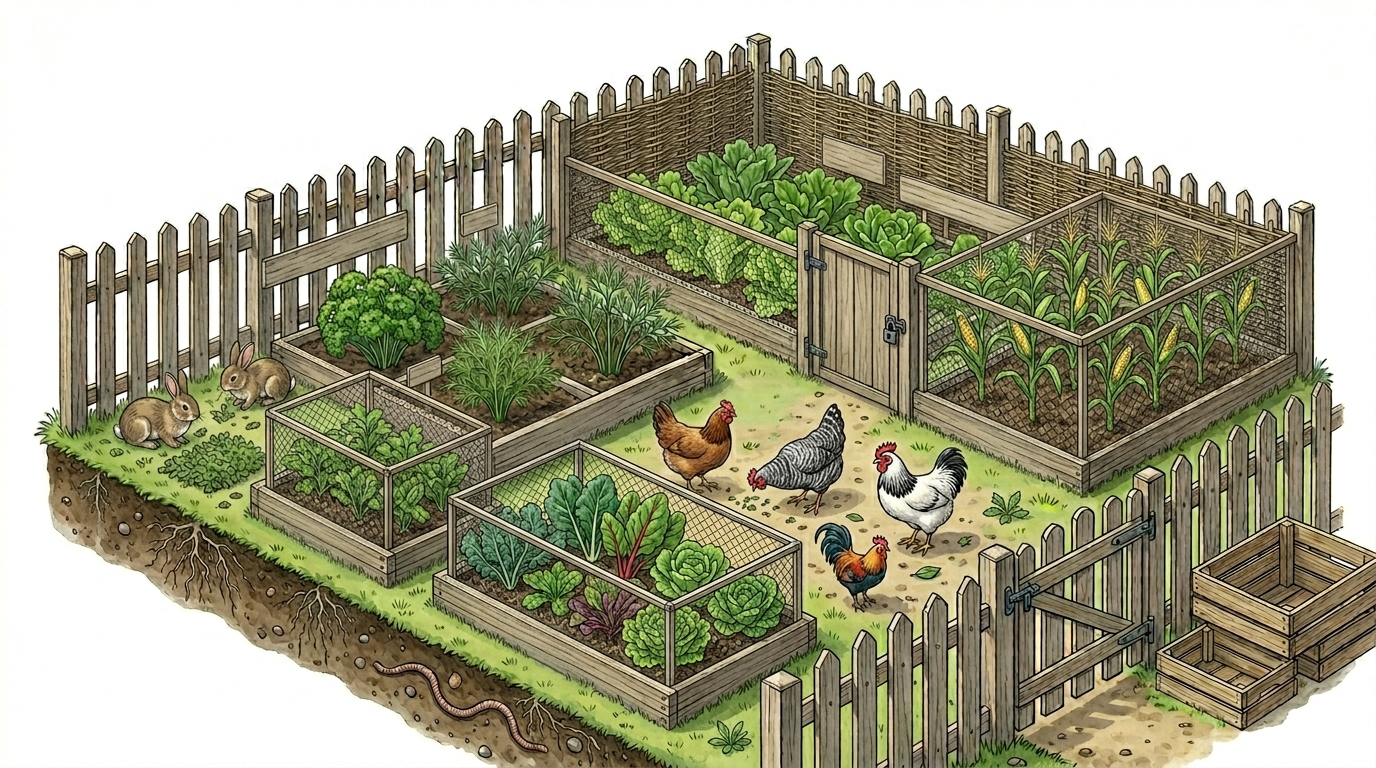
Chickens in the Garden: Safe Plants and Zones
Learn how to design a chicken-friendly garden with suitable plants, protected beds, and well-planned activity areas.
Guide
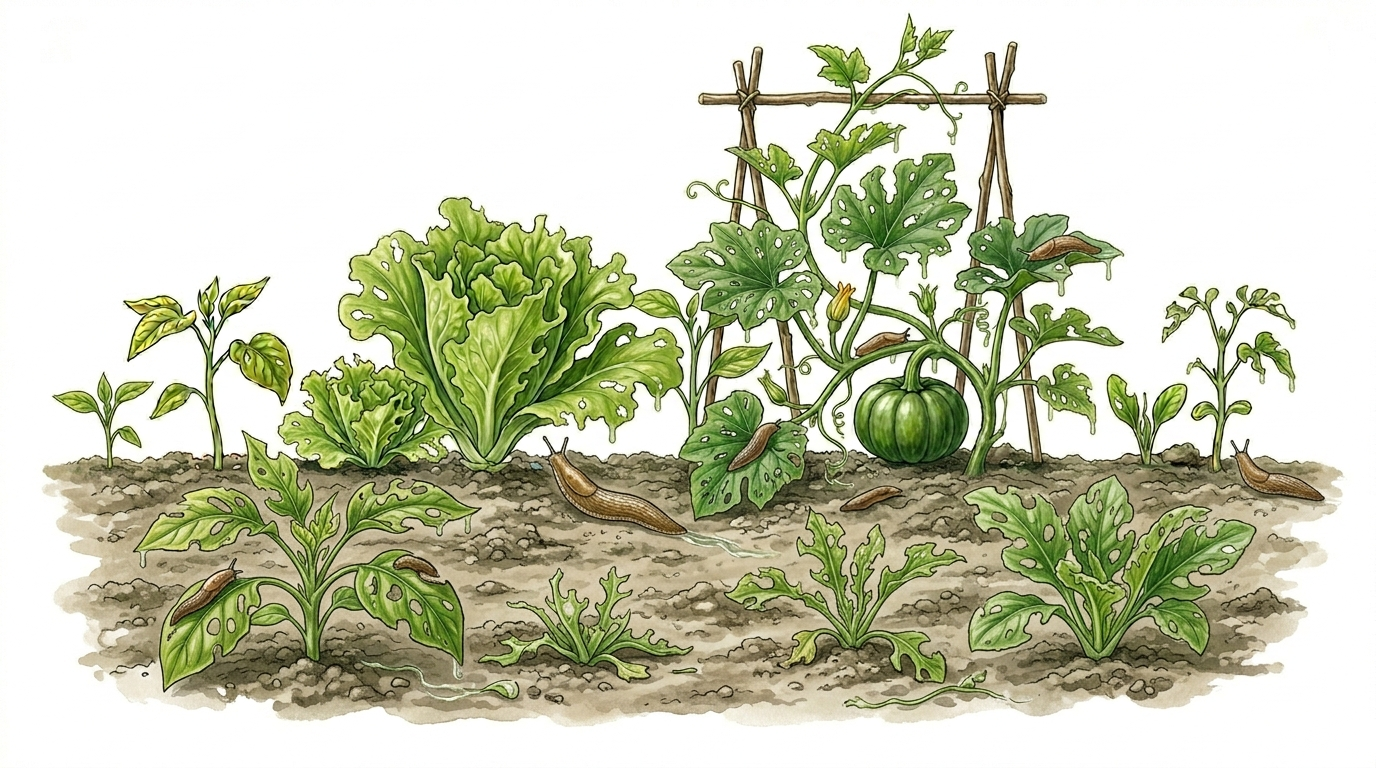
Slugs in Vegetable Beds: Protecting Vulnerable Plants
Learn how to protect vegetables from slugs, recognize feeding damage early, and plan beds to reduce slug pressure.
Guide
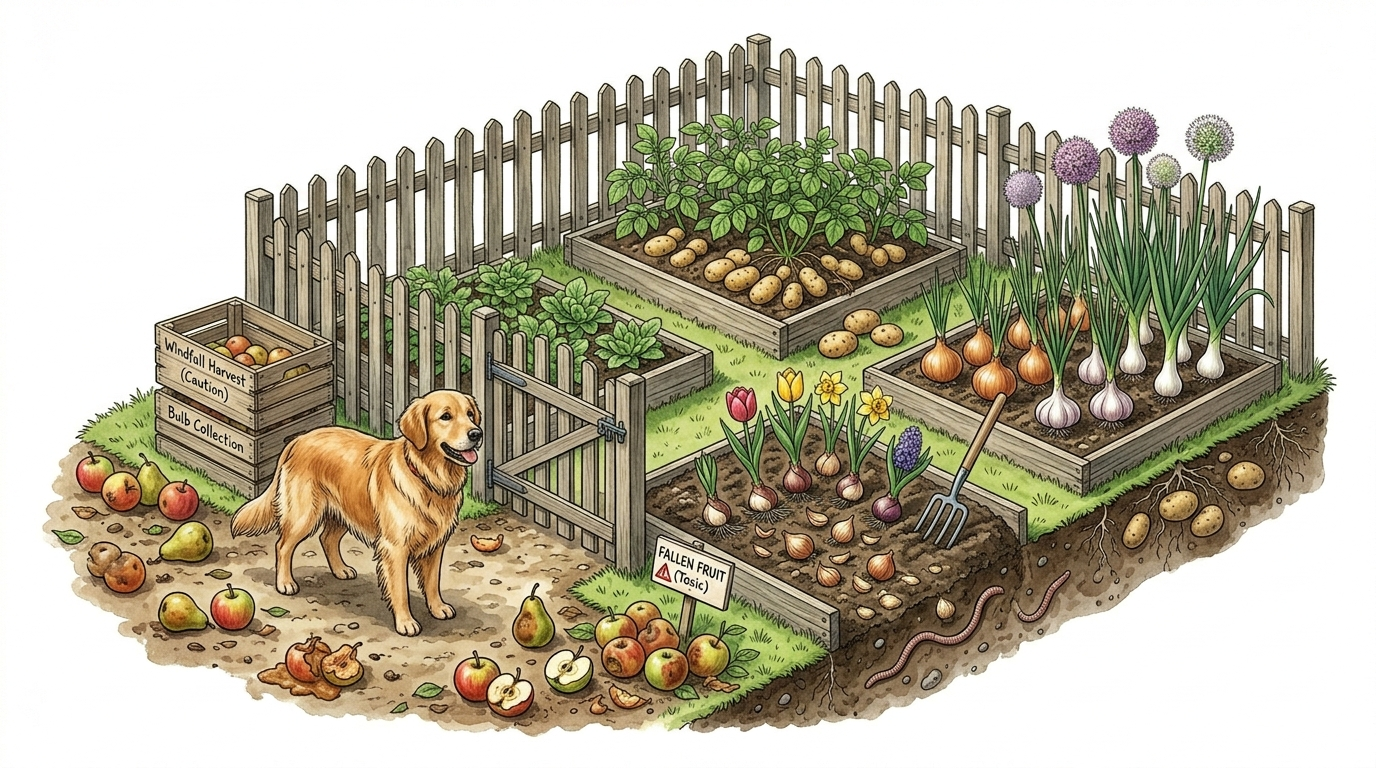
Dogs in the Garden: Windfall Fruit and Risks
Keep your garden dog-safe by managing windfall fruit, seeds, stored crops, and potentially problematic plant parts.
Internal links
Related plants
Spinach
Similar use as leafy greens, though chard is more robust.
Beetroot
Both susceptible to Cercospora leaf spot.
Closely related, same species Beta vulgaris.
Quinoa
Kale
Both are vitamin-rich winter vegetables.
Mangelwurzel
Historical confusion due to similar common names (Mangold wurzel).
Sources
Public sources
- Wikidata entity
Wikidata · 2026-05-14
- GBIF species match
GBIF · 2026-05-14
- Deutschsprachige Wikipedia: Mangold
Wikipedia · 2026-05-14
- Wikidata entity
Wikidata · 2026-05-14
- GBIF species match
GBIF · 2026-05-14
- Deutschsprachige Wikipedia: Futterrübe
Wikipedia · 2026-05-14
- English Wikipedia: Mangelwurzel
Wikipedia · 2026-05-14