Profile

butternut squashCucurbita moschata

Butternut squash (Cucurbita moschata) is a popular variety of winter squash, known for its sweet, nutty flavor and creamy texture. The fruits are pear-shaped with smooth, tan skin and bright orange flesh. They are rich in vitamins and minerals and are excellent for soups, purees, roasted dishes, and as a side. Butternut squash is relatively easy to care for but requires ample space and warmth to grow. Harvest occurs in autumn, and the fruits can be stored for several months if properly handled.
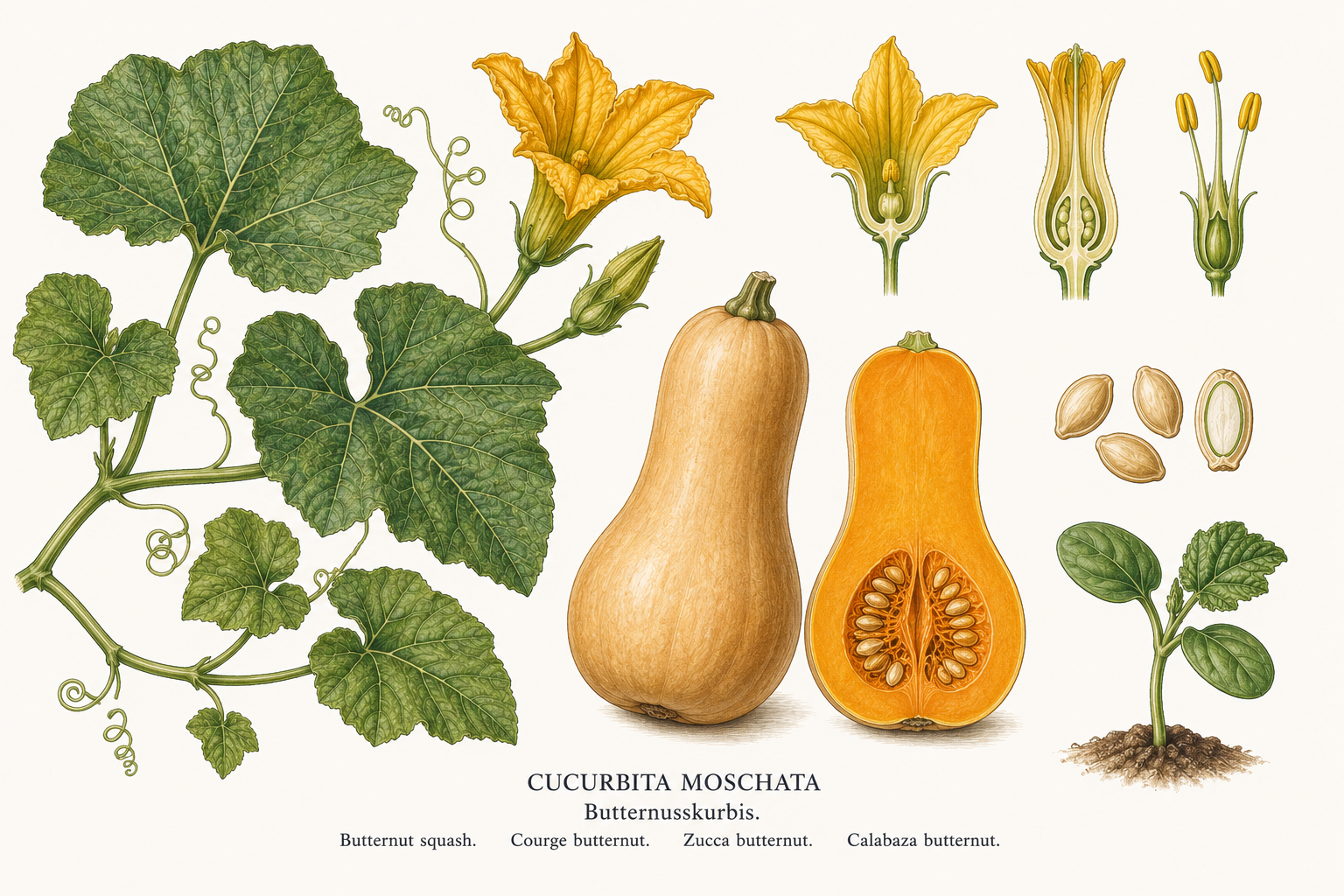
butternut squash (Cucurbita moschata): plant portrait for plant portrait - Vegetables, Gourd family, Sunny to partially
butternut squash: plant portrait. harvest: Sep, Oct, Nov.

Quick profile

Key data

Planting

May, Jun

Harvest

Sep, Oct, Nov

Light

Sunny to partially shaded

Water

high

Good neighbors

BeansCornCorianderNasturtium

Avoid

PotatoesCabbage

Growing data

butternut squash Growing data

Seed depth

2 - 3 cm

Plant spacing

80 - 120 cm

Row spacing

100 - 150 cm

Germination temp

20 - 30 °C

Sowing and germination

Seed depth2 - 3 cm
Germination temp20 - 30 °C
Germination time7 - 14 days
Seed viability3 - 5 years
Light germinatorNo
Dark germinatorYes
Cold germinatorNo
Stratification neededNo
Pre-soaking recommendedNo
Direct sowing possibleYes
Pre-culture recommendedYes

Planting and spacing

Plant spacing80 - 120 cm
Row spacing100 - 150 cm
Plants per m²0.8 - 1.2 per m²
Bed widthfrom 120 cm
Spacing1 plant per 2-3 sq ft

Temperature and site

Soil temperature12 - 20 °C
Growing temperaturefrom 15 °C
Optimal temperature20 - 28 °C
Frost sensitiveYes
Late frost sensitiveYes
Heat tolerancemedium
Cold tolerancelow

Water, nutrients and care

Waterhigh
Critical water phasesFlowering, Fruit development
Watering methodat the base
Droughthigh
Waterlogging sensitiveYes
Mulching recommendedYes
Nutrient needheavy_feeder
Compost recommendedYes
Fertilizer sensitivitylow

Container, support and growth

Container suitableNo
SupportNo
Height0.3 - 0.5 cm
Width100 - 300 cm
Root depth60 - 120 cm
Root spread100 - 200 cm
Yield2 - 5 fruits

Year plan

butternut squash Calendar

All plants
Indoor sowingDirect sowingPlantingHarvest

Indoor sowing

MarApr

Start sowing indoors from early March if you want an early harvest. Sow into pots at least 10 cm in diameter.

Direct sowing

MayJun

Direct sowing outdoors only after the last frosts, once the soil has warmed up (at least 12°C).

Planting

MayJun

Plant seedlings outdoors when there is no longer any risk of frost and soil temperatures are stable. Gradually acclimatize plants to outdoor conditions.

Harvest

SepOctNov

Harvest before the first hard frost. Squashes are storable if fully ripe and the rind is hard.

Year plan
  1. Start indoor pre-culture
  2. Continue indoor pre-culture
  3. Plant out into the garden
  4. Weed control
  5. First fertilization
  6. Water regularly
  7. Second fertilization
  8. Guide vines
  9. Begin harvest
  10. Main harvest time
  11. Store squashes

Growing

butternut squash Site, soil and care

Light

Sunny to partially shaded

Wind

Sheltered from wind

Spacing

80 - 120 cm

Storage

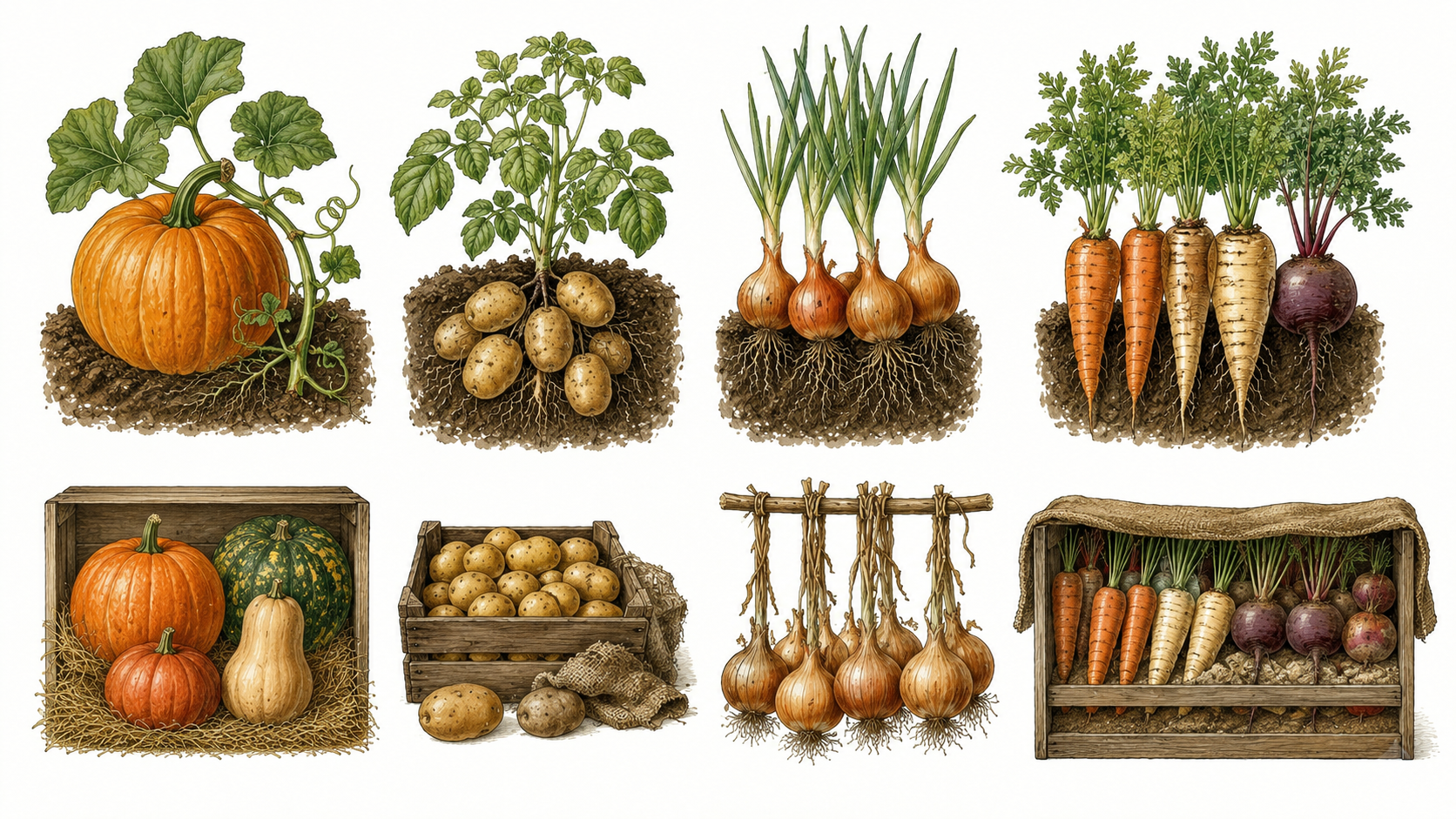
Butternut squashes are well storable if harvested and handled correctly. They are classified as winter squash.

Butternut squash requires ample space and warmth. Ensure good nutrient supply and consistent watering. Fruits are storable if harvested before the first frost and dried properly.

Pruning

butternut squash Pruning

Not applicable

Goal

Not applicable

Tools and hygiene

Not applicable for this herbaceous plant.

Companion guide

butternut squash Companion guide

Companion guide

Good neighbors

BeansCornCorianderNasturtium

Avoid

PotatoesCabbage

Health

Pests, Diseases

FAQ

When is the best time to sow butternut squash?

Sow indoors from early March for an early harvest, or direct sow outdoors from mid-May once the risk of frost has passed and the soil has warmed up.

How much space does butternut squash need?

Butternut squash requires ample space. Plan for about 1-2 square meters per plant, as the vines can spread widely.

How do I know if my butternut squash is ripe?

A ripe butternut squash has a hard, deep orange rind, a dry and woody stem attachment, and sounds dull when tapped. Harvest before the first hard frost.

What is the best way to store butternut squash?

Store butternut squash in a cool (10-15°C), dry, and well-ventilated place. They can last 3-6 months under optimal conditions.

Why does my squash taste bitter?

Bitter taste can be caused by stress factors like extreme temperatures, water shortage, or cross-pollination with ornamental gourds. Such fruits should not be consumed.

Related plants

Gourd family

Same family

Butternut squash belongs to the Cucurbitaceae family.

Squash

Same crop group

Butternut squash is a type of squash.

Powdery mildew

Shared diseases

Can also affect other cucurbits.

Downy mildew

Shared diseases

Can also affect other cucurbits.

tomato

Similar nutrient needs

Both are heavy feeders and need many nutrients, especially potassium and phosphorus.

Cabbage

Similar nutrient needs

Cabbage is also a heavy feeder and has similar nutrient needs.

Cucumber

Similar water needs

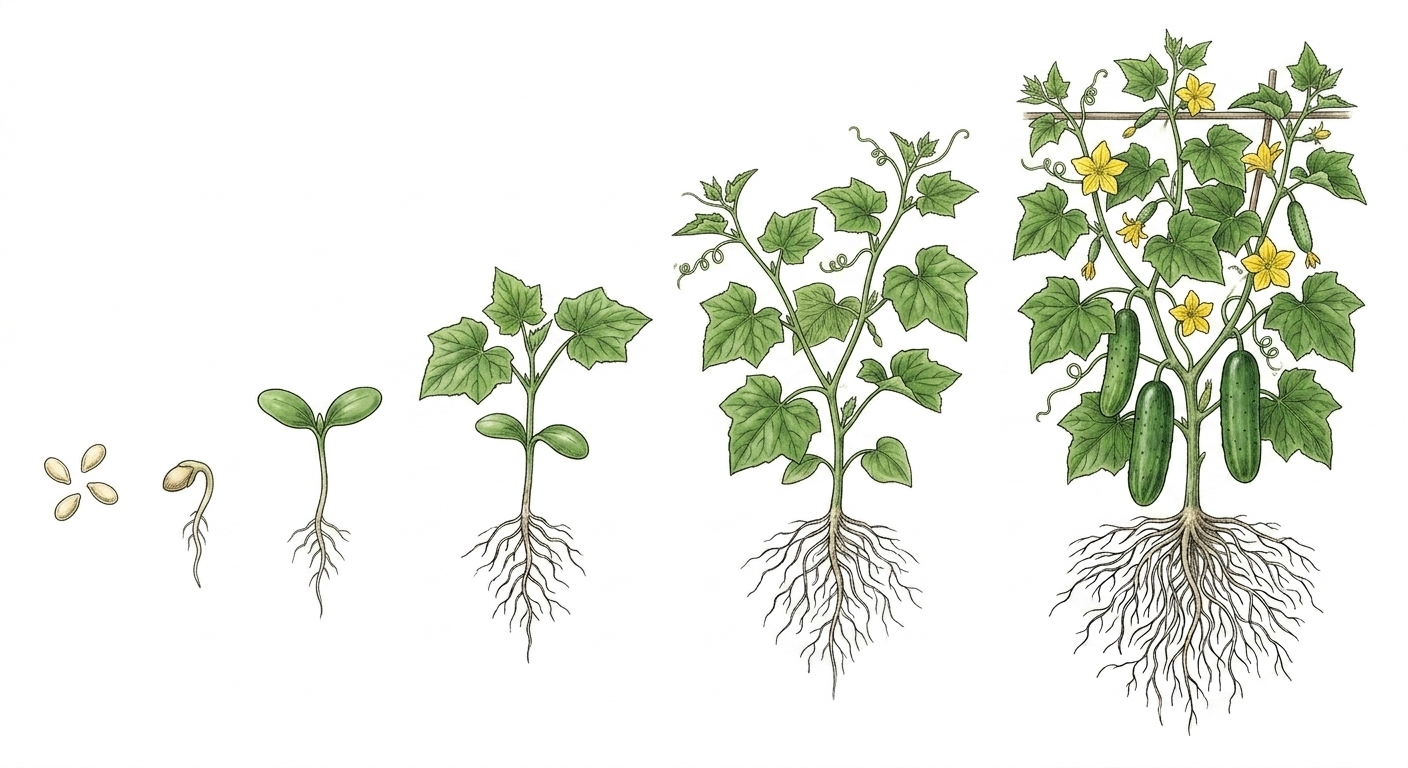
Both need consistent moisture, especially during fruit development.

Pepper

Similar water needs

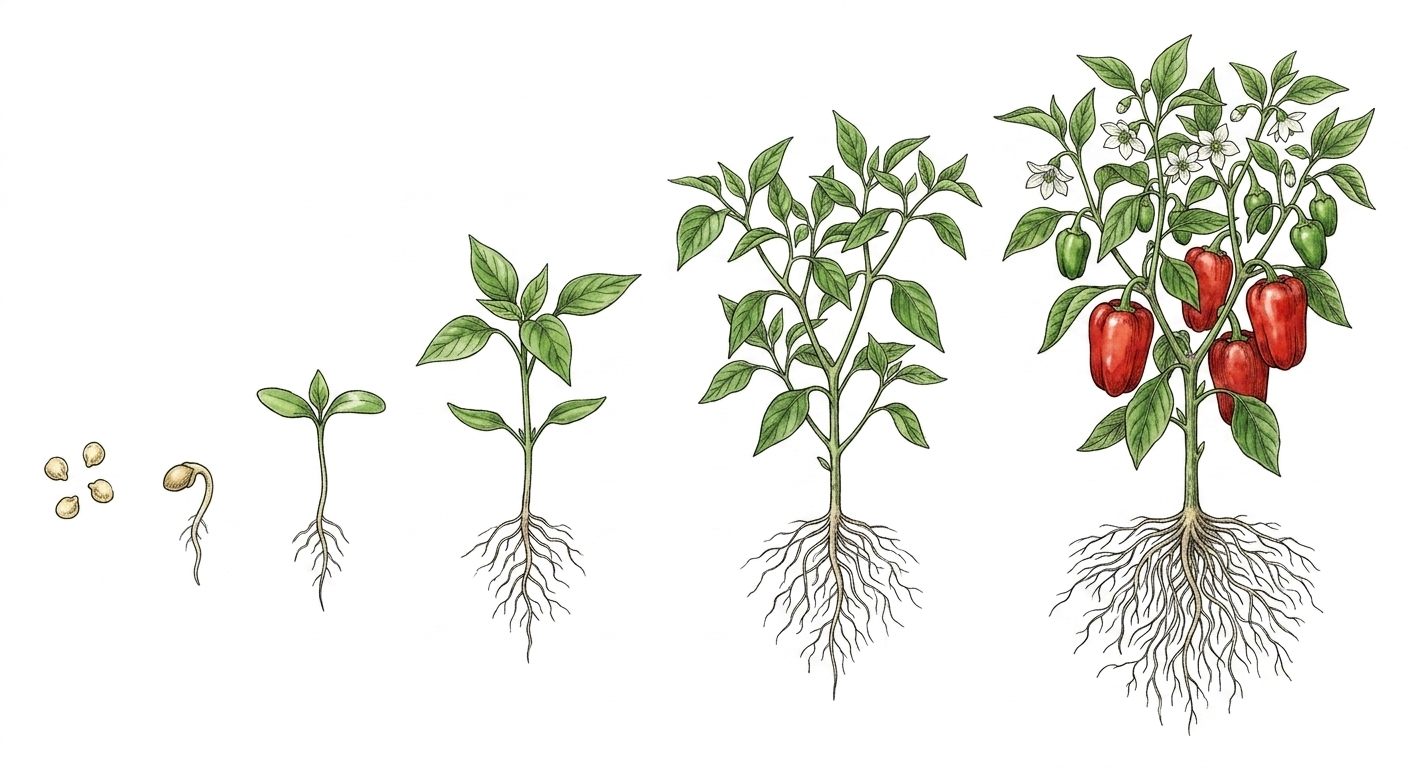
Both benefit from even watering to avoid drought stress.

Sources

Public sources

  1. Wikidata entity

    Wikidata · 2026-05-12

  2. GBIF species match

    GBIF · 2026-05-12

  3. English Wikipedia: Butternut squash

    Wikipedia · 2026-05-12

Details

More public plant data

Names
Common

butternut squash

Plural

butternut squash

BotanicalCucurbita moschata
Botanical authorDuchesne
Synonyms
  1. butternut pumpkin
  2. gramma
Common synonyms
  1. butternut pumpkin
Regional names
Historical names
Market names
Misspellings
International names
Fr
  1. courge musquée
Es
  1. calabaza moscada
It
  1. zucca violina
Pl
  1. dynia piżmowa
Search terms
  1. butternut squash
  2. butternut pumpkin
  3. Cucurbita moschata
Taxonomy
KingdomPlantae
Clades
  1. Tracheophytes
  2. Angiosperms
  3. Eudicots
  4. Rosids
OrderCucurbitales
Family botanicalCucurbitaceae
Family

Gourd family

Family idcucurbitaceae
SubfamilyCucurbitoideae
TribeBenincaseae
GenusCucurbita
Speciesmoschata
Cultivar groupWinter Squash
Hybrid statusnot_hybrid
Related crops
  1. cucurbita-maxima
  2. cucurbita-pepo
Classification
Main groupVegetable
Sub groupFruit Vegetable
Crop groupCucurbits
Life cycleAnnual
Perennialno
Woodyno
Treeno
Shrubno
Edible parts
  1. Fruit
Nutrient groupCarbohydrate
Calendar
Sowing indoor
Months
  1. 3
  2. 4
Earliest month3
Latest month4
Notes

Start sowing indoors from early March if you want an early harvest. Sow into pots at least 10 cm in diameter.

Sowing outdoor
Months
  1. 5
  2. 6
Earliest month5
Latest month6
Notes

Direct sowing outdoors only after the last frosts, once the soil has warmed up (at least 12°C).

Planting out
Months
  1. 5
  2. 6
Earliest month5
Latest month6
Notes

Plant seedlings outdoors when there is no longer any risk of frost and soil temperatures are stable. Gradually acclimatize plants to outdoor conditions.

Harvest
Months
  1. 9
  2. 10
  3. 11
Earliest month9
Latest month11
Notes

Harvest before the first hard frost. Squashes are storable if fully ripe and the rind is hard.

Month tasks
3
  1. Early March: Sow indoors for an early harvest.

4
  1. Continue sowing indoors.

5
  1. Mid-May onwards: Plant out into the garden after the last frosts.

6
  1. Weed and re-sow if necessary.

7
  1. Water and fertilize regularly. Watch for pests and diseases.

8
  1. Continue care, guide vines if necessary.

9
  1. Start of harvest for early varieties. Protect fruits from moisture.

10
  1. Main harvest time. Harvest squashes before the first frost.

11
  1. Store harvested squashes in a cool, dry place.

Month tasks structured
3
  1. TaskSow indoors
    Label

    Start indoor pre-culture

    Priorityhigh
    Months
    1. 3
    ConditionSoil temperature at least 15°C
    Estimated effortlow
    Notes

    Sow into pots at least 10 cm in diameter.

4
  1. TaskSow indoors
    Label

    Continue indoor pre-culture

    Prioritymedium
    Months
    1. 4
    Estimated effortlow
    Notes

    Sow more seeds if needed.

5
  1. TaskPlant out
    Label

    Plant out into the garden

    Priorityhigh
    Months
    1. 5
    2. 6
    ConditionNo frost risk, soil temperature > 12°C
    Estimated effortmedium
    Notes

    Gradually acclimatize plants to outdoor temperatures.

6
  1. TaskWeeding
    Label

    Weed control

    Prioritymedium
    Months
    1. 6
    ConditionWeeds present
    Estimated effortmedium
    Notes

    Keep the bed free of weeds to avoid competition.

  2. TaskFertilizing
    Label

    First fertilization

    Prioritymedium
    Months
    1. 6
    ConditionPlants established
    Estimated effortlow
    Notes

    Use organic fertilizer or compost.

7
  1. TaskWatering
    Label

    Water regularly

    Priorityhigh
    Months
    1. 7
    2. 8
    ConditionDry weather
    Estimated effortmedium
    Notes

    Especially during dry spells and fruit development.

  2. TaskFertilizing
    Label

    Second fertilization

    Prioritymedium
    Months
    1. 7
    ConditionPlants growing vigorously
    Estimated effortlow
    Notes

    If needed, with a balanced liquid fertilizer.

  3. TaskPest and disease control
    Label

    Check for pests and diseases

    Prioritymedium
    Months
    1. 7
    2. 8
    ConditionVisible signs
    Estimated effortlow
    Notes

    Act early if infestation occurs.

8
  1. TaskVine training
    Label

    Guide vines

    Prioritylow
    Months
    1. 8
    ConditionVines growing
    Estimated effortlow
    Notes

    Prevents overgrowth and facilitates harvesting.

9
  1. TaskHarvest
    Label

    Begin harvest

    Priorityhigh
    Months
    1. 9
    2. 10
    3. 11
    ConditionFruits mature
    Estimated effortmedium
    Notes

    Harvest before the first hard frost. The rind should be hard.

10
  1. TaskHarvest
    Label

    Main harvest time

    Priorityhigh
    Months
    1. 10
    ConditionFruits mature
    Estimated effortmedium
    Notes

    Ensure all fruits are harvested before frost.

11
  1. TaskStorage
    Label

    Store squashes

    Priorityhigh
    Months
    1. 11
    ConditionHarvested and dry
    Estimated effortlow
    Notes

    Store in a cool (approx. 10-15°C), dry, and well-ventilated place.

Book content
Overview

Butternut squash (Cucurbita moschata) is a popular variety of winter squash, known for its sweet, nutty flavor and creamy texture. The fruits are pear-shaped with smooth, tan skin and bright orange flesh. They are rich in vitamins and minerals and are excellent for soups, purees, roasted dishes, and as a side. Butternut squash is relatively easy to care for but requires ample space and warmth to grow. Harvest occurs in autumn, and the fruits can be stored for several months if properly handled.

Structured month tasks
3
  1. TaskSow indoors
    Label

    Start indoor pre-culture

    Priorityhigh
    Months
    1. 3
    ConditionSoil temperature at least 15°C
    Estimated effortlow
    Notes

    Sow into pots at least 10 cm in diameter.

4
  1. TaskSow indoors
    Label

    Continue indoor pre-culture

    Prioritymedium
    Months
    1. 4
    Estimated effortlow
    Notes

    Sow more seeds if needed.

5
  1. TaskPlant out
    Label

    Plant out into the garden

    Priorityhigh
    Months
    1. 5
    2. 6
    ConditionNo frost risk, soil temperature > 12°C
    Estimated effortmedium
    Notes

    Gradually acclimatize plants to outdoor temperatures.

6
  1. TaskWeeding
    Label

    Weed control

    Prioritymedium
    Months
    1. 6
    ConditionWeeds present
    Estimated effortmedium
    Notes

    Keep the bed free of weeds to avoid competition.

  2. TaskFertilizing
    Label

    First fertilization

    Prioritymedium
    Months
    1. 6
    ConditionPlants established
    Estimated effortlow
    Notes

    Use organic fertilizer or compost.

7
  1. TaskWatering
    Label

    Water regularly

    Priorityhigh
    Months
    1. 7
    2. 8
    ConditionDry weather
    Estimated effortmedium
    Notes

    Especially during dry spells and fruit development.

  2. TaskFertilizing
    Label

    Second fertilization

    Prioritymedium
    Months
    1. 7
    ConditionPlants growing vigorously
    Estimated effortlow
    Notes

    If needed, with a balanced liquid fertilizer.

  3. TaskPest and disease control
    Label

    Check for pests and diseases

    Prioritymedium
    Months
    1. 7
    2. 8
    ConditionVisible signs
    Estimated effortlow
    Notes

    Act early if infestation occurs.

8
  1. TaskVine training
    Label

    Guide vines

    Prioritylow
    Months
    1. 8
    ConditionVines growing
    Estimated effortlow
    Notes

    Prevents overgrowth and facilitates harvesting.

9
  1. TaskHarvest
    Label

    Begin harvest

    Priorityhigh
    Months
    1. 9
    2. 10
    3. 11
    ConditionFruits mature
    Estimated effortmedium
    Notes

    Harvest before the first hard frost. The rind should be hard.

10
  1. TaskHarvest
    Label

    Main harvest time

    Priorityhigh
    Months
    1. 10
    ConditionFruits mature
    Estimated effortmedium
    Notes

    Ensure all fruits are harvested before frost.

11
  1. TaskStorage
    Label

    Store squashes

    Priorityhigh
    Months
    1. 11
    ConditionHarvested and dry
    Estimated effortlow
    Notes

    Store in a cool (approx. 10-15°C), dry, and well-ventilated place.

Cultivation specs
Seed
Seed depth cm min.2
Seed depth cm max.3
Light germinatorno
Dark germinatoryes
Cold germinatorno
Stratification neededno
Pre soaking recommendedno
Germination temperature c min.20
Germination temperature c max.30
Germination days min.7
Germination days max.14
Seed lifespan years min.3
Seed lifespan years max.5
Direct sowing possibleyes
Pre culture recommendedyes
Spacing
Plant spacing cm min.80
Plant spacing cm max.120
Row spacing cm min.100
Row spacing cm max.150
Recommended density per sqm min.0.8
Recommended density per sqm max.1.2
Min. bed width120 cm
Square foot gardening spacing1 plant per 2-3 sq ft
Spacing notes

Squashes require ample space. Ensure adequate spacing between plants and rows.

Growth dimensions
Height cm min.0.3
Height cm max.0.5
Width cm min.100
Width cm max.300
Root depth cm min.60
Root depth cm max.120
Root spread cm min.100
Root spread cm max.200
Growth speedfast
Final size notes

Plants develop long, trailing vines and require significant space.

Temperature
Min. growing temperature15 °C
Optimal temperature c min.20
Optimal temperature c max.28
Max. heat tolerance35 °C
Soil temperature for sowing c min.12
Soil temperature for sowing c optimal20
Frost sensitiveyes
Late frost sensitiveyes
Heat tolerancemedium
Cold tolerancelow
Temperature notes

Warm-season crop, sensitive to frost.

Water
Water needhigh
Critical water phases
  1. Flowering
  2. Fruit development
Drought tolerantno
Drought sensitivityhigh
Waterlogging sensitiveyes
Mulching recommendedyes
Water notes

Consistent soil moisture is crucial; avoid waterlogging.

Nutrition
Nutrient groupheavy_feeder
Heavy feederyes
Medium feederno
Light feederno
Nitrogen needmedium
Phosphorus needhigh
Potassium needhigh
Calcium needmedium
Magnesium needmedium
Compost recommendedyes
Mulching recommendedyes
Fertilizer sensitivitylow
Nutrition notes

Requires nutrient-rich soil and regular feeding, especially during fruit development.

Container
Container suitableno
Drainage requiredno
Repotting neededno
Container notes

Not suitable for container growing due to space and root system requirements.

Support
Needs supportno
Support recommendedno
Climbingno
Viningyes
Trellis recommendedno
Training requiredno
Support notes

Plants vine and require significant ground space. Support is usually not necessary but can help in confined areas.

Cultivation modes
Outdoor bed suitableyes
Raised bed suitableyes
Container suitableno
Balcony suitableno
Greenhouse suitableyes
Polytunnel suitableyes
Indoor suitableno
Windowsill suitableno
Hydroponic possibleno
Permaculture suitableyes
No dig suitableyes
Yield density
Yield per plant min.2
Yield per plant max.5
Yield unitfruits
Yield per sqm min.1.5
Yield per sqm max.3
Yield reliabilitymedium
Yield notes

Yields can vary depending on cultivar, location, and care.

Site
Sun

Sunny to partially shaded

Wind

Sheltered from wind

Notes

Prefers a warm, sunny, and wind-sheltered location.

Soil
Type

Humus-rich, fertile, loose, and well-draining

PH
Min.6
Max.7.5
Optimal min.6.5
Optimal max.7
Notes

Prepare soil well before planting and enrich with compost.

Watering
Frequency

Regularly, especially during dry spells

Method

At the root base, avoid waterlogging

Notes

Consistent moisture promotes fruit development and prevents diseases.

Nutrition
Type

Needs-based, with a focus on compost and organic fertilizers

Timing

Before planting, during growth, and fruit development

Notes

Squashes are heavy feeders. Good nutrient supply is crucial for high yields.

Cultivation planning
Succession sowing
Possibleno
Bed planning notes

Requires ample space, ideal for growing at the edge of beds or in compost heaps.

Rotation prioritymedium
Interplanting potentiallow
Mechanization relevancelow
Crop rotation

Cucurbits (Cucurbitaceae) should not be grown on areas where cucurbits, melons, or cucumbers were planted in the previous year. A break of 3-4 years is recommended.

Deficiencies
Slugbutternusskurbis-naehrstoffmangel
Name

Nutrient deficiencies in Butternut Squash

Description

Symptoms and causes of nutrient deficiencies in butternut squash.

Deficiency groups
  1. Slugstickstoffmangel
    Name

    Nitrogen deficiency

    ElementNitrogen (N)
    Symptoms
    1. Uniform pale green to yellowing of all leaves, starting with older leaves
    2. Reduced growth
    3. Stunted plants
    Causes
    1. Insufficient fertilization
    2. Leaching due to heavy rain
    3. Soil low in organic matter
    Correction
    1. Balanced nitrogen fertilization (organic or mineral)
    2. Incorporation of compost or green manure
  2. Slugphosphormangel
    Name

    Phosphorus deficiency

    ElementPhosphorus (P)
    Symptoms
    1. Dark green to purplish discoloration of leaves, especially on the underside
    2. Stunted growth
    3. Slow development
    Causes
    1. Low soil pH
    2. Cold, wet soil
    3. Lack of phosphorus availability
    Correction
    1. Application of phosphorus-rich fertilizers (e.g., bone meal, Thomas slag)
    2. Improvement of soil structure
  3. Slugkaliummangel
    Name

    Potassium deficiency

    ElementPotassium (K)
    Symptoms
    1. Yellowish margins on older leaves that turn brown and die (marginal necrosis)
    2. Poor fruit development
    3. Reduced disease resistance
    Causes
    1. Low soil potassium content
    2. High soil magnesium content
    3. Heavy leaching
    Correction
    1. Potassium fertilizers (e.g., potassium sulfate, wood ash)
    2. Soil analysis to determine potassium needs
  4. Slugmagnesiummangel
    Name

    Magnesium deficiency

    ElementMagnesium (Mg)
    Symptoms
    1. Interveinal chlorosis (yellowing between the veins) on older leaves, while the veins remain green
    2. Leaves may curl upwards
    Causes
    1. Low soil magnesium content
    2. High soil potassium content
    3. Acidic soils
    Correction
    1. Magnesium sulfate (Epsom salt) spray or soil application
    2. Liming to adjust pH
Notes

Balanced fertilization based on soil analysis and plant needs is crucial. Heavy feeders like squash require adequate nutrients.

Problems
Slugbutternusskurbis-probleme
Name

Problems with Butternut Squash cultivation

Description

Common problems encountered during butternut squash cultivation and their causes.

Problem groups
  1. Slugunreife-fruechte
    Name

    Unripe fruits at harvest

    Description

    Fruits are not fully mature, affecting storability and flavor.

    Causes
    1. Harvesting too early
    2. Cool weather in late summer/autumn
    3. Diseases or pests inhibiting growth
    Solutions
    1. Determine harvest time accurately (hard rind, dry stem attachment)
    2. Care for plants until the first frost
    3. Use frost cloth for protection if needed
    Prevention
    1. Choose varieties with appropriate maturity times
    2. Good nutrient and water supply
    3. Early planting
  2. Slugfalsche-befruchtung
    Name

    Poor fruit set / Improper pollination

    Description

    Flowers open, but no or only deformed fruits develop.

    Causes
    1. Lack of pollinators (bees, bumblebees)
    2. Extreme temperatures (too hot or too cold)
    3. High humidity
    4. Inconsistent watering
    5. Nutrient imbalance (too much nitrogen)
    Solutions
    1. Encourage pollinators (wildflower meadow, insect hotels)
    2. Shade plants during extreme heat
    3. Water consistently
    4. Fertilize balancedly
    Prevention
    1. Plant flowering plants to attract pollinators
    2. Avoid insecticides during flowering period
  3. Slugplatzmangel
    Name

    Lack of space

    Description

    Squash plants require ample space for their vines to spread.

    Causes
    1. Planting too densely
    2. Unfavorable location
    Solutions
    1. Guide vines intentionally and prune if necessary
    2. Plant on compost heaps or at the edge of beds
    Prevention
    1. Maintain adequate plant spacing
    2. Choose a suitable location
  4. Slugbitterer-geschmack
    Name

    Bitter taste

    Description

    Some squashes can taste bitter, which is due to cucurbitacins.

    Causes
    1. Genetic predisposition
    2. Stress factors like extreme temperatures, water shortage, or nutrient imbalance
    3. Cross-pollination with ornamental gourds
    Solutions
    1. Do not consume bitter fruits
    2. Only grow varieties known for their sweet taste
    Prevention
    1. Variety selection
    2. Minimize stress factors
    3. Avoid cross-pollination with ornamental gourds
Notes

Many problems can be avoided through good site selection, adequate spacing, and appropriate care.

Problem management
Common pest groups
  1. Aphids
  2. Squash fly
  3. Spider mites
  4. Slugs and Snails
Common disease groups
  1. Powdery mildew
  2. Downy mildew
  3. Fruit rot
  4. Bacterial wilt
Prevention principles
  1. Choose disease-resistant varieties.
  2. Ensure good air circulation and avoid waterlogging.
  3. Encourage beneficial insects for pest control.
  4. Keep the growing area clean and remove infested plant parts.
  5. Observe crop rotation.
  6. Strengthen plants through good care and balanced fertilization.
  7. Avoid soil contact of fruits to prevent rot.
  8. Regularly monitor for pests and diseases.
Diagnosis notes

Accurate diagnosis of problems often requires observing symptoms, location of infestation, and environmental conditions. When in doubt, it is advisable to consult specialized literature or ask experts.

Disease graph
ScopeCucurbita moschata
Profiles
  1. Slugechter-mehltau
    Severitymedium
    Conditions
    1. High humidity
    2. Moderate temperatures
    3. Poor air circulation
    Affected parts
    1. Leaves
    2. Stems
    3. Fruits
    Prevention
    1. Disease-resistant varieties
    2. Good air circulation
    3. Crop rotation
    4. Control soil moisture
    Organic control
    1. Sprays with milk-water mixture
    2. Baking soda solution
    3. Neem oil
  2. Slugfalscher-mehltau
    Severitymedium
    Conditions
    1. High humidity
    2. Wet leaves
    3. Moderate temperatures
    Affected parts
    1. Leaves
    Prevention
    1. Good air circulation
    2. Avoid overcrowding plants
    3. Keep soil moist but avoid waterlogging
    Organic control
    1. Plant extracts (horsetail)
    2. Copper-based fungicides (cautiously)
  3. Slugfruchtfaeule
    Severityhigh
    Conditions
    1. High humidity
    2. Soil contact of fruits
    3. Poor air circulation
    Affected parts
    1. Fruits
    Prevention
    1. Avoid soil contact (mulching, placing underneath)
    2. Good air circulation
    3. Elevate fruits
    Organic control
    1. Remove infected fruits immediately
    2. Copper-based fungicides (cautiously)
Diagnostic rules
  1. Symptom

    White, powdery coating on leaves

    Possible causes
    1. echter-mehltau
    First checks
    1. Is the coating easily wiped off?
    2. Does it appear on the upper or lower leaf surfaces?
  2. Symptom

    Yellowish spots on leaves with gray coating on the underside

    Possible causes
    1. falscher-mehltau
    First checks
    1. Is the coating visible on the underside of the leaf?
    2. Are the spots on the upper side?
    3. What is the humidity level?
  3. Symptom

    Soft, rotting spots on fruits

    Possible causes
    1. fruchtfaeule
    First checks
    1. Do the fruits have soil contact?
    2. Is the weather humid?
    3. Is there mold formation?
Prevention strategy
Cultural
  1. Select robust, disease-resistant varieties.
  2. Ensure adequate plant spacing and good air circulation.
  3. Provide consistent watering without waterlogging.
  4. Incorporate compost and organic fertilizers for strong plants.
  5. Practice consistent crop rotation.
  6. Remove infected plant parts and fruits promptly.
  7. Avoid soil contact of fruits by mulching or placing them on supports.
Monitoring
  1. Regularly inspect leaves and fruits for early signs of diseases or pests.
  2. Look for changes in leaf color, spotting, or coatings.
  3. Monitor humidity levels, especially in greenhouses.
Organic first response
  1. For early signs of powdery mildew: Sprays with milk-water mixture (1:10) or baking soda solution.
  2. For aphids: Spray with water, use beneficial insects, or soap solution.
  3. For signs of rot: Remove infected fruits, avoid soil contact.
Notes

Prevention is key to avoiding diseases in squash. A healthy plant is more resistant to pathogens.

Diagnosis
Slugbutternusskurbis-diagnose
Name

Diagnosis of problems in Butternut Squash

Description

Guide to identifying and diagnosing common problems in butternut squash.

Diagnostic steps
  1. 1. Observe symptoms closely: Where do they appear (leaves, stems, fruits)? What do they look like (spots, discoloration, coatings, feeding damage)?

  2. 2. Check environmental conditions: Temperature, humidity, sunlight, soil condition, fertilization, watering.

  3. 3. Identify possible pests or pathogens: Look for insects, larvae, fungal spores, or bacteria.

  4. 4. Compare observations with known problems (see Diseases, Pests, Nutrient Deficiencies).

  5. 5. Consider the possibility of stress factors (e.g., cold, heat, drought, mechanical damage).

  6. 6. Consult specialized literature or experts if unsure.

Common misdiagnoses
  1. Downy mildew vs. Powdery mildew: Symptoms and location of infestation (underside vs. upper side) are crucial.

  2. Nutrient deficiency vs. Diseases: Symptoms can be similar, but the cause (nutrient availability vs. pathogen) differs.

  3. Wilting due to drought vs. Bacterial wilt: The plant recovers after watering when due to drought, but not with bacterial wilt.

Notes

Early and correct diagnosis is crucial for effective problem management and minimizing yield losses.

Phenology
Stages
  1. Germination
  2. Growth
  3. Flowering
  4. Fruit development
  5. Ripening
Notes

The growing season is approximately 90-120 days, depending on the variety and climate. Full ripeness is often achieved during storage after the main harvest.

Flowering pollination

The plants produce yellow, trumpet-shaped flowers. Squashes are monoecious, meaning there are male and female flowers on the same plant. Pollination is primarily carried out by insects, especially bees and bumblebees. Adequate pollination is essential for good fruit set.

Harvest

Harvest takes place in autumn before the first hard frost. Fruits are ripe when the rind is hard and the color changes from green to a deep brown-orange. The stem attachment should be dry and woody.

Harvest details
Harvest frequency

Single main harvest in autumn, with potential for follow-up harvest of early varieties.

Harvest indicators
  1. Hard rind that cannot be easily dented
  2. Dry, woody stem attachment
  3. Deep, uniform color (brown-orange)
  4. Dull sound when tapped
Post harvest handling

Harvested squashes should be handled carefully to avoid damage. Leave a portion of the stem attached to the fruit. Clean fruits dry only if necessary. Curing in a warm place (approx. 20-25°C) for 1-2 weeks improves storability and flavor.

Storage

Butternut squashes are well storable if harvested and handled correctly. They are classified as winter squash.

Storage details
General storage category

Cool and dry

Storage life

3-6 months under optimal conditions (approx. 10-15°C, 70-80% humidity).

Processing options
  1. Raw (rarely)
  2. Cooked
  3. Baked
  4. Pureed
  5. Frozen
  6. Dried
Processing use

Butternut squash is versatile. The flesh can be cooked, baked, roasted, or processed into soups and purees. It is also suitable for freezing.

Kitchen usage

Its sweet, nutty flavor makes butternut squash a popular ingredient for soups, stews, casseroles, curries, and as a side dish. It can also be used in cakes and desserts.

Safety and edibility
Edible parts
  1. Flesh
  2. Squash seeds (roasted)
Inedible or caution parts
  1. Leaves and stems (not common, but can be edible depending on variety and preparation)
  2. Unripe fruits (can be bitter)
Toxicity notes

The fruit is non-toxic. Bitter fruits, which can result from stress or cross-pollination with ornamental gourds, should not be consumed due to their high cucurbitacin content.

Raw consumption

The flesh is edible raw, but it is usually consumed cooked as it becomes sweeter and more digestible. Cooked flesh is softer and easier to process.

Seed saving

Seeds can be saved from ripe fruits. It is important to use seeds only from healthy plants and varieties that have not been cross-pollinated with ornamental gourds or other Cucurbita species to maintain varietal characteristics.

Seed saving advanced
Isolation distance500 m
Hand pollination recommendedyes
Notes

To ensure varietal purity, an isolation distance of at least 500 meters from other Cucurbita species (especially ornamental gourds and other winter squash varieties) is necessary. Hand-pollinating female flowers with pollen from male flowers of the same plant or another healthy plant of the same variety is the safest method. Seeds should be thoroughly cleaned and dried.

Woody crop details
Rootstock relevanceNot applicable
Renewal pruning relevanceNot applicable
Notes

Butternut squash is an annual herbaceous plant and not a woody perennial. Therefore, details regarding woody cultivation are not applicable.

Ecology
Pollinator valuehigh
Wildlife valuelow
Biodiversity notes

The flowers provide nectar and pollen for bees and other pollinators. The fruits can serve as a food source for birds and small mammals in winter if not fully harvested.

Practical notes

Butternut squash requires ample space and warmth. Ensure good nutrient supply and consistent watering. Fruits are storable if harvested before the first frost and dried properly.

Seasonal content
Spring

In spring, the butternut squash season begins with indoor sowing from March. Ensure warm temperatures for germination. From mid-May, young plants can be transplanted outdoors.

Summer

Summer is the main growth phase. Regular watering and fertilizing are important to promote vigorous plants and good fruit development. Watch out for pests and diseases.

Autumn

Autumn is harvest time. Harvest the fruits before the first hard frost. Curing in a warm place improves storability. The last fruits are stored.

Winter

In winter, well-stored butternut squashes can be consumed. They are a valuable source of vitamins during the cold season.