Plant Profile
sweet cherryPrunus avium
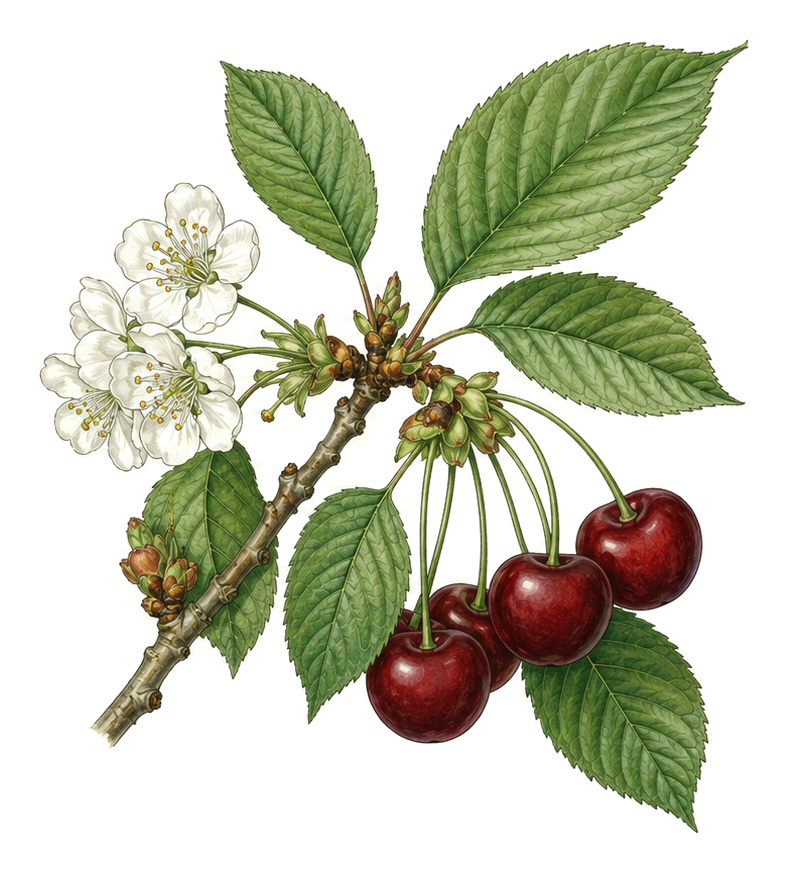
Popular fruit tree with juicy, sweet fruits, delighting with abundant blossoms in spring. Often requires a pollinator variety.
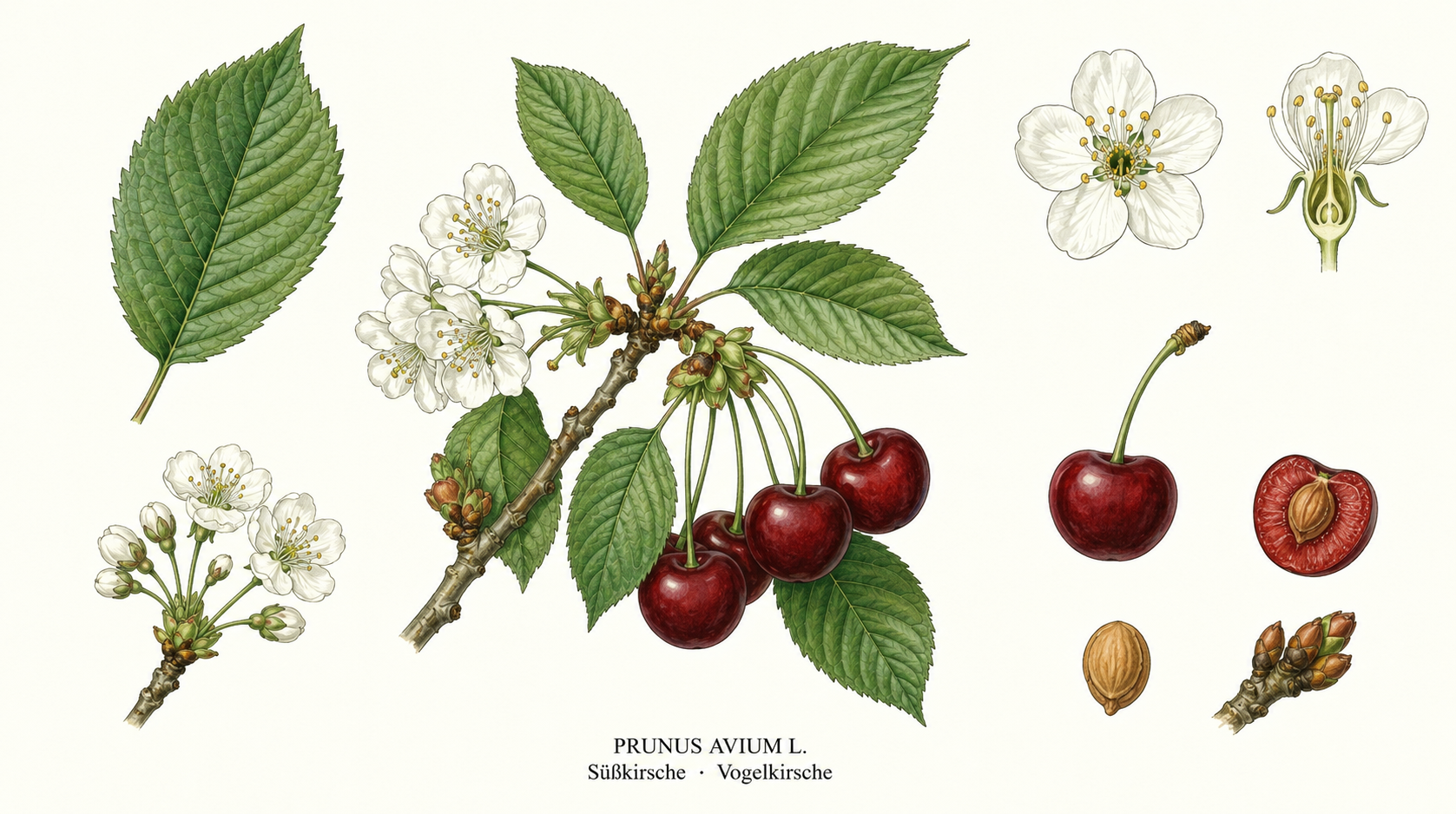
Quick profile
Key data
Suitable growing locations:
Good neighbors
GarlicLupinBorage
Avoid
WalnutPotato
Indoor & direct sowing
sweet cherry: Sowing and germination
Sweet cherries are not started indoors as they are trees planted directly.
Sweet cherries are typically not sown but planted as grafted trees.
Planting & site
sweet cherry: Planting and spacing
Plant sweet cherry in spring (March–April) or autumn (October–November) when soil is frost-free.
Temperature & frost
sweet cherry: Temperature and site
Water & nutrients
sweet cherry: Water, nutrients and care
Container & growth
sweet cherry: Container, support and growth
Year plan
sweet cherry Calendar
In spring, the white blossoms attract countless bees, while summer rewards with the first ripe, bright red fruits.
Recurring tasks
Relevant now
June
- HarvestFrüchte reif: Pick fruit with stem attached.
Next up
July
- Continue harvestFrüchte reif: Cover birds or apply netting.
Monthly tasks
Single tasks from monthly data; repeated seasonal windows are shown in the overview above.
January
Pruning
- Tree pruningfrostfrei: Remove dead wood and crossing branches.
February
Pruning
- Finish pruningfrostfrei: Treat wounds with wound sealant if needed.
March
Planting
- Prepare plantingBoden frostfrei: Dig planting hole and improve soil with compost.
April
Planting
- PlantingBoden nicht nass: Keep graft union above soil.
May
Plant health
- Pest controlAustrieb sichtbar: Watch for aphids and cherry fruit fly.
June
Harvest
- HarvestFrüchte reif: Pick fruit with stem attached.
August
Harvest
- Finish harvestFrüchte reif: Harvest last fruit and remove fallen fruit.
September
Growing
- WateringTrockenheit: Water young trees sufficiently before winter.
October
Planting
- Autumn plantingBoden frostfrei: Planting possible until November.
November
Planting
- Finish autumn plantingBoden frostfrei: Last plantings before frost.
December
Growing
- Winter protectionFrost: Protect trunk with jute or white paint.
Flowering & pollination
sweet cherry Flowering & pollination
Flower type
Single
Flower color
White, five-petalled
Self-fertility
meist selbstunfruchtbar (außer alte Selbstbefruchter wie 'Stella')
Pollinator needed
yes
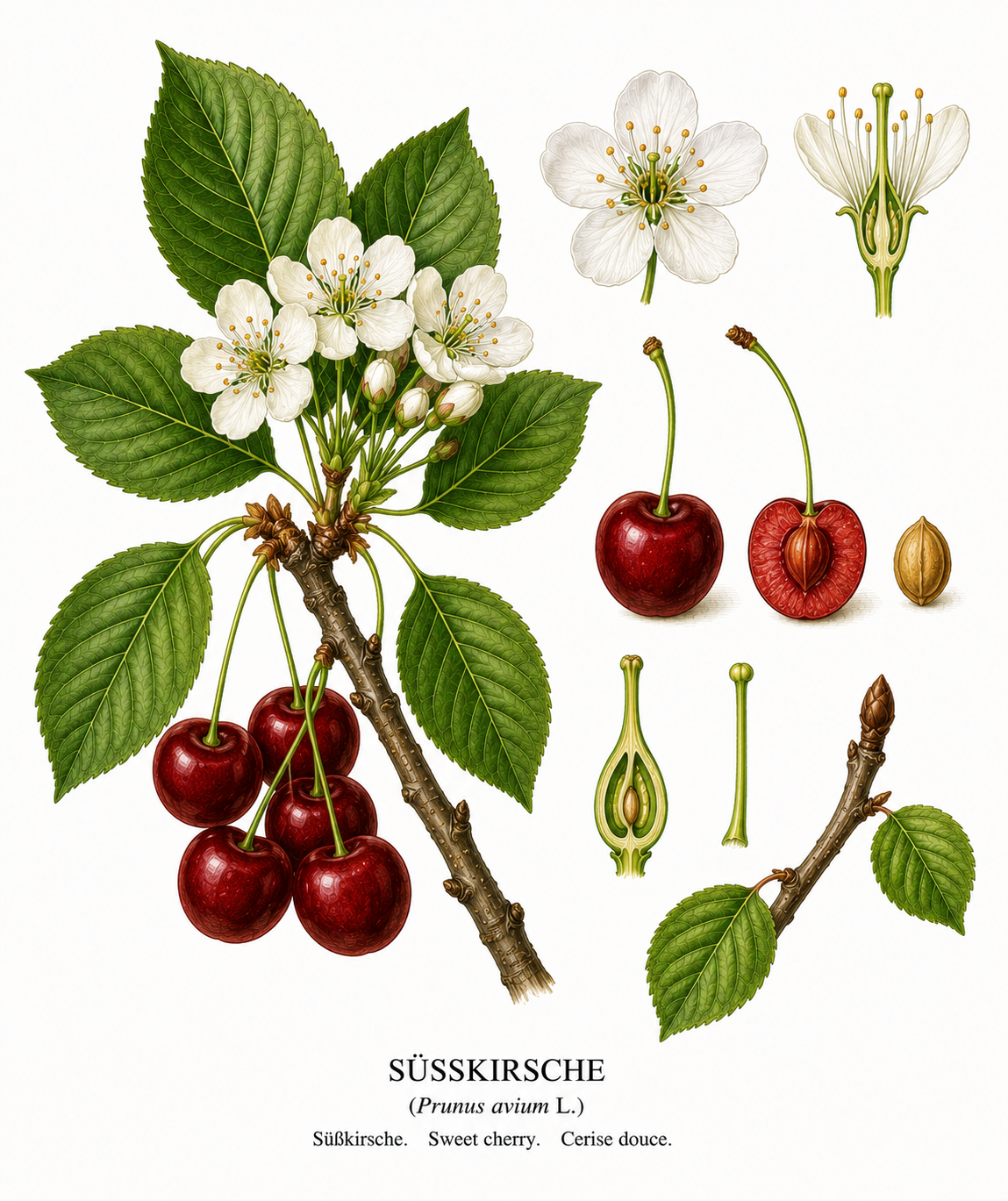
Overview
Most sweet cherry varieties are self-incompatible and require cross-pollination by a suitable pollinator variety.
Notes
Flowers appear before leaves and are rich in nectar.
Pruning & care
sweet cherry Pruning & care
Pruning type
winter pruning with summer correction for light and air circulation
Pruning timing
Main prune: shape and thin during dormancy Only prune on frost-free days above -5 °C.
Corrective prune after harvest: remove water sprouts and dead shoots Only light cuts to avoid bacterial canker.
Remove
Preserve
Avoid
Tools and hygiene
Disinfect pruning tools before and after each tree with 70 % alcohol or household cleaner. Change immediately after diseased cuts.
Companion guide
sweet cherry Companion guide
Good neighbors
GarlicLupinBorage
Avoid
WalnutPotato
Use & storage
sweet cherry Use & storage
Harvest sweet cherries from June to August depending on cultivar and region.
Storage
Short-term storage (1–2 weeks)
Storage life
1–2 weeks in refrigerator; freeze for up to 12 months
Harvest
Harvest sweet cherries from June to August depending on cultivar and region.
Processing
After harvest
Cool fruit immediately after picking; do not wash. Remove stems only just before eating or processing.
Notes
Fruit is pressure-sensitive and should be consumed or processed as soon as possible.
Edibility & safety
sweet cherry Edibility & safety
For people
In brief: which parts are edible, which parts remain risky, and whether raw consumption makes sense.
Safety notes
Pits contain cyanogenic glycosides; accidental ingestion of a few pits is harmless, but large amounts should be avoided.
Animal safety
This plant is not simply safe or unsafe for animals. 14 animal types have restrictions, so quantity, access, and plant part matter.
Each row shows which parts are more suitable and which parts are critical.
Companion animals
 Dog
DogFlesh
Pits, Stems, Leaves
Flesh
Pits, Stems, Leaves
Ingestion of pits, stems, or leaves, wilted foliage increases risk
Difficulty breathing, Vomiting, Diarrhea
contact a vet if ingested
The flesh of sweet cherry is safe for dogs in small amounts, but pits, stems, and leaves are toxic due to cyanogenic glycosides. Wilted foliage poses an increased risk. If ingestion of toxic parts is suspected, contact a veterinarian.
Open animal page Cat
CatFlesh (ripe)
Stems, Leaves, Seeds
Flesh (ripe)
Stems, Leaves, Seeds
Brick red mucous membranes, Dilated pupils, Difficulty breathing
 Rabbit
Flesh
Pits, Stems, Leaves
Flesh
Pits, Stems, Leaves
Consumption of pits stems or leaves, wilted foliage increases risk
Difficulty breathing, bright red mucous membranes dilated pupils, shock
contact a vet if symptoms appear
The flesh of sweet cherry is suitable for rabbits in small amounts as a treat. Pits stems and leaves contain cyanogenic glycosides and are toxic. If toxic parts are ingested contact a veterinarian immediately.
Open animal page Guinea pig
Flesh
Pits, Stems, Leaves
Flesh
Pits, Stems, Leaves
Consumption of pits stems or leaves, wilted foliage increases risk
Difficulty breathing, bright red mucous membranes dilated pupils, weakness
contact a vet if symptoms appear
The flesh of sweet cherry is suitable for guinea pigs in small amounts as a treat. Pits stems and leaves contain cyanogenic glycosides and are toxic. Contact a vet immediately if poisoning symptoms occur.
Open animal page Hamster
Flesh
Pits, Stems, Leaves
Flesh
Pits, Stems, Leaves
Consumption of pits stems or leaves, wilted foliage increases risk
Difficulty breathing, bright red mucous membranes dilated pupils weakness
contact a vet if symptoms appear
The flesh of sweet cherry is suitable for hamsters in small amounts as a treat. Pits stems and leaves contain cyanogenic glycosides and are toxic. If toxic parts are ingested monitor for symptoms and contact a vet if symptoms appear. Large amounts of flesh may cause diarrhea due to sugar content.
Open animal page Budgie
Flesh
Pits, Stems, Leaves
Flesh
Pits, Stems, Leaves
wilted material, large quantities of pits or leaves
difficulty breathing, brick red mucous membranes, dilated pupils
contact a vet if symptoms appear
The flesh of sweet cherry is suitable for budgies in small amounts as an occasional treat, but pits, stems, and leaves contain cyanogenic glycosides and are toxic. Large quantities or wilted plant material should be avoided. If signs of poisoning appear, consult an avian veterinarian immediately.
Open animal pageFarm animals
 Horse
HorseFlesh
Pits, Stems, Leaves
Flesh
Pits, Stems, Leaves
Wilted leaves increase risk, large quantities of pits
Difficulty breathing, bright red mucous membranes dilated pupils, shock
contact a vet if ingested
The flesh of sweet cherry is safe for horses in small amounts, but pits, stems, and leaves are toxic due to cyanogenic glycosides. Wilted foliage poses an increased risk.
Open animal page Chicken
Flesh
Pits, Stems, Leaves
Flesh
Pits, Stems, Leaves
Consumption of pits, stems, or leaves, wilted foliage increases risk
Difficulty breathing, bright red mucous membranes, dilated pupils
contact a vet if symptoms appear
The flesh of sweet cherry is suitable for chickens in small amounts as a treat. Pits, stems, and leaves contain cyanogenic glycosides and are toxic. If toxic parts are ingested, monitor for symptoms and contact a veterinarian if symptoms appear. Large amounts of flesh may cause diarrhea due to sugar content.
Open animal page Duck
DuckFlesh
Pits, Stems, Leaves
Flesh
Pits, Stems, Leaves
Consumption of pits, stems, or leaves, Wilted foliage increases risk
Difficulty breathing, Shock, Dilated pupils
contact a vet if ingested
The flesh of sweet cherry is suitable for ducks in small amounts as a treat, but pits, stems, and leaves are toxic due to cyanogenic glycosides and should be avoided. Wilted foliage poses a higher risk. If toxic parts are ingested, seek veterinary advice immediately.
Open animal page Goose
GooseFlesh
Pits, Stems, Leaves
Flesh
Pits, Stems, Leaves
Consumption of pits stems or leaves, wilted foliage increases risk
Difficulty breathing, bright red mucous membranes dilated pupils, weakness
contact a vet if symptoms appear
The flesh of sweet cherry is suitable for geese in small amounts as a treat. Pits stems and leaves contain cyanogenic glycosides and are toxic. Large amounts of fruit may cause gastrointestinal upset. Wilted foliage is particularly hazardous due to higher cyanide concentration. No species-specific sources for geese found but conservative assessment possible based on known toxicity in similar livestock and poultry.
Open animal page Sheep
SheepFlesh
Pits, Stems, Leaves
Flesh
Pits, Stems, Leaves
Wilted leaves, accessible pits, overconsumption
Difficulty breathing, bright red mucous membranes dilated pupils weakness
contact a vet if symptoms appear
The flesh of sweet cherry is suitable for sheep in small amounts as a treat, but pits, stems, and leaves contain cyanogenic glycosides that can be toxic if ingested. Wilted leaves pose an increased risk. Overconsumption of fruit may cause digestive upset.
Open animal page Goat
GoatFlesh
Pits, Stems, Leaves
Flesh
Pits, Stems, Leaves
Wilted leaves, accessible pits, overconsumption
Difficulty breathing, bright red mucous membranes dilated pupils weakness
contact a vet if symptoms appear
No direct species-specific source was found for goats. This is a cautious inference from the sheep profile and the known plant-part risks.
Open animal page Cattle
Flesh
Pits, Stems, Leaves
Flesh
Pits, Stems, Leaves
Wilted leaves or stems, large quantities of pits
Difficulty breathing, bright red mucous membranes, dilated pupils
contact a vet if symptoms appear
The flesh of sweet cherry is suitable for cattle in small amounts as an occasional treat, but pits, stems, and leaves are toxic due to cyanogenic glycosides, especially when wilted. Large quantities can lead to poisoning symptoms.
Open animal page Pig
PigFlesh
Pits, Stems, Leaves
Flesh
Pits, Stems, Leaves
Consumption of pits, stems, or leaves, Wilted foliage increases risk
Difficulty breathing, Shock, Mucous membrane discoloration
contact a vet if symptoms appear
The flesh of sweet cherry is suitable for pigs in small amounts as an occasional treat, but pits, stems, and leaves contain cyanogenic glycosides that can be toxic if consumed in large quantities. Wilted foliage poses an increased risk. Feeding should be limited to the flesh and occur only occasionally.
Open animal pageThese guidelines are for general information only and do not replace veterinary diagnosis. If critical plant parts were ingested or the animal shows unusual behaviour or symptoms, seek veterinary advice.
Max risk
3 / 5
Highest status
selected parts only
Urgency
contact a vet if ingested
Saving seed
sweet cherry Saving seed
Seed viability
1 - 2 years
Notes
Trees grown from pits are not true-to-type; grafting preserves cultivar characteristics.
Practical tips
sweet cherry Practical tips
Common beginner mistakes
Success pattern
High-impact tips
Grower observations
Plant Profile
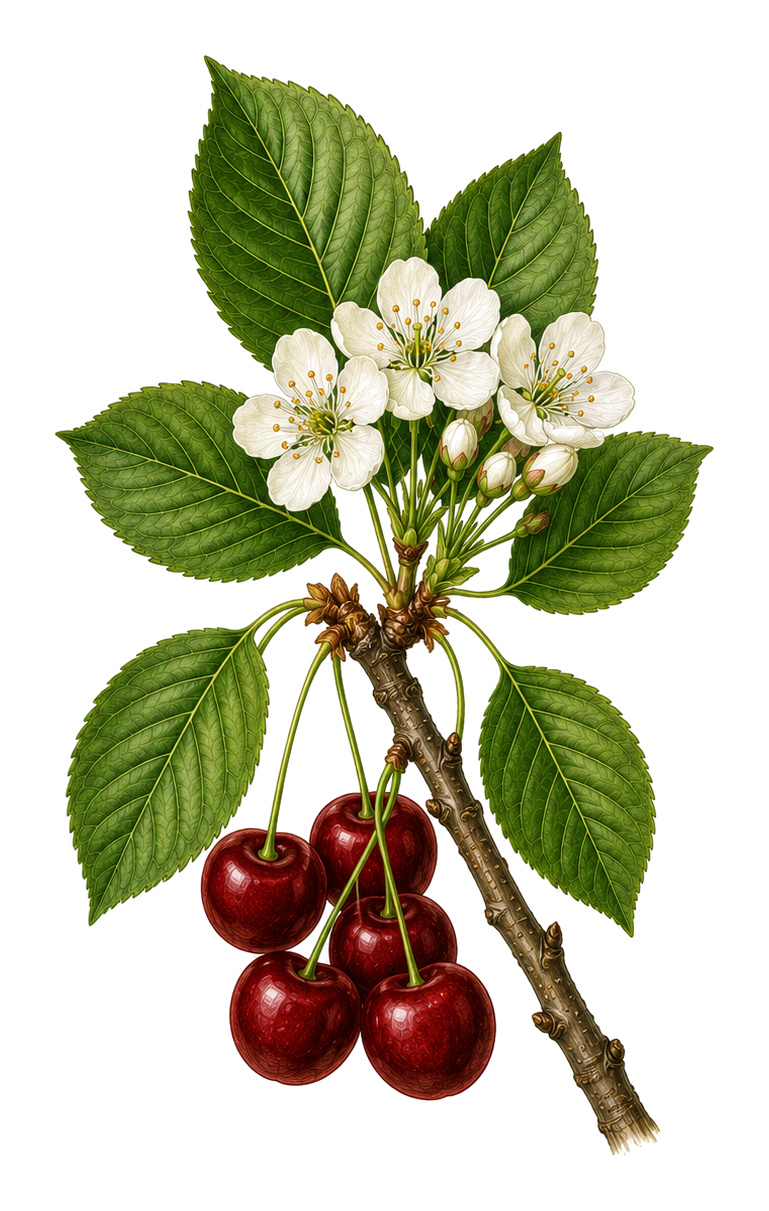
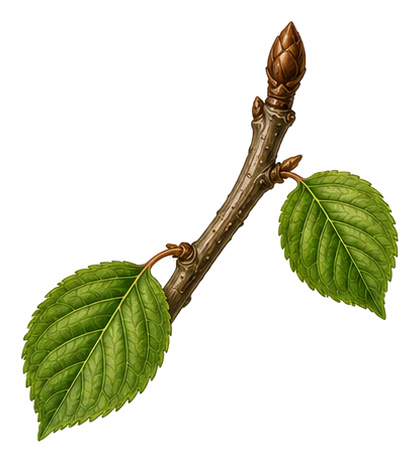
Additional plant images
Health
Pests, Diseases
Pests
Cherry fruit fly
- Maggots in fruit
- Fruits soften and drop prematurely
Cherry blackfly
- Curled leaves
- Sticky honeydew
- Sooty mold
Diseases
Monilia shoot blight
- Death of blossoms and young shoots
- Browning
- Gummosis
Monilia fruit rot
- Rot on fruit
- Concentric spore clusters
- Mummified fruit
Shot hole disease
- Red to brown spots on leaves
- Hole formation
- Premature leaf drop
Bacterial canker
- Canker on bark
- Gummosis
- Dieback of branches
Deficiencies
- Brown leaf margins
- Fruit stays small and tasteless
- Pale green leaves
- Weak growth
Plant health
Diagnosis help
sweet cherry Diagnosis help
Pest groups
Disease groups
Prevention
Diagnosis
Regular inspection of leaves and fruit from May onward. Act immediately at first symptoms.
Cultural prevention
Monitoring
First response
Diagnostic rules
Wilted blossoms
Possible causes: Monilia laxa, Frost schaden
- Check weather during bloom
- Examine affected areas for spore clusters
Holes in leaves
Possible causes: Blumeriella jaapii, Insektenfrass
- Check leaf undersides for pests
- Observe spots before hole formation
FAQ
Why isn't my cherry tree bearing fruit?
Common reasons include lack of pollinator varieties (most sweet cherries are self-incompatible), late frost damage to blossoms, insufficient bee pollination, or a tree that is too young.
When is the best time to prune a cherry tree?
The main pruning is done in winter on frost-free days (January/February) during dormancy. Light corrective pruning can be done after harvest in summer (June/July) to remove water sprouts and thin the crown.
How do I protect cherries from birds?
The most effective method is to place bird netting over the canopy once the fruits begin to color. Reflective tapes or scarecrows can also help, but are often less effective.
Is sweet cherry safe for Dog?
sweet cherry is classified as selected parts only for Dog. Risk: 3 / 5. Urgency: contact a vet if ingested. The flesh of sweet cherry is safe for dogs in small amounts, but pits, stems, and leaves are toxic due to cyanogenic glycosides. Wilted foliage poses an increased risk. If ingestion of toxic parts is suspected, contact a veterinarian.
Is sweet cherry safe for Cat?
sweet cherry is classified as selected parts only for Cat. Risk: 3 / 5. Urgency: unknown. No reliable species-specific assessment is available.
Is sweet cherry safe for Rabbit?
sweet cherry is classified as selected parts only for Rabbit. Risk: unknown. Urgency: contact a vet if symptoms appear. The flesh of sweet cherry is suitable for rabbits in small amounts as a treat. Pits stems and leaves contain cyanogenic glycosides and are toxic. If toxic parts are ingested contact a veterinarian immediately.
Is sweet cherry safe for Horse?
sweet cherry is classified as selected parts only for Horse. Risk: 3 / 5. Urgency: contact a vet if ingested. The flesh of sweet cherry is safe for horses in small amounts, but pits, stems, and leaves are toxic due to cyanogenic glycosides. Wilted foliage poses an increased risk.
Guides
Related guides
Guide
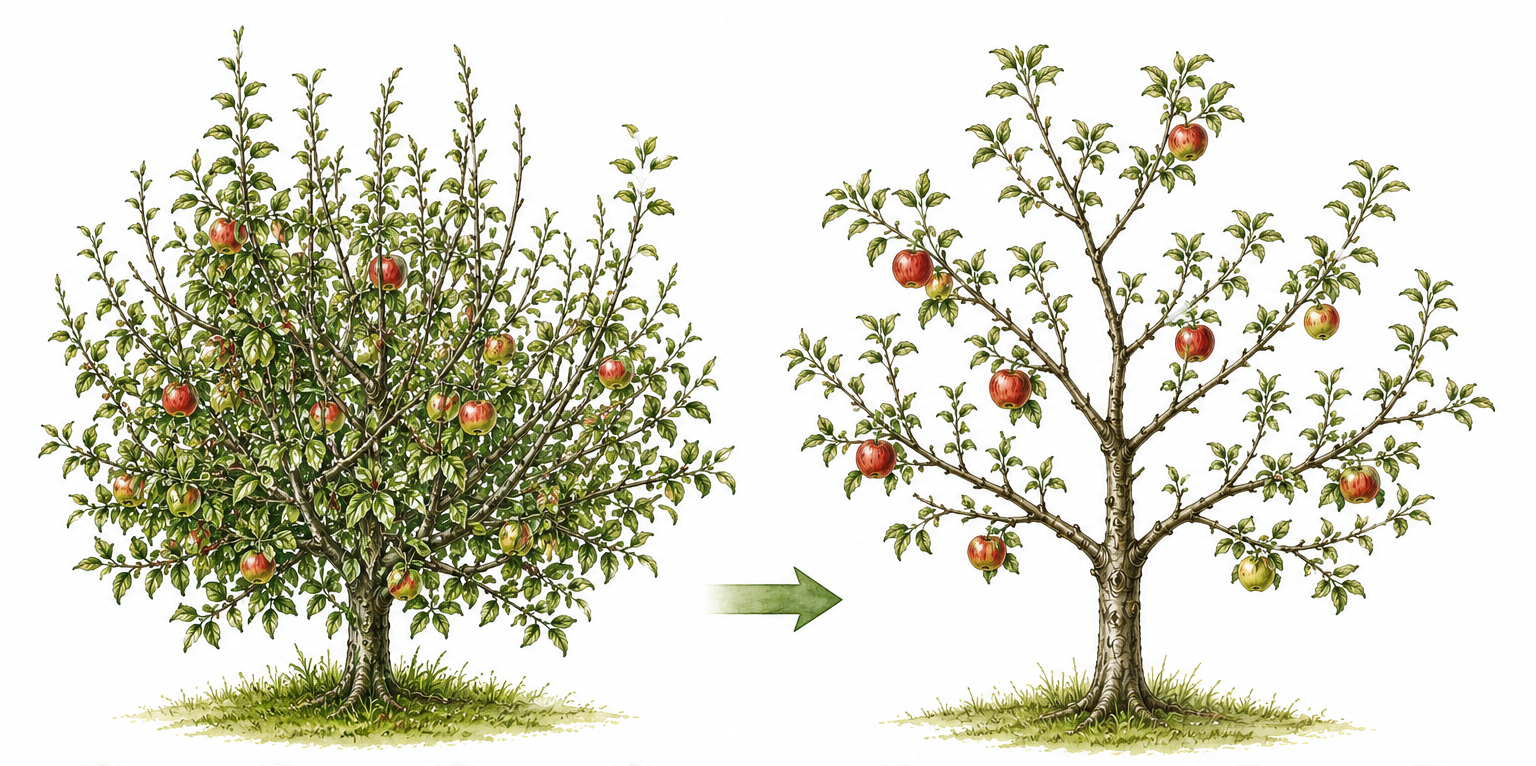
Pruning Apple Trees: Timing, Techniques, and Common Mistakes
Learn when and how to prune apple trees properly, including winter pruning, summer pruning, training cuts, and maintenance tips for healthy, productive…
Guide
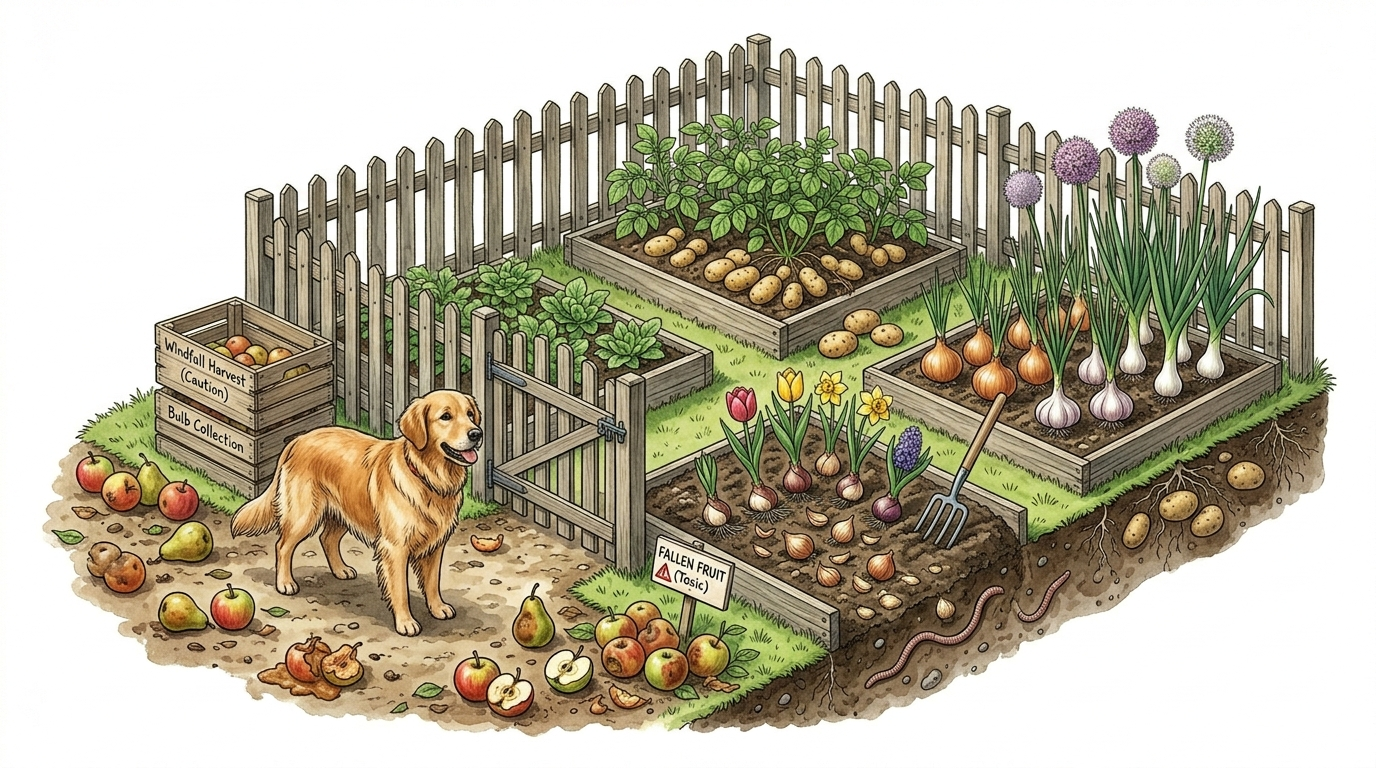
Dogs in the Garden: Windfall Fruit and Risks
Keep your garden dog-safe by managing windfall fruit, seeds, stored crops, and potentially problematic plant parts.
Guide
Horse Pastures and Garden Plants: Safety Checks
Learn how to identify risks near horse pastures, fences, turnout areas, fruit trees, and garden planting zones.
Guide
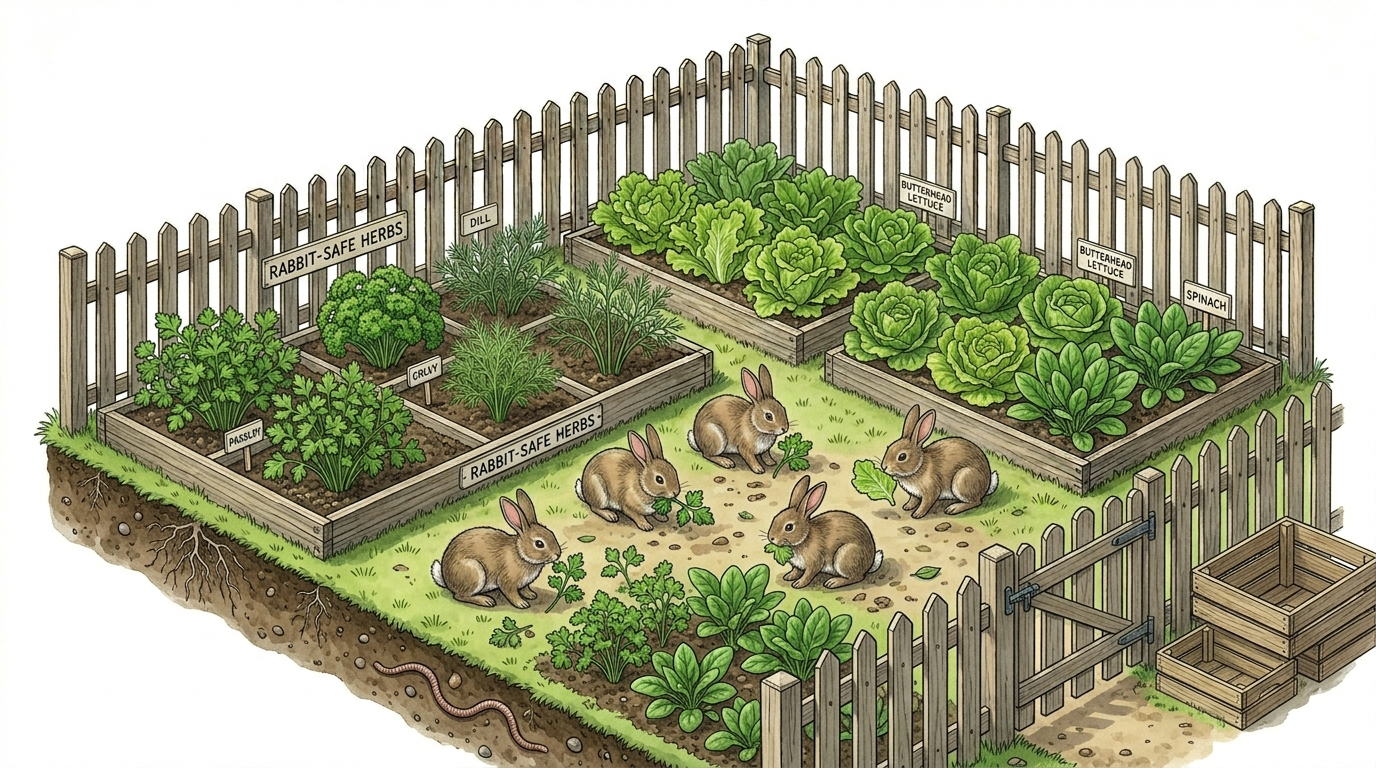
Rabbits in the Garden: Herbs and Vegetables
Learn how to choose suitable herbs and vegetables for rabbits, grow feeding plants, and plan a rabbit-friendly garden.
Internal links
Related plants
Apple
Both belong to the rose family (Rosaceae).
Both are heavy feeders and require similar nutrient levels.
Plum
Both belong to the rose family (Rosaceae) and genus Prunus.
As stone fruits, they have similar requirements for potassium and nitrogen.
Garden Strawberry
Both belong to the rose family (Rosaceae).
Sour Cherry
Both are cherries and belong to the same subgroup.
Closely related, belongs to the same genus Prunus.
Monilia shoot blight
Also occurs in other stone fruits like apricot and plum.
Bacterial canker
A common disease in many Prunus species.
Bird Cherry
Closely related, belongs to the same genus Prunus.
Sources
Public sources
- Wikidata entity
Wikidata · 2026-05-15
- GBIF species match
GBIF · 2026-05-15
- Deutschsprachige Wikipedia: Vogelkirsche (Baum)
Wikipedia · 2026-05-15
- English Wikipedia: Prunus avium
Wikipedia · 2026-05-15