Plant Profile
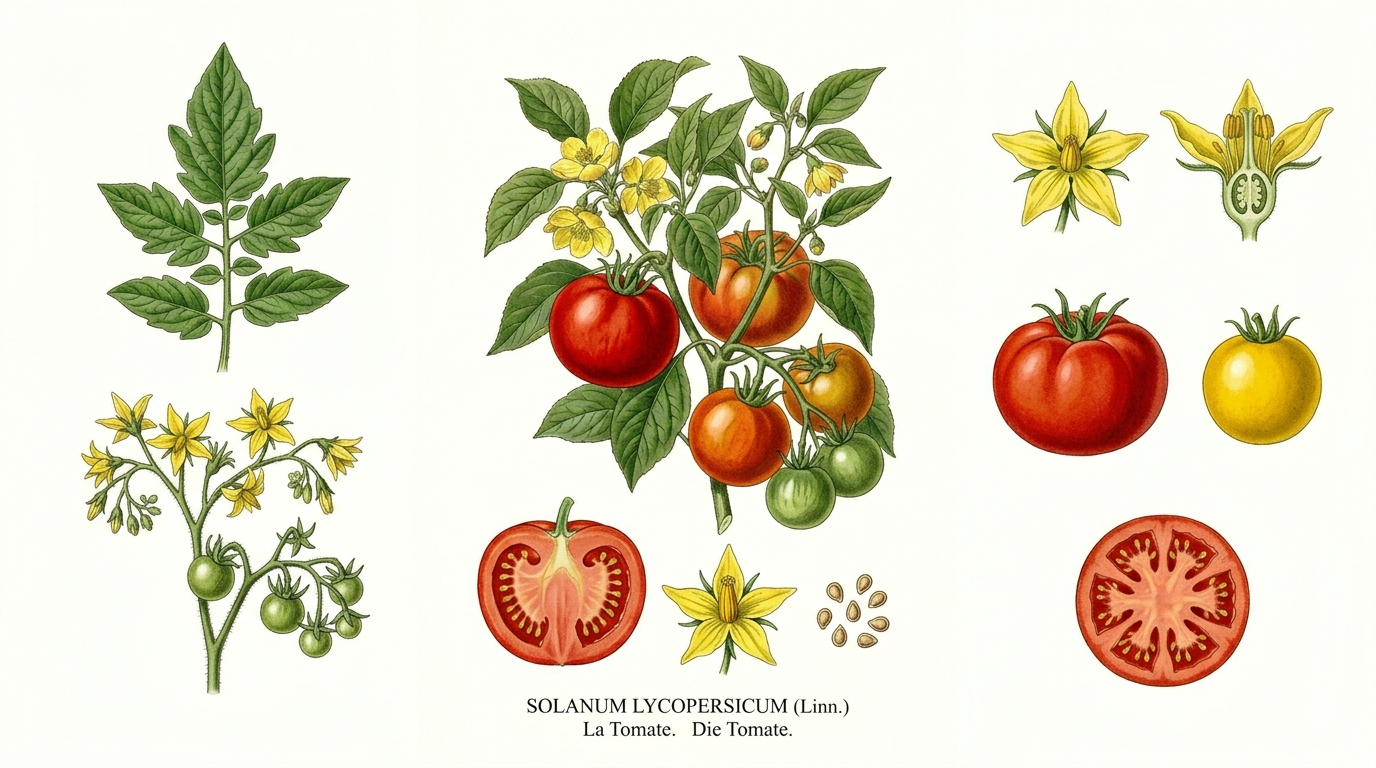
tomatoSolanum lycopersicum
The most popular fruit vegetable in the garden, versatile and productive.
Quick profile
Key data
Suitable growing locations:
Indoor & direct sowing
tomato: Sowing and germination
Sow from mid-March in seed trays or pots at about 20–22 °C.
Direct sowing from May only after the last frost, when soil is warm.
Planting & site
tomato: Planting and spacing
Plant out from mid-May after the last frost into beds or greenhouse.
Temperature & frost
tomato: Temperature and site
Water & nutrients
tomato: Water, nutrients and care
Container & growth
tomato: Container, support and growth
Year plan
tomato Calendar
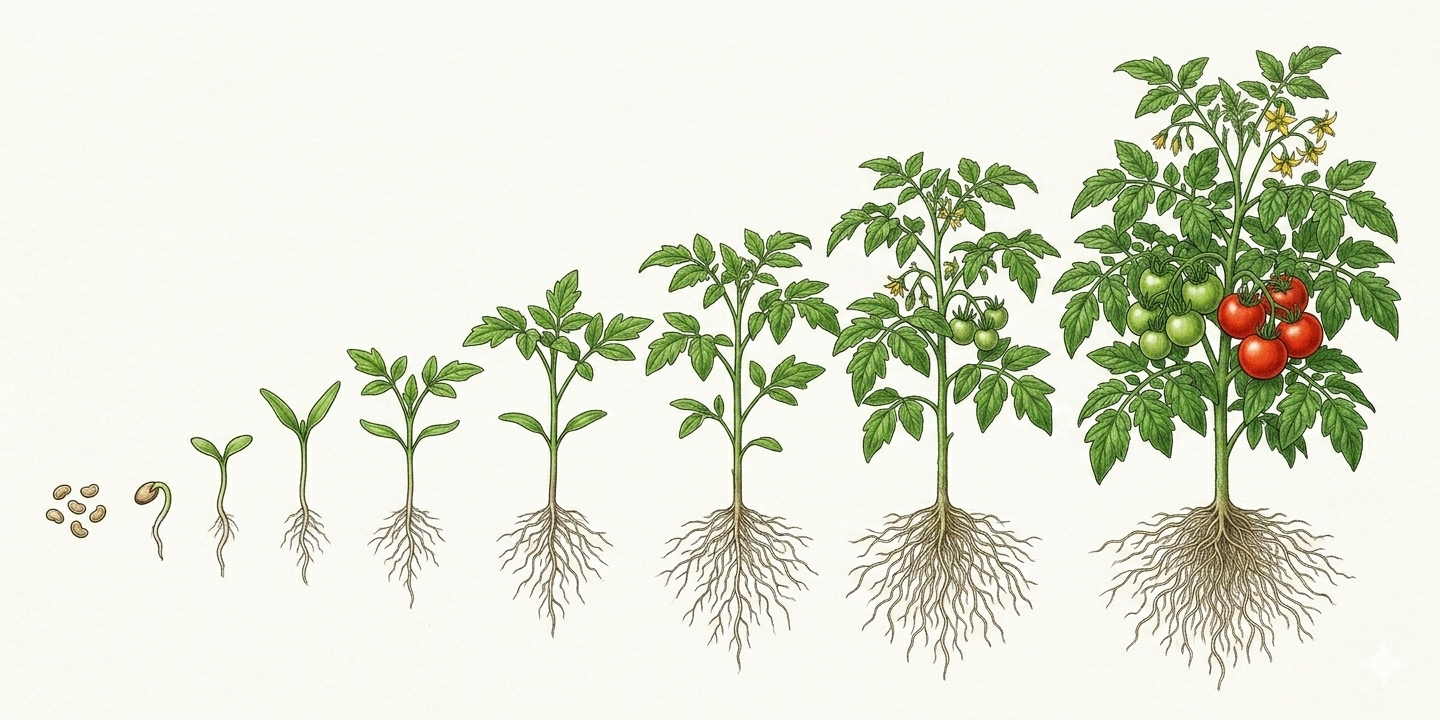
From mid-May, after the last frosts, the pre-grown tomato plants can finally move outdoors or into the greenhouse.
Recurring tasks
Relevant now
June
- Remove side shootsRemove side shoots in leaf axils.
- Water & mulchKeep evenly moist, mulch with straw.
Next up
July
- HarvestHarvest regularly to promote further ripening.
Monthly tasks
Single tasks from monthly data; repeated seasonal windows are shown in the overview above.
January
Quiet month
February
Direct sowing
- Plan indoor sowingfrost: Order seeds for desired varieties.
March
Direct sowing
- Sow indoorsUse seed compost at 20–22 °C, place bright.
April
Growing
- Prick outPlant into individual pots, harden off from late April.
May
Planting
- PlantingSpacing 60x80 cm, plant deeply, tie up.
June
Growing
- Remove side shootsRemove side shoots in leaf axils.
- Water & mulchKeep evenly moist, mulch with straw.
August
Harvest
- Main harvestCheck daily and pick ripe fruits.
September
Harvest
- Late care and green harvestLet green fruits ripen or protect from frost.
October
Harvest
- Final harvest and remove plantsHarvest all fruits, compost plants.
November
Quiet month
December
Quiet month
Flowering & pollination
tomato Flowering & pollination
Flowering period
June to September
Flower type
hermaphroditic flower
Flower color
yellow
Self-fertility
self-fertile
Pollinator needed
no
Overview
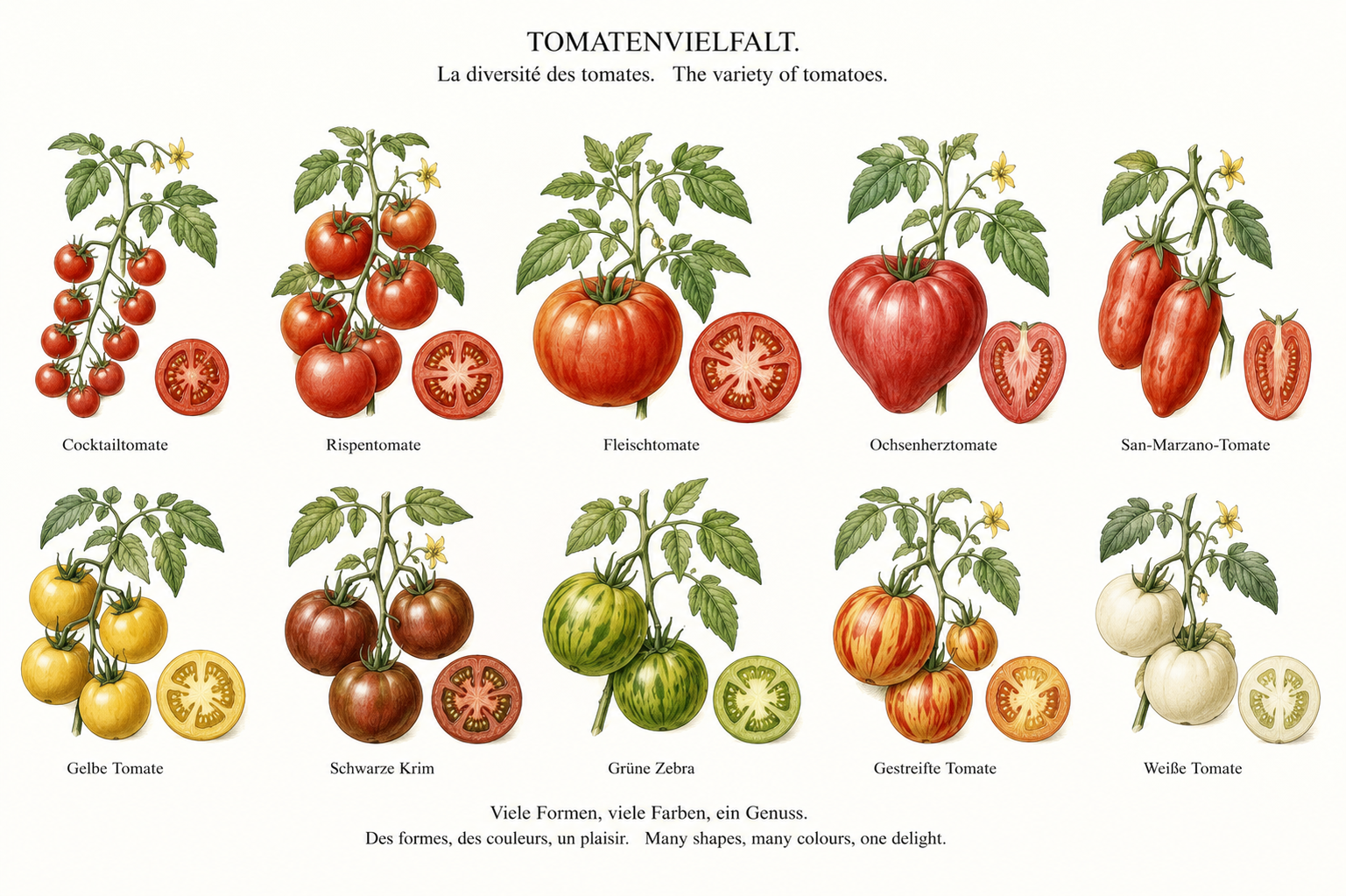
Tomatoes are primarily self-pollinating. Wind and insects (especially bumblebees) can assist pollination and improve fruit set.
Notes
Small, yellow flowers appear in clusters. They are self-fertile, but slight vibrations (wind, insects) promote pollination.
Pruning & care
tomato Pruning & care
Pruning type
maintenance pruning
Pruning timing
Promote fruit development, improve air circulation, prevent diseases Perform regularly during growth, especially for indeterminate tomatoes. Topping is usually done in late summer to encourage ripening of existing fruits.
Remove
Preserve
Avoid
Tools and hygiene
Use clean, sharp shears or a knife to make clean cuts and prevent disease. Disinfect tools if necessary.
Companion guide
tomato Companion guide
Use & storage
tomato Use & storage
Harvest begins in July depending on variety and continues until October, before the first frost.
Storage
fresh, processed
Storage life
Fresh: 1-2 weeks at room temperature; Processed: several months to years
Primary use
fresh consumption, preservation
Flavor
Sweet-tart, umami, varying by variety
Harvest
Harvest begins in July depending on variety and continues until October, before the first frost.
Culinary uses
Processing
After harvest
Pick tomatoes carefully, ideally with the calyx attached. Do not stack to avoid bruising. Green fruits can be harvested before the first frost and ripened indoors.
Notes
Tomatoes are a staple in many cuisines worldwide and can be enjoyed raw or cooked.
Edibility & safety
tomato Edibility & safety
For people
In brief: which parts are edible, which parts remain risky, and whether raw consumption makes sense.
Safety notes
All green parts of the tomato plant (leaves, stems, unripe fruits) contain solanine, a mildly toxic alkaloid. Ingesting large quantities can cause gastrointestinal upset. Ripe fruits are safe and contain only trace amounts of solanine.
Animal safety
For animals, the specific plant part matters here: some parts may be suitable, while others should be avoided. At least one critical rating is listed for 1 animal types.
Each row shows which parts are more suitable and which parts are critical.
Companion animals
 Dog
Dogripe fruit
leaves, stems, unripe green fruits
ripe fruit
leaves, stems, unripe green fruits
consumption of large quantities of unripe parts
gastrointestinal upset, vomiting, diarrhea
observe
Ripe tomato fruits are safe for dogs in moderation and can be given as treats. All green parts of the plant contain solanine and can cause gastrointestinal upset if consumed in excess. Stems and leaves should be avoided.
Open animal page Cat
CatFruit (ripe)
Leaves, Stems, Unripe green fruits
Fruit (ripe)
Leaves, Stems, Unripe green fruits
Ingestion of green plant parts, Overripe or moldy fruits
Vomiting, Diarrhea, Gastrointestinal upset
observe
Ripe tomato fruits are safe for cats in small amounts as an occasional treat. Green parts of the plant contain solanine and can cause gastrointestinal upset. If large quantities are ingested or symptoms occur, consult a veterinarian.
Open animal page Rabbit
Fruit (ripe)
Leaves, Stems, Unripe green fruits
Fruit (ripe)
Leaves, Stems, Unripe green fruits
Consuming large quantities of unripe parts, Access to plant trimmings
Gastrointestinal upset, Diarrhea
observe
Ripe tomato fruits are suitable for rabbits in small amounts as a treat. All green parts of the plant contain solanine and can cause gastrointestinal upset. Do not use as primary feed.
Open animal page Guinea pig
Fruit (ripe)
Leaves, Stems, Unripe green fruits
Fruit (ripe)
Leaves, Stems, Unripe green fruits
Consuming large quantities of unripe parts, Access to plant trimmings
Gastrointestinal upset, Vomiting, Diarrhea
observe
Ripe tomato fruits are suitable for guinea pigs in small amounts as a treat. All green parts of the plant contain solanine and should be avoided. Overfeeding ripe fruits may cause mouth irritation due to acidity.
Open animal page Hamster
Fruit (ripe)
Leaves, Stems, Unripe green fruits
Fruit (ripe)
Leaves, Stems, Unripe green fruits
Consumption of green plant parts, Overripe or moldy fruits
Gastrointestinal upset, Vomiting, Diarrhea
observe
Ripe tomato fruits are suitable for hamsters in small amounts as a treat. Green parts of the plant contain solanine and should be avoided. Consult a veterinarian if large amounts are consumed or symptoms occur.
Open animal page Budgie
ripe fruit
leaves, stems, unripe green fruits
ripe fruit
leaves, stems, unripe green fruits
consumption of large quantities of unripe parts, access to plant debris
gastrointestinal upset, vomiting, diarrhea
observe
Ripe tomato fruits are suitable for budgies in small amounts as a treat. All green parts of the plant contain solanine and should be avoided. Ingestion of large quantities of toxic parts may cause gastrointestinal upset. Budgies should not have access to tomato plants to avoid ingestion of leaves or stems. Consult an avian veterinarian if symptoms occur.
Open animal pageFarm animals
 Horse
Horseripe fruit
leaves, stems, unripe green fruits
ripe fruit
leaves, stems, unripe green fruits
consumption of large quantities of unripe parts, access to plant trimmings
gastrointestinal upset, vomiting, diarrhea
contact a vet if symptoms appear
Ripe tomato fruit is suitable for horses in small amounts as a treat. All green parts of the plant contain solanine and can cause gastrointestinal upset. No indications of severe poisoning from normal feeding of ripe fruit.
Open animal page Chicken
ripe fruit
leaves, stems, unripe green fruits
ripe fruit
leaves, stems, unripe green fruits
consumption of large quantities of unripe parts
gastrointestinal upset, vomiting, diarrhea
observe
Ripe tomato fruits are suitable for chickens in moderation as a treat. Green plant parts contain solanine and may cause gastrointestinal upset if consumed excessively. No indications of severe poisoning in chickens under normal feeding behavior.
Open animal page Duck
DuckFruit (ripe)
Leaves, Stems, Unripe green fruits
Fruit (ripe)
Leaves, Stems, Unripe green fruits
Consuming large quantities of unripe parts, Access to plant debris
Gastrointestinal upset, Vomiting, Diarrhea
observe
Ripe tomato fruits are safe for ducks in moderation. Green plant parts contain solanine and can cause gastrointestinal upset. No duck-specific toxicity studies available, but conservative assessment based on known compounds and similar poultry tolerance.
Open animal page Goose
GooseFruit (ripe)
Leaves, Stems, Unripe green fruits
Fruit (ripe)
Leaves, Stems, Unripe green fruits
Consuming large quantities of unripe parts, Access to plant debris
Gastrointestinal upset, Vomiting, Diarrhea
observe
Ripe tomato fruits are suitable for geese in small amounts as a treat. All green parts of the plant contain solanine and can cause gastrointestinal upset. No goose-specific studies found, but conservative classification based on known plant toxicity and similar poultry tolerance.
Open animal page Sheep
SheepFruit (ripe)
Leaves, Stems, Unripe green fruits
Fruit (ripe)
Leaves, Stems, Unripe green fruits
Consuming large quantities of unripe plant parts, Access to tomato plants in garden
Gastrointestinal upset, Vomiting, Diarrhea
observe
Ripe tomato fruits are generally safe for sheep as an occasional treat in small amounts. All green parts of the plant contain solanine and can cause gastrointestinal upset if consumed excessively. Sheep may browse plants and should be restricted from accessing unripe plant parts.
Open animal page Goat
GoatFruit (ripe)
Leaves, Stems, Unripe green fruits
Fruit (ripe)
Leaves, Stems, Unripe green fruits
Consuming large quantities of green plant parts, Access to unripe fruits or plant parts
Gastrointestinal upset, Vomiting, Diarrhea
observe
Ripe tomato fruits are safe for goats in moderation and can be given as treats. All green parts of the plant contain solanine and can cause gastrointestinal upset if consumed excessively. Goats are natural browsers and may ingest hazardous parts if given access.
Open animal page Cattle
Fruit (ripe)
Leaves, Stems, Unripe green fruits
Fruit (ripe)
Leaves, Stems, Unripe green fruits
Consumption of large quantities of green plant parts
Gastrointestinal upset, Vomiting, Diarrhea
observe
Ripe tomato fruit is generally safe for cattle in moderation, but green plant parts contain solanine and can cause gastrointestinal upset if consumed excessively. Cattle should not have access to tomato plants with leaves and stems.
Open animal page Pig
PigNo suitable parts listed
No risk parts listed
No suitable parts listed
No risk parts listed
These guidelines are for general information only and do not replace veterinary diagnosis. If critical plant parts were ingested or the animal shows unusual behaviour or symptoms, seek veterinary advice.
Max risk
unknown
Highest status
do not feed
Urgency
contact a vet if symptoms appear
Saving seed
tomato Saving seed
Seed saving
Very good for open-pollinated seeds
Seed viability
3 - 5 years
Notes
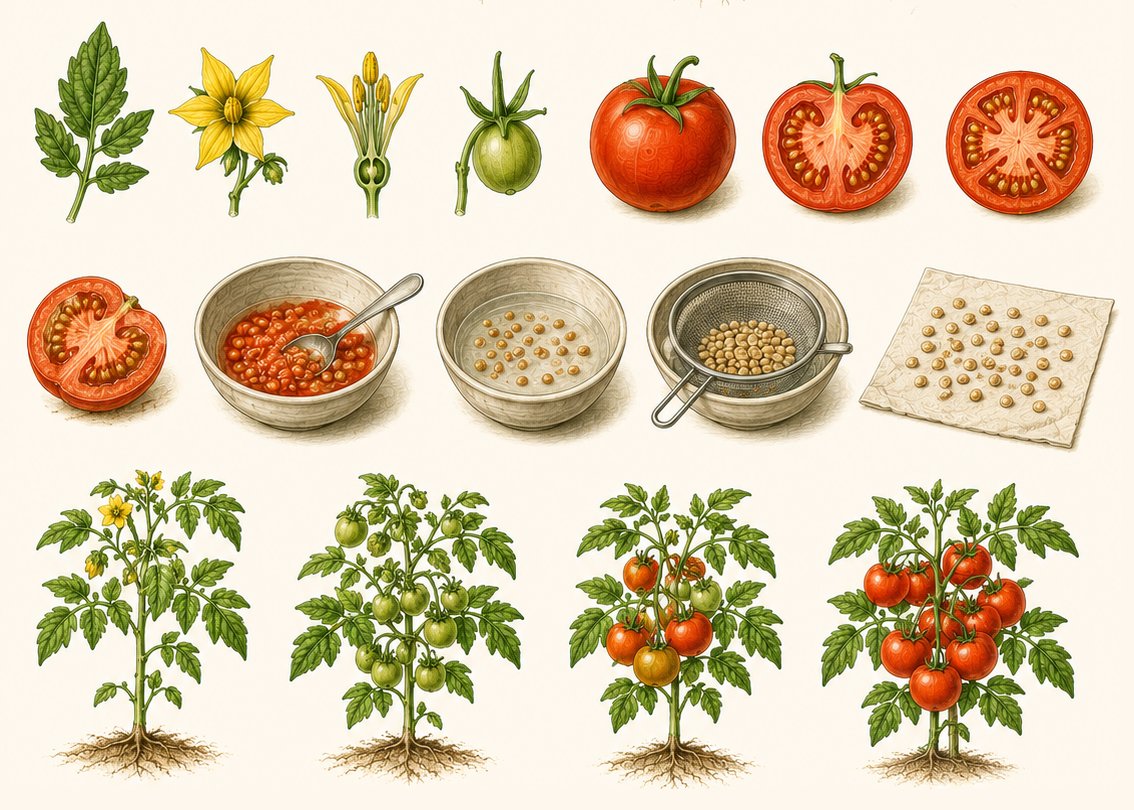
For true-to-type seeds from open-pollinated varieties, fermentation of the seeds is recommended to remove germination inhibitors and improve viability.
Practical tips
tomato Practical tips
Common beginner mistakes
Success pattern
High-impact tips
Grower observations
Plant Profile
Additional plant images
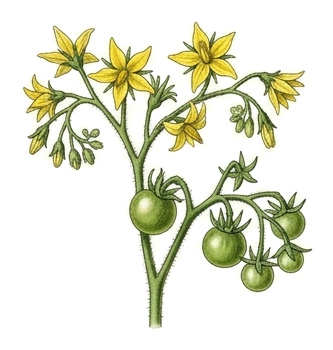

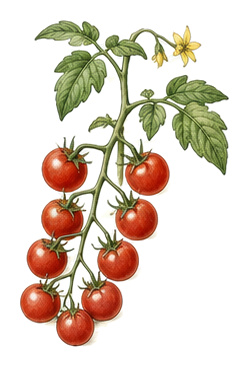
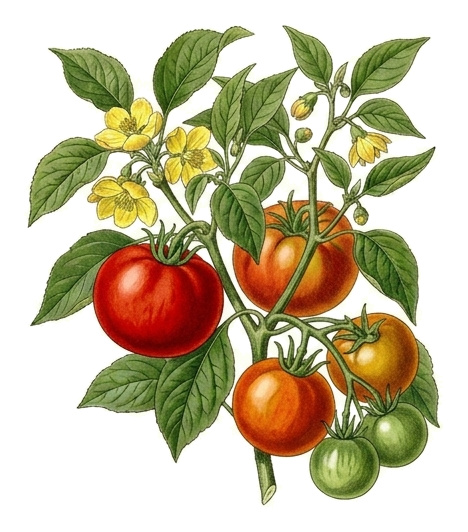
Health
Pests, Diseases
Pests
aphids
- Promote beneficials (ladybugs)
- spray with nettle tea or soap solution
whitefly
- Use sticky yellow traps
- introduce parasitoid wasps
spider mites
- Increase humidity
- treat with neem oil or predatory mites
leaf miners
- Remove affected leaves
- promote beneficial insects
Diseases
late blight
Brown spots on leaves and fruit, white mold on undersides
powdery mildew
White powdery coating on leaves
gray mold (Botrytis)
Gray mold on stems and fruit
early blight (Alternaria)
Concentric brown rings on leaves
Deficiencies
nitrogen deficiency
Pale green to yellow leaves, stunted growth
potassium deficiency
Brown leaf margins, poor fruit set
calcium deficiency
Blossom end rot: brown, sunken spots at fruit tip
magnesium deficiency
Yellowing between leaf veins, upcurled leaf margins
Plant health
Diagnosis help
tomato Diagnosis help
Pest groups
Disease groups
Prevention
Diagnosis
Regularly inspect leaf undersides for pests and watch for wilting or spotted leaves as first disease symptoms.
Cultural prevention
Monitoring
First response
Diagnostic rules
Brown spots on leaves with white mold
Possible causes: Phytophthora infestans
- Check humidity
- Recent weather
- Assess infection stage
Gray mold on stems/fruit
Possible causes: Botrytis cinerea
- Check plant spacing
- Irrigation method
- Look for injuries
FAQ
Why do my tomatoes get brown spots at the blossom end?
This is a symptom of blossom end rot, usually caused by calcium deficiency in the soil or irregular watering. Ensure consistent moisture and adequate calcium supply.
Do I need to prune tomato suckers?
For indeterminate (cordon) tomatoes, removing side shoots (suckers) is important to concentrate energy on the main fruits and improve air circulation. Determinate (bush) tomatoes generally do not need to be pruned in this way.
When is the best time to harvest tomatoes?
Harvest tomatoes when they are fully colored (variety-specific), firm but yield to gentle pressure, and detach easily from the stem. This is usually from July to October.
Is tomato safe for Dog?
tomato is classified as selected parts only for Dog. Risk: unknown. Urgency: observe. Ripe tomato fruits are safe for dogs in moderation and can be given as treats. All green parts of the plant contain solanine and can cause gastrointestinal upset if consumed in excess. Stems and leaves should be avoided.
Is tomato safe for Cat?
tomato is classified as moderation only for Cat. Risk: unknown. Urgency: observe. Ripe tomato fruits are safe for cats in small amounts as an occasional treat. Green parts of the plant contain solanine and can cause gastrointestinal upset. If large quantities are ingested or symptoms occur, consult a veterinarian.
Is tomato safe for Rabbit?
tomato is classified as moderation only for Rabbit. Risk: unknown. Urgency: observe. Ripe tomato fruits are suitable for rabbits in small amounts as a treat. All green parts of the plant contain solanine and can cause gastrointestinal upset. Do not use as primary feed.
Is tomato safe for Budgie?
tomato is classified as selected parts only for Budgie. Risk: unknown. Urgency: observe. Ripe tomato fruits are suitable for budgies in small amounts as a treat. All green parts of the plant contain solanine and should be avoided. Ingestion of large quantities of toxic parts may cause gastrointestinal upset. Budgies should not have access to tomato plants to avoid ingestion of leaves or stems. Consult an avian veterinarian if symptoms occur.
Guides
Related guides
Guide
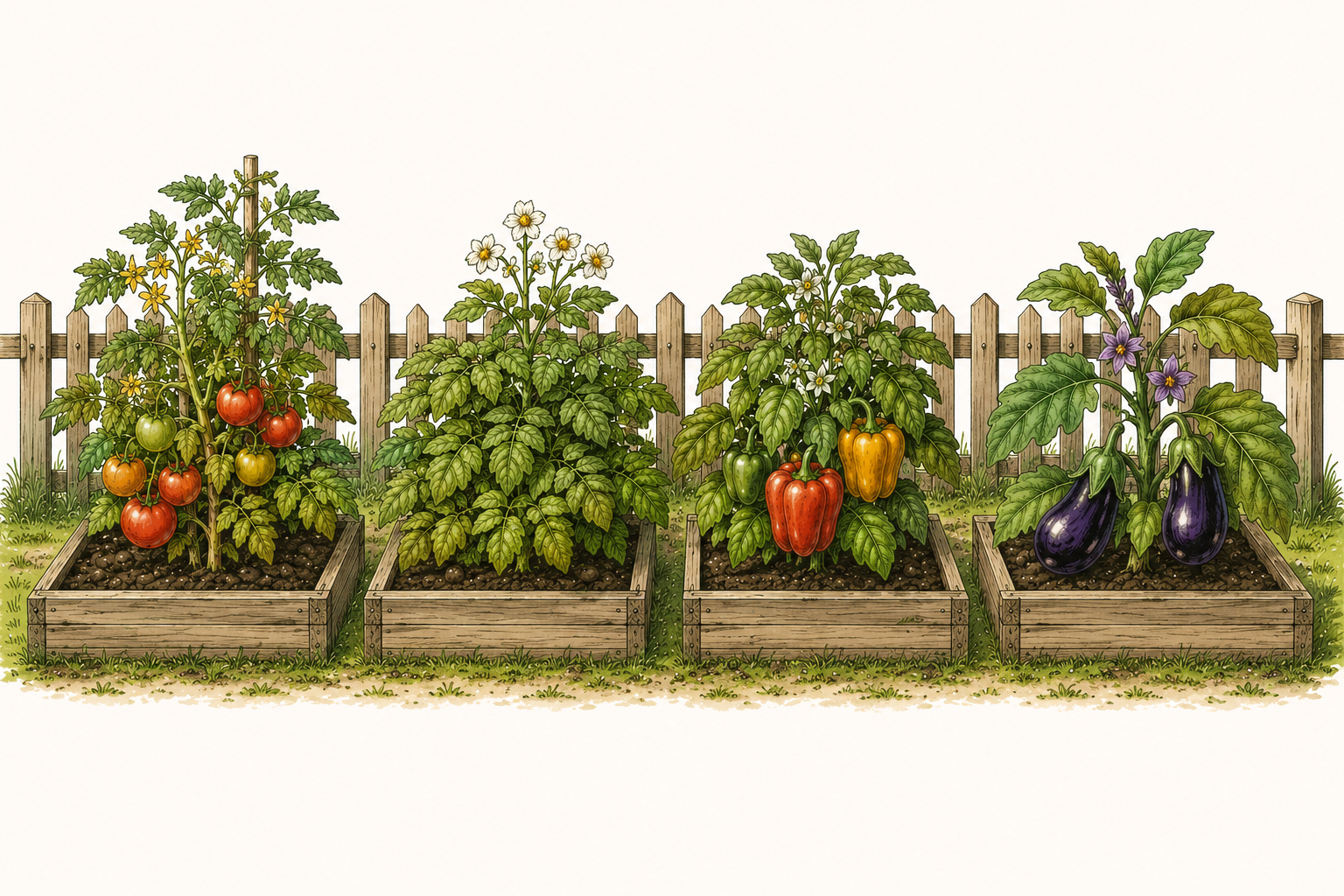
Pets and Nightshades: Tomatoes, Potatoes and More
Learn how to grow tomatoes, potatoes, peppers, and eggplants safely in pet-friendly gardens and understand plant-part risks.
Guide
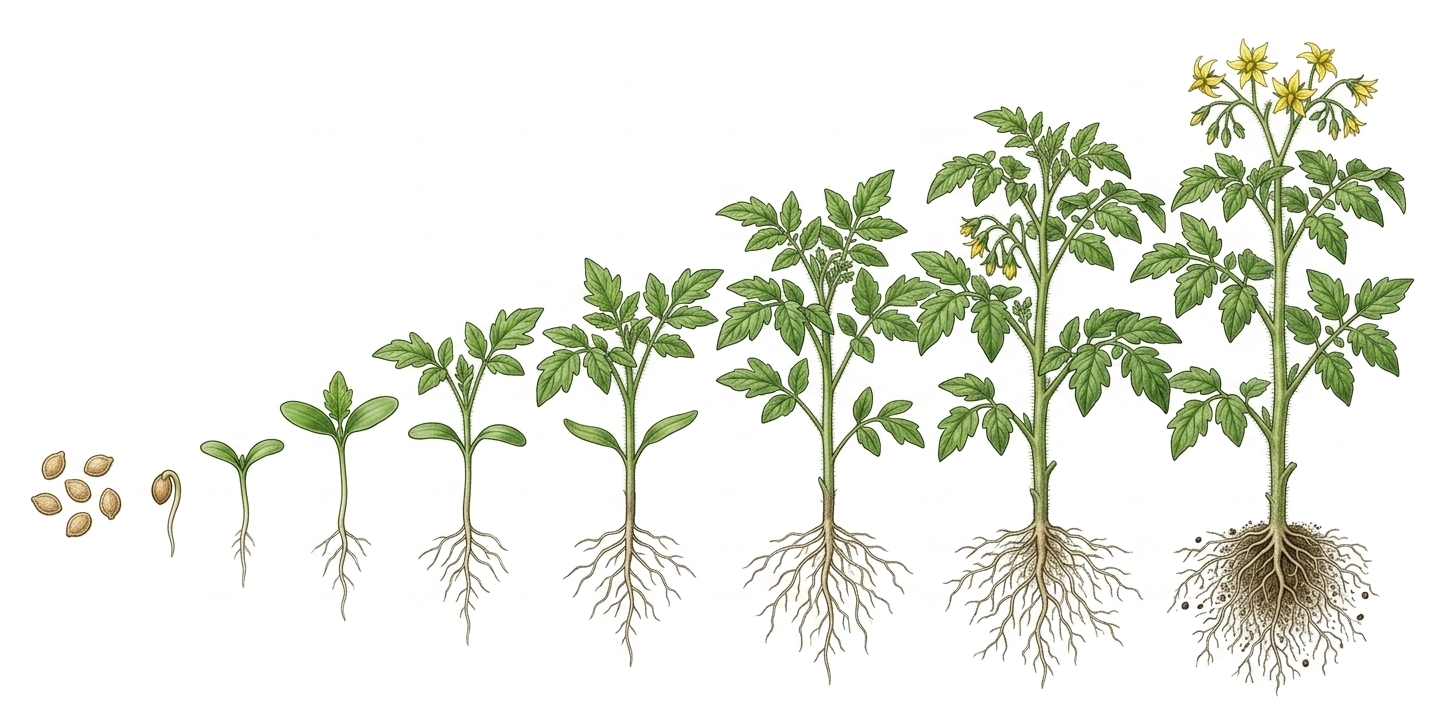
Starting Tomatoes Indoors: Light, Timing and Pricking Out
Start tomatoes indoors successfully with the right timing, warmth, strong light, pricking out, and care for healthy young plants.
Guide
Horse Pastures and Garden Plants: Safety Checks
Learn how to identify risks near horse pastures, fences, turnout areas, fruit trees, and garden planting zones.
Guide
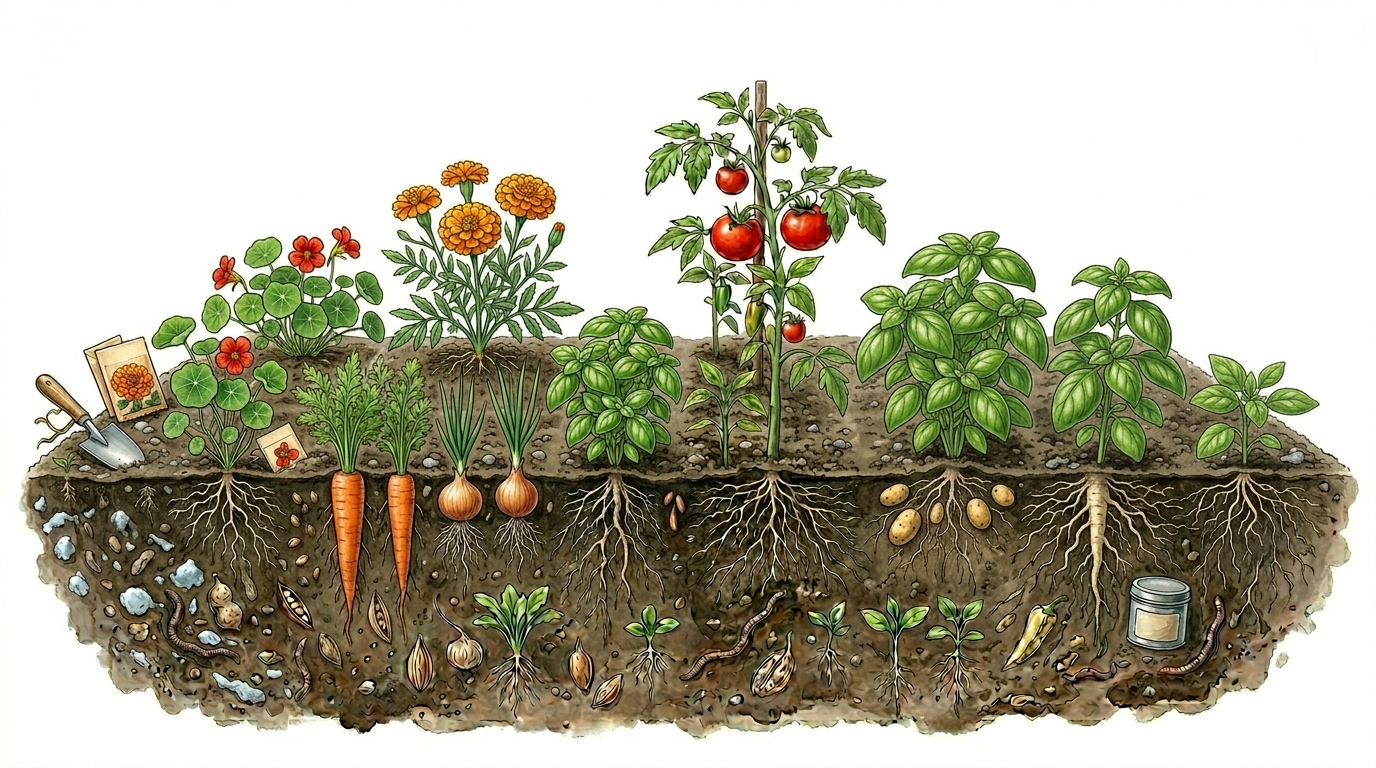
Companion Planting for Tomatoes: Good and Bad Neighbors
Learn which plants grow well with tomatoes, which neighbors to avoid, and how to plan productive mixed tomato beds.
Internal links
Related plants
groundcherry
Both belong to the nightshade family (Solanaceae).
pumpkin
Both are fruit vegetables.
Both are heavy feeders.
chili pepper
Fruit vegetable, similar cultivation methods
Sources
Public sources
- Wikidata entity
Wikidata · 2026-05-15
- GBIF species match
GBIF · 2026-05-15
- Deutschsprachige Wikipedia: Tomate
Wikipedia · 2026-05-15
- English Wikipedia: Tomato
Wikipedia · 2026-05-15
- Trefle API species data
Trefle · 2026-05-15