Plant Profile
Sour cherryPrunus cerasus
The sour cherry (Prunus cerasus) is a popular fruit tree species known for its tart fruits. It is more robust and easier to care for than the sweet cherry and is well-suited for home gardens. Harvest takes place in summer, and the fruits are versatile, used in everything from pies to liqueurs.
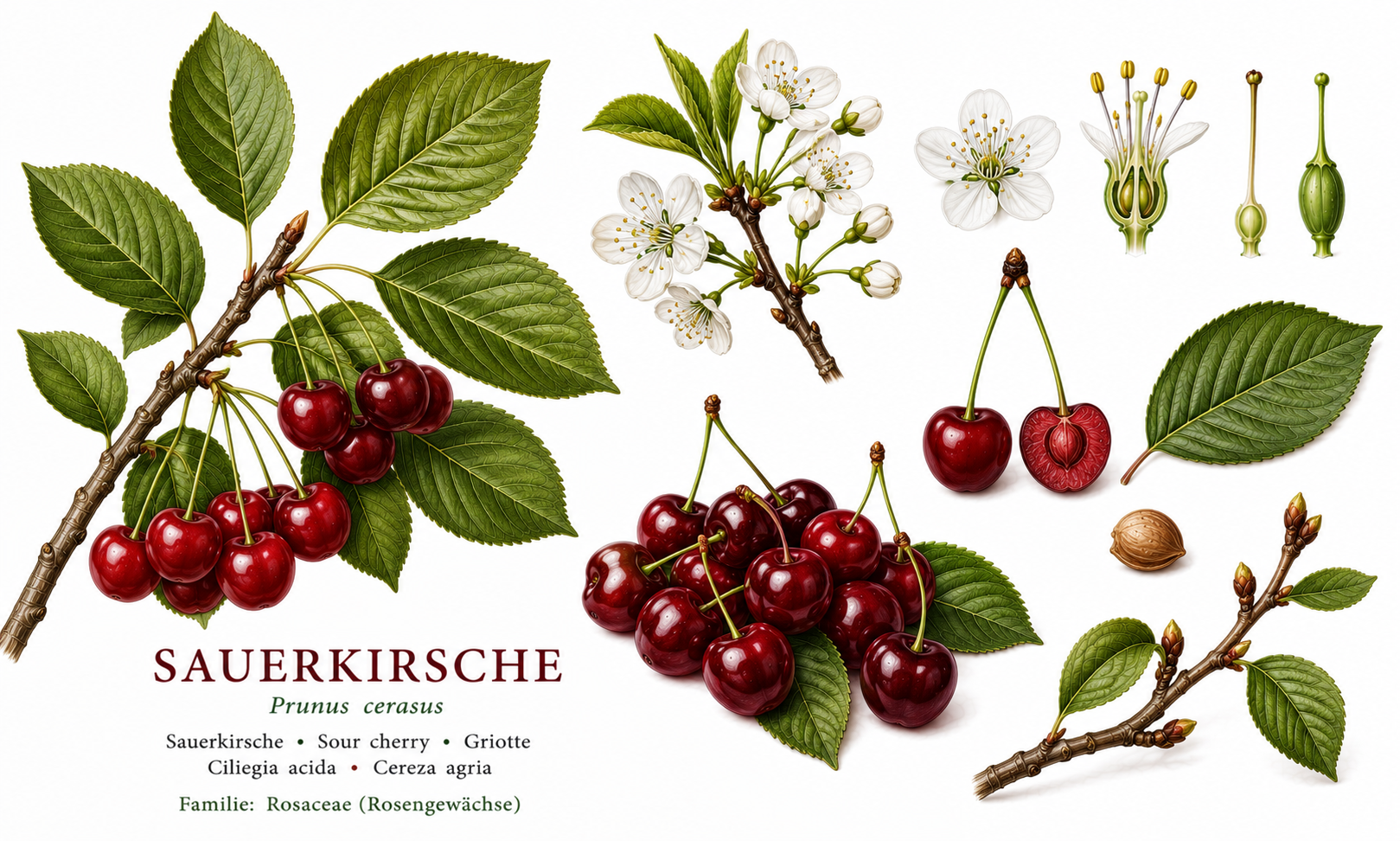
Quick profile
Key data
Suitable growing locations:
Good neighbors
Garden strawberryRaspberryEnglish lavenderRosemary
Avoid
tomatoCabbageSweet cherry
Indoor & direct sowing
Sour cherry: Sowing and germination
Not suitable for indoor cultivation.
Direct sowing is not common. Grafting is the usual propagation method.
Planting & site
Sour cherry: Planting and spacing
The best planting times are spring (March-April) and autumn (October-November).
Site & practical notes
Sour cherries are relatively undemanding and tolerate pruning well. Ensure good crown ventilation to prevent fungal diseases. Harvest is usually in summer, and the fruits are very tart, making them ideal for processing.
Temperature & frost
Sour cherry: Temperature and site
Water & nutrients
Sour cherry: Water, nutrients and care
Container & growth
Sour cherry: Container, support and growth
Year plan
Sour cherry Calendar
Spring blossoms are crucial for pollinators, followed by a bountiful harvest in mid-summer.
Recurring tasks
Relevant now
June
- Harvest early cultivarsHarvest ripe fruits carefully to avoid damaging the plant.
- Pest and disease monitoringEspecially important during fruit development and ripening.
Next up
July
- Main harvest timeHarvest fruits at optimal ripeness for best flavor.
- Monitor soil moistureavoid waterlogging: Consistent watering promotes fruit size and quality.
Monthly tasks
Single tasks from monthly data; repeated seasonal windows are shown in the overview above.
January
Quiet month
February
Quiet month
March
Growing
- Fertilize fruit treesif not already done: Slow-release organic fertilizers are beneficial.
Pruning
- Prune fruit treeswhile dormant: Remove dead, diseased, or crossing branches. Encourage an open crown structure.
April
Plant health
- Pest and disease monitoringPay special attention to aphids, cherry fruit fly, and Monilia.
May
Growing
- Thin fruit setif necessary: Overly dense fruit set can lead to smaller fruits and branch breakage.
- Watering during dry spellsdry spells, especially young trees: Consistent moisture is important for fruit development.
June
Harvest
- Harvest early cultivarsHarvest ripe fruits carefully to avoid damaging the plant.
Plant health
- Pest and disease monitoringEspecially important during fruit development and ripening.
August
Harvest
- Fertilize after harvestif needed: Supports plant recovery and preparation for the next season.
- Harvest late cultivarsHarvest the last fruits of the season.
September
Growing
- Soil careImproves soil structure and retains moisture.
Pruning
- Autumn pruningif necessary: Remove only damaged or diseased branches. Main pruning is done in winter.
October
Planting
- Plant new treesAutumn is ideal for planting fruit trees, allowing them to establish roots before winter.
Plant health
- Remove fallen leavesPrevents overwintering of pathogens.
November
Growing
- Protect young treesfrom frost: Use fleece or burlap to wrap the trunk.
- Winter preparationProtection against severe frost and wind may be necessary for young trees.
December
Quiet month
Flowering & pollination
Sour cherry Flowering & pollination
Self-fertility
partially self-fertile
Pollinator needed
yes
Overview
Most sour cherry cultivars are self-fertile, but require cross-pollination from another sour cherry cultivar or a suitable sweet cherry cultivar for good fruit set and high yields.
Notes
Although self-fertile, pollination by a compatible cultivar significantly improves yield and fruit quality. Pay attention to cultivars with similar flowering times.
Pruning & care
Sour cherry Pruning & care
Pruning type
Renewal pruning and formative pruning
Notes
Pruning sour cherries is generally less severe than for sweet cherries. Excessive pruning can lead to gummosis.
Pruning timing
Main pruning for shaping, thinning, and renewal. Promoting crown structure and fruiting wood. While the tree is dormant. Avoid frost periods.
Removal of water sprouts and diseased parts. Light corrections to improve ventilation. Only if necessary, to avoid weakening the plant.
Goal
Pruning is for shaping, maintaining vitality, promoting fruit yield, and disease prevention. Sour cherries are usually trained upright or as a bush/pyramid.
Remove
Preserve
Avoid
Tools and hygiene
Use sharp and disinfected tools (e.g., with alcohol) to prevent diseases.
Companion guide
Sour cherry Companion guide
Good neighbors
Garden strawberryRaspberryEnglish lavenderRosemary
Avoid
tomatoCabbageSweet cherry
Use & storage
Sour cherry Use & storage
Harvest time varies by cultivar and ripeness, typically from mid-June to late August.
Storage
Fresh consumption, processing
Storage life
Refrigerated (0-4°C): 3-7 days.
Harvest
Harvest time varies by cultivar and ripeness, typically from mid-June to late August.
Processing
After harvest
Harvested cherries should be handled gently to avoid bruising. They are delicate and should be processed or refrigerated promptly.
Edibility & safety
Sour cherry Edibility & safety
For people
In brief: which parts are edible, which parts remain risky, and whether raw consumption makes sense.
Safety notes
The pits are not intended for consumption. Swallowing a few pits is generally harmless, but deliberately chewing or consuming large quantities should be avoided.
Animal safety
This plant is not simply safe or unsafe for animals. 14 animal types have restrictions, so quantity, access, and plant part matter.
Each row shows which parts are more suitable and which parts are critical.
Companion animals
 Dog
DogFlesh
Pits, leaves, twigs
Flesh
Pits, leaves, twigs
Chewing or consuming large quantities of pits, Access to wilted leaves or twigs
Vomiting, Diarrhea, Abdominal pain
contact a vet if symptoms appear
The flesh of sour cherries is safe for dogs in small amounts as an occasional treat. Pits, leaves, and twigs contain amygdalin, which can hydrolyze to hydrogen cyanide when chewed, posing a poisoning risk. Swallowing a few whole pits is generally low risk, but deliberate chewing should be avoided. Excessive consumption of the flesh may cause gastrointestinal upset due to acidity and fiber. If symptoms such as…
Open animal page Cat
CatFlesh
Pits, leaves, twigs
Flesh
Pits, leaves, twigs
Chewing pits, Consumption of leaves or twigs
Vomiting, Diarrhea, Abdominal pain
contact a vet if symptoms appear
The flesh of sour cherry is suitable for cats in small amounts as an occasional treat, but its high acidity may cause gastrointestinal upset if overconsumed. Pits, leaves, and twigs contain amygdalin, which can hydrolyze to hydrogen cyanide when chewed, posing a poisoning risk. Swallowing a few intact pits is generally low risk, but deliberate consumption or chewing should be avoided. If symptoms such as vomiting…
Open animal page Rabbit
Flesh
Pits, leaves, twigs
Flesh
Pits, leaves, twigs
Chewing or ingesting pits, Consumption of wilted leaves or twigs
Diarrhea, Abdominal pain, Respiratory distress at high dose
contact a vet if symptoms appear
The flesh of sour cherry is suitable for rabbits in small amounts as a treat. Pits, leaves, and twigs contain amygdalin, which can break down into cyanide and cause poisoning-like symptoms. Overfeeding fruit may lead to digestive issues due to sugar content.
Open animal page Guinea pig
Flesh
Pits, leaves, twigs
Flesh
Pits, leaves, twigs
 Hamster
Flesh
Pits, leaves, twigs
Flesh
Pits, leaves, twigs
Chewing or ingesting pits, Consumption of wilted leaves or twigs
Vomiting, Diarrhea, Breathing difficulties
contact a vet if symptoms appear
The flesh of sour cherry is suitable for hamsters in small amounts as a treat, but its acidity may cause gastrointestinal upset if overfed. Pits, leaves, and twigs contain amygdalin, which can break down into hydrogen cyanide and is toxic. Ingestion of pits poses a choking hazard.
Open animal page Budgie
Flesh
Pits, leaves, twigs
Flesh
Pits, leaves, twigs
Chewing or ingesting pits, leaves, or twigs
Difficulty breathing, tremors, Vomiting
contact a vet if ingested
The flesh of sour cherry is suitable for budgies in small amounts as an occasional treat, but due to its high acidity should only be fed sparingly. Pits, leaves, and twigs contain amygdalin, which can hydrolyze to hydrogen cyanide when chewed, posing a poisoning risk. Budgies tend to explore objects with their beaks and may chew on toxic parts.
Open animal pageFarm animals
 Horse
HorseFlesh
Pits, leaves, twigs
Flesh
Pits, leaves, twigs
Chewing pits releases cyanide; wilted leaves increase toxicity
Difficulty breathing, trembling, drooling
contact a vet if ingested
The flesh is safe in small amounts as a treat, but pits, leaves, and twigs contain amygdalin, which can metabolize to cyanide. Horses should not have access to wilted twigs or foliage. Swallowing a few pits whole is usually harmless, but deliberate consumption should be prevented. Seek veterinary help immediately if poisoning signs appear.
Open animal page Chicken
Flesh
Pits
Flesh
Pits
Consuming large amounts of pits
Nausea, Vomiting
contact a vet if symptoms appear
Sour cherries can be fed to chickens as a treat, but the pits should be avoided as they contain amygdalin, which can break down into cyanide.
Open animal page Duck
DuckFruit flesh (without pits)
Pits, Leaves, Stems
Fruit flesh (without pits)
Pits, Leaves, Stems
Consumption of large quantities of leaves, stems, or pits, Chewing pits
Difficulty breathing, Bright red mucous membranes, Weakness
emergency vet immediately
No direct species-specific source was found for ducks. This is a cautious inference from the geese profile and the known plant-part risks.
Open animal page Goose
GooseFruit flesh (without pits)
Pits, Leaves, Stems
Fruit flesh (without pits)
Pits, Leaves, Stems
Consumption of large quantities of leaves, stems, or pits, Chewing pits
Difficulty breathing, Bright red mucous membranes, Weakness
emergency vet immediately
The fruit (without pits) can be offered in very small quantities as an occasional treat. However, leaves, stems, bark, and pits contain cyanogenic glycosides, which are toxic if ingested and could be consumed by geese while foraging. Therefore, the plant as a whole is not suitable as feed.
Open animal page Sheep
SheepFlesh
Pits, leaves, twigs
Flesh
Pits, leaves, twigs
Chewing pits, consumption of wilted foliage
Difficulty breathing, trembling, bright red mucous membranes
contact a vet if ingested
The flesh of sour cherry is suitable for sheep in small amounts as an occasional treat, but pits, leaves, and twigs contain amygdalin, which can release cyanide when chewed or when wilted material is consumed. Sheep tend to browse and may ingest leaves and twigs, posing a poisoning risk. Only pit-free flesh should be offered occasionally. Seek veterinary help immediately if poisoning is suspected.
Open animal page Goat
GoatFlesh
Pits, leaves, twigs
Flesh
Pits, leaves, twigs
 Cattle
Flesh
Pits, leaves, twigs
Flesh
Pits, leaves, twigs
 Pig
PigFlesh
Pits, leaves, twigs
Flesh
Pits, leaves, twigs
These guidelines are for general information only and do not replace veterinary diagnosis. If critical plant parts were ingested or the animal shows unusual behaviour or symptoms, seek veterinary advice.
Max risk
unknown
Highest status
selected parts only
Urgency
emergency vet immediately
Practical tips
Sour cherry Practical tips
Common beginner mistakes
Success pattern
High-impact tips
Grower observations
Plant Profile
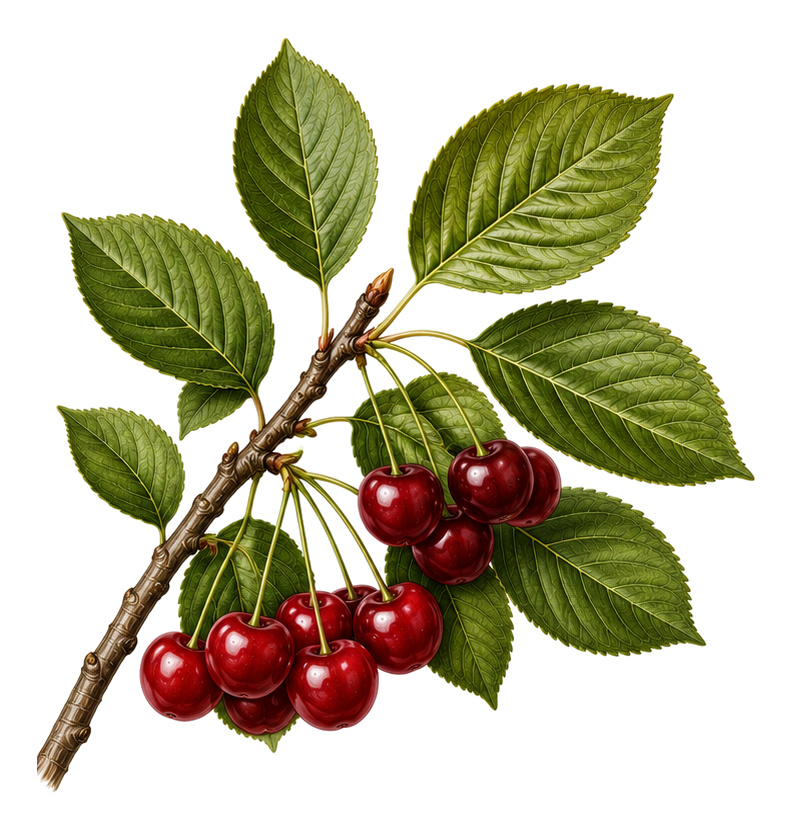
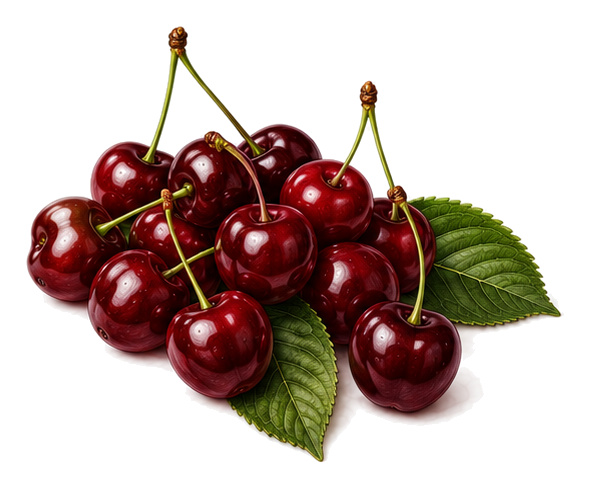
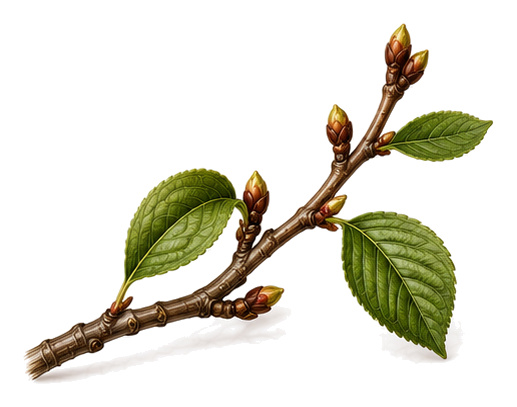
Additional plant images
Health
Pests, Diseases
Pests
Aphids
Small, sucking insects that colonize young shoots and leaves, feeding on plant sap. They can cause deformities and honeydew.
Cherry fruit fly
A small fly whose larvae hollow out cherries from the inside, making them inedible.
Cherry aphid
A specialized aphid species that primarily infests young shoots and leaves of cherry trees.
Scale insects
Small, sessile insects living under a shield-like covering, sucking plant sap. They leave behind honeydew, which can lead to sooty mold.
Spider mites
Tiny arachnids that colonize the underside of leaves and suck plant sap, leading to fine speckling and later yellowish or bronze-colored leaves. Fine webbing visible with heavy infestation.
Diseases
Monilia blight (brown rot)
Fungal disease affecting blossoms, shoots, and fruits. Leads to wilting, shoot dieback, and fruit rot.
Bacterial canker
Bacterial disease affecting bark, leaves, and fruits. Causes bark necrosis, gummosis, and leaf fall.
Leaf spot diseases
Various fungi can cause leaf spots, leading to premature leaf fall and impairing photosynthesis.
Powdery mildew
Fungal disease appearing as a white coating on leaves, shoots, and fruits. Affects growth and fruit quality.
Verticillium wilt
Soil-borne fungal disease that affects the plant's vascular system, leading to wilting.
Deficiencies
Iron deficiency
Lack of iron leads to chlorosis, especially in young leaves.
Magnesium deficiency
Magnesium deficiency often appears as chlorosis on older leaves.
Potassium deficiency
Potassium deficiency affects water regulation and fruit development.
Plant health
Diagnosis help
Sour cherry Diagnosis help
Pest groups
Disease groups
Prevention
Diagnosis
Accurate diagnosis often requires observing symptoms on different plant parts (leaves, shoots, fruits, bark) and considering the season and environmental conditions. Professional advice or laboratory analysis is recommended if uncertain.
Cultural prevention
Monitoring
First response
Diagnostic rules
Brown, mummified fruits remaining on the tree
Possible causes: Monilia blight
- Check for gray-brown fungal growth on the fruits.
Gummosis (oozing of sap) from bark cracks
Possible causes: Bacterial canker
- Look for dark, circular spots on the bark.
White, powdery coating on leaves and shoots
Possible causes: Powdery mildew
- Check whether the coating can be wiped off.
Yellowing of leaves between veins, veins remain green
Possible causes: Iron deficiency
- Mainly affects young leaves.
FAQ
When is the best time to plant a sour cherry tree?
The best planting times are spring (March-April) and autumn (October-November), allowing the tree to establish roots before bud break or winter, respectively.
How often do I need to water my sour cherry tree?
Sour cherries require regular watering, especially during dry spells and fruit development. Ensure you avoid waterlogging.
What diseases commonly affect sour cherries?
Common diseases include Monilia blight (brown rot), bacterial canker (gummosis), and various leaf spot diseases. Prevention through good care and resistant cultivars is important.
Can I grow sour cherries in containers?
Sour cherries are generally not suitable for container cultivation as they grow too large and develop deep root systems. Dwarf varieties on weak rootstocks might theoretically be possible but are not common.
Is Sour cherry safe for Dog?
Sour cherry is classified as selected parts only for Dog. Risk: unknown. Urgency: contact a vet if symptoms appear. The flesh of sour cherries is safe for dogs in small amounts as an occasional treat. Pits, leaves, and twigs contain amygdalin, which can hydrolyze to hydrogen cyanide when chewed, posing a poisoning risk. Swallowing a few whole pits is generally low risk, but deliberate chewing should be avoided. Excessive consumption of the flesh may cause gastrointestinal upset due to acidity and fiber. If symptoms such as…
Is Sour cherry safe for Cat?
Sour cherry is classified as selected parts only for Cat. Risk: unknown. Urgency: contact a vet if symptoms appear. The flesh of sour cherry is suitable for cats in small amounts as an occasional treat, but its high acidity may cause gastrointestinal upset if overconsumed. Pits, leaves, and twigs contain amygdalin, which can hydrolyze to hydrogen cyanide when chewed, posing a poisoning risk. Swallowing a few intact pits is generally low risk, but deliberate consumption or chewing should be avoided. If symptoms such as vomiting…
Is Sour cherry safe for Rabbit?
Sour cherry is classified as selected parts only for Rabbit. Risk: unknown. Urgency: contact a vet if symptoms appear. The flesh of sour cherry is suitable for rabbits in small amounts as a treat. Pits, leaves, and twigs contain amygdalin, which can break down into cyanide and cause poisoning-like symptoms. Overfeeding fruit may lead to digestive issues due to sugar content.
Is Sour cherry safe for Guinea pig?
Sour cherry is classified as selected parts only for Guinea pig. Risk: unknown. Urgency: unknown. No reliable species-specific assessment is available.
Guides
Related guides
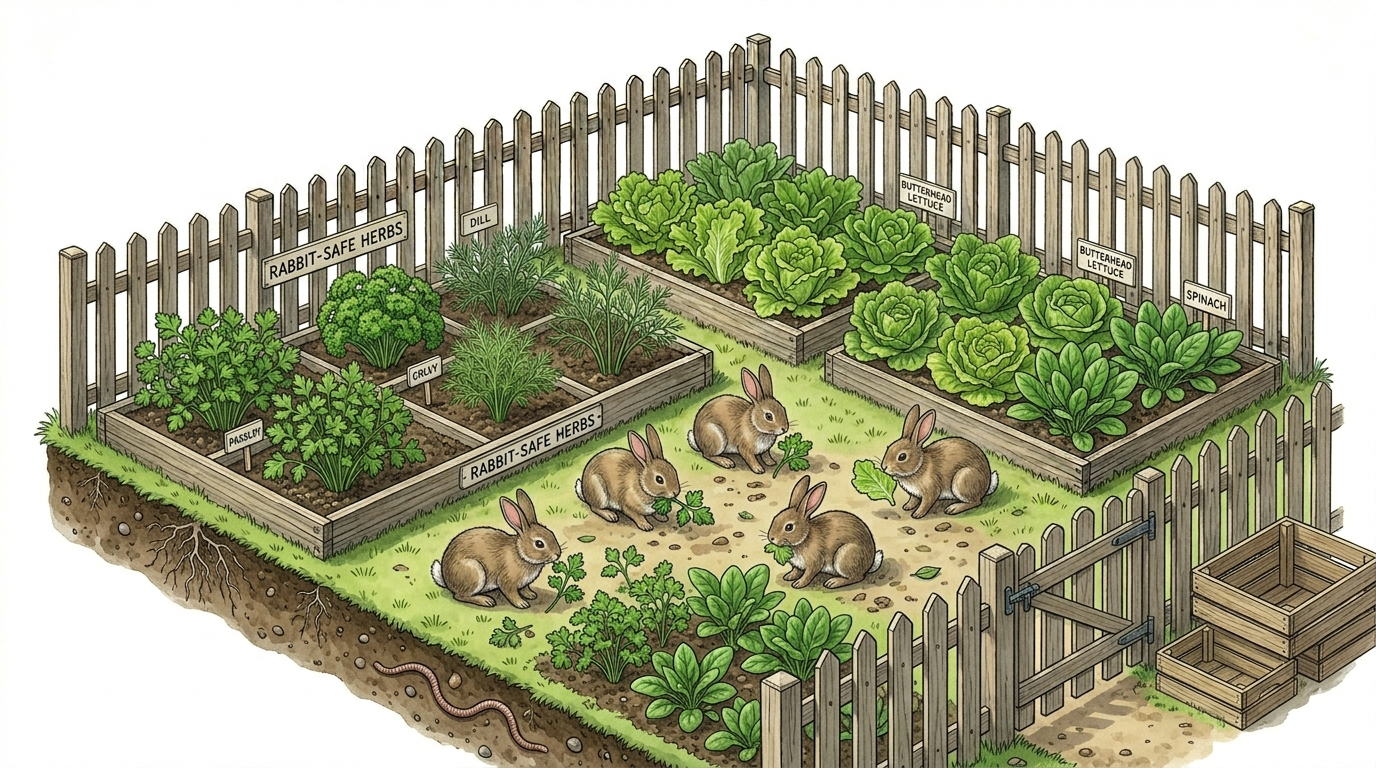
Guide
Rabbits in the Garden: Herbs and Vegetables
Learn how to choose suitable herbs and vegetables for rabbits, grow feeding plants, and plan a rabbit-friendly garden.
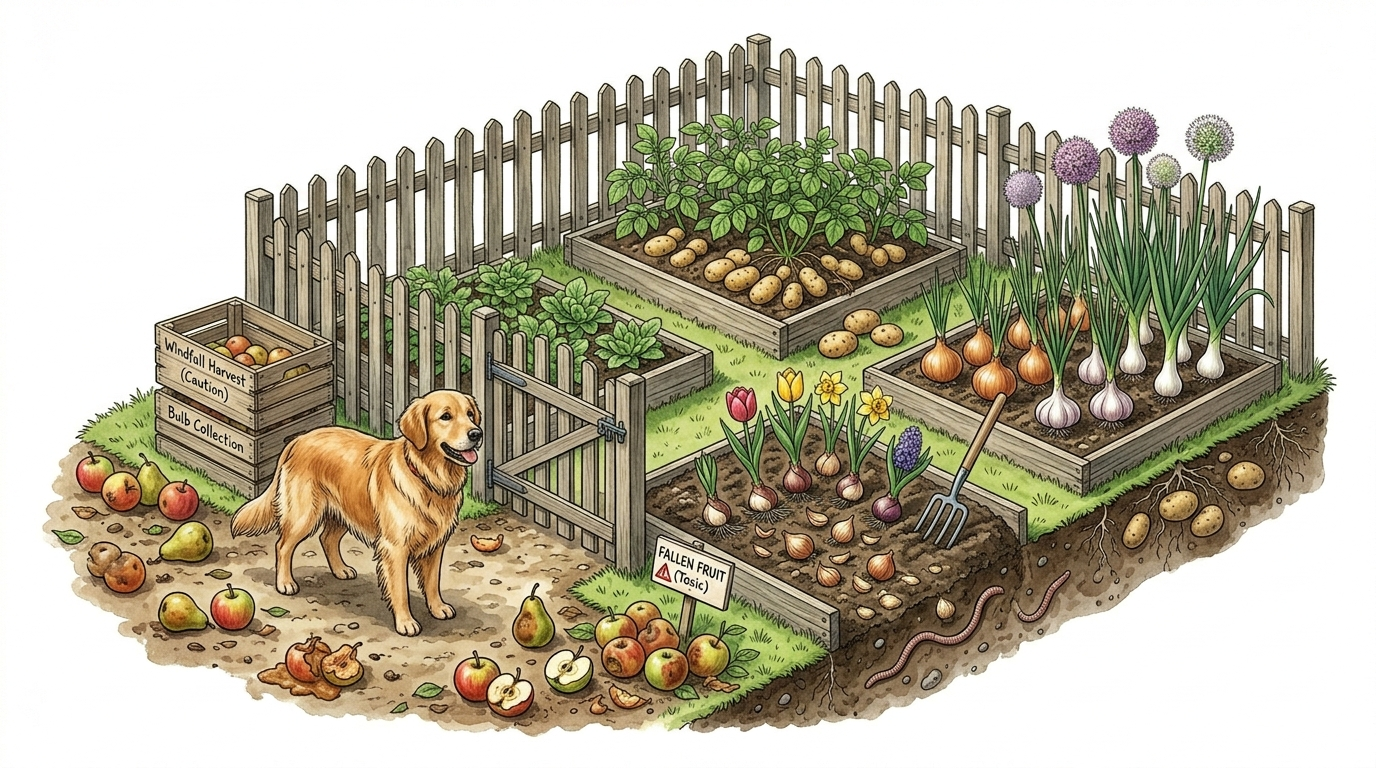
Guide
Dogs in the Garden: Windfall Fruit and Risks
Keep your garden dog-safe by managing windfall fruit, seeds, stored crops, and potentially problematic plant parts.
Guide
Horse Pastures and Garden Plants: Safety Checks
Learn how to identify risks near horse pastures, fences, turnout areas, fruit trees, and garden planting zones.
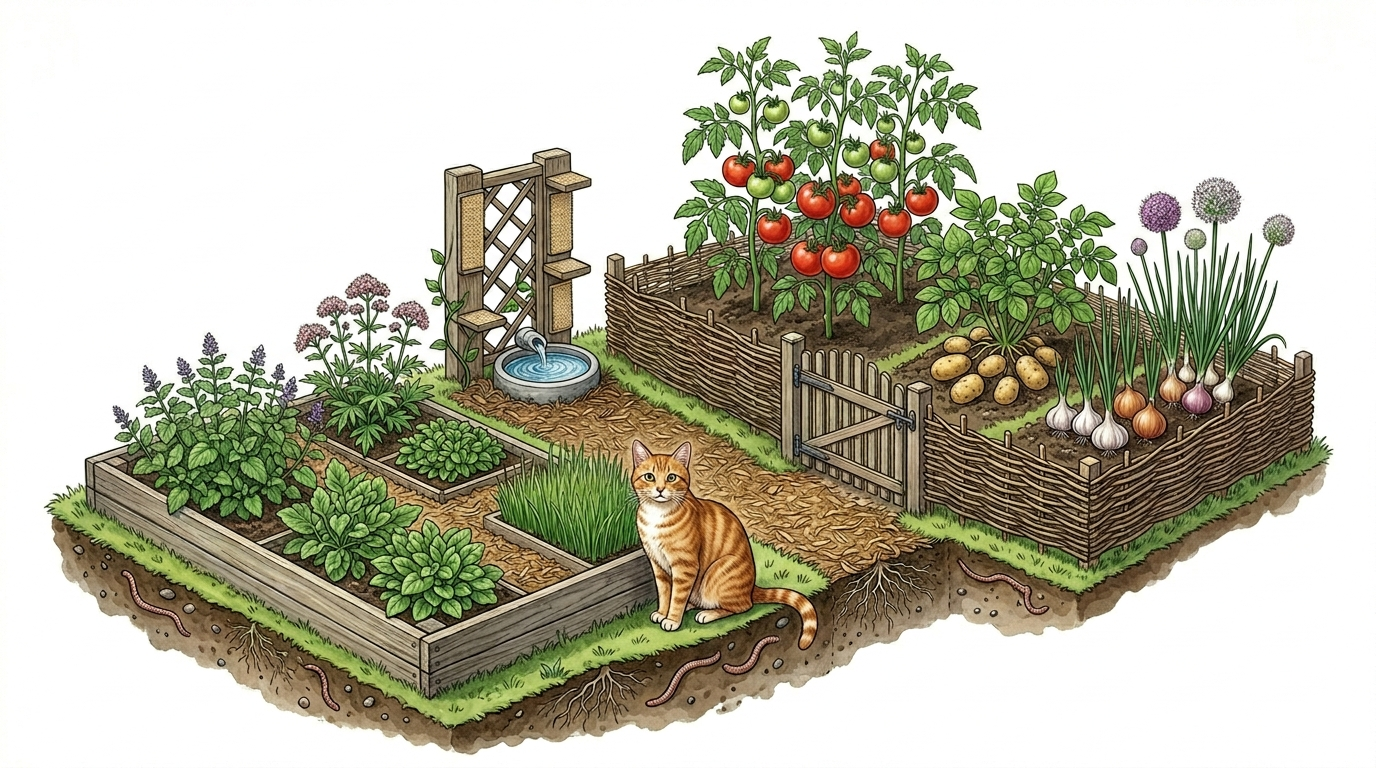
Guide
Toxic Garden Plants for Cats: Safer Planning
Learn which garden plants can be risky for cats, how to plan safer beds, and what to do if a cat eats a toxic plant.
Internal links
Related plants
Sweet cherry
Both belong to the genus Prunus and share similar needs but have different fruit characteristics.
Both are stone fruits and are cultivated similarly.
Plum
Belong to the same family (Rosaceae) and have similar requirements for location and soil.
Both belong to the Rosaceae family.
Monilia blight (brown rot)
This fungal disease also affects sweet cherries and other Rosaceae.
Bacterial canker
Bacterial canker is a common disease in many stone fruit varieties, including sweet cherries.
Garden strawberry
Both belong to the Rosaceae family.
Sources
Public sources
- Wikidata entity
Wikidata · 2026-05-15
- GBIF species match
GBIF · 2026-05-15
- Deutschsprachige Wikipedia: Sauerkirsche
Wikipedia · 2026-05-15
- English Wikipedia: Prunus cerasus
Wikipedia · 2026-05-15