Plant Profile
KiwiActinidia chinensis
The kiwi is a vigorous climbing plant that produces sweet, vitamin-rich fruits. It requires sturdy support and winter protection in colder regions.
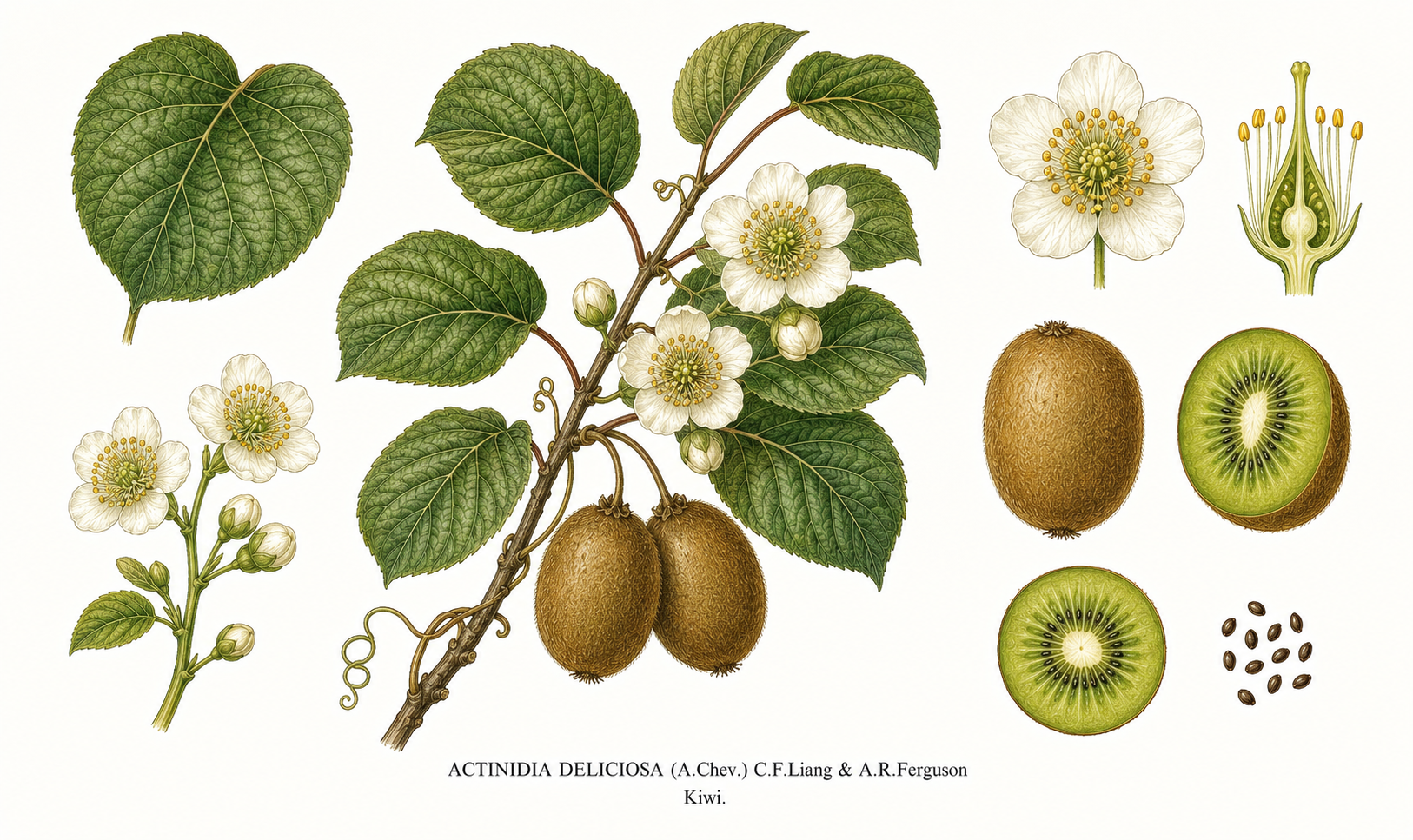
Quick profile
Key data
Suitable growing locations:
Good neighbors
No data
Avoid
No data
Indoor & direct sowing
Kiwi: Sowing and germination
Sowing seeds requires cold stratification.
Not recommended.
Planting & site
Kiwi: Planting and spacing
Plant out young plants after the last frosts.
Temperature & frost
Kiwi: Temperature and site
Water & nutrients
Kiwi: Water, nutrients and care
Container & growth
Kiwi: Container, support and growth
Year plan
Kiwi Calendar
In autumn, the kiwi rewards with its sweet fruits, which often need to ripen further before fully developing their flavor.
Recurring tasks
Relevant now
June
- Water and fertilize regularlyWährend der Wachstumsphase: Sufficient water and nutrient supply is crucial for fruit development.
- Perform summer pruningNach dem Fruchtansatz: Remove superfluous shoots and shorten fruit-bearing shoots to improve fruit quality.
Next up
July
- Guide and tie shootsRegelmäßig: Guiding the shoots ensures good light exposure and facilitates harvesting.
- Continue summer pruningBei Bedarf: Continue to remove superfluous shoots and thin out the crown interior.
Monthly tasks
Single tasks from monthly data; repeated seasonal windows are shown in the overview above.
January
Growing
- Check winter protectionBei Bedarf: Ensure winter protection is intact and protects plants from severe frost.
February
Direct sowing
- Prepare seeds for stratificationBei Anzucht aus Samen: Kiwi seeds require cold stratification to germinate.
Pruning
- Perform winter pruningBei etablierten Pflanzen: Remove old and dead shoots to promote growth and fruit set.
March
Growing
- First fertilizationFür etablierte Pflanzen: Incorporate organic fertilizer or compost to stimulate growth.
- Remove winter protectionNach den letzten starken Frösten: Gradually remove winter protection once severe frosts are no longer expected.
April
Planting
- Plant out young plantsNach den Eisheiligen: Ensure no late frosts are threatening. Provide ample space and support.
Growing
- Install/check support structuresVor dem Austrieb: Kiwis require sturdy support structures as they are vigorous growers.
- Watch out for late frostsBesonders bei jungen Trieben und Blüten: Young shoots and flowers are very frost-sensitive and should be protected if necessary.
May
Growing
- Tie shoots to support structuresRegelmäßig: Gently tie new shoots to encourage good branching and light exposure.
- Water regularlyBei Trockenheit: Consistent soil moisture is important, especially during bud break.
June
Growing
- Water and fertilize regularlyWährend der Wachstumsphase: Sufficient water and nutrient supply is crucial for fruit development.
Pruning
- Perform summer pruningNach dem Fruchtansatz: Remove superfluous shoots and shorten fruit-bearing shoots to improve fruit quality.
August
Growing
- Ensure consistent moistureBesonders wichtig für die Fruchtgröße: Drought stress at this stage can negatively affect fruit size and quality.
- Monitor fruit developmentRegelmäßig: Watch for signs of diseases or pests and monitor ripening.
September
Harvest
- First harvest (depending on variety)Bei frühen Sorten: Fruits are ready to harvest when they yield slightly and detach easily from the stem.
Growing
- Reduce wateringWenn Früchte zu reifen beginnen: A slight reduction in watering can promote fruit sweetness.
October
Harvest
- Main harvest seasonVor dem ersten starken Frost: Kiwis can ripen after harvesting. Harvest before frost.
Growing
- Prepare winter protectionFür junge Pflanzen oder in kälteren Regionen: Mulch the base of the trunk and protect young plants with fleece or brushwood.
November
Harvest
- Late harvestBei späten Sorten oder milder Witterung: Harvest all remaining fruits before frost.
Growing
- Apply winter protectionVor dem Wintereinbruch: Young plants and sensitive varieties particularly need protection from frost.
December
Growing
- Check winter protectionRegelmäßig bei Frostperioden: Ensure winter protection has not shifted and continues to protect the plants.
Flowering & pollination
Kiwi Flowering & pollination
Flowering period
May to June
Flower color
White to creamy yellow
Self-fertility
dioecious
Pollinator needed
yes
Overview
Kiwi plants are typically dioecious, meaning there are separate male and and female plants. For fruit set, pollination by a male plant is required, unless it is a self-fertile variety.
Notes
Pollination is primarily carried out by insects, especially bees. One male plant can pollinate several female plants (ratio 1:5 to 1:8). Hand pollination may be necessary if natural pollinators are scarce.
Pruning & care
Kiwi Pruning & care
Pruning type
trellis_and_pergola_systems
Pruning timing
Structural pruning, removal of old fruiting wood, and shaping. Promotes vigorous growth and new fruit set. Done before bud break but after the severest frosts. Remove all shoots that bore fruit the previous year, as well as weak or damaged shoots. Leave enough one-year-old shoots for the upcoming harvest.
Thinning of fruiting shoots, control of vegetative growth, improvement of fruit quality and light exposure. After fruit set, remove superfluous shoots and shorten fruiting shoots to 4-6 leaves beyond the last fruit. This directs energy into fruit development and improves ventilation.
Remove
Preserve
Avoid
Tools and hygiene
Always use sharp and clean pruning tools to ensure smooth cuts and minimize disease transmission. Disinfect tools regularly, especially after pruning diseased plant parts.
Use & storage
Kiwi Use & storage
Harvest fruits before the first hard frost.
Storage
Cool and dark
Storage life
Unripe: 2-4 months at 0-5°C; Ripe: 1-2 weeks in the refrigerator
Flavor
Sweet-tart, refreshing
Harvest
Harvest fruits before the first hard frost.
Culinary uses
Processing
After harvest
Harvested, still firm fruits can ripen at room temperature. To accelerate the ripening process, they can be stored with apples in a paper bag (ethylene effect).
Notes
Kiwi is versatile and enhances many dishes with its exotic flavor and vibrant color.
Edibility & safety
Kiwi Edibility & safety
For people
In brief: which parts are edible, which parts remain risky, and whether raw consumption makes sense.
Safety notes
Kiwi is safe for most people to eat. Some individuals may experience oral allergy syndrome (itching in the mouth, swelling), especially with cross-allergies to birch pollen or latex.
Animal safety
This plant is not simply safe or unsafe for animals. 14 animal types have restrictions, so quantity, access, and plant part matter.
Each row shows which parts are more suitable and which parts are critical.
Companion animals
 Dog
DogFruit flesh
Skin, Leaves, Stems
Fruit flesh
Skin, Leaves, Stems
Overconsumption, Consumption of skin or leaves
Vomiting, Diarrhea, Gastrointestinal upset
observe
Kiwi fruit flesh is suitable for dogs in small amounts as an occasional treat. The skin, leaves, and stems contain actinidin and oxalates that can cause gastrointestinal upset. If large amounts or non-edible parts are consumed, consult a veterinarian.
Open animal page Cat
CatFruit flesh
Skin, Leaves, Stems
Fruit flesh
Skin, Leaves, Stems
Overconsumption, Consumption of skin or leaves
Vomiting, Diarrhea, Gastrointestinal upset
observe
Kiwi fruit flesh is safe for cats in small amounts as an occasional treat. Skin, leaves, and stems contain actinidin and oxalates that can cause gastrointestinal irritation. Due to high sugar content, feeding should be limited. Consult a veterinarian if large amounts or toxic parts are ingested.
Open animal page Rabbit
Fruit flesh
Skin, Leaves, Stems
Fruit flesh
Skin, Leaves, Stems
Overconsumption, Sensitivity to actinidin, Consumption of skin or leaves
Gastrointestinal upset, Diarrhea
observe
Kiwi fruit flesh is suitable for rabbits in small amounts as an occasional treat. Skin, leaves, and stems contain actinidin and oxalates that may cause gastrointestinal upset if consumed in excess. Due to high sugar content, kiwi should only be fed occasionally.
Open animal page Guinea pig
Fruit flesh
Skin, Leaves
Fruit flesh
Skin, Leaves
Overconsumption, Sensitivity to actinidin
Gastrointestinal upset, Diarrhea
observe
Kiwi fruit flesh is suitable for guinea pigs in small amounts as an occasional treat. Skin and leaves should be avoided due to potential irritation and mild toxicity. Due to high water and sugar content, feed only occasionally.
Open animal page Hamster
Fruit flesh
Skin, Leaves, Stems
Fruit flesh
Skin, Leaves, Stems
Overconsumption, Consumption of skin or leaves
Gastrointestinal upset, Vomiting, Diarrhea
observe
Kiwi fruit flesh is suitable for hamsters in small amounts as an occasional treat. Skin, leaves, and stems contain potentially irritating compounds like actinidin and oxalates and should be avoided. Due to high water and sugar content, feed only occasionally.
Open animal page Budgie
Fruit flesh
Skin, Leaves, Stems
Fruit flesh
Skin, Leaves, Stems
Overconsumption, Consumption of skin or leaves
Gastrointestinal upset, Vomiting, Diarrhea
observe
Kiwi fruit flesh is suitable for budgies in small amounts as an occasional treat. Skin, leaves, and stems contain actinidin and oxalates that may cause gastrointestinal irritation. Offer only ripe fruit without skin. Consult a veterinarian if signs of distress appear.
Open animal pageFarm animals
 Horse
HorseFruit flesh
Skin, Leaves, Stems
Fruit flesh
Skin, Leaves, Stems
Overconsumption, Consumption of skin or leaves
Gastrointestinal upset, Vomiting, Diarrhea
observe
Kiwi fruit flesh is suitable for horses in small amounts as an occasional treat. Skin, leaves, and stems contain actinidin and oxalates that may cause gastrointestinal upset if consumed in excess. Not suitable as primary feed.
Open animal page Chicken
Fruit flesh
Skin, Leaves, Stems
Fruit flesh
Skin, Leaves, Stems
Overconsumption, Consumption of skin or leaves
Gastrointestinal upset, Vomiting, Diarrhea
observe
Kiwi fruit flesh is suitable for chickens in small amounts as a treat, providing vitamin C and fiber. Skin, leaves, and stems contain actinidin and oxalates that may cause gastrointestinal irritation if consumed excessively. No indications of severe poisoning in chickens reported.
Open animal page Duck
DuckFruit flesh
Skin, Leaves, Stems
Fruit flesh
Skin, Leaves, Stems
Overconsumption, Consumption of skin or leaves
Gastrointestinal upset, Vomiting, Diarrhea
observe
Kiwi fruit flesh is suitable for ducks in small amounts as an occasional treat. Skin, leaves, and stems contain actinidin and oxalates that may cause gastrointestinal irritation. Due to high water and sugar content, kiwi should only be fed occasionally.
Open animal page Goose
GooseFruit flesh
Skin, Leaves, Stems
Fruit flesh
Skin, Leaves, Stems
Overconsumption, Consumption of skin or leaves
Gastrointestinal upset, Vomiting, Diarrhea
observe
Kiwi fruit flesh is suitable for geese in small amounts as an occasional treat. Skin, leaves, and stems contain actinidin and oxalates that may cause gastrointestinal irritation. Feed only the fruit flesh and limit quantity.
Open animal page Sheep
SheepFruit flesh
Leaves, Stems
Fruit flesh
Leaves, Stems
Excessive consumption of leaves or stems, Unripe fruit
Gastrointestinal upset, Diarrhea
observe
Kiwi fruit flesh is suitable for sheep in small amounts as an occasional treat. Leaves and stems contain actinidin and oxalates, which can cause gastrointestinal upset if consumed excessively. Sheep should only be given the fruit flesh, never leaves or stems.
Open animal page Goat
GoatFruit flesh
Leaves, Stems, Skin (hairy in some varieties)
Fruit flesh
Leaves, Stems, Skin (hairy in some varieties)
 Cattle
Fruit flesh
Leaves, Stems, Skin (with excessive consumption)
Fruit flesh
Leaves, Stems, Skin (with excessive consumption)
 Pig
PigFruit flesh
Skin, Leaves, Stems
Fruit flesh
Skin, Leaves, Stems
Overconsumption, Consumption of skin or leaves
Gastrointestinal upset, Vomiting, Diarrhea
observe
Kiwi fruit flesh is suitable for pigs in small amounts as an occasional treat. Skin, leaves, and stems contain actinidin and oxalates that may cause gastrointestinal irritation if consumed excessively. No indications of severe poisoning in pigs documented.
Open animal pageThese guidelines are for general information only and do not replace veterinary diagnosis. If critical plant parts were ingested or the animal shows unusual behaviour or symptoms, seek veterinary advice.
Max risk
unknown
Highest status
selected parts only
Urgency
unknown
Saving seed
Kiwi Saving seed
Seed saving
yes
Seed viability
2 - 3 years
Notes
Growing from seeds is possible, but the resulting plants will not be true to type, and their sex will only be identifiable after several years when they flower. For home gardeners, vegetative propagation (cuttings) or purchasing grafted plants is more advisable.
Practical tips
Kiwi Practical tips
Common beginner mistakes
Wrong location (too windy, too shady), missing male pollinator plant, insufficient pruning, waterlogging.
Success pattern
Choosing a suitable variety (hardy, self-fertile if space is limited), sunny, sheltered location, sturdy support, regular pruning, and adequate water/nutrient supply.
High-impact tips
Mulching the root area saves water and protects in winter. Incorporate compost once a year in spring. Regularly tie up shoots.
Grower observations
Kiwis are surprisingly robust if they have the right location and sturdy support. Winter protection is crucial in the first few years.
Plant Profile
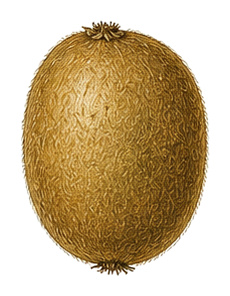
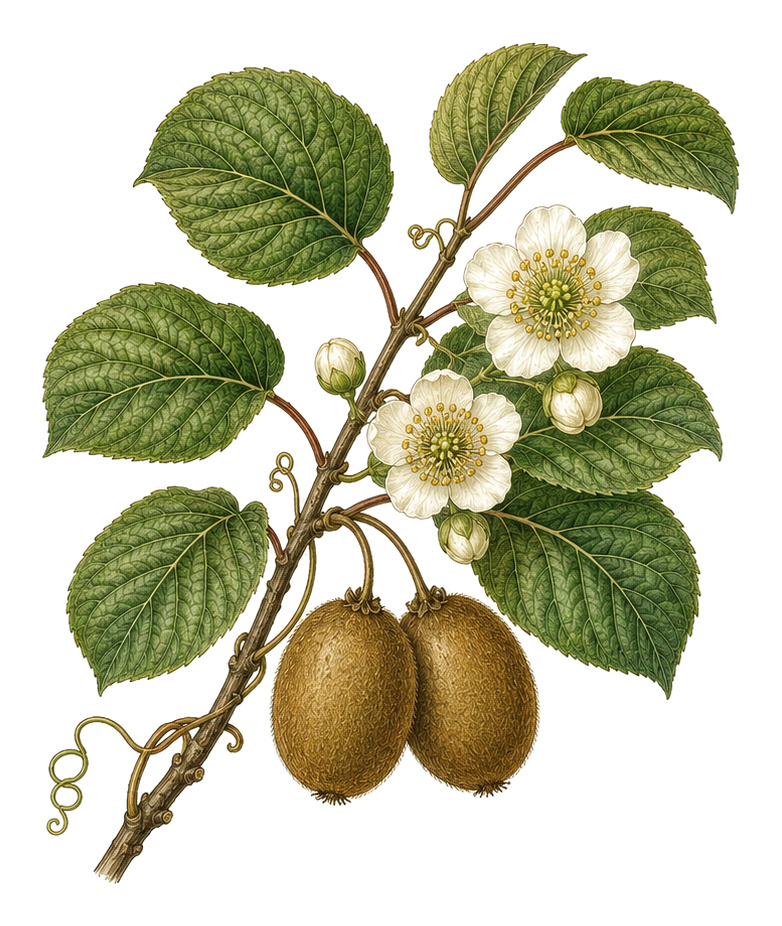
Additional plant images

Health
Pests, Diseases
Plant health
Diagnosis help
Kiwi Diagnosis help
Pest groups
Disease groups
Prevention
Diagnosis
Look for changes in leaves (discoloration, spots, deformities), shoots (wilting, dieback), and fruits (rot, spots). Also check the root area for waterlogging and the stem for injuries or pests. Accurate diagnosis often requires a combination of symptoms, environmental conditions, and the exclusion of other causes.
Cultural prevention
Monitoring
First response
Diagnostic rules
Leaves wilt and yellow, plant dies, even though soil is moist.
Possible causes: Root rot, Waterlogging
- Check soil for waterlogging
- check site drainage
- inspect roots for rot
Young leaves are yellow, but veins remain green.
Possible causes: Iron deficiency
- Measure soil pH
- check for calcareous soil
Few or no fruits despite flowering.
Possible causes: Poor fruit set
- Check for presence of male and female plants
- observe pollinator activity during flowering
- check weather conditions during flowering
Young shoots and flowers are blackened and dead, especially after cold nights in spring.
Possible causes: Frost damage
- Check weather history (late frosts)
- check site for frost protection
FAQ
Why isn't my kiwi plant bearing fruit?
The most common reasons are lack of pollination (often due to a missing male plant for dioecious varieties), plants being too young, frost damage to flowers, or insufficient pruning.
How do I prune a kiwi correctly?
Kiwi requires winter pruning (February/March) for shaping and removing old fruiting wood, and summer pruning (June/July) to thin out fruiting shoots and control growth. Fruits are borne on one-year-old wood.
Is my kiwi plant winter hardy?
Winter hardiness varies by variety. Many varieties require winter protection in colder regions (below -10°C), especially in the first few years. Young shoots and flowers are frost-sensitive.
When and how do I harvest kiwi?
The main harvest season is October to November, before the first hard frost. Fruits are ready to harvest when the seeds are black and they detach easily from the stem. Kiwis ripen after harvesting.
Can I grow kiwi in a container?
Yes, but only dwarf or less vigorous varieties are suitable. They require a very large container (at least 50-80 liters) with good drainage, regular watering and fertilization, and sturdy support.
Is Kiwi safe for Dog?
Kiwi is classified as selected parts only for Dog. Risk: unknown. Urgency: observe. Kiwi fruit flesh is suitable for dogs in small amounts as an occasional treat. The skin, leaves, and stems contain actinidin and oxalates that can cause gastrointestinal upset. If large amounts or non-edible parts are consumed, consult a veterinarian.
Is Kiwi safe for Cat?
Kiwi is classified as selected parts only for Cat. Risk: unknown. Urgency: observe. Kiwi fruit flesh is safe for cats in small amounts as an occasional treat. Skin, leaves, and stems contain actinidin and oxalates that can cause gastrointestinal irritation. Due to high sugar content, feeding should be limited. Consult a veterinarian if large amounts or toxic parts are ingested.
Is Kiwi safe for Rabbit?
Kiwi is classified as selected parts only for Rabbit. Risk: unknown. Urgency: observe. Kiwi fruit flesh is suitable for rabbits in small amounts as an occasional treat. Skin, leaves, and stems contain actinidin and oxalates that may cause gastrointestinal upset if consumed in excess. Due to high sugar content, kiwi should only be fed occasionally.
Is Kiwi safe for Guinea pig?
Kiwi is classified as selected parts only for Guinea pig. Risk: unknown. Urgency: observe. Kiwi fruit flesh is suitable for guinea pigs in small amounts as an occasional treat. Skin and leaves should be avoided due to potential irritation and mild toxicity. Due to high water and sugar content, feed only occasionally.
Guides
Related guides
Guide
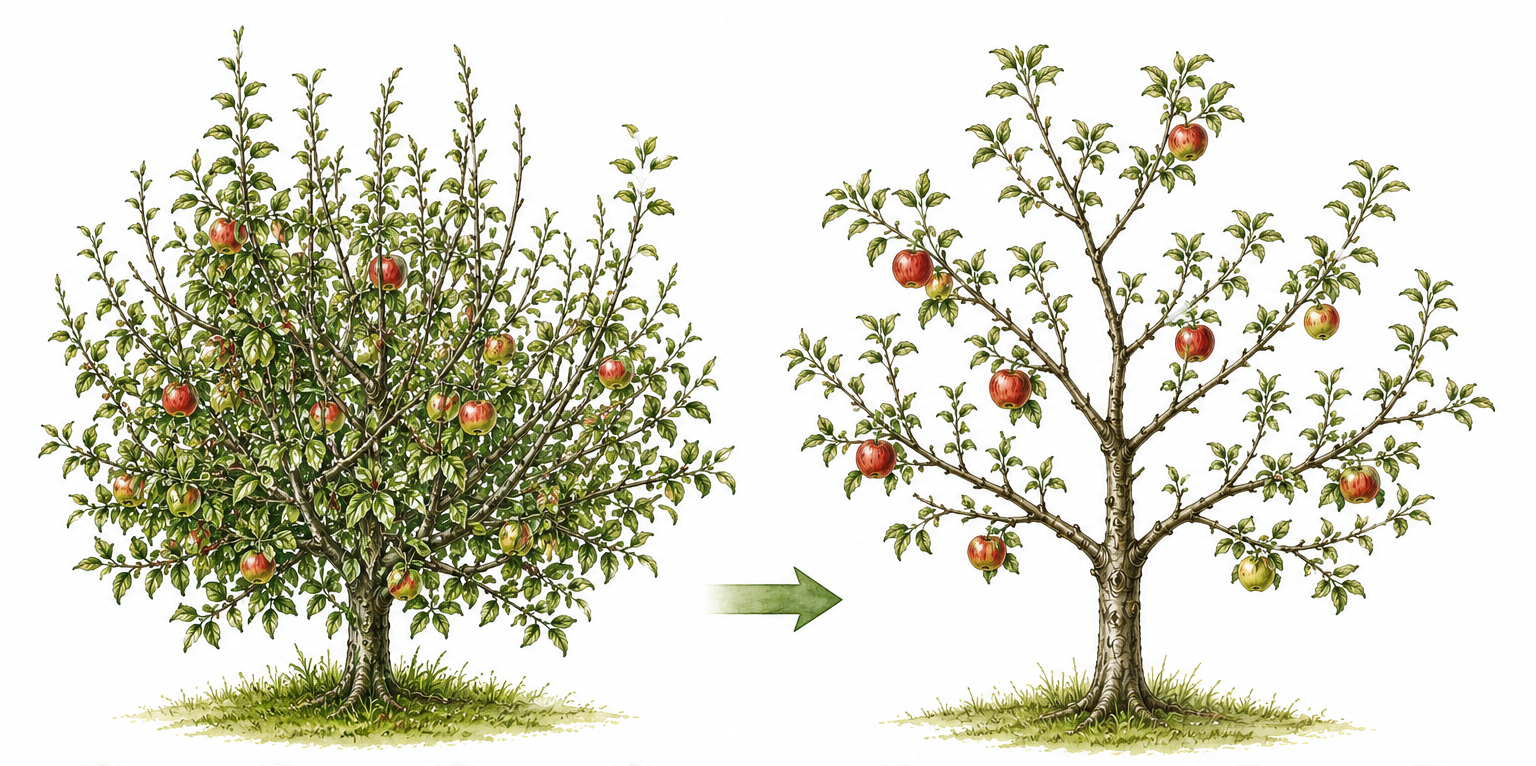
Pruning Apple Trees: Timing, Techniques, and Common Mistakes
Learn when and how to prune apple trees properly, including winter pruning, summer pruning, training cuts, and maintenance tips for healthy, productive…
Guide
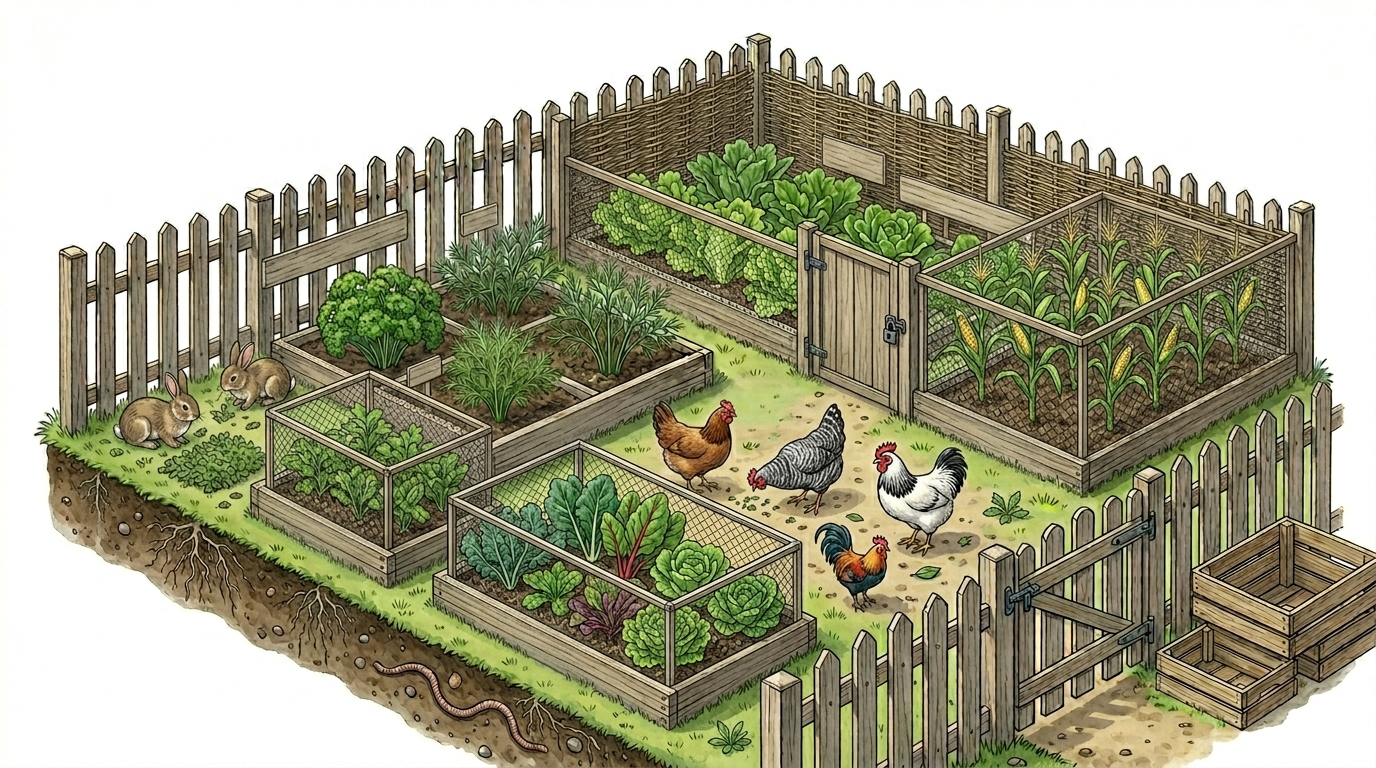
Chickens in the Garden: Safe Plants and Zones
Learn how to design a chicken-friendly garden with suitable plants, protected beds, and well-planned activity areas.
Guide
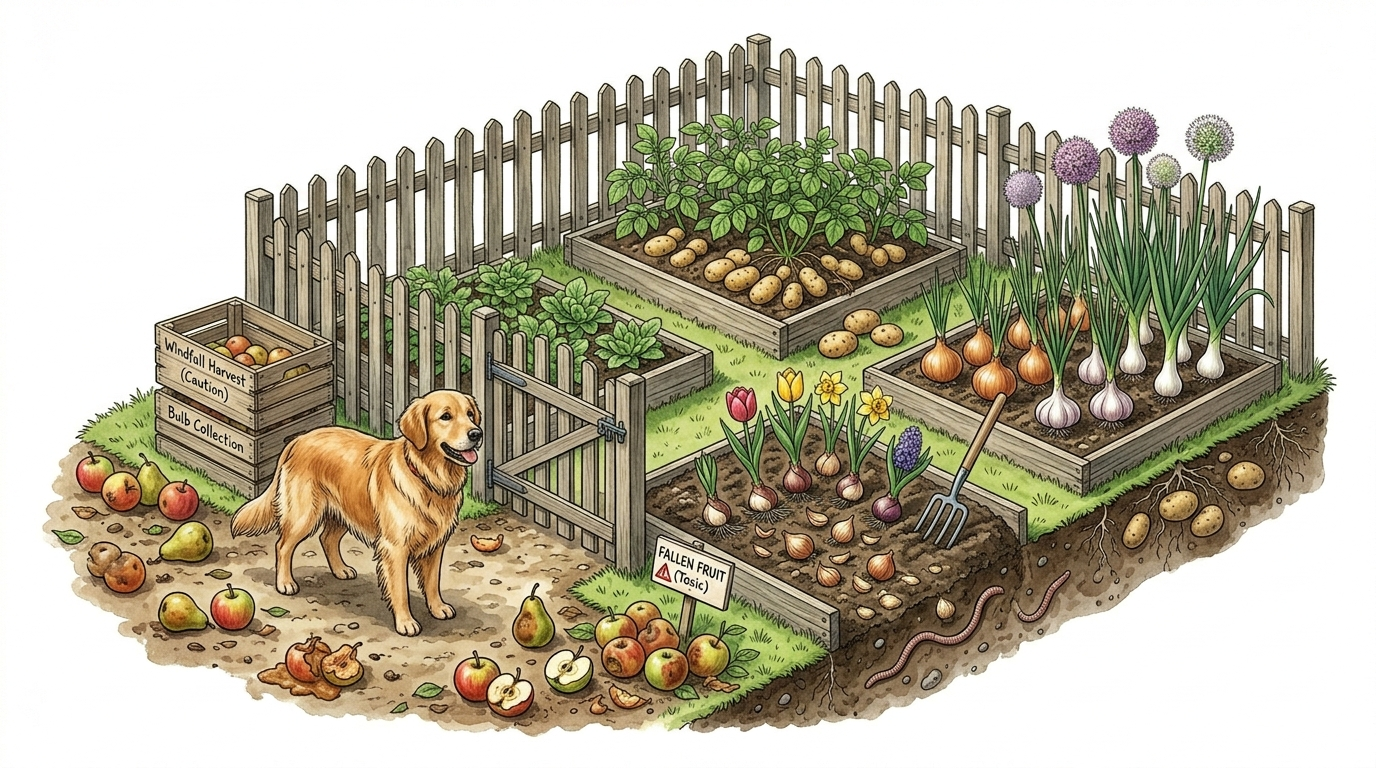
Dogs in the Garden: Windfall Fruit and Risks
Keep your garden dog-safe by managing windfall fruit, seeds, stored crops, and potentially problematic plant parts.
Guide
Horse Pastures and Garden Plants: Safety Checks
Learn how to identify risks near horse pastures, fences, turnout areas, fruit trees, and garden planting zones.
Internal links
Related plants
Grapevine
Both are vigorous climbing plants that require sturdy support and regular pruning.
Both are vigorous climbing plants that require support and regular pruning.
Rubus
Often trained on trellises, perennial, similar care requirements regarding pruning and location.
Both are perennial fruit types often trained on trellises and have similar care requirements.
Grey Mold
Grey mold affects many fruit types, especially in high humidity and poor ventilation.
Root Rot
Root rot is a common problem for plants sensitive to waterlogging.
Cabbage
Both plants are heavy feeders and require abundant nutrient supply.
Pumpkin
Similar high nutrient requirements for good growth and fruit development.
Cucumber
Both plants require a consistent and high water supply, especially during fruit development.
Zucchini
High water requirement for good fruit formation.
Apple
Both fruits are eaten fresh, used in desserts, and for preservation (jam, juice).
Sources
Public sources
- Wikidata entity
Wikidata · 2026-05-13
- GBIF species match
GBIF · 2026-05-13
- Deutschsprachige Wikipedia: Actinidia chinensis
Wikipedia · 2026-05-13
- English Wikipedia: Actinidia chinensis
Wikipedia · 2026-05-13