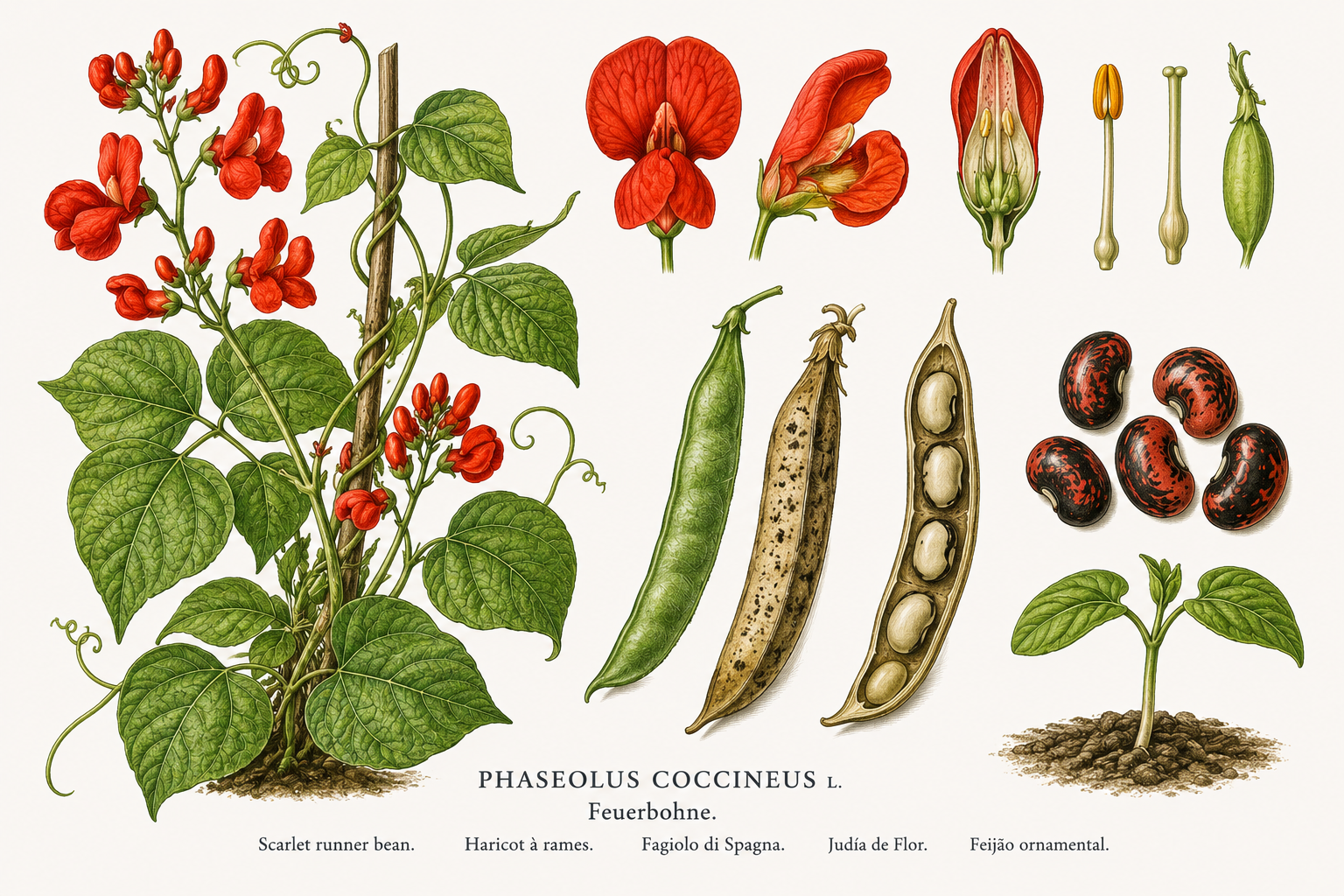
Quick profile
Key data
Suitable growing locations:
Indoor & direct sowing
Runner bean: Sowing and germination
Pre-culture in pots possible from mid-April to advance harvest.
Direct sowing only after the last frost (mid-May) when soil is warm.
Planting & site
Runner bean: Planting and spacing
Plant out hardened seedlings from mid-May onwards.
Site & practical notes
Title: Water conservation through mulching, Content: Since runner beans require lots of water, a thick layer of mulch helps retain soil moisture.
Temperature & frost
Runner bean: Temperature and site
Water & nutrients
Runner bean: Water, nutrients and care
Container & growth
Runner bean: Container, support and growth
Year plan
Runner bean Calendar
Recurring tasks
Relevant now
June
- No additional single task
Next up
July
- No additional single task
Monthly tasks
Single tasks from monthly data; repeated seasonal windows are shown in the overview above.
January
Quiet month
February
Quiet month
March
Quiet month
April
No additional single task
May
Direct sowing
- Direct sowing outdoorsSow beans in clusters of 4-6 seeds around the poles.
June
No additional single task
August
No additional single task
September
No additional single task
October
No additional single task
November
Quiet month
December
Quiet month
Flowering & pollination
Runner bean Flowering & pollination
Flowering period
June to September
Flower color
Scarlet red, occasionally white or bicolor
Self-fertility
partial
Pollinator needed
yes
Overview
Predominantly cross-pollinated by insects, especially bumblebees and bees.
Notes
Bumblebees often 'rob' nectar by piercing the flower base. High temperatures above 30°C can inhibit successful pollination.
Pruning & care
Runner bean Pruning & care
Pruning type
climbing_support_optimization
Pruning timing
Growth control Pinch out tips once they reach the top of the support to direct energy into the pods.
Remove
Preserve
Avoid
Tools and hygiene
Use clean hands or sharp shears to prevent the spread of viruses.
Companion guide
Runner bean Companion guide
Use & storage
Runner bean Use & storage
Pick green pods continuously; dry beans only at full maturity in autumn.
Storage
Legume (fresh or dried)
Storage life
Dried 1-2 years; frozen approx. 12 months.
Primary use
Edible bean (vegetable or pulse)
Harvest
Pick green pods continuously; dry beans only at full maturity in autumn.
Processing
After harvest
Process fresh pods quickly; clean dry beans and store in a cool place.
Edibility & safety
Runner bean Edibility & safety
For people
In brief: which parts are edible, which parts remain risky, and whether raw consumption makes sense.
Safety notes
Contains the toxin phytohaemagglutinin (lectin) when raw, which is destroyed by boiling for at least 10 minutes.
Animal safety
For animals, the specific plant part matters here: some parts may be suitable, while others should be avoided. At least one critical rating is listed for 11 animal types.
Each row shows which parts are more suitable and which parts are critical.
Companion animals
 Dog
Dogcooked pods (young), cooked seeds (mature and immature)
raw seeds and pods
cooked pods (young), cooked seeds (mature and immature)
raw seeds and pods
raw consumption, insufficient cooking, access to immature or mature seeds
vomiting, diarrhea, abdominal pain
contact a vet if symptoms appear
['Runner bean (Phaseolus coccineus) contains the lectin phytohaemagglutinin (phyasin) when raw, which can cause gastrointestinal irritation in dogs. Sufficient cooking (at least 10 minutes boiling) destroys the toxin, making cooked pods and seeds suitable as an occasional treat. Flowers are also edible and non-toxic. Raw seeds and pods are toxic and should be avoided.']
Open animal page Cat
CatPods (young, cooked), Seeds (mature and immature, cooked)
Raw seeds and pods, Raw flowers
Pods (young, cooked), Seeds (mature and immature, cooked)
Raw seeds and pods, Raw flowers
Raw consumption, Insufficient cooking
Vomiting, Diarrhea, Abdominal pain
contact a vet if symptoms appear
['Cooked pods, seeds, and flowers are suitable for cats in small amounts as an occasional treat. Raw plant parts contain the toxin phytohaemagglutinin, which causes gastrointestinal irritation. If raw parts are ingested, seek veterinary advice.']
Open animal page Rabbit
cooked pods (young), cooked seeds (mature and immature)
raw seeds, raw pods
cooked pods (young), cooked seeds (mature and immature)
raw seeds, raw pods
Raw consumption of seeds or pods, Insufficient cooking
diarrhea, abdominal pain
contact a vet if symptoms appear
Cooked parts of runner bean can be given to rabbits occasionally as a treat, but raw seeds and pods are toxic due to the lectin phytohaemagglutinin and can cause gastrointestinal distress. Only feed cooked parts and offer in small amounts.
Open animal page Guinea pig
cooked pods (young), cooked seeds (mature and immature)
raw seeds, raw pods
cooked pods (young), cooked seeds (mature and immature)
raw seeds, raw pods
raw consumption, insufficient cooking
vomiting, diarrhea, abdominal pain
contact a vet if symptoms appear
Cooked parts are suitable for guinea pigs in small amounts as an occasional treat. Raw material contains the lectin phytohaemagglutinin, which causes gastrointestinal irritation. No specific studies on guinea pigs found, but conservative classification based on known toxicity in other mammals and similar digestive physiology. Root tubers only when cooked and very rarely due to high starch content.
Open animal page Hamster
cooked pods (young), cooked seeds (mature and immature)
raw seeds, raw pods
cooked pods (young), cooked seeds (mature and immature)
raw seeds, raw pods
Raw consumption of seeds or pods, Insufficient cooking
vomiting, diarrhea, abdominal pain
contact a vet if symptoms appear
['Cooked parts of runner bean can be given to hamsters occasionally as a treat. Raw material contains the lectin phytohaemagglutinin, causing gastrointestinal irritation. Only feed cooked pods, seeds, and flowers. Not a regular staple food.']
Open animal page Budgie
No suitable parts listed
No risk parts listed
No suitable parts listed
No risk parts listed
unknown
['Only cooked young pods in small amounts as an occasional treat are suitable. Raw parts contain the toxin phytohaemagglutinin and are hazardous. Flowers and mature seeds should be avoided due to lack of data for budgies.']
Open animal pageFarm animals
 Horse
HorseYoung pods (cooked), Mature seeds (cooked)
Raw seeds and pods, Raw root tubers
Young pods (cooked), Mature seeds (cooked)
Raw seeds and pods, Raw root tubers
Raw consumption, Insufficient cooking, Overconsumption of cooked parts
Vomiting, Diarrhea, Abdominal pain
contact a vet if symptoms appear
Cooked pods, seeds, and flowers are tolerable in moderation. Raw parts contain the toxic phytohaemagglutinin and can cause gastrointestinal distress. No indications of severe poisoning in horses with normal feeding of cooked parts.
Open animal page Chicken
No suitable parts listed
No risk parts listed
No suitable parts listed
No risk parts listed
unknown
['Runner bean contains the lectin phytohaemagglutinin (phyasin) when raw, which can cause gastrointestinal upset in chickens. Cooked parts are suitable in moderation as a treat or supplemental feed. Raw seeds and pods are toxic and should be avoided.']
Open animal page Duck
DuckYoung pods (cooked), Mature seeds (cooked)
Raw seeds and pods, Raw root tubers
Young pods (cooked), Mature seeds (cooked)
Raw seeds and pods, Raw root tubers
Raw consumption of seeds or pods, Insufficient cooking
Vomiting, Diarrhea, Abdominal pain
contact a vet if symptoms appear
Cooked pods and seeds are suitable for ducks in moderation; raw parts contain the toxic phytohaemagglutinin and should be avoided. Flowers are considered safe. If ingestion of raw plant material is suspected, a veterinarian should be consulted.
Open animal page Goose
Goosecooked pods (young), cooked seeds (mature and immature)
raw seeds, raw pods
cooked pods (young), cooked seeds (mature and immature)
raw seeds, raw pods
Raw consumption of seeds or pods, Insufficient cooking
vomiting, diarrhea, abdominal pain
contact a vet if symptoms appear
['Geese can tolerate cooked pods, seeds, and flowers of runner bean in small amounts. Raw material contains the lectin phytohaemagglutinin, which causes gastrointestinal irritation. When feeding, use only cooked parts and avoid raw seeds or pods.']
Open animal page Sheep
Sheepcooked pods (young), cooked seeds (mature and immature)
raw seeds, raw pods
cooked pods (young), cooked seeds (mature and immature)
raw seeds, raw pods
unknown
No direct species-specific source was found for sheep. This is a cautious inference from the goats profile and the known plant-part risks.
Open animal page Goat
Goatcooked pods (young), cooked seeds (mature and immature)
raw seeds, raw pods
cooked pods (young), cooked seeds (mature and immature)
raw seeds, raw pods
 Cattle
Pods (young, cooked), Seeds (mature, cooked)
Raw seeds and pods
Pods (young, cooked), Seeds (mature, cooked)
Raw seeds and pods
Raw consumption, Insufficient cooking, Overconsumption of cooked beans
Vomiting, Diarrhea, Abdominal pain
observe
['Cooked runner bean (pods, seeds, flowers) is tolerable for cattle in moderation and provides protein and energy. Raw parts contain the lectin phytohaemagglutinin, which can cause gastroenteritis in cattle. Overfeeding cooked beans may lead to bloat and digestive upset.']
Open animal page Pig
Pigcooked pods (young), cooked seeds (mature and immature)
raw seeds, raw pods
cooked pods (young), cooked seeds (mature and immature)
raw seeds, raw pods
raw consumption of seeds or pods, insufficient cooking
vomiting, diarrhea, abdominal pain
contact a vet if symptoms appear
['Runner bean contains the toxin phytohaemagglutinin when raw, which is destroyed by cooking. Cooked parts are suitable for pigs in moderation, raw parts are toxic.']
Open animal pageThese guidelines are for general information only and do not replace veterinary diagnosis. If critical plant parts were ingested or the animal shows unusual behaviour or symptoms, seek veterinary advice.
Max risk
unknown
Highest status
do not feed
Urgency
contact a vet if symptoms appear
Saving seed
Runner bean Saving seed
Seed viability
3 - 5 years
Isolation
500 - 1000 meters (due to cross-pollination)
Practical tips
Runner bean Practical tips
Common beginner mistakes
Sowing too early in cold soil leads to rot.
Success pattern
Ample watering during flowering ensures a high yield.
High-impact tips
Stabilize young plants by hilling up.
Grower observations
Unlike common beans, runner bean cotyledons remain underground during germination.
Health
Pests, Diseases
Pests
Black bean aphid
- Curled leaves
- Sticky honeydew
Spider mites
- Fine webs
- Yellowish speckling on leaves
Diseases
Bean anthracnose
Sunken, dark spots on pods and stems
Deficiencies
Nitrogen deficiency
- Yellowing of older leaves
- Stunted growth
Plant health
Diagnosis help
Runner bean Diagnosis help
Pest groups
Disease groups
Prevention
Diagnosis
Most common cause of crop failure in runner beans is water stress during flowering.
Cultural prevention
Monitoring
Weekly check for aphid colonies
First response
Potassium soap solution for initial aphid infestation
Diagnostic rules
Yellow leaves with green veins
Possible causes: Manganese deficiency, Magnesium deficiency
- Check soil pH
FAQ
Are runner beans toxic when raw?
Yes, they contain phytohaemagglutinin. They must be boiled for at least 10 minutes to be safe to eat.
Is Runner bean safe for Dog?
Runner bean is classified as moderation only for Dog. Risk: unknown. Urgency: contact a vet if symptoms appear. ['Runner bean (Phaseolus coccineus) contains the lectin phytohaemagglutinin (phyasin) when raw, which can cause gastrointestinal irritation in dogs. Sufficient cooking (at least 10 minutes boiling) destroys the toxin, making cooked pods and seeds suitable as an occasional treat. Flowers are also edible and non-toxic. Raw seeds and pods are toxic and should be avoided.']
Is Runner bean safe for Cat?
Runner bean is classified as do not feed for Cat. Risk: unknown. Urgency: contact a vet if symptoms appear. ['Cooked pods, seeds, and flowers are suitable for cats in small amounts as an occasional treat. Raw plant parts contain the toxin phytohaemagglutinin, which causes gastrointestinal irritation. If raw parts are ingested, seek veterinary advice.']
Is Runner bean safe for Rabbit?
Runner bean is classified as do not feed for Rabbit. Risk: unknown. Urgency: contact a vet if symptoms appear. Cooked parts of runner bean can be given to rabbits occasionally as a treat, but raw seeds and pods are toxic due to the lectin phytohaemagglutinin and can cause gastrointestinal distress. Only feed cooked parts and offer in small amounts.
Is Runner bean safe for Guinea pig?
Runner bean is classified as do not feed for Guinea pig. Risk: unknown. Urgency: contact a vet if symptoms appear. Cooked parts are suitable for guinea pigs in small amounts as an occasional treat. Raw material contains the lectin phytohaemagglutinin, which causes gastrointestinal irritation. No specific studies on guinea pigs found, but conservative classification based on known toxicity in other mammals and similar digestive physiology. Root tubers only when cooked and very rarely due to high starch content.
Guides
Related guides
Guide
Horse Pastures and Garden Plants: Safety Checks
Learn how to identify risks near horse pastures, fences, turnout areas, fruit trees, and garden planting zones.
Guide
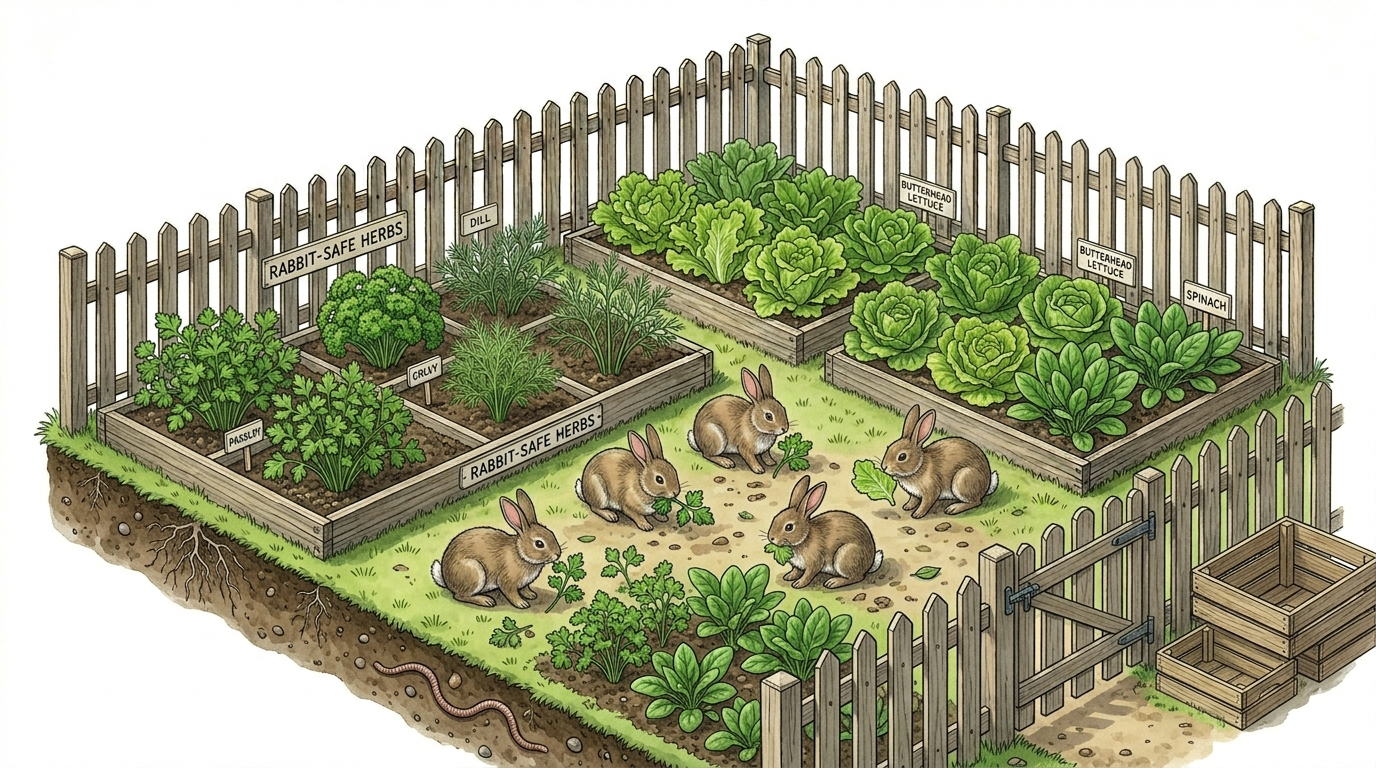
Rabbits in the Garden: Herbs and Vegetables
Learn how to choose suitable herbs and vegetables for rabbits, grow feeding plants, and plan a rabbit-friendly garden.
Guide
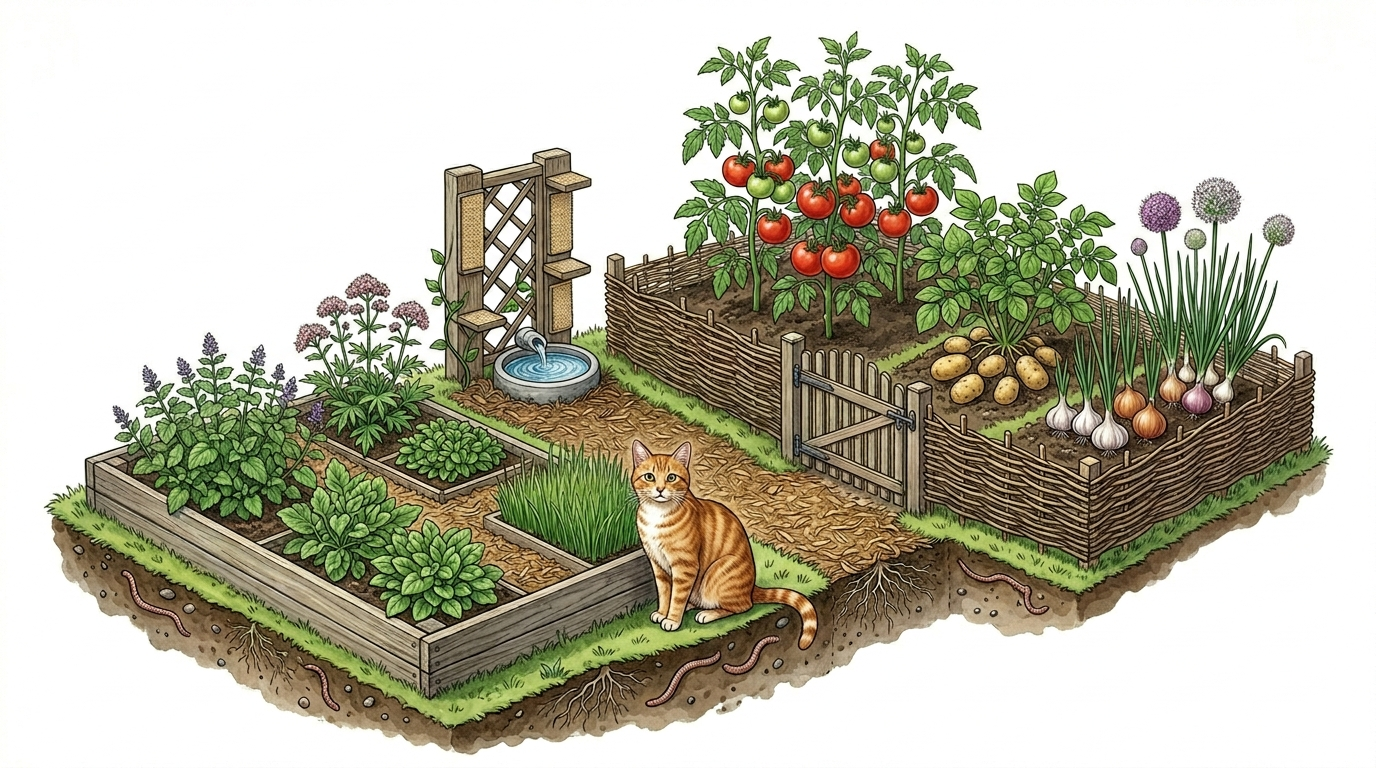
Toxic Garden Plants for Cats: Safer Planning
Learn which garden plants can be risky for cats, how to plan safer beds, and what to do if a cat eats a toxic plant.
Guide
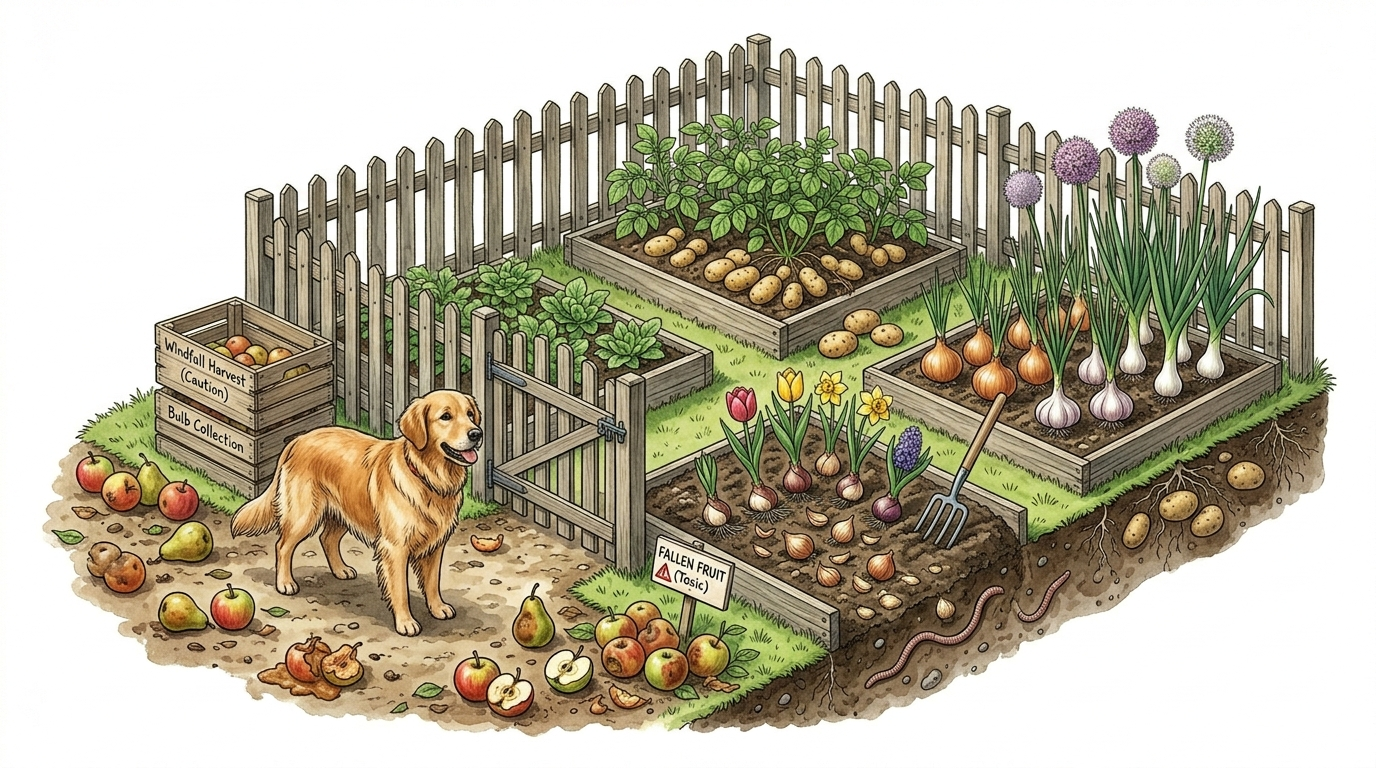
Dogs in the Garden: Windfall Fruit and Risks
Keep your garden dog-safe by managing windfall fruit, seeds, stored crops, and potentially problematic plant parts.
Internal links
Related plants
Broad bean
Bush bean
Bean rust
Sweet corn
Cucumber
Lima bean
Both are regionally referred to as 'butter beans'.
Pea
Both belong to the Fabaceae family.
Morning glory
Also a fast-growing screen with beautiful blossoms.
Common bean
Similar habit, but runner beans have larger seeds and usually red flowers.
Sources
Public sources
- Wikidata entity
Wikidata · 2026-05-13
- GBIF species match
GBIF · 2026-05-13
- Deutschsprachige Wikipedia: Feuerbohne
Wikipedia · 2026-05-13
- English Wikipedia: Phaseolus coccineus
Wikipedia · 2026-05-13