Plant Profile
Common FigFicus carica
Warmth-loving fruit tree with decorative foliage and sweet fruits.
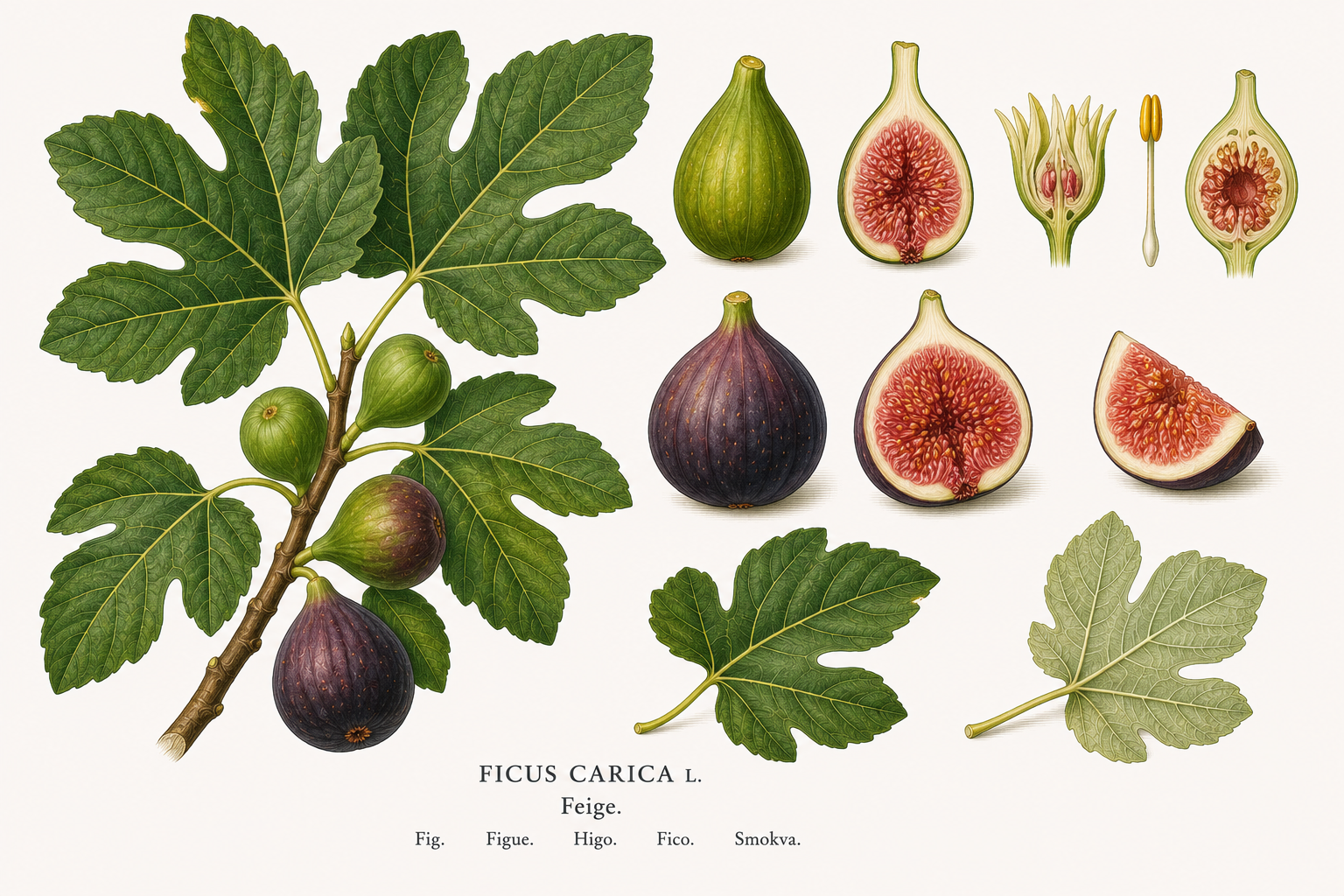
Quick profile
Key data
Suitable growing locations:
Indoor & direct sowing
Common Fig: Sowing and germination
Propagation usually via cuttings or layering; sowing is uncommon for home gardeners.
Direct outdoor sowing not recommended in Central Europe.
Planting & site
Common Fig: Planting and spacing
Best planting time is spring to allow the plant to establish roots before winter.
Site & practical notes
Care tips: Avoid waterlogging, especially in containers., Wear gloves when pruning due to the milky sap.
Temperature & frost
Common Fig: Temperature and site
Water & nutrients
Common Fig: Water, nutrients and care
Container & growth
Common Fig: Container, support and growth
Year plan
Common Fig Calendar
Recurring tasks
Relevant now
June
- No additional single task
Next up
July
- No additional single task
Monthly tasks
Single tasks from monthly data; repeated seasonal windows are shown in the overview above.
January
Quiet month
February
Quiet month
March
No additional single task
April
No additional single task
May
No additional single task
June
Quiet month
August
No additional single task
September
No additional single task
October
No additional single task
November
No additional single task
December
Quiet month
Flowering & pollination
Common Fig Flowering & pollination
Flowering period
May to June
Flower type
Syconium (inflorescence inside the false fruit)
Self-fertility
self-fertile
Pollinator needed
no
Overview
In Central Europe, almost exclusively parthenocarpic (self-fruiting) varieties are cultivated, which do not require pollination.
Notes
The natural pollinator (fig wasp) is not native north of the Alps; therefore, only self-fertile varieties are relevant for gardening.
Pruning & care
Common Fig Pruning & care
Pruning type
thinning_and_heading
Pruning timing
Main pruning and thinning Performed shortly before bud break during frost-free weather.
Pinching (tipping) Shorten shoot tips after the 5th-6th leaf to encourage fruit development.
Remove
Preserve
Avoid
Tools and hygiene
Use sharp, clean shears to avoid crushing and infections from the sticky milky sap. Clean tools after use.
Companion guide
Common Fig Companion guide
Use & storage
Common Fig Use & storage
Main harvest from August depending on variety and location; fruits must ripen on the tree.
Storage
Short-term storage (fresh consumption)
Storage life
Fresh fruits keep for only 1-2 days in the refrigerator.
Primary use
Fresh consumption or drying
Harvest
Main harvest from August depending on variety and location; fruits must ripen on the tree.
Processing
After harvest
Pick carefully to avoid bruising. Milky sap at the stem can cause skin irritation.
Edibility & safety
Common Fig Edibility & safety
For people
In brief: which parts are edible, which parts remain risky, and whether raw consumption makes sense.
Safety notes
The milky sap contains furocoumarins, which can cause phototoxic skin reactions upon contact combined with sunlight.
Animal safety
This plant is not simply safe or unsafe for animals. 14 animal types have restrictions, so quantity, access, and plant part matter.
Each row shows which parts are more suitable and which parts are critical.
Companion animals
 Dog
Dogripe fruit (syconium) including skin
leaves, unripe shoots, milky sap
ripe fruit (syconium) including skin
leaves, unripe shoots, milky sap
consumption of large amounts of unripe fruit or leaves, contact with phototoxic milky sap during sun exposure
gastrointestinal upset (vomiting, diarrhea) with excessive consumption, skin irritation from contact with milky sap and sunlight
observe
The ripe fruit of the common fig is suitable for dogs in small amounts as a treat. Leaves, unripe plant parts, and the milky sap contain furocoumarins and ficin, which can cause gastrointestinal upset or phototoxic skin reactions. The skin of ripe fruit is edible and tolerated. Excessive consumption may lead to vomiting and diarrhea. Skin contact with sap in sunlight can cause skin irritation. Contact a vet if…
Open animal page Cat
Catripe fruit (syconium)
No risk parts listed
ripe fruit (syconium)
No risk parts listed
 Rabbit
ripe fruit (syconium including skin)
No risk parts listed
ripe fruit (syconium including skin)
No risk parts listed
 Guinea pig
ripe fruit (syconium)
No risk parts listed
ripe fruit (syconium)
No risk parts listed
 Hamster
ripe fruit (syconium)
No risk parts listed
ripe fruit (syconium)
No risk parts listed
 Budgie
ripe fruit (syconium)
No risk parts listed
ripe fruit (syconium)
No risk parts listed
Farm animals
 Horse
Horseripe fruit (syconium)
No risk parts listed
ripe fruit (syconium)
No risk parts listed
 Chicken
ripe fruit (syconium) including skin
leaves, unripe shoots, milky sap
ripe fruit (syconium) including skin
leaves, unripe shoots, milky sap
consumption of large quantities of unripe fruit or leaves, contact with phototoxic milky sap
gastrointestinal upset from excessive ingestion of leaves or unripe parts, skin irritation from contact with milky sap and sunlight
observe
Ripe fig fruits are safe for chickens in moderation and can be given as a treat. Leaves, unripe shoots, and milky sap contain furocoumarins and ficin, which can cause gastrointestinal upset or skin irritation. Skin of ripe fruit is edible and safe. If hazardous parts are ingested, observe and consult a veterinarian if symptoms persist.
Open animal page Duck
Duckripe fruit (syconium including skin)
No risk parts listed
ripe fruit (syconium including skin)
No risk parts listed
 Goose
Gooseripe fruit (syconium including skin)
No risk parts listed
ripe fruit (syconium including skin)
No risk parts listed
 Sheep
Sheepripe syconium (fruit flesh including skin)
No risk parts listed
ripe syconium (fruit flesh including skin)
No risk parts listed
 Goat
Goatripe fruits (syconium including skin)
No risk parts listed
ripe fruits (syconium including skin)
No risk parts listed
consumption of unripe fruits or leaves, contact with phototoxic milky sap
gastrointestinal upset from excessive consumption of unripe parts, skin irritation from contact with milky sap and sunlight
observe
Ripe fig fruits are generally safe for goats and enjoyed as a treat. Overconsumption may cause diarrhea. Leaves and unripe plant parts contain furocoumarins and the enzyme ficin, which can cause gastrointestinal irritation or phototoxic skin reactions. Access to leaves and unripe shoots should be restricted.
Open animal page Cattle
ripe fruit (syconium)
No risk parts listed
ripe fruit (syconium)
No risk parts listed
 Pig
Pigripe fruit (syconium)
No risk parts listed
ripe fruit (syconium)
No risk parts listed
These guidelines are for general information only and do not replace veterinary diagnosis. If critical plant parts were ingested or the animal shows unusual behaviour or symptoms, seek veterinary advice.
Max risk
unknown
Highest status
selected parts only
Urgency
unknown
Saving seed
Common Fig Saving seed
Method
Uncommon in Central Europe, as seeds are usually infertile (due to lack of pollination).
Practical tips
Common Fig Practical tips
Common beginner mistakes
Too much nitrogen fertilizer leads to giant leaves but no fruit.
Success pattern
A sheltered spot in front of a south-facing wall is half the battle.
High-impact tips
Mulching keeps moisture consistent and prevents splitting fruit.
Grower observations
In harsh climates, figs often freeze back to the ground but sprout vigorously again in spring.
Health
Pests, Diseases
Plant health
Diagnosis help
Common Fig Diagnosis help
Pest groups
Disease groups
Prevention
Diagnosis
For leaf changes, check water balance and nutrients first before assuming pests.
Cultural prevention
Monitoring
Weekly inspection of leaf undersides starting in June
First response
Diagnostic rules
Yellow spots/mosaic pattern on leaves
Possible causes: Feigenmosaikvirus
- Check for vectors (fig mite)
- Rule out nutrient deficiency
FAQ
Why is my fig tree dropping fruit in summer?
This is usually due to drought stress or sudden cold snaps. Ensure a consistent water supply.
Is Common Fig safe for Dog?
Common Fig is classified as selected parts only for Dog. Risk: unknown. Urgency: observe. The ripe fruit of the common fig is suitable for dogs in small amounts as a treat. Leaves, unripe plant parts, and the milky sap contain furocoumarins and ficin, which can cause gastrointestinal upset or phototoxic skin reactions. The skin of ripe fruit is edible and tolerated. Excessive consumption may lead to vomiting and diarrhea. Skin contact with sap in sunlight can cause skin irritation. Contact a vet if…
Is Common Fig safe for Cat?
Common Fig is classified as selected parts only for Cat. Risk: unknown. Urgency: unknown. No reliable species-specific assessment is available.
Is Common Fig safe for Rabbit?
Common Fig is classified as selected parts only for Rabbit. Risk: unknown. Urgency: unknown. No reliable species-specific assessment is available.
Is Common Fig safe for Guinea pig?
Common Fig is classified as selected parts only for Guinea pig. Risk: unknown. Urgency: unknown. No reliable species-specific assessment is available.
Guides
Related guides

Guide
Growing Figs Outdoors: Varieties, Pots and Winter Care
Grow figs outdoors or in containers with the right variety, warm site, steady care, and practical winter protection.
Guide
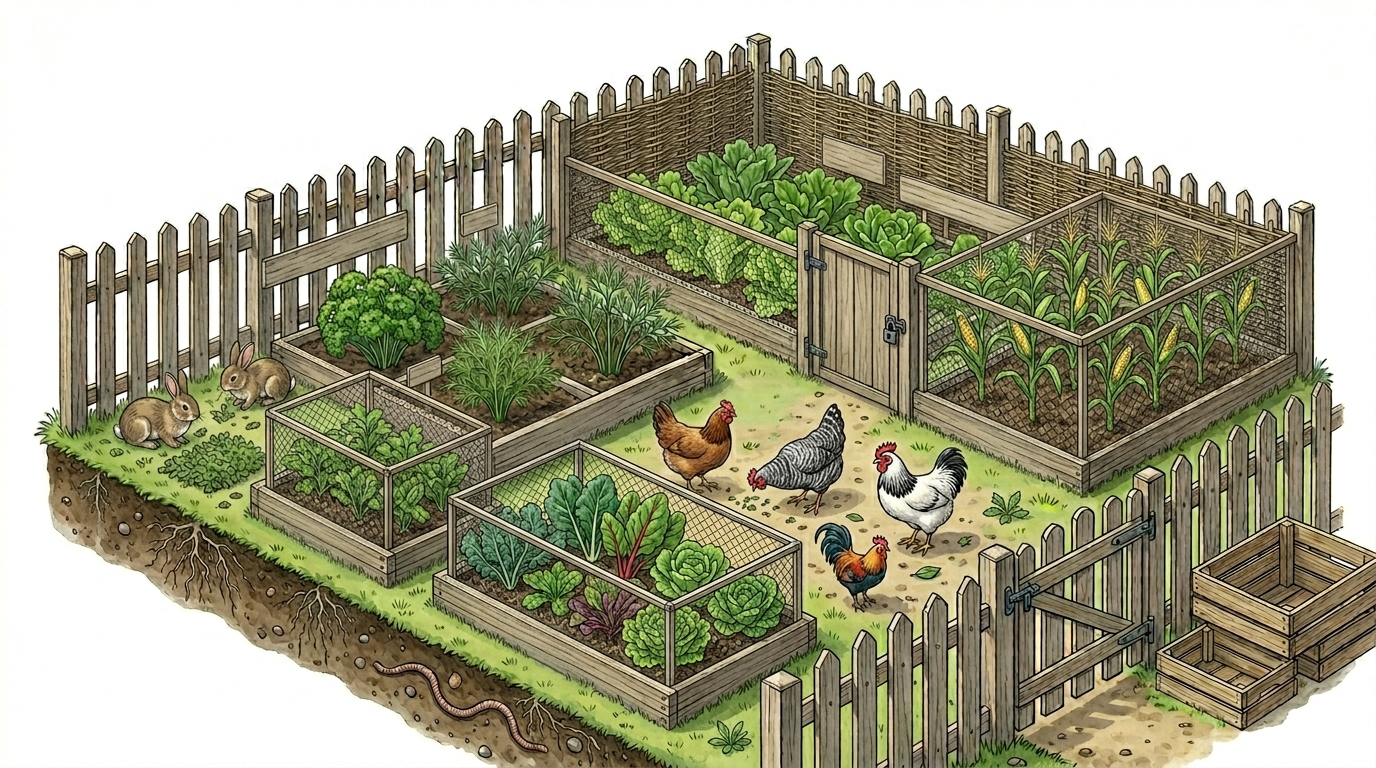
Chickens in the Garden: Safe Plants and Zones
Learn how to design a chicken-friendly garden with suitable plants, protected beds, and well-planned activity areas.
Guide
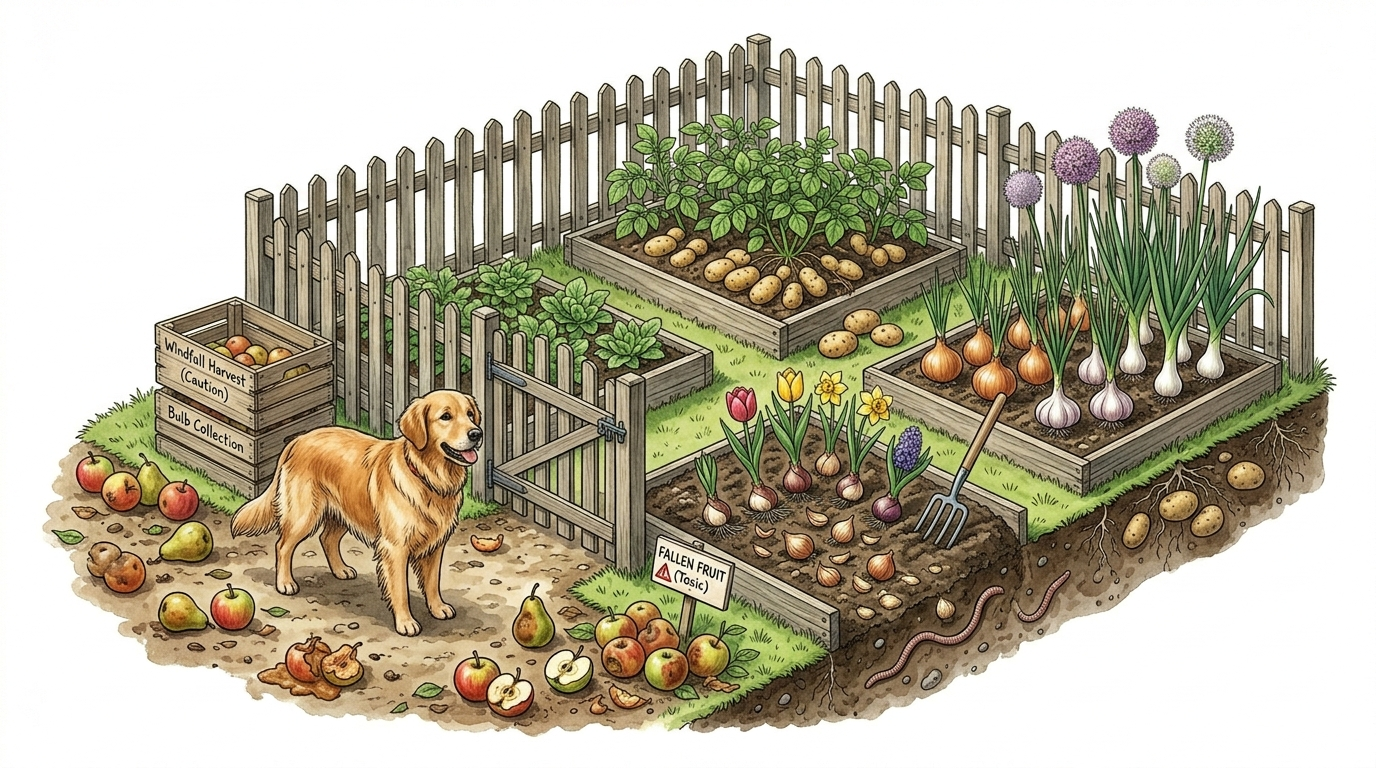
Dogs in the Garden: Windfall Fruit and Risks
Keep your garden dog-safe by managing windfall fruit, seeds, stored crops, and potentially problematic plant parts.
Guide
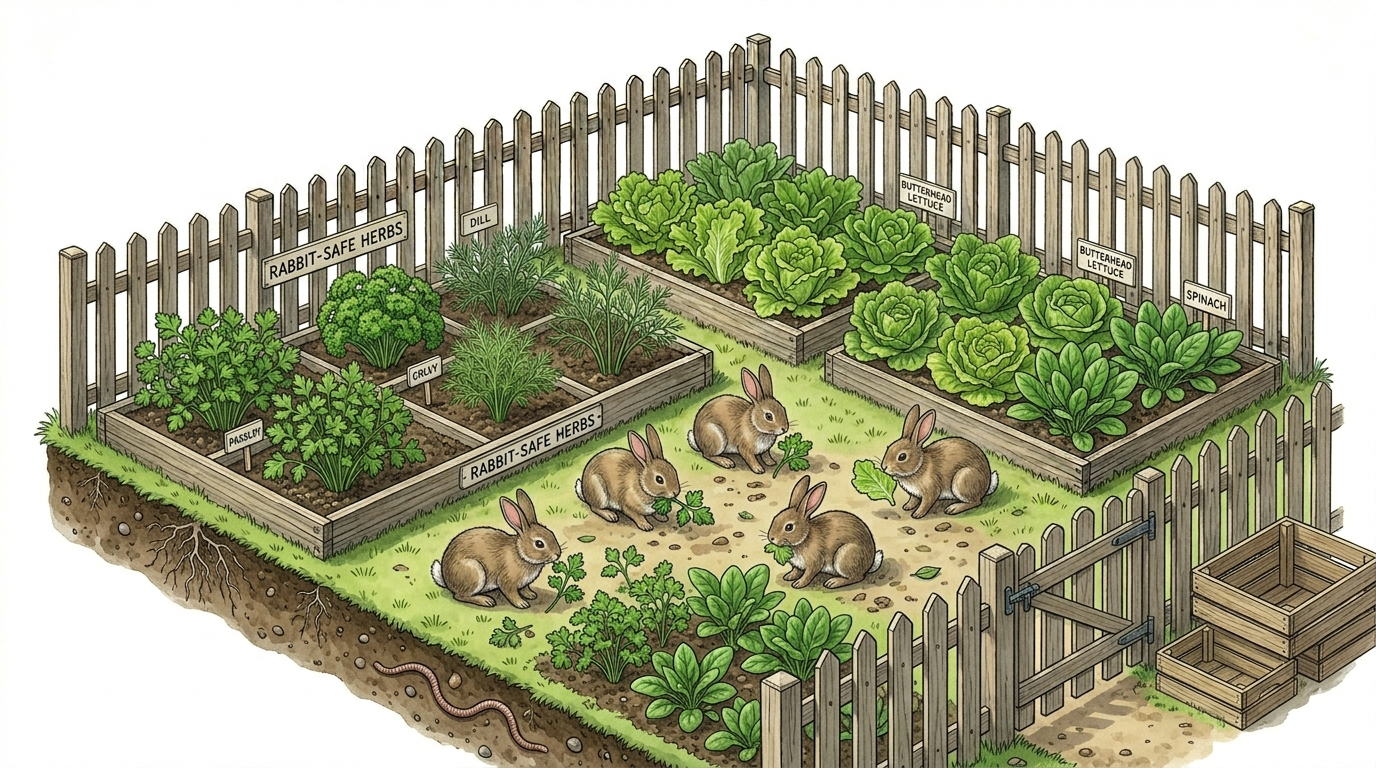
Rabbits in the Garden: Herbs and Vegetables
Learn how to choose suitable herbs and vegetables for rabbits, grow feeding plants, and plan a rabbit-friendly garden.
Internal links
Related plants
Mulberry
Grapevine
Black Mulberry
Belongs to the same family (Moraceae) and has similar site requirements.
Prickly Pear
Similar name but botanically unrelated (Cactus vs. Mulberry family).
Sources
Public sources
- Wikidata entity
Wikidata · 2026-05-13
- GBIF species match
GBIF · 2026-05-13
- Deutschsprachige Wikipedia: Echte Feige
Wikipedia · 2026-05-13
- English Wikipedia: Fig
Wikipedia · 2026-05-13