Plant Profile
cardoonCynara cardunculus
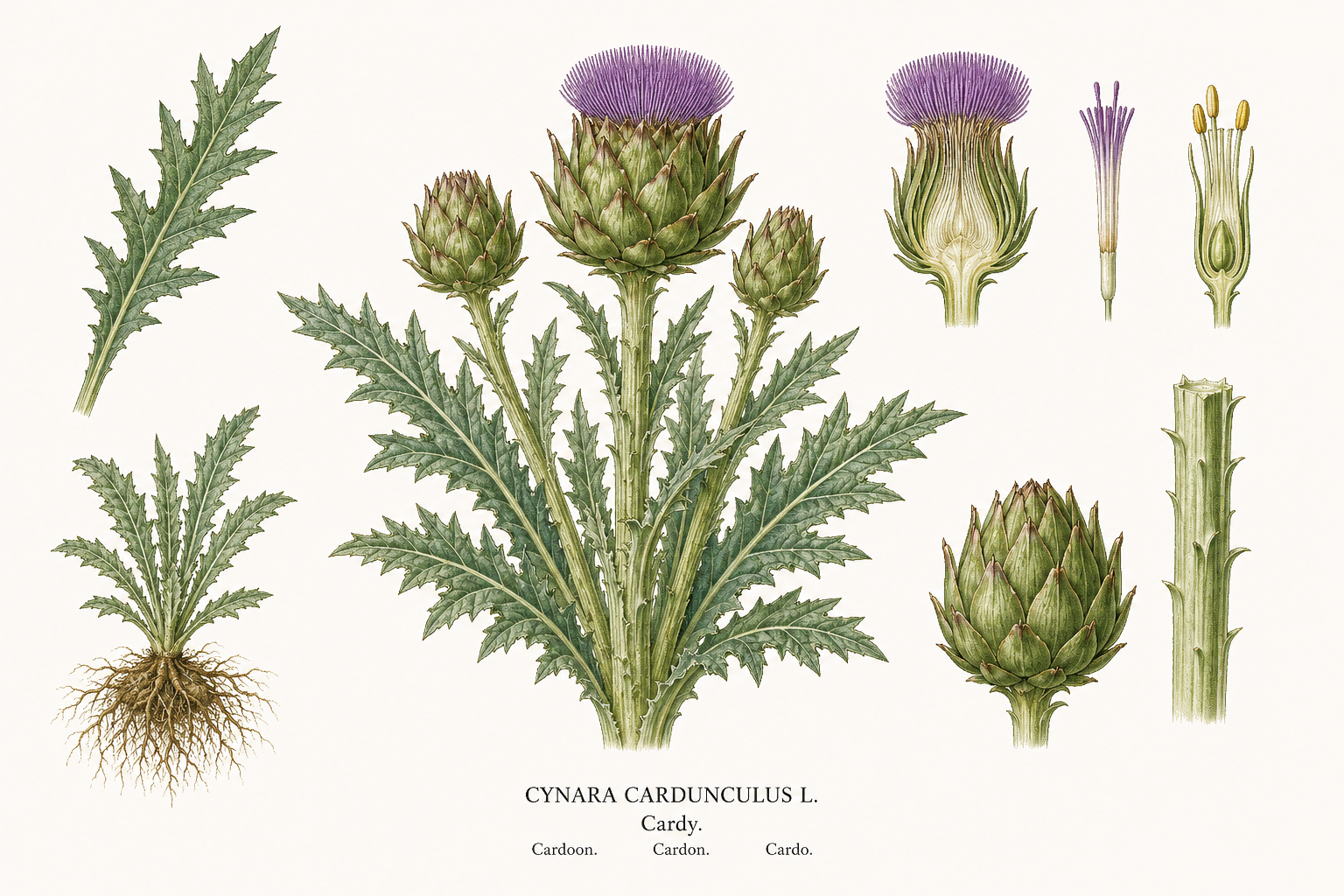
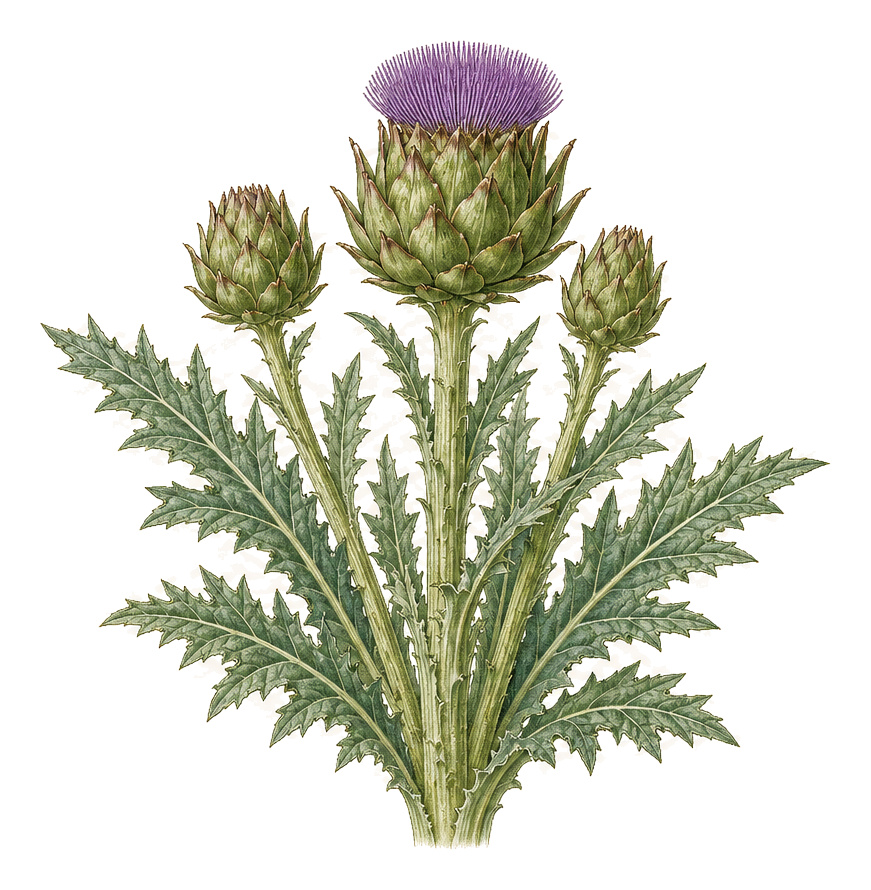
Cardoon (Cynara cardunculus) is a thistle-like plant cultivated for its fleshy leaf stalks and young leaves. It is closely related to the artichoke and prepared similarly, but is often more bitter. The plant is perennial, grows very large, and requires ample space. It prefers sunny locations and nutrient-rich soil. Harvesting takes place from summer into autumn.
Quick profile
Key data
Good neighbors
LegumesAromatic herbs (e.g., rosemary, thyme)Radish
Avoid
SunflowersPotatoesAlliums (onions, garlic)
Indoor & direct sowing
cardoon: Sowing and germination
Start sowing indoors from early March.
Direct sow outdoors from mid-April to mid-May, after the last frost.
Planting & site
cardoon: Planting and spacing
Plant out young plants from mid-May to mid-June, after the last frost.
Site & practical notes
Cardoon is an imposing plant that requires plenty of space. Ensure good nutrient supply and consistent watering to obtain tender and flavorful leaf stalks. Young leaves and stalks are the most tender. The thorns on the leaf margins can be bothersome during harvesting and processing.
Temperature & frost
cardoon: Temperature and site
Water & nutrients
cardoon: Water, nutrients and care
Container & growth
cardoon: Container, support and growth
Year plan
cardoon Calendar
The harvest season extends from mid-summer into autumn, with young shoots and leaves being continuously harvested.
Relevant now
June
- Continue cultivation, remove weedsWachstumsphase: Hoe and weed regularly to avoid competition from weeds.
Next up
July
- Start harvestingPflanzen sind erntereif: Harvest young, tender leaf stalks and leaves. Do not cut too deeply to encourage regrowth.
Monthly tasks
Single tasks from monthly data; repeated seasonal windows are shown in the overview above.
January
Quiet month
February
Growing
- Start indoor pre-cultureKeine Spätfröste mehr: Sow in seed compost, press gently, and keep moist. Seeds germinate at approx. 18-20°C.
March
Growing
- Continue indoor pre-cultureKeine Spätfröste mehr: Prick out seedlings once they are strong enough. Place in a bright, cooler location.
April
Direct sowing
- Direct sowing outdoorsBoden erwärmt, keine Spätfröste: Sow seeds in well-prepared soil, row spacing approx. 50-70 cm.
May
Planting
- Plant out young plantsNach den letzten Frösten: From mid-May, when soil temperature is stable. Spacing approx. 50-70 cm.
June
Growing
- Continue cultivation, remove weedsWachstumsphase: Hoe and weed regularly to avoid competition from weeds.
August
Harvest
- Harvest and water regularlyWachstums- und Erntephase: Water well during dry periods to maintain the quality of the leaf stalks.
September
Plant health
- Continue harvesting, watch for pestsErntezeit: Watch for aphids and slugs. Remove damaged leaves.
October
Harvest
- Final harvest before the first frostVor dem ersten Frost: Harvest all remaining edible parts before the plant freezes.
November
Quiet month
December
Quiet month
Flowering & pollination
cardoon Flowering & pollination
Self-fertility
cross-pollinator
Pollinator needed
yes
Overview
Cardoon is a cross-pollinating plant, pollinated by insects. The flowers are attractive to bees and other pollinators.
Notes
For good seed set, the presence of pollinators such as bees and bumblebees is important. Single plants may be poorly pollinated.
Companion guide
cardoon Companion guide
Good neighbors
LegumesAromatic herbs (e.g., rosemary, thyme)Radish
Avoid
SunflowersPotatoesAlliums (onions, garlic)
Use & storage
cardoon Use & storage
Harvest from July to October. Young leaves and leaf stalks can be harvested continuously.
Storage
Cool and dark, protect from drying out.
Storage life
Freshly harvested leaf stalks last a few days in the refrigerator (approx. 3-5). Significantly longer when frozen or pickled.
Harvest
Harvest from July to October. Young leaves and leaf stalks can be harvested continuously.
Processing
After harvest
Harvested parts should be stored cool and processed quickly. Leaf stalks can be blanched or peeled.
Edibility & safety
cardoon Edibility & safety
For people
In brief: which parts are edible, which parts remain risky, and whether raw consumption makes sense.
Safety notes
No known toxic properties when edible parts are consumed as intended.
Animal safety
Most animal profiles are moderate here: 12 animal types are rated suitable or mostly suitable, with quantity and plant part still relevant.
Each row shows which parts are more suitable and which parts are critical.
Companion animals
 Dog
DogYoung leaf stalks, Young leaves
Older, fibrous leaf stalks, Thorns on leaves and stalks
Young leaf stalks, Young leaves
Older, fibrous leaf stalks, Thorns on leaves and stalks
Excessive consumption, Consumption of older, fibrous leaf stalks, Consumption of thorns
Gastrointestinal upset (with excessive consumption or consumption of older, fibrous parts)
observe
Young, tender parts are safe in moderation; older, fibrous parts and thorns should be avoided.
Open animal page Cat
CatYoung leaf stalks, Young leaves
Older, fibrous leaf stalks, Thorns on leaves and stalks
Young leaf stalks, Young leaves
Older, fibrous leaf stalks, Thorns on leaves and stalks
Excessive consumption, Consumption of older, fibrous leaf stalks, Consumption of thorns
Gastrointestinal upset (with excessive consumption or consumption of older, fibrous parts)
observe
Young, tender parts are safe in moderation; older, fibrous parts and thorns should be avoided.
Open animal page Rabbit
Young leaf stalks, Young leaves
Older, fibrous leaf stalks, Thorns on leaves and stalks
Young leaf stalks, Young leaves
Older, fibrous leaf stalks, Thorns on leaves and stalks
Excessive consumption, Consumption of older, fibrous leaf stalks, Consumption of thorns
Gastrointestinal upset (with excessive consumption or consumption of older, fibrous parts)
observe
Cardy (Cynara cardunculus) is traditionally used as a food source. Young, tender parts are suitable for rabbits as an occasional treat or supplement, provided they are not consumed in large quantities. Older, fibrous parts and thorns should be avoided. There are no known toxic compounds, but excessive consumption can lead to digestive issues.
Open animal page Guinea pig
Young leaf stalks, Young leaves
Older, fibrous leaf stalks, Thorns on leaves and stalks
Young leaf stalks, Young leaves
Older, fibrous leaf stalks, Thorns on leaves and stalks
Excessive consumption, Consumption of older, fibrous leaf stalks, Consumption of thorns
Gastrointestinal upset (with excessive consumption or consumption of older, fibrous parts)
observe
No direct species-specific source was found for guinea pigs. This is a cautious inference from the rabbits profile and the known plant-part risks.
Open animal page Hamster
Young leaf stalks, Young leaves
Older, fibrous leaf stalks, Thorns on leaves and stalks
Young leaf stalks, Young leaves
Older, fibrous leaf stalks, Thorns on leaves and stalks
Excessive consumption, Consumption of older, fibrous leaf stalks, Consumption of thorns
Gastrointestinal upset (with excessive consumption or consumption of older, fibrous parts)
observe
No direct species-specific source was found for hamsters. This is a cautious inference from the rabbits profile and the known plant-part risks.
Open animal page Budgie
No suitable parts listed
No risk parts listed
No suitable parts listed
No risk parts listed
unknown
No reliable species-specific assessment for budgies is available. This is not species-specific information for budgies.
Open animal pageFarm animals
 Horse
HorseNo suitable parts listed
No risk parts listed
No suitable parts listed
No risk parts listed
unknown
No specific information found regarding the toxicity of Cynara cardunculus for horses. There are no indications of toxic compounds or symptoms, but general gastrointestinal upset can occur from consuming plant material.
Open animal page Chicken
Young leaves, Young leaf stalks
No risk parts listed
Young leaves, Young leaf stalks
No risk parts listed
Excessive consumption of older, fibrous parts.
usually no action needed
The edible parts of Cardy (Cynara cardunculus) are generally safe for chickens when fed in moderation. Older, fibrous parts or thorns should be avoided. There are no known toxic properties when edible parts are consumed as intended.
Open animal page Duck
DuckYoung leaves, Young leaf stalks
No risk parts listed
Young leaves, Young leaf stalks
No risk parts listed
Excessive consumption of older, fibrous parts.
usually no action needed
No direct species-specific source was found for ducks. This is a cautious inference from the geese profile and the known plant-part risks.
Open animal page Goose
GooseYoung leaves, Young leaf stalks
No risk parts listed
Young leaves, Young leaf stalks
No risk parts listed
Excessive consumption of older, fibrous parts.
usually no action needed
No direct species-specific source was found for geese. This is a cautious inference from the chickens profile and the known plant-part risks.
Open animal page Sheep
SheepYoung leaf stalks, Young leaves
Older, fibrous leaf stalks, Thorns on leaves and stalks
Young leaf stalks, Young leaves
Older, fibrous leaf stalks, Thorns on leaves and stalks
Overconsumption, Consumption of older, fibrous plant parts, Presence of thorns
Gastrointestinal upset if excessive amounts are consumed or if older, fibrous parts are eaten.
observe
No direct species-specific source was found for sheep. This is a cautious inference from the goats profile and the known plant-part risks.
Open animal page Goat
GoatYoung leaf stalks, Young leaves
Older, fibrous leaf stalks, Thorns on leaves and stalks
Young leaf stalks, Young leaves
Older, fibrous leaf stalks, Thorns on leaves and stalks
Overconsumption, Consumption of older, fibrous plant parts, Presence of thorns
Gastrointestinal upset if excessive amounts are consumed or if older, fibrous parts are eaten.
observe
Cynara cardunculus (cardoon) is traditionally used as a forage plant. The young, tender parts are suitable for goats as part of their diet. Older, fibrous parts and thorns should be avoided. There are no known toxic compounds.
Open animal page Cattle
Young leaf stalks, Young leaves
Older, fibrous leaf stalks, Thorns on leaves and stalks
Young leaf stalks, Young leaves
Older, fibrous leaf stalks, Thorns on leaves and stalks
Overconsumption, Consumption of older, fibrous plant parts, Presence of thorns
Gastrointestinal upset if excessive amounts are consumed or if older, fibrous parts are eaten.
observe
No direct species-specific source was found for cattle. This is a cautious inference from the sheep profile and the known plant-part risks.
Open animal page Pig
PigYoung leaf stalks, Young leaves
Older, fibrous leaf stalks, Thorns on leaves and stalks
Young leaf stalks, Young leaves
Older, fibrous leaf stalks, Thorns on leaves and stalks
Excessive consumption, Consumption of older, fibrous leaf stalks, Consumption of thorns
Gastrointestinal upset (with excessive consumption or consumption of older, fibrous parts)
observe
No reliable species-specific assessment is available. Cardoon (Cynara cardunculus) is cultivated as an edible plant for human consumption, with young leaf stalks and buds being used. There are no known toxic properties when edible parts are consumed as intended. There is no specific toxicity data for pigs, but as the plant is generally considered edible and contains no known toxins, low toxicity is likely, although…
Open animal pageThis does not replace veterinary advice. If risky plant parts were ingested or symptoms appear, contact a veterinarian.
Max risk
unknown
Highest status
not established
Urgency
unknown
Saving seed
cardoon Saving seed
Seed viability
2 - 3 years
Practical tips
cardoon Practical tips
Common beginner mistakes
Success pattern
High-impact tips
Grower observations
Plant Profile
Additional plant images
Health
Pests, Diseases
Pests
Aphids
Small, sucking insects that colonize young shoots and leaves, feeding on plant sap. Cause yellowing and deformation of leaves.
Slugs
Mollusks that feed on young leaves and shoots, leaving characteristic slime trails. Can cause significant feeding damage.
Thistle Caterpillar (larvae)
The larvae of the thistle tortrix moth feed on leaves and flowers, often within webs. They can cause significant damage.
Diseases
Powdery mildew
Fungal disease that appears as a white, powdery coating on leaves, stems, and flowers. Reduces photosynthesis and plant vitality.
Root Rot
Fungal disease caused by waterlogging and poor drainage. Leads to root death and the collapse of the entire plant.
Deficiencies
Magnesium deficiency
Lack of magnesium leads to chlorosis between the leaf veins, especially in older leaves.
Calcium Deficiency
Calcium deficiency affects overall plant health and resilience.
Plant health
Diagnosis help
cardoon Diagnosis help
Pest groups
Disease groups
Fungal diseases (mildew, root rot)
Prevention
Diagnosis
Symptoms such as leaf discoloration, wilting, or feeding marks indicate specific problems. Close observation of the plant and environmental conditions is essential for diagnosis.
Cultural prevention
Monitoring
First response
Diagnostic rules
White, powdery coating on leaves
Possible causes: Powdery mildew
- Check humidity
- Assess site ventilation
Wilting leaves despite moist soil
Possible causes: Root rot
- Check roots (color, consistency)
- Assess soil condition (waterlogging?)
FAQ
What is cardoon and how is it used?
Cardoon is a thistle-like plant cultivated for its fleshy leaf stalks and young leaves. These are cooked, stewed, or served as a vegetable side dish. The flower buds can be prepared similarly to artichokes but are often more bitter.
How do I grow cardoon?
Cardoon requires a sunny location with deep, nutrient-rich soil. Sow in spring, either indoors or directly outdoors. Ensure adequate spacing (50-70 cm) as the plants grow large. Regular watering and fertilization are important.
When is cardoon harvested?
Harvest typically begins in July and lasts until October. Young, tender leaf stalks and leaves can be harvested continuously. Flower buds are harvested before they fully open.
Is cardoon hardy?
Cardoon is a perennial plant that can overwinter in mild climates. However, in colder regions, winter protection is advisable, or the plant is grown as an annual. The above-ground parts die back in winter, but the roots can survive.
Is cardoon safe for Dog?
cardoon is classified as moderation only for Dog. Risk: unknown. Urgency: observe. Young, tender parts are safe in moderation; older, fibrous parts and thorns should be avoided.
Is cardoon safe for Cat?
cardoon is classified as moderation only for Cat. Risk: unknown. Urgency: observe. Young, tender parts are safe in moderation; older, fibrous parts and thorns should be avoided.
Is cardoon safe for Rabbit?
cardoon is classified as moderation only for Rabbit. Risk: unknown. Urgency: observe. Cardy (Cynara cardunculus) is traditionally used as a food source. Young, tender parts are suitable for rabbits as an occasional treat or supplement, provided they are not consumed in large quantities. Older, fibrous parts and thorns should be avoided. There are no known toxic compounds, but excessive consumption can lead to digestive issues.
Is cardoon safe for Guinea pig?
cardoon is classified as moderation only for Guinea pig. Risk: unknown. Urgency: observe. No direct species-specific source was found for guinea pigs. This is a cautious inference from the rabbits profile and the known plant-part risks.
Guides
Related guides
Guide
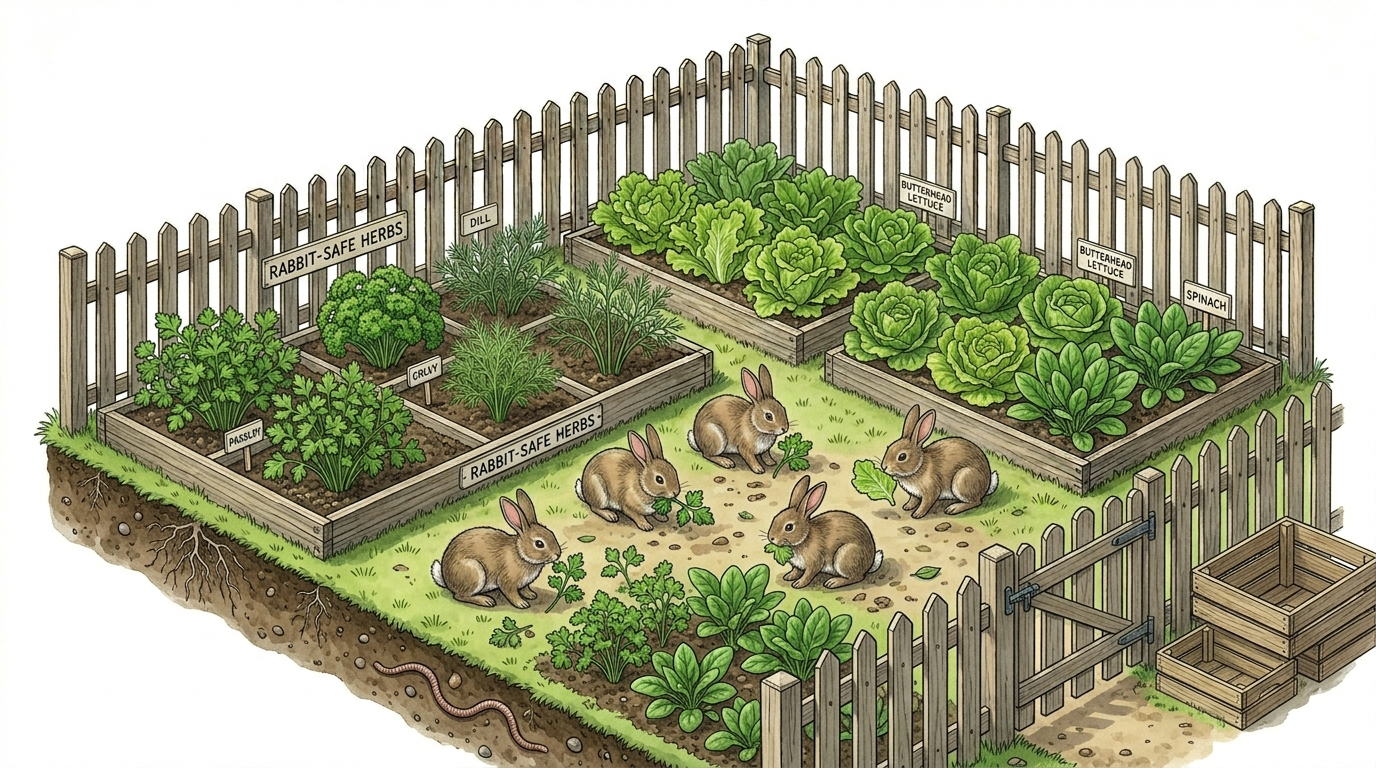
Rabbits in the Garden: Herbs and Vegetables
Learn how to choose suitable herbs and vegetables for rabbits, grow feeding plants, and plan a rabbit-friendly garden.
Guide
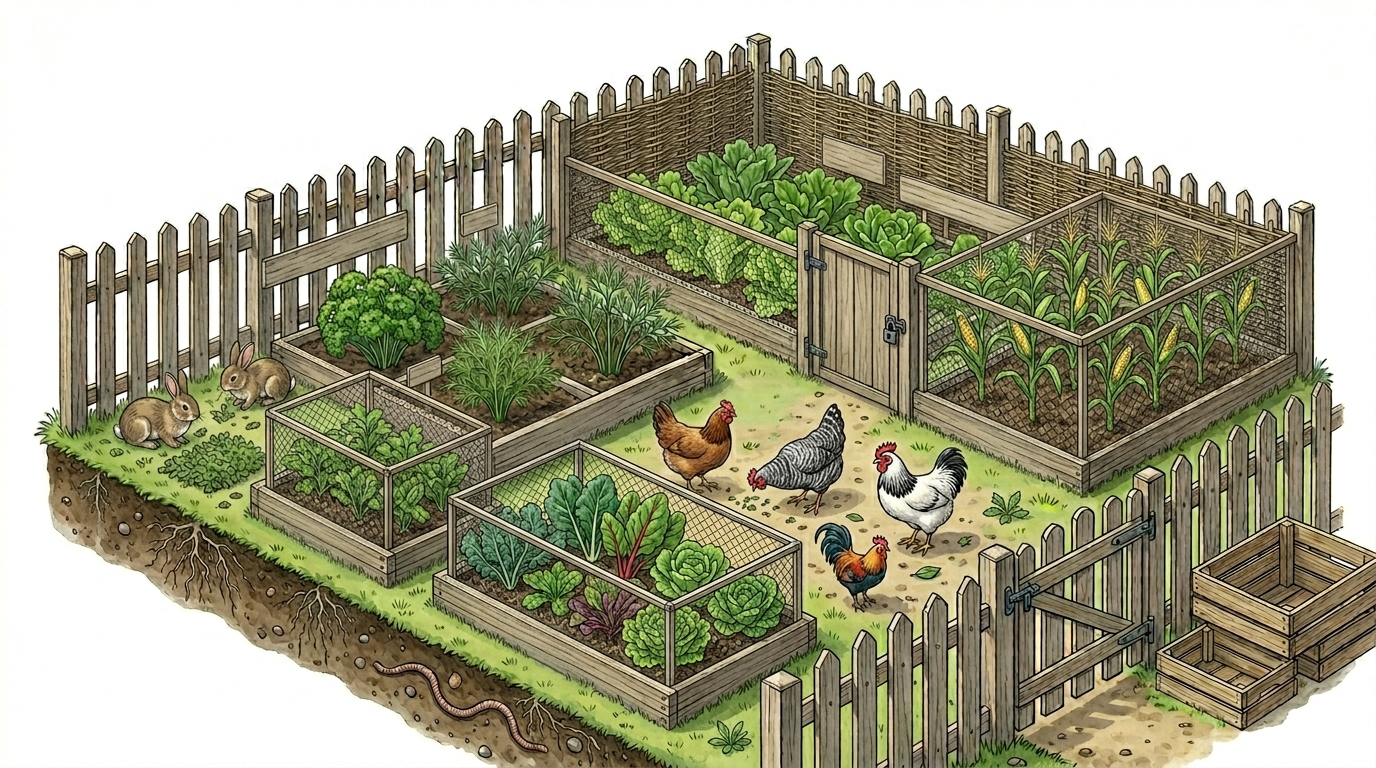
Chickens in the Garden: Safe Plants and Zones
Learn how to design a chicken-friendly garden with suitable plants, protected beds, and well-planned activity areas.
Guide
Horse Pastures and Garden Plants: Safety Checks
Learn how to identify risks near horse pastures, fences, turnout areas, fruit trees, and garden planting zones.
Guide
Dogs in the Garden: Windfall Fruit and Risks
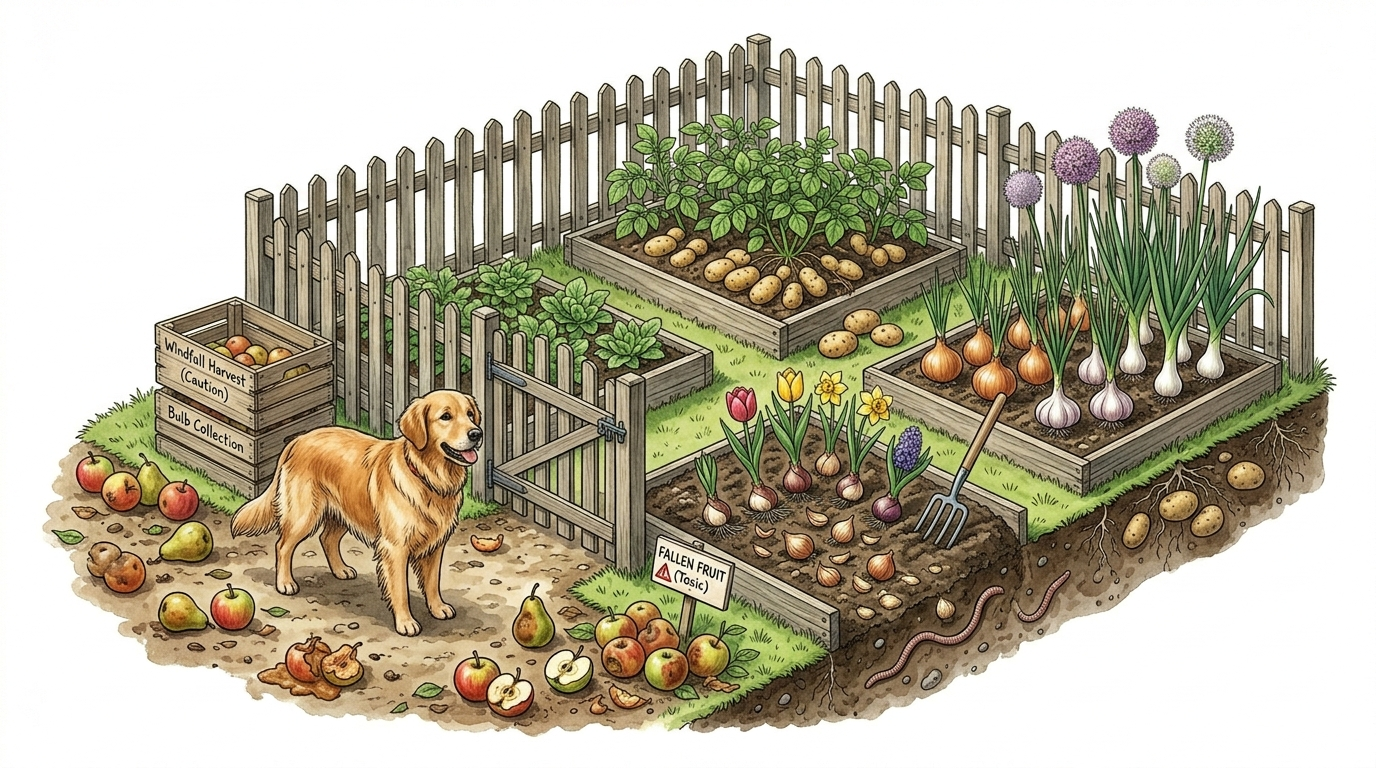
Keep your garden dog-safe by managing windfall fruit, seeds, stored crops, and potentially problematic plant parts.
Internal links
Related plants
Artichoke
Belongs to the same genus (Cynara) and has similar requirements, but is used differently.
Closely related (same genus Cynara), similar requirements, but different primary use.
Sunflower
Both are members of the Asteraceae family.
Both belong to the Asteraceae family.
Leafy greens
Primarily grown for its leaves and stalks.
Powdery Mildew
Asteraceae are often susceptible to mildew.
Root Rot
Many plants suffer from waterlogging.
Cabbage
Both are heavy feeders and require abundant nutrients, especially nitrogen.
Leek
Both prefer consistent soil moisture.
Lettuce
Both belong to the Asteraceae family.
Celery
Both are grown and cooked for their fleshy stalks/ribs.
Sources
Public sources
- Wikidata entity
Wikidata · 2026-05-12
- GBIF species match
GBIF · 2026-05-12
- Deutschsprachige Wikipedia: Cardy
Wikipedia · 2026-05-12
- Flora of the World Online: Cynara cardunculus
Plants of the World Online · 2026-05-12