Plant Profile
Garden cressLepidium sativum
Garden cress is the epitome of uncomplicated gardening. As an extremely fast-growing herb, it provides fresh, pungent vitamins after just a few days, whether in the garden bed or on the domestic windowsill.
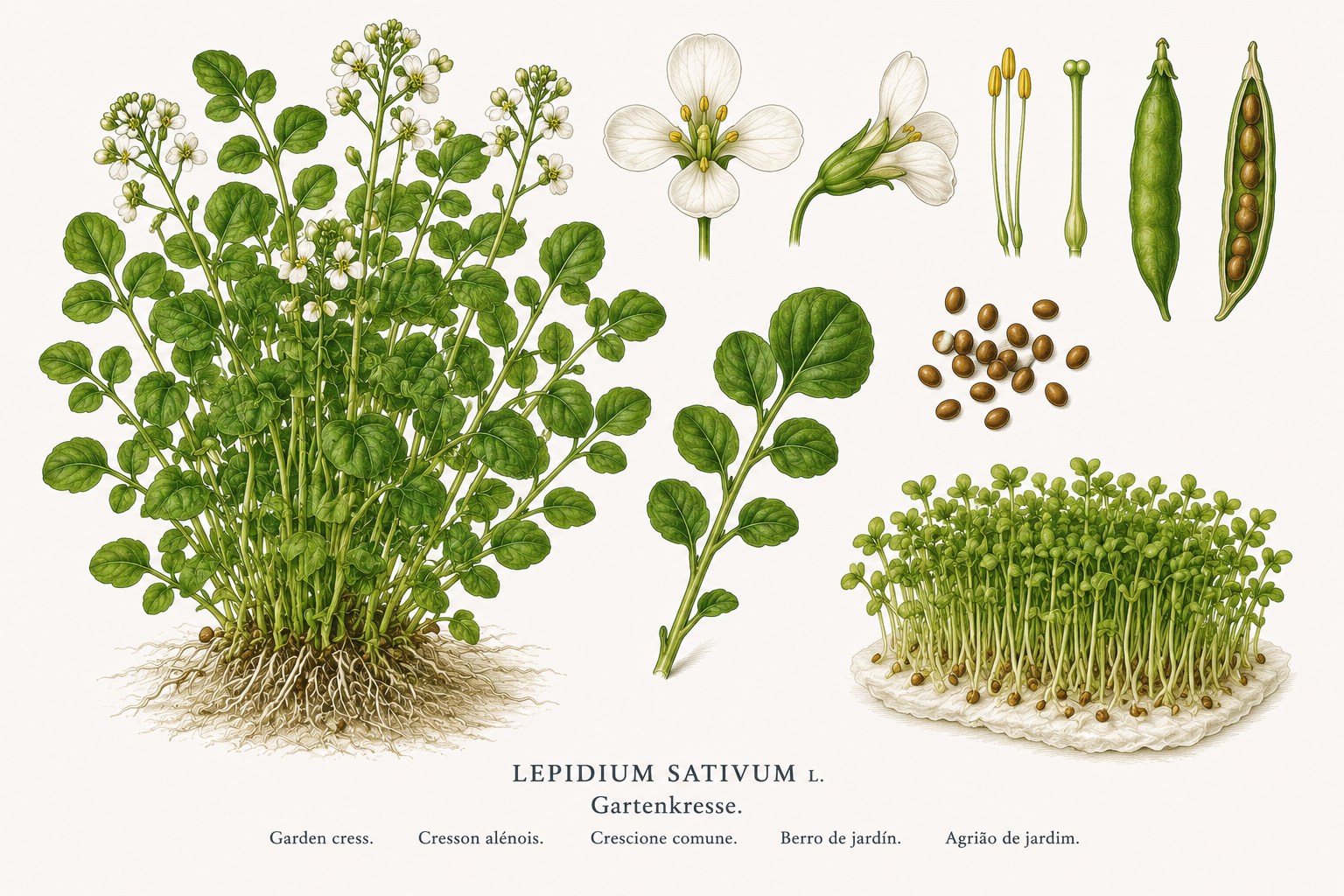
Quick profile
Key data
Good neighbors
tomatoRadish
Avoid
Cabbage varieties
Indoor & direct sowing
Garden cress: Sowing and germination
Possible year-round on the windowsill.
Direct sowing outdoors from March to September.
Planting & site
Garden cress: Planting and spacing
Transplanting is not common; direct sowing preferred.
Site & practical notes
Sow small amounts every 2 weeks to ensure a continuous supply of fresh greens.
Temperature & frost
Garden cress: Temperature and site
Water & nutrients
Garden cress: Water, nutrients and care
Container & growth
Garden cress: Container, support and growth
Year plan
Garden cress Calendar
Fresh greens even in the depths of winter.
Recurring tasks
Relevant now
June
- No additional single task
Next up
July
- No additional single task
Monthly tasks
Single tasks from monthly data; repeated seasonal windows are shown in the overview above.
January
No additional single task
February
No additional single task
March
No additional single task
April
No additional single task
May
No additional single task
June
No additional single task
August
No additional single task
September
No additional single task
October
No additional single task
November
No additional single task
December
No additional single task
Flowering & pollination
Garden cress Flowering & pollination
Flowering period
June to August (if plants are not harvested)
Flower color
White to pale pink
Self-fertility
high
Pollinator needed
no
Overview
Self-pollinating, but also visited by small insects such as hoverflies.
Notes
Irrelevant for herb harvest, only significant for seed production.
Pruning & care
Garden cress Pruning & care
Pruning type
cut-and-come-again-limited
Pruning timing
Harvest cut Cutting occurs approx. 7-14 days after sowing.
Remove
Preserve
Avoid
Tools and hygiene
Clean kitchen scissors after use; disinfection necessary for commercial sprout production.
Companion guide
Garden cress Companion guide
Good neighbors
tomatoRadish
Avoid
Cabbage varieties
Use & storage
Garden cress Use & storage
Harvest usually 1-2 weeks after sowing.
Storage
Short-lived fresh consumption
Storage life
1 to 2 days
Flavor
Piquant, mustard-like, radish-like
Harvest
Harvest usually 1-2 weeks after sowing.
Processing
After harvest
Use immediately; wilts extremely quickly after cutting.
Notes
Drying leads to almost complete loss of aroma.
Edibility & safety
Garden cress Edibility & safety
For people
In brief: which parts are edible, which parts remain risky, and whether raw consumption makes sense.
Safety notes
Non-toxic; contains mustard oil glycosides, which in very large quantities may cause gastric irritation in sensitive individuals.
Animal safety
Most animal profiles are moderate here: 11 animal types are rated suitable or mostly suitable, with quantity and plant part still relevant.
Each row shows which parts are more suitable and which parts are critical.
Companion animals
 Dog
DogLeaves, Seedlings
Seeds
Leaves, Seedlings
Seeds
Large quantities consumed, Sensitive gastrointestinal tract
Gastric irritation, Vomiting, Diarrhea
observe
Garden cress is safe for dogs in small amounts as an occasional treat. The leaves, seedlings, and flowers can be fed, but seeds should be avoided due to their higher mustard oil content, which may cause gastric irritation if consumed excessively. When fed occasionally as a treat, no serious effects are expected. If large amounts are ingested, especially seeds, the dog should be monitored and a veterinarian…
Open animal page Cat
CatNo suitable parts listed
No risk parts listed
No suitable parts listed
No risk parts listed
unknown
Leaves, seedlings, and flowers are safe for cats in normal amounts and can be offered as occasional greens. Seeds should be avoided due to higher mustard oil glycoside concentrations. Excessive consumption may cause gastrointestinal upset.
Open animal page Rabbit
No suitable parts listed
No risk parts listed
No suitable parts listed
No risk parts listed
unknown
Garden cress is safe for rabbits in small amounts and valued as a nutritious supplement. Seeds contain higher concentrations of mustard oil glycosides and should be avoided. Leaves, seedlings, and flowers are harmless and can be fed occasionally. Excessive consumption may cause gastrointestinal upset.
Open animal page Guinea pig
No suitable parts listed
No risk parts listed
No suitable parts listed
No risk parts listed
 Hamster
Leaves, Seedlings
Seeds
Leaves, Seedlings
Seeds
High concentration of mustard oil glycosides in seeds
Gastrointestinal upset in excessive amounts
 Budgie
Leaves, Seedlings
Seeds
Leaves, Seedlings
Seeds
Overfeeding, Sensitivity to mustard oils
Gastrointestinal upset with excessive intake
observe
Garden cress is suitable for budgies in small amounts as an occasional treat. The leaves, seedlings, and flowers are safe and nutrient-rich. The seeds contain higher concentrations of mustard oil glycosides and should be avoided, as excessive consumption may cause gastrointestinal irritation. A budgie's diet should primarily consist of specialized budgie feed.
Open animal pageFarm animals
 Horse
HorseLeaves, Seedlings
Seeds
Leaves, Seedlings
Seeds
Large quantities of seeds may cause irritation
Gastrointestinal upset with excessive intake
 Chicken
Leaves, Seedlings
Seeds
Leaves, Seedlings
Seeds
Large quantities of seeds may cause irritation
Gastrointestinal upset with excessive intake
observe
Leaves, seedlings, and flowers are suitable as treats for chickens. Seeds contain higher concentrations of mustard oil glycosides and should be avoided. When fed normally as green fodder, it is harmless.
Open animal page Duck
DuckLeaves, Seedlings
Seeds
Leaves, Seedlings
Seeds
High glucosinolate content in seeds, Possible sensitivity in birds
Gastrointestinal upset with overconsumption
observe
Garden cress is suitable for ducks in small amounts as an occasional treat. Leaves, seedlings, and flowers are safe and nutritious. Seeds contain higher concentrations of mustard oil glycosides and should be avoided, as overconsumption may cause gastrointestinal irritation. Ducks should only receive small amounts of the safe parts occasionally. Consult a veterinarian if signs of discomfort appear.
Open animal page Goose
GooseLeaves, Seedlings
Seeds
Leaves, Seedlings
Seeds
Excessive seed consumption, Sensitivity to mustard oils
Gastrointestinal upset with overconsumption
observe
Garden cress is safe for geese in small amounts, particularly leaves, seedlings, and flowers. Seeds contain higher concentrations of mustard oil glycosides and should be avoided. Overconsumption may cause gastrointestinal upset. Suitable as occasional greens.
Open animal page Sheep
SheepLeaves, Seedlings
Seeds
Leaves, Seedlings
Seeds
Large quantities of seeds may cause gastric irritation
Gastrointestinal irritation with excessive intake
 Goat
GoatLeaves, Seedlings
Seeds
Leaves, Seedlings
Seeds
Excessive seed consumption, Sensitivity to mustard oils
Gastric irritation, Diarrhea
observe
Leaves, seedlings, and flowers are safe for goats in moderation and provide nutritional value. Seeds contain higher concentrations of mustard oil glycosides and may cause gastrointestinal upset if consumed in large amounts. No indications of severe toxicity in goats, but part-specific risk should be considered.
Open animal page Cattle
Leaves, Seedlings
Seeds
Leaves, Seedlings
Seeds
Excessive seed consumption, Sensitivity to mustard oils
Gastric irritation, Gastrointestinal upset
observe
Leaves, seedlings, and flowers are safe for cattle in moderation and can be used as supplemental feed. Seeds contain higher concentrations of mustard oil glycosides and may cause gastric irritation if consumed excessively. Roots are not recommended due to potential substrate contamination.
Open animal page Pig
PigLeaves, Seedlings
Seeds
Leaves, Seedlings
Seeds
Excessive seed consumption, Sensitivity to mustard oils
Gastric irritation, Diarrhea with excessive intake
observe
Garden cress is safe for pigs in normal feeding amounts. Leaves, seedlings, and flowers can be given as supplemental feed. Seeds contain higher concentrations of mustard oil glycosides and should be fed very sparingly, as excessive intake can cause gastric irritation. The plant provides vitamin C and iron and is well accepted due to its pungent flavor. If signs of gastrointestinal upset occur, feeding should be…
Open animal pageThis does not replace veterinary advice. If risky plant parts were ingested or symptoms appear, contact a veterinarian.
Max risk
unknown
Highest status
not established
Urgency
unknown
Saving seed
Garden cress Saving seed
Seed viability
2 - 3 years
Seed extraction
Shake dry plants or beat them in a bag.
Practical tips
Garden cress Practical tips
Common beginner mistakes
Covering seeds with soil (light germinator!).
Success pattern
Germination within 24-48 hours at room temperature.
High-impact tips
Use a clay cress hedgehog for a decorative look.
Grower observations
Cress grows on almost any moist medium, even kitchen paper.
Health
Pests, Diseases
Pests
Flea beetles
Small, sieve-like holes in the cotyledons.
Diseases
Damping-off
Seedlings collapse at the root neck and rot.
Plant health
Diagnosis help
Garden cress Diagnosis help
Pest groups
Biting insects (Flea beetles)
Disease groups
Seedling diseases (Fungi)
Prevention
Diagnosis
Most problems with cress arise from sowing too densely or drying out.
Cultural prevention
Monitoring
Daily check for mold growth
First response
Use chamomile tea for watering (mildly fungicidal)
Diagnostic rules
Seedlings fall over
Possible causes: Damping off
- Check substrate moisture
- Check sowing density
FAQ
Why is my cress molding?
It is usually due to sowing too densely or standing water. Ensure good ventilation and water moderately but regularly.
Is Garden cress safe for Dog?
Garden cress is classified as moderation only for Dog. Risk: unknown. Urgency: observe. Garden cress is safe for dogs in small amounts as an occasional treat. The leaves, seedlings, and flowers can be fed, but seeds should be avoided due to their higher mustard oil content, which may cause gastric irritation if consumed excessively. When fed occasionally as a treat, no serious effects are expected. If large amounts are ingested, especially seeds, the dog should be monitored and a veterinarian…
Is Garden cress safe for Cat?
Garden cress is classified as not established for Cat. Risk: unknown. Urgency: unknown. Leaves, seedlings, and flowers are safe for cats in normal amounts and can be offered as occasional greens. Seeds should be avoided due to higher mustard oil glycoside concentrations. Excessive consumption may cause gastrointestinal upset.
Is Garden cress safe for Rabbit?
Garden cress is classified as not established for Rabbit. Risk: unknown. Urgency: unknown. Garden cress is safe for rabbits in small amounts and valued as a nutritious supplement. Seeds contain higher concentrations of mustard oil glycosides and should be avoided. Leaves, seedlings, and flowers are harmless and can be fed occasionally. Excessive consumption may cause gastrointestinal upset.
Is Garden cress safe for Guinea pig?
Garden cress is classified as not established for Guinea pig. Risk: unknown. Urgency: unknown. No reliable species-specific assessment is available.
Guides
Related guides
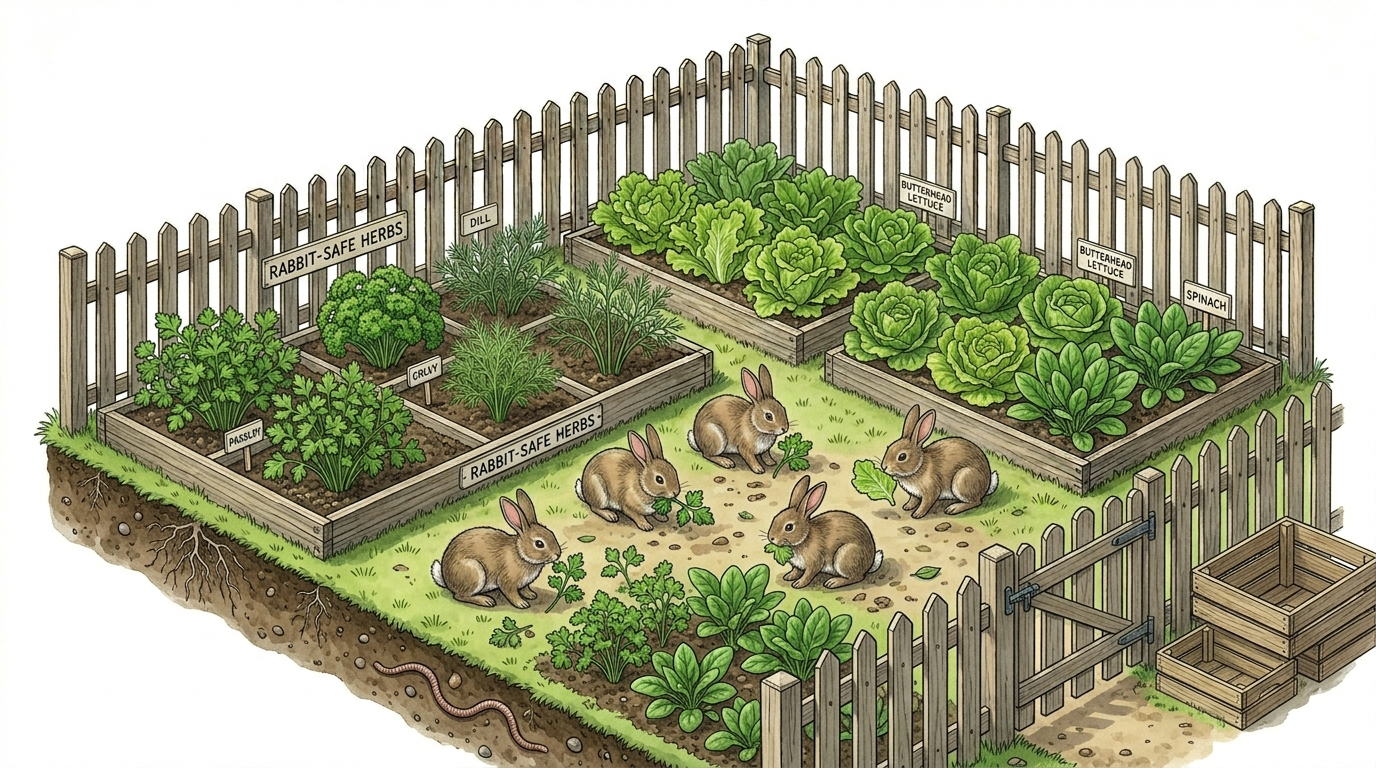
Guide
Rabbits in the Garden: Herbs and Vegetables
Learn how to choose suitable herbs and vegetables for rabbits, grow feeding plants, and plan a rabbit-friendly garden.
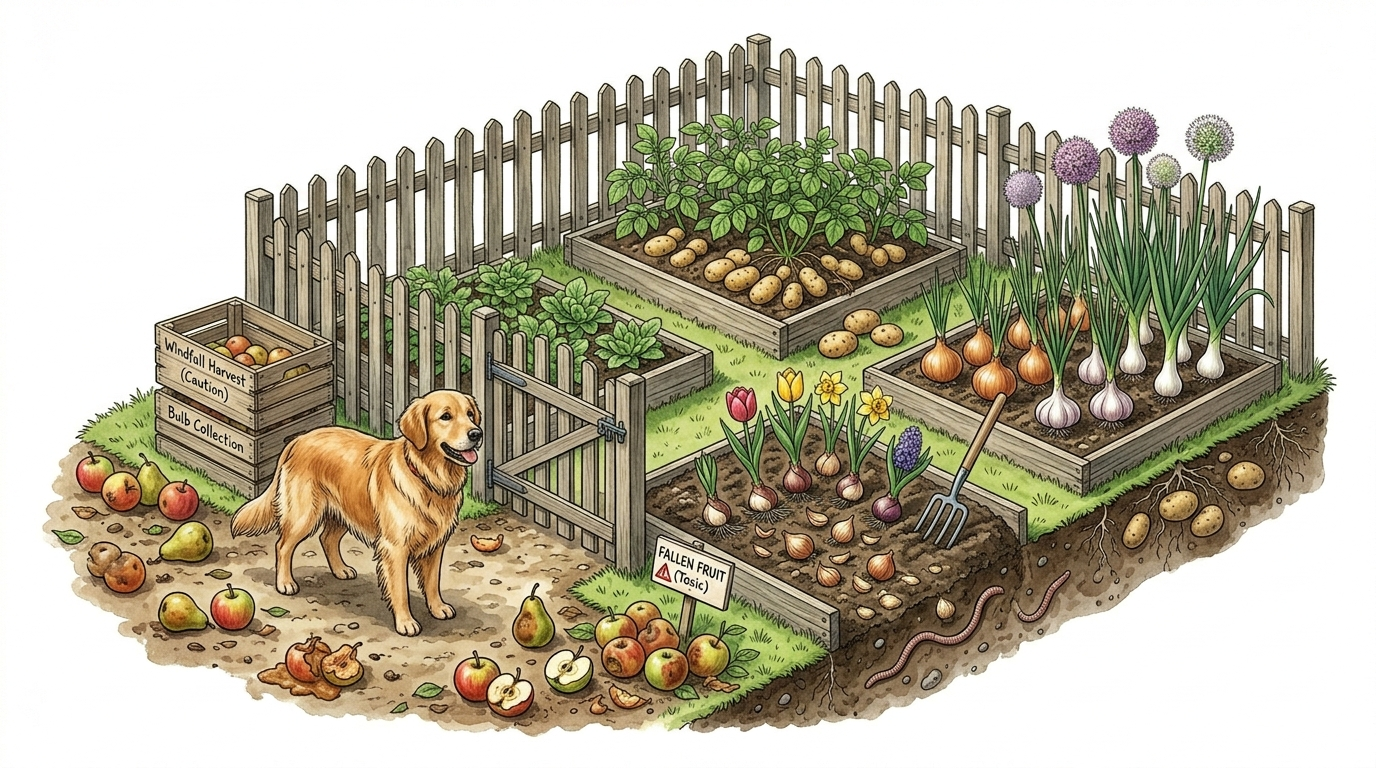
Guide
Dogs in the Garden: Windfall Fruit and Risks
Keep your garden dog-safe by managing windfall fruit, seeds, stored crops, and potentially problematic plant parts.
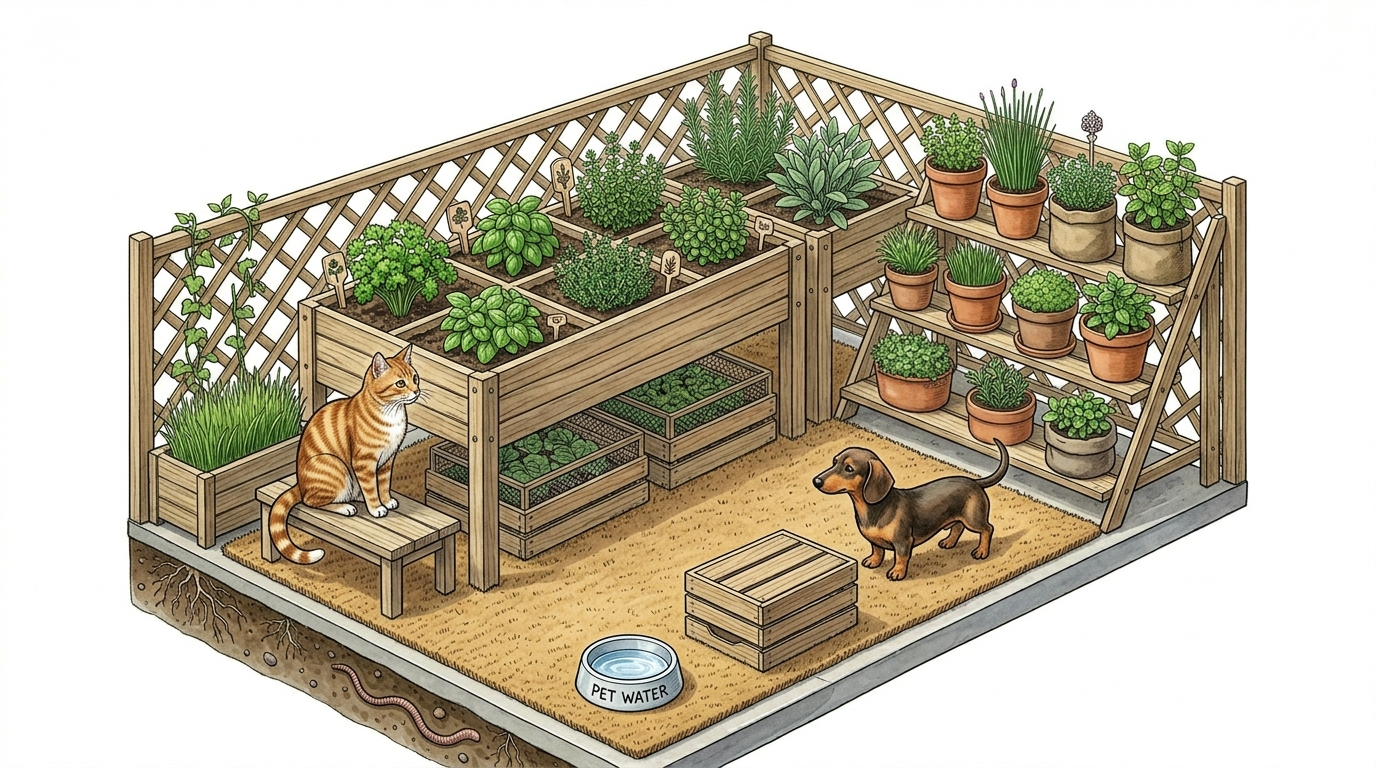
Guide
Pet-Safe Herb Gardens for Balconies and Beds
Learn how to create a pet-safe herb garden with suitable herbs, thoughtful layouts, and practical maintenance strategies.
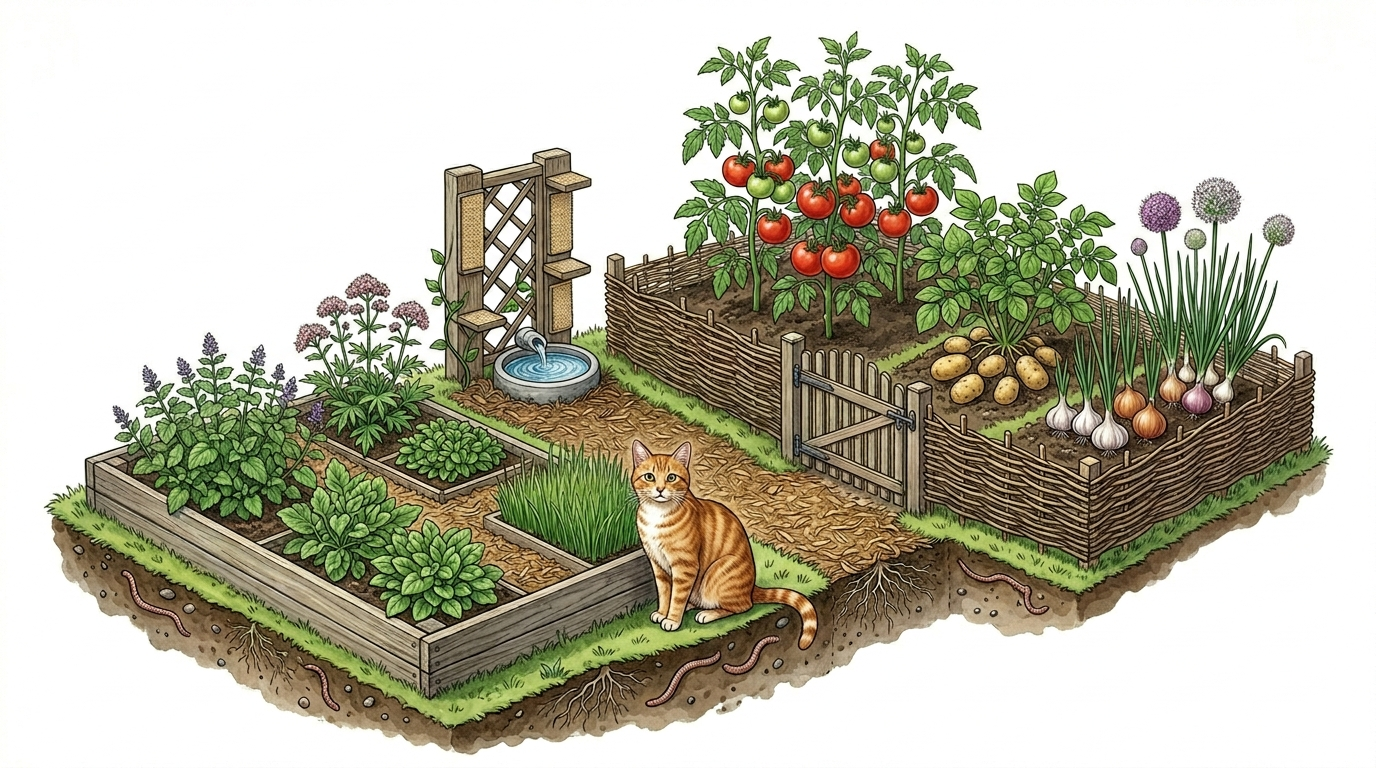
Guide
Toxic Garden Plants for Cats: Safer Planning
Learn which garden plants can be risky for cats, how to plan safer beds, and what to do if a cat eats a toxic plant.
Internal links
Related plants
Cabbage
Both belong to the Brassicaceae family.
Arugula
Radish
Lettuce
Spinach
Radish
Both are brassicas with a pungent aroma.
White Mustard
Also often consumed as a seedling (Mustard & Cress).
Watercress
Similar name, but grows in water.
Nasturtium
Similar flavor profile but completely different growth habit.
Sources
Public sources
- Wikidata entity
Wikidata · 2026-05-13
- GBIF species match
GBIF · 2026-05-13
- Deutschsprachige Wikipedia: Gartenkresse
Wikipedia · 2026-05-13
- English Wikipedia: Garden cress
Wikipedia · 2026-05-13