Plant Profile
Winter Heath OnionAllium fistulosum
Hardy, perennial allium for fresh greens almost year-round. Mild flavor, clump-forming.
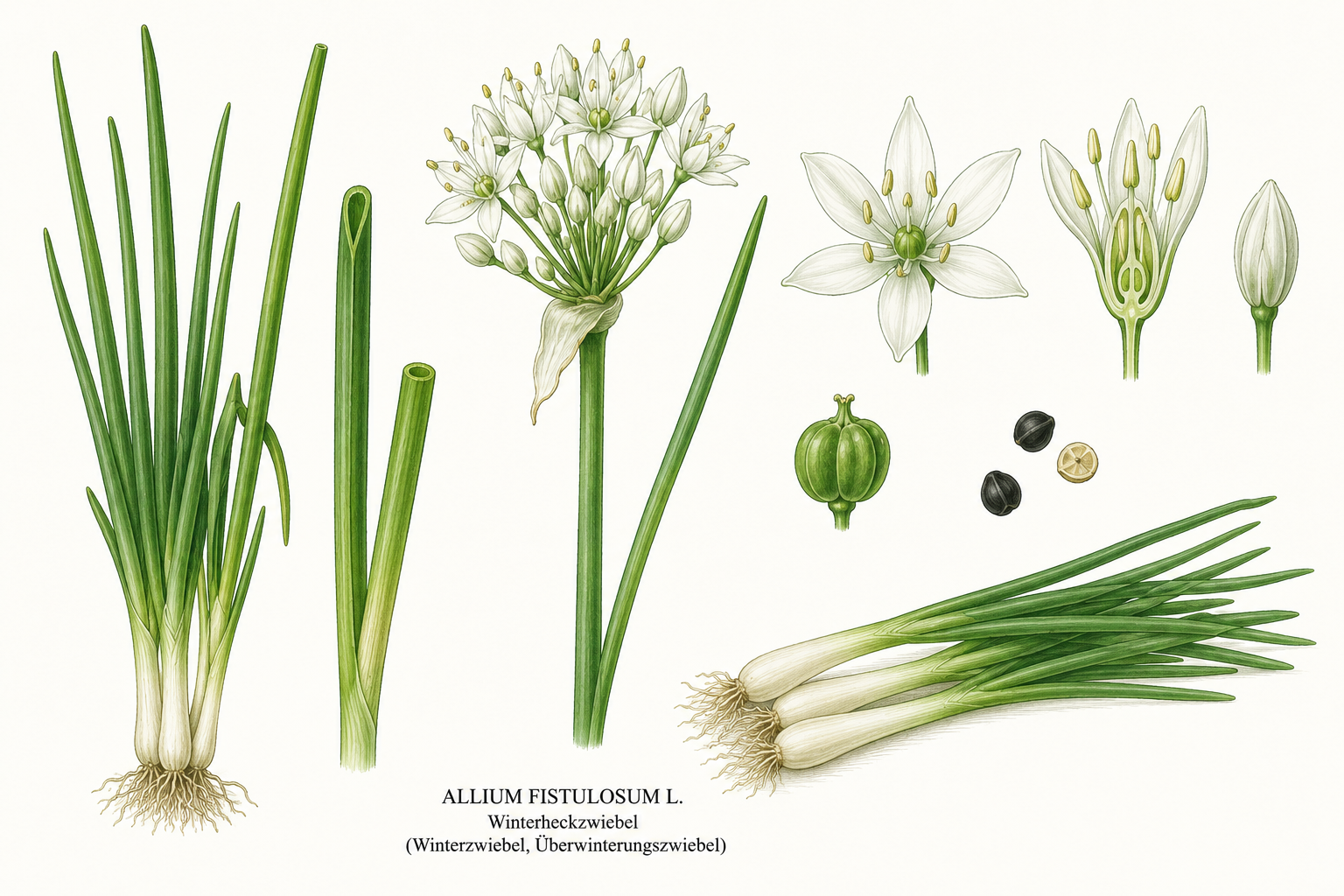
Quick profile
Key data
Suitable growing locations:
Good neighbors
CarrotStrawberryLettuce
Indoor & direct sowing
Winter Heath Onion: Sowing and germination
Not recommended; direct sowing preferred.
Direct sow from March; sow in August/September for autumn and winter harvest.
Planting & site
Winter Heath Onion: Planting and spacing
Plant sets or pre-grown transplants in spring or late summer.
Temperature & frost
Winter Heath Onion: Temperature and site
Water & nutrients
Winter Heath Onion: Water, nutrients and care
Container & growth
Winter Heath Onion: Container, support and growth
Year plan
Winter Heath Onion Calendar
Even under a thin layer of snow, fresh, spicy leaves can be harvested in winter during mild weather.
Recurring tasks
Relevant now
June
- Harvest young spring onionsPflanzen ca. 20–30 cm hoch: Harvest leaves or whole plant.
Next up
July
- Harvest winter heath onionVerdickungen gut ausgebildet: Harvest plants as needed.
Monthly tasks
Single tasks from monthly data; repeated seasonal windows are shown in the overview above.
January
Quiet month
February
Quiet month
March
Direct sowing
- Direct sow winter heath onionsober Boden, ab 5°C Bodentemperatur: Sow seeds about 1–2 cm deep in rows.
April
Planting
- Plant onion setsBoden ab 8°C, keine Staunässe: Plant sets 15–20 cm apart.
May
Growing
- Maintenance: hoe, waterbei Trockenheit: Remove weeds, keep soil moist.
June
Harvest
- Harvest young spring onionsPflanzen ca. 20–30 cm hoch: Harvest leaves or whole plant.
August
Direct sowing
- Autumn sowing winter heath onionBoden feucht, kühlere Witterung: Sow for overwintering and early spring harvest.
September
Growing
- Autumn carenach letzter Saat: Fertilize and mulch if needed.
October
Harvest
- Late harvestvor Frost: Final harvest before frost.
November
Growing
- Winter preparationvor Dauerfrost: Apply mulch layer of leaves or straw.
December
Quiet month
Flowering & pollination
Winter Heath Onion Flowering & pollination
Self-fertility
partial
Pollinator needed
yes
Overview
Insect pollination (bees, bumblebees and hoverflies). Cross-pollination by insects; self-pollination possible but less common.
Notes
Bees and bumblebees visit flowers abundantly. For seed production, avoid proximity to other Allium species to prevent crossing.
Pruning & care
Winter Heath Onion Pruning & care
Pruning type
kein formeller Schnitt
Notes
Removing spent flower stalks after bloom promotes leaf growth and prevents unwanted self-seeding.
Pruning timing
Remove dead winter leaves Cut old foliage close to the ground before new growth.
Remove spent flower stalks Cut stalks at base to redirect energy to leaf growth.
Remove
Preserve
Avoid
Tools and hygiene
Use sharp, clean secateurs or knife. Disinfect tools with 70% alcohol before cutting to prevent disease transmission.
Companion guide
Winter Heath Onion Companion guide
Good neighbors
CarrotStrawberryLettuce
Use & storage
Winter Heath Onion Use & storage
Can be harvested over many months. Young leaves from spring, thickened stems from summer. Harvestable in winter during mild spells.
Storage
Short-term to medium-term storage
Storage life
Leaves: 3–5 days in refrigerator, thickened stems: 2–4 weeks at 0–2 °C and high humidity.
Harvest
Can be harvested over many months. Young leaves from spring, thickened stems from summer. Harvestable in winter during mild spells.
Processing
After harvest
Store leaves and young plants cool and moist, ideally in the refrigerator. Store thickened stems cool and dry. Use flowers immediately or dry them.
Edibility & safety
Winter Heath Onion Edibility & safety
For people
In brief: which parts are edible, which parts remain risky, and whether raw consumption makes sense.
Safety notes
Non-toxic to humans. For dogs and cats, large amounts can be harmful (thiosulfates).
Animal safety
For animals, the specific plant part matters here: some parts may be suitable, while others should be avoided. At least one critical rating is listed for 11 animal types.
Each row shows which parts are more suitable and which parts are critical.
Companion animals
 Dog
DogLeaves, young shoots
Root fibers, dry leaf sheaths
Leaves, young shoots
Root fibers, dry leaf sheaths
Large amounts, Repeated ingestion
Vomiting, Diarrhea, Gastrointestinal upset
contact a vet if symptoms appear
Leaves, young shoots, thickened stems, and flowers are acceptable as treats in small amounts. Root fibers and dry leaf sheaths should be avoided due to potential irritation from thiosulfates. Excessive consumption may lead to gastrointestinal upset.
Open animal page Cat
CatLeaves, young shoots
No risk parts listed
Leaves, young shoots
No risk parts listed
Large amounts, Repeated feeding
Vomiting, Diarrhea, Gastrointestinal upset
observe
Leaves, young shoots, thickened stems, and flowers are edible for cats in small amounts but contain thiosulfates that may cause gastrointestinal upset if consumed excessively. Root fibers and dry leaf sheaths should be avoided.
Open animal page Rabbit
No suitable parts listed
No risk parts listed
No suitable parts listed
No risk parts listed
unknown
Edible parts (leaves, young shoots, thickened stems, flowers) are tolerable for rabbits in small amounts but contain thiosulfates that may cause gastrointestinal upset if overconsumed. Root fibers and dry leaf sheaths should be avoided. Consult a veterinarian if symptoms occur.
Open animal page Guinea pig
Leaves, young shoots
Root fibers, dry leaf sheaths
Leaves, young shoots
Root fibers, dry leaf sheaths
Large amounts, Root fibers or dry leaf sheaths
Vomiting, Diarrhea, Gastrointestinal upset
contact a vet if symptoms appear
Leaves, young shoots, thickened stems, and flowers are suitable as occasional treats in small amounts. Root fibers and dry leaf sheaths should be avoided due to potential irritation from thiosulfates. Overconsumption may lead to gastrointestinal upset. No species-specific studies for guinea pigs available, but conservative classification based on Allium toxicity in other small mammals and known compounds.
Open animal page Hamster
Leaves, young shoots
Root fibers, dry leaf sheaths
Leaves, young shoots
Root fibers, dry leaf sheaths
Large amounts, Repeated feeding
Gastrointestinal upset, Vomiting, Diarrhea
contact a vet if symptoms appear
Winter Heath Onion (Allium fistulosum) contains thiosulfates that can cause gastrointestinal upset in hamsters when consumed in large amounts. The edible parts (leaves, young shoots, thickened stems, flowers) can be given in small amounts as treats, while root fibers and dry leaf sheaths should be avoided. Contact a veterinarian if signs of poisoning appear.
Open animal page Budgie
No suitable parts listed
Leaves, young shoots, thickened stems
No suitable parts listed
Leaves, young shoots, thickened stems
Large amounts
Vomiting, gastrointestinal upset
contact a vet if symptoms appear
Winter Heath Onion contains thiosulfates, which can be harmful to birds like budgies. While specific data for budgies is lacking, toxicity for other small animals and birds is likely similar to that for dogs and cats. All aerial parts should be avoided. Root fibers and dry leaf sheaths are considered lower risk but are not suitable as feed.
Open animal pageFarm animals
 Horse
HorseNo suitable parts listed
No risk parts listed
No suitable parts listed
No risk parts listed
unknown
Winter Heath Onion (Allium fistulosum) contains thiosulfates that can cause gastrointestinal upset in horses when consumed in large amounts. Edible parts such as leaves, young shoots, thickened stems, and flowers are suitable in moderation, while root fibers and dry leaf sheaths should be avoided. Known to be potentially harmful in large amounts for dogs and cats; similar caution advised for horses. No specific…
Open animal page Chicken
Leaves, young shoots
Root fibers, dry leaf sheaths
Leaves, young shoots
Root fibers, dry leaf sheaths
Large amounts, Repeated feeding
Gastrointestinal upset, diarrhea, weakness
contact a vet if symptoms appear
Edible parts (leaves, shoots, stems, flowers) are safe for chickens in small amounts but contain thiosulfates that can cause health issues if overconsumed. Root fibers and dry leaf sheaths should be avoided. Suitable as occasional greens but not as primary feed.
Open animal page Duck
DuckLeaves, young shoots
Root fibers, dry leaf sheaths
Leaves, young shoots
Root fibers, dry leaf sheaths
Large quantities, Repeated feeding
Gastrointestinal upset, Vomiting, Diarrhea
contact a vet if symptoms appear
Winter Heath Onion (Allium fistulosum) contains thiosulfates that can cause gastrointestinal upset in ducks when consumed in large quantities. The edible parts (leaves, young shoots, thickened stems, flowers) are suitable in moderation, while root fibers and dry leaf sheaths should be avoided. Known to be potentially harmful to dogs and cats in large amounts; similar reactions in ducks are likely due to shared…
Open animal page Goose
GooseNo suitable parts listed
Leaves, young shoots, thickened stems
No suitable parts listed
Leaves, young shoots, thickened stems
Large amounts
Vomiting, gastrointestinal upset
contact a vet if symptoms appear
Winter Heath Onion contains thiosulfates, which can be harmful to geese in large amounts. Although non-toxic to humans, Allium species can cause hemolytic anemia in birds. No species-specific sources for geese found, but conservative classification recommended based on plant general toxicity and known risks for related avian species.
Open animal page Sheep
SheepLeaves, young shoots
Root fibers, dry leaf sheaths
Leaves, young shoots
Root fibers, dry leaf sheaths
Large amounts, Root fibers or dry leaf sheaths
Gastrointestinal upset, Vomiting, Diarrhea
contact a vet if symptoms appear
Edible parts (leaves, young shoots, thickened stems, flowers) are safe for sheep in moderation but contain thiosulfates that may cause gastrointestinal upset if overconsumed. Root fibers and dry leaf sheaths should be avoided. Sheep are ruminants and can tolerate Allium species better than monogastric animals, but caution is still advised.
Open animal page Goat
GoatLeaves, young shoots
Root fibers, dry leaf sheaths
Leaves, young shoots
Root fibers, dry leaf sheaths
Large amounts, Root fibers or dry leaf sheaths
Gastrointestinal upset, Vomiting, Diarrhea
contact a vet if symptoms appear
No direct species-specific source was found for goats. This is a cautious inference from the sheep profile and the known plant-part risks.
Open animal page Cattle
Leaves, young shoots
Root fibers, dry leaf sheaths
Leaves, young shoots
Root fibers, dry leaf sheaths
Large amounts, Repeated feeding, Young animals more sensitive
Gastrointestinal upset, Diarrhea, Anemia with repeated consumption
contact a vet if symptoms appear
Winter Heath Onion contains thiosulfates that can cause hemolytic effects in ruminants when consumed in large amounts. Edible parts are tolerable in moderation but not suitable as primary feed. Root fibers and dry leaf sheaths should be avoided. Seek veterinary advice if weakness or dark urine is observed.
Open animal page Pig
PigNo suitable parts listed
No risk parts listed
No suitable parts listed
No risk parts listed
unknown
Winter Heath Onion (Allium fistulosum) contains thiosulfates that can cause gastrointestinal irritation in pigs when consumed in large amounts. The edible parts (leaves, young shoots, thickened stems, flowers) are suitable in moderation, while root fibers and dry leaf sheaths should be avoided. For pigs as livestock, similar limits apply as for other livestock due to shared sensitivity to Allium compounds.
Open animal pageThese guidelines are for general information only and do not replace veterinary diagnosis. If critical plant parts were ingested or the animal shows unusual behaviour or symptoms, seek veterinary advice.
Max risk
unknown
Highest status
do not feed
Urgency
contact a vet if symptoms appear
Saving seed
Winter Heath Onion Saving seed
Seed viability
2 - 3 years
Practical tips
Winter Heath Onion Practical tips
Common beginner mistakes
Success pattern
High-impact tips
Grower observations
Plant Profile
Additional plant images
Health
Pests, Diseases
Pests
Onion fly
Larvae of the onion fly bore into the bulb base and feed on tissue. Infected plants turn yellow and rot.
Thrips
Infested leaves show silvery spots and become deformed. Dry weather favors reproduction.
Diseases
Downy mildew
A fungus that forms a gray, velvety coating on leaves and leads to tissue death.
Fusarium bulb rot
Soil-borne fungus that attacks roots and causes bulb base rot. Plants wilt and die.
Plant health
Diagnosis help
Winter Heath Onion Diagnosis help
Pest groups
Disease groups
Prevention
Diagnosis
If rot is suspected, expose the bulb base and check for discoloration or mold. For thrips, look for silvery leaf undersides.
Cultural prevention
Monitoring
First response
Diagnostic rules
Yellow, discolored leaves
Possible causes: Nitrogen deficiency, Zwiebelfliegenbefall, Fusarium Fäule
- Check soil moisture
- Inspect bulb base
- Check yellow sticky traps
Silvery leaf spots
Possible causes: Thrips, Downy mildew
- Check leaf underside with magnifier
- Measure humidity
FAQ
What is the best way to sow winter heath onions?
Direct sowing outdoors from March to September is ideal. Sow seeds 1-2 cm deep in rows 25-30 cm apart. Keep the soil moist until germination.
When can winter heath onions be harvested?
You can continuously harvest young leaves from April onwards. Whole young plants (spring onions) are ready for harvest from June, thickened stems from July to October. Harvesting is also possible in winter during mild weather.
Are winter heath onions winter hardy and perennial?
Yes, winter heath onions are very winter hardy and perennial. They survive winter even without special protection, though a layer of mulch is beneficial.
What pests and diseases affect winter heath onions?
Common issues include onion fly, thrips, and fungal diseases such as downy mildew or Fusarium rot. Good crop rotation and companion planting with carrots can prevent many problems.
Can winter heath onions be grown in pots?
Yes, they are very well suited for growing in pots or balcony boxes. Ensure a sufficiently large container (at least 5 liters volume, 20 cm depth) and good drainage.
Is Winter Heath Onion safe for Dog?
Winter Heath Onion is classified as do not feed for Dog. Risk: unknown. Urgency: contact a vet if symptoms appear. Leaves, young shoots, thickened stems, and flowers are acceptable as treats in small amounts. Root fibers and dry leaf sheaths should be avoided due to potential irritation from thiosulfates. Excessive consumption may lead to gastrointestinal upset.
Is Winter Heath Onion safe for Cat?
Winter Heath Onion is classified as do not feed for Cat. Risk: unknown. Urgency: observe. Leaves, young shoots, thickened stems, and flowers are edible for cats in small amounts but contain thiosulfates that may cause gastrointestinal upset if consumed excessively. Root fibers and dry leaf sheaths should be avoided.
Is Winter Heath Onion safe for Rabbit?
Winter Heath Onion is classified as not established for Rabbit. Risk: unknown. Urgency: unknown. Edible parts (leaves, young shoots, thickened stems, flowers) are tolerable for rabbits in small amounts but contain thiosulfates that may cause gastrointestinal upset if overconsumed. Root fibers and dry leaf sheaths should be avoided. Consult a veterinarian if symptoms occur.
Is Winter Heath Onion safe for Guinea pig?
Winter Heath Onion is classified as do not feed for Guinea pig. Risk: unknown. Urgency: contact a vet if symptoms appear. Leaves, young shoots, thickened stems, and flowers are suitable as occasional treats in small amounts. Root fibers and dry leaf sheaths should be avoided due to potential irritation from thiosulfates. Overconsumption may lead to gastrointestinal upset. No species-specific studies for guinea pigs available, but conservative classification based on Allium toxicity in other small mammals and known compounds.
Guides
Related guides
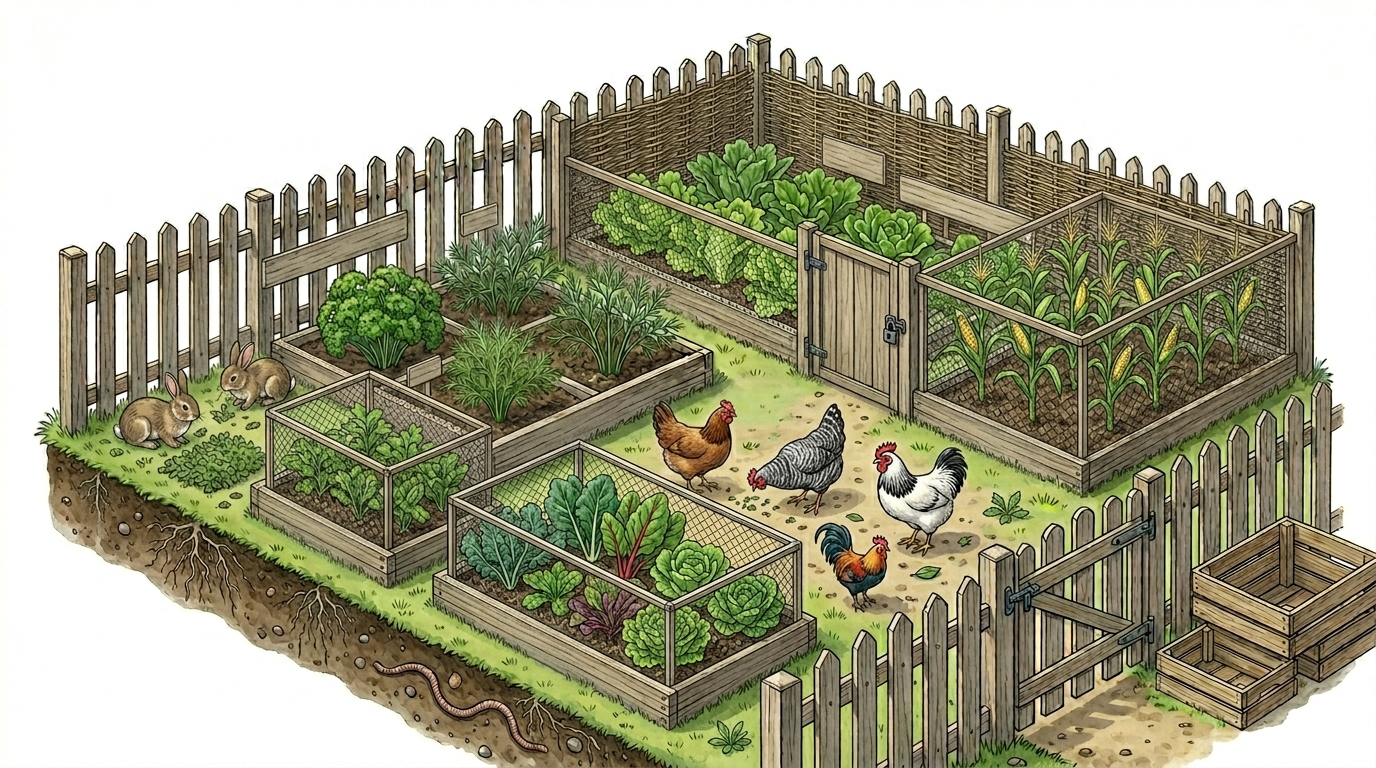
Guide
Chickens in the Garden: Safe Plants and Zones
Learn how to design a chicken-friendly garden with suitable plants, protected beds, and well-planned activity areas.
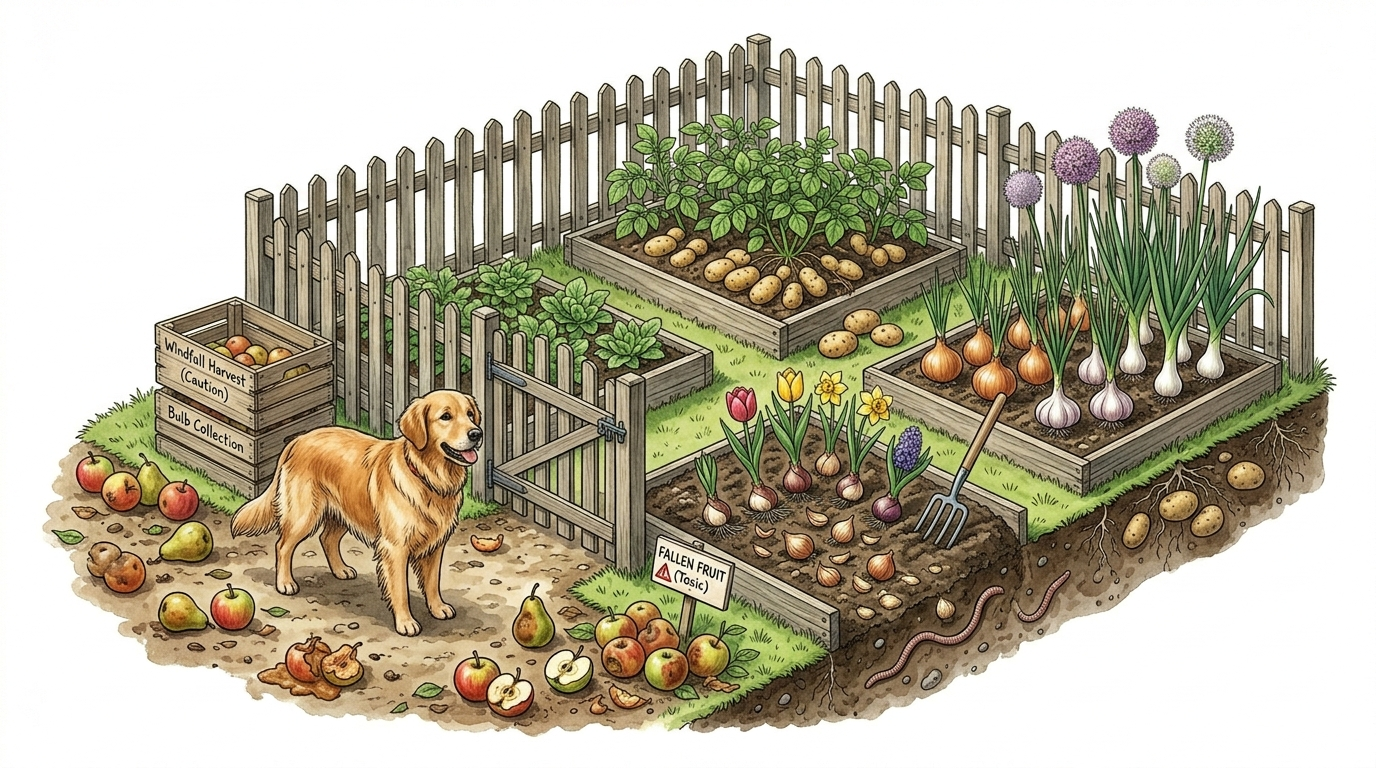
Guide
Dogs in the Garden: Windfall Fruit and Risks
Keep your garden dog-safe by managing windfall fruit, seeds, stored crops, and potentially problematic plant parts.
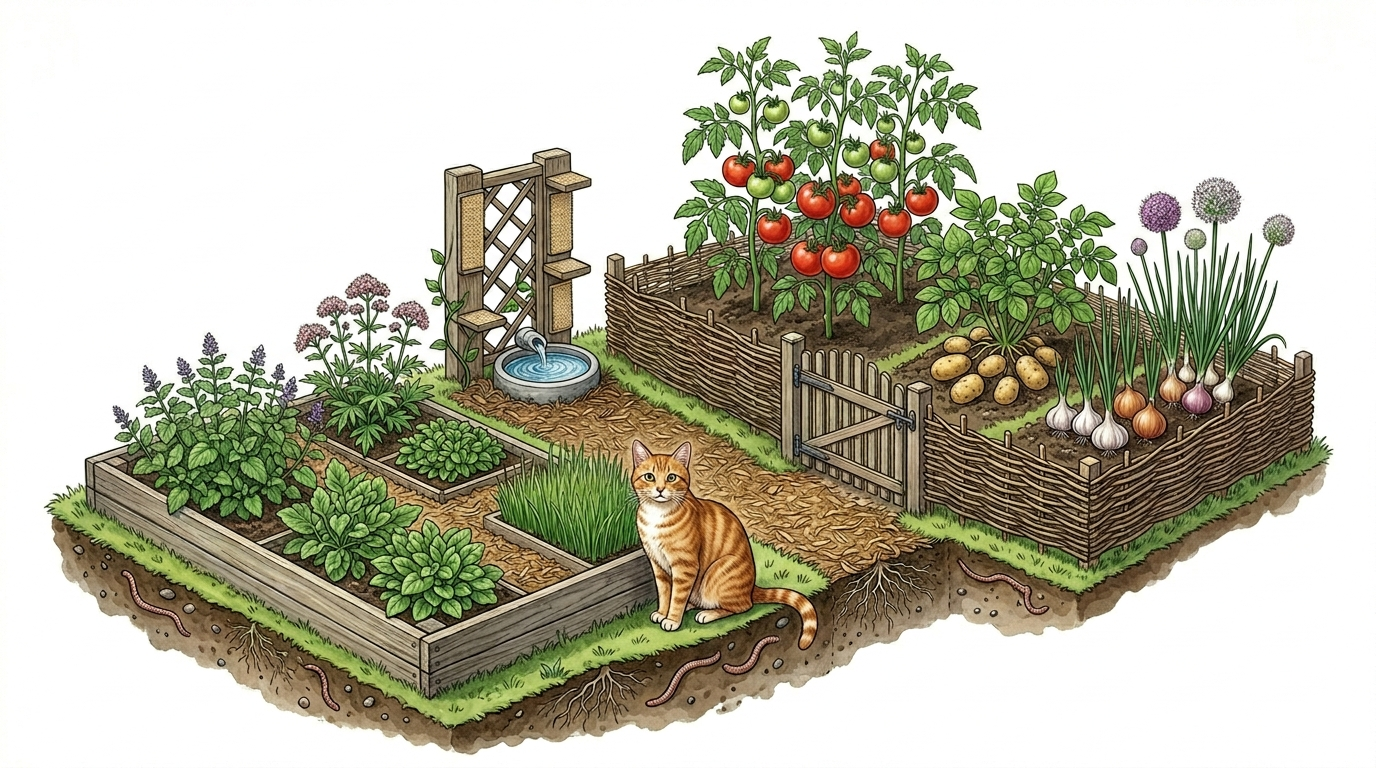
Guide
Toxic Garden Plants for Cats: Safer Planning
Learn which garden plants can be risky for cats, how to plan safer beds, and what to do if a cat eats a toxic plant.
Guide
Horse Pastures and Garden Plants: Safety Checks
Learn how to identify risks near horse pastures, fences, turnout areas, fruit trees, and garden planting zones.
Internal links
Related plants
Downy mildew
A common problem for many Allium species.
Onion fly
Infests all onion family plants.
Lettuce
Both are medium feeders and prefer balanced nutrient supply.
Both require moderate, consistent moisture.
Radish
Both are medium feeders.
Carrot
Both require moderate, consistent moisture.
Chives
Both belong to the genus Allium and the Amaryllis family.
Fresh greens as a culinary herb in the kitchen.
Sources
Public sources
- Wikidata search
Wikidata · 2026-05-15
- GBIF species match
GBIF · 2026-05-15