Pests
Flea beetles
Identify Flea beetles: symptoms, possible causes, prevention, and practical actions for 17 affected plants. Small, round holes in leaves
Editorial diagnosis
Diagnosis overview
Flea beetles are small jumping beetles that mainly damage young brassicas and other crucifers. They chew many tiny holes in leaves and can severely slow seedlings in dry, warm weather.
In gardens, Flea beetles can occur on plants including Watercress, Napa cabbage, Choy Sum, Radish. In the available profiles, it is linked mainly with Asian greens, Brassicas, Cabbages. Recorded timing or triggers include April to June, Months: 5, 6, 7, 8.
The recorded risk level is medium. Heavy damage can quickly limit growth in small seedlings.
Inspect leaf undersides, shoot tips, and the soil around the plant at different times of day. Eggs, larvae, droppings, webbing, or slime trails are often more diagnostic than one damaged leaf.
A common mistake is to treat feeding damage without checking the animal, eggs, larvae, time of activity, and affected plant parts.
At a glance
Plants
17
Category
Asian greens, Brassicas, Cabbages, Flower vegetables, Leafy vegetables
Risk
medium
Season
April to June, Months: 5, 6, 7, 8
Scientific name
Phyllotreta spp.
Typical signs
- Many tiny round holes
- Shot-hole pattern
- Small dark beetles jump away
- Seedlings grow poorly
- Worse in dry warm weather
Possible confusion
- Slugs: Slug damage is larger and slimy; flea beetles cause tiny dry holes.
- Cabbage white butterfly: Cabbage white caterpillars eat larger areas and visible larvae are present.
Immediate actions
- Protect seedlings with fleece or mesh
- Keep soil evenly moist
- Replace badly damaged seedlings
- Reduce cruciferous weeds
- Check early
Prevention
- Cover immediately after sowing
- Rotate brassica crops
- Encourage strong seedlings
- Avoid drought stress
- Do not let beds dry out
Affected plants
Guides
Related guides
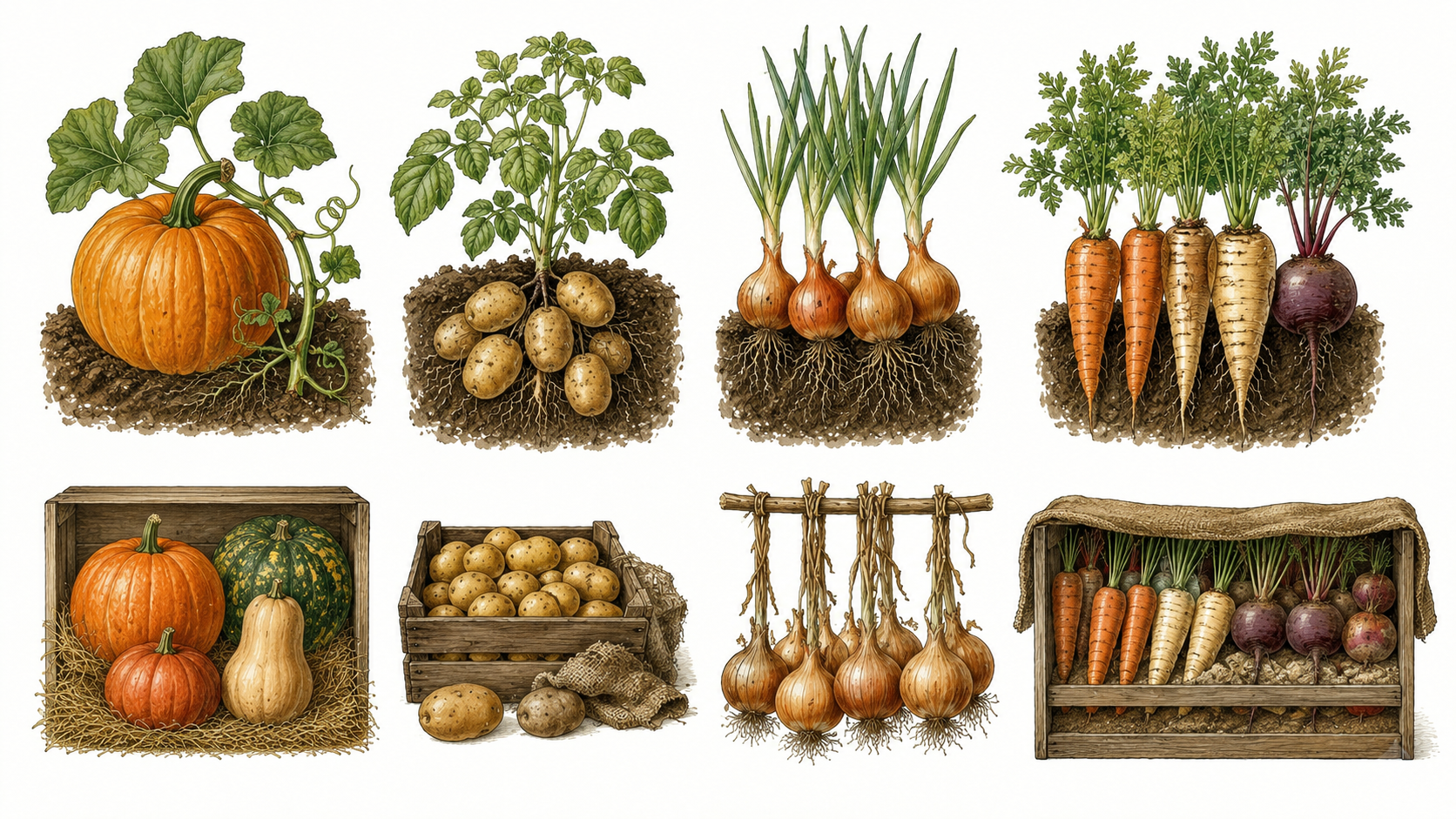
Guide
Autumn Harvest and Storage for Squash and Root Crops
Learn how to harvest and store squash, potatoes, onions, and root vegetables for longer freshness through autumn and winter.
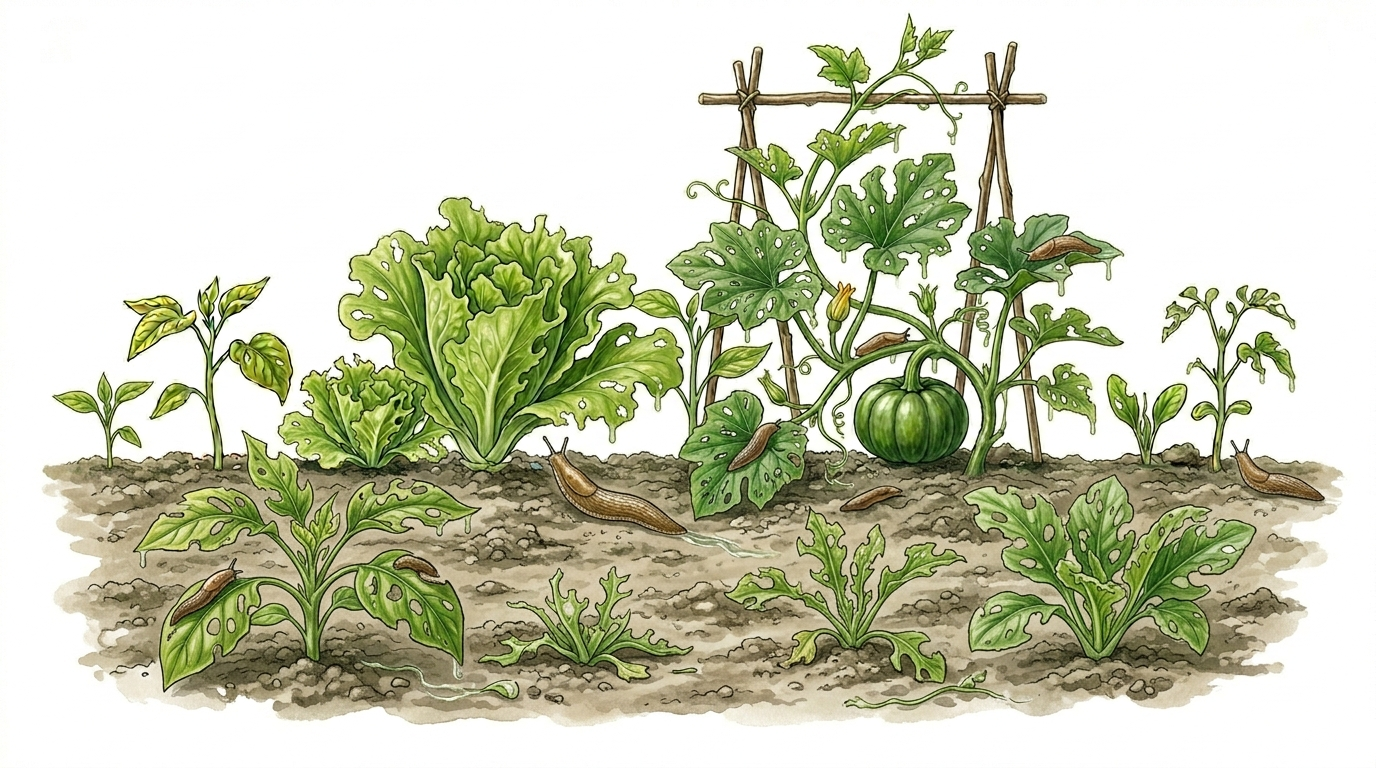
Guide
Slugs in Vegetable Beds: Protecting Vulnerable Plants
Learn how to protect vegetables from slugs, recognize feeding damage early, and plan beds to reduce slug pressure.
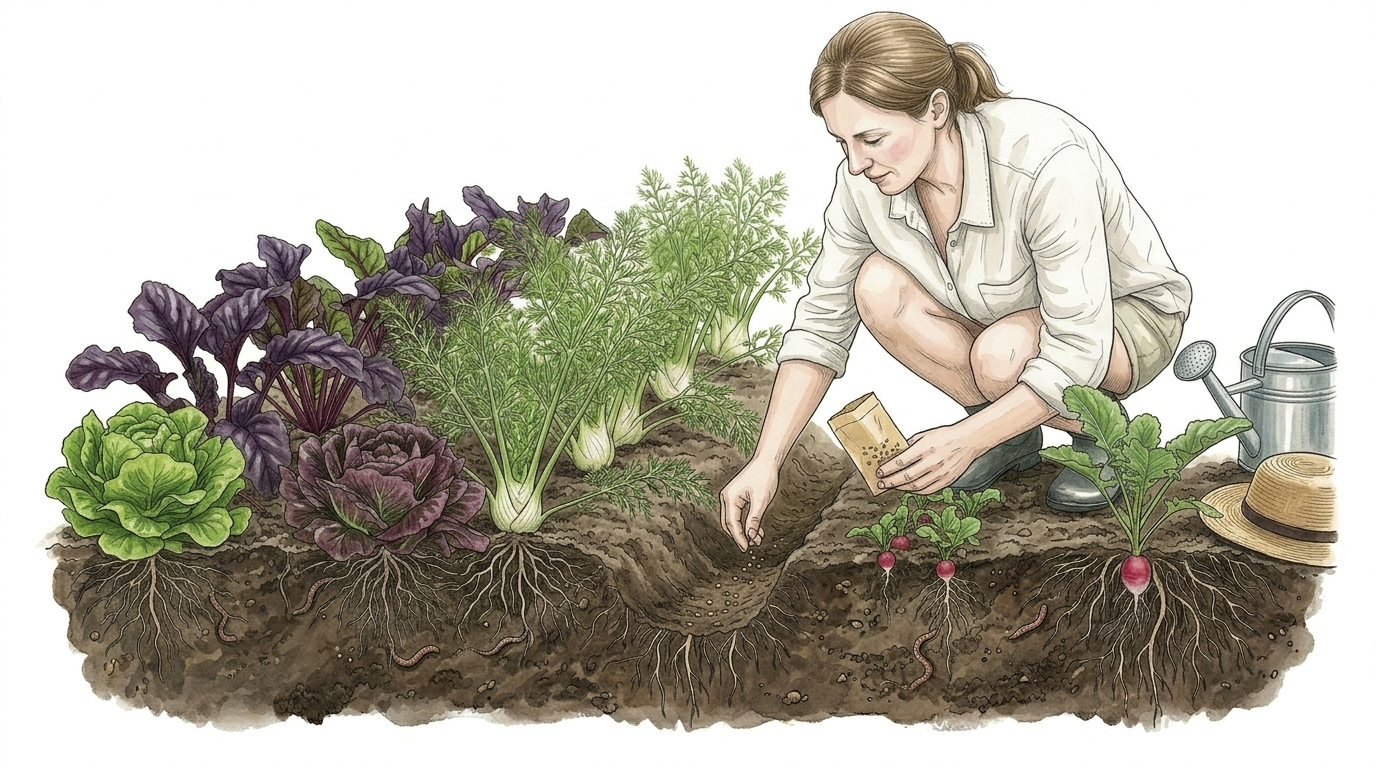
Guide
What to Sow in June: Succession Crops and Autumn Harvests
Discover which vegetables to sow in June for succession planting, filling gaps in beds, and planning autumn harvests.