Plant Profile
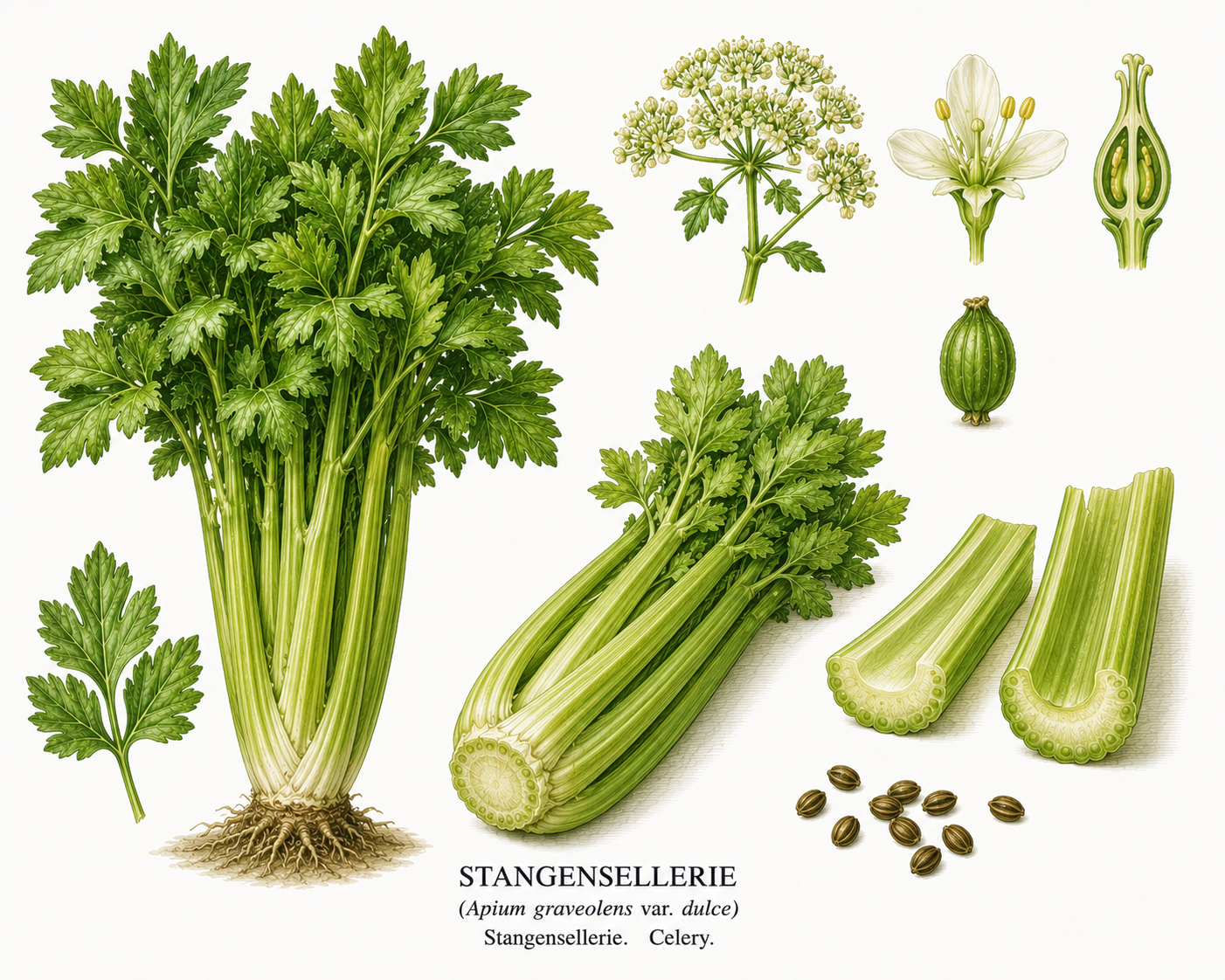
celeryApium graveolens var. dulce
Crisp, aromatic stalks, enjoyable raw or cooked.
Quick profile
Key data
Suitable growing locations:
Indoor & direct sowing
celery: Sowing and germination
Sow from February in seed trays at 15–20 °C. Do not sow too early to avoid bolting.
Direct sowing possible from mid-April once soil is warm. Row spacing 40 cm.
Planting & site
celery: Planting and spacing
Plant out from late April after the last frosts. Spacing 30–40 cm in the row.
Temperature & frost
celery: Temperature and site
Water & nutrients
celery: Water, nutrients and care
Container & growth
celery: Container, support and growth
Year plan
celery Calendar
The main celery harvest period runs from July to October.
Relevant now
June
- WaterDry period: Ensure even water supply.
- Weed controlAs needed: Keep beds weed-free.
Next up
July
- HarvestStalks > 2 cm diameter: Harvest stalks from outer to inner.
Monthly tasks
Single tasks from monthly data; repeated seasonal windows are shown in the overview above.
January
Quiet month
February
Direct sowing
- Sow indoorsHeated propagation area available: Cover seeds lightly, keep evenly moist.
March
Growing
- Prick outSeedlings have first true leaves: Prick out into individual pots 8 cm diameter.
April
Planting
- PlantingNo frost forecast: Spacing 30–40 cm, row spacing 40 cm.
Growing
- Harden offDaytime temperatures above 10 °C: Place plants outdoors in sheltered spot during day, bring in at night.
May
Direct sowing
- Direct sowSoil temperature > 10 °C: Sow seeds 0.5 cm deep, keep moist.
Growing
- Water regularlyDry weather: Even moisture is important.
June
Growing
- WaterDry period: Ensure even water supply.
- Weed controlAs needed: Keep beds weed-free.
August
Harvest
- HarvestMain harvest period.
September
Harvest
- HarvestContinue harvest.
October
Harvest
- Final harvestBefore first hard frost: Harvest all before frost.
November
Quiet month
December
Quiet month
Flowering & pollination
celery Flowering & pollination
Self-fertility
teilweise selbstfruchtbar, aber Fremdbestäubung bevorzugt
Pollinator needed
yes
Overview
Celery is primarily insect-pollinated. Self-pollination is possible but rare. Cross-pollination is recommended for seed production.
Notes
Main pollinators are flies, small beetles, and solitary bees. Honey bees visit the flowers only occasionally.
Pruning & care
celery Pruning & care
Pruning type
Kein Schnittsystem.
Tools and hygiene
Not applicable.
Companion guide
celery Companion guide
Use & storage
celery Use & storage
Harvest starts in July once stalks reach desired thickness. Harvest before heavy frost.
Storage
Short-term storage (refrigerator).
Storage life
1–2 weeks in the refrigerator; at room temperature only 2–3 days.
Harvest
Harvest starts in July once stalks reach desired thickness. Harvest before heavy frost.
Processing
After harvest
Remove leaves after harvest and store stalks cool and moist. Use or process quickly as stalks lose aroma rapidly.
Edibility & safety
celery Edibility & safety
For people
In brief: which parts are edible, which parts remain risky, and whether raw consumption makes sense.
Safety notes
Celery contains small amounts of psoralens (furocoumarins), which can cause skin irritation in sensitive individuals combined with UV light. Harmless in normal consumption amounts.
Animal safety
For many animals, this plant is generally low-risk: 12 animal types are rated suitable or mostly suitable. Quantity, plant part, and individual tolerance still matter.
Each row shows which parts are more suitable and which parts are critical.
Companion animals
 Dog
Dogstalks, leaves
root, seeds
stalks, leaves
root, seeds
UV light exposure
nausea, vomiting, diarrhea
contact a vet if symptoms appear
Celery can be used as an occasional treat for dogs in moderation. However, the root and seeds should be avoided.
Open animal page Cat
Catstalks, leaves
seeds
stalks, leaves
seeds
Excessive seed consumption, UV light with skin contact to psoralens
Gastrointestinal upset, Vomiting, Diarrhea
observe
Celery is suitable for cats in small amounts as an occasional treat. Stalks and leaves are generally safe, while seeds should be avoided due to concentrated essential oils and psoralens. Excessive consumption may cause mild gastrointestinal upset. Skin contact with plant sap followed by sunlight poses a low risk of photosensitivity. Consult a veterinarian if symptoms persist.
Open animal page Rabbit
No suitable parts listed
No risk parts listed
No suitable parts listed
No risk parts listed
unknown
Celery stalks and leaves are suitable for rabbits in moderation as a treat. Seeds contain concentrated psoralens and essential oils and should be avoided. With normal stalk feeding, mild overconsumption risks like soft stool possible. No known severe toxicities for rabbits with typical use.
Open animal page Guinea pig
No suitable parts listed
No risk parts listed
No suitable parts listed
No risk parts listed
unknown
Celery (stalks and leaves) is suitable for guinea pigs in moderation and is commonly fed as a treat. Seeds contain higher concentrations of essential oils and psoralens and should be avoided. With normal feeding of edible parts, serious poisoning is not expected. Excessive amounts may cause gastrointestinal upset. Contact with seeds and sunlight may cause skin irritation, but this is rare with normal handling.
Open animal page Hamster
stalks, leaves
seeds
stalks, leaves
seeds
Overfeeding, Sensitivity to psoralens
Gastrointestinal upset with excessive intake
 Budgie
stalks, leaves
seeds
stalks, leaves
seeds
Excessive seed consumption, Sensitivity to psoralens
Gastrointestinal upset, Diarrhea
observe
Celery stalks and leaves are suitable for budgies in small amounts as an occasional treat. Seeds contain higher concentrations of psoralens and essential oils and should be avoided. Excessive consumption may cause gastrointestinal upset. No known severe poisoning cases documented in birds.
Open animal pageFarm animals
 Horse
Horsestalks, leaves
root, seeds
stalks, leaves
root, seeds
Overconsumption, Sensitivity to psoralens, Use of non-food-grade celery
Gastrointestinal upset with overconsumption, Photosensitivity from psoralen contact with UV light
observe
Celery (stalks and leaves) is suitable for horses in small amounts as an occasional treat. Root and seeds contain higher concentrations of psoralens and essential oils and should be avoided. Overconsumption may cause gastrointestinal upset. Contact with psoralen-containing sap followed by sunlight poses a low risk of photosensitivity. Normal feed amounts should not be exceeded.
Open animal page Chicken
stalks
leaves, seeds
stalks
leaves, seeds
Overconsumption, Consumption of leaves or seeds
Gastrointestinal upset, Diarrhea
observe
Celery stalks are suitable for chickens in small amounts as a treat. Leaves and seeds contain higher concentrations of essential oils and psoralens, which may cause gastrointestinal upset if consumed excessively. No evidence of severe toxicity in chickens available.
Open animal page Duck
Duckstalks, leaves
seeds
stalks, leaves
seeds
Overconsumption, Seed ingestion
Gastrointestinal upset if overconsumed
observe
Celery stalks and leaves are safe for ducks in moderation. Seeds contain concentrated essential oils and psoralens that may cause gastrointestinal upset if ingested in large amounts. No species-specific toxicity cases known, but cautious feeding is recommended based on general botany and similar poultry tolerance.
Open animal page Goose
Goosestalks, leaves
seeds
stalks, leaves
seeds
Excessive seed consumption, Sensitivity to psoralens
Gastrointestinal upset with excessive consumption, Skin irritation from seed contact with UV light
observe
Celery is suitable for geese in small amounts as a treat. Stalks and leaves are generally safe, while seeds should be used cautiously due to their high content of essential oils and psoralens. Under normal feeding of stalks and leaves, no poisoning symptoms are expected. Seed consumption may cause gastrointestinal upset. The plant contains small amounts of psoralens, which can cause skin irritation in sensitive…
Open animal page Sheep
Sheepstalks, leaves
seeds
stalks, leaves
seeds
Excessive seed consumption, Sensitivity to psoralens
Gastrointestinal upset with excessive intake, Photosensitization with seeds and UV light
observe
Celery is suitable for sheep in small amounts as a treat. Stalks and leaves are safe; seeds should be fed sparingly due to their high psoralen and essential oil content. Under normal forage feeding, there is no risk.
Open animal page Goat
Goatstalks, leaves
seeds
stalks, leaves
seeds
Seed consumption, Overfeeding, UV exposure with seeds
Gastrointestinal upset with overconsumption, Photosensitization with seeds and UV light
observe
Celery (stalks and leaves) is generally safe for goats in moderation. Seeds contain higher concentrations of psoralens and essential oils and should be avoided. Under normal feeding of stalks and leaves, poisoning is unlikely. With seed consumption, possible gastrointestinal upset or photosensitization.
Open animal page Cattle
stalks, leaves
seeds
stalks, leaves
seeds
Excessive seed consumption, High feeding frequency
Gastrointestinal upset with excessive consumption
observe
Celery (stalks and leaves) is safe and nutritious for cattle in moderation. Seeds contain concentrated essential oils and psoralens that may cause irritation in large amounts. Normal feeding as part of a mixed ration is unproblematic.
Open animal page Pig
Pigstalks, leaves
seeds
stalks, leaves
seeds
Excessive seed consumption, Sensitivity to psoralens
Gastrointestinal upset with excessive consumption, Skin irritation from seed contact and UV light
observe
Celery is safe for pigs in normal amounts, with stalks and leaves suitable for feeding. Seeds should be avoided due to their high content of essential oils and psoralens. At typical feeding levels, there is low risk of gastrointestinal upset.
Open animal pageThese guidelines are for general information only and do not replace veterinary diagnosis. If critical plant parts were ingested or the animal shows unusual behaviour or symptoms, seek veterinary advice.
Max risk
unknown
Highest status
not established
Urgency
contact a vet if symptoms appear
Saving seed
celery Saving seed
Seed viability
3 - 5 years
Practical tips
celery Practical tips
Common beginner mistakes
Success pattern
Regular watering and consistent nutrient supply from the seedling stage.
High-impact tips
Mulching retains soil moisture and reduces weeds.
Plant Profile
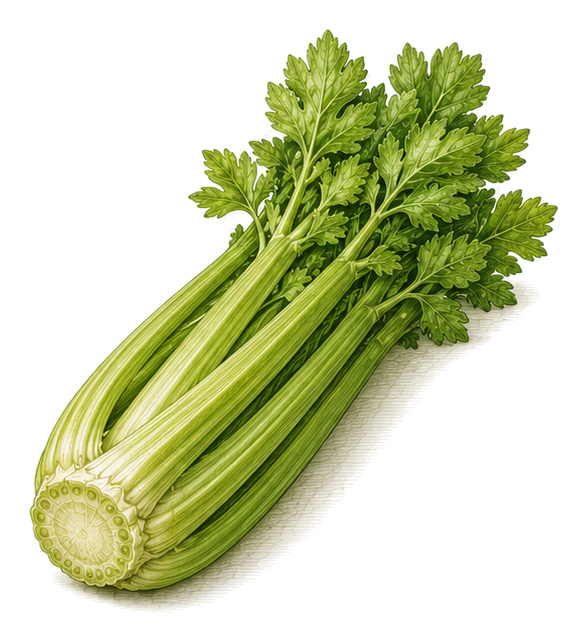
Additional plant images

Health
Pests, Diseases
Pests
Carrot fly
- Mining tunnels in stalks
- Browning of leaves
Celery aphid
- Leaf curling
- Sticky honeydew
- Sooty mold
Diseases
Celery scab (Septoria leaf spot)
- Brown spots on leaves
- Yellow halos around spots
- Leaf drop
Fusarium wilt
- Yellowing and wilting of leaves
- Brown vascular tissue in stalk
Deficiencies
- Pale green to yellow leaves
- Stunted growth
- Small, thin stalks
- Brown leaf edges
- Weak stalks
- Increased disease susceptibility
Plant health
Diagnosis help
celery Diagnosis help
Pest groups
Disease groups
Prevention
Diagnosis
If brown spots with yellow halos appear on leaves, it is likely Septoria leaf spot. Yellow, wilting leaves with discolored vascular tissue suggest Fusarium wilt. Aphids are recognized by leaf curling and sticky residue.
Cultural prevention
Monitoring
First response
Diagnostic rules
Brown spots on leaves with yellow margin
Possible causes: Septoria Blattflecken
- Examine spots on leaf underside with a magnifying glass
- Check soil moisture
Yellow, wilting leaves, dark vascular tissue
Possible causes: Fusarium wilt
- Check cut stalk for brown rings
- Soil test for Fusarium
FAQ
When to sow celery?
Sow from February indoors at 15–20 °C. Direct sowing is possible from mid-April.
How often should celery be watered?
Even moisture is crucial. Water daily during dry spells, avoid waterlogging.
Can celery be grown in a pot?
Yes, in a container with at least 10 L volume and good drainage. Water and fertilize regularly.
Why does celery become bitter?
Bitter stalks often result from drought stress, high temperatures, or when the plant bolts (flowers).
Which celery varieties are recommended?
Proven varieties include 'Tall Utah', 'Golden Self-Blanching', and 'Tango' (more bolt-resistant).
Is celery safe for Dog?
celery is classified as moderation only for Dog. Risk: unknown. Urgency: contact a vet if symptoms appear. Celery can be used as an occasional treat for dogs in moderation. However, the root and seeds should be avoided.
Is celery safe for Cat?
celery is classified as moderation only for Cat. Risk: unknown. Urgency: observe. Celery is suitable for cats in small amounts as an occasional treat. Stalks and leaves are generally safe, while seeds should be avoided due to concentrated essential oils and psoralens. Excessive consumption may cause mild gastrointestinal upset. Skin contact with plant sap followed by sunlight poses a low risk of photosensitivity. Consult a veterinarian if symptoms persist.
Is celery safe for Rabbit?
celery is classified as not established for Rabbit. Risk: unknown. Urgency: unknown. Celery stalks and leaves are suitable for rabbits in moderation as a treat. Seeds contain concentrated psoralens and essential oils and should be avoided. With normal stalk feeding, mild overconsumption risks like soft stool possible. No known severe toxicities for rabbits with typical use.
Is celery safe for Guinea pig?
celery is classified as not established for Guinea pig. Risk: unknown. Urgency: unknown. Celery (stalks and leaves) is suitable for guinea pigs in moderation and is commonly fed as a treat. Seeds contain higher concentrations of essential oils and psoralens and should be avoided. With normal feeding of edible parts, serious poisoning is not expected. Excessive amounts may cause gastrointestinal upset. Contact with seeds and sunlight may cause skin irritation, but this is rare with normal handling.
Guides
Related guides
Guide
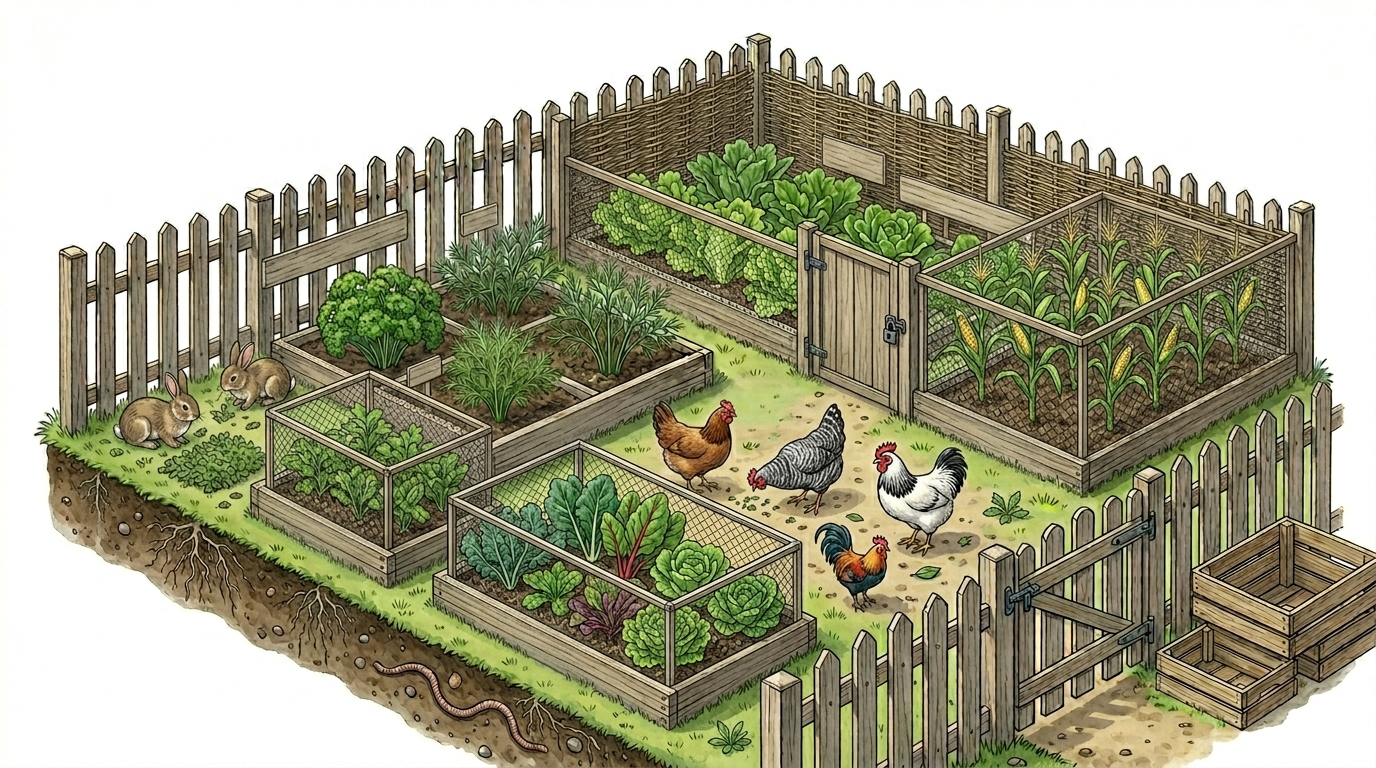
Chickens in the Garden: Safe Plants and Zones
Learn how to design a chicken-friendly garden with suitable plants, protected beds, and well-planned activity areas.
Guide
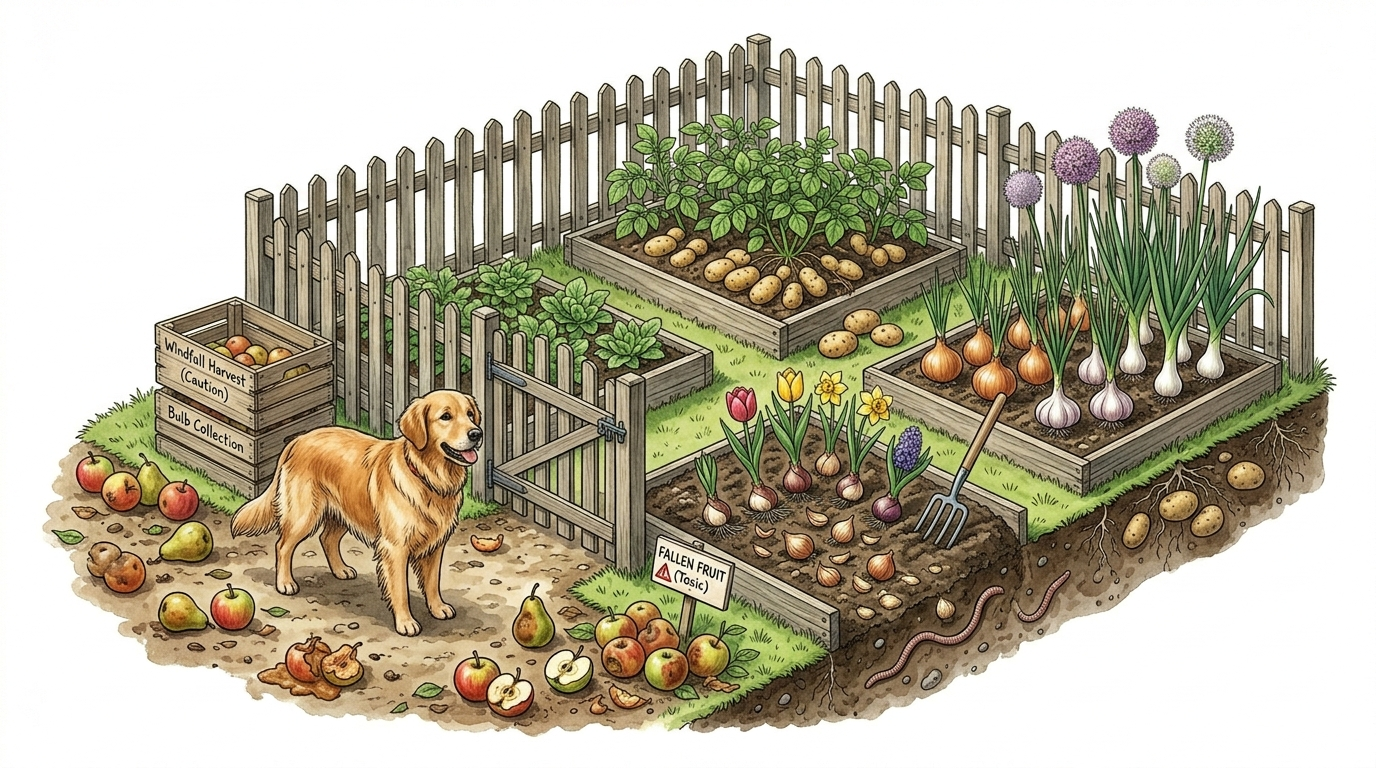
Dogs in the Garden: Windfall Fruit and Risks
Keep your garden dog-safe by managing windfall fruit, seeds, stored crops, and potentially problematic plant parts.
Guide
Horse Pastures and Garden Plants: Safety Checks
Learn how to identify risks near horse pastures, fences, turnout areas, fruit trees, and garden planting zones.
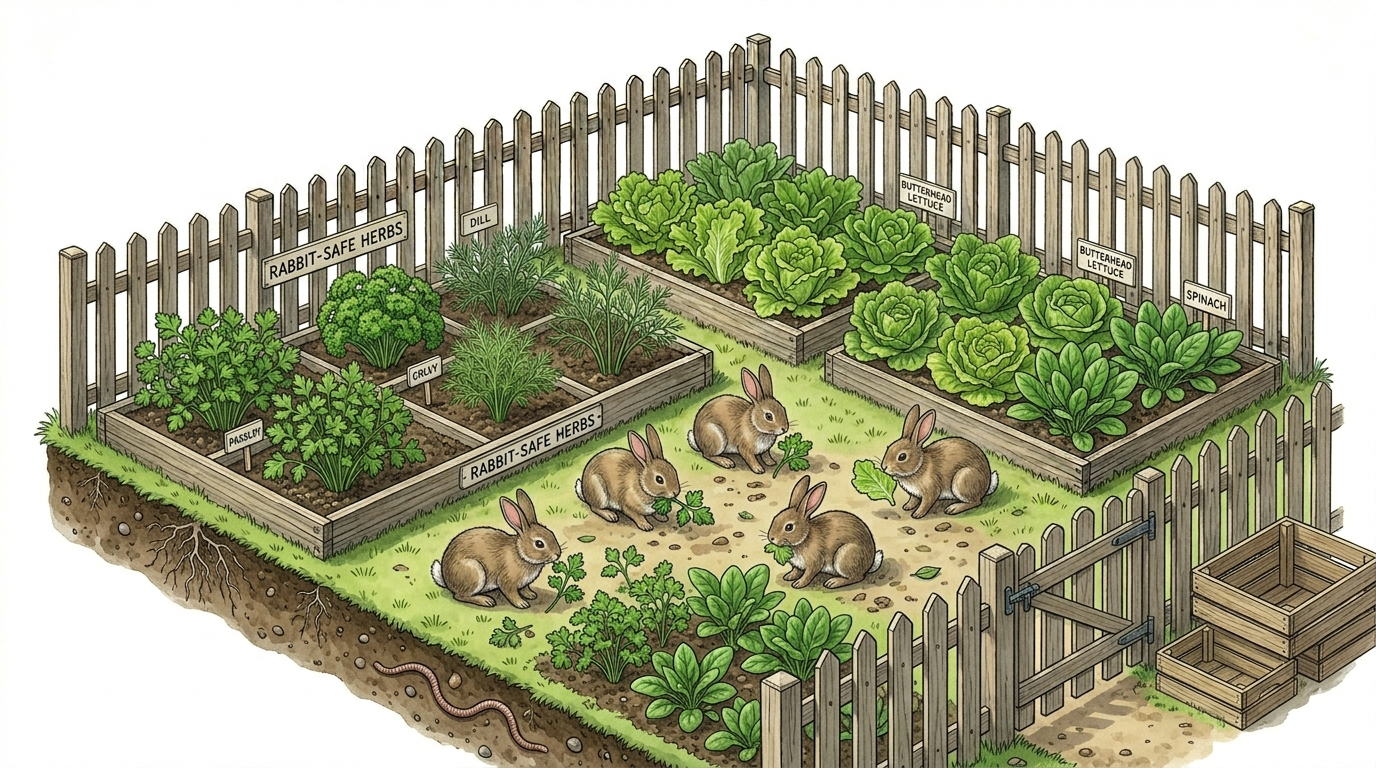
Guide
Rabbits in the Garden: Herbs and Vegetables
Learn how to choose suitable herbs and vegetables for rabbits, grow feeding plants, and plan a rabbit-friendly garden.
Internal links
Related plants
Carrot
Family Apiaceae
Both belong to the carrot family.
celeriac
Celery scab and Fusarium wilt affect both celery forms.
Both are varieties of the same species, but celeriac is grown for the thick root, stem celery for the stalks.
Cabbage
Both heavy feeders.
Celery (species)
Parent species
parsley
Family Apiaceae.
Fennel
Family Apiaceae.
Asparagus
Stem-type vegetable.
Leaf celery
Grown for leaves, stem celery for thick stalks.
Sources
Public sources
- Wikidata entity
Wikidata · 2026-05-15
- GBIF species match
GBIF · 2026-05-15
- English Wikipedia: Apium graveolens dulce
Wikipedia · 2026-05-15