Profile

StrawberryFragaria

The strawberry is the queen of the summer home garden. Whether in beds, raised beds, or hanging baskets—its versatility and the incomparable taste of freshly picked fruit make it indispensable. Botanically, the fruits are aggregate accessory fruits, where the actual seeds are small yellow achenes on the surface of the red receptacle.
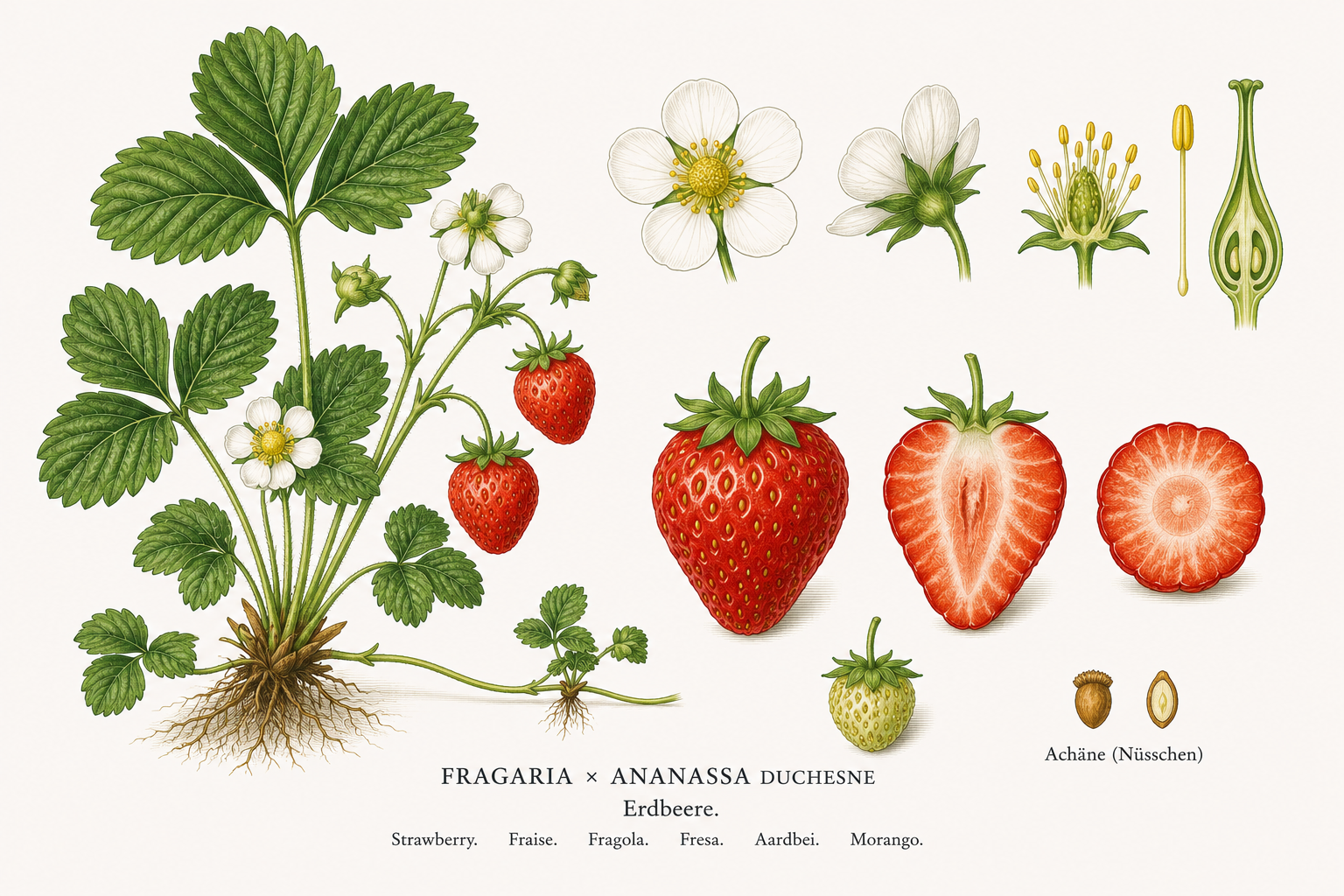
Strawberry (Fragaria): plant portrait for plant portrait - Fruit, Rose family, Harvest May, Jun, Jul, Aug, Sep, Oct
Strawberry: plant portrait. harvest: May, Jun, Jul, Aug, Sep, Oct.

Quick profile

Key data

Planting

Apr, May, Jun, Sep

Harvest

May, Jun, Jul, Aug, Sep, Oct

Water

medium

Good neighbors

OnionGarlicBorage

Avoid

Brassicas

Growing data

Strawberry Growing data

Seed depth

0.5 - 1 cm

Plant spacing

25 - 40 cm

Row spacing

50 - 70 cm

Germination temp

15 - 20 °C

Sowing and germination

Seed depth0.5 - 1 cm
Germination temp15 - 20 °C
Germination time14 - 28 days
Seed viability2 - 3 years
Light germinatorNo
Dark germinatorYes
Cold germinatorNo
Stratification neededNo
Pre-soaking recommendedNo
Direct sowing possibleYes
Pre-culture recommendedYes

Planting and spacing

Plant spacing25 - 40 cm
Row spacing50 - 70 cm
Plants per m²5 - 8 per m²
Bed widthfrom 60 cm
Spacing3 plants per square foot

Temperature and site

Soil temperature15 - 18 °C
Growing temperaturefrom 10 °C
Optimal temperature18 - 25 °C
Frost sensitiveNo
Late frost sensitiveYes
Heat tolerancemedium
Cold tolerancehigh

Water, nutrients and care

Watermedium
Critical water phasesFlowering, Fruit development, Growth phase
Watering methodDrip irrigation or watering at the base
Droughthigh
Waterlogging sensitiveYes
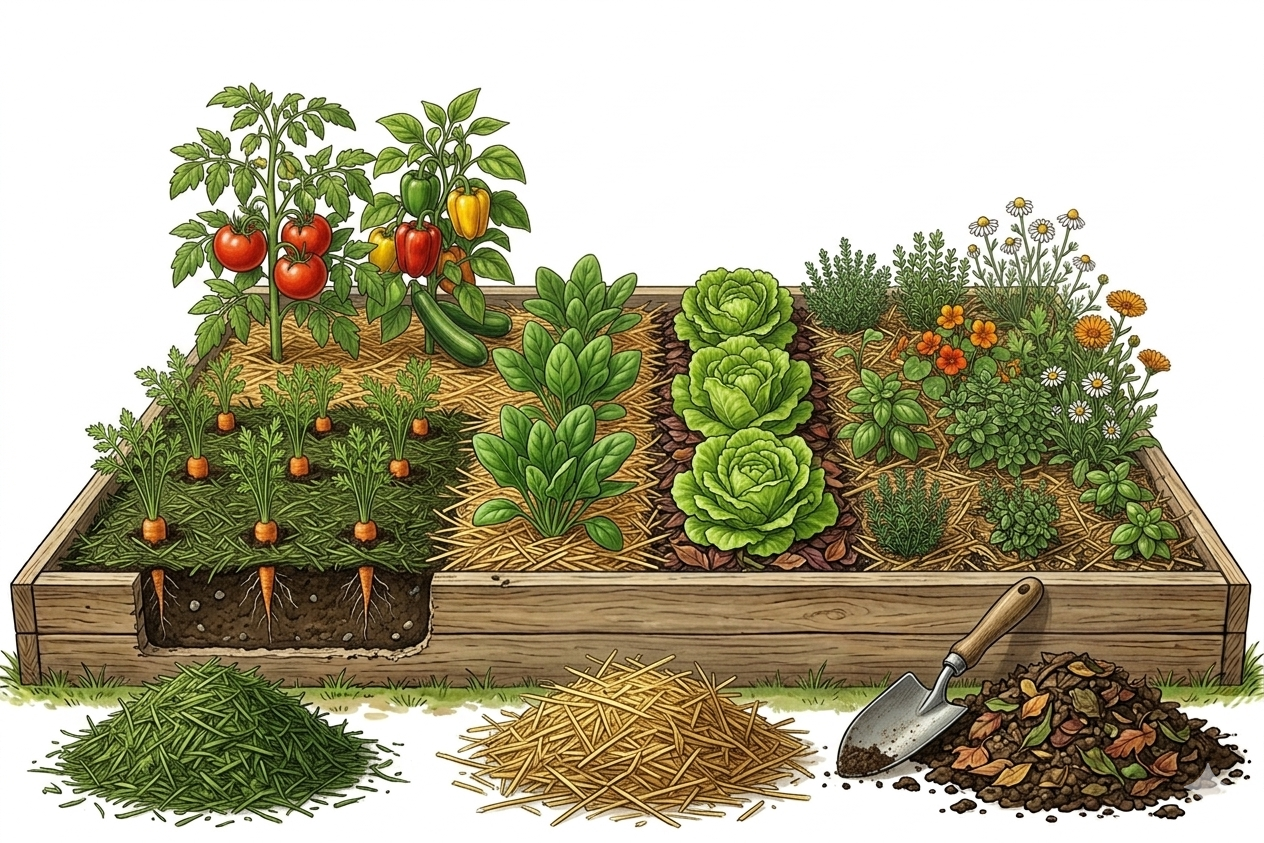
Mulching recommendedYes
Nutrient needmedium_feeder
Compost recommendedYes
Fertilizer sensitivitymedium

Container, support and growth

Container suitableYes
Pot sizeVolume: from 10 l; Recommended: from 20 l; Diameter: from 30 cm; Depth: from 20 cm
SupportNo
Height15 - 30 cm
Width30 - 50 cm
Root depth20 - 40 cm
Yield100 - 500 g

Year plan

Strawberry Calendar

All plants
Indoor sowingDirect sowingPlantingHarvest

Indoor sowing

No data

Strawberries are typically not sown indoors; they are propagated as young plants or by dividing existing ones.

Direct sowing

MarAprMaySep

Direct sowing is possible, but germination can be irregular. Young plants are often preferred.

Planting

AprMayJunSep

Young plants can be set out after the last frosts. Planting in late summer/early autumn allows for good establishment before winter.

Harvest

MayJunJulAugSepOct

Harvest time varies by variety and climate. Summer-bearing types ripen mainly in early summer, while everbearing varieties produce fruit into autumn.

Year plan
  1. Prepare soil, incorporate compost
  2. Start early indoor sowing
  3. Plant out young plants
  4. Perform direct sowing
  5. Water regularly
  6. Weed
  7. Main harvest period
  8. Water and fertilize
  9. Continue harvesting
  10. Prune plants after harvest
  11. Harvest everbearing varieties
  12. Loosen soil and fertilize
  13. Autumn planting
  14. Prepare soil for next year
  15. Final harvest
  16. Winter preparation (mulching)
  17. Winter dormancy
  18. Frost protection

Growing

Strawberry Site, soil and care

Spacing

25 - 40 cm

Storage

Storage temperature: 2-5°C, Humidity requirement: high

  • Place straw under the fruits to prevent grey mold and keep the berries clean.
  • Cut back once-bearing varieties completely after harvest to promote vitality.

Pruning

Strawberry Pruning

seasonal herbaceous clearing

Goal

seasonal herbaceous clearing

Pruning timing

spring

Mar

Cleaning cut Removal of winter leaves to make room for new growth.

summer

JulAug

Rejuvenation For once-bearing varieties, cut approx. 5cm above the crown.

Remove

  • Old, brown foliage in spring
  • Excess runners during the season
  • Complete foliage after harvest (once-bearing only)
  • Dried fruit stalks

Preserve

  • The crown (growing point)
  • Strong runners for targeted propagation
  • Healthy, young leaves on everbearing varieties

Avoid

  • Damaging the plant crown during cutting
  • Pruning everbearing varieties in summer
  • Using blunt shears (risk of bruising)

Tools and hygiene

Disinfect shears after contact with Botrytis-infected parts.

Companion guide

Strawberry Companion guide

Companion guide

Good neighbors

OnionGarlicBorage

Avoid

Brassicas

Health

Pests, Diseases

FAQ

Why are my strawberries yielding less in the second year?

It is often due to nutrient deficiency or exhaustion. Strawberries should be moved to a new location every 3 years.

Related plants

Raspberry

Same family

Blackcurrant

Same crop group

Blackberry

Shared diseases

Susceptible to grey mold (Botrytis).

Tomato

Similar nutrient needs

Both require high potassium during fruit development.

Cucumber

Similar water needs

Sources

Public sources

  1. Wikidata entity

    Wikidata · 2026-05-13

  2. GBIF species match

    GBIF · 2026-05-13

  3. Deutschsprachige Wikipedia: Erdbeeren

    Wikipedia · 2026-05-13

  4. English Wikipedia: Fragaria

    Wikipedia · 2026-05-13

Details

More public plant data

Names
Common

Strawberry

Plural

Strawberries

BotanicalFragaria
Synonyms
  1. strawberry
  2. strawberries
Common synonyms
  1. strawberry
  2. strawberries
Regional names
Historical names
Market names
Misspellings
Search terms
  1. Strawberry
  2. Fragaria
Taxonomy
KingdomPlantae
Clades
  1. Tracheophytes
  2. Angiosperms
  3. Eudicots
  4. Rosids
OrderRosales
Family botanicalRosaceae
Family

Rose family

Family idrosaceae
SubfamilyRosoideae
GenusFragaria
Hybrid statusnatural_hybrid
Classification
Main groupFruit
Sub groupBerry
Crop groupFruit
Life cyclePerennial
Perennialyes
Woodyno
Treeno
Shrubno
Edible parts
  1. Fruit
Nutrient groupFruit
Calendar
Sowing indoor
Notes

Strawberries are typically not sown indoors; they are propagated as young plants or by dividing existing ones.

Sowing outdoor
Months
  1. 3
  2. 4
  3. 5
  4. 9
Earliest month3
Latest month9
Notes

Direct sowing is possible, but germination can be irregular. Young plants are often preferred.

Planting out
Months
  1. 4
  2. 5
  3. 6
  4. 9
Earliest month4
Latest month9
Notes

Young plants can be set out after the last frosts. Planting in late summer/early autumn allows for good establishment before winter.

Harvest
Months
  1. 5
  2. 6
  3. 7
  4. 8
  5. 9
  6. 10
Earliest month5
Latest month10
Notes

Harvest time varies by variety and climate. Summer-bearing types ripen mainly in early summer, while everbearing varieties produce fruit into autumn.

Month tasks
3
  1. Prepare soil, incorporate compost

  2. Start early indoor sowing

  3. Remove old mulch layer

4
  1. Plant out young plants

  2. Perform direct sowing

  3. Mulch

  4. First fertilization

5
  1. Water regularly

  2. Weed

  3. Remove runners

  4. Harvest first fruits

6
  1. Main harvest period

  2. Water and fertilize

  3. Check runners

  4. Install bird protection

7
  1. Continue harvesting

  2. Prune plants after harvest

  3. Establish new plants from runners

8
  1. Harvest everbearing varieties

  2. Loosen soil and fertilize

  3. Prepare for autumn planting

9
  1. Autumn planting

  2. Prepare soil for next year

  3. Mulch for winter protection

10
  1. Final harvest

  2. Winter preparation (mulching)

  3. Repot / Create new beds

11
  1. Winter dormancy

  2. Frost protection

12
  1. Winter dormancy

  2. Frost protection

Month tasks structured
3
  1. TaskBoden vorbereiten und Kompost einarbeiten.
    Label

    Prepare soil, incorporate compost

    Priorityhigh
    Months
    1. 3
    Conditionbefore planting
    Estimated effortmedium
    Notes

    Ensures soil is loose and nutrient-rich.

  2. TaskBei früher Aussaat im Haus: Aussaat starten.
    Label

    Start early indoor sowing

    Prioritymedium
    Months
    1. 3
    Conditionfor early harvest
    Estimated effortlow
    Notes

    Only for varieties intended for very early harvest.

  3. TaskBei Bedarf: Alte Mulchschicht entfernen.
    Label

    Remove old mulch layer

    Prioritylow
    Months
    1. 3
    Conditionif present
    Estimated effortlow
    Notes

    Removes dead material and promotes soil warming.

4
  1. TaskJungpflanzen auspflanzen.
    Label

    Plant out young plants

    Priorityhigh
    Months
    1. 4
    2. 5
    Conditionafter last frost
    Estimated effortmedium
    Notes

    Ensure adequate spacing.

  2. TaskBei Direktsaat: Aussaat durchführen.
    Label

    Perform direct sowing

    Prioritymedium
    Months
    1. 4
    2. 5
    Conditionsoil temperature > 10°C
    Estimated effortlow
    Notes

    Observe sowing depth and keep moist.

  3. TaskMulchen zur Feuchtigkeitserhaltung und Unkrautunterdrückung.
    Label

    Mulch

    Prioritymedium
    Months
    1. 4
    2. 5
    Conditionafter planting/sowing
    Estimated effortlow
    Notes

    Prevents drying out and suppresses weeds.

  4. TaskErste Düngergabe bei Bedarf.
    Label

    First fertilization

    Prioritymedium
    Months
    1. 4
    Conditionafter establishment
    Estimated effortlow
    Notes

    Use a balanced berry fertilizer.

5
  1. TaskRegelmäßig wässern, besonders während der Blüte und Fruchtbildung.
    Label

    Water regularly

    Priorityhigh
    Months
    1. 5
    2. 6
    3. 7
    Conditiondry periods
    Estimated effortmedium
    Notes

    Avoid waterlogging.

  2. TaskUnkraut jäten.
    Label

    Weed

    Priorityhigh
    Months
    1. 5
    2. 6
    3. 7
    4. 8
    Conditionas needed
    Estimated effortmedium
    Notes

    Minimize competition for nutrients and water.

  3. TaskAusläufer entfernen (außer bei Vermehrungsabsicht).
    Label

    Remove runners

    Prioritymedium
    Months
    1. 5
    2. 6
    3. 7
    Conditionto promote fruit production
    Estimated effortmedium
    Notes

    Directs plant energy towards fruit production.

  4. TaskErste Früchte ernten.
    Label

    Harvest first fruits

    Priorityhigh
    Months
    1. 5
    2. 6
    Conditionfruits are ripe
    Estimated effortmedium
    Notes

    Pick fully colored fruits.

6
  1. TaskHaupt-Erntezeit für viele Sorten.
    Label

    Main harvest period

    Priorityhigh
    Months
    1. 6
    2. 7
    Conditionpeak season
    Estimated efforthigh
    Notes

    Harvest daily or every other day to maintain quality.

  2. TaskRegelmäßig gießen und düngen.
    Label

    Water and fertilize

    Priorityhigh
    Months
    1. 6
    2. 7
    Conditionduring fruiting
    Estimated effortmedium
    Notes

    Balanced fertilization to support fruit development.

  3. TaskAusläufer kontrollieren.
    Label

    Check runners

    Prioritymedium
    Months
    1. 6
    2. 7
    Conditionongoing
    Estimated effortlow
    Notes

    Remove if not intended for propagation.

  4. TaskBei Bedarf: Schutz vor Vögeln anbringen.
    Label

    Install bird protection

    Prioritymedium
    Months
    1. 6
    Conditionduring ripening
    Estimated effortlow
    Notes

    Use nets or other barriers.

7
  1. TaskErnte fortsetzen.
    Label

    Continue harvesting

    Priorityhigh
    Months
    1. 7
    2. 8
    Conditionfruits are ripe
    Estimated effortmedium
    Notes

    Regular harvesting encourages new fruit formation in everbearing varieties.

  2. TaskNach der Ernte: Verblühte Pflanzen zurückschneiden (bei einmaltragenden Sorten).
    Label

    Prune plants after harvest

    Prioritymedium
    Months
    1. 7
    Conditionafter fruiting (once-bearing types)
    Estimated effortmedium
    Notes

    Promotes the formation of new, strong runners for the next season.

  3. TaskNeue Pflanzen aus Ausläufern etablieren.
    Label

    Establish new plants from runners

    Prioritymedium
    Months
    1. 7
    2. 8
    3. 9
    Conditionfrom healthy runners
    Estimated effortmedium
    Notes

    Plant runners into pots or directly into the bed.

8
  1. TaskErnte bei immertragenden Sorten.
    Label

    Harvest everbearing varieties

    Priorityhigh
    Months
    1. 8
    2. 9
    3. 10
    Conditionfruits are ripe
    Estimated effortmedium
    Notes

    Continuous harvest until the first frost.

  2. TaskBoden lockern und bei Bedarf düngen.
    Label

    Loosen soil and fertilize

    Prioritymedium
    Months
    1. 8
    Conditionafter harvest / before autumn planting
    Estimated effortlow
    Notes

    Improves soil structure and nutrient supply for autumn plantings.

  3. TaskVorbereitung für Herbstpflanzung oder -vermehrung.
    Label

    Prepare for autumn planting

    Prioritymedium
    Months
    1. 8
    Conditionplanning
    Estimated effortlow
    Notes

    Select suitable varieties and locations.

9
  1. TaskHerbstpflanzung von Jungpflanzen oder Ausläufern.
    Label

    Autumn planting

    Priorityhigh
    Months
    1. 9
    Conditionideal planting window
    Estimated effortmedium
    Notes

    Allows for good root development before winter.

  2. TaskBoden für das nächste Jahr vorbereiten.
    Label

    Prepare soil for next year

    Prioritymedium
    Months
    1. 9
    Conditionafter harvest
    Estimated effortmedium
    Notes

    Incorporate compost, sow green manure.

  3. TaskMulchen zur Überwinterungsvorbereitung.
    Label

    Mulch for winter protection

    Prioritymedium
    Months
    1. 9
    2. 10
    Conditionbefore frost
    Estimated effortlow
    Notes

    Protects the roots from severe frost.

10
  1. TaskLetzte Ernte bei späten Sorten.
    Label

    Final harvest

    Priorityhigh
    Months
    1. 10
    Conditionfruits are ripe
    Estimated effortlow
    Notes

    Harvest before the first hard frost.

  2. TaskPflanzen für den Winter vorbereiten: Mulchschicht aufbringen.
    Label

    Winter preparation (mulching)

    Priorityhigh
    Months
    1. 10
    Conditionbefore ground freezes
    Estimated effortmedium
    Notes

    A thick layer of leaves or straw protects the plants.

  3. TaskBei Bedarf: Umtopfen oder neue Beete anlegen.
    Label

    Repot / Create new beds

    Prioritymedium
    Months
    1. 10
    Conditionfor container plants or new plantings
    Estimated effortmedium
    Notes

    Ensures plants overwinter well or establish properly.

11
  1. TaskWinterruhe.
    Label

    Winter dormancy

    Prioritylow
    Months
    1. 11
    2. 12
    3. 1
    4. 2
    Conditiondormant season
    Notes

    Plants require a rest period.

  2. TaskSchutz vor starkem Frost bei Bedarf.
    Label

    Frost protection

    Prioritymedium
    Months
    1. 11
    2. 12
    3. 1
    4. 2
    Conditionprolonged deep frost
    Estimated effortlow
    Notes

    Additional mulch or fleece may be necessary.

12
  1. TaskWinterruhe.
    Label

    Winter dormancy

    Prioritylow
    Months
    1. 11
    2. 12
    3. 1
    4. 2
    Conditiondormant season
    Notes

    Plants require a rest period.

  2. TaskSchutz vor starkem Frost bei Bedarf.
    Label

    Frost protection

    Prioritymedium
    Months
    1. 11
    2. 12
    3. 1
    4. 2
    Conditionprolonged deep frost
    Estimated effortlow
    Notes

    Additional mulch or fleece may be necessary.

Book content
Overview

The strawberry is the queen of the summer home garden. Whether in beds, raised beds, or hanging baskets—its versatility and the incomparable taste of freshly picked fruit make it indispensable. Botanically, the fruits are aggregate accessory fruits, where the actual seeds are small yellow achenes on the surface of the red receptacle.

Structured month tasks
3
  1. TaskBoden vorbereiten, Kompost einarbeiten
    Label

    Prepare soil, incorporate compost

    Priorityhigh
    Months
    1. 3
    Conditionbefore planting
    Estimated effortmedium
    Notes

    Ensures soil is loose and nutrient-rich.

  2. TaskFrühe Aussaat im Haus starten
    Label

    Start early indoor sowing

    Prioritymedium
    Months
    1. 3
    Conditionfor early harvest
    Estimated effortlow
    Notes

    Only for varieties intended for very early harvest.

  3. TaskAlte Mulchschicht entfernen
    Label

    Remove old mulch layer

    Prioritylow
    Months
    1. 3
    Conditionif present
    Estimated effortlow
    Notes

    Removes dead material and promotes soil warming.

4
  1. TaskJungpflanzen auspflanzen
    Label

    Plant out young plants

    Priorityhigh
    Months
    1. 4
    2. 5
    Conditionafter last frost
    Estimated effortmedium
    Notes

    Ensure adequate spacing.

  2. TaskDirektsaat durchführen
    Label

    Perform direct sowing

    Prioritymedium
    Months
    1. 4
    2. 5
    Conditionsoil temperature > 10°C
    Estimated effortlow
    Notes

    Observe sowing depth and keep moist.

  3. TaskMulchen zur Feuchtigkeitserhaltung und Unkrautunterdrückung
    Label

    Mulch

    Prioritymedium
    Months
    1. 4
    2. 5
    Conditionafter planting/sowing
    Estimated effortlow
    Notes

    Prevents drying out and suppresses weeds.

  4. TaskErste Düngergabe
    Label

    First fertilization

    Prioritymedium
    Months
    1. 4
    Conditionafter establishment
    Estimated effortlow
    Notes

    Use a balanced berry fertilizer.

5
  1. TaskRegelmäßig wässern, besonders während der Blüte und Fruchtbildung
    Label

    Water regularly

    Priorityhigh
    Months
    1. 5
    2. 6
    3. 7
    Conditiondry periods
    Estimated effortmedium
    Notes

    Avoid waterlogging.

  2. TaskUnkraut jäten
    Label

    Weed

    Priorityhigh
    Months
    1. 5
    2. 6
    3. 7
    4. 8
    Conditionas needed
    Estimated effortmedium
    Notes

    Minimize competition for nutrients and water.

  3. TaskAusläufer entfernen (außer bei Vermehrungsabsicht)
    Label

    Remove runners

    Prioritymedium
    Months
    1. 5
    2. 6
    3. 7
    Conditionto promote fruit production
    Estimated effortmedium
    Notes

    Directs plant energy towards fruit production.

  4. TaskErnte erste Früchte
    Label

    Harvest first fruits

    Priorityhigh
    Months
    1. 5
    2. 6
    Conditionfruits are ripe
    Estimated effortmedium
    Notes

    Pick fully colored fruits.

6
  1. TaskHaupt-Erntezeit für viele Sorten
    Label

    Main harvest period

    Priorityhigh
    Months
    1. 6
    2. 7
    Conditionpeak season
    Estimated efforthigh
    Notes

    Harvest daily or every other day to maintain quality.

  2. TaskRegelmäßig gießen und düngen
    Label

    Water and fertilize

    Priorityhigh
    Months
    1. 6
    2. 7
    Conditionduring fruiting
    Estimated effortmedium
    Notes

    Balanced fertilization to support fruit development.

  3. TaskAusläufer kontrollieren
    Label

    Check runners

    Prioritymedium
    Months
    1. 6
    2. 7
    Conditionongoing
    Estimated effortlow
    Notes

    Remove if not intended for propagation.

  4. TaskSchutz vor Vögeln anbringen
    Label

    Install bird protection

    Prioritymedium
    Months
    1. 6
    Conditionduring ripening
    Estimated effortlow
    Notes

    Use nets or other barriers.

7
  1. TaskErnte fortsetzen
    Label

    Continue harvesting

    Priorityhigh
    Months
    1. 7
    2. 8
    Conditionfruits are ripe
    Estimated effortmedium
    Notes

    Regular harvesting encourages new fruit formation in everbearing varieties.

  2. TaskPflanzen nach der Ernte zurückschneiden (bei einmaltragenden Sorten)
    Label

    Prune plants after harvest

    Prioritymedium
    Months
    1. 7
    Conditionafter fruiting (once-bearing types)
    Estimated effortmedium
    Notes

    Promotes the formation of new, strong runners for the next season.

  3. TaskNeue Pflanzen aus Ausläufern etablieren
    Label

    Establish new plants from runners

    Prioritymedium
    Months
    1. 7
    2. 8
    3. 9
    Conditionfrom healthy runners
    Estimated effortmedium
    Notes

    Plant runners into pots or directly into the bed.

8
  1. TaskErnte bei immertragenden Sorten
    Label

    Harvest everbearing varieties

    Priorityhigh
    Months
    1. 8
    2. 9
    3. 10
    Conditionfruits are ripe
    Estimated effortmedium
    Notes

    Continuous harvest until the first frost.

  2. TaskBoden lockern und bei Bedarf düngen
    Label

    Loosen soil and fertilize

    Prioritymedium
    Months
    1. 8
    Conditionafter harvest / before autumn planting
    Estimated effortlow
    Notes

    Improves soil structure and nutrient supply for autumn plantings.

  3. TaskVorbereitung für Herbstpflanzung
    Label

    Prepare for autumn planting

    Prioritymedium
    Months
    1. 8
    Conditionplanning
    Estimated effortlow
    Notes

    Select suitable varieties and locations.

9
  1. TaskHerbstpflanzung von Jungpflanzen oder Ausläufern
    Label

    Autumn planting

    Priorityhigh
    Months
    1. 9
    Conditionideal planting window
    Estimated effortmedium
    Notes

    Allows for good root development before winter.

  2. TaskBoden für das nächste Jahr vorbereiten
    Label

    Prepare soil for next year

    Prioritymedium
    Months
    1. 9
    Conditionafter harvest
    Estimated effortmedium
    Notes

    Incorporate compost, sow green manure.

  3. TaskMulchen zur Überwinterungsvorbereitung
    Label

    Mulch for winter protection

    Prioritymedium
    Months
    1. 9
    2. 10
    Conditionbefore frost
    Estimated effortlow
    Notes

    Protects the roots from severe frost.

10
  1. TaskLetzte Ernte bei späten Sorten
    Label

    Final harvest

    Priorityhigh
    Months
    1. 10
    Conditionfruits are ripe
    Estimated effortlow
    Notes

    Harvest before the first hard frost.

  2. TaskPflanzen für den Winter vorbereiten: Mulchschicht aufbringen
    Label

    Winter preparation (mulching)

    Priorityhigh
    Months
    1. 10
    Conditionbefore ground freezes
    Estimated effortmedium
    Notes

    A thick layer of leaves or straw protects the plants.

  3. TaskUmtopfen / Neue Beete anlegen
    Label

    Repot / Create new beds

    Prioritymedium
    Months
    1. 10
    Conditionfor container plants or new plantings
    Estimated effortmedium
    Notes

    Ensures plants overwinter well or establish properly.

11
  1. TaskWinterruhe
    Label

    Winter dormancy

    Prioritylow
    Months
    1. 11
    2. 12
    3. 1
    4. 2
    Conditiondormant season
    Notes

    Plants require a rest period.

  2. TaskFrostschutz
    Label

    Frost protection

    Prioritymedium
    Months
    1. 11
    2. 12
    3. 1
    4. 2
    Conditionprolonged deep frost
    Estimated effortlow
    Notes

    Additional mulch or fleece may be necessary.

12
  1. TaskWinterruhe
    Label

    Winter dormancy

    Prioritylow
    Months
    1. 11
    2. 12
    3. 1
    4. 2
    Conditiondormant season
    Notes

    Plants require a rest period.

  2. TaskFrostschutz
    Label

    Frost protection

    Prioritymedium
    Months
    1. 11
    2. 12
    3. 1
    4. 2
    Conditionprolonged deep frost
    Estimated effortlow
    Notes

    Additional mulch or fleece may be necessary.

Cultivation specs
Seed
Seed depth cm min.0.5
Seed depth cm max.1
Light germinatorno
Dark germinatoryes
Cold germinatorno
Stratification neededno
Pre soaking recommendedno
Germination temperature c min.15
Germination temperature c max.20
Germination days min.14
Germination days max.28
Seed lifespan years min.2
Seed lifespan years max.3
Direct sowing possibleyes
Pre culture recommendedyes
Spacing
Plant spacing cm min.25
Plant spacing cm max.40
Row spacing cm min.50
Row spacing cm max.70
Recommended density per sqm min.5
Recommended density per sqm max.8
Min. bed width60 cm
Square foot gardening spacing3 plants per square foot
Spacing notes

Spacing depends on variety and growth habit. Runners can fill in the stand.

Growth dimensions
Height cm min.15
Height cm max.30
Width cm min.30
Width cm max.50
Root depth cm min.20
Root depth cm max.40
Growth speedmedium
Final size notes

Forms runners that can spread widely.

Temperature
Min. growing temperature10 °C
Optimal temperature c min.18
Optimal temperature c max.25
Max. heat tolerance30 °C
Soil temperature for sowing c min.15
Soil temperature for sowing c optimal18
Frost sensitiveno
Late frost sensitiveyes
Heat tolerancemedium
Cold tolerancehigh
Temperature notes

Young flowers and fruits are sensitive to late frosts.

Water
Water needmedium
Critical water phases
  1. Flowering
  2. Fruit development
  3. Growth phase
Drought tolerantno
Drought sensitivityhigh
Waterlogging sensitiveyes
Mulching recommendedyes
Water notes

Consistent soil moisture is crucial for good yields and fruit quality. Avoid waterlogging at all costs.

Nutrition
Nutrient groupmedium_feeder
Heavy feederno
Medium feederyes
Light feederno
Nitrogen needmedium
Phosphorus needmedium
Potassium needhigh
Calcium needlow
Magnesium needlow
Compost recommendedyes
Mulching recommendedyes
Fertilizer sensitivitymedium
Nutrition notes

Regular but moderate fertilization. High potassium requirement for fruit quality. Avoid over-fertilizing with nitrogen.

Container
Container suitableyes
Min. pot volume10 l
Recommended pot volume20 l
Min. pot depth20 cm
Min. pot diameter30 cm
Plants per container min.1
Plants per container max.3
Drainage requiredyes
Repotting neededyes
Container notes

Suitable for window boxes, pots, and hanging baskets. Ensure regular water and nutrient supply.

Support
Needs supportno
Support recommendedno
Climbingno
Viningno
Trellis recommendedno
Training requiredno
Support notes

Herbaceous plants do not form climbing or support structures.

Cultivation modes
Outdoor bed suitableyes
Raised bed suitableyes
Container suitableyes
Balcony suitableyes
Greenhouse suitableno
Polytunnel suitableno
Indoor suitableno
Windowsill suitableno
Hydroponic possibleno
Permaculture suitableyes
No dig suitableyes
Yield density
Yield per plant min.100
Yield per plant max.500
Yield unitg
Yield per sqm min.500
Yield per sqm max.1500
Yield reliabilitymedium
Yield notes

Yields vary greatly depending on variety, location, care, and plant age. Older plants may produce less.

Site
Sunlight

Full sun to partial shade

Wind protection

Light wind protection beneficial

Site notes

A sunny to partially shaded location with good air circulation is ideal. Avoid waterlogged conditions.

Soil
Soil type

Humus-rich, loose, well-draining, slightly acidic to neutral

PH min.5.5
PH max.6.5
Soil notes

Prefers deep, nutrient-rich soils. Absolutely avoid waterlogging.

Watering
Water needmedium
Frequency

Regularly, keep soil lightly moist

Method

Best at the root zone to prevent leaf diseases.

Watering notes

Especially important during flowering and fruit development. Avoid waterlogging.

Nutrition
Fertilizer type

Balanced berry fertilizer, compost, organic fertilizers

Frequency

Spring application, possibly a follow-up after harvest

Nutrition notes

High potassium requirement for fruit quality. Keep nitrogen applications moderate.

Cultivation planning
Succession sowing
Possibleno
Bed planning notes

Strawberries can remain in the same location for several years but should be replanted every 3-4 years to prevent diseases and maintain high yields. Observe crop rotation.

Rotation prioritymedium
Interplanting potentiallow
Mechanization relevancelow
Crop rotation
Rotation period years4
Preceding crops
  1. Broad beans
  2. Onions
  3. Garlic
  4. Lamb's lettuce
Following crops
  1. Legumes
  2. Brassicas
  3. Root vegetables
Deficiencies
Nitrogen

Pale green to yellowish leaves, reduced growth.

Potassium

Brown leaf margins (necrosis), soft fruits.

Problems
Environmental
  1. Late frost damage to flowers
  2. Fruit rot during persistent rain
Problem management
Common pest groups
  1. Beetles
  2. Mites
  3. Slugs
Common disease groups
  1. Fruit rots
  2. Leaf spot fungi
  3. Powdery mildew
Prevention principles
  1. Use straw mulch
  2. Do not water from above (foliage)
  3. Wide spacing for good ventilation
Diagnosis notes

Regularly check the undersides of leaves and the crown.

Disease graph
ScopeFragaria species
Profiles
  1. Slugbotrytis
    Severityhigh
    Conditions
    1. High humidity
    2. Dense planting
    Affected parts
    1. Fruits
    2. Flowers
    Prevention
    1. Mulching with straw
    2. Thinning
    Organic control
    1. Removing infected parts
    2. Liverwort extract
Diagnostic rules
  1. Symptom

    Fruits become mushy and grey

    Possible causes
    1. botrytis-cinerea
    First checks
    1. Check air circulation
    2. Check fruit soil contact
Prevention strategy
Cultural
  1. Variety selection (resistant)
  2. Row spacing
Monitoring
  1. Weekly monitoring from flowering
Organic first response
  1. Horsetail tea for strengthening
Notes

Hygiene is crucial: never put infected fruits on the compost.

Diagnosis
Common misdiagnoses

Sunburn on fruits is often confused with rot.

Phenology
Stages
  1. Winter dormancy
  2. Bud break
  3. Leaf development
  4. Flowering
  5. Fruit set
  6. Fruit development
  7. Fruit ripening / Main harvest
  8. Runner formation
  9. Nutrient storage for winter
Notes

Strawberries undergo a rapid cycle from bud break to ripening, with everbearing varieties continuously producing new blossoms.

Flowering pollination
Flowering period

April to June (once-bearing); April until frost (everbearing)

Flower color

White, rarely pink

Flower type

Hermaphroditic flowers

Harvest
Harvest period

May to October

Yield estimate

150–500g per plant

Harvest details
Harvest frequency

Daily to every 2 days during peak ripening

Harvest indicators
  1. Fully red coloring up to the calyx
  2. Fruit yields slightly to gentle pressure
  3. Characteristic strawberry aroma is present
Post harvest handling

Pick fruits carefully with the calyx attached; do not wash until ready to eat to prevent rot.

Storage
Storage temperature2-5°C
Humidity requirementhigh
Storage details
General storage category

Short-term storage (fresh consumption)

Storage life

1–3 days in the refrigerator

Processing options
  1. Freezing
  2. Preserving (jam)
  3. Drying
  4. Juicing
Processing use
Best methods
  1. Fresh consumption
  2. Preserves
  3. Desserts
Kitchen usage
Culinary profile

Sweet-tart, aromatic

Common dishes
  1. Strawberry shortcake
  2. Fruit salad
  3. Smoothies
  4. Yogurt dishes
Safety and edibility
Edible parts
  1. Fruits
  2. Young leaves (for tea)
Inedible or caution parts
  1. Roots
Toxicity notes

No known toxicity; however, some individuals may experience allergic reactions (strawberry allergy).

Raw consumption

Excellent for raw consumption.

Seed saving
Difficultymedium
Extraction method

Scrape seeds (achenes) from the skin or rub through a sieve.

Seed saving advanced
Isolation distance100m
Seed viability

2–3 years

Stratification notes

Cold treatment can improve germination rates in wild species.

Varieties
  1. Slugsenga-sengana
    NameSenga Sengana
    Typeonce-bearing
    Description

    The classic garden variety; very high yield, ideal for preserves, but susceptible to grey mold.

  2. Slugostara
    NameOstara
    Typeeverbearing
    Description

    Proven everbearing variety with medium-sized, aromatic fruits until frost.

  3. Slugmieze-schindler
    NameMieze Schindler
    Typeonce-bearing
    Description

    Connoisseur variety with a distinct wild strawberry aroma. Requires a pollinator variety.

  4. Slugkorona
    NameKorona
    Typeonce-bearing
    Description

    Large, firm fruits with excellent flavor; robust against root diseases.

Woody crop details
Training systems to research
  1. Mattendurchkultur
  2. Hügelkultur
  3. Vertikalanbau
Renewal pruning relevancehigh
Notes

Strawberries are not woody plants botanically, but require systematic rejuvenation management through runner control or replanting every 3 years.

Ecology
Pollinator valuehigh
Wildlife valuemedium
Biodiversity notes

Important food source for wild bees and bumblebees in spring. Birds enjoy eating the fruits.

Native status

Native (Fragaria vesca), cultivars are hybrids.

Practical notes
  1. Place straw under the fruits to prevent grey mold and keep the berries clean.

  2. Cut back once-bearing varieties completely after harvest to promote vitality.

Seasonal content
Spring

Remove old leaves and fertilize.

Summer

Main harvest time and runner control.