Plant Profile
JostaberryRibes × nidigrolaria
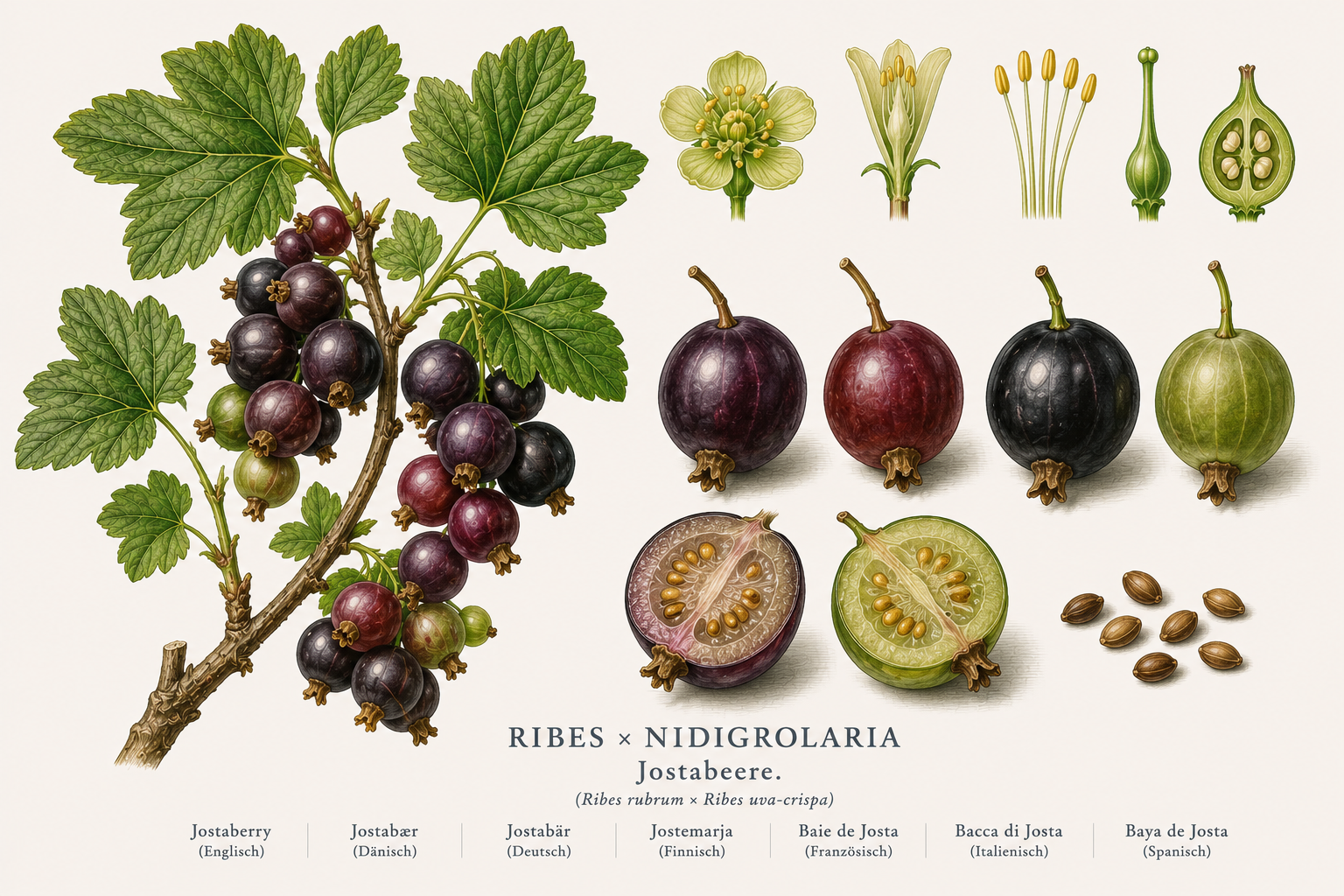
The Jostaberry (Ribes × nidigrolaria) is a cross between a blackcurrant and a gooseberry. It grows as a robust, thornless shrub and bears large, tart berries that are well-suited for jams, juices, and pies. The plant is winter-hardy and relatively undemanding, but prefers a sunny to partial shade location with well-draining soil.
Quick profile
Key data
Suitable growing locations:
Good neighbors
StrawberryBeansCabbage
Indoor & direct sowing
Jostaberry: Sowing and germination
Planting & site
Jostaberry: Planting and spacing
Young plants can be set out in spring or autumn.
Site & practical notes
The jostaberry is an easy-to-care-for and high-yielding berry plant. Ensure adequate planting distance and regular thinning cuts to maintain fruit quality and the health of the shrub. The berries are tart and are excellent for processing.
Temperature & frost
Jostaberry: Temperature and site
Water & nutrients
Jostaberry: Water, nutrients and care
Container & growth
Jostaberry: Container, support and growth
Year plan
Jostaberry Calendar
The summer harvest provides juicy, tart berries for diverse uses.
Recurring tasks
Relevant now
June
- Thinning cutNach der Ernte: Remove old, diseased, or crossing shoots.
Next up
July
- No additional single task
Monthly tasks
Single tasks from monthly data; repeated seasonal windows are shown in the overview above.
January
Quiet month
February
Quiet month
March
Planting
- Planting young plantsBoden frostfrei: Ideal for planting young jostaberry bushes.
April
No additional single task
May
Growing
- First fertilizationBeginn des Austriebs: After bud break, with organic fertilizer or compost.
June
Growing
- Thinning cutNach der Ernte: Remove old, diseased, or crossing shoots.
August
Harvest
- HarvestFrüchte reif: Carefully collect the ripe berries.
September
Quiet month
October
Growing
- Soil improvementNach Laubfall: Incorporate compost or well-rotted manure.
November
Quiet month
December
Quiet month
Flowering & pollination
Jostaberry Flowering & pollination
Self-fertility
self-fertile
Pollinator needed
no
Overview
The jostaberry is self-fertile but benefits from cross-pollination with other currant or gooseberry varieties to increase yield.
Notes
Bees and other insects visit the flowers and contribute to pollination. Planting multiple varieties can increase yield.
Pruning & care
Jostaberry Pruning & care
Pruning type
renewal pruning
Pruning timing
Basic pruning for shaping and renewal Before bud break, when the soil is frost-free. Removal of old and damaged shoots.
Thinning cut after harvest Removal of excess or weak shoots to improve ventilation and prevent diseases.
Remove
Preserve
Avoid
Tools and hygiene
Clean and disinfect tools before and after use to prevent disease transmission.
Companion guide
Jostaberry Companion guide
Good neighbors
StrawberryBeansCabbage
Use & storage
Jostaberry Use & storage
The harvest period extends over several weeks.
Storage
Cool, dry, dark (for processed products)
Storage life
Fresh: 2-5 days in the refrigerator. Frozen: 6-12 months. Processed (jam, juice): 1-2 years.
Flavor
A mix of currant and gooseberry, slightly tart with a fruity aroma.
Harvest
The harvest period extends over several weeks.
Processing
After harvest
Harvested berries should be stored cool and processed quickly as they are perishable.
Notes
Fresh berries have a short shelf life. Freezing or processing are the best methods for longer storage.
Edibility & safety
Jostaberry Edibility & safety
For people
In brief: which parts are edible, which parts remain risky, and whether raw consumption makes sense.
Safety notes
The fruits are non-toxic and edible. Other plant parts are not intended for consumption.
Animal safety
For many animals, this plant is generally low-risk: 14 animal types are rated suitable or mostly suitable. Quantity, plant part, and individual tolerance still matter.
Each row shows which parts are more suitable and which parts are critical.
Companion animals
 Dog
DogFruit
Leaves, Stems, Roots
Fruit
Leaves, Stems, Roots
Overconsumption of non-fruit parts, Unripe fruit
Gastrointestinal upset, Vomiting, Diarrhea
observe
The fruit of the jostaberry bush is edible for dogs in small amounts and may be tolerated as an occasional treat. Other plant parts such as leaves, stems, and roots may cause gastrointestinal upset if ingested but are not considered highly toxic. Monitoring is recommended if larger amounts are consumed.
Open animal page Cat
CatFruit
Leaves, Stems, Roots
Fruit
Leaves, Stems, Roots
Excessive consumption of leaves or stems, Unripe fruit
Gastrointestinal upset, Vomiting, Diarrhea
observe
The fruit of the jostaberry plant is safe for cats in small amounts as a treat. Other plant parts may cause gastrointestinal upset if ingested. If symptoms occur, consult a veterinarian.
Open animal page Rabbit
Fruit
Leaves, Stems, Roots
Fruit
Leaves, Stems, Roots
Overconsumption of leaves or stems
Gastrointestinal upset
observe
The fruit of the jostaberry plant is suitable for rabbits in small amounts as a treat. Other plant parts may cause gastrointestinal upset and should be avoided.
Open animal page Guinea pig
Fruit
Leaves, Stems, Roots
Fruit
Leaves, Stems, Roots
Overconsumption may cause gastrointestinal upset due to acidity and fiber content.
Gastrointestinal upset
observe
The fruit of the jostaberry plant is suitable for guinea pigs in small amounts as a treat, but contains high acidity and fiber that can cause digestive upset if overconsumed. Other plant parts such as leaves, stems, and roots should be avoided as they may contain potentially toxic compounds and are not suitable as feed.
Open animal page Hamster
Fruit
Leaves, Stems, Roots
Fruit
Leaves, Stems, Roots
Overconsumption may cause digestive upset due to acidity and fiber content., Seeds may pose a choking hazard or contain trace compounds; remove seeds when feeding., Hamsters have sensitive digestive systems; introduce new foods gradually.
Gastrointestinal upset
observe
The fruit of the jostaberry is suitable for hamsters in small amounts as a treat, as it is non-toxic. Other plant parts such as leaves and stems should be avoided, as they may be irritating to small mammals and lack feeding recommendations. Due to the tart taste and high fiber content, feeding should be limited.
Open animal page Budgie
Fruit
Leaves, Stems, Roots
Fruit
Leaves, Stems, Roots
Excessive consumption of leaves or stems
Gastrointestinal upset
observe
The fruit of the jostaberry bush is safe for budgies in small amounts and non-toxic. Other plant parts such as leaves and stems should be avoided as they may be irritating. Due to lack of species-specific sources, a conservative assessment is made.
Open animal pageFarm animals
 Horse
HorseFruit
Leaves, Stems, Roots
Fruit
Leaves, Stems, Roots
Overconsumption may cause gastrointestinal upset due to the fruit's acidity and fiber content.
 Chicken
Fruit
Leaves, Stems, Roots
Fruit
Leaves, Stems, Roots
Excessive consumption of leaves or stems, Unripe fruit
Gastrointestinal upset, Diarrhea
observe
Jostaberry fruits are suitable for chickens in small amounts as a treat, providing vitamin C and antioxidants. Leaves, stems, and roots contain cyanogenic glycosides and should be avoided. Consumption of large amounts or unripe fruit may cause gastrointestinal upset. Consult a veterinarian if symptoms occur.
Open animal page Duck
DuckFruit
Leaves, Stems, Roots
Fruit
Leaves, Stems, Roots
Overconsumption may cause gastrointestinal upset due to acidity and fiber content.
Gastrointestinal upset
observe
The fruit of the jostaberry is suitable for ducks in small amounts as a treat, but contains high acidity and fiber that may cause digestive upset if overconsumed. Other plant parts are not recommended as they are not known as food and may be unsuitable.
Open animal page Goose
GooseFruit
Leaves, Stems, Roots
Fruit
Leaves, Stems, Roots
Excessive consumption may cause gastrointestinal upset due to acidity and high fiber content.
Gastrointestinal upset
observe
The fruit of the jostaberry is suitable for geese in small amounts as a treat, as it is non-toxic and edible. Other plant parts should be avoided as they are not intended for consumption and may be potentially irritating.
Open animal page Sheep
SheepFruit
Leaves, Stems, Roots
Fruit
Leaves, Stems, Roots
Overconsumption may cause gastrointestinal upset due to the fruit's high acidity and fiber content.
 Goat
GoatFruit
Leaves, Stems, Roots
Fruit
Leaves, Stems, Roots
Overconsumption may cause gastrointestinal upset due to acidity and high fiber content.
observe
Jostaberry fruits are suitable for goats in small amounts as a treat and are non-toxic. Other plant parts such as leaves, stems, and roots should be avoided as they are not intended for consumption and may cause gastrointestinal upset.
Open animal page Cattle
Fruit
Leaves, Stems, Roots
Fruit
Leaves, Stems, Roots
Overconsumption may cause gastrointestinal upset due to acidity and high fiber content.
observe
Jostaberry fruits are suitable for cattle in small amounts as a treat, but leaves, stems, and roots are not intended for consumption and may cause gastrointestinal upset if consumed excessively.
Open animal page Pig
PigFruit
Leaves, Stems, Roots
Fruit
Leaves, Stems, Roots
Overconsumption may cause gastrointestinal upset due to acidity and fiber content., Seeds are not typically consumed but if ingested in large quantities could pose a risk., Plant parts other than fruit may contain compounds that could cause irritation.
observe
The fruit of the jostaberry is safe for pigs in moderation and can be given as a treat. Other plant parts should be avoided as they may be potentially irritating.
Open animal pageThese guidelines are for general information only and do not replace veterinary diagnosis. If critical plant parts were ingested or the animal shows unusual behaviour or symptoms, seek veterinary advice.
Max risk
unknown
Highest status
moderation only
Urgency
observe
Saving seed
Jostaberry Saving seed
Seed saving
no
Practical tips
Jostaberry Practical tips
Common beginner mistakes
Success pattern
High-impact tips
Health
Pests, Diseases
Pests
Aphids
Small, sucking insects that colonize young shoots and leaves, feeding on plant sap. They can also transmit viruses.
Spider mites
Tiny arachnids that settle on the underside of leaves, especially in dry weather. They feed on plant sap and leave fine webbing.
Currant bud mite
Tiny mites that overwinter in the buds and damage them, leading to stunted growth and altered, bushy shoots.
Diseases
Powdery mildew
Fungal disease that appears as a white, powdery coating on leaves, shoots, and fruits. Often occurs in dry weather with high humidity.
Rust
Fungal disease characterized by yellowish to orange pustules on the underside of leaves, followed by leaf drop. Especially in wet weather.
Anthracnose
Fungal disease that affects leaves, shoots, and fruits, leading to spotting, wilting, and rot. Often occurs in warm, humid weather.
Deficiencies
Iron deficiency
Causes chlorosis (yellowing) of young leaves, while the veins remain green. Often occurs in alkaline soils.
Magnesium deficiency
Leads to yellowing between the leaf veins, starting on older leaves. The veins themselves remain green.
Plant health
Diagnosis help
Jostaberry Diagnosis help
Pest groups
Disease groups
Fungal diseases (powdery mildew, rust, anthracnose)
Prevention
Diagnosis
Look for typical symptoms such as leaf discoloration, coatings, or visible pests. Accurate diagnosis is important for correct treatment.
Cultural prevention
Monitoring
First response
Diagnostic rules
White, powdery coating on leaves and shoots
Possible causes: Powdery mildew
- Check humidity
- Assess ventilation
- Consider temperature
Yellowish to orange pustules on the underside of leaves
Possible causes: Rust
- Check for moisture on leaves
- Consider weather conditions
FAQ
When is the best time to plant jostaberries?
The best planting time for jostaberries is in spring (March-April) or autumn (September-October), when the soil is frost-free and workable.
How much space does a jostaberry need?
Allow a planting distance of about 100-150 cm between bushes in a row and 150-200 cm between rows to ensure adequate space for growth and ventilation.
Do jostaberries need pruning?
Yes, annual thinning pruning is recommended. Remove old, diseased, or crossing shoots to promote fruiting and maintain plant health. The best time is after harvest or in late winter.
Are jostaberries self-fertile?
Yes, jostaberries are self-fertile, but cross-pollination with other currant or gooseberry varieties can increase yield.
What diseases can affect jostaberries?
Jostaberries can be susceptible to powdery mildew, rust, and anthracnose. Preventive measures such as adequate plant spacing and good ventilation are important.
Is Jostaberry safe for Dog?
Jostaberry is classified as moderation only for Dog. Risk: unknown. Urgency: observe. The fruit of the jostaberry bush is edible for dogs in small amounts and may be tolerated as an occasional treat. Other plant parts such as leaves, stems, and roots may cause gastrointestinal upset if ingested but are not considered highly toxic. Monitoring is recommended if larger amounts are consumed.
Is Jostaberry safe for Cat?
Jostaberry is classified as moderation only for Cat. Risk: unknown. Urgency: observe. The fruit of the jostaberry plant is safe for cats in small amounts as a treat. Other plant parts may cause gastrointestinal upset if ingested. If symptoms occur, consult a veterinarian.
Is Jostaberry safe for Rabbit?
Jostaberry is classified as moderation only for Rabbit. Risk: unknown. Urgency: observe. The fruit of the jostaberry plant is suitable for rabbits in small amounts as a treat. Other plant parts may cause gastrointestinal upset and should be avoided.
Is Jostaberry safe for Guinea pig?
Jostaberry is classified as moderation only for Guinea pig. Risk: unknown. Urgency: observe. The fruit of the jostaberry plant is suitable for guinea pigs in small amounts as a treat, but contains high acidity and fiber that can cause digestive upset if overconsumed. Other plant parts such as leaves, stems, and roots should be avoided as they may contain potentially toxic compounds and are not suitable as feed.
Guides
Related guides
Guide
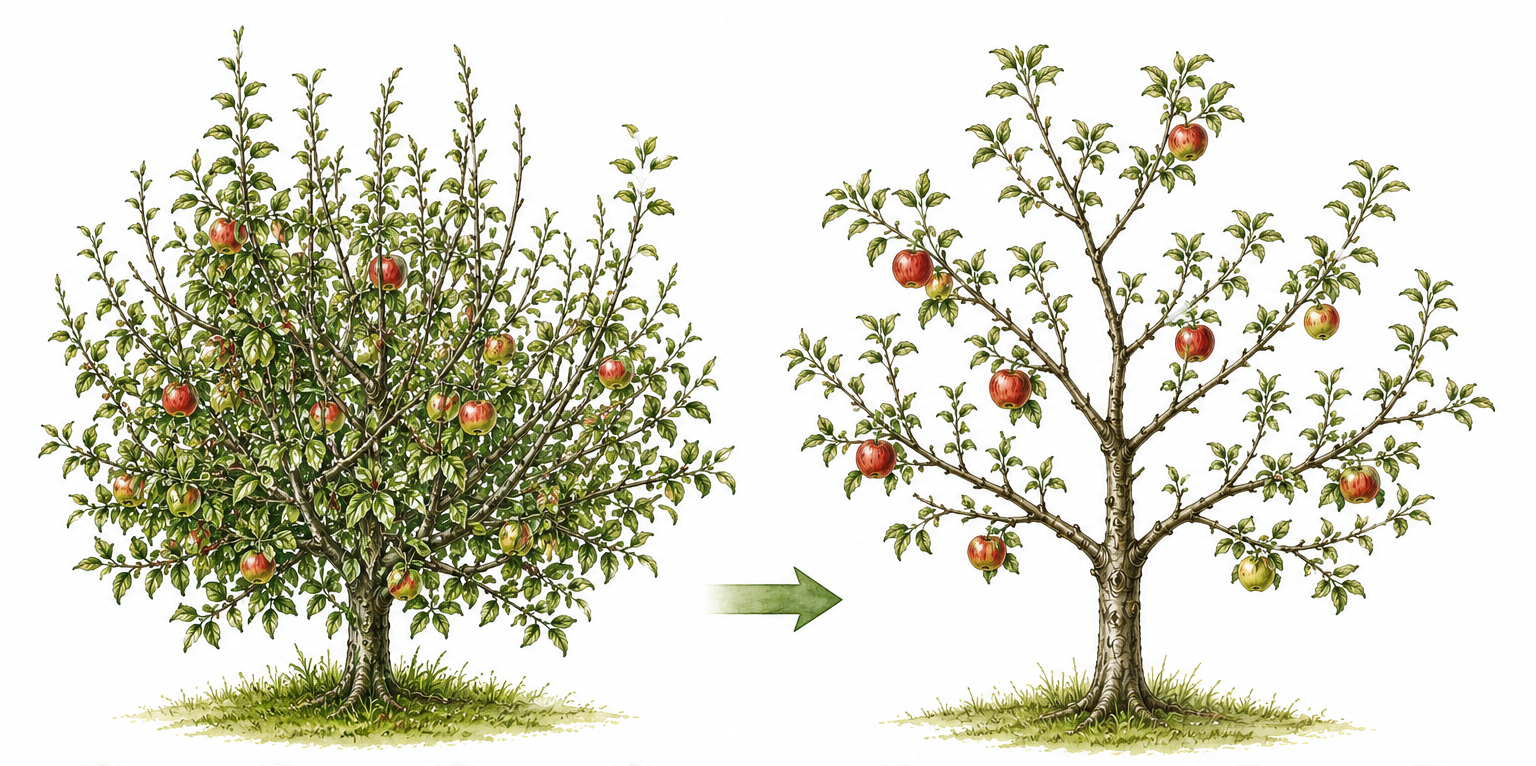
Pruning Apple Trees: Timing, Techniques, and Common Mistakes
Learn when and how to prune apple trees properly, including winter pruning, summer pruning, training cuts, and maintenance tips for healthy, productive…
Guide
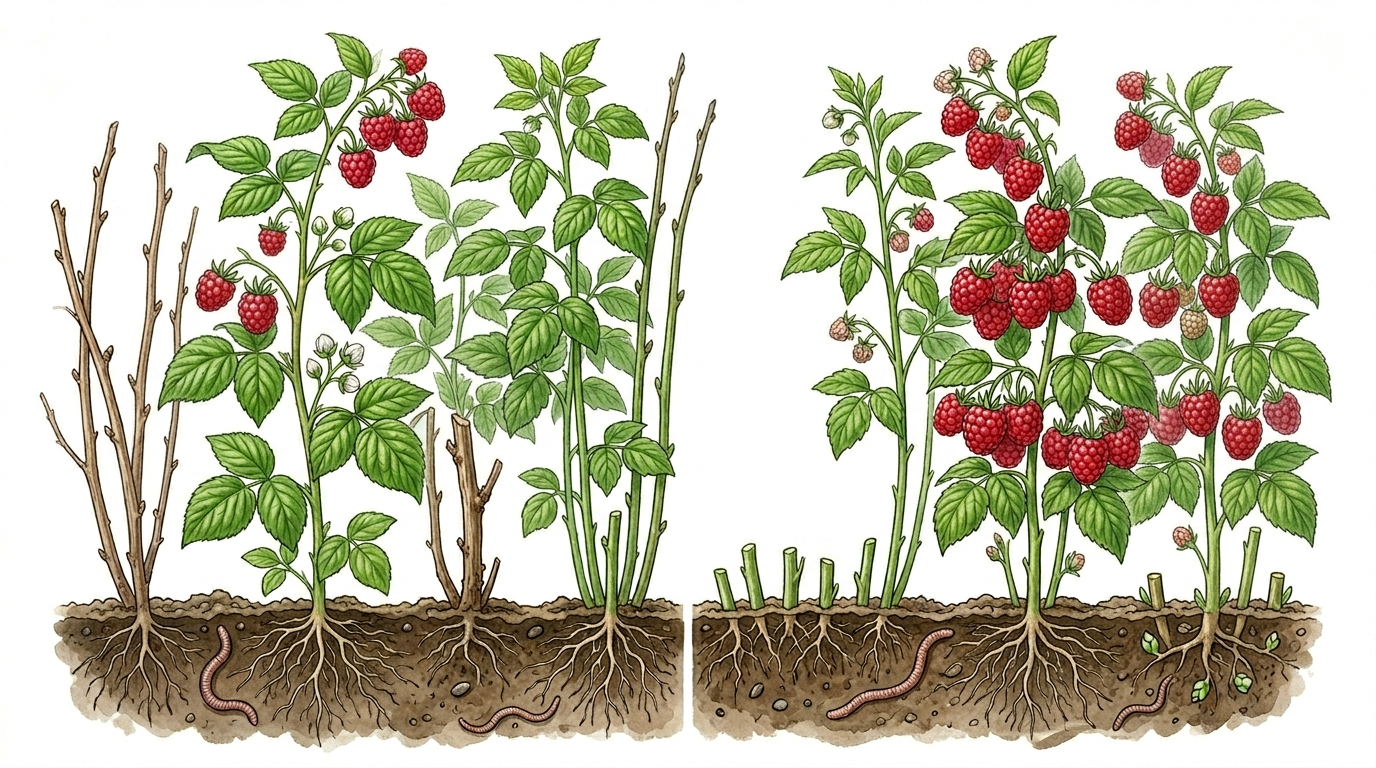
Pruning Raspberries: Summer and Autumn Types
Learn how to prune raspberries correctly by understanding the differences between summer-bearing and autumn-bearing types.
Guide
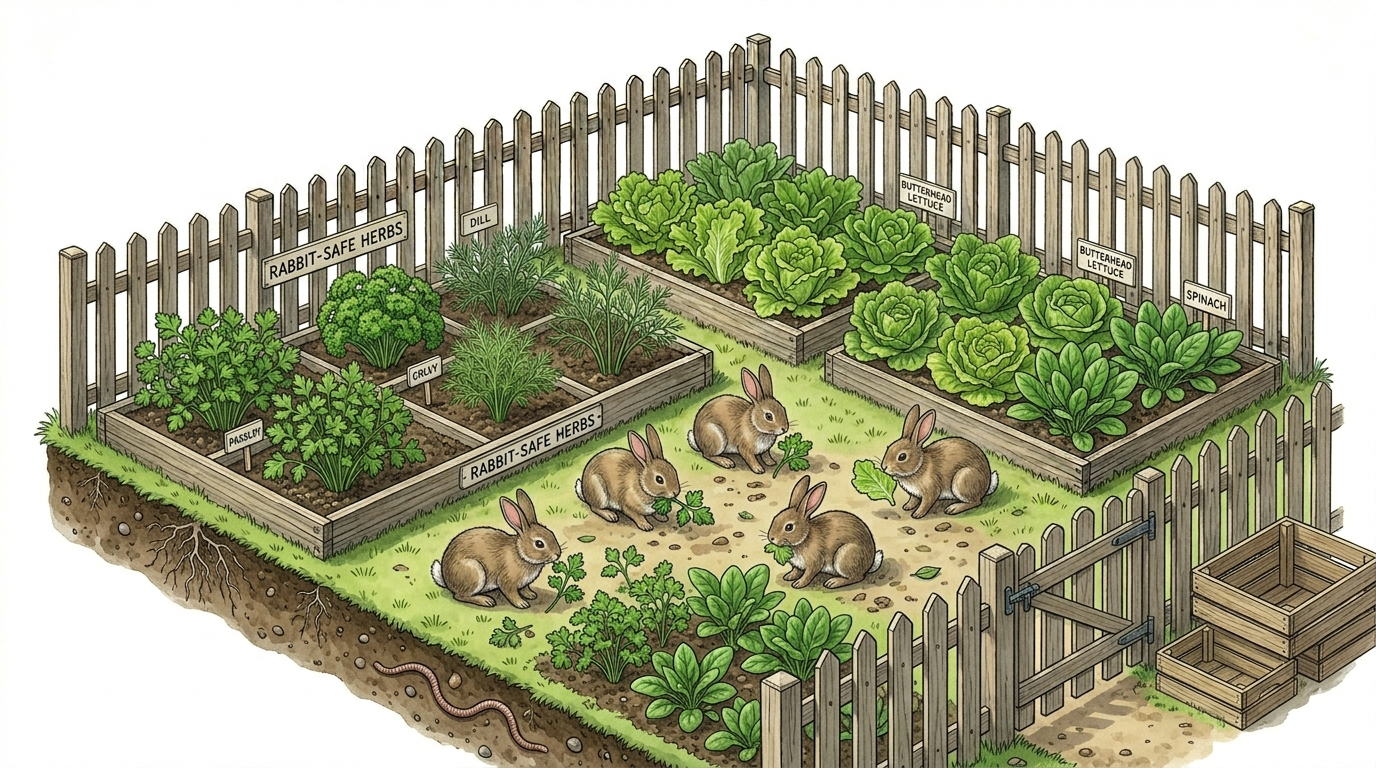
Rabbits in the Garden: Herbs and Vegetables
Learn how to choose suitable herbs and vegetables for rabbits, grow feeding plants, and plan a rabbit-friendly garden.
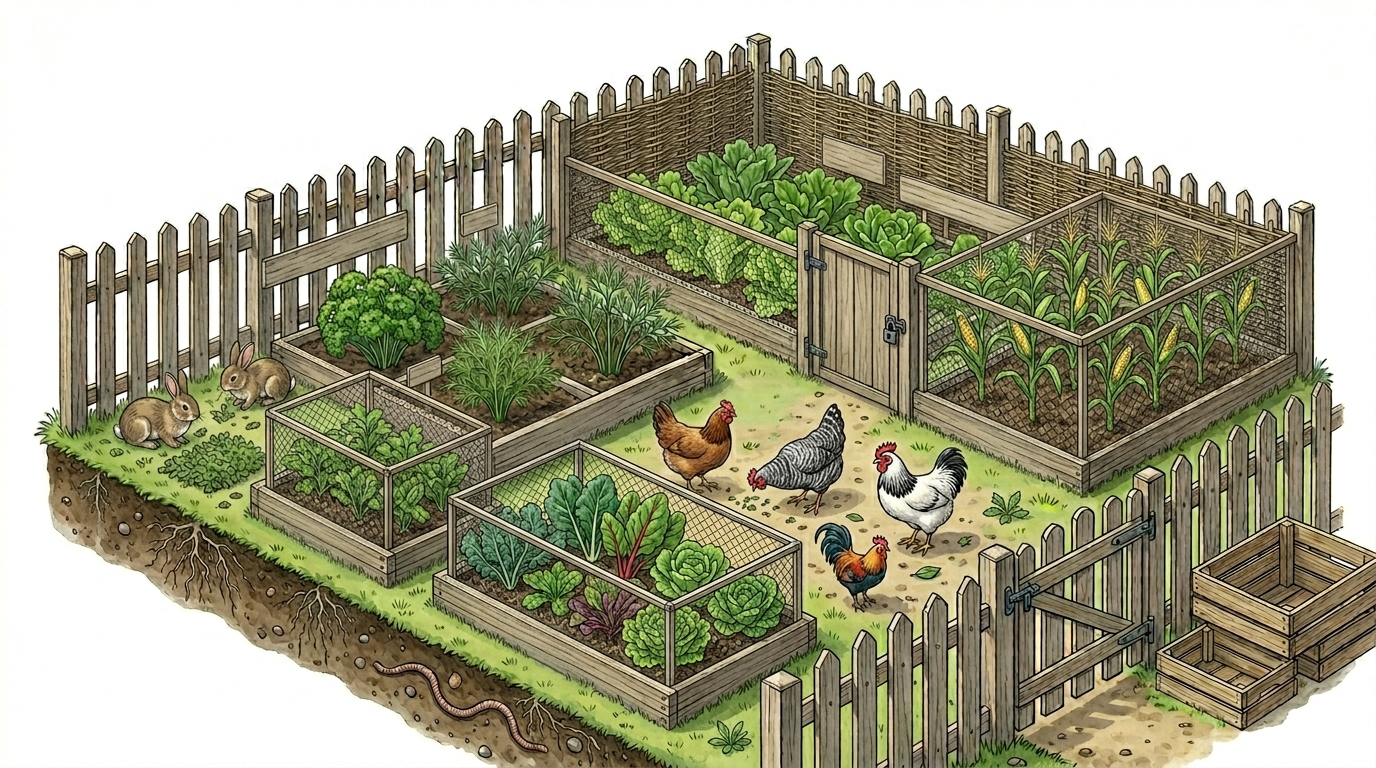
Guide
Chickens in the Garden: Safe Plants and Zones
Learn how to design a chicken-friendly garden with suitable plants, protected beds, and well-planned activity areas.
Internal links
Related plants
Ribes
The jostaberry is a hybrid where the blackcurrant is one of the parent species.
Requires similar nutrient supply as currants.
gooseberry
The jostaberry is a hybrid where the gooseberry is one of the parent species.
Requires similar nutrient supply as gooseberries.
Berry fruit
The jostaberry belongs to the berry fruit group.
Powdery mildew
Shares susceptibility to powdery mildew with currants and gooseberries.
Rust
Shares susceptibility to rust with currants and gooseberries.
Raspberry
Both are tart berries well-suited for jams, juices, and desserts.
Rubus
Both are tart berries well-suited for jams, juices, and desserts.
Sources
Public sources
- Wikidata entity
Wikidata · 2026-05-13
- GBIF species match
GBIF · 2026-05-13
- Deutschsprachige Wikipedia: Jostabeere
Wikipedia · 2026-05-13
- English Wikipedia: Jostaberry
Wikipedia · 2026-05-13