Profile
RaspberryRubus idaeus
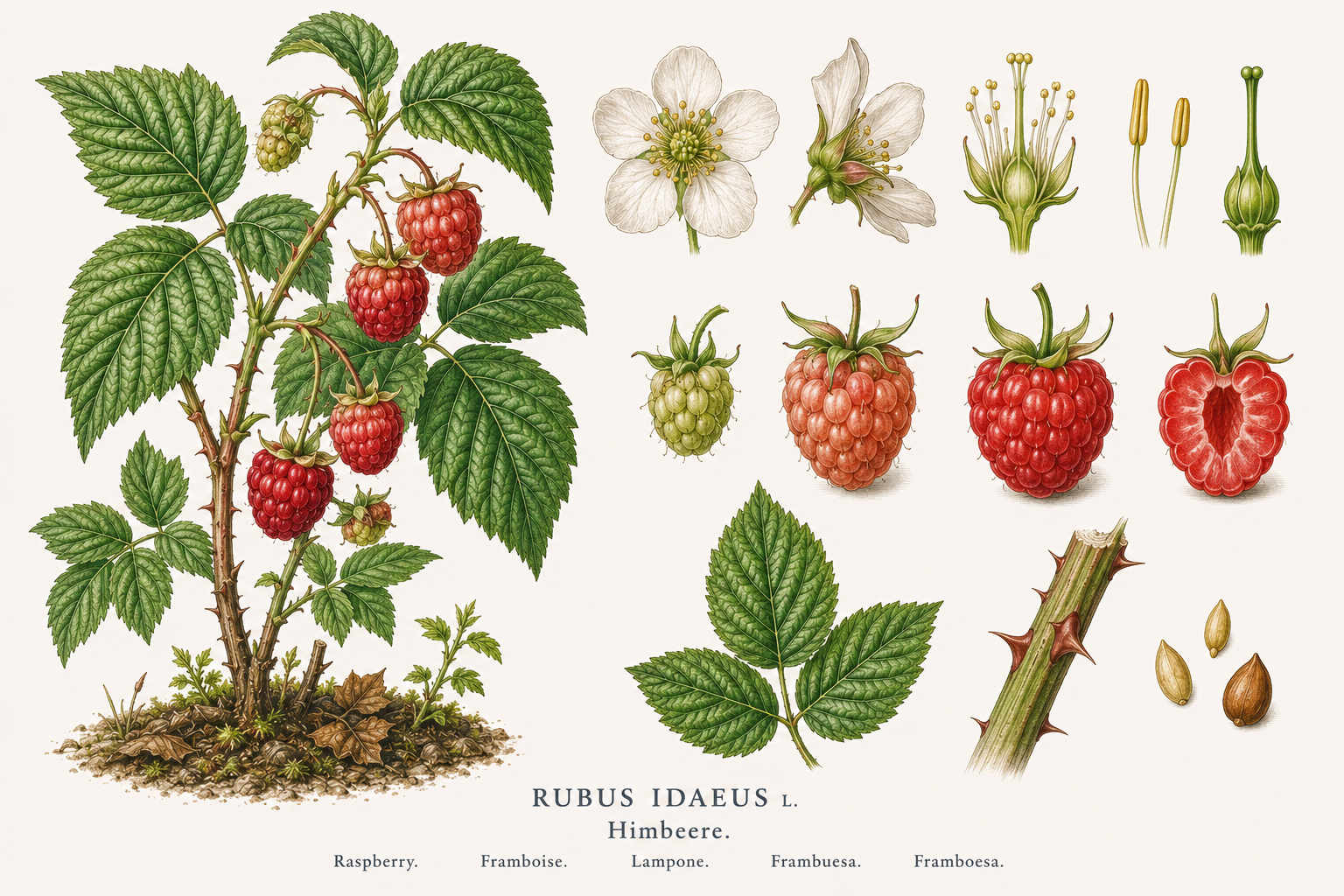
The raspberry (Rubus idaeus) is a popular and productive berry plant suitable for both home gardens and commercial cultivation. It is known for its sweet, aromatic fruits, rich in vitamins and antioxidants. Raspberries are relatively easy to care for and can be grown in various locations, but require good support and regular maintenance for optimal yields. There are summer-bearing and autumn-bearing varieties, which differ in their fruiting habits and pruning requirements.
Quick profile
Key data
Planting
Mar, Apr, Oct
Harvest
Jun, Jul, Aug, Sep, Oct
Water
medium
Good neighbors
BeansCabbageGarliccommon sage
Growing data
Raspberry Growing data
Plant spacing
40 - 60 cm
Row spacing
150 - 200 cm
Sowing and germination
Planting and spacing
Temperature and site
Water, nutrients and care
Container, support and growth
Year plan
Raspberry Calendar
Indoor sowing
Raspberries are generally not started from seed indoors.
Direct sowing
Direct sowing is uncommon for raspberries. Propagation is usually done via root suckers or cuttings.
Planting
Planting of young plants or cuttings in spring (March-April) or autumn (October).
Harvest
Harvest time varies by variety. Summer raspberries ripen from June to August, autumn raspberries from August to October.
Year plan
- Prune canes that have fruited (for summer-bearing raspberries)
- Plant new raspberry bushes
- Cut back one-year-old canes (for autumn-bearing raspberries)
- Thin out and prune shoots
- Mulch for moisture retention and weed suppression
- Tie canes to supports
- First fertilization
- Remove excess root suckers
- Regularly harvest ripe fruits
- Water as needed
- Continue harvesting
- Harvesting of autumn raspberries begins
- Remove old, fruiting canes (for summer-bearing raspberries)
- Continue harvesting
- Prepare for pruning
- Final harvest
- Prune harvested canes (for autumn-bearing raspberries)
- Prune harvested canes (for summer-bearing raspberries)
Growing
Raspberry Site, soil and care
Spacing
40 - 60 cm
Storage
Notes: Raspberries do not store well and should be consumed as fresh as possible. Longer storage is only possible under special conditions (freezing).
Raspberries are relatively undemanding, but a good harvest requires attention. Pay attention to the correct variety selection (summer vs. autumn-bearing), a sunny, wind-sheltered location, and stable support. Pruning is crucial: summer-bearing raspberries are pruned after harvest, autumn-bearing raspberries in spring. Regular watering, especially during dry spells, and annual fertilization with compost promote growth and fruiting. Watch out for pests and diseases and act promptly.
Pruning
Raspberry Pruning
renewal_pruning
Goal
renewal_pruning
Pruning timing
winter
Pruning of harvested canes (summer-bearing raspberries) and thinning. The best time for pruning summer-bearing raspberries is after harvest or in late winter/early spring before sap flow begins.
early_spring
Cutting back autumn-bearing raspberries to near-ground stubs to promote same-year harvest. All canes of autumn-bearing raspberries are cut back to approx. 20-30 cm in early spring.
spring
Thinning and tying new shoots. Remove weak shoots and loosely tie the remaining strong canes to the support.
Remove
- Fruited canes (for summer-bearing raspberries)
- Weak, diseased, or damaged canes
- Excess canes (overly dense shoots)
Preserve
- Healthy, one-year-old canes (for summer-bearing raspberries)
- Healthy, two-year-old canes (for autumn-bearing raspberries, if not all are cut to the ground)
- Strong, well-developed canes
Avoid
- Over-pruning autumn-bearing raspberries, which reduces the harvest in the same year.
- Damaging roots when thinning root suckers.
- Wetting the foliage when watering.
Tools and hygiene
Use sharp and clean tools (saw, secateurs) to ensure clean cuts and prevent disease transmission.
Companion guide
Raspberry Companion guide
Good neighbors
BeansCabbageGarliccommon sage
Health
Pests, Diseases
Pests
Aphids
Small, soft-bodied insects that suck plant sap and excrete honeydew, which can lead to sooty mold. Often infest young shoots and leaves.
Raspberry beetle
Small, black beetles whose larvae infest the fruits, making them inedible. Adult beetles feed on flowers and young leaves.
Spider mites
Tiny arachnids that settle on the underside of leaves and suck plant sap. They prefer dry, warm conditions.
Diseases
Raspberry rust
Fungal disease characterized by yellowish to orange pustules on the underside of leaves, and later on canes and fruits. Leads to premature leaf drop and reduced yield.
Grey mould (on canes and leaves)
Fungal disease that occurs mainly in humid weather. Affects leaves, canes, and fruits, causing a grey, fuzzy spore mass. Leads to rot and death of plant parts.
Verticillium wilt
Soil-borne fungal disease that clogs the plant's vascular system. Leads to wilting and death of canes, often one-sided.
Deficiencies
Iron deficiency
Causes chlorosis (yellowing) of young leaves, while the veins remain green. Often occurs on alkaline, wet soils.
Magnesium deficiency
Leads to a characteristic striped chlorosis, where the leaf veins remain green while the areas between them turn yellow. Often starts on older leaves.
Plant health
FAQ
When is the best time to plant raspberries?
The best time to plant raspberries is in spring (March-April) after the last frost, or in autumn (October) when the soil is still warm enough. Autumn plantings establish well over winter.
How do I prune raspberries correctly?
Pruning depends on the variety: Summer-bearing raspberries fruit on two-year-old canes and are pruned after harvest. Autumn-bearing raspberries fruit on one-year-old canes and are cut back to near ground level in spring. Always remove weak, diseased, or dead canes.
Why aren't my raspberries producing fruit?
Possible reasons include insufficient pollination (lack of insects, bad weather during flowering), frost damage to blossoms, nutrient deficiency (especially potassium), water shortage, or diseases. Also check if you are using the correct pruning method for your variety.
Can I grow raspberries in pots?
Yes, raspberries are well-suited for container growing, especially dwarf or compact varieties. Use deep pots (at least 30-40 cm) with good drainage and ensure regular watering and fertilization, as the substrate dries out faster.
Related plants
Apple
Both belong to the Rosaceae family.
Strawberry
Both belong to the Rosaceae family.
Rubus
Both are aggregate fruits and belong to the genus Rubus.
Similar need for potassium and general nutrient supply.
Ribes
Both are popular berry fruits for the home garden.
Grey mould (on canes and leaves)
Can also affect other berry fruits like strawberries and blackberries.
Guides
Related guides
Guide
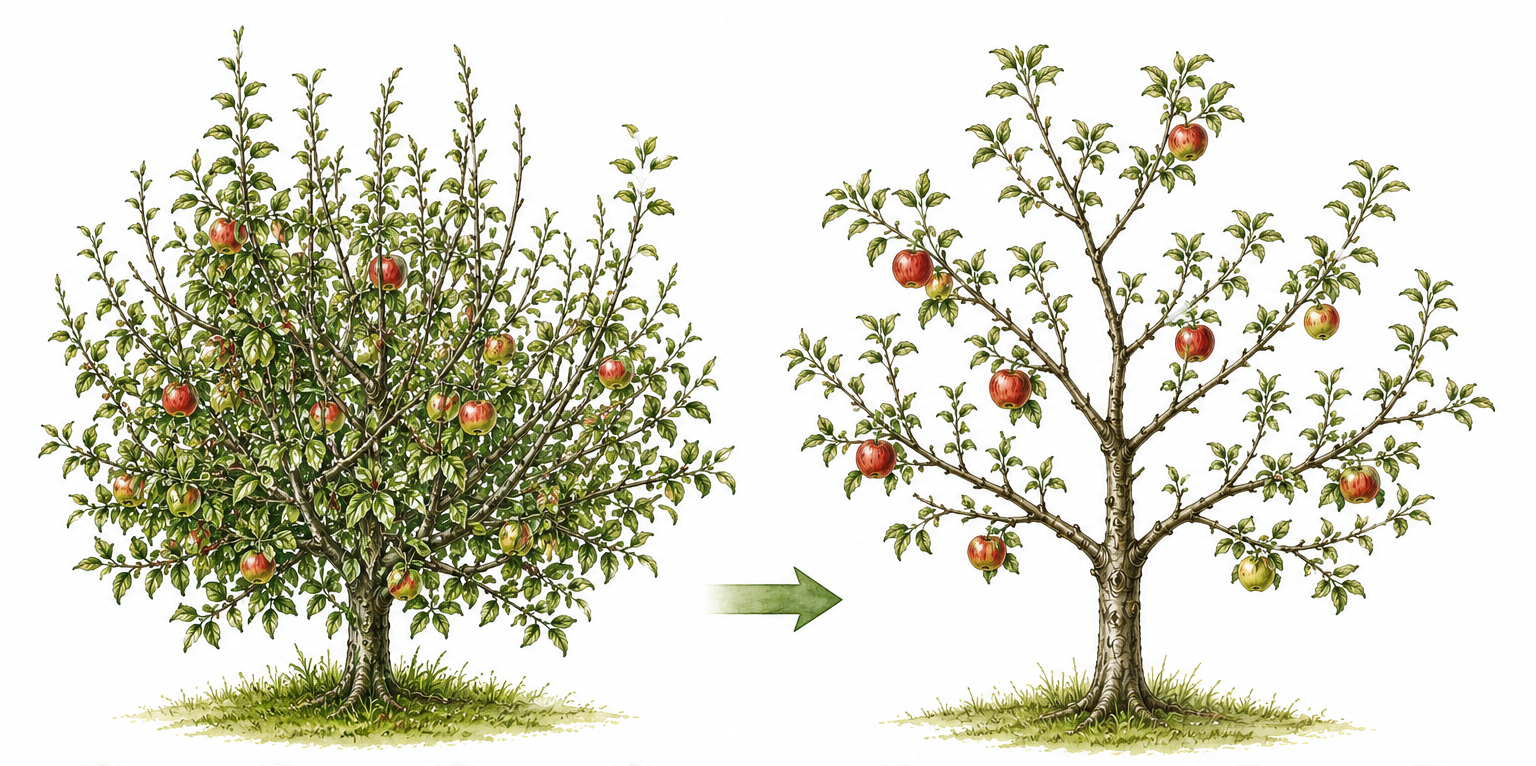
Pruning Apple Trees: Timing, Techniques, and Common Mistakes
Learn when and how to prune apple trees properly, including winter pruning, summer pruning, training cuts, and maintenance tips for healthy, productive…
Guide
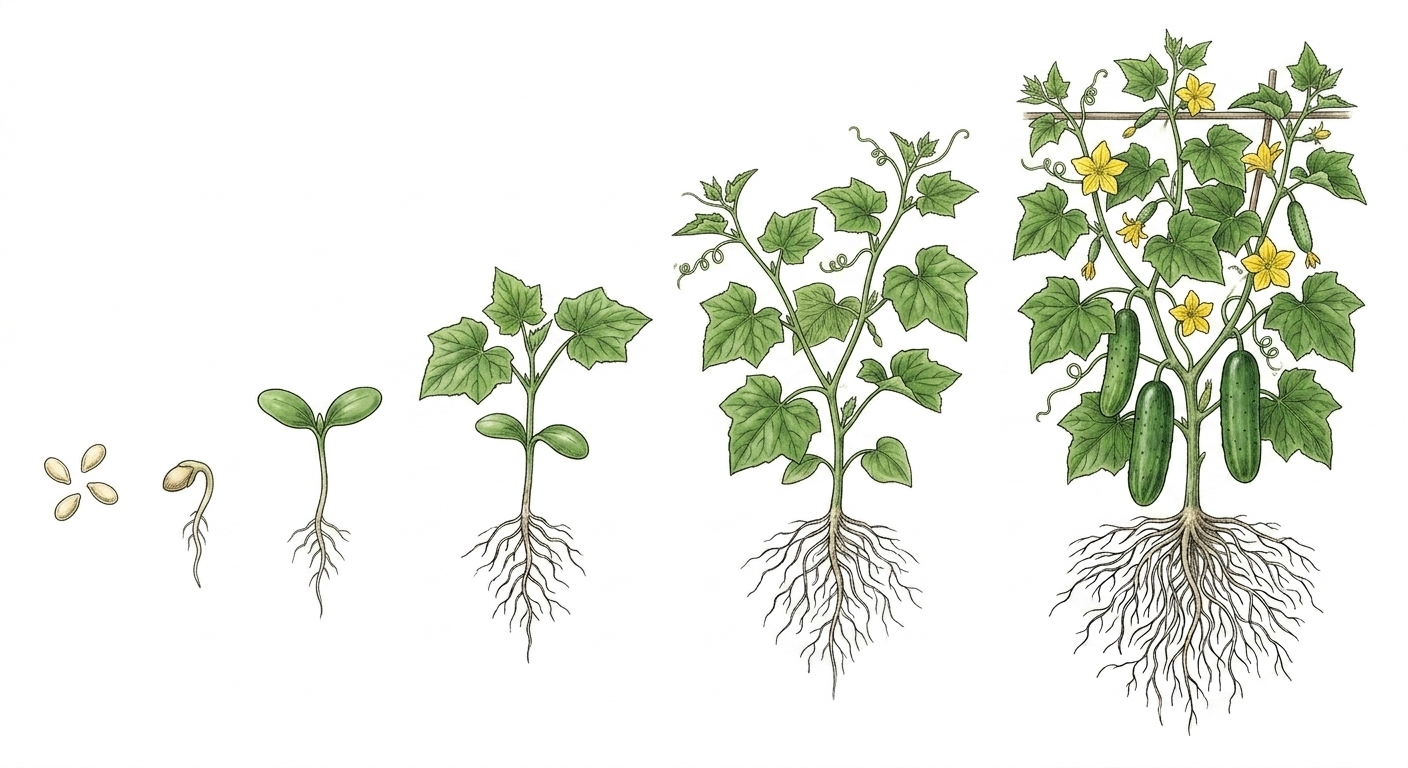
Growing Cucumbers: Starting, Supports and Harvest
Learn how to grow cucumbers successfully with indoor starting, transplanting, trellises, watering, and regular harvesting.
Guide
Growing Zucchini: Spacing, Pollination and Mildew
Learn how to grow zucchini with the right site, spacing, pollination support, and practical tips to prevent powdery mildew.
Guide
Starting Peppers and Chilies Indoors Successfully
Learn how to start peppers and chilies indoors with proper warmth, strong light, pricking out, and healthy seedling care.
Internal links
Related plants
Sources
Public sources
- Wikidata entity
Wikidata · 2026-05-13
- GBIF species match
GBIF · 2026-05-13
- Deutschsprachige Wikipedia: Himbeere
Wikipedia · 2026-05-13
- English Wikipedia: Rubus idaeus
Wikipedia · 2026-05-13
Details
More public plant data
Names
Common
Raspberry
Plural
Raspberries
Synonyms
- red raspberry
- European raspberry
- European red raspberry
Common synonyms
- raspberry
Regional names
Historical names
Market names
Misspellings
Search terms
- Raspberry
- Rubus idaeus
- red raspberry
Taxonomy
Clades
- Tracheophytes
- Angiosperms
- Eudicots
- Rosids
Family
Rose family
Classification
Edible parts
- Fruit
Calendar
Sowing indoor
Notes
Raspberries are generally not started from seed indoors.
Sowing outdoor
Notes
Direct sowing is uncommon for raspberries. Propagation is usually done via root suckers or cuttings.
Planting out
Months
- 3
- 4
- 10
Notes
Planting of young plants or cuttings in spring (March-April) or autumn (October).
Harvest
Months
- 6
- 7
- 8
- 9
- 10
Notes
Harvest time varies by variety. Summer raspberries ripen from June to August, autumn raspberries from August to October.
Month tasks
2
Prune canes that have fruited (for summer-bearing raspberries)
3
Plant new raspberry bushes
Cut back one-year-old canes (for autumn-bearing raspberries)
4
Thin out and prune shoots
Mulch for moisture retention and weed suppression
5
Tie canes to supports
First fertilization
6
Remove excess root suckers
Regularly harvest ripe fruits
7
Water as needed
Continue harvesting
8
Harvesting of autumn raspberries begins
Remove old, fruiting canes (for summer-bearing raspberries)
9
Continue harvesting
Prepare for pruning
10
Final harvest
Prune harvested canes (for autumn-bearing raspberries)
11
Prune harvested canes (for summer-bearing raspberries)
Month tasks structured
2
- TaskPruning
Label
Prune canes that have fruited (for summer-bearing raspberries)
PrioritymediumMonths
- 2
Conditionafter fruitingEstimated effortmediumNotes
Remove canes that bore fruit last summer, cutting them back to the ground.
3
- TaskPlanting
Label
Plant new raspberry bushes
PriorityhighMonths
- 3
Conditiondormant seasonEstimated effortmediumNotes
Plant young bushes or cuttings in well-prepared soil.
- TaskPruning
Label
Cut back one-year-old canes (for autumn-bearing raspberries)
PriorityhighMonths
- 3
Conditionearly springEstimated effortmediumNotes
Cut all canes back to about 20-30 cm above the ground for autumn-bearing raspberries to encourage fruiting in the same year.
4
- TaskThinning
Label
Thin out and prune shoots
PrioritymediumMonths
- 4
Conditionwhen shoots emergeEstimated effortmediumNotes
Remove weak or excess shoots to ensure good air circulation.
- TaskMulching
Label
Mulch for moisture retention and weed suppression
PrioritymediumMonths
- 4
Conditionafter soil warmsEstimated effortlowNotes
A layer of organic material (e.g., compost, straw) helps retain moisture and reduce weeds.
5
- TaskSupport
Label
Tie canes to supports
PriorityhighMonths
- 5
Conditionas canes growEstimated effortmediumNotes
Loosely tie growing canes to trellises, stakes, or wire systems to support them and facilitate fruiting.
- TaskFertilizing
Label
First fertilization
PrioritymediumMonths
- 5
Conditionif neededEstimated effortlowNotes
Apply a balanced slow-release fertilizer or compost if needed.
6
- TaskWeeding
Label
Remove excess root suckers
PrioritymediumMonths
- 6
ConditionongoingEstimated effortmediumNotes
Control and remove root suckers that form too far from the main bush.
- TaskHarvesting
Label
Regularly harvest ripe fruits
PriorityhighMonths
- 6
Conditionwhen ripeEstimated efforthighNotes
Harvest raspberries gently when fully ripe for best quality.
7
- TaskWatering
Label
Water as needed
PriorityhighMonths
- 7
Conditionduring dry periodsEstimated effortmediumNotes
Ensure consistent soil moisture, especially during fruit development and ripening.
- TaskHarvesting
Label
Continue harvesting
PriorityhighMonths
- 7
Conditionwhen ripeEstimated efforthighNotes
Harvest daily or every other day to secure the best fruits.
8
- TaskHarvesting
Label
Harvesting of autumn raspberries begins
PriorityhighMonths
- 8
Conditionwhen ripeEstimated efforthighNotes
Start of the harvest season for everbearing varieties.
- TaskPruning
Label
Remove old, fruiting canes (for summer-bearing raspberries)
PriorityhighMonths
- 8
Conditionafter fruitingEstimated effortmediumNotes
Cut back the canes that bore fruit in summer close to the ground.
9
- TaskHarvesting
Label
Continue harvesting
PriorityhighMonths
- 9
Conditionwhen ripeEstimated efforthighNotes
The harvest season for autumn raspberries continues.
- TaskPruning
Label
Prepare for pruning
PrioritymediumMonths
- 9
Conditionlate seasonEstimated effortlowNotes
Identify canes that will bear fruit next year and plan for pruning in autumn or winter.
10
- TaskHarvesting
Label
Final harvest
PriorityhighMonths
- 10
Conditionwhen ripeEstimated effortmediumNotes
Harvest the last fruits before frost sets in.
- TaskPruning
Label
Prune harvested canes (for autumn-bearing raspberries)
PriorityhighMonths
- 10
Conditionafter harvestEstimated effortmediumNotes
Cut back the canes that bore fruit in autumn close to the ground.
11
- TaskPruning
Label
Prune harvested canes (for summer-bearing raspberries)
PriorityhighMonths
- 11
Conditionafter fruitingEstimated effortmediumNotes
Remove canes that bore fruit in summer, cutting them back to the ground.
Book content
Overview
The raspberry (Rubus idaeus) is a popular and productive berry plant suitable for both home gardens and commercial cultivation. It is known for its sweet, aromatic fruits, rich in vitamins and antioxidants. Raspberries are relatively easy to care for and can be grown in various locations, but require good support and regular maintenance for optimal yields. There are summer-bearing and autumn-bearing varieties, which differ in their fruiting habits and pruning requirements.
Structured month tasks
2
- TaskPruning
Label
Prune canes that have fruited (for summer-bearing raspberries)
PrioritymediumMonths
- 2
Conditionafter fruitingEstimated effortmediumNotes
Remove canes that bore fruit last summer, cutting them back to the ground.
3
- TaskPlanting
Label
Plant new raspberry bushes
PriorityhighMonths
- 3
Conditiondormant seasonEstimated effortmediumNotes
Plant young bushes or cuttings in well-prepared soil.
- TaskPruning
Label
Cut back one-year-old canes (for autumn-bearing raspberries)
PriorityhighMonths
- 3
Conditionearly springEstimated effortmediumNotes
Cut all canes back to about 20-30 cm above the ground for autumn-bearing raspberries to encourage fruiting in the same year.
4
- TaskThinning
Label
Thin out and prune shoots
PrioritymediumMonths
- 4
Conditionwhen shoots emergeEstimated effortmediumNotes
Remove weak or excess shoots to ensure good air circulation.
- TaskMulching
Label
Mulch for moisture retention and weed suppression
PrioritymediumMonths
- 4
Conditionafter soil warmsEstimated effortlowNotes
A layer of organic material (e.g., compost, straw) helps retain moisture and reduce weeds.
5
- TaskSupport
Label
Tie canes to supports
PriorityhighMonths
- 5
Conditionas canes growEstimated effortmediumNotes
Loosely tie growing canes to trellises, stakes, or wire systems to support them and facilitate fruiting.
- TaskFertilizing
Label
First fertilization
PrioritymediumMonths
- 5
Conditionif neededEstimated effortlowNotes
Apply a balanced slow-release fertilizer or compost if needed.
6
- TaskWeeding
Label
Remove excess root suckers
PrioritymediumMonths
- 6
ConditionongoingEstimated effortmediumNotes
Control and remove root suckers that form too far from the main bush.
- TaskHarvesting
Label
Regularly harvest ripe fruits
PriorityhighMonths
- 6
Conditionwhen ripeEstimated efforthighNotes
Harvest raspberries gently when fully ripe for best quality.
7
- TaskWatering
Label
Water as needed
PriorityhighMonths
- 7
Conditionduring dry periodsEstimated effortmediumNotes
Ensure consistent soil moisture, especially during fruit development and ripening.
- TaskHarvesting
Label
Continue harvesting
PriorityhighMonths
- 7
Conditionwhen ripeEstimated efforthighNotes
Harvest daily or every other day to secure the best fruits.
8
- TaskHarvesting
Label
Harvesting of autumn raspberries begins
PriorityhighMonths
- 8
Conditionwhen ripeEstimated efforthighNotes
Start of the harvest season for everbearing varieties.
- TaskPruning
Label
Remove old, fruiting canes (for summer-bearing raspberries)
PriorityhighMonths
- 8
Conditionafter fruitingEstimated effortmediumNotes
Cut back the canes that bore fruit in summer close to the ground.
9
- TaskHarvesting
Label
Continue harvesting
PriorityhighMonths
- 9
Conditionwhen ripeEstimated efforthighNotes
The harvest season for autumn raspberries continues.
- TaskPruning
Label
Prepare for pruning
PrioritymediumMonths
- 9
Conditionlate seasonEstimated effortlowNotes
Identify canes that will bear fruit next year and plan for pruning in autumn or winter.
10
- TaskHarvesting
Label
Final harvest
PriorityhighMonths
- 10
Conditionwhen ripeEstimated effortmediumNotes
Harvest the last fruits before frost sets in.
- TaskPruning
Label
Prune harvested canes (for autumn-bearing raspberries)
PriorityhighMonths
- 10
Conditionafter harvestEstimated effortmediumNotes
Cut back the canes that bore fruit in autumn close to the ground.
11
- TaskPruning
Label
Prune harvested canes (for summer-bearing raspberries)
PriorityhighMonths
- 11
Conditionafter fruitingEstimated effortmediumNotes
Remove canes that bore fruit in summer, cutting them back to the ground.
Cultivation specs
Seed
Spacing
Spacing notes
Adjust spacing between plants in the row and between rows depending on variety and support system.
Growth dimensions
Final size notes
Raspberries grow as upright shrubs that spread via root suckers.
Temperature
Temperature notes
Young shoots and flowers are sensitive to late frosts.
Water
Critical water phases
- Flowering
- Fruit set
- Fruit development
Water notes
Consistent moisture is crucial for a good harvest. Avoid waterlogging.
Nutrition
Nutrition notes
Regular feeding with compost and balanced fertilizers promotes fruiting and health.
Container
Container notes
Choose deep pots with good drainage. Ensure adequate watering and fertilization.
Support
Support types
- post_and_wire
- trellis
- arch
Support notes
Raspberries require support to grow upright and ensure good air circulation to the fruits.
Cultivation modes
Yield density
Yield notes
Yields can vary depending on variety, plant age, and care.
Site
Sun exposure
Full sun to partial shade
Wind protection
Wind-sheltered
Notes
A sunny location, sheltered from strong winds, is ideal. Avoid waterlogged conditions.
Soil
Soil type
Humus-rich, loose, well-draining, slightly acidic to neutral
PH range
Soil amendment
Incorporate plenty of compost or well-rotted manure.
Notes
Raspberries prefer deep, moist, but well-draining soils. Absolutely avoid waterlogging.
Watering
Frequency
Regularly, especially during dry periods and fruit development
Method
Watering at the root zone, e.g., with drip irrigation, is best.
Notes
Consistent soil moisture is important for fruit quality and yield. Avoid wetting the foliage to prevent fungal diseases.
Nutrition
Fertilizer type
Balanced slow-release fertilizer, compost, well-rotted manure
Timing
Spring (at bud break) and after harvest (for summer-bearing) or after pruning (for autumn-bearing).
Notes
Adequate nutrition promotes vigorous growth and abundant fruiting. Avoid over-fertilization.
Cultivation planning
Succession sowing
Bed planning notes
Raspberries form root suckers and should therefore be planted with adequate spacing, ideally in rows.
Crop rotation
Notes
Raspberries should not be planted on areas where other Rosaceae (like strawberries, apples, pears) or Solanaceae (like tomatoes, potatoes) were grown previously. A break of 4-5 years is recommended.
Deficiencies
Iron deficiency
Name
Iron deficiency
Description
Causes chlorosis (yellowing) of young leaves, while the veins remain green. Often occurs on alkaline, wet soils.
Symptoms
- Yellowing of young leaves between the veins
- Veins remain green
- In severe cases, leaves may drop
Management
Organic
- Bodenverbesserung mit saurem Kompost oder Torf
- Anwendung von Eisenchelaten (z.B. Fe-EDDHA)
- Vermeidung von Staunässe
Notes
Soil pH is critical. If the pH is too high, iron is difficult for the plant to absorb.
Magnesium deficiency
Name
Magnesium deficiency
Description
Leads to a characteristic striped chlorosis, where the leaf veins remain green while the areas between them turn yellow. Often starts on older leaves.
Symptoms
- Yellowing between the leaf veins, which remain green
- Starts on older leaves
- Can lead to premature leaf drop
Management
Organic
- Anwendung von Bittersalz (Magnesiumsulfat)
- Bodenverbesserung mit organischem Material
Notes
Common on sandy soils or when a lot of potassium has been applied.
Problems
Poor fruit set
Name
Poor fruit set
Description
Insufficient pollination of flowers, resulting in few or small fruits.
Causes
- Unzureichende Bestäubung (wenige Bestäuber, schlechtes Wetter während der Blüte)
- Extreme Temperaturen (Frost, Hitze) während der Blüte
- Nährstoffmangel (insbesondere Stickstoff oder Kalium)
- Wassermangel
- Krankheiten oder Schädlinge, die die Blüten beeinträchtigen
Management
- Encourage pollinators (nearby flower meadow, insect hotels)
- Protect blossoms from frost (covering)
- Balanced fertilization
- Regular watering
- Disease and pest control
Fruit dropping
Name
Fruit dropping
Description
Premature dropping of fruits before they are ripe.
Causes
- Wassermangel oder unregelmäßige Wasserversorgung
- Nährstoffmangel
- Hitze- oder Trockenstress
- Schädlingsbefall (z.B. Himbeerkäferlarven)
- Krankheiten (z.B. Pilzbefall)
- Unzureichende Bestäubung
Management
- Ensure consistent watering
- Mulching for moisture retention
- Balanced fertilization
- Pest and disease control
- Promote pollination
Problem management
Common pest groups
- Sucking insects (aphids, spider mites)
- Beetles and their larvae (raspberry beetle)
Common disease groups
- Fungal diseases (rust, grey mould, wilt)
Prevention principles
- Site selection: Sunny, wind-sheltered, well-ventilated.
- Soil health: Humus-rich, loose, well-draining, regular compost application.
- Variety selection: Prefer robust and resistant varieties.
- Plant spacing: Adequate spacing for good air circulation.
- Watering: Consistent, avoid waterlogging and wetting foliage.
- Fertilization: Balanced, according to need.
- Hygiene: Remove infested plant parts and weeds.
- Crop rotation: Observe a break of 4-5 years.
Diagnosis notes
Observe your plants regularly for signs of pests or diseases. Identify the problem based on symptoms and choose the appropriate control method. Seek expert advice if unsure.
Disease graph
Profiles
- SlugrustSeveritymedium
Conditions
- High humidity
- Moderate temperatures
- Poor air circulation
Affected parts
- Leaves
- Canes
- Fruits
Prevention
- Choose resistant varieties
- Good ventilation
- Soil hygiene
- Remove infected leaves
Organic control
- Sulfur-based preparations
- Copper decoction
- Plant extracts
- Slugbotrytis_cane_and_leaf_spotSeverityhigh
Conditions
- High humidity
- Cool temperatures
- Poor ventilation
- Close planting
Affected parts
- Leaves
- Canes
- Fruits
Prevention
- Good ventilation
- Avoid waterlogging
- Harvest in dry weather
- Remove diseased plant parts
Organic control
- Bacillus subtilis preparations
- Plant extracts
- Remove infected fruits
- Slugverticillium_wiltSeverityhigh
Conditions
- Moist soils
- High temperatures
- Stress from drought or nutrient deficiency
Affected parts
- Entire plant
- Vascular system
Prevention
- Choose resistant varieties
- Observe crop rotation
- Promote soil health
- Avoid waterlogging
Organic control
- No cure possible
- Remove and destroy infected plants
Diagnostic rules
Symptom
Yellowing of young leaves, veins remain green
Possible causes
- iron_deficiency
First checks
- Check soil pH
- Check soil moisture
Symptom
Yellowing of older leaves between veins, veins remain green
Possible causes
- magnesium_deficiency
First checks
- Soil test for magnesium
- Check for excessive potassium fertilization
Symptom
Yellow-orange pustules on leaf undersides
Possible causes
- rust
First checks
- Inspect affected leaves for visible symptoms
- Check weather conditions (humid, moderately warm)
Symptom
Grey, fuzzy coating on fruits or canes
Possible causes
- botrytis_cane_and_leaf_spot
First checks
- Examine affected fruits/canes
- Check humidity and ventilation
Symptom
One-sided wilting of canes
Possible causes
- verticillium_wilt
First checks
- Cut through affected cane (brown vascular tissue?)
- Check soil conditions (waterlogging?)
Prevention strategy
Cultural
- Choose a sunny, sheltered location with well-drained soil.
- Ensure sufficient plant spacing for good air circulation.
- Use good crop rotation and avoid planting where rose-family crops previously grew.
- Promote soil health with compost applications and mulching.
- Choose robust and disease-resistant varieties.
- Regularly remove weeds and infected plant parts.
- Provide even watering and avoid waterlogging.
Monitoring
- Regularly inspect plants for signs of pests (aphids, beetles, mites) and diseases (spots, wilt, rust).
- Pay particular attention to young shoots, leaves, and flowers during growth and flowering.
- Check leaf undersides for spider mites and aphids.
- Watch fruits for signs of infestation or rot.
Organic first response
- For aphid infestation: rinse with water, use beneficial insects (ladybugs, lacewings), or sprays based on neem oil or potassium soap.
- For raspberry beetle infestation: regularly collect beetles, apply neem oil, and remove infested fruits.
- For spider mite infestation: increase humidity, spray with water, use predatory mites, or apply sprays based on neem oil or potassium soap.
- For fungal diseases (rust, gray mold): remove infected parts, improve ventilation, and if needed apply biological fungicides (e.g. Bacillus subtilis, copper mixtures, sulfur products).
- For Verticillium wilt: remove and destroy infected plants immediately.
Notes
A combination of preventive measures and prompt action at the first signs of problems is key to healthy raspberry plants and a good harvest.
Diagnosis
Approach
Visual inspection of the plant, considering site conditions and care history.
Common issues
Wilting symptoms on canes
Leaf discoloration (yellowing, spots)
Infestation by insects or mites
Fruit rot or inedible fruits
Diagnostic steps
Identify the affected plant part (leaves, canes, fruits, roots).
Describe the symptoms precisely (color, shape, pattern, spread).
Check environmental conditions (soil moisture, sun exposure, temperature, wind).
Inspect for pests (including on leaf undersides).
Consider possible diseases or nutrient deficiencies.
Consult reference materials or experts if uncertain.
Notes
Early diagnosis allows for targeted and more effective treatment.
Phenology
Stages
- Bud break: Spring (March-April)
- Flowering: Late spring to early summer (May-July)
- Fruit ripening: Summer (June-August) for summer-bearing raspberries, late summer to autumn (August-October) for autumn-bearing raspberries
- Leaf fall: Late autumn
Notes
The exact phenology depends heavily on the variety and climatic conditions. Autumn-bearing raspberries often flower and fruit on one-year-old wood.
Harvest
Months
- 6
- 7
- 8
- 9
- 10
Notes
Harvest time varies by variety. Summer raspberries ripen from June to August, autumn raspberries from August to October.
Harvest details
Harvest frequency
Daily to every other day during the harvest period, as fruits ripen quickly.
Harvest indicators
- Fruits are fully colored (color depends on variety, usually red, but yellow or black are also possible).
- Fruits detach easily from the receptacle without falling apart.
- Fruits are soft and have an aromatic scent.
Post harvest handling
Raspberries are very delicate. Pick carefully, do not crush. Store cool, as they spoil quickly.
Storage
Notes
Raspberries do not store well and should be consumed as fresh as possible. Longer storage is only possible under special conditions (freezing).
Storage details
General storage category
Short-term fresh storage, freezing
Storage life
Refrigerated (0-4°C): 1-3 days. Frozen: 6-12 months.
Processing options
- Gefriertrocknung
- Einkochen
- Einlegen in Alkohol
- Trocknen
- Gefrieren
Kitchen usage
Raspberries are versatile: eaten fresh, in desserts (cakes, pies, ice cream, yogurt), jams, jellies, juices, smoothies, liqueurs, and as a side to savory dishes.
Safety and edibility
Edible parts
- Fruit
Inedible or caution parts
- Leaves and stems (raw, in large quantities)
Toxicity notes
Raspberries are non-toxic. The leaves can be used in moderation as tea, but raw consumption is not recommended.
Raw consumption
The fruits are edible raw and taste best freshly harvested.
Seed saving
Propagation is usually done vegetatively (root suckers, cuttings). Seeds are not suitable for propagating cultivars as they do not come true to type.
Seed saving advanced
For breeding new varieties, seeds can be obtained. Fruits are crushed, seeds separated from pulp residue, and stratified after drying.
Woody crop details
Training systems to research
- post_and_wire
- trellis
- arch
Notes
Raspberries are vigorous growers and require support. Distinguishing between summer-bearing and autumn-bearing types is crucial for pruning.
Ecology
Biodiversity notes
Raspberry blossoms provide nectar and pollen for bees and other insects. The fruits are a food source for birds and small mammals. The plant itself offers habitat and shelter.
Practical notes
Raspberries are relatively undemanding, but a good harvest requires attention. Pay attention to the correct variety selection (summer vs. autumn-bearing), a sunny, wind-sheltered location, and stable support. Pruning is crucial: summer-bearing raspberries are pruned after harvest, autumn-bearing raspberries in spring. Regular watering, especially during dry spells, and annual fertilization with compost promote growth and fruiting. Watch out for pests and diseases and act promptly.
Seasonal content
Spring
In spring, the raspberry season begins with pruning (especially for autumn-bearing varieties) and planting new bushes. Pay attention to bud break and the first shoots that need support.
Summer
Summer is the main harvest season for raspberries. Regular watering and harvesting are essential. For summer-bearing varieties, fruited canes are removed.
Autumn
Harvesting of autumn-bearing raspberries continues. After harvest, the fruited canes are pruned. The soil should be prepared for winter.
Winter
In winter, raspberry bushes are dormant. This is the time for the main pruning of summer-bearing raspberries and planning for the next season.