Plant Profile
Salad BurnetSanguisorba minor
Perennial, semi-evergreen herb with a nutty aroma.
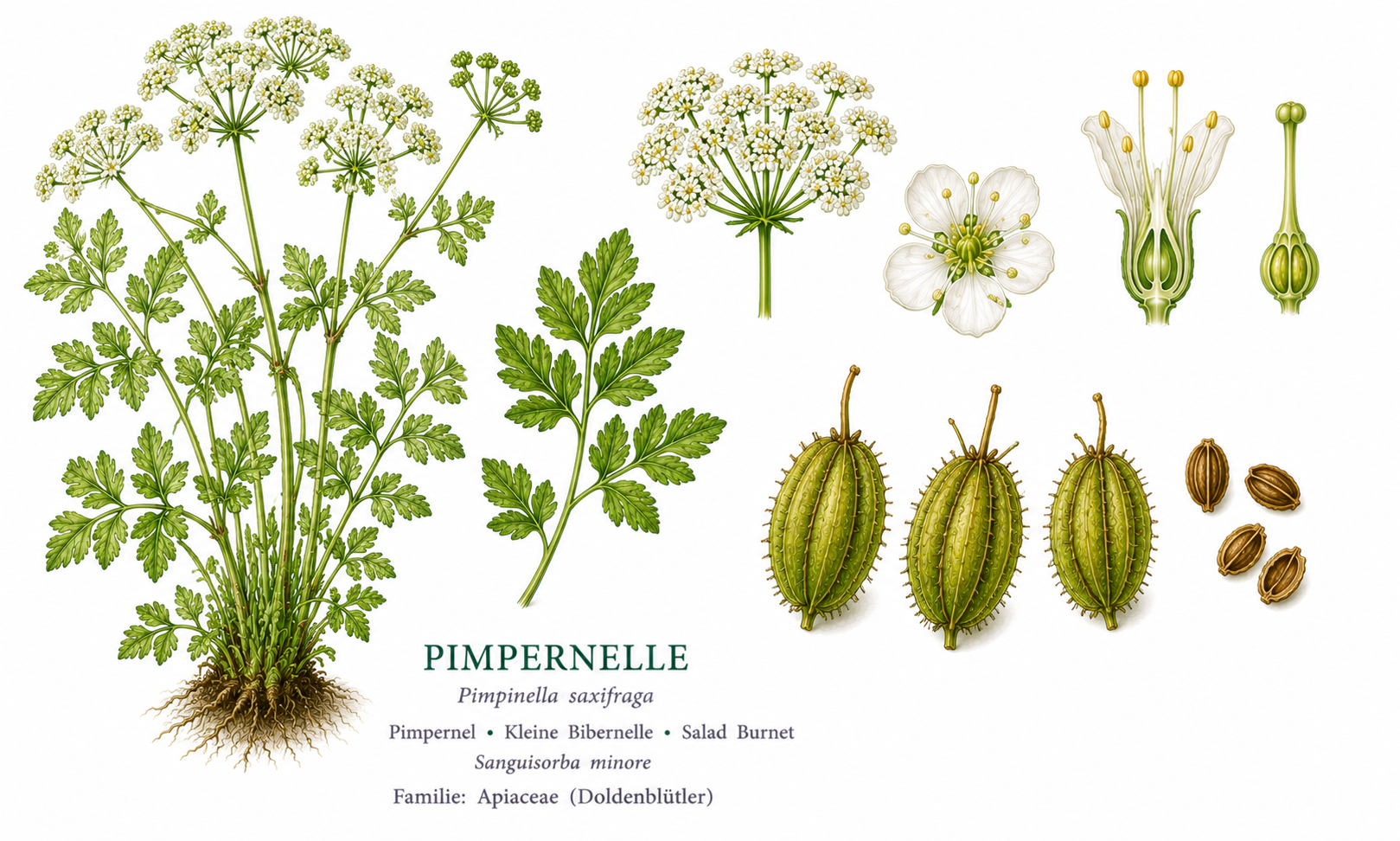
Quick profile
Key data
Suitable growing locations:
Good neighbors
BorageChervil
Avoid
SouthernwoodMint
Indoor & direct sowing
Salad Burnet: Sowing and germination
Indoor pre-culture in pots possible, but direct sowing is usually preferred.
Possible in both spring and late summer.
Planting & site
Salad Burnet: Planting and spacing
Set young plants at a distance of 25 cm.
Site & practical notes
Growing tips: Avoid fertilizing to keep the flavor intense., Place in the middle tier of herb spirals.
Temperature & frost
Salad Burnet: Temperature and site
Water & nutrients
Salad Burnet: Water, nutrients and care
Container & growth
Salad Burnet: Container, support and growth
Year plan
Salad Burnet Calendar
A green highlight even in the cold season.
Recurring tasks
Relevant now
June
- No additional single task
Next up
July
- No additional single task
Monthly tasks
Single tasks from monthly data; repeated seasonal windows are shown in the overview above.
January
No additional single task
February
No additional single task
March
No additional single task
April
No additional single task
May
No additional single task
June
No additional single task
August
No additional single task
September
No additional single task
October
No additional single task
November
No additional single task
December
No additional single task
Flowering & pollination
Salad Burnet Flowering & pollination
Flowering period
5, 6, 7, 8
Flower type
Spherical clusters
Flower color
Greenish-red to crimson
Self-fertility
self-fertile
Pollinator needed
no
Overview
Primarily wind-pollinated, but also attracts insects.
Notes
The plant is hermaphrodite and can be self-pollinated by wind.
Pruning & care
Salad Burnet Pruning & care
Pruning type
cut-back
Pruning timing
Flavor preservation and rejuvenation Regular removal of flower heads prevents leaves from becoming bitter.
Cleanup Removing old leaves from the previous year to make room for new growth.
Remove
Preserve
Avoid
Tools and hygiene
Use clean shears to avoid the transmission of rust fungi.
Companion guide
Salad Burnet Companion guide
Good neighbors
BorageChervil
Avoid
SouthernwoodMint
Use & storage
Salad Burnet Use & storage
Harvestable year-round in mild winters; tastes best before flowering.
Storage
Short-term storage (fresh consumption)
Storage life
In the refrigerator (damp cloth) approx. 2-3 days.
Flavor
Nutty, reminiscent of cucumber.
Harvest
Harvestable year-round in mild winters; tastes best before flowering.
Processing
After harvest
Use immediately as leaves wilt quickly; a short soak in cold water refreshes them.
Edibility & safety
Salad Burnet Edibility & safety
For people
In brief: which parts are edible, which parts remain risky, and whether raw consumption makes sense.
Safety notes
Non-toxic, considered very safe for consumption.
Animal safety
For many animals, this plant is generally low-risk: 13 animal types are rated suitable or mostly suitable. Quantity, plant part, and individual tolerance still matter.
Each row shows which parts are more suitable and which parts are critical.
Companion animals
 Dog
DogLeaves, Flowers
No risk parts listed
Leaves, Flowers
No risk parts listed
usually no action needed
Plant is used as edible herb, leaves and young shoots are safe in moderation. No known toxic compounds or symptoms reported in dogs.
Open animal page Cat
CatLeaves, Flowers
No risk parts listed
Leaves, Flowers
No risk parts listed
usually no action needed
Safe in moderation as an occasional treat. Woody stems should be avoided. No known toxic compounds or species-specific symptoms documented in cats. Conservatively classified due to lack of species-specific toxicity studies, but strong evidence for non-toxicity from a trusted source.
Open animal page Rabbit
Leaves, Flowers
No risk parts listed
Leaves, Flowers
No risk parts listed
usually no action needed
Sanguisorba minor is safe for rabbits and considered a suitable feed. Young leaves, flowers, and shoots can be fed regularly. Woody stems should be avoided as they are difficult to digest.
Open animal page Guinea pig
Leaves, Flowers
No risk parts listed
Leaves, Flowers
No risk parts listed
usually no action needed
No direct species-specific source was found for guinea pigs. This is a cautious inference from the rabbits profile and the known plant-part risks.
Open animal page Hamster
Leaves, Flowers
No risk parts listed
Leaves, Flowers
No risk parts listed
usually no action needed
No direct species-specific source was found for hamsters. This is a cautious inference from the rabbits profile and the known plant-part risks.
Open animal page Budgie
No suitable parts listed
No risk parts listed
No suitable parts listed
No risk parts listed
unknown
Although no direct budgerigar studies exist, the plant is considered an edible herb with low risk, especially as it belongs to the Rosaceae family and lacks known toxic principles relevant to birds. Young leaves, flowers, and shoots can be offered in small amounts as part of a varied diet. Woody stems should be avoided due to potential mechanical hazards.
Open animal pageFarm animals
 Horse
HorseLeaves, Flowers
No risk parts listed
Leaves, Flowers
No risk parts listed
usually no action needed
The plant is used as an edible wild plant and contains no known toxic compounds for equines. Leaves, flowers, and young shoots can be fed in moderation. Woody stems are less palatable and should be avoided.
Open animal page Chicken
Leaves, Flowers
No risk parts listed
Leaves, Flowers
No risk parts listed
usually no action needed
Salad Burnet (Sanguisorba minor) is considered non-toxic to chickens and is occasionally used as a forage plant. Young leaves, flowers, and shoots can be fed in moderation. Woody stems should be avoided due to poor digestibility.
Open animal page Duck
DuckLeaves, Flowers
No risk parts listed
Leaves, Flowers
No risk parts listed
usually no action needed
No direct species-specific source was found for ducks. This is a cautious inference from the geese profile and the known plant-part risks.
Open animal page Goose
GooseLeaves, Flowers
No risk parts listed
Leaves, Flowers
No risk parts listed
usually no action needed
No direct species-specific source was found for geese. This is a cautious inference from the chickens profile and the known plant-part risks.
Open animal page Sheep
SheepLeaves, Flowers
Woody stems
Leaves, Flowers
Woody stems
High tannin content in mature or woody parts, Excessive consumption
Gastrointestinal irritation with excessive consumption
observe
No direct species-specific source was found for sheep. This is a cautious inference from the cattle profile and the known plant-part risks.
Open animal page Goat
GoatLeaves, Flowers
Woody stems
Leaves, Flowers
Woody stems
High tannin content in mature or woody parts, Excessive consumption
Gastrointestinal irritation with excessive consumption
observe
No direct species-specific source was found for goats. This is a cautious inference from the sheep profile and the known plant-part risks.
Open animal page Cattle
Leaves, Flowers
Woody stems
Leaves, Flowers
Woody stems
High tannin content in mature or woody parts, Excessive consumption
Gastrointestinal irritation with excessive consumption
 Pig
PigLeaves, Flowers
No risk parts listed
Leaves, Flowers
No risk parts listed
usually no action needed
Sanguisorba minor is non-toxic to pigs and considered safe as feed. Young leaves, flowers, and shoots can be occasionally given as supplemental feed. Woody stems are less palatable and should be avoided.
Open animal pageThese guidelines are for general information only and do not replace veterinary diagnosis. If critical plant parts were ingested or the animal shows unusual behaviour or symptoms, seek veterinary advice.
Max risk
unknown
Highest status
not established
Urgency
unknown
Saving seed
Salad Burnet Saving seed
Seed viability
2 - 4 years
Practical tips
Salad Burnet Practical tips
Common beginner mistakes
Planting the rosette too deep leads to rot.
Success pattern
Once established, it's very hardy and self-seeds readily.
High-impact tips
Consistently pinch out flower buds for best leaf quality.
Grower observations
In mild winters, it is one of the few herbs providing fresh greens directly from the garden.
Plant Profile
Additional plant images

Health
Pests, Diseases
Pests
Aphids
Curled young leaves, sticky honeydew.
Diseases
Powdery Mildew
White, wipeable coating on leaf surfaces.
Burnet Rust
Yellow-orange pustules on leaf undersides.
Deficiencies
Nitrogen deficiency
Stunted growth, pale leaves.
Plant health
Diagnosis help
Salad Burnet Diagnosis help
Pest groups
Sucking insects
Disease groups
Prevention
Diagnosis
Salad burnet is very robust; problems usually only occur with extreme wetness or over-fertilization.
Cultural prevention
Monitoring
Check for aphid infestation in spring.
First response
Diagnostic rules
Yellow spots on leaf top, orange pustules underneath.
Possible causes: Phragmidium sanguisorbae
- Check leaf undersides.
- Check site moisture levels.
FAQ
Can you dry salad burnet?
No, it loses almost all its flavor when dried. Better to use fresh or infuse in vinegar.
Is Salad Burnet safe for Dog?
Salad Burnet is classified as suitable for Dog. Risk: unknown. Urgency: usually no action needed. Plant is used as edible herb, leaves and young shoots are safe in moderation. No known toxic compounds or symptoms reported in dogs.
Is Salad Burnet safe for Cat?
Salad Burnet is classified as suitable for Cat. Risk: unknown. Urgency: usually no action needed. Safe in moderation as an occasional treat. Woody stems should be avoided. No known toxic compounds or species-specific symptoms documented in cats. Conservatively classified due to lack of species-specific toxicity studies, but strong evidence for non-toxicity from a trusted source.
Is Salad Burnet safe for Rabbit?
Salad Burnet is classified as suitable for Rabbit. Risk: unknown. Urgency: usually no action needed. Sanguisorba minor is safe for rabbits and considered a suitable feed. Young leaves, flowers, and shoots can be fed regularly. Woody stems should be avoided as they are difficult to digest.
Is Salad Burnet safe for Guinea pig?
Salad Burnet is classified as suitable for Guinea pig. Risk: unknown. Urgency: usually no action needed. No direct species-specific source was found for guinea pigs. This is a cautious inference from the rabbits profile and the known plant-part risks.
Guides
Related guides
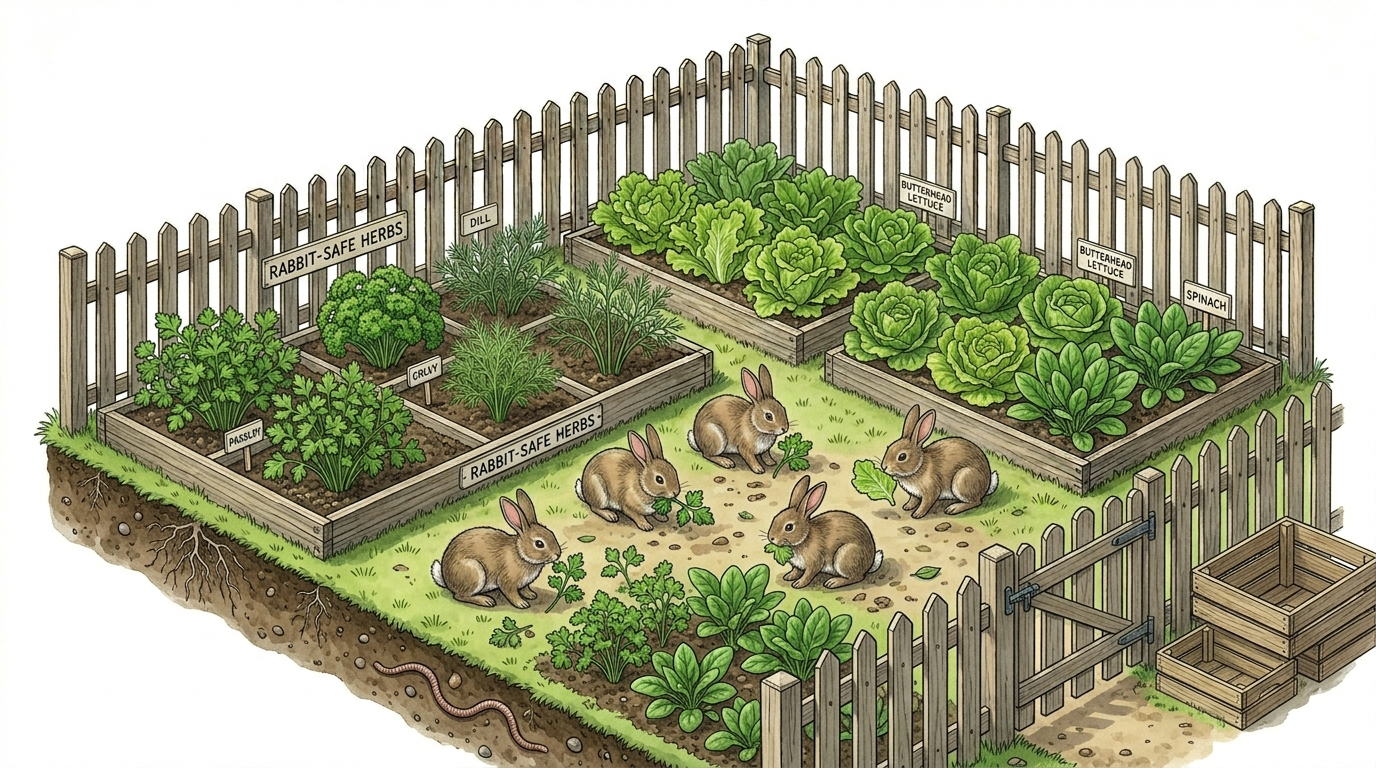
Guide
Rabbits in the Garden: Herbs and Vegetables
Learn how to choose suitable herbs and vegetables for rabbits, grow feeding plants, and plan a rabbit-friendly garden.
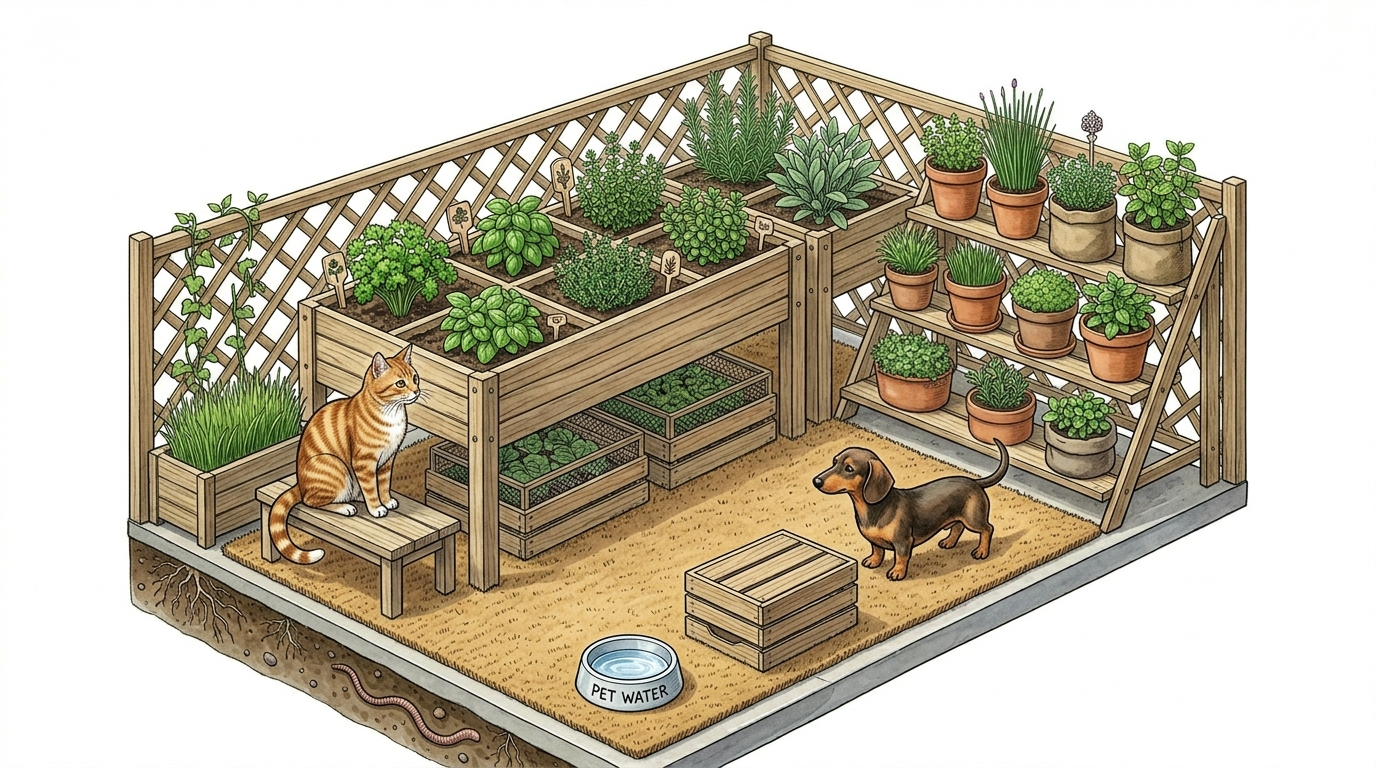
Guide
Pet-Safe Herb Gardens for Balconies and Beds
Learn how to create a pet-safe herb garden with suitable herbs, thoughtful layouts, and practical maintenance strategies.
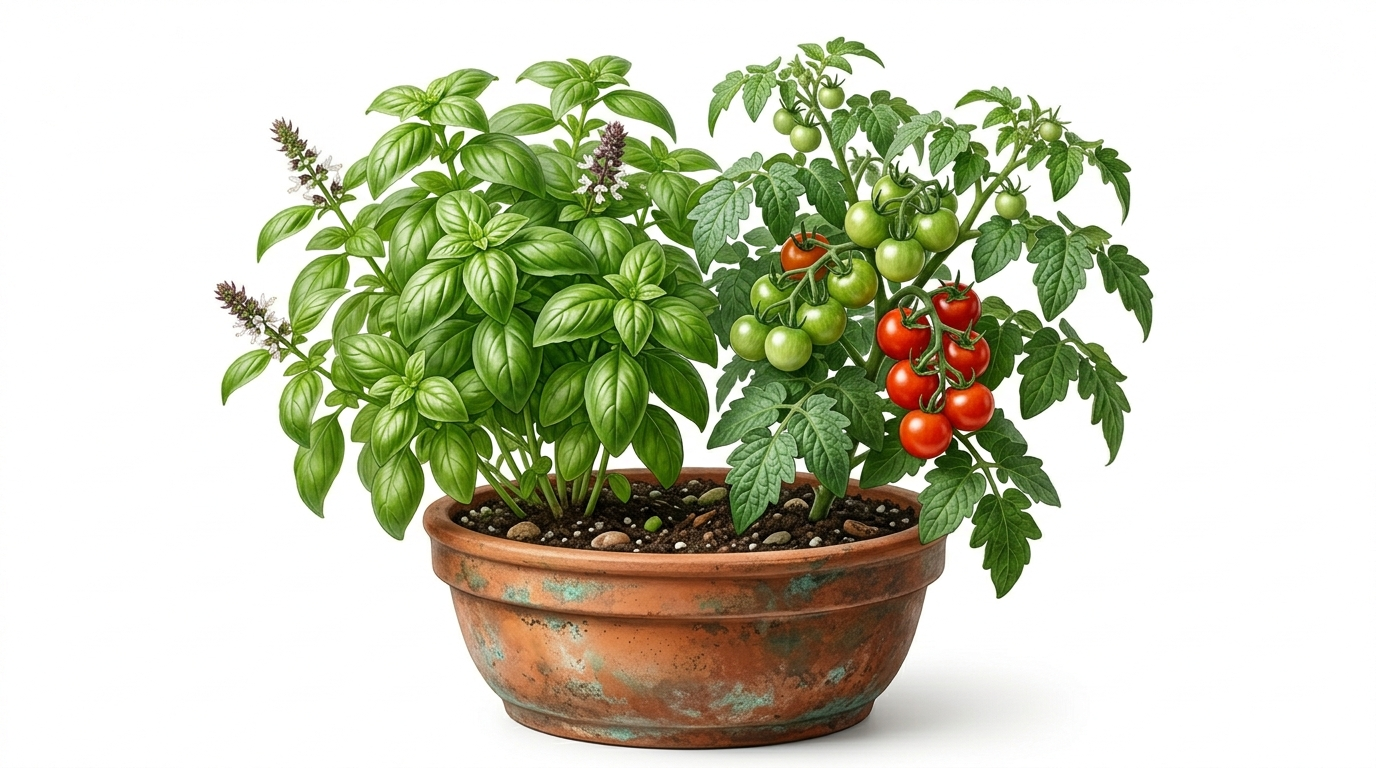
Guide
Growing Basil: Site, Watering and Harvesting
Learn how to grow basil successfully with the right site, steady watering, regular harvesting, and tips to delay flowering.
Guide
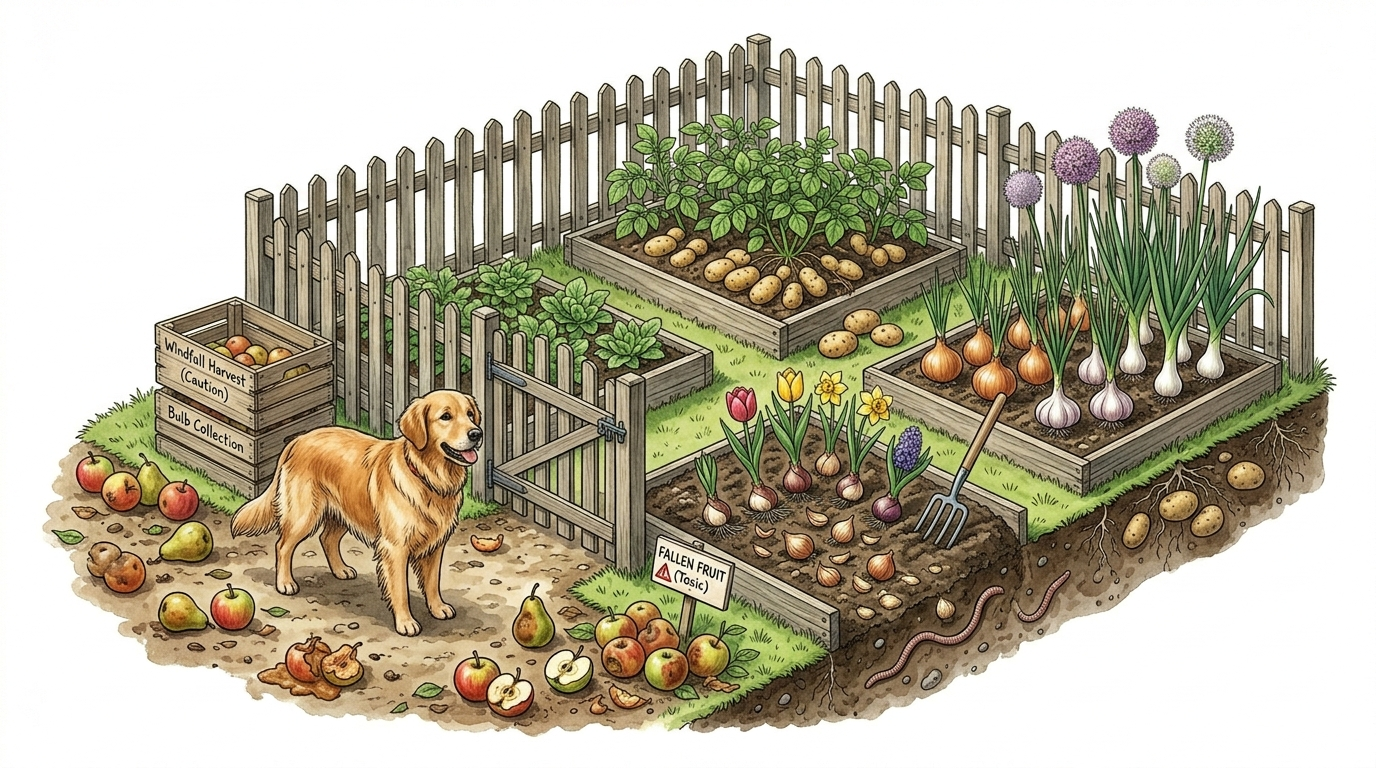
Dogs in the Garden: Windfall Fruit and Risks
Keep your garden dog-safe by managing windfall fruit, seeds, stored crops, and potentially problematic plant parts.
Internal links
Related plants
Rose
Great Burnet
Close relative, but prefers wetter locations.
Thyme
Sage
Strawberry
Both belong to the Rosaceae family.
Borage
Both herbs share a distinct cucumber aroma.
Anise
Naming similarity but botanically and culinarically distinct.
Sources
Public sources
- Wikidata entity
Wikidata · 2026-05-15
- GBIF species match
GBIF · 2026-05-15
- Deutschsprachige Wikipedia: Kleiner Wiesenknopf
Wikipedia · 2026-05-15
- English Wikipedia: Sanguisorba minor
Wikipedia · 2026-05-15