Guide
Dogs in the Garden: Windfall Fruit and Risks
Many dogs enjoy spending time in the garden, exploring beneath fruit trees and investigating harvest areas or compost piles. The greatest risks often come not from the plant itself but from fallen fruit, seeds, pits, plant waste, and stored crops. Good garden maintenance can prevent many problems.
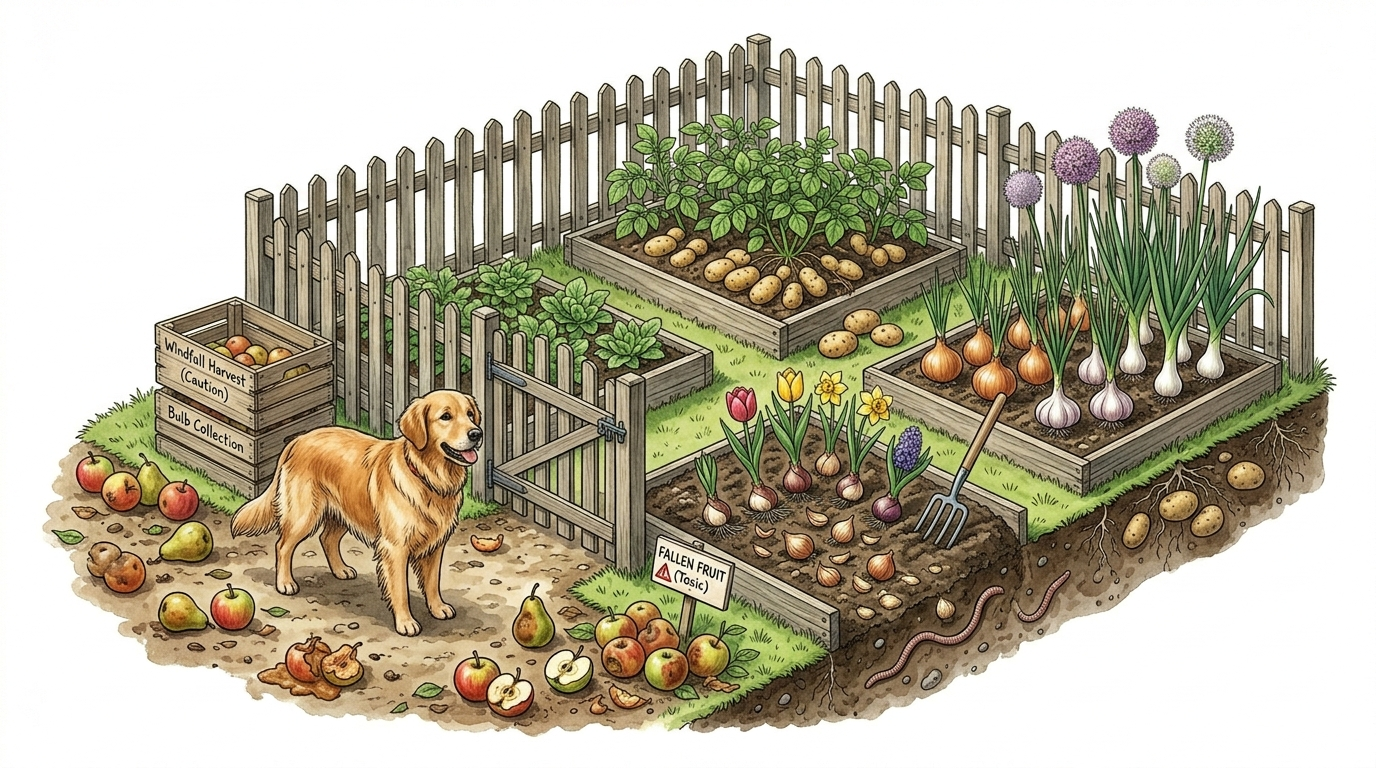
Why garden plants can become a problem
Not every garden plant is automatically dangerous. Risks often arise from specific plant parts, large quantities, or easily accessible plant waste. Curious dogs and young animals are especially likely to investigate anything on the ground.
- windfall fruit is often chewed or eaten
- seeds and pits may be swallowed
- garden waste is frequently within reach
- compost contains many different plant materials
- stored harvests may be easily accessible
Manage windfall fruit regularly
Fallen fruit often accumulates beneath fruit trees during the growing season. Overripe, damaged, or long-forgotten fruit should be removed regularly.
- collect fallen apples regularly
- remove pears before they spoil
- pick up dropped plums promptly
- discard damaged fruit
- inspect areas beneath fruit trees
Seeds, pits, and fruit waste
Many dogs are attracted to fallen fruit. During chewing, seeds or pits may also be consumed. Fruit scraps and processing waste should therefore not be left accessible.
- dispose of apple processing waste
- remove plum pits from the garden
- avoid open storage of fruit scraps
- keep harvest areas clean
- inform family members and visitors
Onions, garlic, and related plants
Onions, garlic, and related plants are not intended for dogs. In gardens, the main concern is usually harvest waste, kitchen scraps, and stored produce.
- dispose of onion skins promptly
- do not leave garlic waste in the garden
- store harvest crates out of reach
- monitor compost areas
- avoid feeding kitchen scraps to dogs
Potatoes and stored harvests
Potatoes are often stored in sheds, garages, or garden buildings. Dogs should not have access to stored potatoes, sprouts, or discarded plant material.
- store potatoes securely
- remove sprouts and plant waste
- discard rejected material promptly
- keep storage areas closed
- check harvest containers regularly
Compost, harvest areas, and garden work
Gardening and harvesting generate a lot of plant waste. These areas are often especially interesting to dogs.
- 1
Clean up harvest areas
Remove fruit, leaves, and plant waste immediately after gardening.
- 2
Monitor compost
Do not allow unsupervised access to fresh compost materials.
- 3
Collect waste
Use secure containers for problematic plant material.
- 4
Inspect storage locations
Check sheds, storage rooms, and garden buildings regularly.
- 5
Remove fallen fruit
Collect windfall fruit frequently.
Planning a dog-safe garden
A dog-friendly garden benefits from clear pathways, secure storage, and regular inspections. Good organization helps prevent many avoidable risks.
- inspect fruit trees regularly
- keep harvest areas tidy
- secure compost systems
- store produce safely
- check new plants before introducing them
Warning signs and veterinary help
If a dog consumes large amounts of unknown plant material or develops unusual symptoms, veterinary advice should be sought.
- vomiting
- diarrhea
- extreme tiredness
- unusual behavior
- loss of appetite
Frequently asked questions
Why is windfall fruit important for dog owners?
Dogs often chew or eat fallen fruit, so regular collection helps reduce avoidable risks.
Are apple seeds and plum pits a concern?
Seeds and pits should not be intentionally consumed. Fruit waste and processing leftovers should be removed.
Should onions and garlic be secured?
Yes. Harvest waste, kitchen scraps, and stored produce should be kept out of reach of dogs.
Internal links
Related plants
Guides
Related guides
Guide
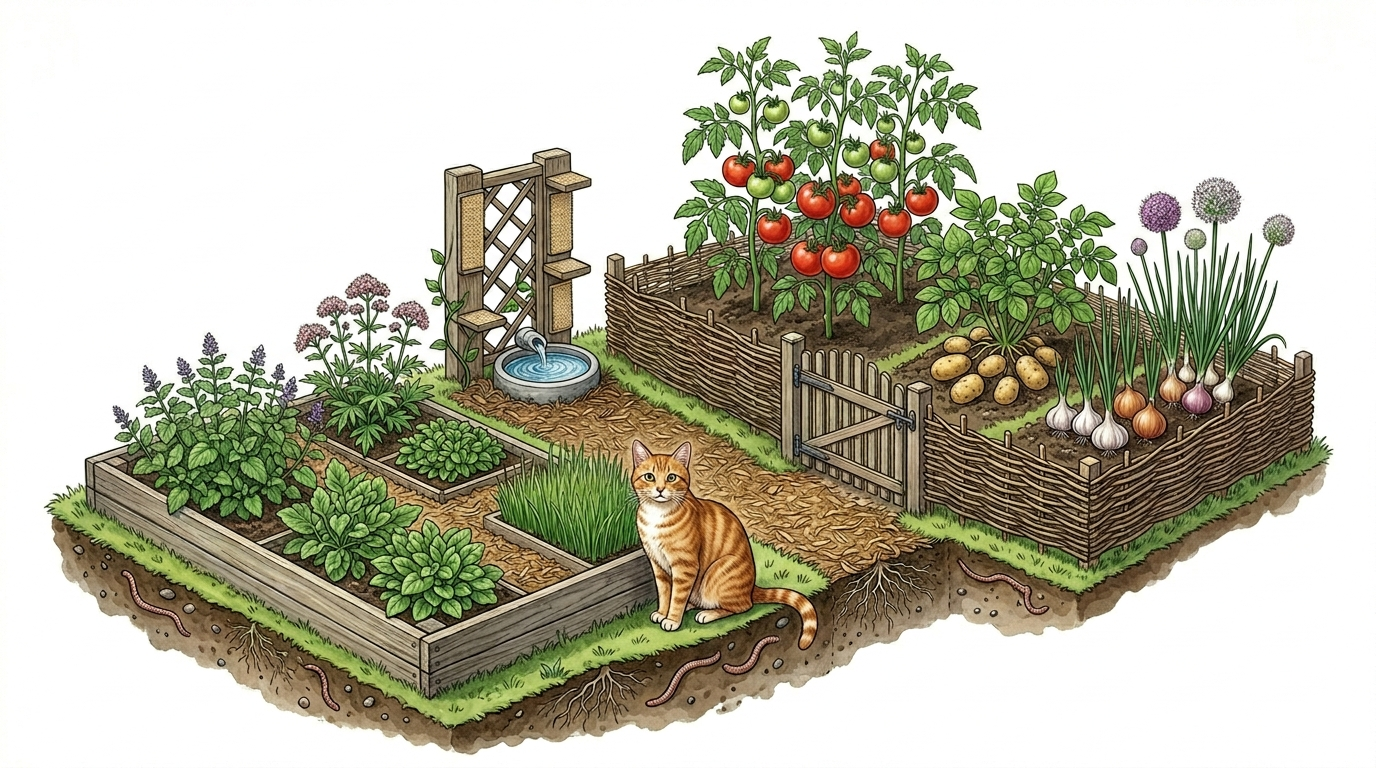
Toxic Garden Plants for Cats: Safer Planning
Learn which garden plants can be risky for cats, how to plan safer beds, and what to do if a cat eats a toxic plant.
Guide
Horse Pastures and Garden Plants: Safety Checks
Learn how to identify risks near horse pastures, fences, turnout areas, fruit trees, and garden planting zones.
Guide
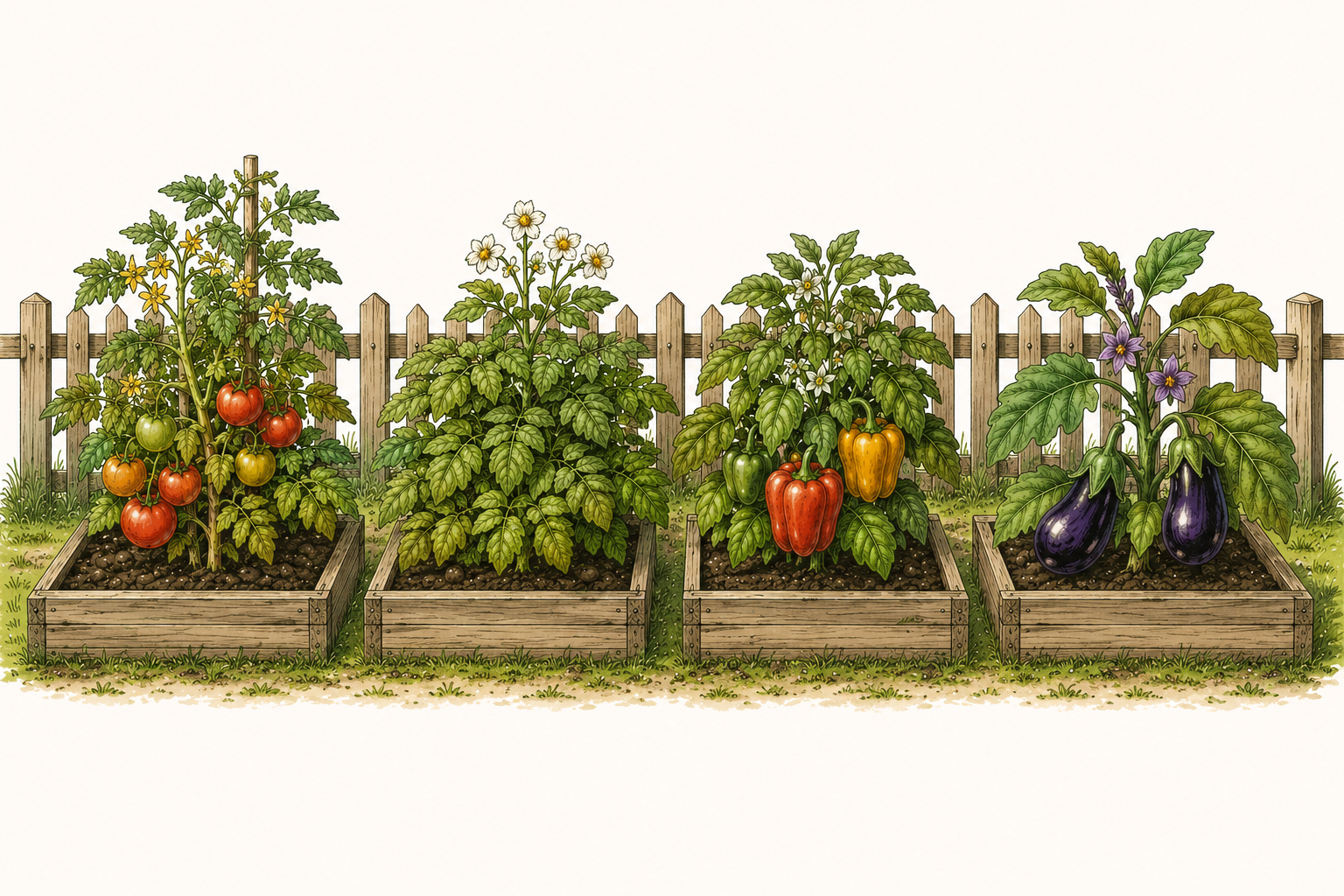
Pets and Nightshades: Tomatoes, Potatoes and More
Learn how to grow tomatoes, potatoes, peppers, and eggplants safely in pet-friendly gardens and understand plant-part risks.
Guide
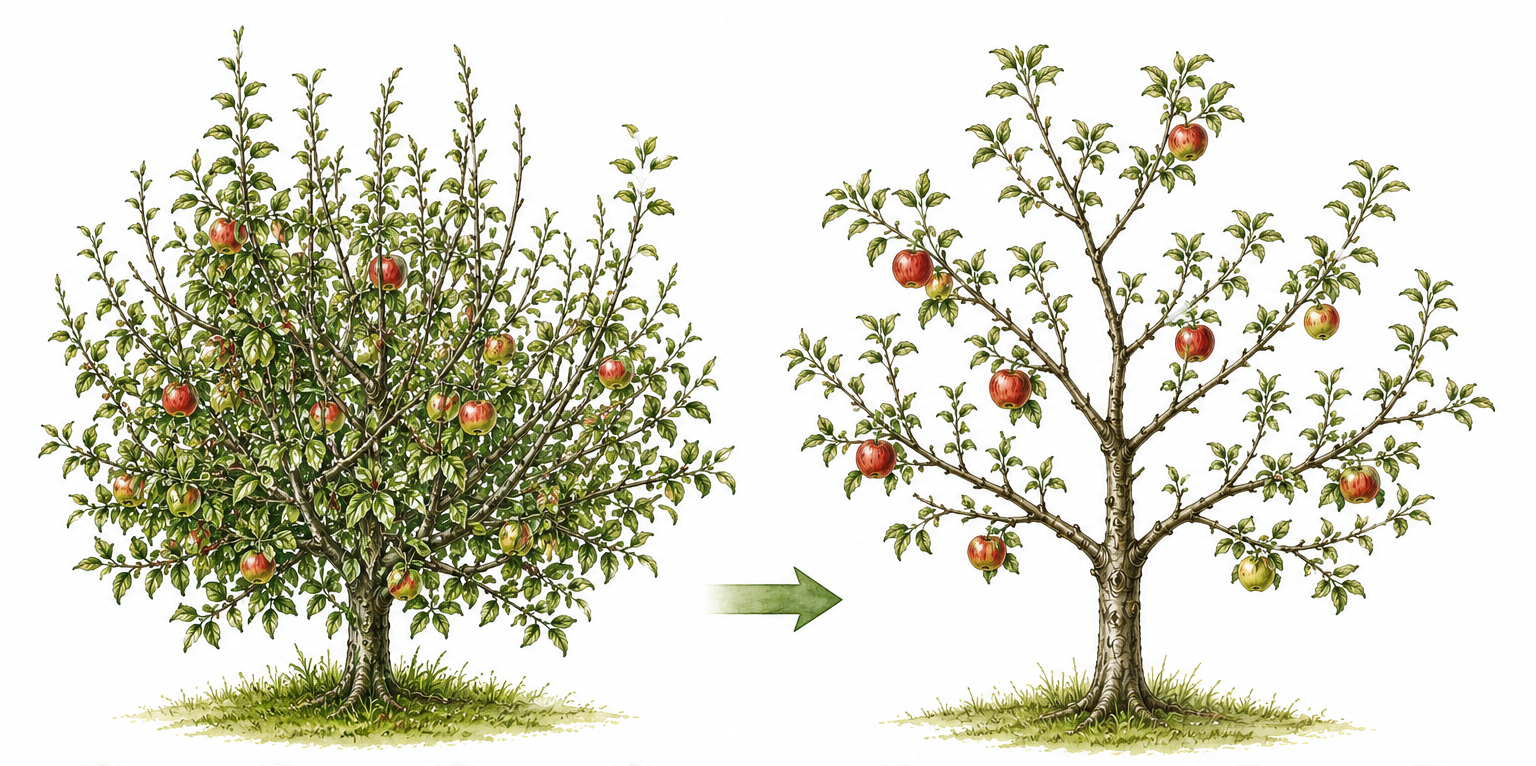
Pruning Apple Trees: Timing, Techniques, and Common Mistakes
Learn when and how to prune apple trees properly, including winter pruning, summer pruning, training cuts, and maintenance tips for healthy, productive…