Guide
Growing Basil: Site, Watering and Harvesting
Basil is one of the most popular kitchen herbs and grows well in pots, balcony planters, and garden beds. With warmth, even moisture, and regular harvesting, plants stay productive and aromatic for much longer.
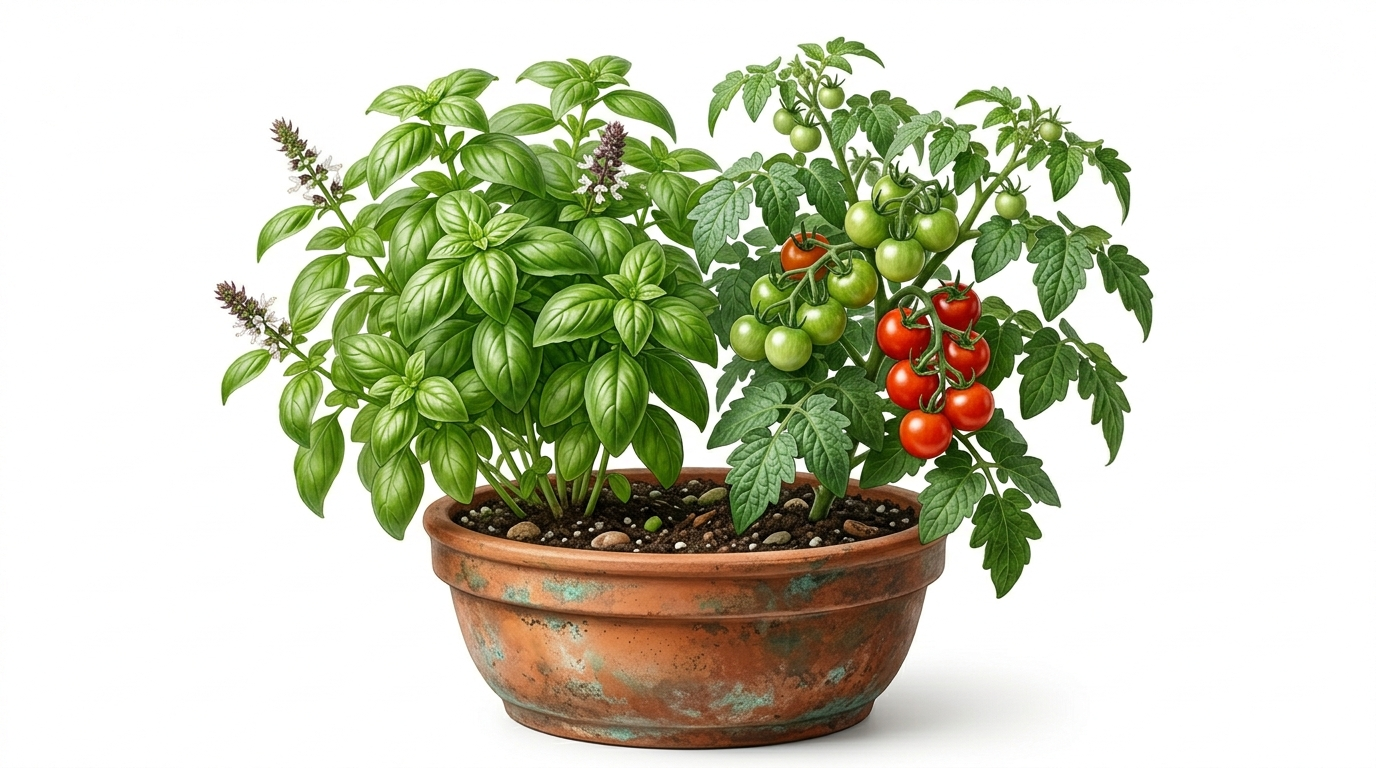
The right site
Basil loves warmth, sunshine, and sheltered spots. Cold nights, wind, and constantly wet soil weaken the plants quickly. Basil grows especially well near warm walls, on sunny balconies, or in greenhouses.
- choose a sunny to bright location
- protect plants from cold wind
- use loose, well-drained soil
- avoid waterlogging
Sowing and planting basil
Basil can be started indoors from March or sown later into pots and planters. Seeds germinate best in steady warmth.
- 1
Prepare the container
Fill pots or trays with loose herb or seed-starting mix.
- 2
Scatter the seeds
Spread seeds thinly on the surface and press them down lightly.
- 3
Keep moist
Keep the soil evenly moist but not wet.
- 4
Place in warmth
Put the sowing container in a bright and warm position.
- 5
Transplant young plants
Move strong seedlings into larger containers or beds with enough spacing.
Watering basil correctly
Basil needs even moisture but does not tolerate waterlogged soil. Container plants in particular can dry out quickly on hot summer days.
- water regularly and moderately
- never let the soil dry out completely
- remove excess water from saucers
- water in the morning when possible
Growing basil in containers
Basil is very suitable for pots and balcony boxes. Enough space, loose soil, and good drainage are especially important.
- use pots with drainage holes
- avoid overcrowding several plants
- check soil moisture regularly
- feed lightly during strong growth
Companion planting and good neighbors
Basil is often grown together with tomatoes. Both plants enjoy similar conditions: warmth, sunshine, and steady moisture.
- pairs well with tomatoes
- works well with oregano in herb containers
- thyme usually prefers slightly drier conditions
- leave enough airflow between plants
How to harvest basil
Regular harvesting keeps basil bushy and encourages new shoots. Instead of picking single leaves, cut whole shoot tips.
- 1
Choose healthy shoots
Select strong shoots with several leaf pairs.
- 2
Cut above a leaf pair
Trim the shoot tip just above a branching point.
- 3
Harvest regularly
Take smaller amounts often rather than large amounts rarely.
- 4
Remove flower buds early
Pinch out flower buds so the plant keeps producing leaves longer.
Delaying flowering
Once basil starts flowering, it puts more energy into blooms and seeds instead of new leaves. Regular harvesting and removing flower buds helps extend leaf production.
- remove flower buds early
- trim shoot tips regularly
- do not let plants dry out
- avoid stress from cold weather
Common mistakes to avoid
- placing basil outdoors too early
- allowing waterlogging in pots
- picking only single leaves
- letting plants become overcrowded
- underestimating cold drafts
Frequently asked questions
Why does my basil wilt so quickly?
Common reasons are cold temperatures, waterlogging, or completely dry soil. Basil reacts very sensitively to stress.
Should basil be allowed to flower?
For a longer leaf harvest, flowers are usually removed because flowering reduces new leaf growth.
Can basil grow together with tomatoes?
Yes. Both plants enjoy warm, sunny conditions and work well together in pots, raised beds, and greenhouses.
What is the best way to harvest basil?
Cut whole shoot tips just above a leaf pair. This encourages the plant to branch and stay bushy.
Internal links
Related plants
Guides
Related guides
Guide
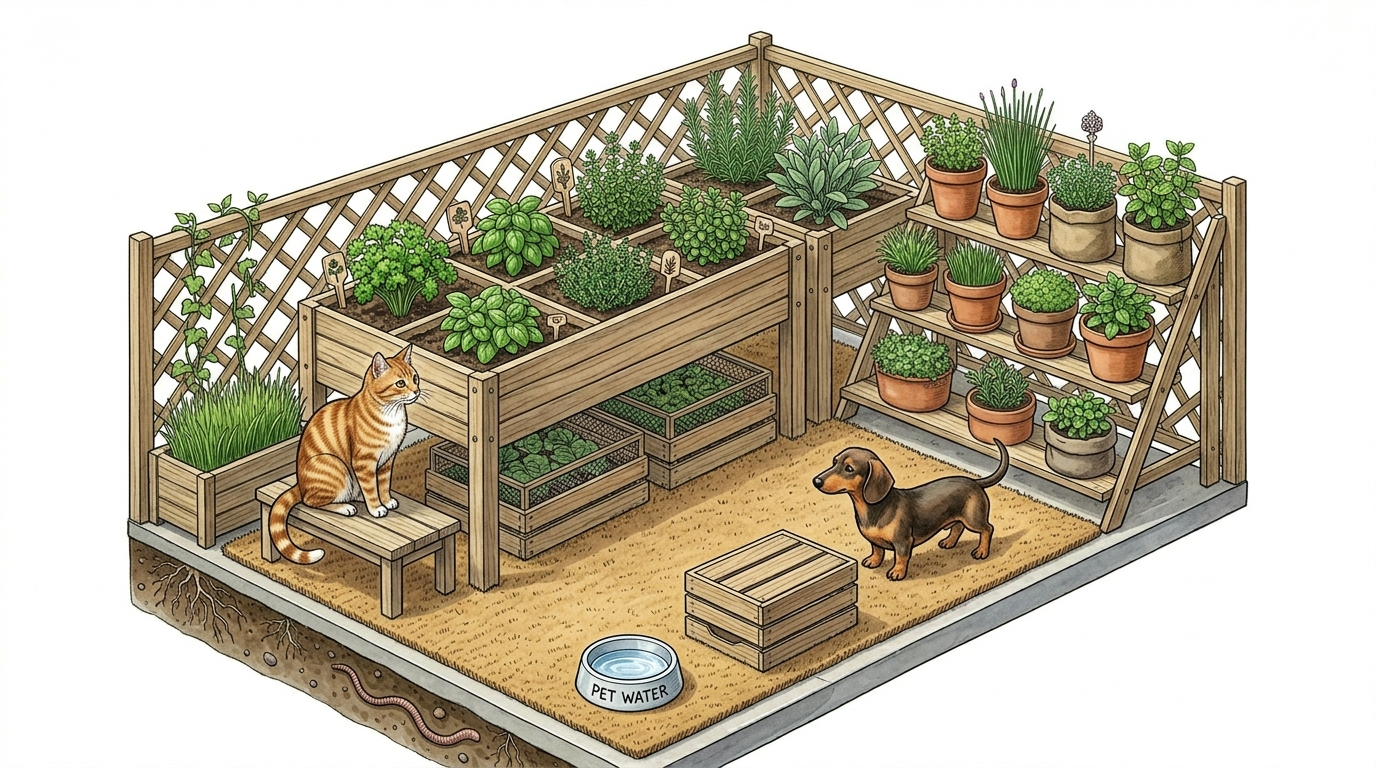
Pet-Safe Herb Gardens for Balconies and Beds
Learn how to create a pet-safe herb garden with suitable herbs, thoughtful layouts, and practical maintenance strategies.
Guide
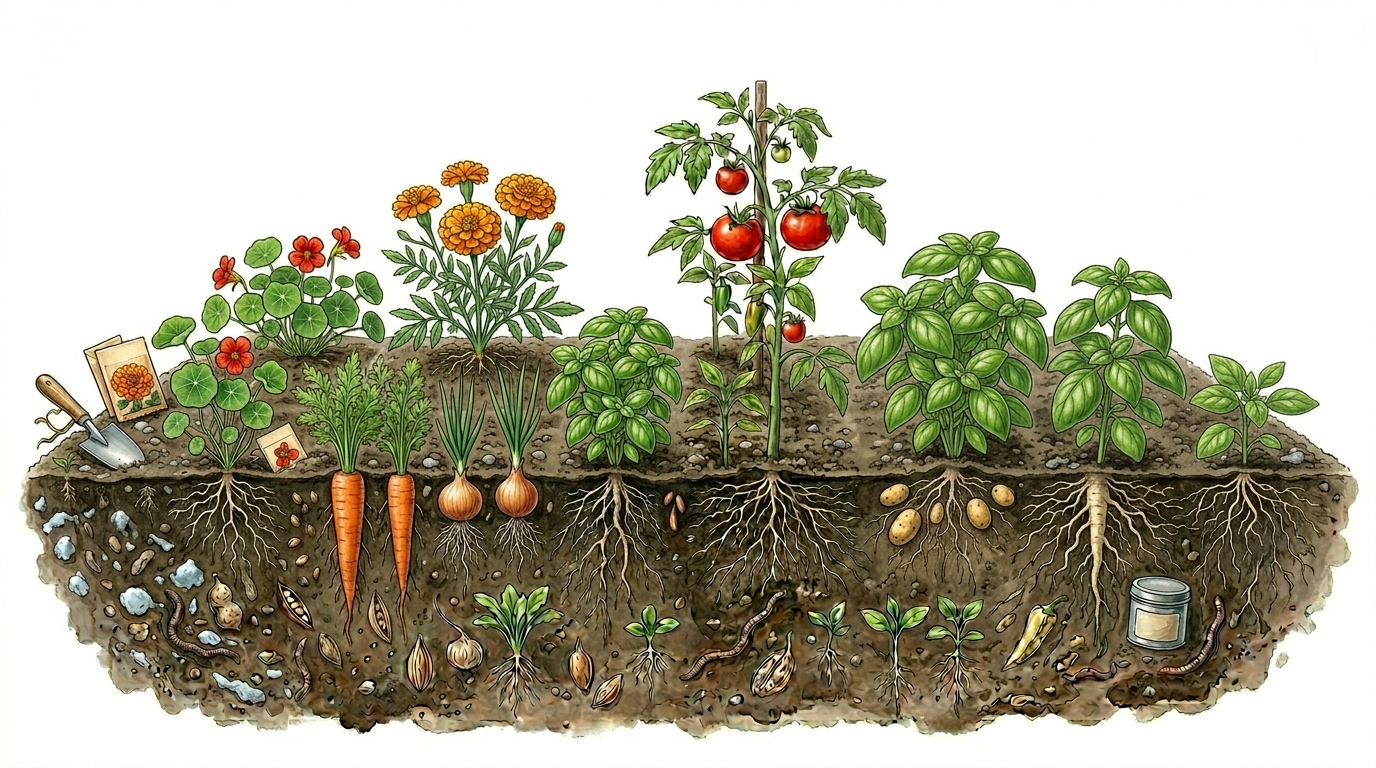
Companion Planting for Tomatoes: Good and Bad Neighbors
Learn which plants grow well with tomatoes, which neighbors to avoid, and how to plan productive mixed tomato beds.
Guide
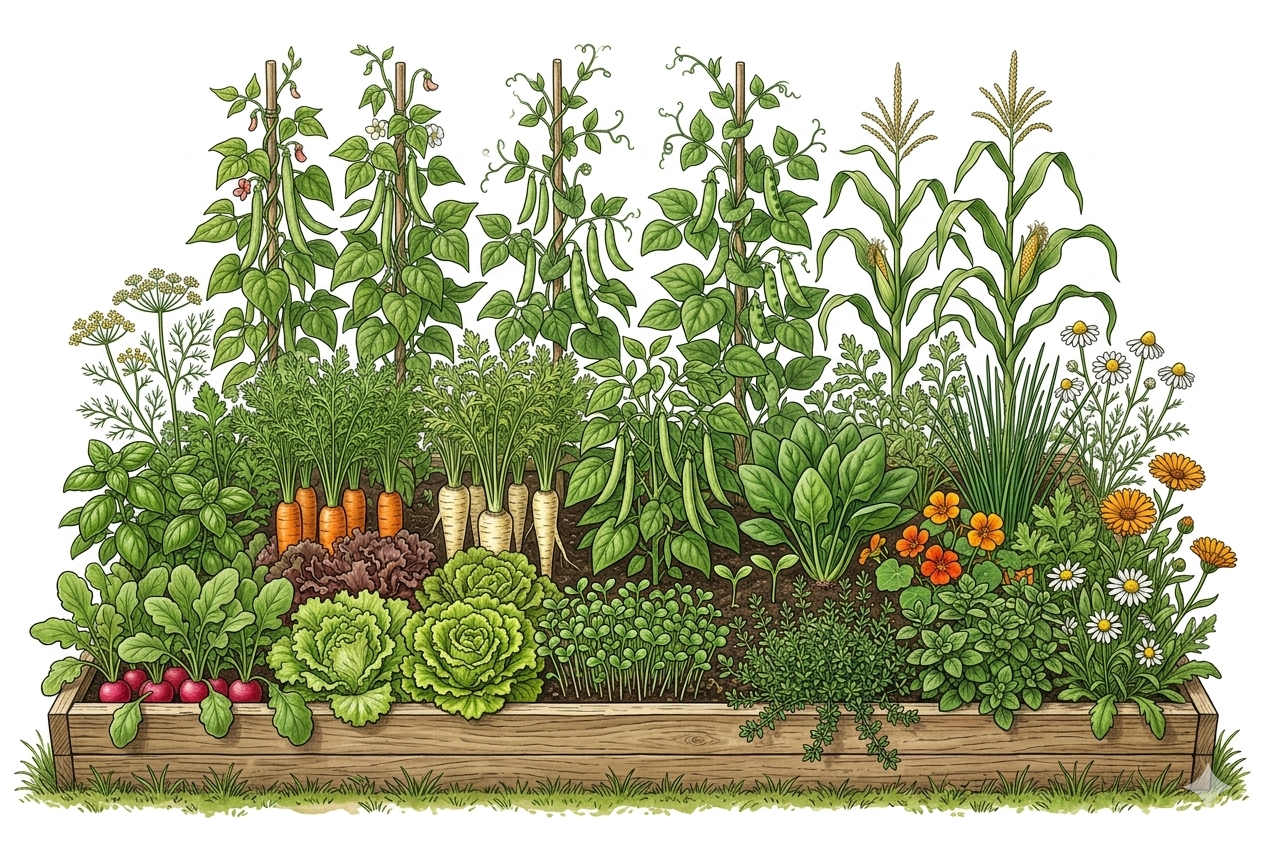
Small Garden Bed Planning: Combine 20 Crops Well
Use small beds efficiently by combining 20 vegetables and herbs, planning successions, and avoiding wasted gaps.
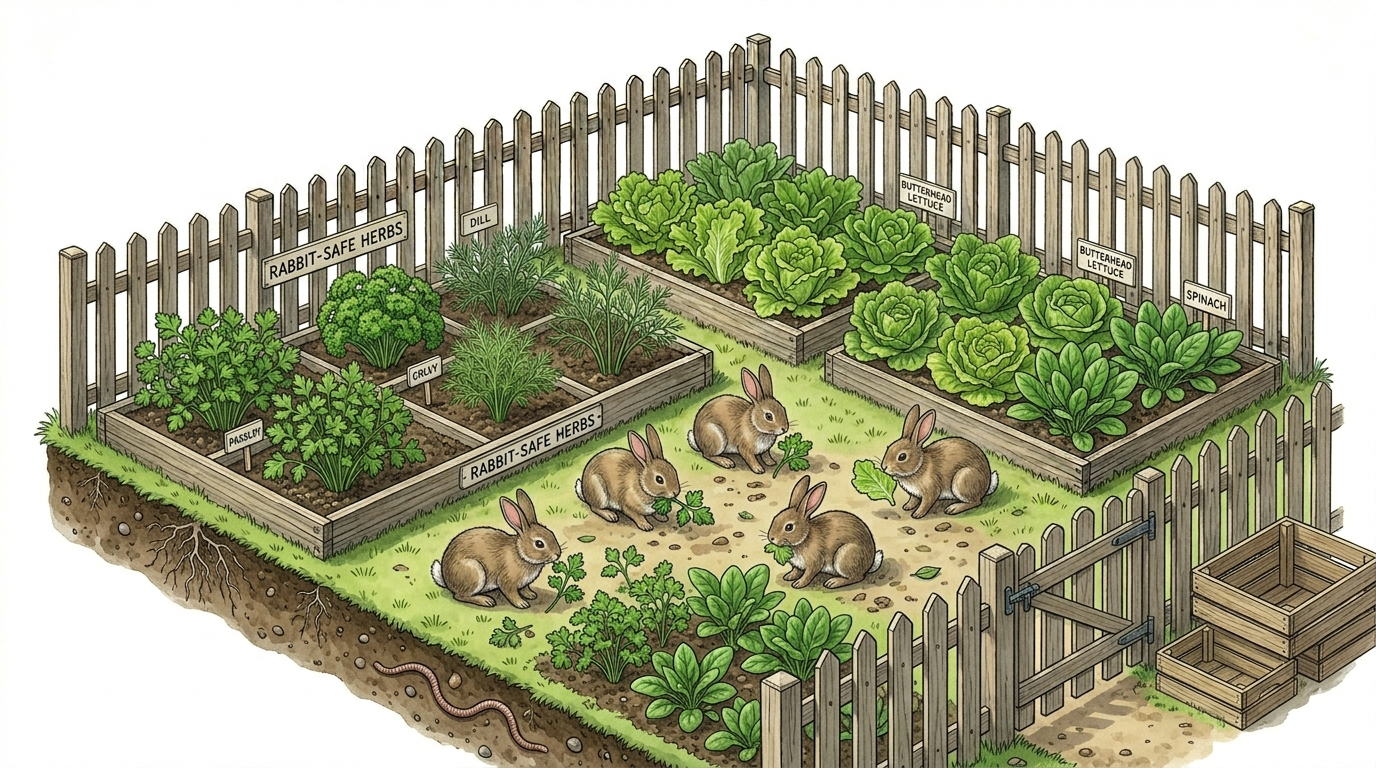
Guide
Rabbits in the Garden: Herbs and Vegetables
Learn how to choose suitable herbs and vegetables for rabbits, grow feeding plants, and plan a rabbit-friendly garden.