Plant Profile
Allium ursinumAllium ursinum
Wild garlic is a perennial wild plant with an intense yet mild garlic flavor. It thrives in shaded, humus-rich sites and is a valuable bee pasture.

Quick profile
Key data
Suitable growing locations:
Good neighbors
sweet woodrufffernsshade-tolerant perennialsFern
Avoid
dry sunny bedsSunflowerRoses
Indoor & direct sowing
Allium ursinum: Sowing and germination
Wild garlic is not usually started indoors; the seeds need a prolonged cold period and germinate irregularly.
Sow fresh seed in autumn in a shaded, humus-rich place; germination may take until the following spring or longer.
Planting & site
Allium ursinum: Planting and spacing
Plant young plants or bulbs in early spring or autumn while the soil is moist and workable without frost.
Site & practical notes
Temperature & frost
Allium ursinum: Temperature and site
Water & nutrients
Allium ursinum: Water, nutrients and care
Container & growth
Allium ursinum: Container, support and growth
Year plan
Allium ursinum Calendar
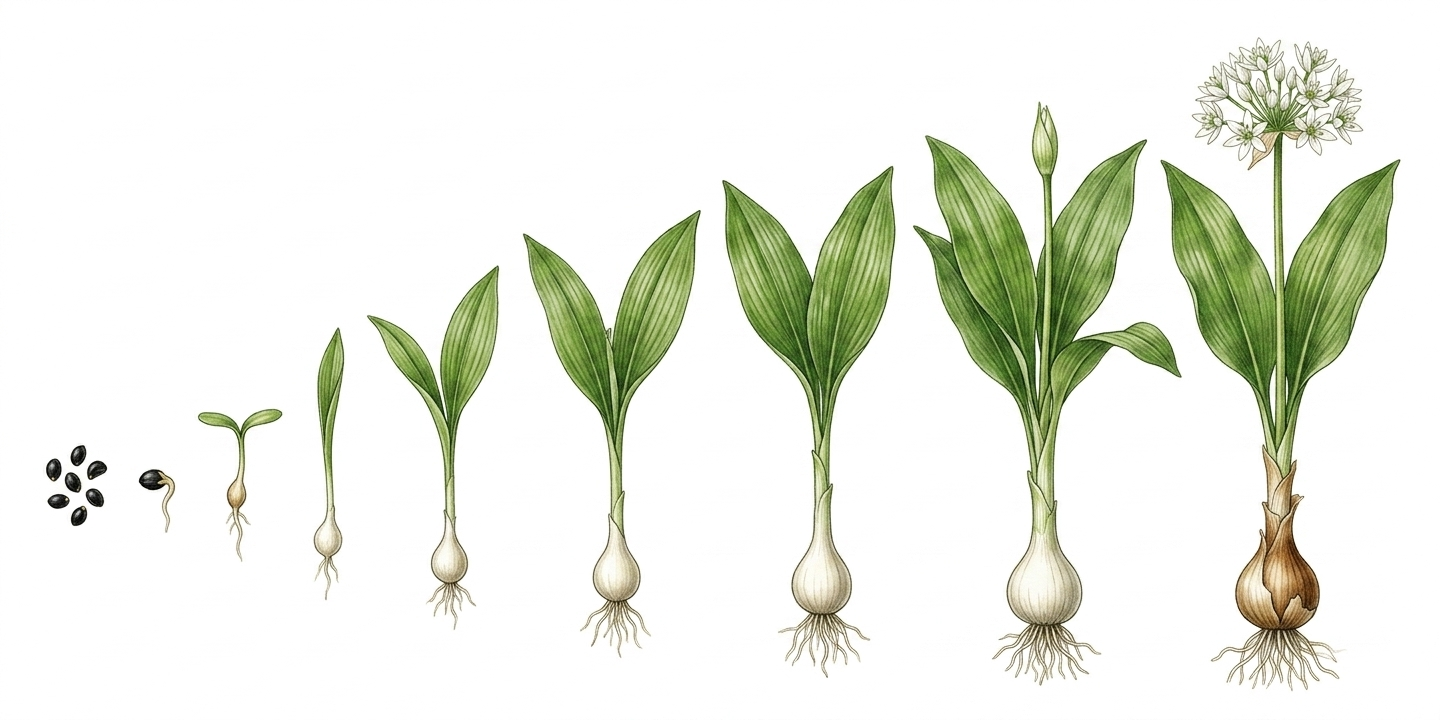
In March, wild garlic emerges and is ready for the first harvest. In May/June, it dies back and regenerates until the following spring.
Relevant now
June
- No additional single task
Next up
July
- No additional single task
Monthly tasks
Single tasks from monthly data; repeated seasonal windows are shown in the overview above.
January
Quiet month
February
Growing
- Check patchestablished patch: Leave mulch in place and do not hoe.
March
Harvest
- Harvest young leavesleaves clearly identified: Harvest only certainly identified leaves and protect the patch.
April
Harvest
- Continue main harvestbefore or at early flowering: Harvest regularly but sparingly.
May
Harvest
- Stop harvestflowering or dieback begins: Let plants replenish reserves after flowering.
June
Quiet month
August
Growing
- Prepare sitenew planting planned: Add humus and choose a shaded area.
September
Planting
- Sow or plantsoil moist: Sow fresh seed or plant bulbs.
October
Growing
- Mulchafter planting: Cover thinly with leaves or mature compost.
November
Planting
- Finish plantingsoil workable: Water late plantings well.
December
Quiet month
Flowering & pollination
Allium ursinum Flowering & pollination
Self-fertility
self-fertile
Pollinator needed
yes
Overview
Wild garlic relies on insect pollination, especially by bees and hoverflies.
Notes
Self-pollination is possible, but insect pollination increases seed set and genetic diversity.
Companion guide
Allium ursinum Companion guide
Good neighbors
sweet woodrufffernsshade-tolerant perennialsFern
Avoid
dry sunny bedsSunflowerRoses
Use & storage
Allium ursinum Use & storage
Harvest leaves before and at the beginning of flowering; after flowering the flavor fades and plants should be allowed to die back.
Storage
cool and moist
Storage life
3–5 days in the refrigerator crisper
Flavor
intensely garlic-like but milder and fresher
Harvest
Harvest leaves before and at the beginning of flowering; after flowering the flavor fades and plants should be allowed to die back.
Processing
After harvest
Harvest carefully with a sharp knife or scissors to avoid damaging the bulbs. Process leaves immediately or store cool.
Edibility & safety
Allium ursinum Edibility & safety
For people
In brief: which parts are edible, which parts remain risky, and whether raw consumption makes sense.
Safety notes
Risk of confusion mainly with the toxic autumn crocus (Colchicum autumnale). Wild garlic leaves have a strong garlic odor and, unlike autumn crocus, emerge annually in spring.
Animal safety
For animals, the specific plant part matters here: some parts may be suitable, while others should be avoided. At least one critical rating is listed for 13 animal types.
Each row shows which parts are more suitable and which parts are critical.
Companion animals
 Dog
DogNo suitable parts listed
No risk parts listed
No suitable parts listed
No risk parts listed
 Cat
CatNo suitable parts listed
All parts of the plant
No suitable parts listed
All parts of the plant
Ingestion of any plant part
Vomiting, ataxia, lethargy
emergency vet immediately
Wild garlic (Allium ursinum) belongs to the Allium genus, which is toxic to cats and can cause hemolytic anemia. All parts of the plant are toxic.
Open animal page Rabbit
No suitable parts listed
All parts of the plant
No suitable parts listed
All parts of the plant
Consumption of large quantities, Regular consumption
Hemolytic anemia, Weakness, Lethargy
emergency vet immediately
Wild garlic belongs to the Allium genus, whose species contain thiosulphates that can cause hemolytic anemia in rabbits. All parts of the plant should be considered toxic. Although no direct rabbit-specific toxicity data is available, high caution is recommended due to the known toxicity of other Allium species.
Open animal page Guinea pig
No suitable parts listed
All parts of the plant
No suitable parts listed
All parts of the plant
Consumption of large quantities, Regular consumption
Hemolytic anemia, Weakness, Lethargy
emergency vet immediately
No direct species-specific source was found for guinea pigs. This is a cautious inference from the rabbits profile and the known plant-part risks.
Open animal page Hamster
No suitable parts listed
All plant parts
No suitable parts listed
All plant parts
amount ingested, individual sensitivity
Anemia, lethargy, weakness
contact a vet if symptoms appear
Wild garlic belongs to the Allium genus, which contains thiosulphates. These compounds are toxic to many animals, including small mammals, and can cause hemolytic anemia. Although no specific data for hamsters is available, it is strongly not recommended due to the general toxicity of Allium species.
Open animal page Budgie
No suitable parts listed
All plant parts
No suitable parts listed
All plant parts
Ingestion of any plant parts
Lethargy, Weakness, Pale mucous membranes
emergency vet immediately
Wild garlic belongs to the Allium genus, whose species (like onions and garlic) are toxic to birds and can cause hemolytic anemia. Although no specific studies for budgies are available, feeding is not recommended due to the known toxicity of the genus.
Open animal pageFarm animals
 Horse
HorseNo suitable parts listed
All plant parts (leaves, bulbs, flowers)
No suitable parts listed
All plant parts (leaves, bulbs, flowers)
Ingestion of large quantities, Prolonged consumption, Fresh or dried plant material
Hemolytic anemia, Weakness, Lethargy
emergency vet immediately
Wild garlic (Allium ursinum) belongs to the Allium genus, which contains thiosulphates and N-propyl disulfide. These compounds can cause oxidative damage to red blood cells in horses, leading to hemolytic anemia. All parts of the plant are potentially toxic.
Open animal page Chicken
No suitable parts listed
leaves, flowers, bulbs
No suitable parts listed
leaves, flowers, bulbs
consumption of large quantities, prolonged consumption
anemia, weakness, lethargy
contact a vet if symptoms appear
Wild garlic belongs to the Allium genus, which contains organosulfur compounds toxic to poultry. These can lead to hemolytic anemia. Although wild garlic is milder than onions or cultivated garlic, consumption is not recommended for chickens.
Open animal page Duck
DuckNo suitable parts listed
All plant parts
No suitable parts listed
All plant parts
Large quantities, regular consumption
Anemia, weakness, lethargy
contact a vet if symptoms appear
Wild garlic belongs to the Allium genus, which contains thiosulphates that can cause hemolytic anemia in poultry. While often considered milder than onions or garlic, caution is advised. Not recommended as feed.
Open animal page Goose
GooseNo suitable parts listed
All plant parts
No suitable parts listed
All plant parts
Large quantities, regular consumption
Anemia, weakness, lethargy
contact a vet if symptoms appear
No direct species-specific source was found for geese. This is a cautious inference from the ducks profile and the known plant-part risks.
Open animal page Sheep
SheepNo suitable parts listed
All parts of the plant, especially bulbs and leaves
No suitable parts listed
All parts of the plant, especially bulbs and leaves
Ingestion of large quantities, Chronic exposure
Hemolytic anemia, Weakness, Lethargy
emergency vet immediately
Wild garlic belongs to the Allium genus, whose species contain thiosulphates that can cause hemolytic anemia in grazing animals like sheep. Although no specific data for Allium ursinum in sheep is available, a toxic classification is made due to the known toxicity of other Allium species to ruminants.
Open animal page Goat
GoatNo suitable parts listed
All parts of the plant
No suitable parts listed
All parts of the plant
Large quantities, Regular consumption, Consumption of bulbs or roots
Hemolytic anemia, Weakness, Lethargy
emergency vet immediately
Wild garlic belongs to the Allium genus, which contains thiosulphates that can cause hemolytic anemia in ruminants. Although wild garlic is edible for humans, it should not be fed to goats.
Open animal page Cattle
No suitable parts listed
All parts of the plant
No suitable parts listed
All parts of the plant
Consumption of large quantities, Regular consumption, Presence in pastures
Hemolytic anemia, Weakness, Pale mucous membranes
emergency vet immediately
Wild garlic (Allium ursinum) contains thiosulphates, which can cause hemolytic anemia in cattle if consumed in large quantities. Although wild garlic is milder than onions or cultivated garlic, consumption should be avoided, especially with regular intake or large amounts in pastures. Symptoms may only appear after several days of consumption.
Open animal page Pig
PigNo suitable parts listed
Entire plant (leaves, stems, bulbs, flowers)
No suitable parts listed
Entire plant (leaves, stems, bulbs, flowers)
Ingestion of significant quantities
Hemolytic anemia, Weakness, Lethargy
emergency vet immediately
Wild garlic belongs to the Allium genus, whose species contain thiosulfates that can cause hemolytic anemia in many animal species, including pigs. Although no specific data for pigs and wild garlic are available, a conservative classification is made due to the known toxicity of Allium species to livestock.
Open animal pageThese guidelines are for general information only and do not replace veterinary diagnosis. If critical plant parts were ingested or the animal shows unusual behaviour or symptoms, seek veterinary advice.
Max risk
4 / 5
Highest status
toxic
Urgency
emergency vet immediately
Saving seed
Allium ursinum Saving seed
Seed viability
1 years
Practical tips
Allium ursinum Practical tips
Common beginner mistakes
Success pattern
High-impact tips
Grower observations
Plant Profile
Additional plant images
Health
Pests, Diseases
Plant health
Diagnosis help
Allium ursinum Diagnosis help
Pest groups
Disease groups
Prevention
Diagnosis
Assess symptoms together with site, weather, and growth stage.
FAQ
How can I identify wild garlic safely?
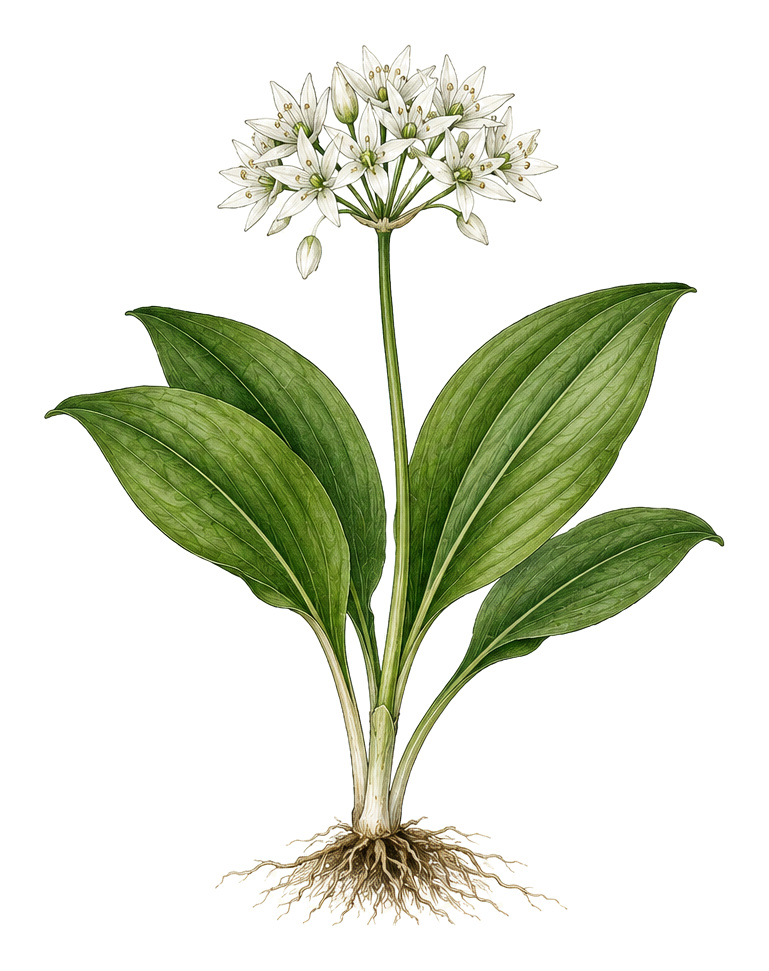
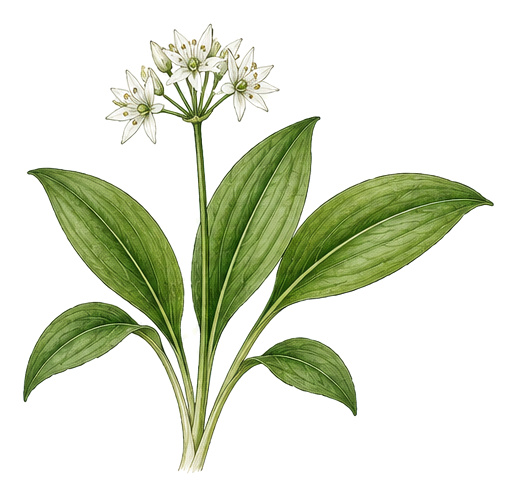
Wild garlic leaves are light green, lance-shaped, glossy, and smell strongly of garlic. They grow in clusters and emerge in spring. Unlike the toxic autumn crocus, wild garlic leaves are annual in their emergence and smell distinctly of garlic. Another difference: autumn crocus leaves are present year-round and do not smell of garlic.
Can wild garlic be grown in pots?
Yes, wild garlic is suitable for container culture. Use a pot with a minimum diameter of 25 cm and depth of 18 cm. Place the pot in shade and keep the soil evenly moist but not waterlogged. In summer, the plant dies back and requires less water.
When is the best time to harvest wild garlic?
The best harvest time is from March to May, before the plant begins to flower. Harvest only selected leaves to avoid weakening the plant. After flowering, the flavor fades, and the plant should be allowed to die back.
How do you dry wild garlic properly?
Wild garlic quickly loses its aroma when dried and is therefore not well suited for drying. If necessary, dry the leaves at low temperature (max. 40°C) in a dehydrator or in the shade. Store in an airtight container in a dark, dry place.
Is wild garlic toxic to dogs?
Yes, wild garlic can be toxic to dogs, especially in large quantities. The sulfur-containing compounds can cause gastrointestinal upset and, in rare cases, anemia. Keep dogs away from wild garlic patches and avoid feeding it to them.
How to avoid confusion with autumn crocus?
Harvest wild garlic only in locations where you are certain no autumn crocus is growing. Pay attention to the intense garlic scent of the leaves and their annual emergence in spring. Clearly mark wild garlic patches to avoid confusion. When in doubt: Do not harvest!
Can wild garlic grow in shade?
Yes, wild garlic thrives especially well in part-shaded to shaded locations. Avoid direct sun and dry soils. Ideal sites are under deciduous trees or at woodland edges.
How to plant wild garlic in the garden?
Wild garlic can be planted by seed or bulbs. Sow fresh seed in autumn (September–November) in a shaded spot. Alternatively, plant bulbs or young plants in spring (March–April) or autumn (September–November). Space plants 15–20 cm apart.
Is wild garlic bee-friendly?
Yes, wild garlic is an important early food source for bees and other pollinating insects. The white flowers provide nectar and pollen, contributing to biodiversity.
What is the best way to store wild garlic?
Fresh wild garlic leaves can be stored in the refrigerator crisper for 3–5 days. Alternatively, they can be frozen, pickled in oil, or made into pesto. Dried wild garlic quickly loses its aroma and is therefore not recommended.
Is Allium ursinum safe for Dog?
Allium ursinum is classified as not established for Dog. Risk: unknown. Urgency: unknown. No reliable species-specific assessment is available.
Is Allium ursinum safe for Cat?
Allium ursinum is classified as toxic for Cat. Risk: 4 / 5. Urgency: emergency vet immediately. Wild garlic (Allium ursinum) belongs to the Allium genus, which is toxic to cats and can cause hemolytic anemia. All parts of the plant are toxic.
Is Allium ursinum safe for Rabbit?
Allium ursinum is classified as toxic for Rabbit. Risk: 4 / 5. Urgency: emergency vet immediately. Wild garlic belongs to the Allium genus, whose species contain thiosulphates that can cause hemolytic anemia in rabbits. All parts of the plant should be considered toxic. Although no direct rabbit-specific toxicity data is available, high caution is recommended due to the known toxicity of other Allium species.
Is Allium ursinum safe for Guinea pig?
Allium ursinum is classified as toxic for Guinea pig. Risk: 4 / 5. Urgency: emergency vet immediately. No direct species-specific source was found for guinea pigs. This is a cautious inference from the rabbits profile and the known plant-part risks.
Guides
Related guides
Guide
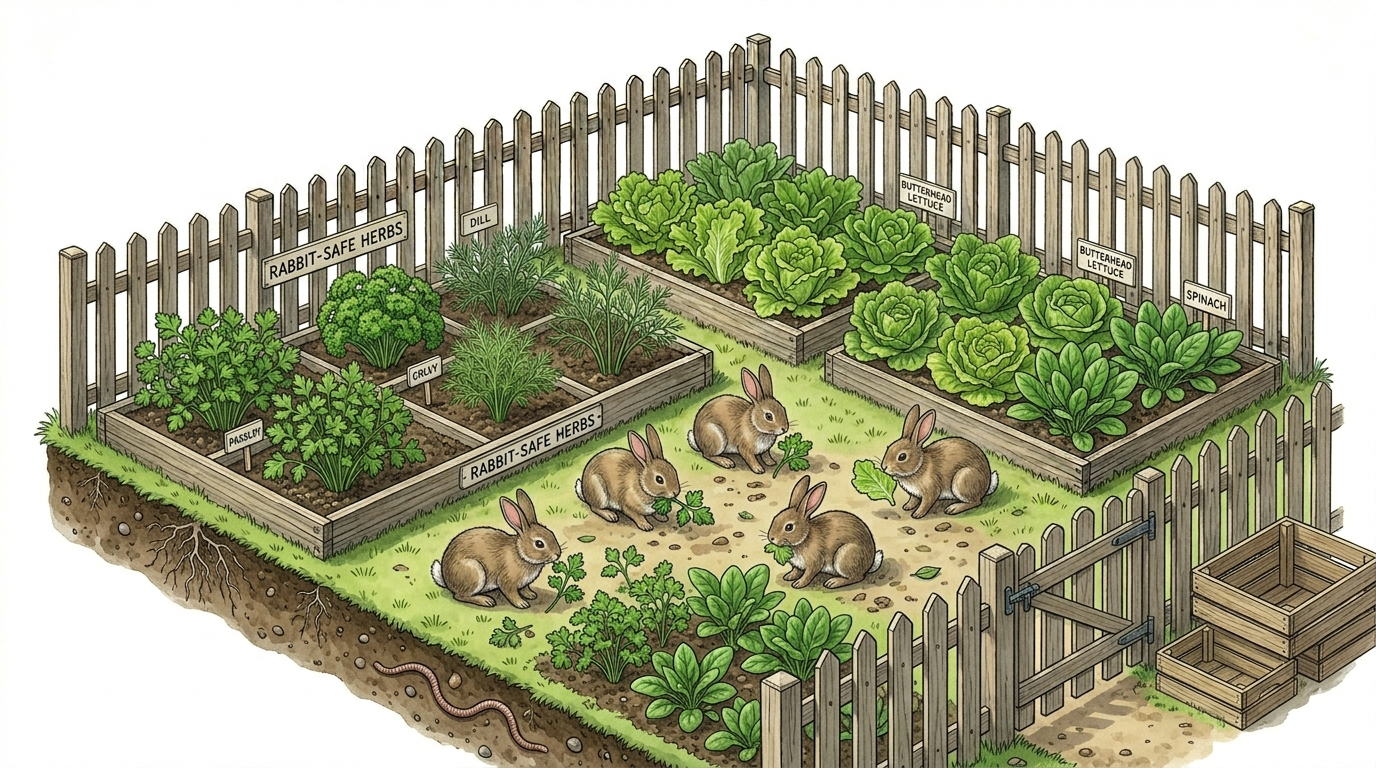
Rabbits in the Garden: Herbs and Vegetables
Learn how to choose suitable herbs and vegetables for rabbits, grow feeding plants, and plan a rabbit-friendly garden.
Guide
Horse Pastures and Garden Plants: Safety Checks
Learn how to identify risks near horse pastures, fences, turnout areas, fruit trees, and garden planting zones.
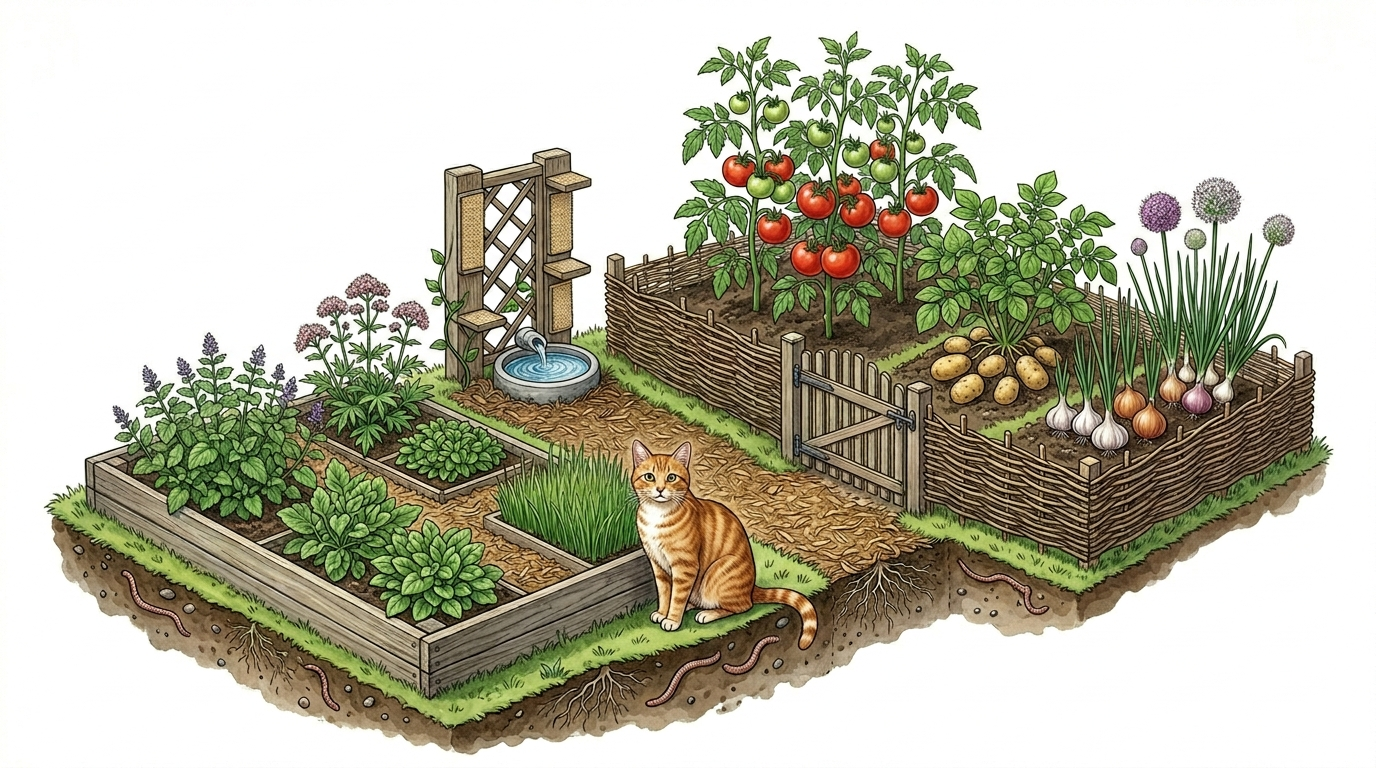
Guide
Toxic Garden Plants for Cats: Safer Planning
Learn which garden plants can be risky for cats, how to plan safer beds, and what to do if a cat eats a toxic plant.
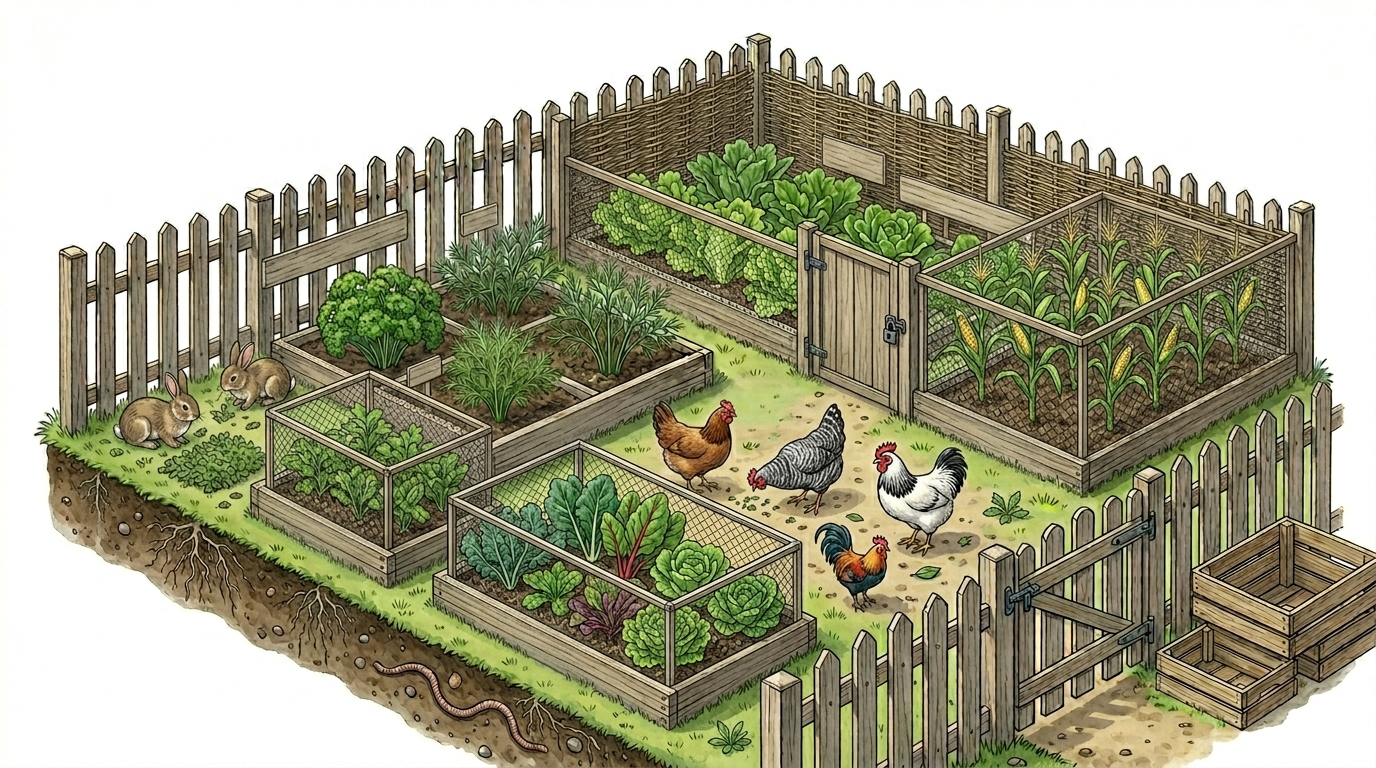
Guide
Chickens in the Garden: Safe Plants and Zones
Learn how to design a chicken-friendly garden with suitable plants, protected beds, and well-planned activity areas.
Internal links
Related plants
Garlic
Both belong to the genus Allium and have a similar flavor.
Wild garlic belongs to the same genus as garlic and has a similar flavor.
Onion
Wild garlic is related to onions and belongs to the genus Allium.
Allium
Wild garlic belongs to the amaryllis family (Amaryllidaceae) and is related to leeks.
Ground elder
Both thrive in shaded, humus-rich sites and are perennial wild herbs.
Ground elder is another edible wild herb harvested in spring.
Urtica
Both prefer moist soils and shaded sites.
Both are edible wild herbs with early emergence and are used in spring cuisine.
Chives
All three plants belong to the genus Allium and are edible.
Autumn Crocus
Leaves resemble those of wild garlic but are toxic and do not smell of garlic.
Lily of the Valley
Leaves are similarly shaped but toxic and lack garlic scent.
Sources
Public sources
- Wikidata entity
Wikidata · 2026-05-12
- GBIF species match
GBIF · 2026-05-12
- Deutschsprachige Wikipedia: Bärlauch
Wikipedia · 2026-05-12
- English Wikipedia: Allium ursinum
Wikipedia · 2026-05-12