Plant Profile
Rosmarinus tomentosusRosmarinus tomentosus
Rosemary (Rosmarinus tomentosus) is an evergreen, aromatic subshrub native to the Mediterranean region. It prefers sunny, well-draining locations and is frost-sensitive in colder climates. The plant is valued for its fragrant, needle-like leaves, used in cooking and for medicinal purposes. Propagation is usually done by cuttings, as seed germination is difficult. Rosemary requires little water and nutrients, but waterlogging must be strictly avoided. Regular pruning promotes bushy growth and prevents the plant from becoming too woody. In colder regions, frost protection is necessary during winter.
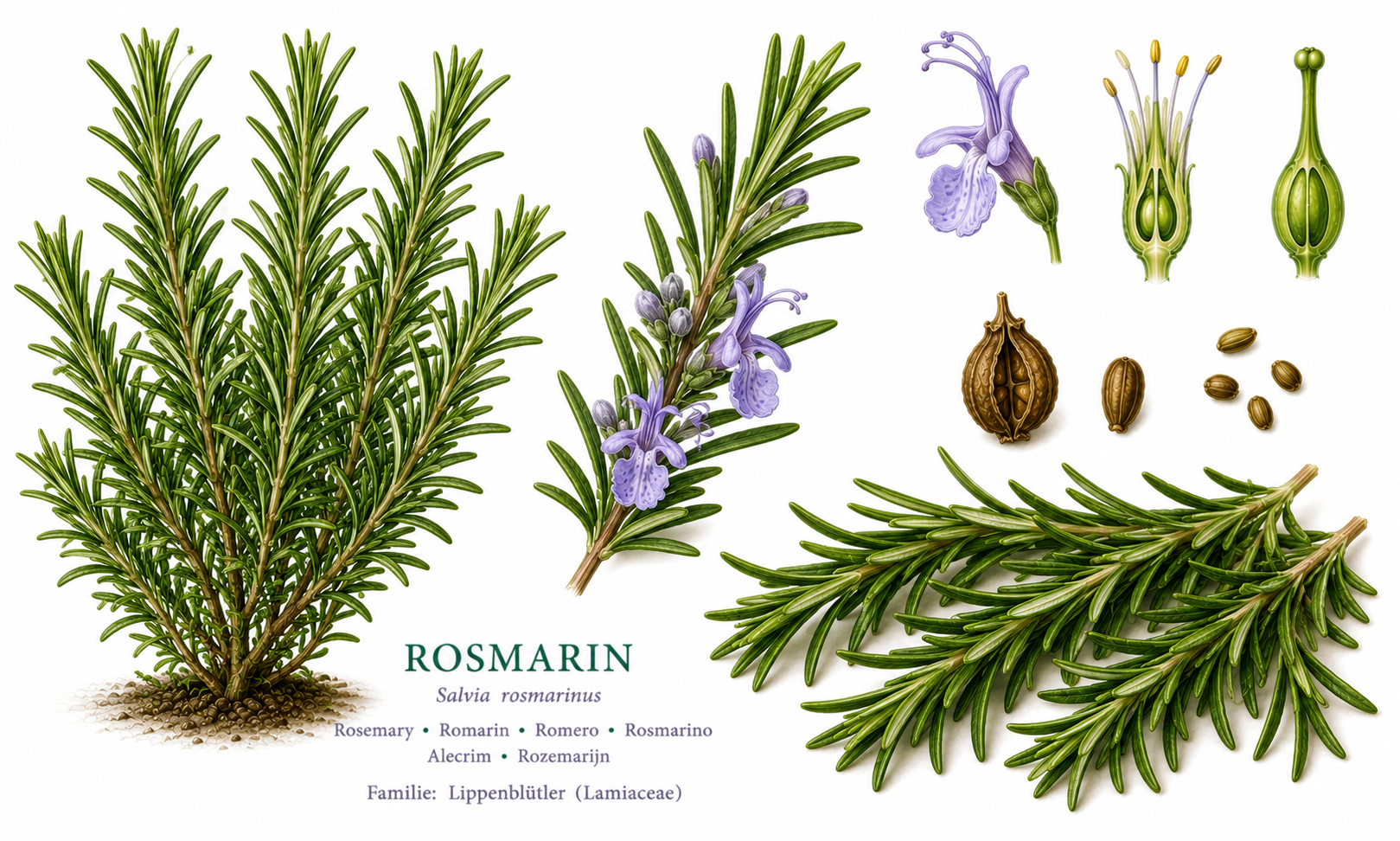
Quick profile
Key data
Suitable growing locations:
Good neighbors
CarrotBeanCabbageStrawberry
Indoor & direct sowing
Rosmarinus tomentosus: Sowing and germination
Rosemary is not typically grown from seed due to difficult and slow germination. Cuttings are the preferred method.
Direct sowing is not common for rosemary.
Planting & site
Rosmarinus tomentosus: Planting and spacing
Plant young plants outdoors after the last frosts, when there is no longer any risk of frost.
Site & practical notes
Rosemary is an easy-care herb but requires specific conditions. Pay attention to: * **Location:** Full sun is ideal. Partial shade is tolerated but results in less aroma. * **Soil:** Excellent drainage is extremely important. Waterlogging quickly leads to root rot. Mix in sand or gravel if necessary. * **Watering:** Water sparingly. Allow the soil to dry out well between waterings. Water even more sparingly in winter. * **Fertilizing:** Rosemary is a light feeder. A light application of compost in spring is usually sufficient. Over-fertilizing is harmful. * **Pruning:** Regular harvesting and pruning in spring keep the plant compact and encourage new growth. Woody stems can be cut back hard in spring. * **Overwintering:** Often hardy in mild regions. In colder zones, the plant needs protection (fleece, mulch) or to be overwintered frost-free (cool, bright room). * **Propagation:** Cuttings are the easiest method. In early summer, take about 10-15 cm long, semi-hardwood cuttings and plant them in moist soil.
Temperature & frost
Rosmarinus tomentosus: Temperature and site
Water & nutrients
Rosmarinus tomentosus: Water, nutrients and care
Container & growth
Rosmarinus tomentosus: Container, support and growth
Year plan
Rosmarinus tomentosus Calendar
Spring is the ideal time for the main pruning to keep the plant vital and bushy.
Recurring tasks
Relevant now
June
- Water regularlyDry weather: Especially important in warm and dry weather. Avoid waterlogging.
- Prune if necessaryTo encourage bushy growth: Remove spent flower stalks and trim the plant to maintain a compact shape.
Next up
July
- Continue harvestingPlants growing well: Harvest regularly to encourage the production of new leaves.
- Check for pests and diseasesWarm weather: Watch out for aphids or spider mites, especially in dry weather.
Monthly tasks
Single tasks from monthly data; repeated seasonal windows are shown in the overview above.
January
No additional single task
February
No additional single task
March
No additional single task
April
No additional single task
May
Planting
- Plant young plants outdoorsNo frost risk: Wait until the risk of night frost has completely passed.
Harvest
- First harvest of young shootsPlants established: Harvest carefully to avoid hindering growth.
June
Growing
- Water regularlyDry weather: Especially important in warm and dry weather. Avoid waterlogging.
Pruning
- Prune if necessaryTo encourage bushy growth: Remove spent flower stalks and trim the plant to maintain a compact shape.
August
Harvest
- Continue harvestingPlants growing well: Harvest as needed.
Pruning
- Prune if necessaryTo maintain shape: Light pruning can encourage bushy growth.
September
Planting
- Prepare plants for winterAutumn approaching: Protect the plant from severe frost, especially in colder regions.
Harvest
- Continue harvestingPlants growing well: Harvest before the plant goes into winter dormancy.
October
Harvest
- Harvest young shootsMild weather: Harvest young shoots as long as the weather is mild.
Growing
- Frost protectionFrost expected: Bring frost-sensitive plants indoors or protect them with fleece or mulch.
November
Harvest
- Harvest older shootsMild weather: Harvest carefully to avoid damaging the plant.
Growing
- Protection from severe frostCold weather: Ensure the plant is adequately protected from frost.
December
Harvest
- Harvest older shootsMild weather: Harvest carefully if the weather permits.
Growing
- Protection from severe frostCold weather: The plant still needs protection from extreme temperatures during winter.
Flowering & pollination
Rosmarinus tomentosus Flowering & pollination
Self-fertility
self-fertile
Pollinator needed
no
Overview
Rosemary is primarily self-pollinating but can also be pollinated by insects.
Notes
Although self-pollinating, flowers are visited by bees and other insects, which can promote fruit set.
Pruning & care
Rosmarinus tomentosus Pruning & care
Pruning type
renewal pruning
Pruning timing
Main pruning for shaping and encouraging growth after winter After the last frost, before strong growth begins. Remove dead shoots and trim the plant to maintain a compact shape.
Light pruning for harvesting and encouraging bushy growth Regular harvesting and pinching of shoot tips promotes branching and new leaf production. Remove spent flower stalks.
Preparation for winter, removal of overhanging shoots Light trimming can help keep the plant compact and minimize damage from snow or wind. Avoid heavy pruning.
Remove
Preserve
Avoid
Tools and hygiene
Always use clean and sharp tools (secateurs, knife) to prevent disease transmission and ensure clean cuts.
Companion guide
Rosmarinus tomentosus Companion guide
Good neighbors
CarrotBeanCabbageStrawberry
Use & storage
Rosmarinus tomentosus Use & storage
Harvesting can be done year-round, using the leaves and young shoots. Harvest in summer and autumn for best quality.
Storage
Cool and dry
Storage life
Dried: several months; Frozen: up to 6 months; Fresh: a few days
Harvest
Harvesting can be done year-round, using the leaves and young shoots. Harvest in summer and autumn for best quality.
Processing
After harvest
Use fresh, dry, or freeze. For drying, hang branches upside down in a airy, shaded location.
Edibility & safety
Rosmarinus tomentosus Edibility & safety
For people
In brief: which parts are edible, which parts remain risky, and whether raw consumption makes sense.
Safety notes
Rosemary is safe in normal culinary amounts for most people. Large quantities may cause stomach upset in sensitive individuals. Pregnant women should limit consumption.
Animal safety
For animals, the specific plant part matters here: some parts may be suitable, while others should be avoided. At least one critical rating is listed for 4 animal types.
Each row shows which parts are more suitable and which parts are critical.
Companion animals
 Dog
DogLeaves, Young shoots
No risk parts listed
Leaves, Young shoots
No risk parts listed
Overconsumption
Gastrointestinal upset, Vomiting
observe
Rosemary is considered non-toxic to dogs, but excessive consumption may cause mild gastrointestinal upset. Not suitable as a regular feed.
Open animal page Cat
CatWhole plant
No risk parts listed
Whole plant
No risk parts listed
Overconsumption
Vomiting, Gastrointestinal upset
observe
As with any plant material, consumption in large quantities may cause mild gastrointestinal upset.
Open animal page Rabbit
No suitable parts listed
No risk parts listed
No suitable parts listed
No risk parts listed
 Guinea pig
No suitable parts listed
Whole plant
No suitable parts listed
Whole plant
Overconsumption, Sensitive animals, Pregnant animals
Gastrointestinal upset (diarrhea, vomiting), Potentially other non-specific symptoms with overconsumption
contact a vet if symptoms appear
Rosemary contains essential oils and phenolic compounds that can cause gastrointestinal upset in large quantities or in sensitive animals. There is no specific data on safety for guinea pigs. Due to potential risks and lack of evidence, feeding is not recommended.
Open animal page Hamster
No suitable parts listed
Entire plant
No suitable parts listed
Entire plant
Overconsumption, Sensitivity to essential oils, Small body size
Gastrointestinal upset, Diarrhea, Lethargy
contact a vet if symptoms appear
Rosemary contains essential oils that can be potentially irritating or toxic in larger quantities for small rodents like hamsters. There is no specific data on safety for hamsters.
Open animal page Budgie
No suitable parts listed
No risk parts listed
No suitable parts listed
No risk parts listed
Farm animals
 Horse
HorseNo suitable parts listed
No risk parts listed
No suitable parts listed
No risk parts listed
unknown
Rosemary is commonly used as a spice in small quantities and is considered safe for horses. There are no reports of toxicity in horses with normal intake. Large quantities could theoretically cause gastrointestinal upset, but this is not well documented.
Open animal page Chicken
Leaves, Young shoots
No risk parts listed
Leaves, Young shoots
No risk parts listed
Overconsumption
usually no action needed
Rosemary is traditionally used as a spice and herb. In moderate amounts, it is likely safe for chickens and can serve as a supplement to their diet. Large quantities should be avoided.
Open animal page Duck
DuckLeaves, Young shoots
No risk parts listed
Leaves, Young shoots
No risk parts listed
Overconsumption
usually no action needed
No direct species-specific source was found for ducks. This is a cautious inference from the geese profile and the known plant-part risks.
Open animal page Goose
GooseLeaves, Young shoots
No risk parts listed
Leaves, Young shoots
No risk parts listed
Overconsumption
usually no action needed
No direct species-specific source was found for geese. This is a cautious inference from the chickens profile and the known plant-part risks.
Open animal page Sheep
SheepNo suitable parts listed
No risk parts listed
No suitable parts listed
No risk parts listed
unknown
No specific information available for sheep. Rosemary is generally considered safe for most animals when consumed in small amounts, but direct evidence for sheep is lacking.
Open animal page Goat
GoatNo suitable parts listed
No risk parts listed
No suitable parts listed
No risk parts listed
unknown
Rosemary is safe for goats in normal amounts and is often accepted as feed. Large quantities may cause gastrointestinal upset due to essential oils. Young shoots and leaves are the safest parts. No known severe toxicities documented for goats.
Open animal page Cattle
No suitable parts listed
No risk parts listed
No suitable parts listed
No risk parts listed
unknown
Rosemary is suitable for cattle in small amounts as a supplemental feed, however essential oils may cause gastrointestinal irritation if overfed. Young shoots and leaves are the preferred parts. Do not use as primary feed. Consult a veterinarian if signs of discomfort appear.
Open animal page Pig
PigNo suitable parts listed
All plant parts, especially leaves and flowers in large quantities
No suitable parts listed
All plant parts, especially leaves and flowers in large quantities
Ingestion of large quantities, Young or sick animals, Pregnant animals (potentially abortifacient in very high doses)
Gastrointestinal upset (vomiting, diarrhea), Potentially hepatotoxic and nephrotoxic in high doses
contact a vet if symptoms appear
Rosemary contains essential oils that can cause gastrointestinal upset and potentially other toxic effects in large quantities. There is no specific data on safety for pigs, therefore feeding is not recommended.
Open animal pageThese guidelines are for general information only and do not replace veterinary diagnosis. If critical plant parts were ingested or the animal shows unusual behaviour or symptoms, seek veterinary advice.
Max risk
unknown
Highest status
do not feed
Urgency
contact a vet if symptoms appear
Practical tips
Rosmarinus tomentosus Practical tips
Common beginner mistakes
Success pattern
High-impact tips
Grower observations
Plant Profile
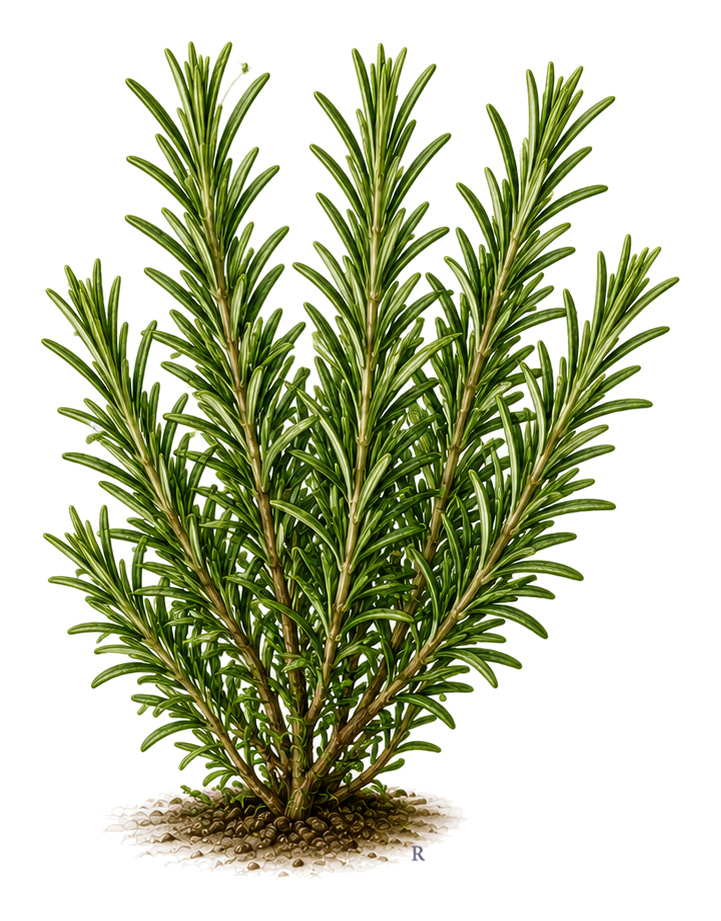
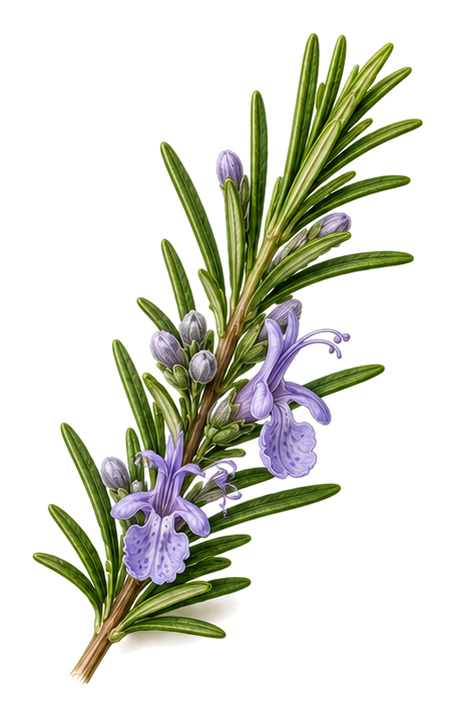
Additional plant images
Health
Pests, Diseases
Pests
Aphids
Small, green or black insects that colonize young shoots and leaves, sucking plant sap.
Spider mites
Tiny mites that leave fine webs on leaves and suck plant sap, especially in dry weather.
Mealybugs
Small, whitish, cottony insects that hide in leaf axils and on shoots, sucking plant sap.
Diseases
Root rot
Caused by fungi (e.g., Phytophthora, Pythium) that thrive in waterlogged conditions and destroy the roots.
Leaf spot
Fungal disease characterized by spots on the leaves.
Deficiencies
Iron deficiency
Yellowing of young leaves, while the veins remain green (chlorosis).
Magnesium deficiency
Yellowing between the leaf veins, starting on older leaves.
Plant health
Diagnosis help
Rosmarinus tomentosus Diagnosis help
Pest groups
Sucking insects (aphids, spider mites, mealybugs)
Disease groups
Fungal diseases (root rot, leaf spot)
Prevention
Diagnosis
Observe specific symptoms such as leaf discoloration, wilting, or visible pests. The combination of symptoms and site conditions aids in diagnosis.
Cultural prevention
Monitoring
First response
Diagnostic rules
Wilting leaves despite moist soil
Possible causes: Root rot, Overwatering
- Check soil moisture
- Examine roots for rot
Yellowing of young leaves, veins remain green
Possible causes: Iron deficiency
- Check soil pH
- Look for signs of pests
Sticky leaves and visible small insects on shoots
Possible causes: Aphids, Mealybugs
- Identify insects
- Examine affected areas
FAQ
How often should I water rosemary?
Rosemary requires little water. Water only when the top layer of soil is dry. Avoid waterlogging at all costs.
Can I leave rosemary outside in winter?
In mild regions, rosemary is often hardy. However, in colder climates, it needs protection (e.g., with fleece or mulch) or to be overwintered frost-free indoors.
Why is my rosemary turning yellow?
Yellow leaves can indicate overwatering, waterlogging, nutrient deficiency (especially iron), or insufficient sunlight. Check soil moisture and location.
How and when should I prune rosemary?
Prune in spring after the last frost to maintain shape and encourage growth. Regular harvesting and pinching of shoot tips in summer promotes bushy growth. Remove dead or diseased shoots at any time.
Is Rosmarinus tomentosus safe for Dog?
Rosmarinus tomentosus is classified as moderation only for Dog. Risk: unknown. Urgency: observe. Rosemary is considered non-toxic to dogs, but excessive consumption may cause mild gastrointestinal upset. Not suitable as a regular feed.
Is Rosmarinus tomentosus safe for Cat?
Rosmarinus tomentosus is classified as do not feed for Cat. Risk: unknown. Urgency: observe. As with any plant material, consumption in large quantities may cause mild gastrointestinal upset.
Is Rosmarinus tomentosus safe for Rabbit?
Rosmarinus tomentosus is classified as not established for Rabbit. Risk: unknown. Urgency: unknown. No reliable species-specific assessment is available.
Is Rosmarinus tomentosus safe for Guinea pig?
Rosmarinus tomentosus is classified as do not feed for Guinea pig. Risk: unknown. Urgency: contact a vet if symptoms appear. Rosemary contains essential oils and phenolic compounds that can cause gastrointestinal upset in large quantities or in sensitive animals. There is no specific data on safety for guinea pigs. Due to potential risks and lack of evidence, feeding is not recommended.
Guides
Related guides
Guide
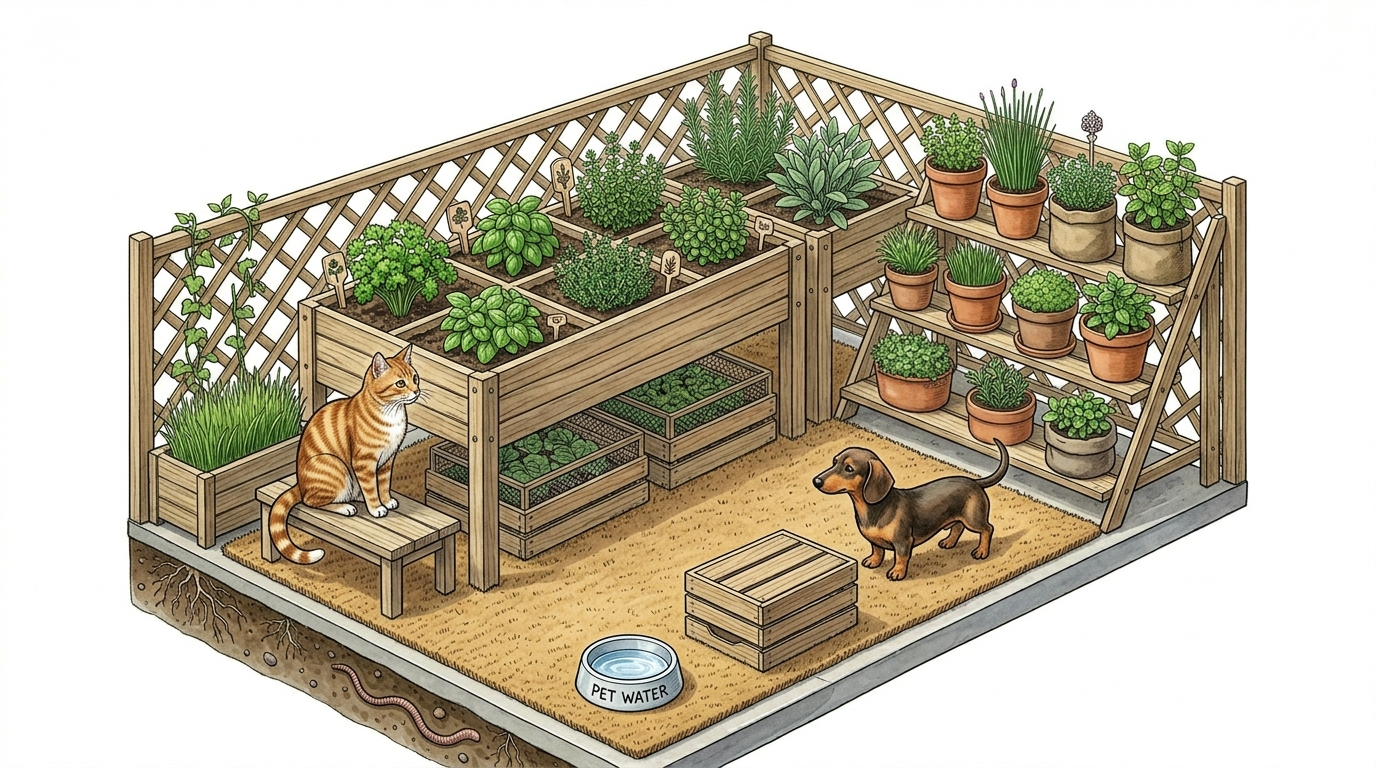
Pet-Safe Herb Gardens for Balconies and Beds
Learn how to create a pet-safe herb garden with suitable herbs, thoughtful layouts, and practical maintenance strategies.
Guide
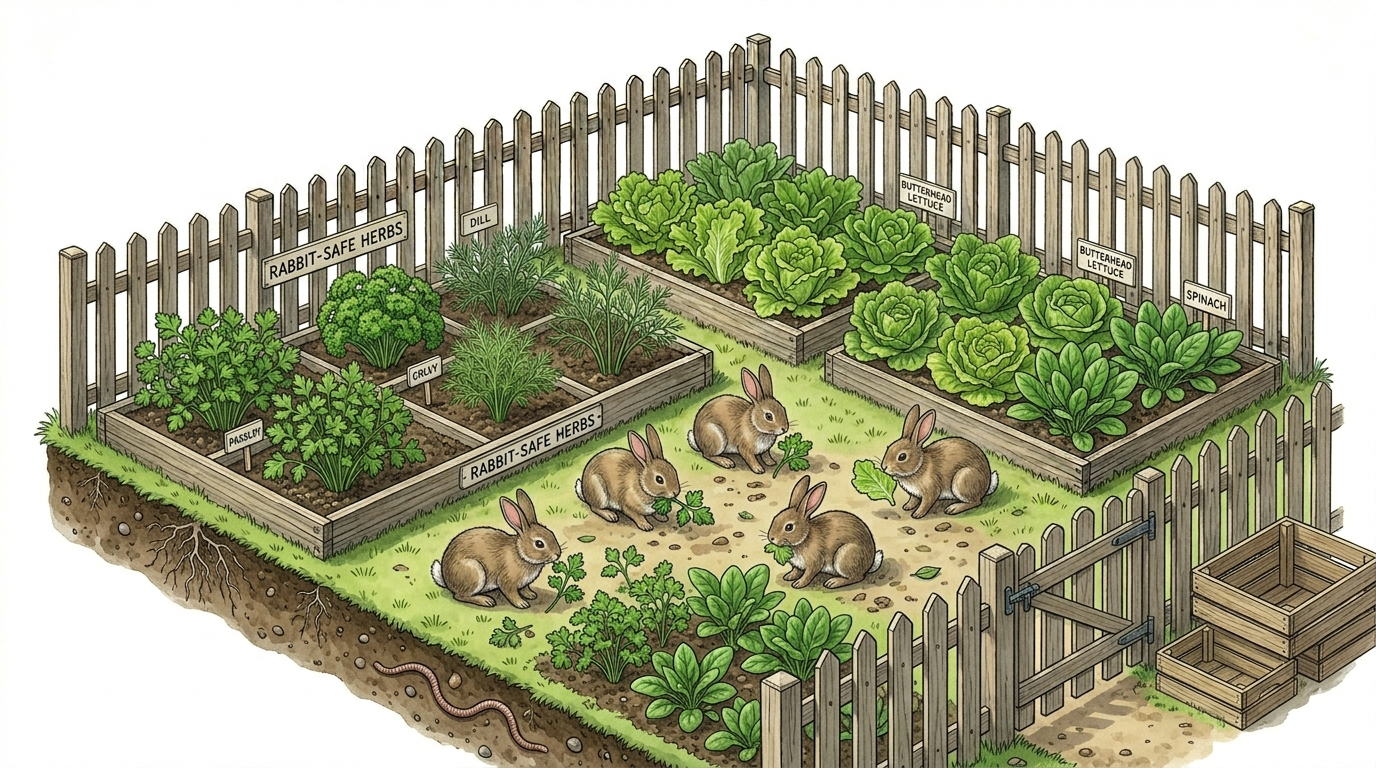
Rabbits in the Garden: Herbs and Vegetables
Learn how to choose suitable herbs and vegetables for rabbits, grow feeding plants, and plan a rabbit-friendly garden.
Guide
Toxic Garden Plants for Cats: Safer Planning
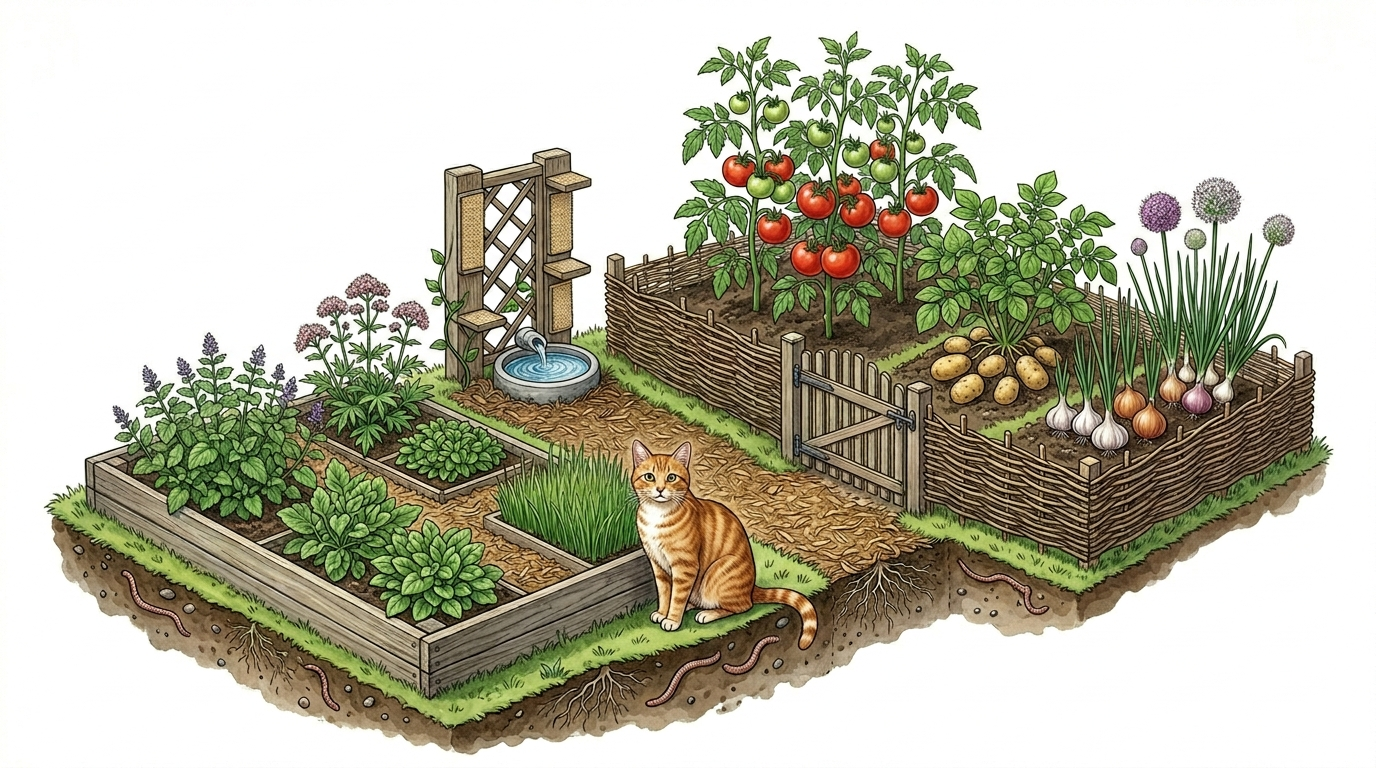
Learn which garden plants can be risky for cats, how to plan safer beds, and what to do if a cat eats a toxic plant.
Guide
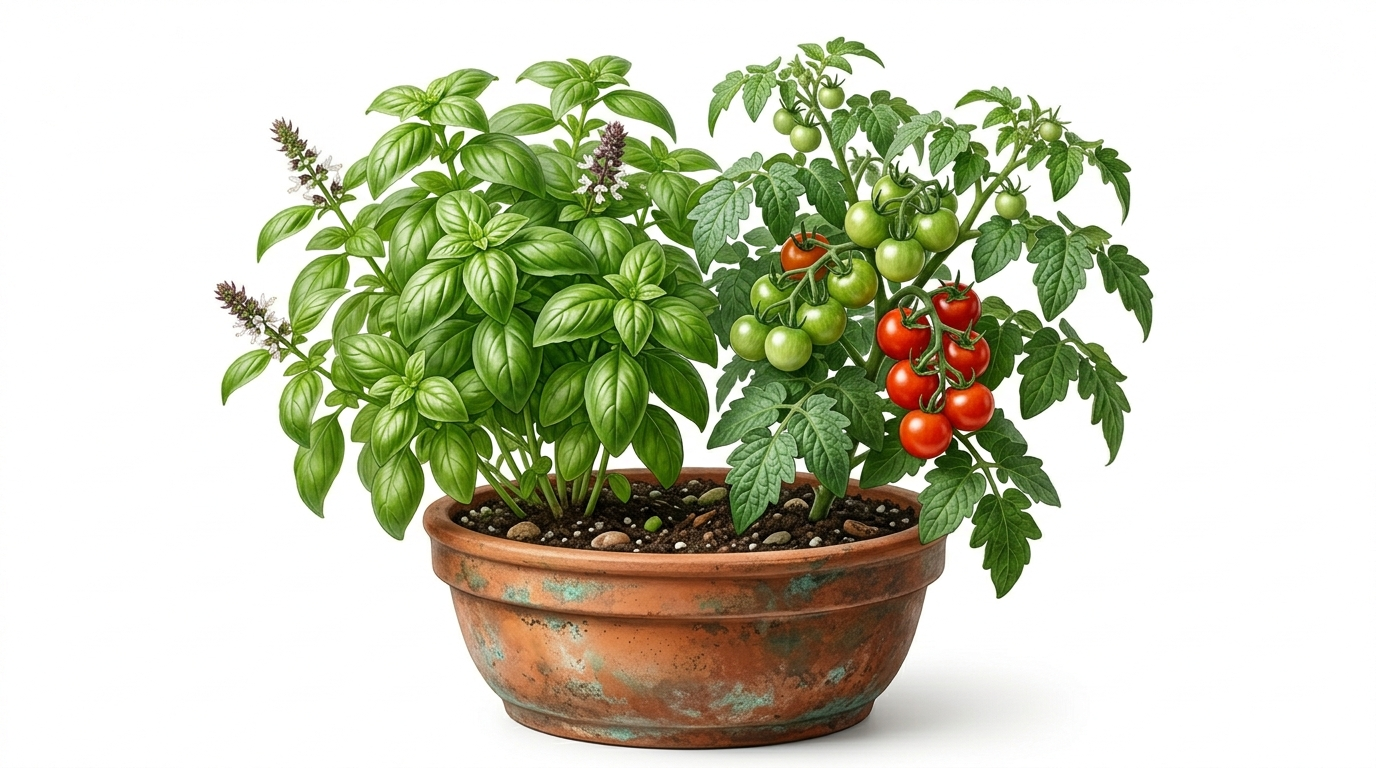
Growing Basil: Site, Watering and Harvesting
Learn how to grow basil successfully with the right site, steady watering, regular harvesting, and tips to delay flowering.
Internal links
Related plants
common sage
Both belong to the Lamiaceae family.
Belongs to the mint family (Lamiaceae) and has similar site and care requirements.
Lavandula
Both prefer poor soils and need little fertilizer.
Both are drought-tolerant and need well-drained soil.
basil
Popular culinary herb with aromatic leaves.
Sources
Public sources
- Wikidata entity
Wikidata · 2026-05-15
- GBIF species match
GBIF · 2026-05-15
- PlantNet species data
PlantNet · 2026-05-15