Plant Profile
Savoy cabbageBrassica oleracea var. sabauda
Popular cabbage with crinkled leaves, hardy and versatile in the kitchen.
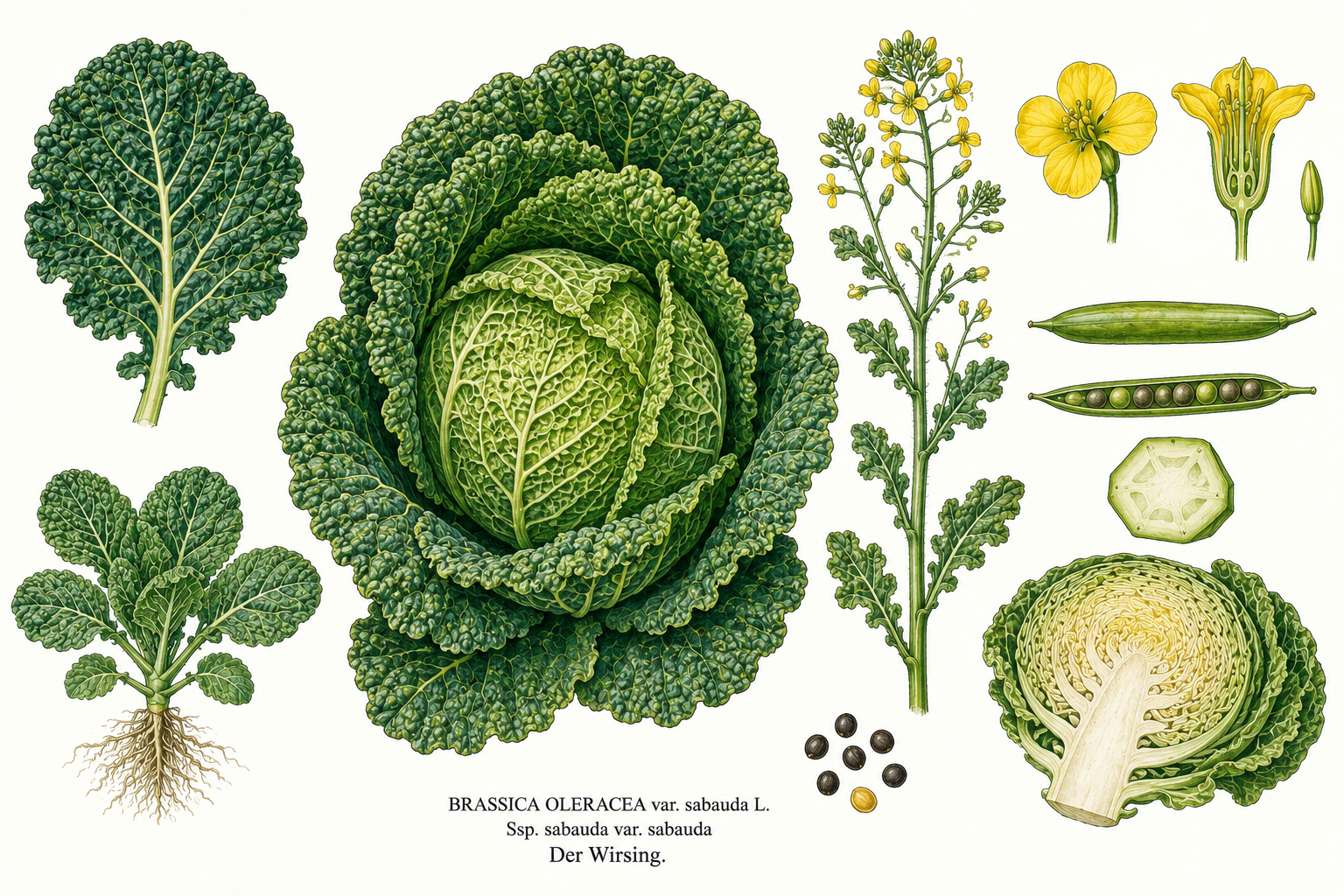
Quick profile
Key data
Suitable growing locations:
Good neighbors
BeansPeasSwiss ChardLettuce
Avoid
CabbagecauliflowerBrussels sproutsStrawberries
Indoor & direct sowing
Savoy cabbage: Sowing and germination
Start indoors from February in a greenhouse or windowsill.
Direct sow outdoors from April once the soil is workable.
Planting & site
Savoy cabbage: Planting and spacing
Transplant seedlings after the last frost from April onward.
Temperature & frost
Savoy cabbage: Temperature and site
Water & nutrients
Savoy cabbage: Water, nutrients and care
Container & growth
Savoy cabbage: Container, support and growth
Year plan
Savoy cabbage Calendar
Late Savoy cabbage varieties are particularly frost-tolerant and develop an even more intense flavor after the first light frosts.
Relevant now
June
- Hilling and mulchingHill for stability and mulch to retain moisture.
Next up
July
- Harvest early varietiesheads firm: Cut heads when firm.
Monthly tasks
Single tasks from monthly data; repeated seasonal windows are shown in the overview above.
January
Growing
- Planning and variety selectionChoose varieties for early, mid, and late harvest.
February
Direct sowing
- Start seeds indoorsSow in seed trays at 15–20 °C.
March
Direct sowing
- Prick out seedlingsseedlings have first true leaves: Transplant into individual pots or larger trays.
April
Planting
- Direct sow and transplant outdoorssoil temperature above 8°C: Harden off before planting. Spacing 40–50 cm.
May
Growing
- Weeding and wateringCultivate regularly and water during dry spells.
June
Growing
- Hilling and mulchingHill for stability and mulch to retain moisture.
August
Plant health
- Continue harvest, monitor pestsCheck for cabbage whiteflies, aphids, and slugs.
September
Harvest
- Autumn care and late harvestKeep soil loose and harvest late varieties.
October
Harvest
- Harvest late varieties, winter preparationComplete harvest before hard frost.
November
Harvest
- Final harvest and storageStore heads at 0–2 °C with high humidity.
December
Growing
- Winter dormancyLet beds rest and plan soil care.
Flowering & pollination
Savoy cabbage Flowering & pollination
Self-fertility
low
Pollinator needed
yes
Overview
Cross-pollination by insects, mainly bees and hoverflies. Self-pollination is possible but low.
Notes
Pollinators are required for seed production. Savoy cabbage easily crosses with other Brassica oleracea varieties (e.g. cabbage, broccoli, Brussels sprouts). Isolation distance for pure seed: at least 500 m.
Pruning & care
Savoy cabbage Pruning & care
Pruning type
nicht_zutreffend
Companion guide
Savoy cabbage Companion guide
Good neighbors
BeansPeasSwiss ChardLettuceOnions
Avoid
CabbagecauliflowerBrussels sproutsStrawberries
Use & storage
Savoy cabbage Use & storage
Harvest starts in July for early varieties, late varieties until November.
Storage
Cold storage
Storage life
Early varieties: 2–4 weeks. Late varieties: 3–6 months under optimal conditions.
Harvest
Harvest starts in July for early varieties, late varieties until November.
Processing
After harvest
Store heads cool immediately after harvest. Remove outer wilted leaves. Do not wash before storage, only brush off dry soil.
Edibility & safety
Savoy cabbage Edibility & safety
For people
In brief: which parts are edible, which parts remain risky, and whether raw consumption makes sense.
Safety notes
Not toxic. Raw savoy cabbage may cause flatulence in sensitive individuals.
Animal safety
For many animals, this plant is generally low-risk: 14 animal types are rated suitable or mostly suitable. Quantity, plant part, and individual tolerance still matter.
Each row shows which parts are more suitable and which parts are critical.
Companion animals
 Dog
DogLeaves, Head
No risk parts listed
Leaves, Head
No risk parts listed
Excessive consumption, Raw consumption in sensitive dogs
Flatulence, Gastrointestinal upset
 Cat
CatLeaves, Head
No risk parts listed
Leaves, Head
No risk parts listed
Excessive consumption, Sensitive stomach
Gastrointestinal upset, Flatulence, Diarrhea
observe
Savoy cabbage is suitable for cats in small amounts as a treat. Raw consumption may cause flatulence or diarrhea in sensitive individuals. No known toxic compounds in the edible parts.
Open animal page Rabbit
Leaves, Head
No risk parts listed
Leaves, Head
No risk parts listed
Overconsumption, Sudden introduction to diet, Young or sensitive animals
Bloating, Gastrointestinal upset, Diarrhea
contact a vet if symptoms appear
Savoy cabbage can be offered to rabbits in small amounts as part of a varied diet. Large quantities or sudden introduction can lead to bloating and digestive issues. Contains goitrogens, which can be problematic with excessive consumption.
Open animal page Guinea pig
Leaves
No risk parts listed
Leaves
No risk parts listed
Overconsumption, Sensitive individuals
Bloating, Gastrointestinal upset, Diarrhea (with overconsumption)
observe
Savoy cabbage can be fed in small amounts as an occasional treat. Large quantities can lead to bloating and digestive issues due to high levels of gas-producing compounds. Tough outer leaves and the core are less digestible.
Open animal page Hamster
Leaves, Head
Core, older outer leaves (hard to digest)
Leaves, Head
Core, older outer leaves (hard to digest)
Overconsumption, sensitive animals
Flatulence, Diarrhea, Digestive upset
contact a vet if symptoms appear
Savoy cabbage can be offered in very small amounts as an occasional treat. Large quantities can cause flatulence and digestive upset. Due to glucosinolates, feeding should be rare.
Open animal page Budgie
Fresh, inner leaves
Outer leaves, Core, Large quantities of raw leaves
Fresh, inner leaves
Outer leaves, Core, Large quantities of raw leaves
Overconsumption, Feeding outer or wilted leaves
Gastrointestinal upset (flatulence, diarrhea), With chronic overconsumption: Thyroid problems
contact a vet if symptoms appear
Savoy cabbage can be offered in small amounts as an occasional treat. Large quantities, especially raw, can lead to digestive upset and potentially thyroid problems due to glucosinolates (goitrogens). Only feed fresh, inner leaves.
Open animal pageFarm animals
 Horse
HorseLeaves, Head
No risk parts listed
Leaves, Head
No risk parts listed
Excessive consumption, Sudden dietary change
Flatulence (with excessive consumption or sensitive animals)
usually no action needed
Savoy cabbage is generally safe for horses when fed in moderation. However, large quantities may lead to digestive issues such as flatulence due to its high fiber content and potential for gas production. It is advisable to introduce it slowly into the diet and monitor the horse's reaction.
Open animal page Chicken
Leaves, Head
No risk parts listed
Leaves, Head
No risk parts listed
Excessive consumption, Feeding older, tough outer leaves
Flatulence (with excessive consumption or sensitive animals)
observe
Savoy cabbage is generally safe for chickens when fed in moderation. Large quantities can lead to digestive issues due to its high fiber content and potential for gas production. Offer only fresh, well-chewed parts.
Open animal page Duck
DuckLeaves, Head
No risk parts listed
Leaves, Head
No risk parts listed
Excessive consumption, Feeding older, tough outer leaves
Flatulence (with excessive consumption or sensitive animals)
observe
Savoy cabbage is generally safe for ducks when fed in moderation. Like other brassicas, excessive consumption can lead to digestive issues such as flatulence. Feed only fresh, well-chewed parts.
Open animal page Goose
GooseLeaves, Head
No risk parts listed
Leaves, Head
No risk parts listed
Overconsumption
May cause flatulence if consumed in excess.
usually no action needed
Savoy cabbage is generally safe for geese when fed in moderation. Large quantities may cause digestive upset such as flatulence. Outer leaves can be tough.
Open animal page Sheep
SheepLeaves, Head
No risk parts listed
Leaves, Head
No risk parts listed
overfeeding, sudden feed change
bloating, mild discomfort from overfeeding
observe
No direct species-specific source was found for sheep. This is a cautious inference from the cattle profile and the known plant-part risks.
Open animal page Goat
GoatLeaves, Head
No risk parts listed
Leaves, Head
No risk parts listed
overfeeding, sudden feed change
bloating, mild discomfort from overfeeding
observe
No direct species-specific source was found for goats. This is a cautious inference from the sheep profile and the known plant-part risks.
Open animal page Cattle
Leaves, Head
No risk parts listed
Leaves, Head
No risk parts listed
overfeeding, sudden feed change
bloating, mild discomfort from overfeeding
observe
Savoy cabbage is tolerable for cattle in moderation and can be used as part of a varied diet. Due to its high water and fiber content, excessive intake may cause bloating, especially in animals not accustomed to carbohydrates. A gradual introduction is recommended. No known toxic compounds in the edible parts.
Open animal page Pig
PigLeaves, Head
No risk parts listed
Leaves, Head
No risk parts listed
Flatulence from overconsumption
usually no action needed
Savoy cabbage is edible for pigs but should be fed only in moderation due to flatulence risk. No known toxic compounds.
Open animal pageThese guidelines are for general information only and do not replace veterinary diagnosis. If critical plant parts were ingested or the animal shows unusual behaviour or symptoms, seek veterinary advice.
Max risk
unknown
Highest status
moderation only
Urgency
contact a vet if symptoms appear
Saving seed
Savoy cabbage Saving seed
Seed viability
4 - 6 years
Practical tips
Savoy cabbage Practical tips
Common beginner mistakes
Success pattern
High-impact tips
Grower observations
Plant Profile
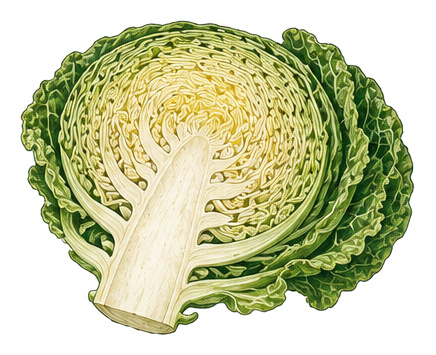
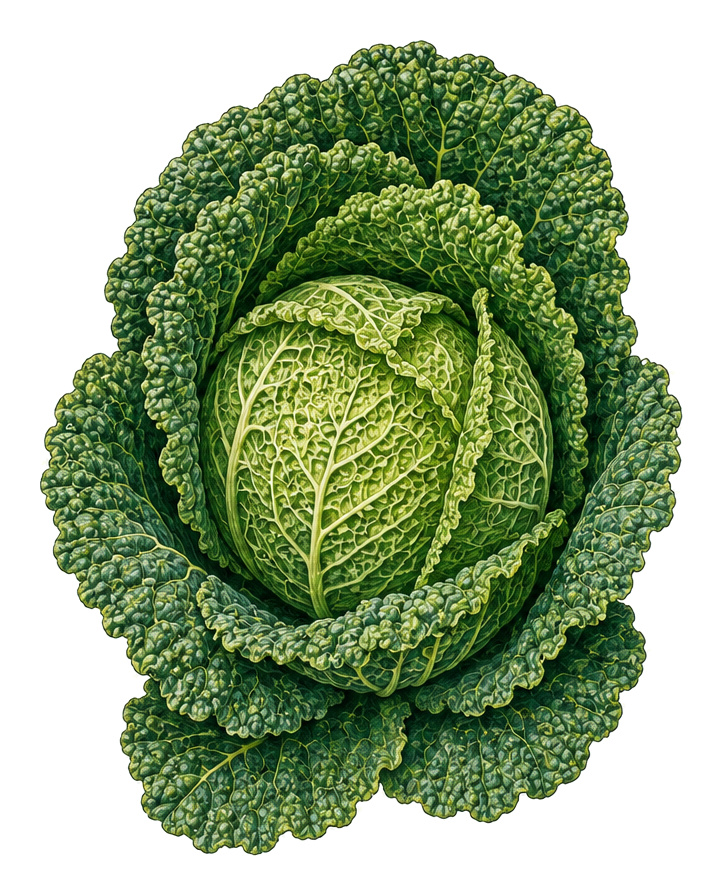
Additional plant images
Health
Pests, Diseases
Plant health
Diagnosis help
Savoy cabbage Diagnosis help
Pest groups
Disease groups
Prevention
Diagnosis
Check leaf undersides and roots when symptoms are unclear.
Cultural prevention
Monitoring
First response
Diagnostic rules
Yellow leaves, wilting plant
Possible causes: Clubroot, Waterlogging, Nitrogen deficiency
- Check roots for swellings
- Check soil moisture
White coating on leaves
Possible causes: Powdery mildew
- Check leaf underside
- Measure humidity
FAQ
How long does it take for Savoy cabbage to be ready for harvest?
Depending on the variety and planting time, the growing period from transplanting to harvest is 12 to 20 weeks. Early varieties are ready for harvest from July, late varieties until November.
Can you eat Savoy cabbage raw?
Yes, Savoy cabbage can be eaten raw, especially the young, tender leaves. Finely sliced or shredded, it is excellent for salads. In sensitive individuals, raw Savoy cabbage may cause flatulence.
What pests most commonly affect Savoy cabbage?
Common pests include the cabbage white butterfly, cabbage aphids, flea beetles, and slugs. An insect netting can effectively protect against flying insects.
Why do Savoy cabbage heads split?
Head splitting is often caused by irregular watering, especially when a lot of water is supplied suddenly after a dry period. The plants absorb water too quickly, and the head cannot withstand the pressure.
Is Savoy cabbage safe for Dog?
Savoy cabbage is classified as moderation only for Dog. Risk: unknown. Urgency: observe. No reliable species-specific assessment is available.
Is Savoy cabbage safe for Cat?
Savoy cabbage is classified as moderation only for Cat. Risk: unknown. Urgency: observe. Savoy cabbage is suitable for cats in small amounts as a treat. Raw consumption may cause flatulence or diarrhea in sensitive individuals. No known toxic compounds in the edible parts.
Is Savoy cabbage safe for Rabbit?
Savoy cabbage is classified as moderation only for Rabbit. Risk: unknown. Urgency: contact a vet if symptoms appear. Savoy cabbage can be offered to rabbits in small amounts as part of a varied diet. Large quantities or sudden introduction can lead to bloating and digestive issues. Contains goitrogens, which can be problematic with excessive consumption.
Is Savoy cabbage safe for Guinea pig?
Savoy cabbage is classified as moderation only for Guinea pig. Risk: unknown. Urgency: observe. Savoy cabbage can be fed in small amounts as an occasional treat. Large quantities can lead to bloating and digestive issues due to high levels of gas-producing compounds. Tough outer leaves and the core are less digestible.
Guides
Related guides
Guide
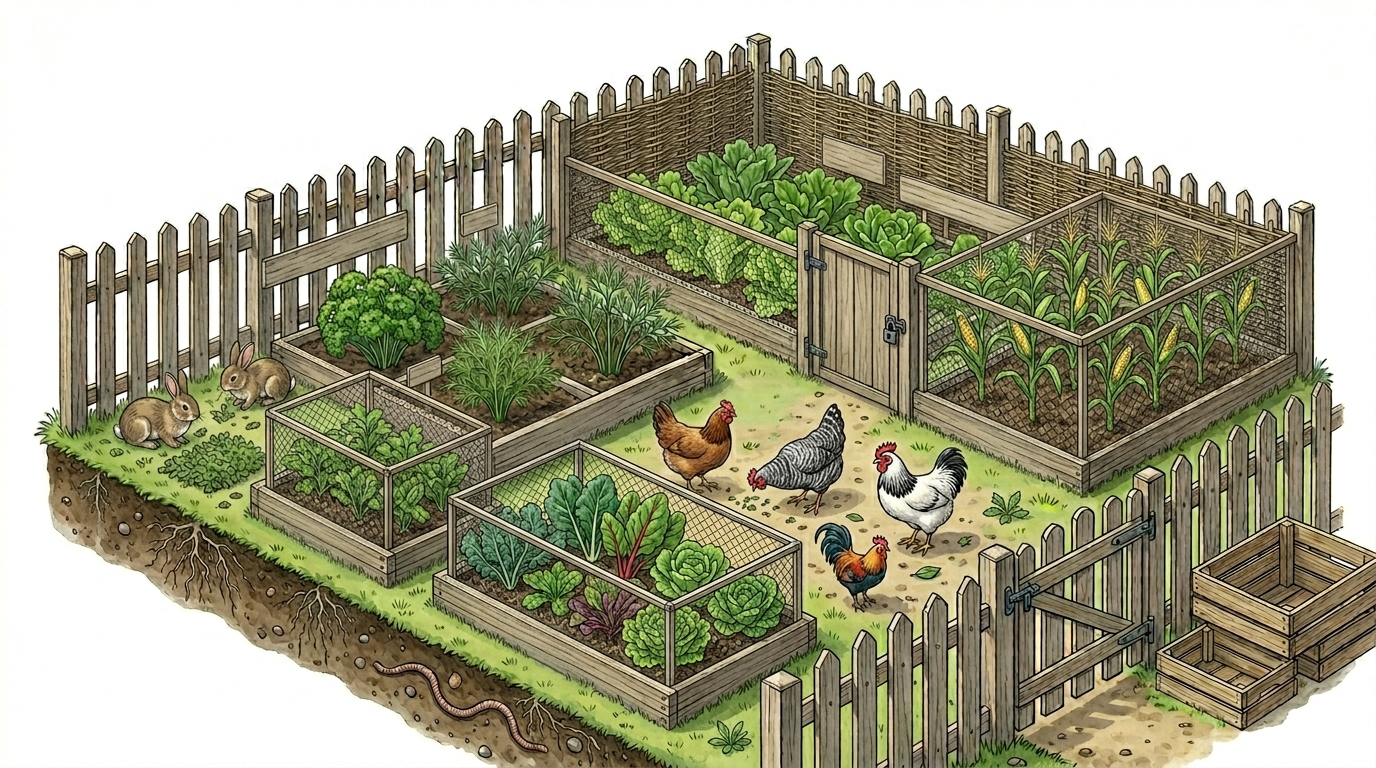
Chickens in the Garden: Safe Plants and Zones
Learn how to design a chicken-friendly garden with suitable plants, protected beds, and well-planned activity areas.
Guide
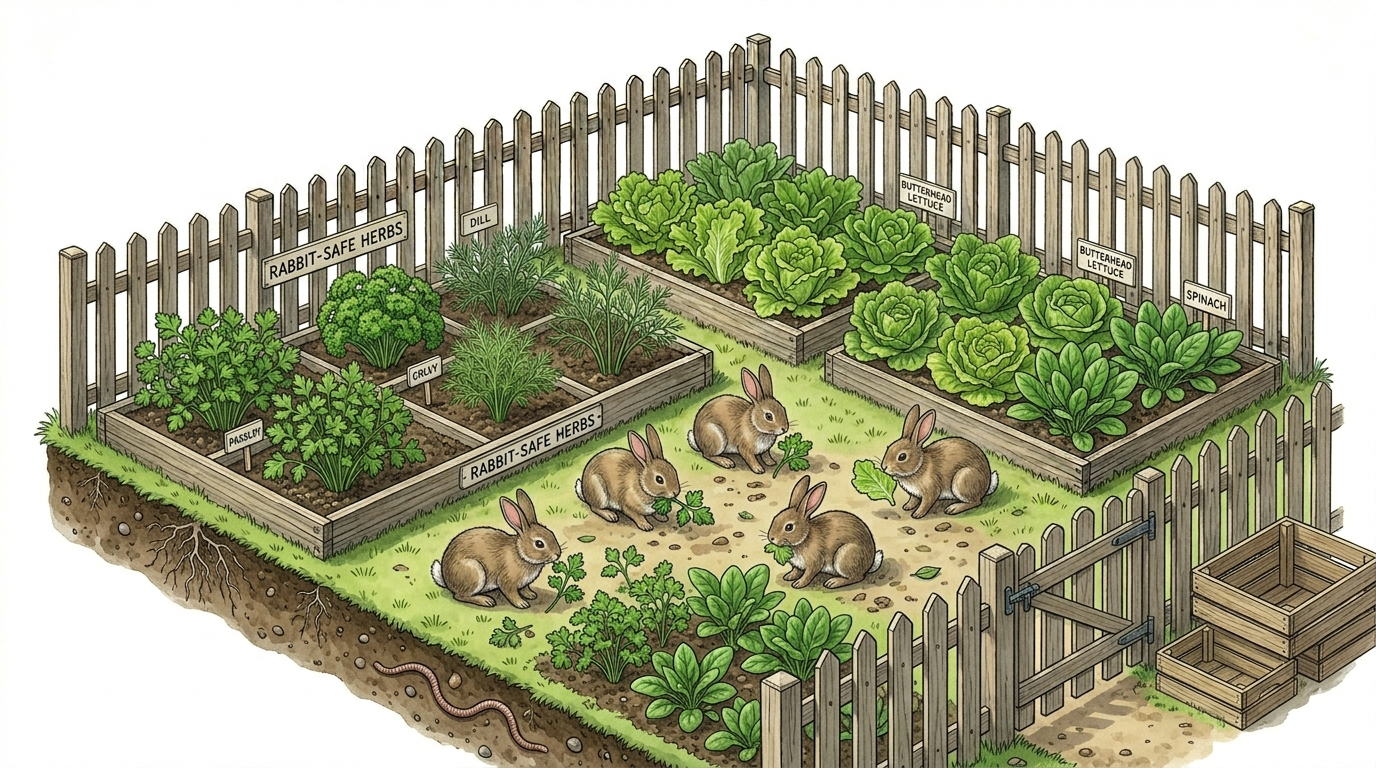
Rabbits in the Garden: Herbs and Vegetables
Learn how to choose suitable herbs and vegetables for rabbits, grow feeding plants, and plan a rabbit-friendly garden.
Guide
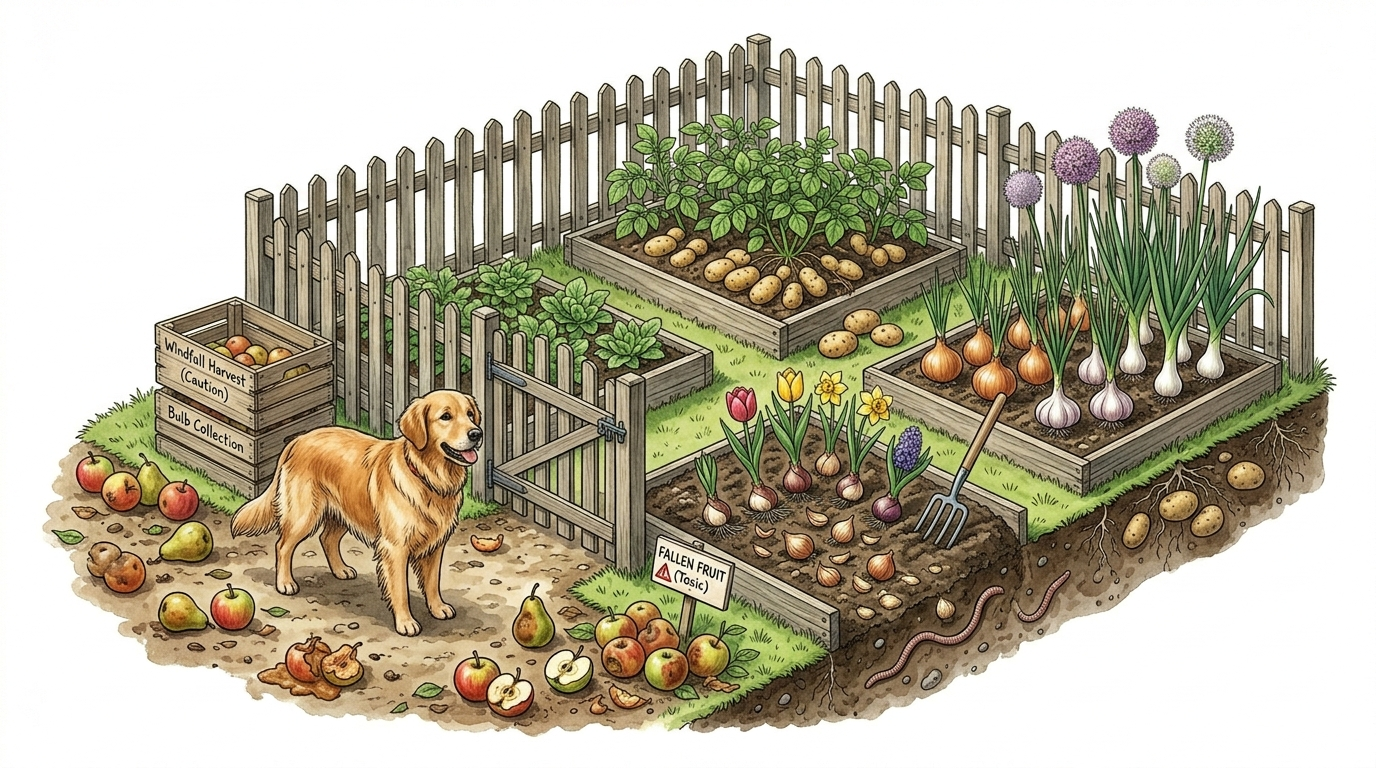
Dogs in the Garden: Windfall Fruit and Risks
Keep your garden dog-safe by managing windfall fruit, seeds, stored crops, and potentially problematic plant parts.
Guide
Horse Pastures and Garden Plants: Safety Checks
Learn how to identify risks near horse pastures, fences, turnout areas, fruit trees, and garden planting zones.
Internal links
Related plants
Cabbage
All cabbage varieties belong to the Brassicaceae family.
General term for brassicas
broccoli
Closely related as a Brassica oleracea variety.
Both are heavy feeders and require a lot of nitrogen.
cauliflower
Closely related as a Brassica oleracea variety.
Both are heavy feeders and require a lot of nitrogen.
red cabbage
Both are heading cabbage varieties.
Clubroot
Typical disease for all brassicas.
Downy mildew
Common in brassicas under humid conditions.
Celery
Like Savoy cabbage, requires consistently moist soil.
Cucumber
High water demand, sensitive to drought.
Sources
Public sources
- Wikidata entity
Wikidata · 2026-05-15
- GBIF species match
GBIF · 2026-05-15
- Deutschsprachige Wikipedia: Wirsing
Wikipedia · 2026-05-15
- English Wikipedia: Savoy cabbage
Wikipedia · 2026-05-15