Guide
Pruning Apple Trees: Timing, Techniques, and Common Mistakes
Regular pruning keeps apple trees healthy, improves airflow and sunlight inside the canopy, and helps produce better fruit over time. The ideal pruning method depends on the tree’s age, growth habit, and your goals.
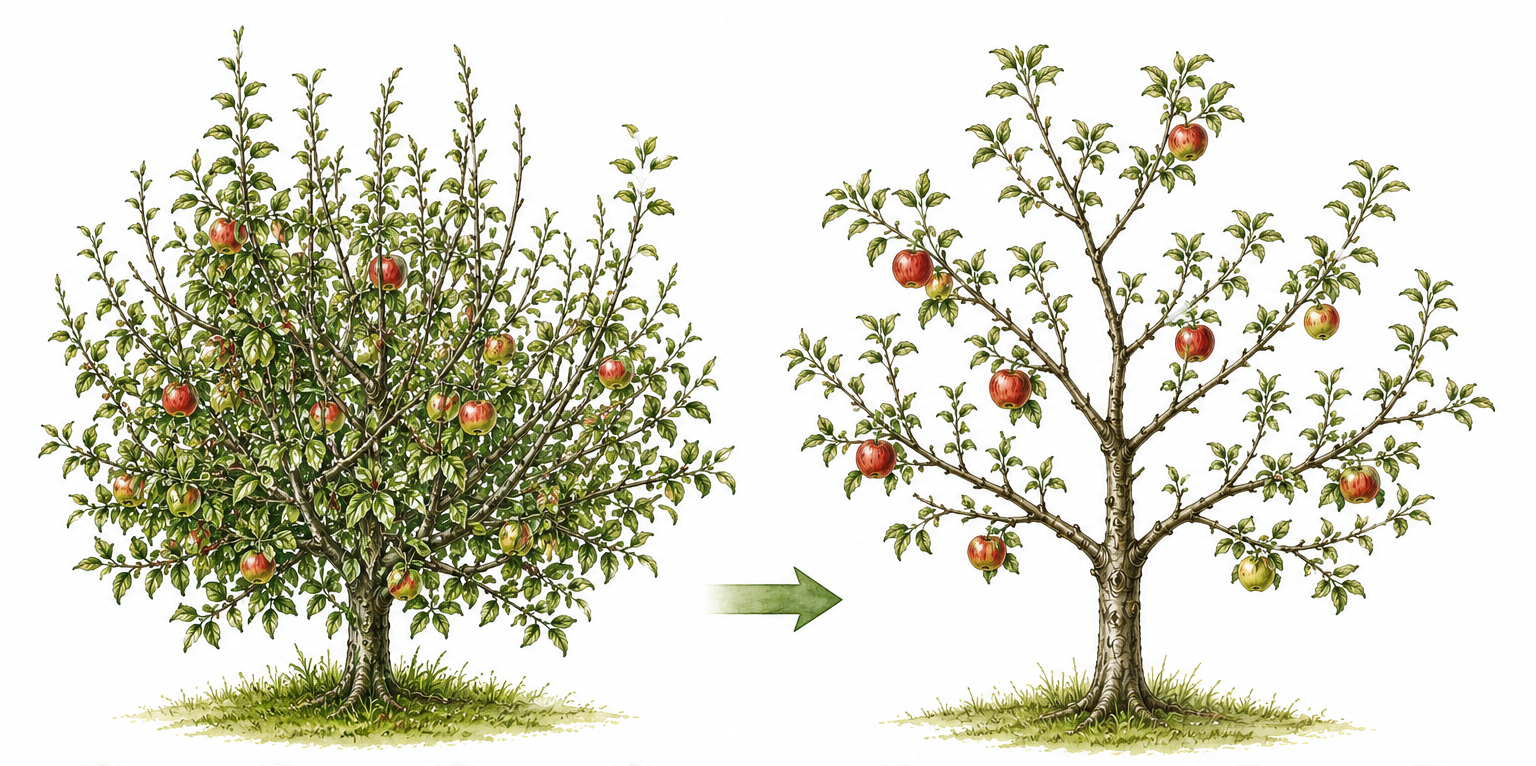
Why prune apple trees?
Pruning improves light penetration and airflow inside the canopy.
Well-pruned apple trees develop stronger branch structures and produce higher-quality fruit.
An open canopy reduces the risk of fungal diseases such as apple scab and powdery mildew.
Pruning also helps control tree size and makes harvesting easier.
When should you prune apple trees?
The main winter pruning period is between January and March on frost-free days.
Winter pruning encourages vigorous growth and is ideal for young trees.
Summer pruning is usually done between July and August.
During summer pruning, vigorous upright shoots and overcrowded growth are removed to improve light and airflow.
Key data
- Do not prune during severe frost.
- Avoid major cuts while the tree is flowering.
- Summer pruning is especially useful for overly vigorous trees.
Important types of pruning
Training pruning
Training cuts shape young apple trees during the first years.
The goal is a stable canopy with a few strong scaffold branches.
Competing shoots and inward-growing branches are removed.
Maintenance pruning
Maintenance pruning keeps the canopy open and balanced.
Old, diseased, or crossing branches are removed.
Fruit-bearing wood is renewed regularly.
Rejuvenation pruning
Old or neglected apple trees can be revitalized through rejuvenation pruning.
The canopy is gradually thinned and old wood removed over several years.
Heavy pruning should be spread across multiple seasons.
Summer pruning
Summer pruning reduces excessive growth and improves fruit quality.
Water sprouts and shading shoots are mainly removed.
Fruit receives more sunlight and dries faster after rain.
How to prune an apple tree step by step
- 1
Prepare tools
Use sharp and clean pruning shears or saws for smooth cuts.
- 2
Remove dead and diseased wood
Cut away damaged, dead, or diseased branches first.
- 3
Remove inward-growing shoots
The canopy should remain open and airy.
- 4
Remove water sprouts
Strong upright shoots consume energy and rarely produce fruit.
- 5
Preserve fruiting wood
Keep short, slightly hanging fruiting branches whenever possible.
Common pruning mistakes
Heavy pruning often causes excessive new water sprouts.
Dense canopies increase disease pressure.
Dull tools create rough wounds.
Pruning at the wrong time can reduce flowering and yield.
Large branches should not tear or damage the trunk collar.
Practical tips
Key data
- Prune lightly and regularly instead of heavily and rarely.
- Young trees need stronger shaping than mature trees.
- Avoid unnecessarily large wounds.
- Well-lit trees usually produce more flavorful apples.
- Water sprouts are easiest to remove during summer.
Internal links
Related plants
Guides
Related guides
Guide
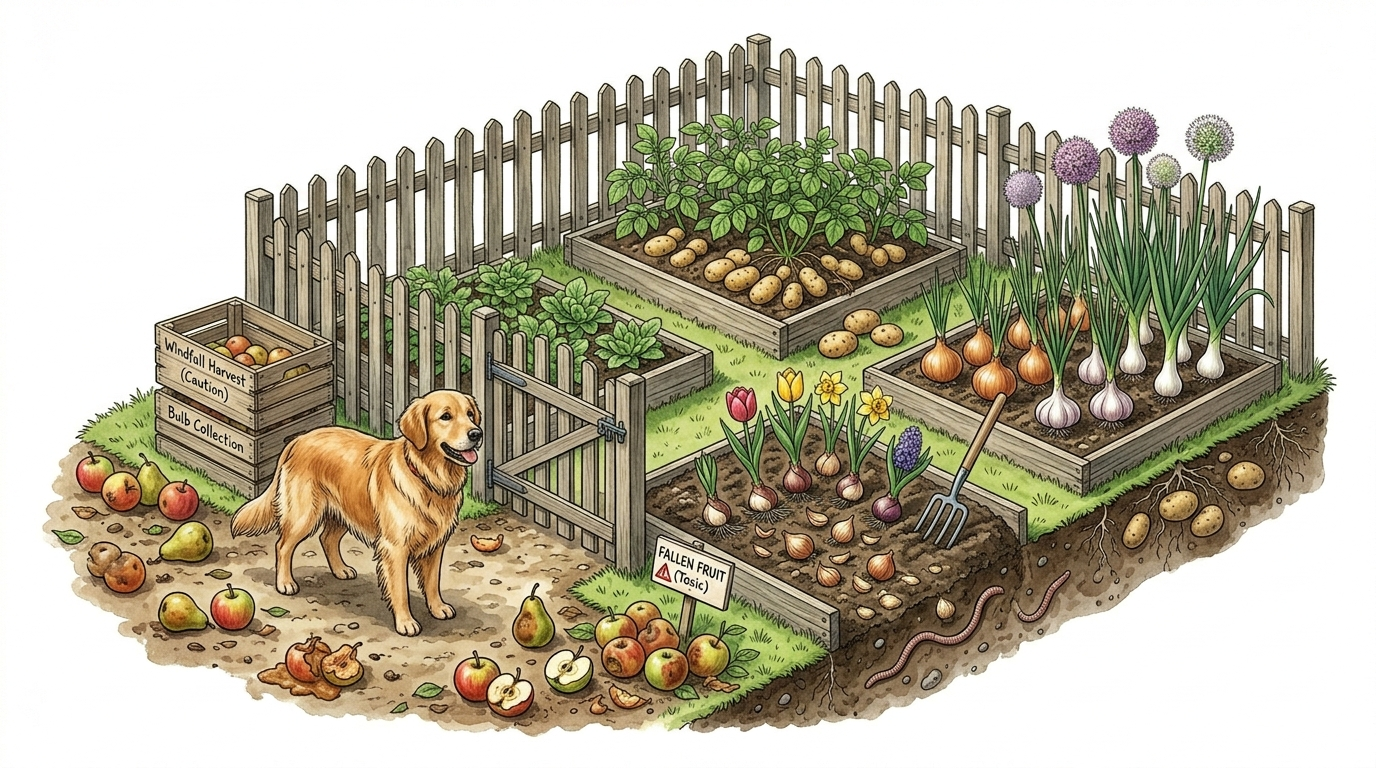
Dogs in the Garden: Windfall Fruit and Risks
Keep your garden dog-safe by managing windfall fruit, seeds, stored crops, and potentially problematic plant parts.
Guide
Horse Pastures and Garden Plants: Safety Checks
Learn how to identify risks near horse pastures, fences, turnout areas, fruit trees, and garden planting zones.
Guide
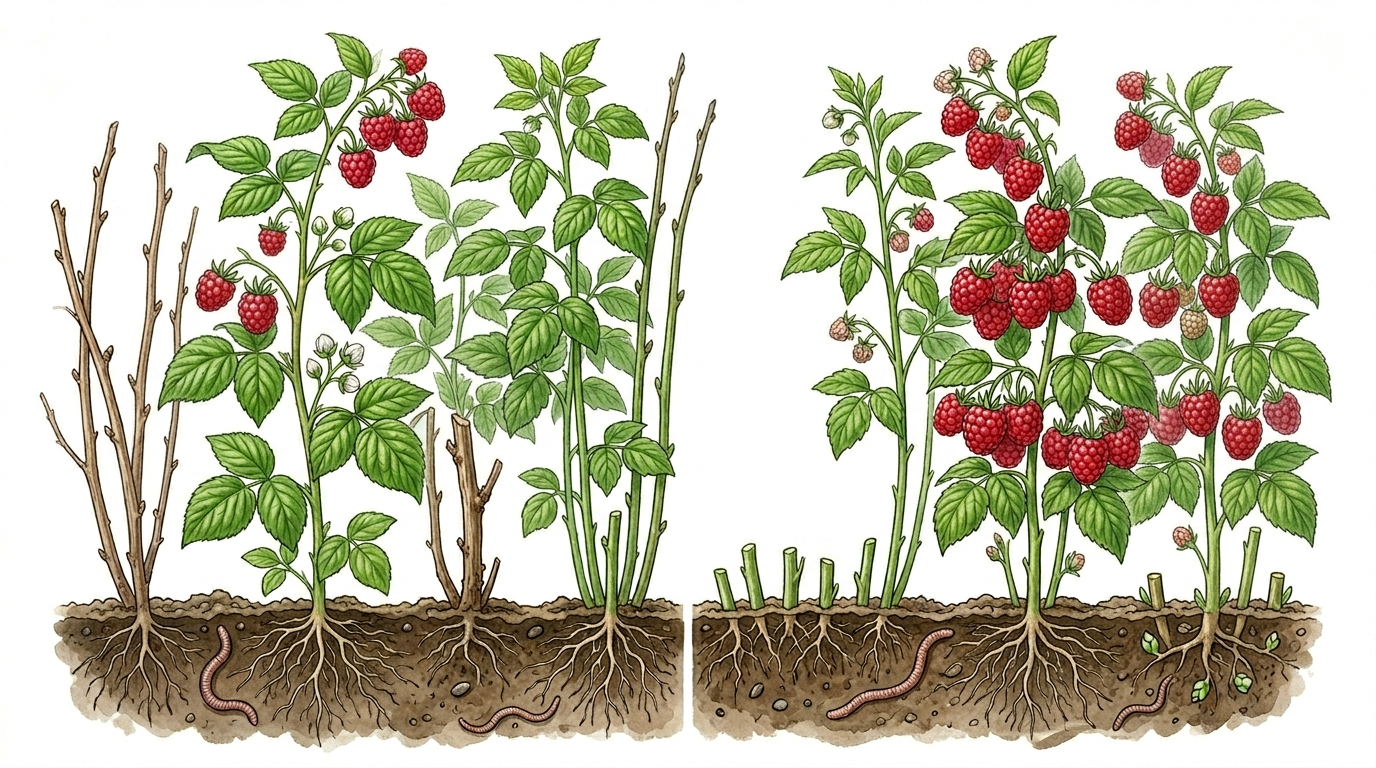
Pruning Raspberries: Summer and Autumn Types
Learn how to prune raspberries correctly by understanding the differences between summer-bearing and autumn-bearing types.
Guide
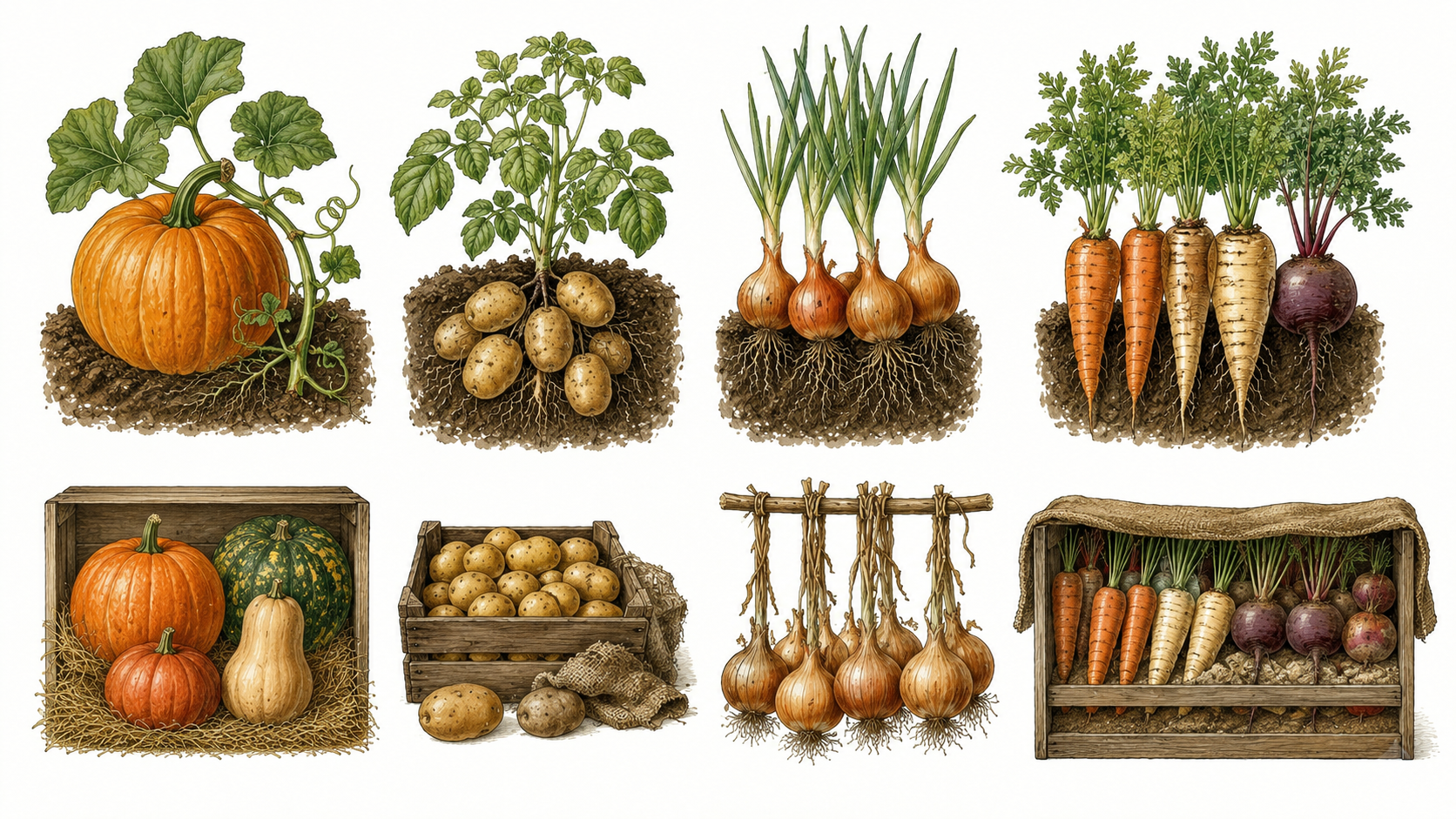
Autumn Harvest and Storage for Squash and Root Crops
Learn how to harvest and store squash, potatoes, onions, and root vegetables for longer freshness through autumn and winter.