Diseases
Clubroot
Identify Clubroot: symptoms, possible causes, prevention, and practical actions for 16 affected plants. Galls on roots
Editorial diagnosis
Diagnosis overview
Clubroot is a long-lasting soil-borne disease of brassicas that creates swollen root galls.
In gardens, Clubroot can occur on plants including Napa cabbage, Choy Sum, Radish, kale. In the available profiles, it is linked mainly with Asian greens, Brassicas, Cabbages. Recorded timing or triggers include Year-round in moist soil.
The recorded risk level is high. Conditions that favour it include Wet weather or prolonged leaf wetness, Dense planting and poor airflow, Susceptible cultivars. Clubroot is serious because it persists in soil for a long time.
Compare upper and lower leaf surfaces, the boundary between healthy and damaged tissue, and spread after wet weather. Coatings, spores, or progressive rot support a disease diagnosis.
A common mistake is to identify a disease from one spot alone; weather, spread, and pathogen structures also need to fit.
At a glance
Plants
16
Category
Asian greens, Brassicas, Cabbages, Flower vegetables, Leafy vegetables
Risk
high
Season
Year-round in moist soil
Scientific name
Plasmodiophora brassicae
Typical signs
- Stunting
- Wilting in warmth
- Swollen roots
- Poor recovery after watering
Possible confusion
- Growing problem: Growing problems are usually linked to water, light, temperature, or soil and do not show pathogen growth, pustules, or progressive infection patterns.
- Nutrient deficiency: Deficiency patterns are often more regular and follow leaf age or veins. Diseases more often show spots, coatings, rot, wilting, or pathogen structures.
Immediate actions
- Remove affected plant parts
- Improve airflow
- Avoid overhead watering
- Keep tools clean
- Remove heavily infected plant residues
Prevention
- Use suitable spacing
- Follow crop rotation
- Choose robust cultivars
- Keep leaves dry
- Support soil structure and plant vigour
Affected plants
Guides
Related guides
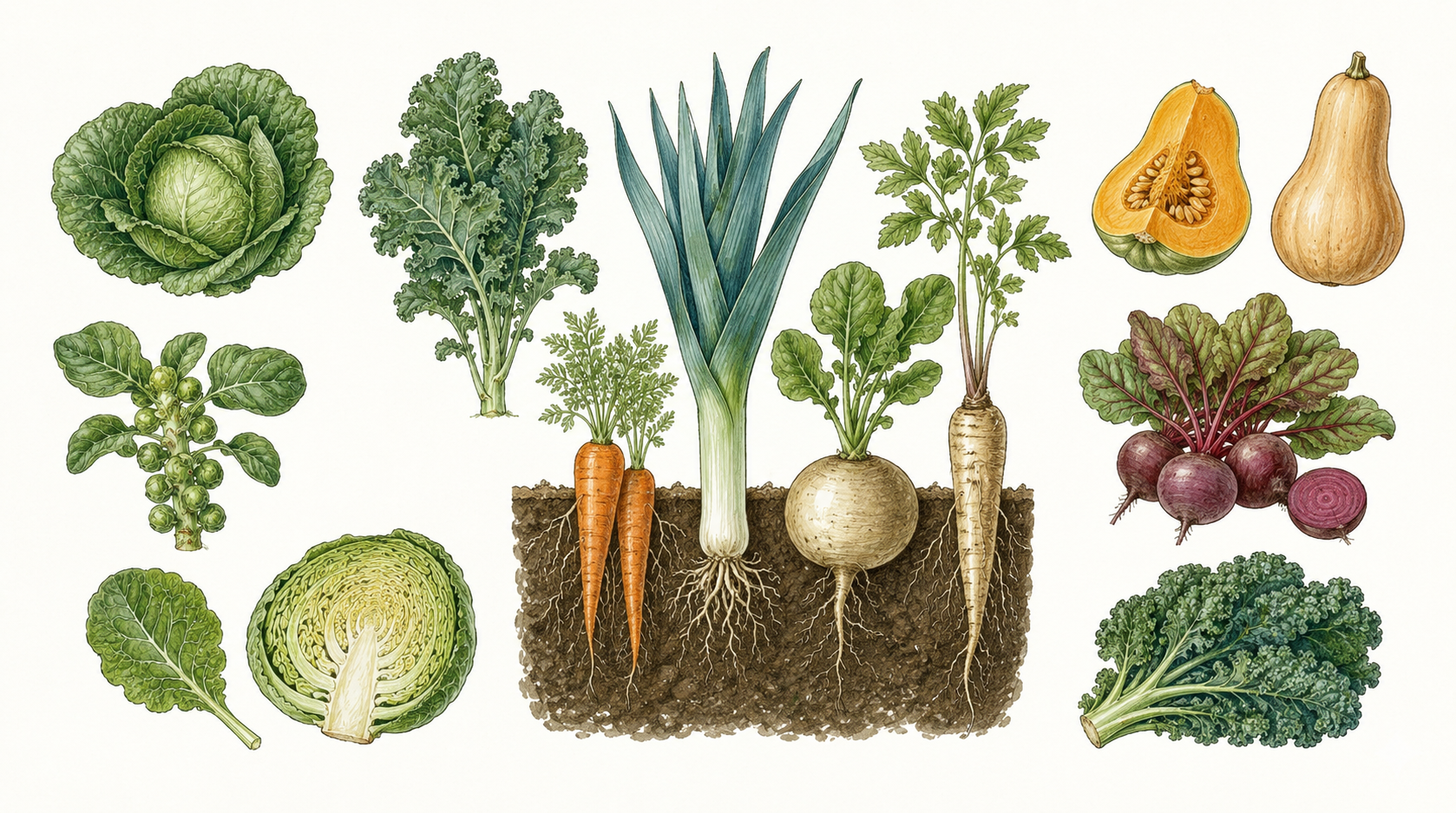
Guide
Growing Autumn Vegetables for Winter Harvests
Learn how to grow autumn vegetables such as kale, spinach, lamb's lettuce, and leeks for harvests into winter.
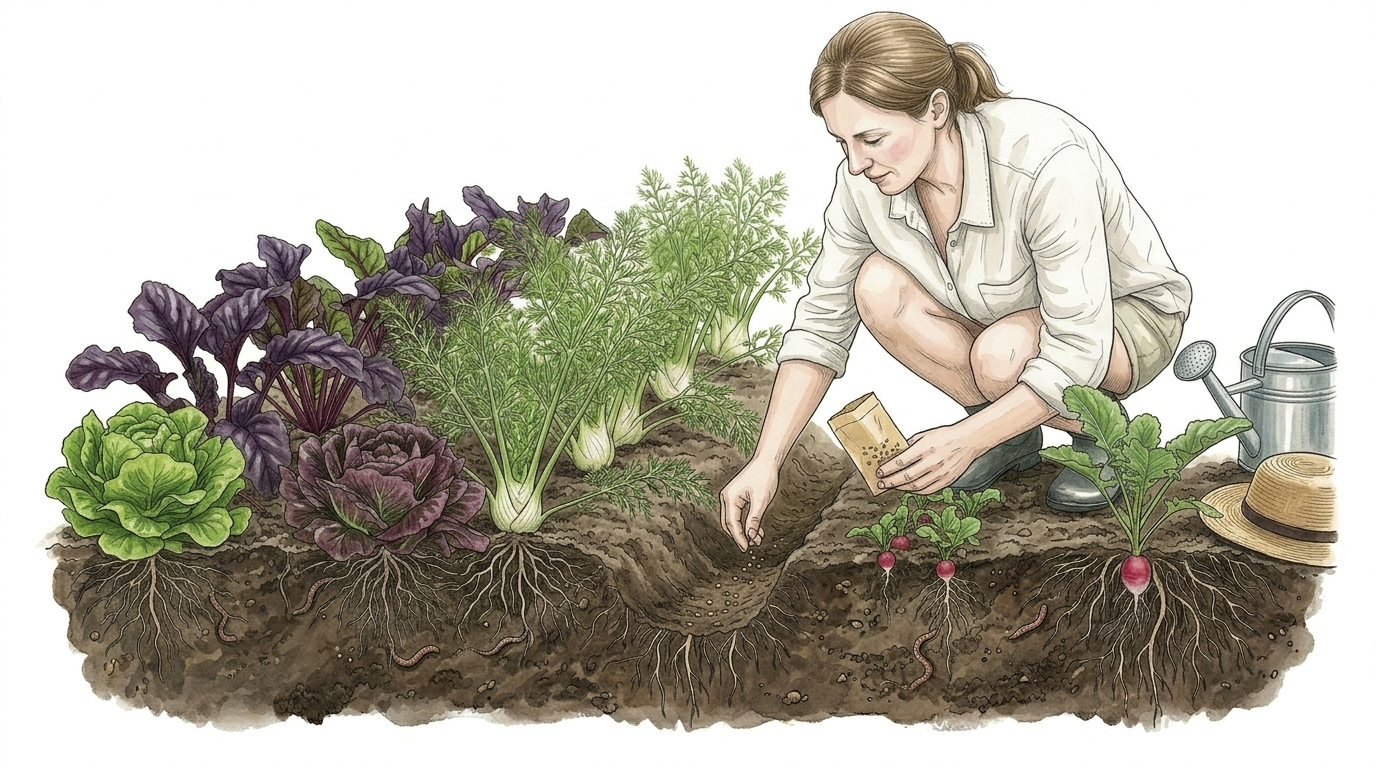
Guide
What to Sow in June: Succession Crops and Autumn Harvests
Discover which vegetables to sow in June for succession planting, filling gaps in beds, and planning autumn harvests.