Profile
CochleariaCochlearia
A vitamin-rich herb with a pungent taste, ideal for salads and as ground cover. Winter-hardy and easy to care for.
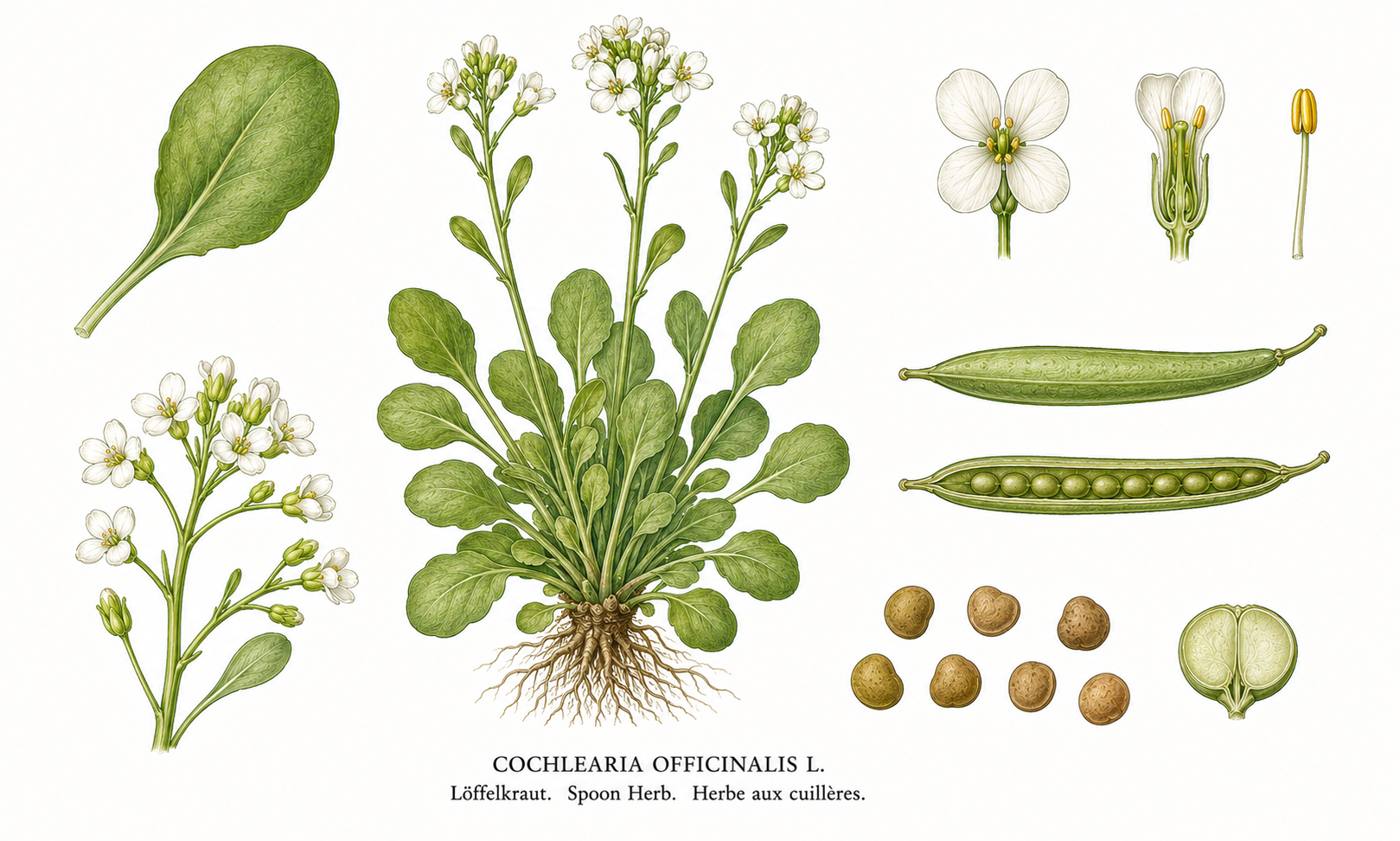
Quick profile
Key data
Planting
Apr, May
Harvest
Mar, Apr, May, Sep, Oct, Nov
Water
medium
Good neighbors
Garden strawberryLettuceGarden pea
Avoid
CabbageRadish
Growing data
Cochlearia Growing data
Seed depth
0.5 - 1 cm
Plant spacing
15 - 25 cm
Row spacing
20 - 30 cm
Germination temp
10 - 18 °C
Sowing and germination
Planting and spacing
Temperature and site
Water, nutrients and care
Container, support and growth
Year plan
Cochlearia Calendar
Indoor sowing
Indoor pre-cultivation is not common for scurvygrass, as it can be sown directly.
Direct sowing
Direct sowing in spring or late summer/autumn for harvest in the following year.
Planting
If seedlings were pre-cultivated, plant out after the last frosts.
Harvest
Leaves can be harvested almost year-round, best before flowering in spring and then again in autumn.
Year plan
- Direct sowing
- Harvest
- Direct sowing
- Planting out
- Harvest
- Watering
- Watering
- Maintenance
- Watering
- Direct sowing
- Direct sowing
- Harvest
- Harvest
- Harvest
Growing
Cochlearia Site, soil and care
Spacing
15 - 25 cm
Storage
Fresh, Frozen, Dried
Pruning
Cochlearia Pruning
not_applicable
Goal
not_applicable
Tools and hygiene
Use clean tools to prevent disease transmission.
Companion guide
Cochlearia Companion guide
Good neighbors
Garden strawberryLettuceGarden pea
Avoid
CabbageRadish
Health
Pests, Diseases
Plant health
FAQ
When is the best harvest time for scurvygrass?
Young leaves can be harvested almost year-round, but ideally before flowering in spring (March-May) and then again in autumn (September-November). After the first frost, the leaves often become milder in flavor.
Can scurvygrass be grown in pots?
Yes, scurvygrass is well-suited for growing in pots or containers. Choose a container with at least 5-10 liters volume and good drainage to prevent waterlogging.
What diseases and pests affect scurvygrass?
Scurvygrass is relatively robust. Occasionally, aphids or flea beetles may appear. With close crop rotation with other brassicas, there is a risk of clubroot.
What does scurvygrass taste like?
Scurvygrass has a pungent, slightly peppery taste, reminiscent of cress or horseradish. It is rich in Vitamin C.
Related plants
Cabbage (general)
Both belong to the mustard family (Brassicaceae).
Radish
Both belong to the mustard family (Brassicaceae).
Spinach
Leafy green used raw or cooked.
Both prefer consistent soil moisture and are sensitive to drought.
Parsley
Herbs for fresh use and seasoning.
Clubroot
Typical disease of brassicas with close crop rotation.
Aphids
Common pest on young shoots of many plants, including brassicas.
Lettuce
Both are medium feeders and benefit from moderate nutrient supply.
Guides
Related guides
Guide
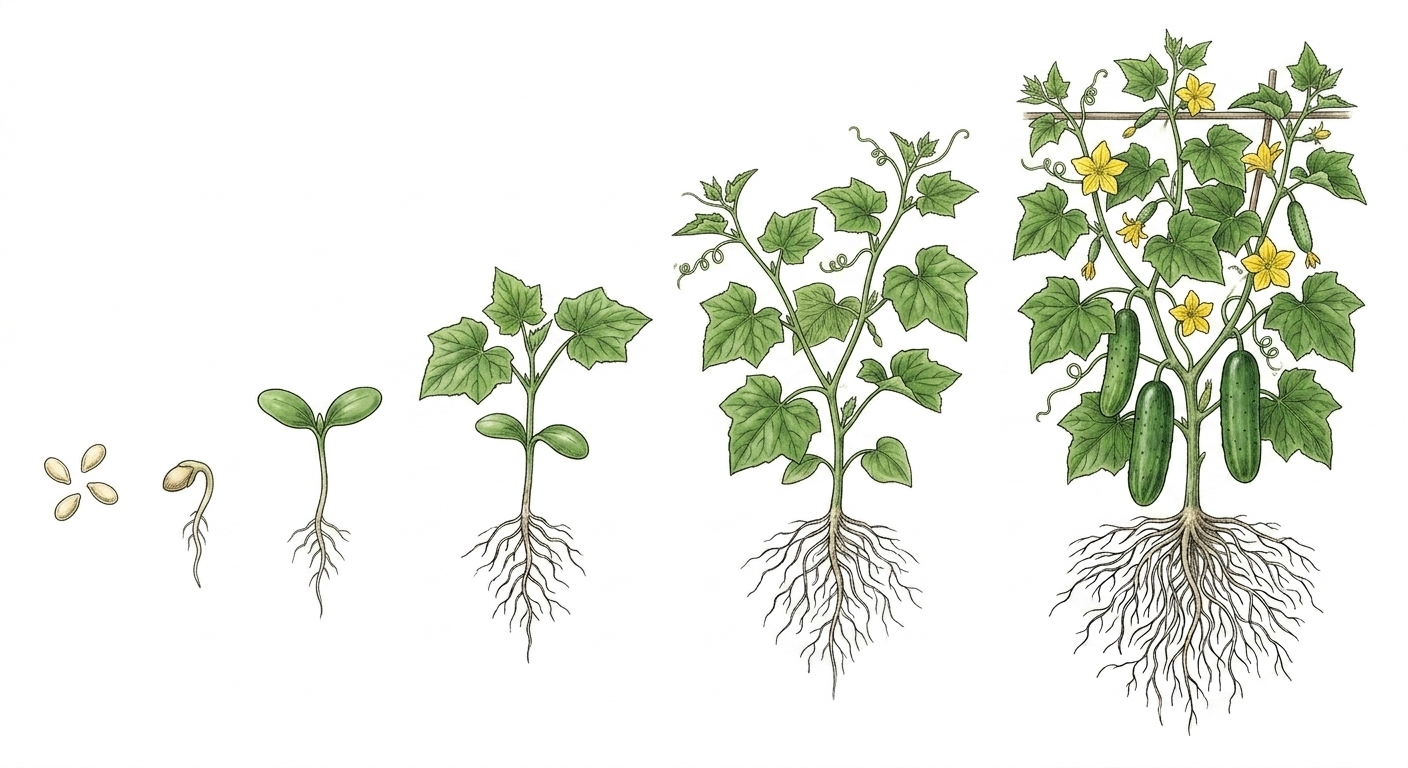
Growing Cucumbers: Starting, Supports and Harvest
Learn how to grow cucumbers successfully with indoor starting, transplanting, trellises, watering, and regular harvesting.
Guide
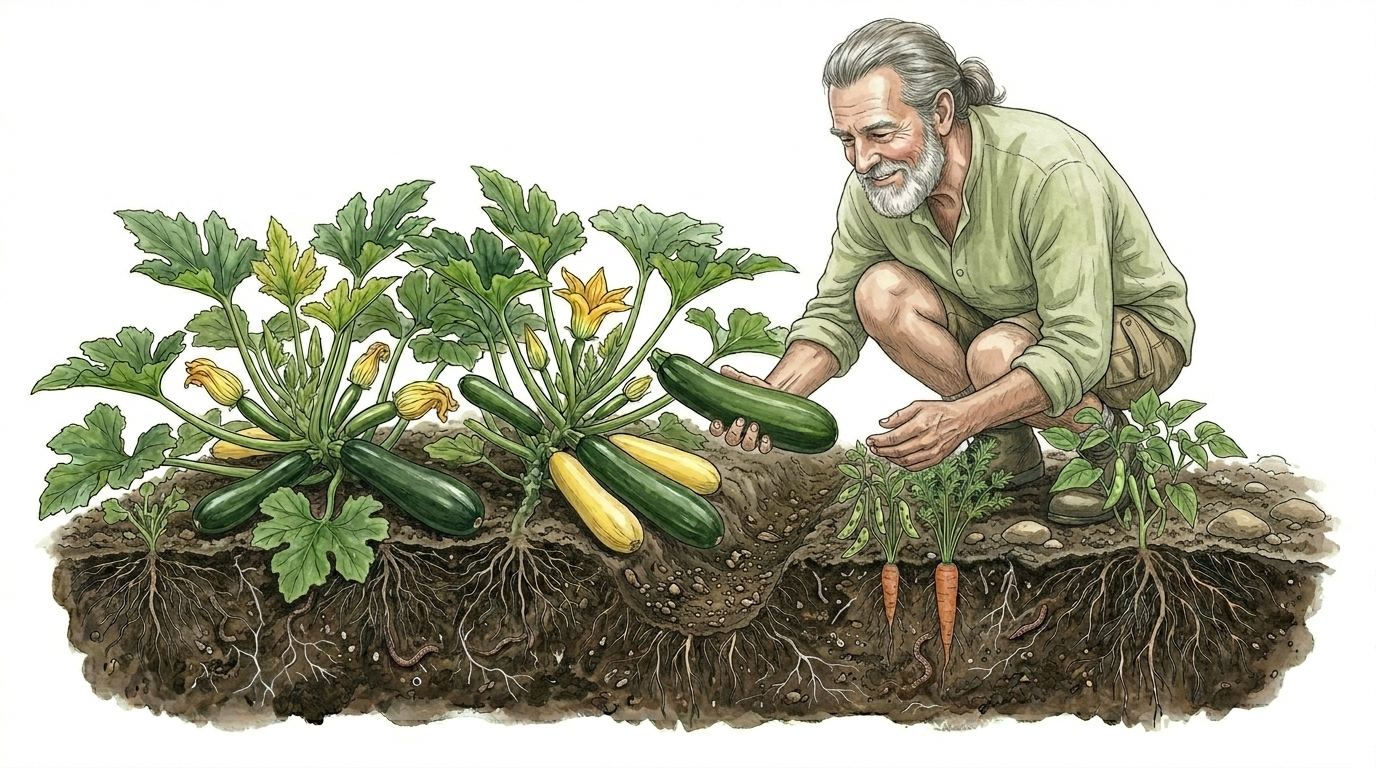
Growing Zucchini: Spacing, Pollination and Mildew
Learn how to grow zucchini with the right site, spacing, pollination support, and practical tips to prevent powdery mildew.
Guide
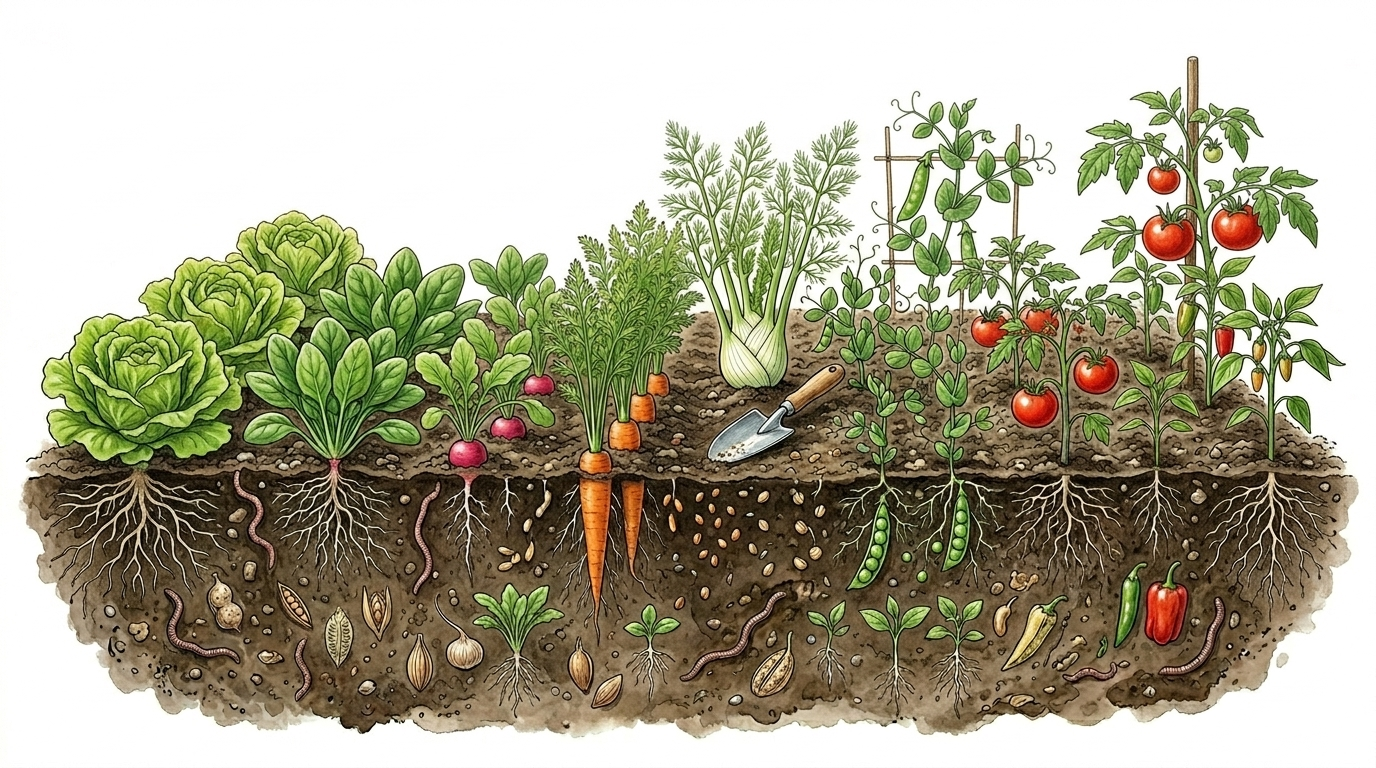
May Planting Calendar: Transplanting and Succession Sowing
What to plant and sow in May: transplant tender vegetables, continue succession sowing, and make the most of garden beds.
Guide
Pruning Apple Trees: Timing, Techniques, and Common Mistakes
Learn when and how to prune apple trees properly, including winter pruning, summer pruning, training cuts, and maintenance tips for healthy, productive…
Internal links
Related plants
Sources
Public sources
- Wikidata entity
Wikidata · 2026-05-14
- GBIF species match
GBIF · 2026-05-14
- Deutschsprachige Wikipedia: Löffelkräuter
Wikipedia · 2026-05-14
- English Wikipedia: Cochlearia
Wikipedia · 2026-05-14
Details
More public plant data
Names
Common
Cochlearia
Plural
Cochlearia
Synonyms
- scurvygrass
- spoonwort
Common synonyms
- scurvygrass
- spoonwort
Regional names
Historical names
Market names
Misspellings
Search terms
- Cochlearia
- scurvygrass
- spoonwort
Taxonomy
Family
Mustard family
Classification
Edible parts
- leaves
Calendar
Sowing indoor
Notes
Indoor pre-cultivation is not common for scurvygrass, as it can be sown directly.
Sowing outdoor
Months
- 3
- 4
- 8
- 9
Notes
Direct sowing in spring or late summer/autumn for harvest in the following year.
Planting out
Months
- 4
- 5
Notes
If seedlings were pre-cultivated, plant out after the last frosts.
Harvest
Months
- 3
- 4
- 5
- 9
- 10
- 11
Notes
Leaves can be harvested almost year-round, best before flowering in spring and then again in autumn.
Month tasks
3
Begin direct sowing outdoors.
Harvest first leaves.
4
Continue direct sowing.
Plant out seedlings.
Harvest regularly.
5
Harvest regularly.
Ensure sufficient moisture.
6
Water if necessary.
Remove spent flowers to encourage or prevent self-seeding.
7
Water if necessary.
8
Direct sow for autumn/winter harvest or next spring.
9
Continue direct sowing.
Harvest autumn leaves.
10
Continue harvesting.
11
Last harvest before winter.
Structured month tasks
3
- Tasksow_outdoor
Label
Direct sowing
PrioritymediumMonths
- 3
ConditionfrostfreiEstimated effortlowNotes
Start direct sowing for an early harvest.
- Taskharvest
Label
Harvest
PriorityhighMonths
- 3
Conditionausreichende BlattgrößeEstimated effortlowNotes
Harvest first tender leaves.
4
- Tasksow_outdoor
Label
Direct sowing
PrioritymediumMonths
- 4
ConditionfrostfreiEstimated effortlowNotes
Continue direct sowing.
- Taskplant_out
Label
Planting out
PrioritymediumMonths
- 4
Conditionnach den letzten FröstenEstimated effortmediumNotes
Transplant pre-cultivated seedlings into the bed.
- Taskharvest
Label
Harvest
PriorityhighMonths
- 4
Conditionausreichende BlattgrößeEstimated effortlowNotes
Regular harvesting promotes regrowth.
5
- Taskharvest
Label
Harvest
PriorityhighMonths
- 5
Conditionausreichende BlattgrößeEstimated effortlowNotes
Harvest before flowering for the best flavor.
- Taskwatering
Label
Watering
PrioritymediumMonths
- 5
ConditionTrockenheitEstimated effortlowNotes
Ensure consistent soil moisture.
6
- Taskwatering
Label
Watering
PrioritymediumMonths
- 6
ConditionTrockenheitEstimated effortlowNotes
Water regularly during prolonged dry spells.
- Taskmaintenance
Label
Maintenance
PrioritylowMonths
- 6
Conditionnach der BlüteEstimated effortlowNotes
Remove spent flowers to manage self-seeding.
7
- Taskwatering
Label
Watering
PrioritymediumMonths
- 7
ConditionTrockenheitEstimated effortlowNotes
Ensure consistent soil moisture to prevent bitterness.
8
- Tasksow_outdoor
Label
Direct sowing
PrioritymediumMonths
- 8
ConditionBodenfeuchteEstimated effortlowNotes
Sow for an autumn/winter harvest or for the next spring.
9
- Tasksow_outdoor
Label
Direct sowing
PrioritymediumMonths
- 9
ConditionBodenfeuchteEstimated effortlowNotes
Last sowing for overwintering and early harvest next year.
- Taskharvest
Label
Harvest
PriorityhighMonths
- 9
Conditionausreichende BlattgrößeEstimated effortlowNotes
Harvest autumn leaves, which are often milder in flavor.
10
- Taskharvest
Label
Harvest
PriorityhighMonths
- 10
ConditionfrostfreiEstimated effortlowNotes
Harvest possible until the first hard frost.
11
- Taskharvest
Label
Harvest
PrioritymediumMonths
- 11
Conditionmilder WinterEstimated effortlowNotes
In mild weather, leaves can still be harvested.
Cultivation specs
Seed
Spacing
Spacing notes
Allow sufficient space for bushy growth, as scurvygrass can spread.
Growth dimensions
Final size notes
Temperature
Temperature notes
Tolerates frost well, but prefers cool temperatures for optimal growth and flavor.
Water
Critical water phases
- During germination
- During dry spells
Water notes
Consistent moisture is important, absolutely avoid waterlogging.
Nutrition
Nutrition notes
Requires moderate nutrient supply. An annual application of compost in spring is usually sufficient.
Container
Container notes
Choose a sufficiently large container with good drainage for healthy development.
Support
Support notes
Cultivation modes
Yield density
Yield notes
Regular harvesting of outer leaves promotes regrowth and extends the harvest period.
Site
Sun exposure
- Full sun
- Partial shade
Wind exposure
- Sheltered
- Moderately windy
Slope preference
- Flat
- Gentle slope
Aspect preference
- North
- East
- West
Microclimate notes
Prefers cool, moist locations, e.g., at the edge of a pond or under light trees. In hot regions, partial shade is beneficial.
Soil
Soil type
- Loamy-sandy
- Humus-rich
Drainage
Well-drained
Texture
- Medium
Organic matter content
High
Soil notes
Prefers moist, nutrient-rich, and well-drained soils. Absolutely avoid waterlogging.
Watering
Frequency
Regularly, especially during dry periods and germination
Watering method
- Ground-level watering
Mulching benefits
Helps retain soil moisture, regulate soil temperature, and suppress weeds.
Watering notes
Consistent soil moisture is crucial for good growth and mild flavor. Waterlogging leads to root rot.
Nutrition
Fertilizer type
- Compost
- Organic complete fertilizer
Application frequency
Once annually in spring
Application method
Incorporate superficially or as a mulch layer
Nutrient deficiency signs
- Yellow leaves (nitrogen deficiency)
- Reddish discoloration (phosphorus deficiency)
Soil amendments
- Compost
- Well-rotted manure
Nutrition notes
As a medium feeder, scurvygrass requires moderate nutrient supply. An annual application of compost is usually sufficient.
Cultivation planning
Succession sowing
Bed planning notes
Well-suited for herb gardens, as ground cover, or at the edge of moist beds. Can spread by self-seeding.
Crop rotation
Notes
Scurvygrass belongs to the Brassicaceae family. Subsequent crops from the same family should be avoided to prevent diseases like clubroot. A break of 3-4 years is recommended.
Deficiencies
Notes
Deficiency symptoms are rare with balanced fertilization and good soil. Yellow leaves may indicate nitrogen deficiency, while red discoloration can suggest phosphorus or potassium deficiency.
Problems
Notes
Main problems are unfavorable growing conditions such as waterlogging, extreme drought, or nutrient deficiency, which can lead to weak growth and low yield. Self-seeding can occur strongly under favorable conditions.
Problem management
Common pest groups
- Aphids
- Flea beetles
Common disease groups
- Clubroot (with close rotation)
- Fungal diseases (rare)
Prevention principles
- Good crop rotation (at least 3-4 years break for brassicas).
- Sufficient nutrient supply and consistent watering.
- Good soil aeration and avoidance of waterlogging.
- Encouraging beneficial insects with flowering neighbors.
Diagnosis notes
For leaf problems, check for pests (e.g., aphids) or nutrient deficiencies (yellow/red leaves). For root deformities, consider clubroot and adjust crop rotation.
Disease graph
Profiles
- SlugclubrootSeveritymedium
Conditions
- Moist, acidic soil
- Close rotation with brassicas
Affected parts
- Roots
- Overall plant
Prevention
- Liming to raise pH
- Long crop rotation (4-5 years)
- Resistant varieties (if available)
- Good drainage
Organic control
- Soil improvement with compost
- Growing in raised beds
- SlugaphidsSeveritylow
Conditions
- Drought
- High temperatures
- Weak plants
Affected parts
- Young leaves
- Shoot tips
Prevention
- Encouraging beneficial insects (ladybugs, lacewings)
- Strengthening plants through good care
- Growing repellent herbs nearby
Organic control
- Spraying with water jet
- Soap solution
- Neem oil
Diagnostic rules
Symptom
Swollen, gall-like growths on the roots leading to stunted growth and yellowing.
Possible causes
- clubroot
First checks
- Check soil pH (acidic?)
- Check crop rotation (brassicas before?)
Symptom
Small, green or black insects on young shoots and leaf undersides, sticky honeydew, curled leaves.
Possible causes
- aphids
First checks
- Inspect plants for pests
- Look for beneficial insects
Prevention strategy
Cultural
- Strict crop rotation, with at least a 3-4 year break for brassicas.
- Optimize the soil: enough lime to raise pH (target pH 6.5-7.5), good drainage, and incorporated compost.
- Site selection: avoid waterlogging and ensure good air circulation.
- Strengthen plants through balanced fertilization and watering as needed.
Monitoring
- Regularly inspect plants for pests, especially in dry weather, and disease symptoms.
- Inspect roots if clubroot is suspected, for example with weak growth.
Organic first response
- For aphid infestation: rinse with water and use neem oil or potassium soap solution.
- If clubroot is suspected: improve soil, grow in raised beds, and if needed switch to non-susceptible crops.
Notes
Prevention is key to avoiding problems. A healthy soil and good plant care are fundamental. When diseases appear, prompt action and adaptation of cultivation methods are important.
Diagnosis
Notes
Diagnosing problems with scurvygrass relies mainly on observing symptoms on leaves and roots, as well as considering growing conditions and crop rotation. Accurate identification of the cause is crucial for effective management.
Phenology
Stages
- Germination
- Growth
- Flowering
- Fruiting
- Seed ripening
Notes
Scurvygrass is a perennial herbaceous plant that forms a rosette of leaves in the first year and flowers and fruits in the second year. The flowering period extends from spring into summer.
Harvest
- Leaves
- Stems
Harvest details
Harvest frequency
Continuously during the growing season, especially before flowering and in autumn.
Harvest indicators
- Sufficient leaf size
- Before flowering for best flavor
Post harvest handling
Use harvested leaves and stems immediately or store them cool. Sort out damaged parts.
Storage
- Fresh
- Frozen
- Dried
Storage details
General storage category
Cool and dry
Storage life
Fresh: a few days in the refrigerator. Frozen: several months. Dried: up to 1 year.
Processing options
- Freezing
- Drying
- Pickling in vinegar or oil
Kitchen usage
The young leaves and stems are used raw in salads, as a seasoning, or for vitamin enrichment. They have a sharp, slightly peppery flavor. When cooked, they can be prepared like spinach.
Safety and edibility
Edible parts
- Leaves
- Young shoots
- Stems
Inedible or caution parts
Toxicity notes
No known toxic properties with normal consumption. Contains mustard oil glycosides, which are responsible for the pungent taste.
Raw consumption
Yes, especially the young, tender leaves.
Seed saving
- Seeds
- Self-pollinator
Seed saving advanced
Seed cleaning method
Sieving and wind or water cleaning.
Seed storage conditions
Cool, dry, and dark in airtight containers.
Notes
As scurvygrass is a self-pollinator, seed purity is relatively easy to ensure. However, if growing multiple varieties or related species, some isolation is advisable to prevent cross-contamination.
Woody crop details
Notes
Scurvygrass is an herbaceous plant, not a woody variety. Therefore, details for woody crops are not applicable.
Ecology
Biodiversity notes
Scurvygrass provides early nectar for insects and can contribute to humus formation as a ground cover. It is a robust plant that thrives even in harsher climates.