Plant Profile
ChivesAllium schoenoprasum
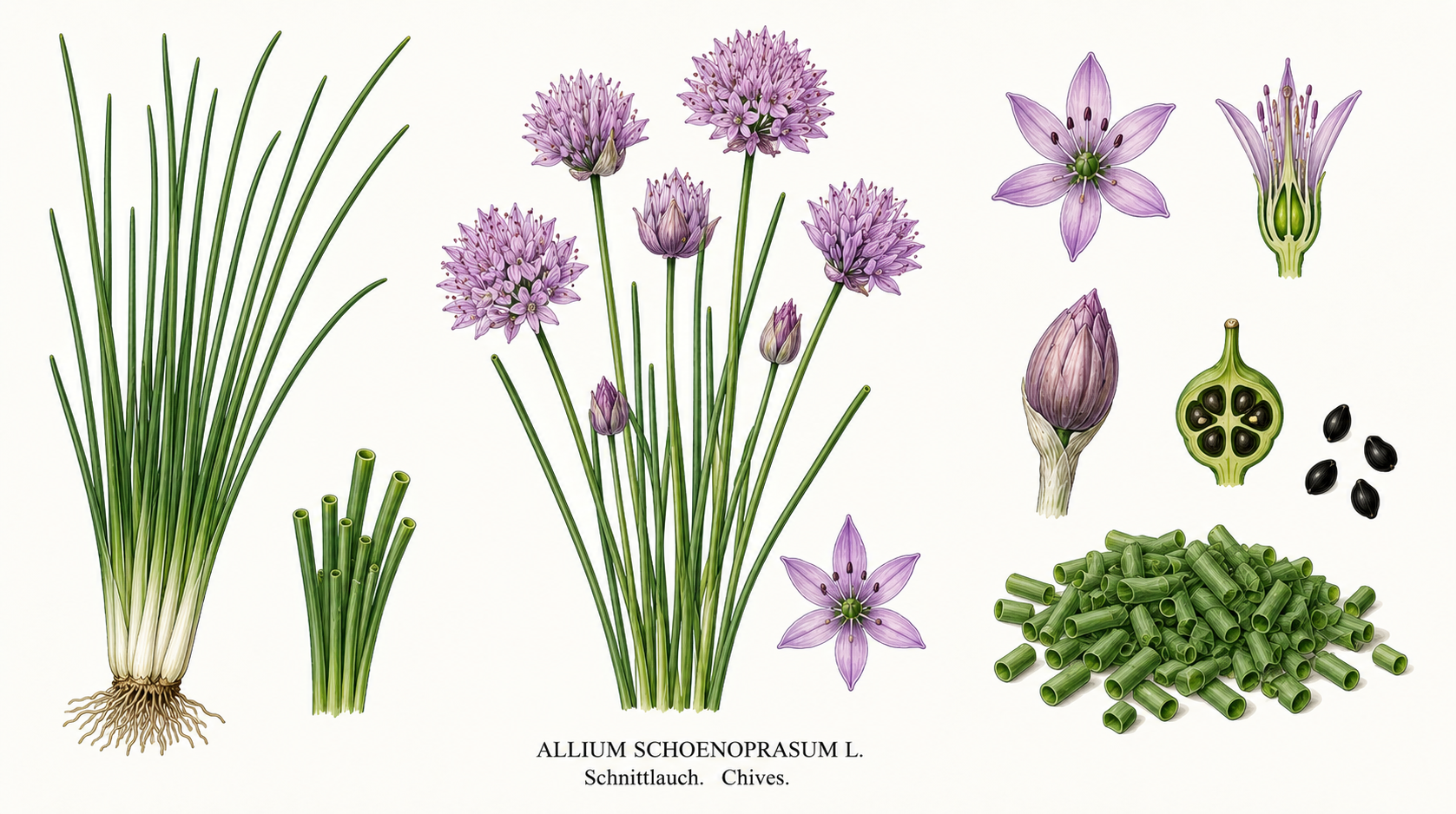
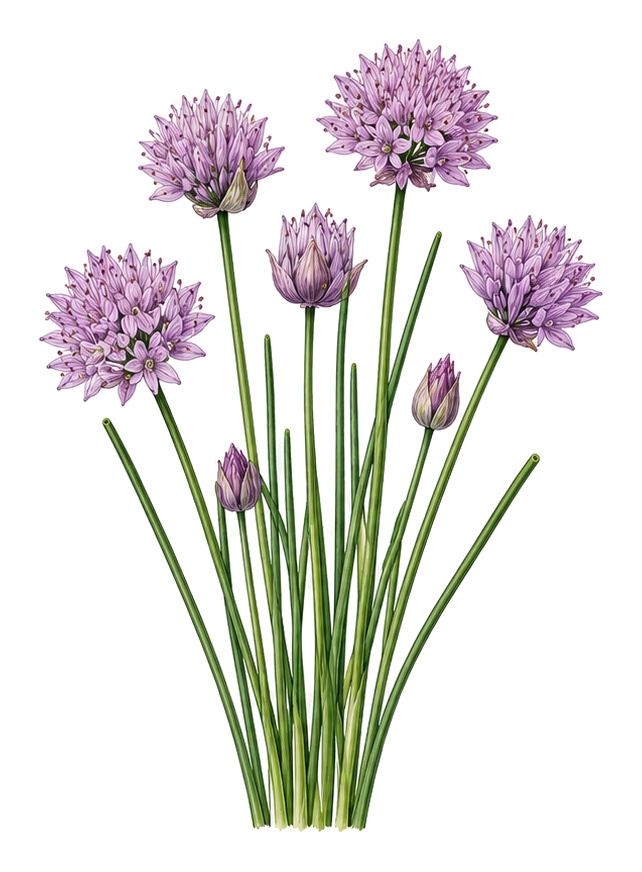
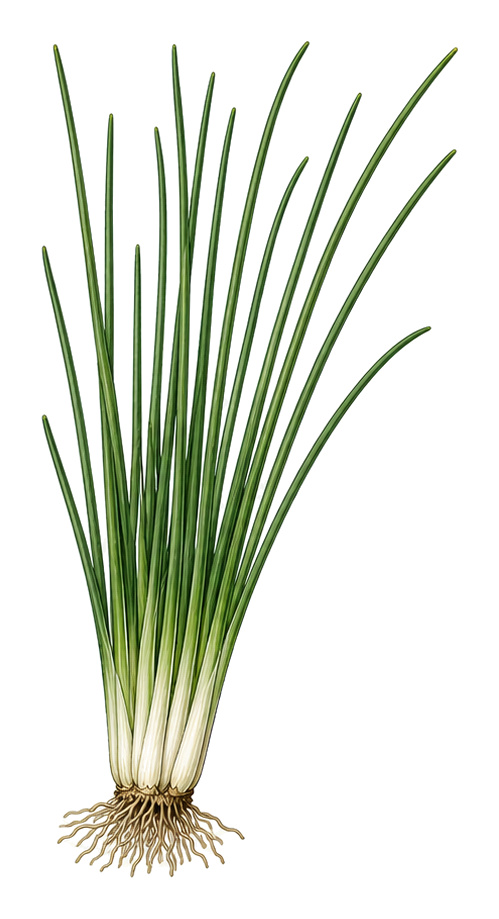
Chives are a popular and easy-to-care-for culinary herb that should be a staple in any garden. Their fine, tubular leaves add a fresh, oniony note to salads, soups, and many other dishes. The pretty, spherical flowers are not only edible but also a decorative feature for any bed.
Quick profile
Key data
Suitable growing locations:
Good neighbors
CarrotStrawberrytomatoCucumber
Avoid
BeanPeaCabbage
Indoor & direct sowing
Chives: Sowing and germination
Sow indoors for an early harvest.
Direct sowing outdoors is possible from April onwards, once the soil has warmed up.
Planting & site
Chives: Planting and spacing
Transplant pre-grown plants outdoors when the risk of frost has passed.
Site & practical notes
Chives are very easy to care for. Regular harvesting promotes growth and prevents the plant from flowering and becoming woody. Spent flower stalks should be removed to direct the plant's energy into leaf production. In autumn, the plant can be cut back to prepare it for winter. Division every few years keeps the plants vigorous.
Temperature & frost
Chives: Temperature and site
Water & nutrients
Chives: Water, nutrients and care
Container & growth
Chives: Container, support and growth
Year plan
Chives Calendar
From spring to autumn, you can continuously harvest fresh leaves.
Recurring tasks
Relevant now
June
- Continue harvestingongoing: Regular harvesting keeps the plants productive.
Next up
July
- Continue harvestingongoing: Regular harvesting keeps the plants productive. · ongoing - Harvesting can continue as long as the leaves are fresh and green.
Monthly tasks
Single tasks from monthly data; repeated seasonal windows are shown in the overview above.
January
Quiet month
February
Harvest
- Sow indoors for early harvestindoors: Start sowing indoors to enable an early harvest.
March
Direct sowing
- Attempt first outdoor sowings if frost-freeAs soon as the soil is frost-free and workable, first sowings can be made outdoors.
- Continue sowing indoorsindoors: Continue sowing indoors to ensure a continuous supply.
April
No additional single task
May
No additional single task
June
Harvest
- Continue harvestingongoing: Regular harvesting keeps the plants productive.
August
Harvest
- Continue harvestingongoing: Regular harvesting keeps the plants productive. · ongoing - Harvesting can continue as long as the leaves are fresh and green. · ongoing - Harvesting is still possible, but the growth rate may begin to slow.
- Sow for autumn harvestA late sowing in August can provide a harvest in late autumn.
September
Harvest
- Continue harvestingongoing: Harvesting can continue as long as the leaves are fresh and green. · ongoing - Harvesting is still possible, but the growth rate may begin to slow. · ongoing - Harvest as long as the leaves are still vigorous.
October
Planting
- Cut back plantsCut the plants back close to the ground to facilitate overwintering.
Harvest
- Continue harvestingongoing: Harvest as long as the leaves are still vigorous.
November
Growing
- Mulch for winter protectionA layer of mulch protects the roots from hard frost.
December
Quiet month
Flowering & pollination
Chives Flowering & pollination
Self-fertility
cross-pollinating
Pollinator needed
yes
Overview
Chives are primarily insect-pollinated. The flowers are attractive to bees and other pollinators.
Notes
Although self-pollinating, cross-pollination by insects is beneficial for good seed set.
Pruning & care
Chives Pruning & care
Pruning type
harvesting
Pruning timing
Start of harvest and promotion of growth Begin harvesting as soon as the leaves have reached a suitable length. Regular cutting stimulates new growth.
Continuous harvest to maintain productivity Harvest regularly to keep the plant bushy and encourage leaf production. Remove spent flower stalks.
Reduced harvest in preparation for winter Reduce harvesting towards the end of the season to allow the plant to gather strength for overwintering. Final harvest before the first hard frost.
Remove
Preserve
Base of the leaves (leave approx. 2-3 cm above the ground to encourage rapid regrowth)
Avoid
Tools and hygiene
Use clean shears or knives to prevent the transmission of diseases.
Companion guide
Chives Companion guide
Good neighbors
CarrotStrawberrytomatoCucumberLettuce
Avoid
BeanPeaCabbage
Use & storage
Chives Use & storage
Harvest leaves as needed. Regular cutting encourages new growth. Reduce harvesting in autumn to allow the plant to gather strength for winter.
Storage
Cool and dry
Storage life
Fresh: a few days in the refrigerator; Frozen: several months; Dried: up to 1 year
Harvest
Harvest leaves as needed. Regular cutting encourages new growth. Reduce harvesting in autumn to allow the plant to gather strength for winter.
Processing
After harvest
Use harvested leaves immediately or store them cool. Flowers can be used fresh or dried.
Edibility & safety
Chives Edibility & safety
For people
In brief: which parts are edible, which parts remain risky, and whether raw consumption makes sense.
Safety notes
Chives are non-toxic to humans. However, for pets like dogs and cats, consuming large quantities can lead to gastrointestinal upset. Caution is advised for young children and sensitive individuals.
Animal safety
For animals, the specific plant part matters here: some parts may be suitable, while others should be avoided. At least one critical rating is listed for 13 animal types.
Each row shows which parts are more suitable and which parts are critical.
Companion animals
 Dog
DogNo suitable parts listed
Leaves, Flowers
No suitable parts listed
Leaves, Flowers
Amount, Frequency of feeding, Individual sensitivity
Vomiting, Diarrhea, Gastrointestinal upset
contact a vet if symptoms appear
Chives contain N-propyl disulfide, which can cause gastrointestinal irritation and hemolytic anemia in dogs. All plant parts are considered toxic. Even small amounts may cause symptoms in sensitive animals. Seek veterinary advice if ingestion is suspected.
Open animal page Cat
CatNo suitable parts listed
Leaves, Flowers
No suitable parts listed
Leaves, Flowers
Consuming large quantities, Sensitivity to Allium compounds
Vomiting, Diarrhea, Gastrointestinal upset
contact a vet if symptoms appear
Chives contain N-propyl disulfide, which can cause gastrointestinal upset and hemolytic anemia in cats. All parts of the plant are considered toxic.
Open animal page Rabbit
No suitable parts listed
Leaves, Flowers
No suitable parts listed
Leaves, Flowers
Consuming large quantities, Sensitivity to Allium compounds
Diarrhea, Gastrointestinal upset, Anemia from red blood cell destruction
contact a vet if symptoms appear
Chives contain N-propyl disulfide, which can be toxic to rabbits and may cause gastrointestinal upset and hemolytic anemia. While rabbits are less sensitive than dogs or cats, consumption should be avoided. If small amounts are ingested accidentally, monitor the animal; for larger amounts or if symptoms appear, consult a veterinarian.
Open animal page Guinea pig
No suitable parts listed
Leaves, Flowers
No suitable parts listed
Leaves, Flowers
Consuming large quantities
Vomiting, Diarrhea, Gastrointestinal upset
contact a vet if symptoms appear
Chives contain N-propyl disulfide, which can cause gastrointestinal upset in guinea pigs. Although no species-specific studies are available, a conservative assessment is made based on toxicity in related species (dogs, cats, horses) and similar sensitivity to Allium compounds. Leaves and flowers should not be fed.
Open animal page Hamster
No suitable parts listed
Leaves, Flowers
No suitable parts listed
Leaves, Flowers
Small body size increases sensitivity to Allium compounds, Even small amounts can be problematic for hamsters
Vomiting, Diarrhea, Gastrointestinal upset
contact a vet if symptoms appear
Hamsters are particularly sensitive to Allium compounds like N-propyl disulfide in chives. While direct studies in hamsters are lacking, the known toxicity in similar small mammals and the severity of hemolytic anemia warrant a conservative classification. All plant parts should be avoided.
Open animal page Budgie
No suitable parts listed
No risk parts listed
No suitable parts listed
No risk parts listed
unknown
Chives contain N-propyl disulfide, which is toxic to birds such as budgies and can lead to hemolytic anemia. Although direct budgie sources are lacking, the effect on birds is generally known and should be conservatively classified. All parts of the plant should be considered potentially hazardous. If ingested, contact an avian veterinarian immediately.
Open animal pageFarm animals
 Horse
HorseNo suitable parts listed
Leaves, Flowers
No suitable parts listed
Leaves, Flowers
Amount consumed, Individual sensitivity
Vomiting, Blood in urine, Weakness
contact a vet if ingested
Chives contain N-propyl disulfide, which can cause hemolytic anemia in horses. All parts of the plant are considered toxic. Even small amounts may provoke reactions in sensitive animals. No parts are considered safe for equine consumption. If ingestion is suspected, contact a veterinarian immediately. Observation is recommended even if no symptoms are initially apparent.
Open animal page Chicken
No suitable parts listed
Leaves, Flowers
No suitable parts listed
Leaves, Flowers
Large quantities, Repeated feeding
Vomiting, Diarrhea, Gastrointestinal upset
contact a vet if symptoms appear
Chives contain N-propyl disulfide, which can cause gastrointestinal upset and potentially hemolytic anemia in chickens. Although no species-specific studies are available, a conservative assessment is made based on toxicity in related species (dogs, cats, horses) and similar metabolic pathways. Leaves and flowers should not be used as feed.
Open animal page Duck
DuckNo suitable parts listed
Leaves, Flowers
No suitable parts listed
Leaves, Flowers
Consuming large quantities, Sensitivity to Allium compounds
Vomiting, Diarrhea, Gastrointestinal upset
contact a vet if symptoms appear
Chives contain N-propyl disulfide, which can be toxic to birds such as ducks, potentially causing hemolytic anemia and gastrointestinal upset. Although no species-specific studies exist for ducks, a conservative assessment is made based on toxicity in related species (dogs, cats, horses) and similar metabolic pathways. Small amounts might be tolerated, but regular consumption is not recommended.
Open animal page Goose
GooseLeaves, Flowers
No risk parts listed
Leaves, Flowers
No risk parts listed
Large quantities, Sensitive individuals
Gastrointestinal upset, Vomiting, Diarrhea
observe
Chives contain N-propyl disulfide, which can cause gastrointestinal upset in geese when consumed in large quantities. Leaves and flowers are suitable as an occasional treat in small amounts, but overfeeding should be avoided. No specific sources for geese found, but conservative classification based on known effects in other birds and mammals.
Open animal page Sheep
SheepNo suitable parts listed
Leaves, Flowers
No suitable parts listed
Leaves, Flowers
Consuming large quantities, Sensitivity to Allium compounds
Vomiting, Diarrhea, Gastrointestinal upset
contact a vet if symptoms appear
Chives contain N-propyl disulfide, which can cause gastrointestinal upset and hemolytic anemia in sheep if consumed in large quantities. Although no species-specific studies are available, a conservative assessment is made based on toxicity in related livestock (horses, cattle) and the known mechanism of action. Leaves and flowers are the toxic parts.
Open animal page Goat
GoatNo suitable parts listed
Leaves, Flowers
No suitable parts listed
Leaves, Flowers
Consuming large quantities, Sensitivity to Allium compounds
Vomiting, Diarrhea, Gastrointestinal upset
contact a vet if symptoms appear
No reliable species-specific assessment is available.
Open animal page Cattle
No suitable parts listed
Leaves, Flowers
No suitable parts listed
Leaves, Flowers
Large quantities, Repeated ingestion, Young animals
Vomiting, Diarrhea, Gastrointestinal upset
contact a vet if symptoms appear
Chives contain N-propyl disulfide, which can cause hemolytic anemia and gastrointestinal irritation in ruminants like cattle at high intake. While cattle are less sensitive than horses, dogs, or cats, there is still a risk with excessive consumption. Leaves and flowers are the toxic parts.
Open animal page Pig
PigLeaves, Flowers
No risk parts listed
Leaves, Flowers
No risk parts listed
Large quantities, Sensitive animals
Vomiting, Diarrhea, Gastrointestinal upset
observe
Chives contain N-propyl disulfide, which can cause gastrointestinal upset in pigs when consumed in large quantities. Leaves and flowers are suitable as an occasional treat in small amounts but not as regular feed.
Open animal pageThese guidelines are for general information only and do not replace veterinary diagnosis. If critical plant parts were ingested or the animal shows unusual behaviour or symptoms, seek veterinary advice.
Max risk
4 / 5
Highest status
toxic
Urgency
contact a vet if ingested
Saving seed
Chives Saving seed
Seed viability
2 - 3 years
Practical tips
Chives Practical tips
Common beginner mistakes
Success pattern
High-impact tips
Plant Profile
Additional plant images
Health
Pests, Diseases
Plant health
Diagnosis help
Chives Diagnosis help
Pest groups
Disease groups
Prevention
Diagnosis
Damage from pests often shows as feeding marks or sticky excretions. Diseases are recognizable by discoloration, spots, or fungal coatings. Root rot manifests as wilting and stunted growth.
Cultural prevention
Monitoring
First response
Diagnostic rules
Yellow to orange pustules on leaves and stems, later turning brown.
Possible causes: Rust
- Check humidity
- Inspect for pustules
White, powdery coating on leaves and stems.
Possible causes: Powdery mildew
- Check air circulation
- Look for powdery coating
Wilting of the plant, yellowish leaves, poor growth, foul smell from the soil.
Possible causes: Root rot
- Check soil moisture
- Inspect roots (if possible)
FAQ
How often should I water chives?
Chives require moderate watering. Keep the soil consistently moist, but avoid waterlogging. Water regularly, especially during dry spells.
When is the best time to sow chives?
Sowing can be done indoors from March or directly outdoors from April, once the soil has warmed up. A second sowing in late summer is possible for an autumn harvest.
Can I grow chives in a pot?
Yes, chives are very well-suited for growing in pots or balcony containers. Ensure adequate pot size and good drainage.
How do I harvest chives correctly?
Harvest the leaves with scissors or a knife about 2-3 cm above the ground. Regular cutting promotes new growth and prevents the plant from flowering.
Is Chives safe for Dog?
Chives is classified as toxic for Dog. Risk: 4 / 5. Urgency: contact a vet if symptoms appear. Chives contain N-propyl disulfide, which can cause gastrointestinal irritation and hemolytic anemia in dogs. All plant parts are considered toxic. Even small amounts may cause symptoms in sensitive animals. Seek veterinary advice if ingestion is suspected.
Is Chives safe for Cat?
Chives is classified as toxic for Cat. Risk: 4 / 5. Urgency: contact a vet if symptoms appear. Chives contain N-propyl disulfide, which can cause gastrointestinal upset and hemolytic anemia in cats. All parts of the plant are considered toxic.
Is Chives safe for Rabbit?
Chives is classified as do not feed for Rabbit. Risk: unknown. Urgency: contact a vet if symptoms appear. Chives contain N-propyl disulfide, which can be toxic to rabbits and may cause gastrointestinal upset and hemolytic anemia. While rabbits are less sensitive than dogs or cats, consumption should be avoided. If small amounts are ingested accidentally, monitor the animal; for larger amounts or if symptoms appear, consult a veterinarian.
Is Chives safe for Horse?
Chives is classified as toxic for Horse. Risk: 4 / 5. Urgency: contact a vet if ingested. Chives contain N-propyl disulfide, which can cause hemolytic anemia in horses. All parts of the plant are considered toxic. Even small amounts may provoke reactions in sensitive animals. No parts are considered safe for equine consumption. If ingestion is suspected, contact a veterinarian immediately. Observation is recommended even if no symptoms are initially apparent.
Guides
Related guides
Guide
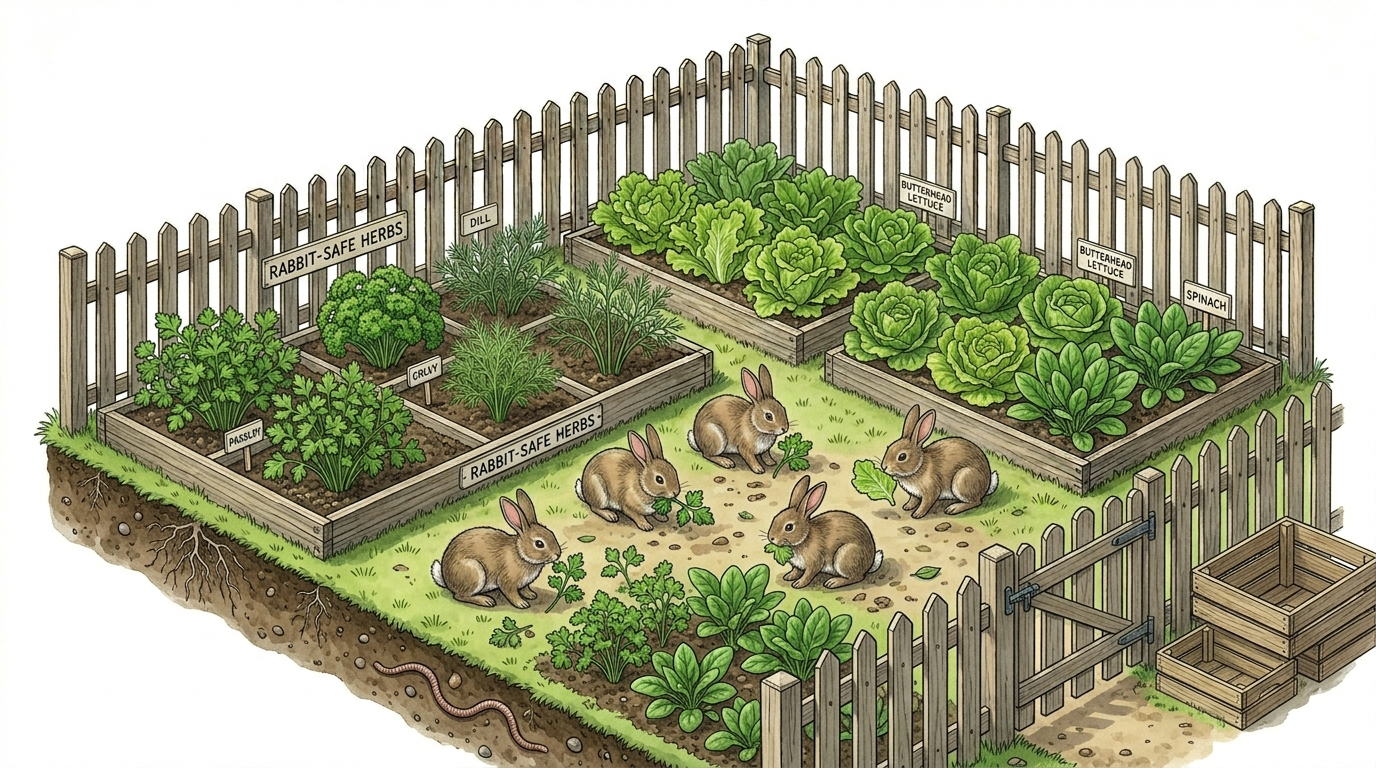
Rabbits in the Garden: Herbs and Vegetables
Learn how to choose suitable herbs and vegetables for rabbits, grow feeding plants, and plan a rabbit-friendly garden.
Guide
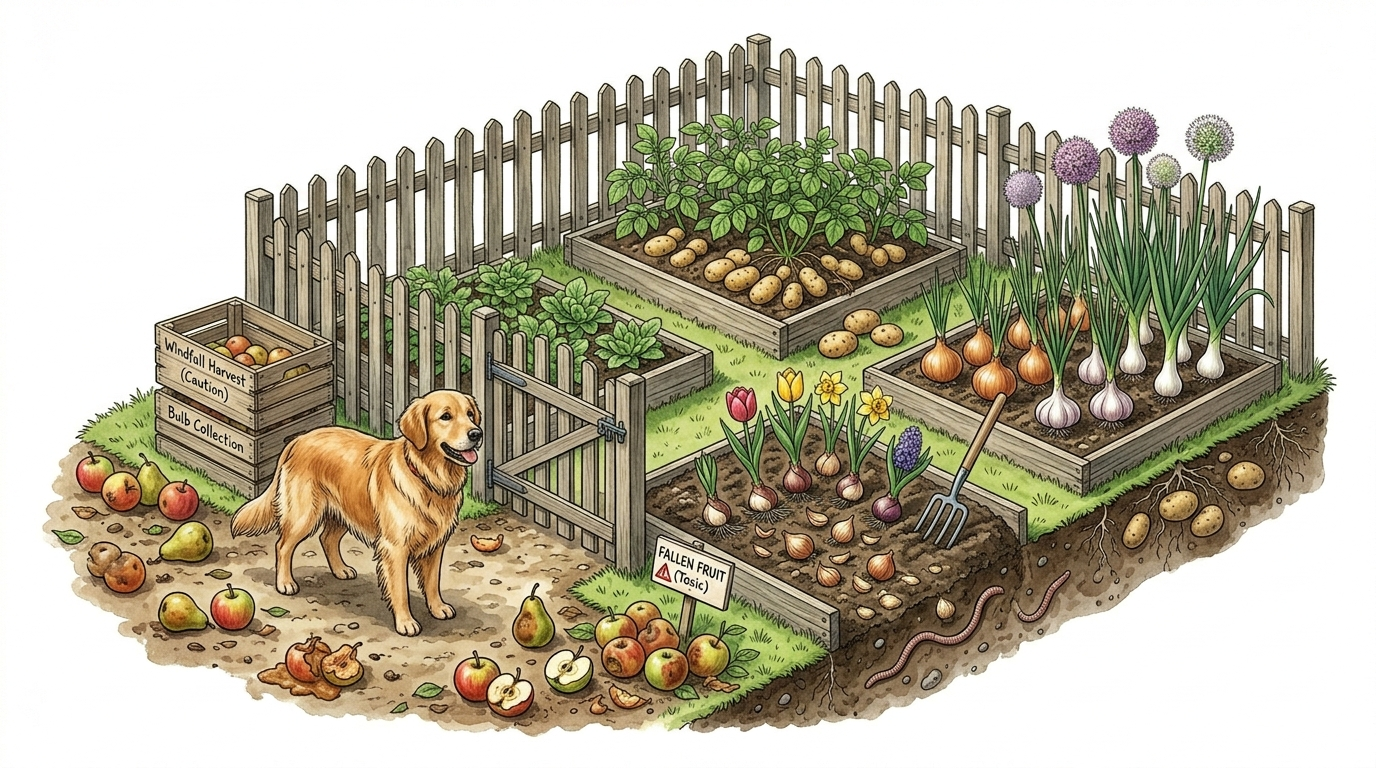
Dogs in the Garden: Windfall Fruit and Risks
Keep your garden dog-safe by managing windfall fruit, seeds, stored crops, and potentially problematic plant parts.
Guide
Horse Pastures and Garden Plants: Safety Checks
Learn how to identify risks near horse pastures, fences, turnout areas, fruit trees, and garden planting zones.
Guide
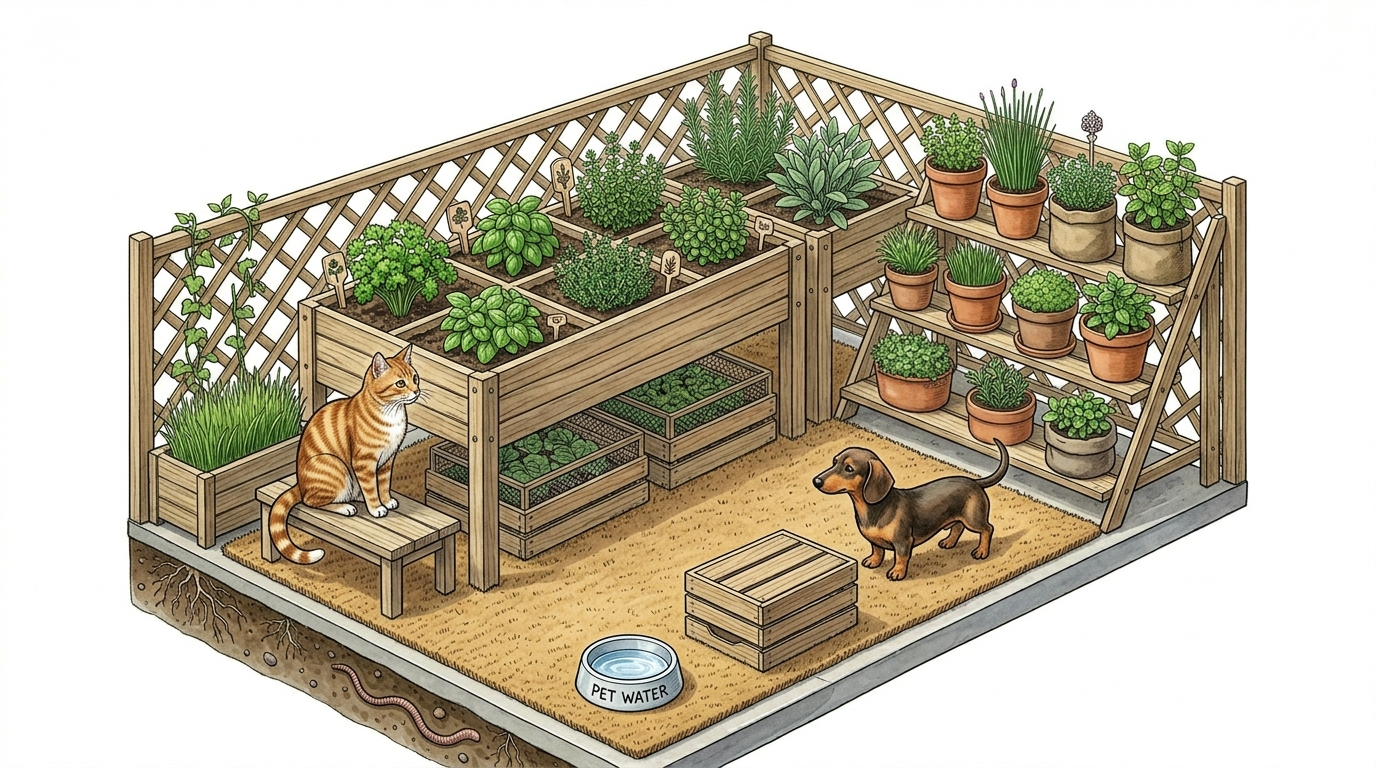
Pet-Safe Herb Gardens for Balconies and Beds
Learn how to create a pet-safe herb garden with suitable herbs, thoughtful layouts, and practical maintenance strategies.
Internal links
Related plants
Garlic
Both belong to the Amaryllidaceae family.
Belongs to the same family (Amaryllidaceae) and genus (Allium), shares similar growth habits and culinary uses.
Onion
Both belong to the Amaryllidaceae family.
Closely related (genus Allium), shares many cultivation characteristics and culinary uses.
Allium
Both belong to the Amaryllidaceae family.
Belongs to the genus Allium, has similar soil requirements and growth periods.
parsley
Both are popular culinary herbs.
Both are light feeders and need only moderate nutrient supply.
Coriander
Both are light feeders and need only moderate nutrient supply.
Both prefer even soil moisture and do not tolerate waterlogging.
Sources
Public sources
- Wikidata entity
Wikidata · 2026-05-15
- GBIF species match
GBIF · 2026-05-15
- Deutschsprachige Wikipedia: Schnittlauch
Wikipedia · 2026-05-15
- English Wikipedia: Chives
Wikipedia · 2026-05-15
- Trefle API: Allium schoenoprasum
Trefle · 2026-05-15
- Perenual API: Allium schoenoprasum
Perenual · 2026-05-15