Plant Profile
CucumberCucumis sativus
Warmth-loving fruit vegetable with high yields.
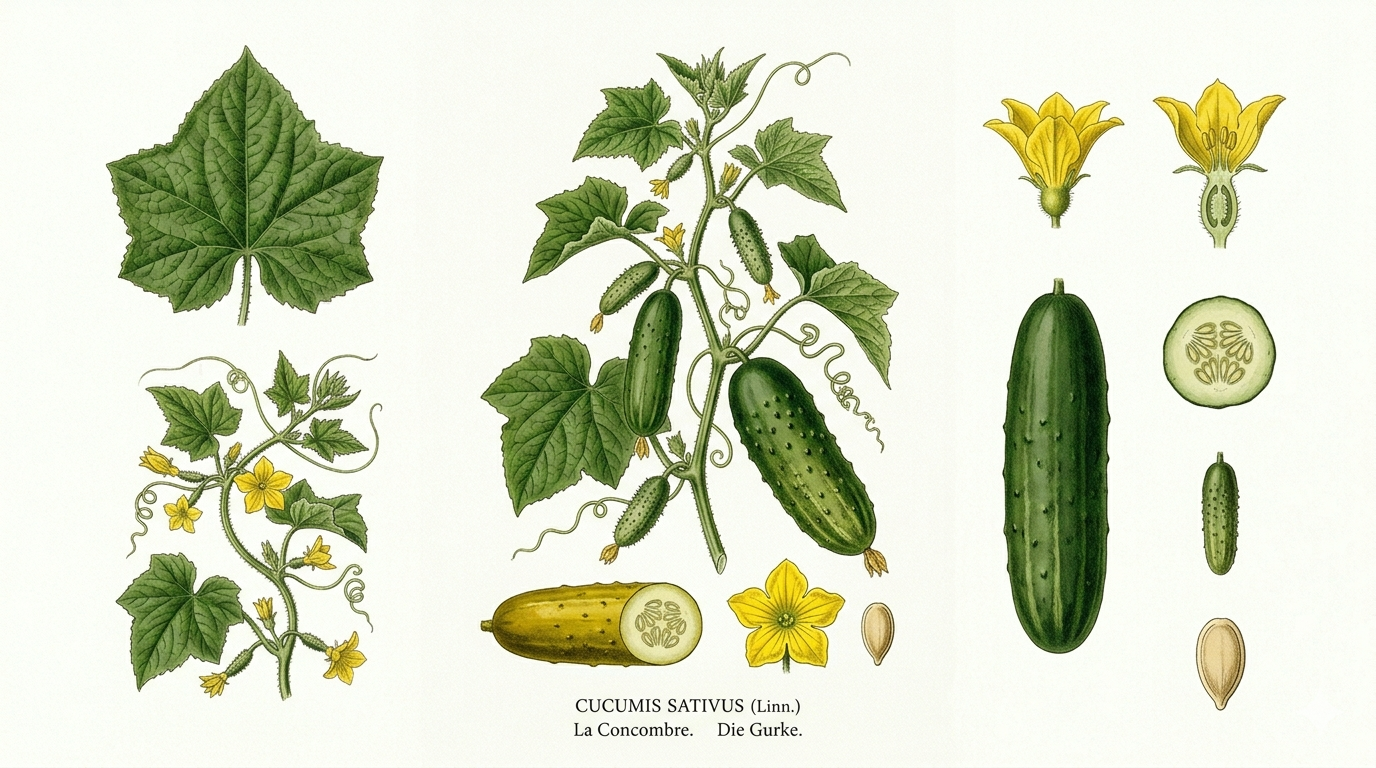
Quick profile
Key data
Suitable growing locations:
Indoor & direct sowing
Cucumber: Sowing and germination
Pre-culture in pots at approx. 20-25°C.
Direct sowing only after the last frost once soil has warmed.
Planting & site
Cucumber: Planting and spacing
Planting out after the last frost; extremely sensitive to cold.
Site & practical notes
Pro tip: Never water with cold tap water; this causes stress and bitter fruits., Vertical benefit: Vertical growing saves space and prevents powdery mildew.
Temperature & frost
Cucumber: Temperature and site
Water & nutrients
Cucumber: Water, nutrients and care
Container & growth
Cucumber: Container, support and growth
Year plan
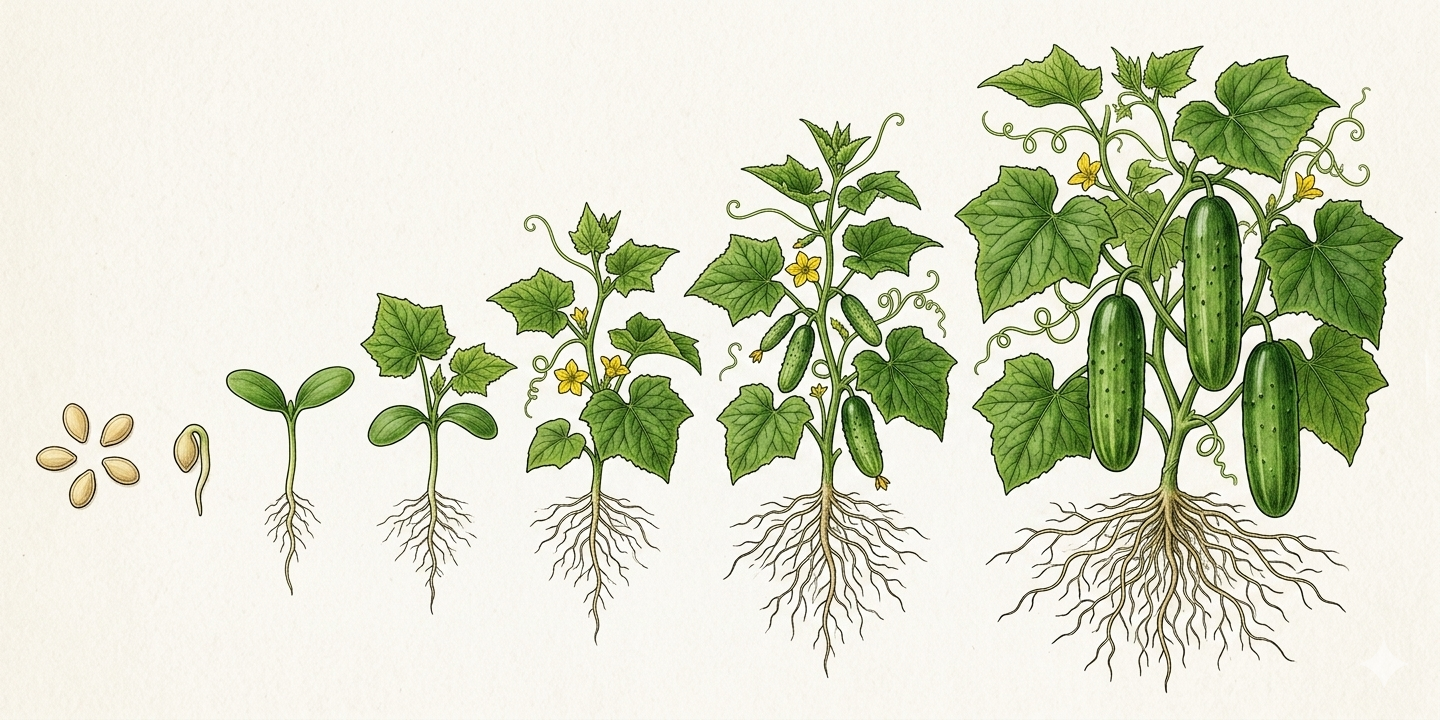
Cucumber Calendar
In July, the big glut begins – time for pickling!
Recurring tasks
Relevant now
June
- No additional single task
Next up
July
- No additional single task
Monthly tasks
Single tasks from monthly data; repeated seasonal windows are shown in the overview above.
January
Quiet month
February
Quiet month
March
No additional single task
April
Direct sowing
- Indoor sowing2 seeds per pot, later remove the weaker seedling.
May
Planting
- Planting outCareful with the root ball; cucumbers hate root disturbance.
June
No additional single task
August
No additional single task
September
No additional single task
October
No additional single task
November
Quiet month
December
Quiet month
Flowering & pollination
Cucumber Flowering & pollination
Flowering period
June to September
Flower type
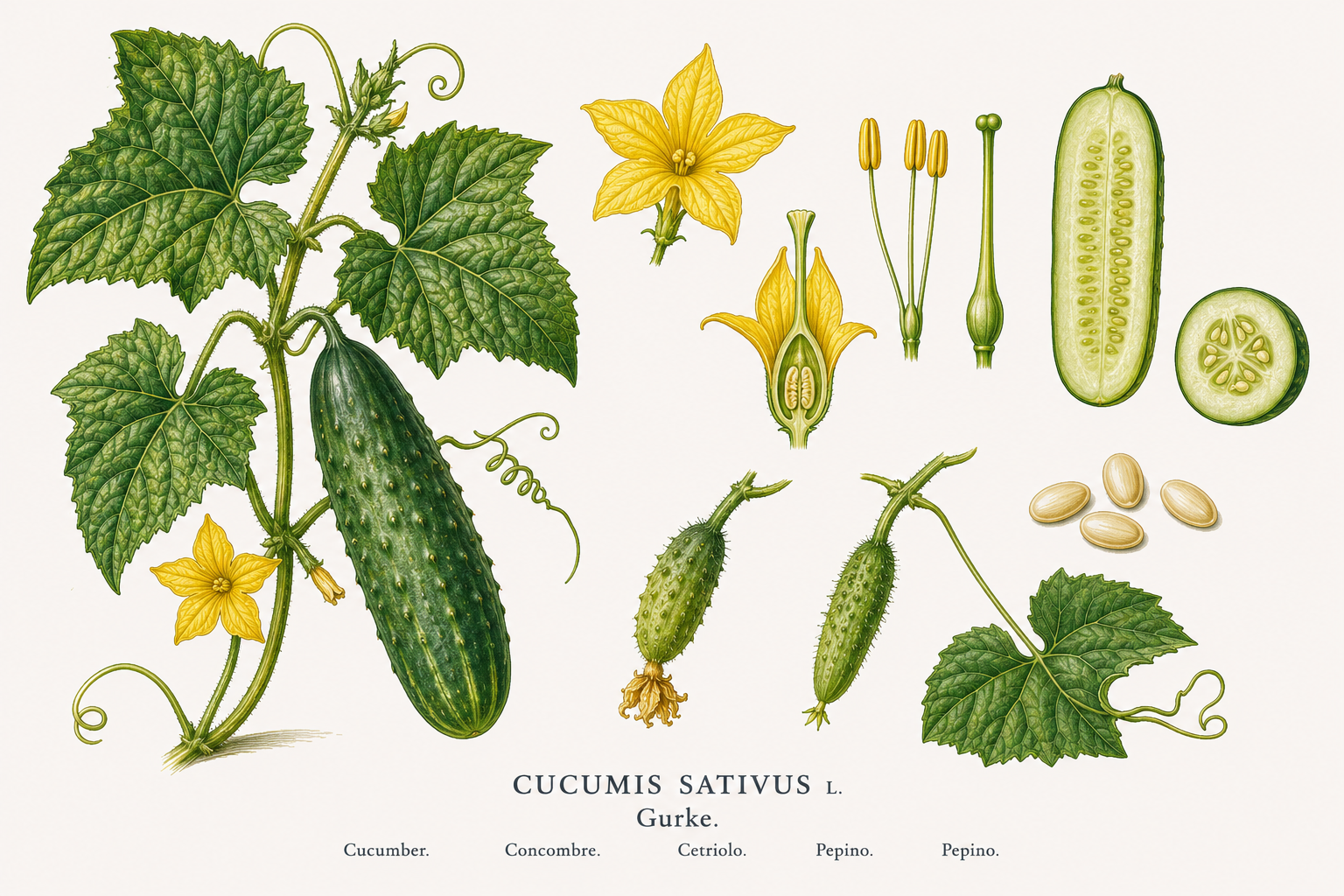
Monoecious, sometimes purely female (gynoecious) in hybrids.
Self-fertility
self_fertile_monoecious
Pollinator needed
yes
Overview
Insect pollination by bees and bumblebees required, except for parthenocarpic varieties.
Notes
Parthenocarpic greenhouse varieties do not require pollination and should be protected from insects to prevent seed formation.
Pruning & care
Cucumber Pruning & care
Pruning type
modified_leader_vining
Pruning timing
Growth control and yield optimization Weekly pinching out of side shoots required.
Remove
Preserve
Avoid
Tools and hygiene
Disinfect tools after each plant to prevent the transmission of viruses (e.g., Cucumber Mosaic Virus).
Companion guide
Cucumber Companion guide
Use & storage
Cucumber Use & storage
Regular harvesting encourages further fruit production.
Storage
Short-term storage (cool pantry)
Storage life
7 to 14 days at 10-12°C.
Harvest
Regular harvesting encourages further fruit production.
Processing
After harvest
Separate from the stem with scissors or a knife; do not pull off.
Edibility & safety
Cucumber Edibility & safety
For people
In brief: which parts are edible, which parts remain risky, and whether raw consumption makes sense.
Safety notes
Caution with bitter-tasting fruits; these contain toxic cucurbitacins and must not be consumed.
Animal safety
This plant is not simply safe or unsafe for animals. 4 animal types have restrictions, so quantity, access, and plant part matter.
Each row shows which parts are more suitable and which parts are critical.
Companion animals
 Dog
DogFruit, Flowers
Stems, Leaves, Seeds
Fruit, Flowers
Stems, Leaves, Seeds
Overconsumption may cause gastrointestinal upset
usually no action needed
Cucumbers are safe for dogs in normal amounts. The fruit is non-toxic and often used as a low-calorie treat. Exercise caution with bitter-tasting fruits, as they may contain cucurbitacins. Leaves and roots are not recommended but are not relevant when feeding the fruit.
Open animal page Cat
CatFruit
Stems, Leaves, Seeds
Fruit
Stems, Leaves, Seeds
Overconsumption may cause gastrointestinal upset
 Rabbit
Fruit
Leaves (hairy/rough), Roots, Bitter fruits
Fruit
Leaves (hairy/rough), Roots, Bitter fruits
Bitter taste of fruit, Consumption of leaves or roots
Gastrointestinal irritation, Diarrhea
observe
Cucumber fruit is suitable for rabbits in small amounts as a treat. Leaves, roots, and bitter fruits contain cucurbitacins and may cause gastrointestinal upset. Only feed non-bitter fruit.
Open animal page Guinea pig
Fruit
Leaves, Stems, Roots
Fruit
Leaves, Stems, Roots
Consumption of leaves or stems, Consumption of bitter-tasting fruits
Gastrointestinal irritation, Vomiting, Diarrhea
observe
Cucumber fruit is suitable for guinea pigs in small amounts as a treat. Leaves, stems, roots, and bitter fruits contain cucurbitacins and may cause gastrointestinal upset. Do not use as primary feed. Remove immediately if bitter taste is detected.
Open animal page Hamster
Fruit (flesh), Flowers
Leaves (hairy/rough), Roots, Bitter fruits
Fruit (flesh), Flowers
Leaves (hairy/rough), Roots, Bitter fruits
Bitter taste indicates cucurbitacins, Overconsumption may cause diarrhea
Gastrointestinal irritation, Vomiting, Diarrhea
observe
Cucumber flesh is suitable for hamsters in small amounts as a treat. Bitter-tasting fruits contain toxic cucurbitacins and must be avoided. Leaves and roots are not recommended due to potential irritants and lower digestibility.
Open animal page Budgie
Fruit
Leaves, Stems, Roots
Fruit
Leaves, Stems, Roots
Bitter taste indicates cucurbitacins, Overfeeding may cause diarrhea
Gastrointestinal irritation, Vomiting, Diarrhea
observe
Cucumber fruit is suitable for budgies in small amounts as a treat. Leaves, stems, roots, and bitter fruits contain cucurbitacins and should be avoided. Immediately remove and do not feed bitter-tasting fruits. If large amounts or toxic parts are ingested, observe for symptoms and consult a veterinarian if symptoms persist.
Open animal pageFarm animals
 Horse
HorseFruit
Stems, Leaves, Seeds
Fruit
Stems, Leaves, Seeds
Overconsumption may cause gastrointestinal upset due to high water and fiber content
 Chicken
Fruit
Leaves, Roots, Bitter fruits
Fruit
Leaves, Roots, Bitter fruits
Consumption of leaves or roots, Consumption of bitter-tasting fruits
Gastrointestinal irritation, Vomiting, Diarrhea
observe
The fruit of cucumber is suitable for chickens in small amounts as a treat. Leaves, roots, and bitter-tasting fruits contain cucurbitacins and may cause gastrointestinal discomfort. Bitter fruits should not be fed. If large amounts are consumed or symptoms occur, a veterinarian should be consulted.
Open animal page Duck
DuckFruit
Leaves, Stems, Roots
Fruit
Leaves, Stems, Roots
Bitter-tasting fruits, Overconsumption of leaves or stems
Gastrointestinal irritation, Vomiting, Diarrhea
observe
No direct species-specific source was found for ducks. This is a cautious inference from the geese profile and the known plant-part risks.
Open animal page Goose
GooseFruit
Leaves, Stems, Roots
Fruit
Leaves, Stems, Roots
Bitter-tasting fruits, Overconsumption of leaves or stems
Gastrointestinal irritation, Vomiting, Diarrhea
observe
Cucumber fruit is safe for geese in small amounts and can be offered as a treat. Leaves, stems, and roots contain cucurbitacins and should be avoided. Bitter-tasting fruits are toxic and must not be fed.
Open animal page Sheep
SheepFruit
Leaves, Stems, Roots
Fruit
Leaves, Stems, Roots
Bitter-tasting fruits, Overconsumption of leaves or stems
Gastrointestinal irritation, Diarrhea, Vomiting
observe
Cucumber fruit is suitable for sheep in small amounts as a treat. Leaves, stems, and roots contain cucurbitacins and may cause gastrointestinal upset. Avoid bitter-tasting fruits, as they may contain high concentrations of toxic cucurbitacins.
Open animal page Goat
GoatFruit
Leaves, Stems, Roots
Fruit
Leaves, Stems, Roots
Bitter taste, Overconsumption of leaves or stems
Gastrointestinal irritation, Vomiting, Diarrhea
observe
Cucumber fruit is suitable for goats in small amounts as a treat. Leaves, stems, roots, and bitter-tasting fruits contain cucurbitacins and may cause gastrointestinal upset. Discontinue feeding if bitter taste is observed and consult a veterinarian if symptoms persist.
Open animal page Cattle
Fruit
Leaves, Stems, Roots
Fruit
Leaves, Stems, Roots
Consumption of bitter fruits, Excessive consumption of leaves or stems
Gastrointestinal irritation, Vomiting, Diarrhea
observe
Cucumber fruit is generally safe for cattle in moderation. Leaves, stems, roots, and bitter fruits contain cucurbitacins and may cause gastrointestinal irritation. No evidence of severe poisoning from normal fruit consumption. If bitter fruits or large amounts of leaves/stems are consumed, observe the animal and consult a veterinarian if symptoms persist.
Open animal page Pig
PigNo suitable parts listed
No risk parts listed
No suitable parts listed
No risk parts listed
unknown
The fruit of cucumber is safe for pigs in moderation and can serve as a hydrating treat. Leaves, stems, roots, and bitter fruits contain cucurbitacins and may cause gastrointestinal upset. Bitter fruits must be avoided. If large amounts are ingested or symptoms occur, a veterinarian should be consulted.
Open animal pageThese guidelines are for general information only and do not replace veterinary diagnosis. If critical plant parts were ingested or the animal shows unusual behaviour or symptoms, seek veterinary advice.
Max risk
3 / 5
Highest status
not established
Urgency
unknown
Saving seed
Cucumber Saving seed
Seed viability
3 - 6 years

Practical tips
Cucumber Practical tips
Common beginner mistakes
Planting out too early before the last frost.
Success pattern
Weekly fertilization leads to massive harvests.
High-impact tips
Mulching keeps soil moisture consistent.
Grower observations
Grafted cucumbers are significantly more robust against soil-borne diseases.
Plant Profile
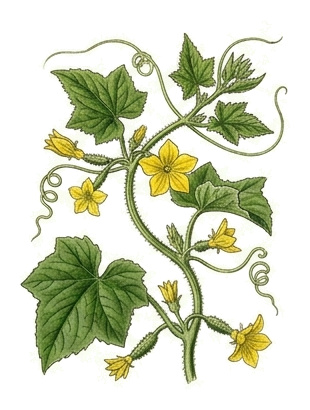
Additional plant images
Health
Pests, Diseases
Pests
Aphids
Curled leaves, sticky honeydew.
Spider mites
Fine webs, yellow spotting on upper leaf surfaces.
Diseases
Powdery mildew
White, powdery coating on upper leaf surfaces.
Downy mildew
Yellow, angular spots on top, grey coating underneath.
Deficiencies
Nitrogen deficiency
Pale green to yellow discoloration of the entire plant.
Plant health
Diagnosis help
Cucumber Diagnosis help
Pest groups
Disease groups
Prevention
Diagnosis
Regularly check the undersides of leaves for pests.
Cultural prevention
Monitoring
Weekly inspection of shoot tips
First response
Diagnostic rules
Sudden wilting despite moist soil
Possible causes: Fusarium, Verticillium, Root rot
- Check stem base for rot
- Inspect root health
FAQ
Why are the small cucumber starts falling off?
Usually due to lack of pollination or temperatures being too low.
Is Cucumber safe for Dog?
Cucumber is classified as selected parts only for Dog. Risk: 3 / 5. Urgency: usually no action needed. Cucumbers are safe for dogs in normal amounts. The fruit is non-toxic and often used as a low-calorie treat. Exercise caution with bitter-tasting fruits, as they may contain cucurbitacins. Leaves and roots are not recommended but are not relevant when feeding the fruit.
Is Cucumber safe for Cat?
Cucumber is classified as selected parts only for Cat. Risk: 3 / 5. Urgency: usually no action needed. No reliable species-specific assessment is available.
Is Cucumber safe for Rabbit?
Cucumber is classified as moderation only for Rabbit. Risk: unknown. Urgency: observe. Cucumber fruit is suitable for rabbits in small amounts as a treat. Leaves, roots, and bitter fruits contain cucurbitacins and may cause gastrointestinal upset. Only feed non-bitter fruit.
Is Cucumber safe for Horse?
Cucumber is classified as selected parts only for Horse. Risk: 3 / 5. Urgency: usually no action needed. No reliable species-specific assessment is available.
Guides
Related guides
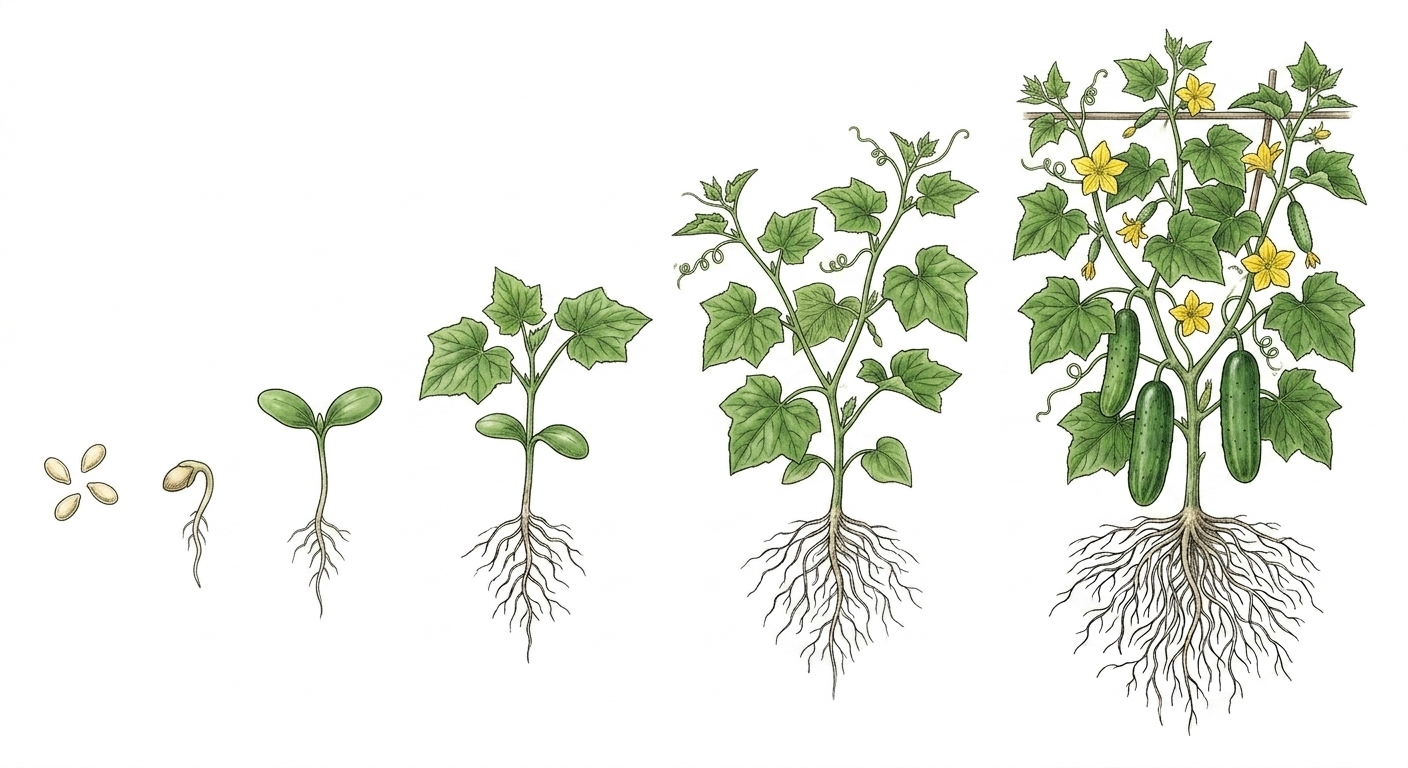
Guide
Growing Cucumbers: Starting, Supports and Harvest
Learn how to grow cucumbers successfully with indoor starting, transplanting, trellises, watering, and regular harvesting.
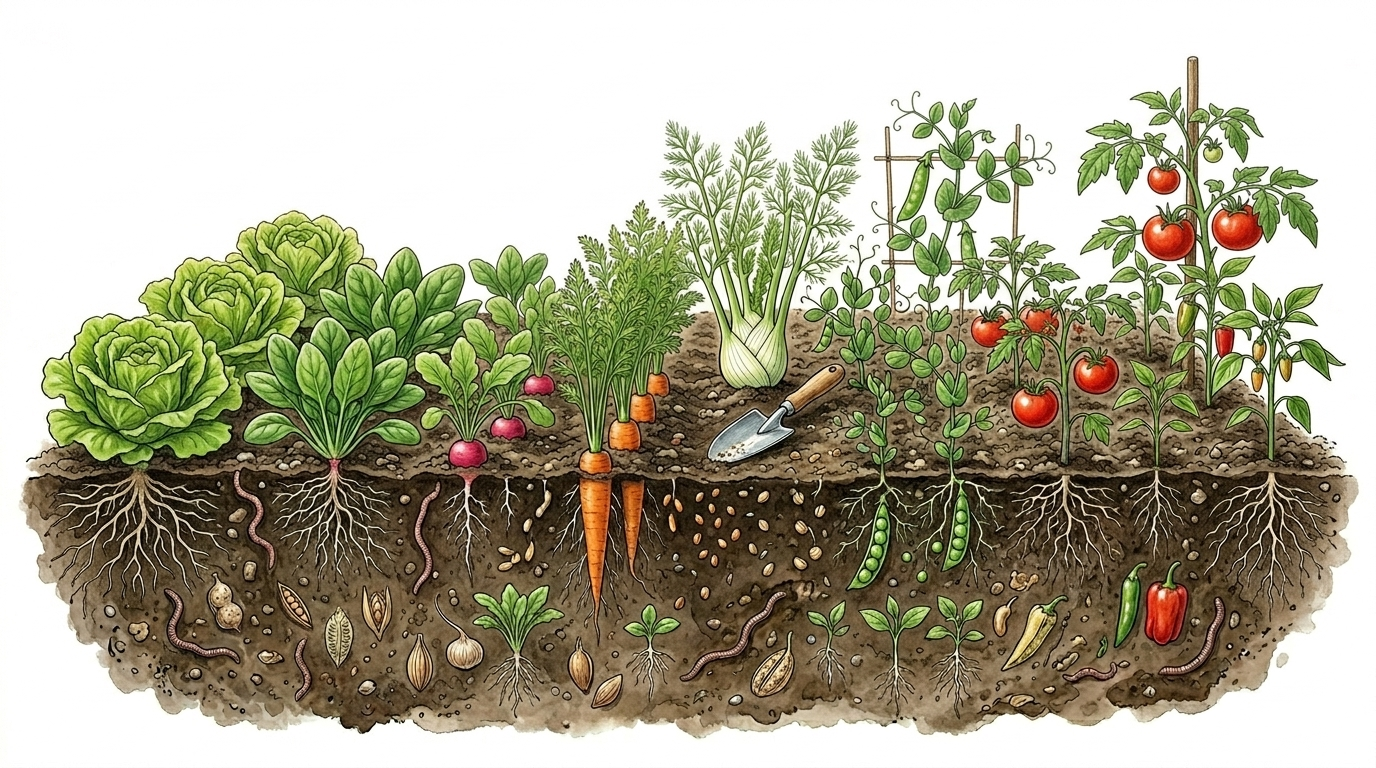
Guide
May Planting Calendar: Transplanting and Succession Sowing
What to plant and sow in May: transplant tender vegetables, continue succession sowing, and make the most of garden beds.
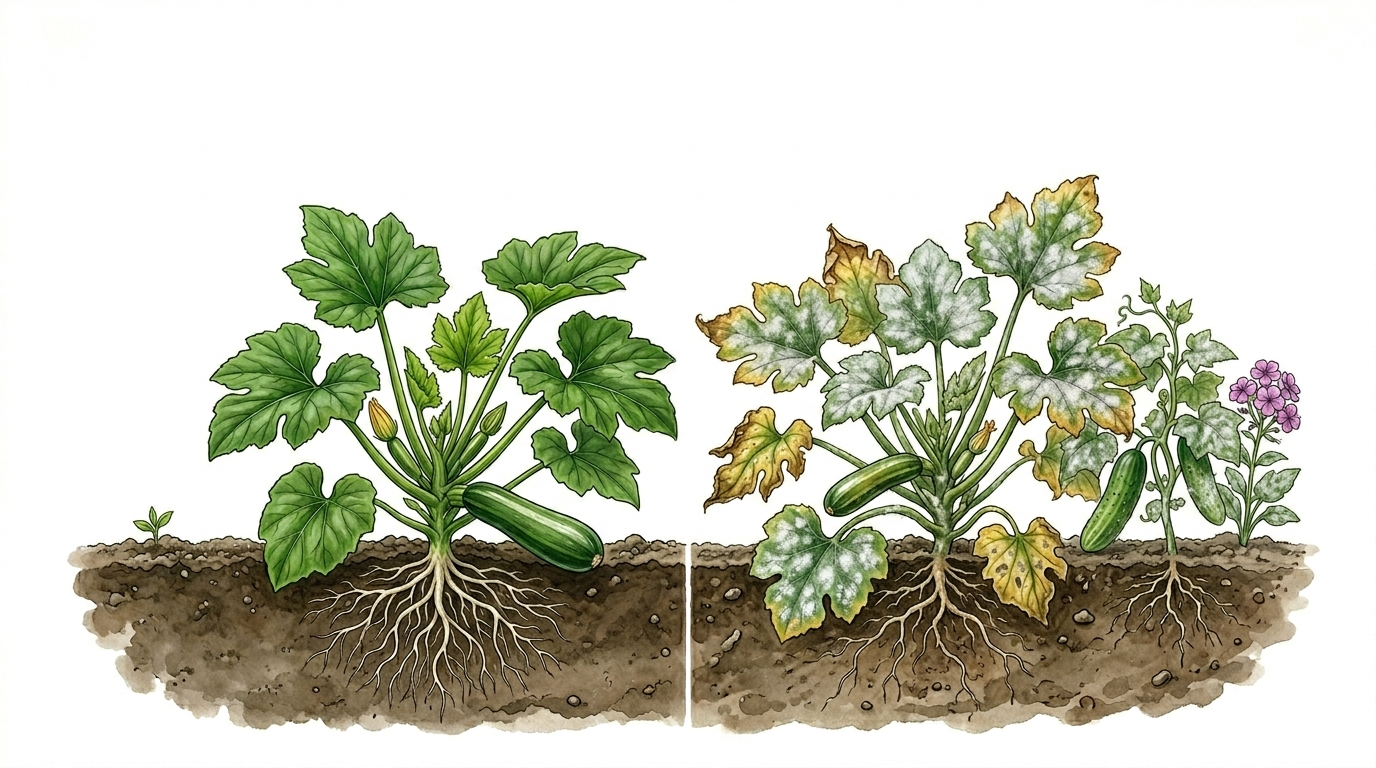
Guide
Powdery Mildew in the Garden: Prevention and Care
Learn how to recognize powdery mildew early, improve airflow, and care for affected vegetables in the garden.
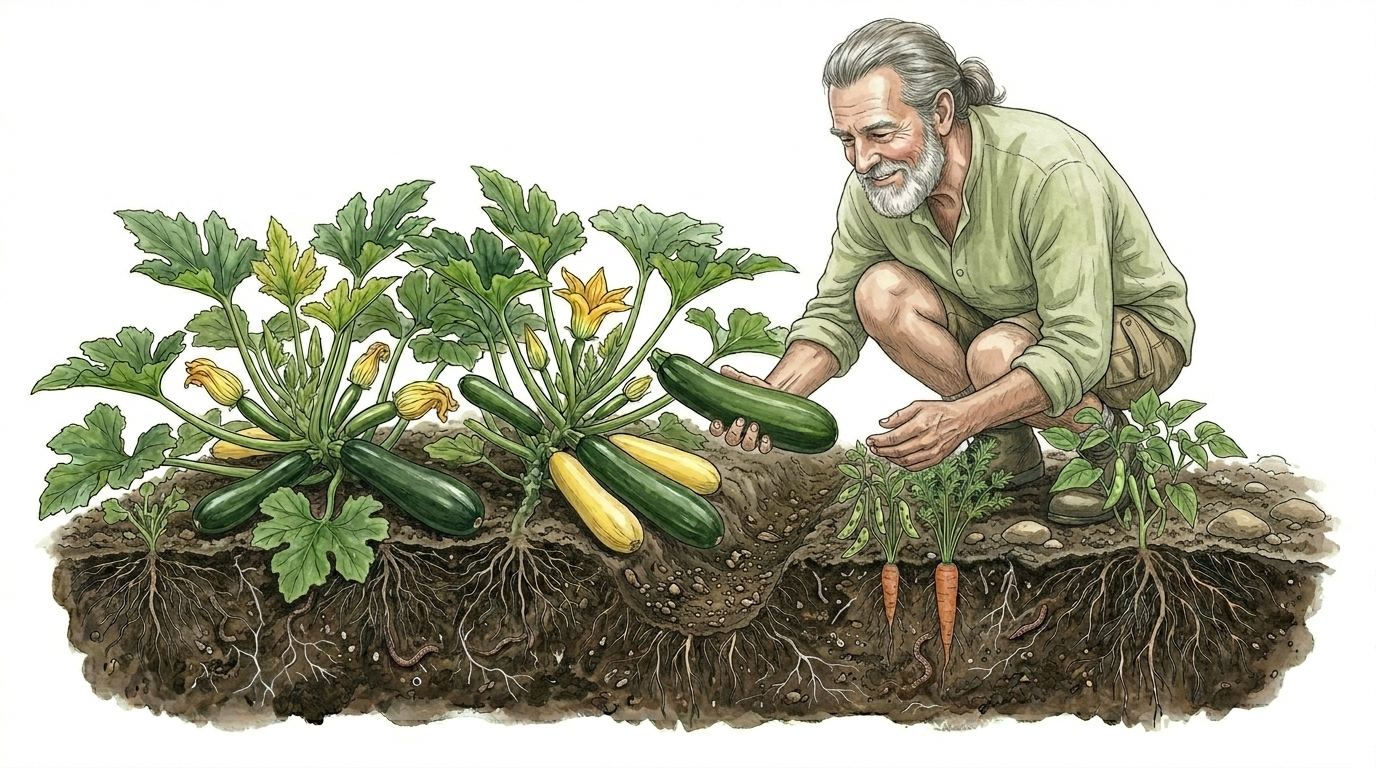
Guide
Growing Zucchini: Spacing, Pollination and Mildew
Learn how to grow zucchini with the right site, spacing, pollination support, and practical tips to prevent powdery mildew.
Internal links
Related plants
Giant Pumpkin
Muskmelon
Similar foliage and vining habit in young plants.
Celery
Watermelon
Both are cold-sensitive cucurbits.
Borage
Known as 'Cucumber herb' due to its similar aroma.
Sources
Public sources
- Wikidata entity
Wikidata · 2026-05-13
- GBIF species match
GBIF · 2026-05-13
- Deutschsprachige Wikipedia: Gurke
Wikipedia · 2026-05-13
- English Wikipedia: Cucumber
Wikipedia · 2026-05-13