Plant Profile
Spaghetti squashCucurbita pepo
The flesh separates into spaghetti-like strands after cooking.
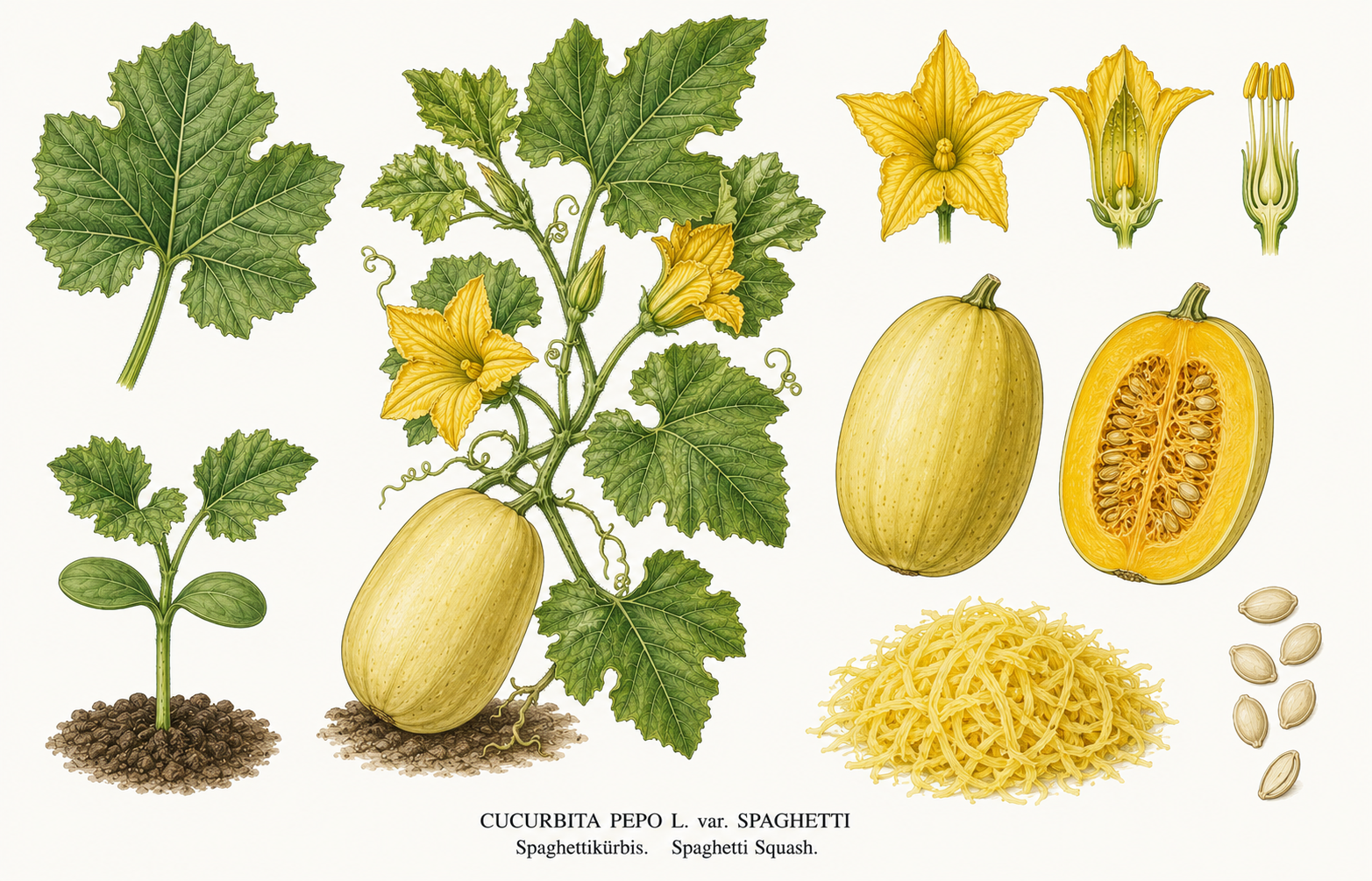
Quick profile
Key data
Suitable growing locations:
Indoor & direct sowing
Spaghetti squash: Sowing and germination
Start sowing indoors from early March to enable an early harvest.
Direct sow outdoors from mid-May after the last frosts.
Planting & site
Spaghetti squash: Planting and spacing
Transplant seedlings outdoors once all danger of frost has passed (after the Ice Saints).
Site & practical notes
Temperature & frost
Spaghetti squash: Temperature and site
Water & nutrients
Spaghetti squash: Water, nutrients and care
Container & growth
Spaghetti squash: Container, support and growth
Year plan
Spaghetti squash Calendar
September is the peak season for spaghetti squash – harvest and enjoy!
Relevant now
June
- WateringWater regularly and deeply, especially during dry periods.
- WeedingMinimize competition from weeds.
Next up
July
- FertilizingTop-dress with organic fertilizer or compost if needed.
- Pest and disease controlRegularly check for signs of pests (e.g., aphids, squash vine borer) and diseases (e.g., powdery mildew).
Monthly tasks
Single tasks from monthly data; repeated seasonal windows are shown in the overview above.
January
Quiet month
February
Quiet month
March
Direct sowing
- Sow spaghetti squash (pre-culture)indoors: Sow in pots or multi-cell trays at approx. 20-25°C.
April
Direct sowing
- Sow spaghetti squash (pre-culture)indoors: Second sowing if needed for a later harvest.
Planting
- Harden off young plantsoutdoors: Gradually acclimatize plants to outdoor temperatures.
May
Direct sowing
- Direct sow spaghetti squashoutdoors: Only if the soil is already warm enough (min. 15°C).
Planting
- Plant out spaghetti squashoutdoors: After the last frosts, when the soil has warmed up. Ensure adequate spacing.
June
Growing
- WateringWater regularly and deeply, especially during dry periods.
- WeedingMinimize competition from weeds.
August
Harvest
- Start harvestingHarvest first fruits as they ripen. This encourages further fruit production.
September
Harvest
- Main harvestMost fruits are now ready for harvest. Bring in all fruits before the first frost.
October
Harvest
- Final harvest and storageHarvest all remaining fruits before the first frost. Store well-keeping fruits in a cool, dry place.
November
Quiet month
December
Quiet month
Flowering & pollination
Spaghetti squash Flowering & pollination
Self-fertility
cross-pollinating
Pollinator needed
yes
Overview
Spaghetti squash is monoecious (separate male and female flowers on one plant) and is primarily pollinated by insects. Cross-pollination with other squash varieties is possible and can affect fruit characteristics.
Notes
Bees and other pollinators are essential for good fruit set. A bee-friendly garden promotes pollination.
Pruning & care
Spaghetti squash Pruning & care
Notes
No conventional pruning is necessary for spaghetti squash. Light thinning may improve air circulation in dense growth.
Tools and hygiene
Not applicable. If shoots are removed, clean hands or clean secateurs are sufficient.
Companion guide
Spaghetti squash Companion guide
Use & storage
Spaghetti squash Use & storage
Fruits are ripe when they feel hard and the vines begin to dry. Harvest before the first frost.
Storage
Winter storage
Storage life
3-6 months under optimal conditions (approx. 10-15°C, high humidity).
Harvest
Fruits are ripe when they feel hard and the vines begin to dry. Harvest before the first frost.
Processing
After harvest
Handle harvested squash carefully to avoid damage. Leave the stem as long as possible. Allow to dry thoroughly.
Edibility & safety
Spaghetti squash Edibility & safety
For people
In brief: which parts are edible, which parts remain risky, and whether raw consumption makes sense.
Safety notes
No known toxic properties when consuming the ripe fruit.
Animal safety
This plant is not simply safe or unsafe for animals. 14 animal types have restrictions, so quantity, access, and plant part matter.
Each row shows which parts are more suitable and which parts are critical.
Companion animals
 Dog
DogFlesh (cooked)
Seeds (raw), Rind
Flesh (cooked)
Seeds (raw), Rind
Raw consumption of seeds or rind, Excessive consumption
Gastrointestinal upset, Vomiting, Diarrhea
observe
Cooked spaghetti squash flesh is safe for dogs in moderation and can be used as a treat. Raw flesh, seeds, and rind contain cucurbitacins, which can cause gastrointestinal irritation. Seeds should be roasted before feeding to reduce bitter compounds. Rind is not recommended due to its hardness and potential residue. Consumption of large amounts of raw hazardous parts warrants veterinary observation. If symptoms…
Open animal page Cat
CatFlesh (cooked)
No risk parts listed
Flesh (cooked)
No risk parts listed
usually no action needed
No specific toxic properties known for cats. Cooked flesh in small amounts is possible as a treat. Raw parts and seeds are not recommended due to bitter compounds and potential gastrointestinal irritation.
Open animal page Rabbit
Flesh (cooked)
No risk parts listed
Flesh (cooked)
No risk parts listed
usually no action needed
No specific toxic properties known for rabbits. Cooked flesh in small amounts is possible as a treat. Raw parts and seeds are not recommended due to bitter compounds and potential gastrointestinal irritation.
Open animal page Guinea pig
Flesh (cooked)
No risk parts listed
Flesh (cooked)
No risk parts listed
usually no action needed
No specific toxic properties known for guinea pigs. Cooked flesh in small amounts is possible as a treat. Raw parts and seeds are not recommended due to bitter compounds and potential gastrointestinal irritation.
Open animal page Hamster
Flesh (cooked)
No risk parts listed
Flesh (cooked)
No risk parts listed
usually no action needed
No specific toxic properties known for hamsters. Cooked flesh in small amounts is possible as a treat. Raw parts and seeds are not recommended due to bitter compounds and potential gastrointestinal irritation.
Open animal page Budgie
Flesh (cooked)
No risk parts listed
Flesh (cooked)
No risk parts listed
usually no action needed
No specific toxic properties known for budgies. Cooked flesh in small amounts is possible as a treat. Raw parts and seeds are not recommended due to bitter compounds and potential gastrointestinal irritation.
Open animal pageFarm animals
 Horse
HorseFlesh (cooked)
Seeds, Rind
Flesh (cooked)
Seeds, Rind
Overconsumption, Consumption of seeds or rind
Gastrointestinal upset, Diarrhea
contact a vet if symptoms appear
Cooked spaghetti squash flesh is suitable for horses in small amounts as a treat. Seeds and hard rind contain potentially irritating cucurbitacins and should not be fed. Overconsumption may cause gastrointestinal upset.
Open animal page Chicken
Flesh (cooked)
No risk parts listed
Flesh (cooked)
No risk parts listed
usually no action needed
No specific toxic properties known for chickens. Cooked flesh in small amounts is possible as a treat. Raw parts and seeds are not recommended due to bitter compounds and potential gastrointestinal irritation.
Open animal page Duck
DuckFlesh (cooked)
No risk parts listed
Flesh (cooked)
No risk parts listed
usually no action needed
No specific toxic properties known for ducks. Cooked flesh in small amounts is possible as a treat. Raw parts and seeds are not recommended due to bitter compounds and potential gastrointestinal irritation.
Open animal page Goose
GooseFlesh (cooked)
Seeds, Rind
Flesh (cooked)
Seeds, Rind
Raw consumption, Overconsumption, Consumption of seeds or rind
Gastrointestinal upset, Vomiting, Diarrhea
observe
Cooked spaghetti squash flesh is suitable for geese in small amounts as a treat. Seeds and hard rind contain potentially irritating cucurbitacins and should not be fed. Overconsumption may cause gastrointestinal upset. No indications of serious toxicity when flesh is fed appropriately.
Open animal page Sheep
SheepFlesh (cooked)
Seeds (raw), Rind
Flesh (cooked)
Seeds (raw), Rind
Raw seed consumption, Overconsumption
Gastrointestinal upset, Vomiting, Diarrhea
observe
Cooked spaghetti squash flesh is suitable for sheep in small amounts as a treat. Raw flesh, seeds, and hard rind may cause gastrointestinal upset due to cucurbitacins and poor digestibility. No known cases of severe poisoning in sheep. Occasionally used as feed but not recommended as a primary component.
Open animal page Goat
GoatFlesh (cooked)
No risk parts listed
Flesh (cooked)
No risk parts listed
usually no action needed
No specific toxic properties known for goats. Cooked flesh in small amounts is possible as a treat. Raw parts and seeds are not recommended due to bitter compounds and potential gastrointestinal irritation.
Open animal page Cattle
Flesh (cooked)
Seeds, Rind
Flesh (cooked)
Seeds, Rind
Overconsumption, Consumption of seeds or rind
Gastrointestinal upset, Diarrhea
contact a vet if symptoms appear
Cooked spaghetti squash flesh is suitable for cattle in small amounts as a treat. Seeds and hard rind may cause gastrointestinal upset and contain potentially irritating cucurbitacins. No indications of severe poisoning in cattle, but caution with unprocessed parts.
Open animal page Pig
PigFlesh (cooked)
No risk parts listed
Flesh (cooked)
No risk parts listed
usually no action needed
No specific toxic properties known for pigs. Cooked flesh in small amounts is possible as a treat. Raw parts and seeds are not recommended due to bitter compounds and potential gastrointestinal irritation.
Open animal pageThese guidelines are for general information only and do not replace veterinary diagnosis. If critical plant parts were ingested or the animal shows unusual behaviour or symptoms, seek veterinary advice.
Max risk
unknown
Highest status
selected parts only
Urgency
contact a vet if symptoms appear
Saving seed
Spaghetti squash Saving seed
Seed viability
3 - 5 years
Practical tips
Spaghetti squash Practical tips
Common beginner mistakes
Sowing too late so that fruits don't mature before frost.
Success pattern
Starting indoors gives a clear head start and a richer harvest.
High-impact tips
Mulching reduces watering needs and suppresses weeds.
Grower observations
Spaghetti squash often ripens sooner than expected – the first fruits are ready as early as August.
Plant Profile
Additional plant images
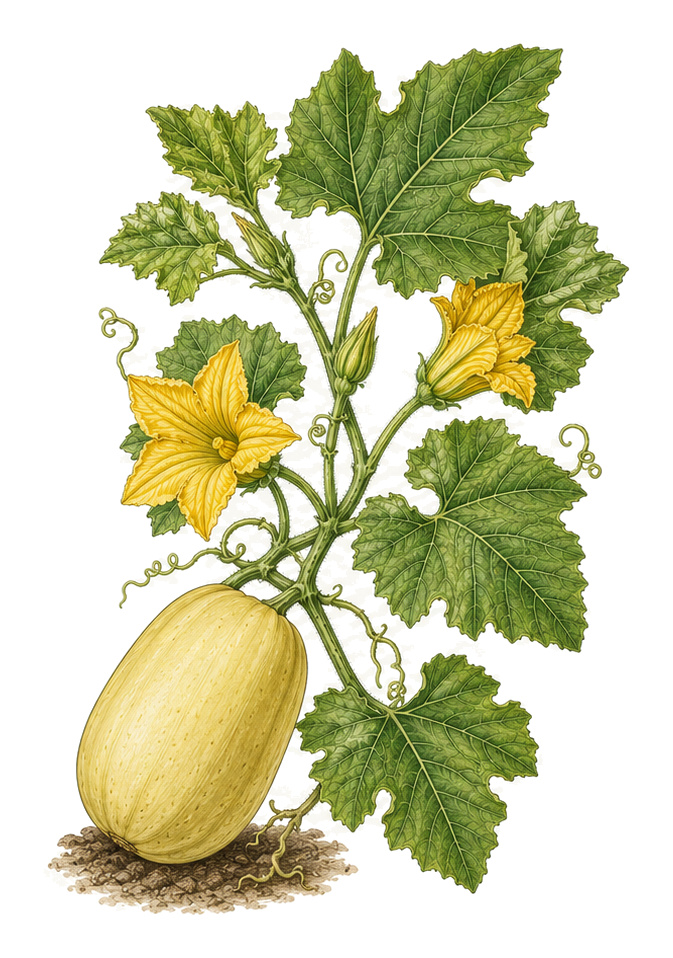
Health
Pests, Diseases
Plant health
Diagnosis help
Spaghetti squash Diagnosis help
Pest groups
Disease groups
Prevention
Diagnosis
Accurate diagnosis of pests, diseases, or nutrient deficiencies is crucial for correct control measures. Observe symptoms carefully and compare them with descriptions.
Cultural prevention
Monitoring
First response
Diagnostic rules
White, powdery coating on leaves and stems.
Possible causes: Powdery mildew
- Check humidity and air circulation.
- Examine infected plant parts for fungal spores.
Wilting shoots, often starting at the base, with boreholes in the stem.
Possible causes: Kurbisfliege
- Inspect stem base for larvae or signs of boring.
- Check soil around the plant for pupae.
FAQ
When is the best time to plant spaghetti squash?
Direct sow outdoors from mid-May; start indoors from March/April.
How long can spaghetti squash be stored?
Stored cool and dry (10–15°C) it keeps for 3–6 months.
Do you have to peel spaghetti squash?
No, the skin is too hard before cooking; after cooking, the flesh can be scraped out with a fork.
Is Spaghetti squash safe for Dog?
Spaghetti squash is classified as selected parts only for Dog. Risk: unknown. Urgency: observe. Cooked spaghetti squash flesh is safe for dogs in moderation and can be used as a treat. Raw flesh, seeds, and rind contain cucurbitacins, which can cause gastrointestinal irritation. Seeds should be roasted before feeding to reduce bitter compounds. Rind is not recommended due to its hardness and potential residue. Consumption of large amounts of raw hazardous parts warrants veterinary observation. If symptoms…
Is Spaghetti squash safe for Cat?
Spaghetti squash is classified as selected parts only for Cat. Risk: unknown. Urgency: usually no action needed. No specific toxic properties known for cats. Cooked flesh in small amounts is possible as a treat. Raw parts and seeds are not recommended due to bitter compounds and potential gastrointestinal irritation.
Is Spaghetti squash safe for Rabbit?
Spaghetti squash is classified as selected parts only for Rabbit. Risk: unknown. Urgency: usually no action needed. No specific toxic properties known for rabbits. Cooked flesh in small amounts is possible as a treat. Raw parts and seeds are not recommended due to bitter compounds and potential gastrointestinal irritation.
Is Spaghetti squash safe for Guinea pig?
Spaghetti squash is classified as selected parts only for Guinea pig. Risk: unknown. Urgency: usually no action needed. No specific toxic properties known for guinea pigs. Cooked flesh in small amounts is possible as a treat. Raw parts and seeds are not recommended due to bitter compounds and potential gastrointestinal irritation.
Guides
Related guides
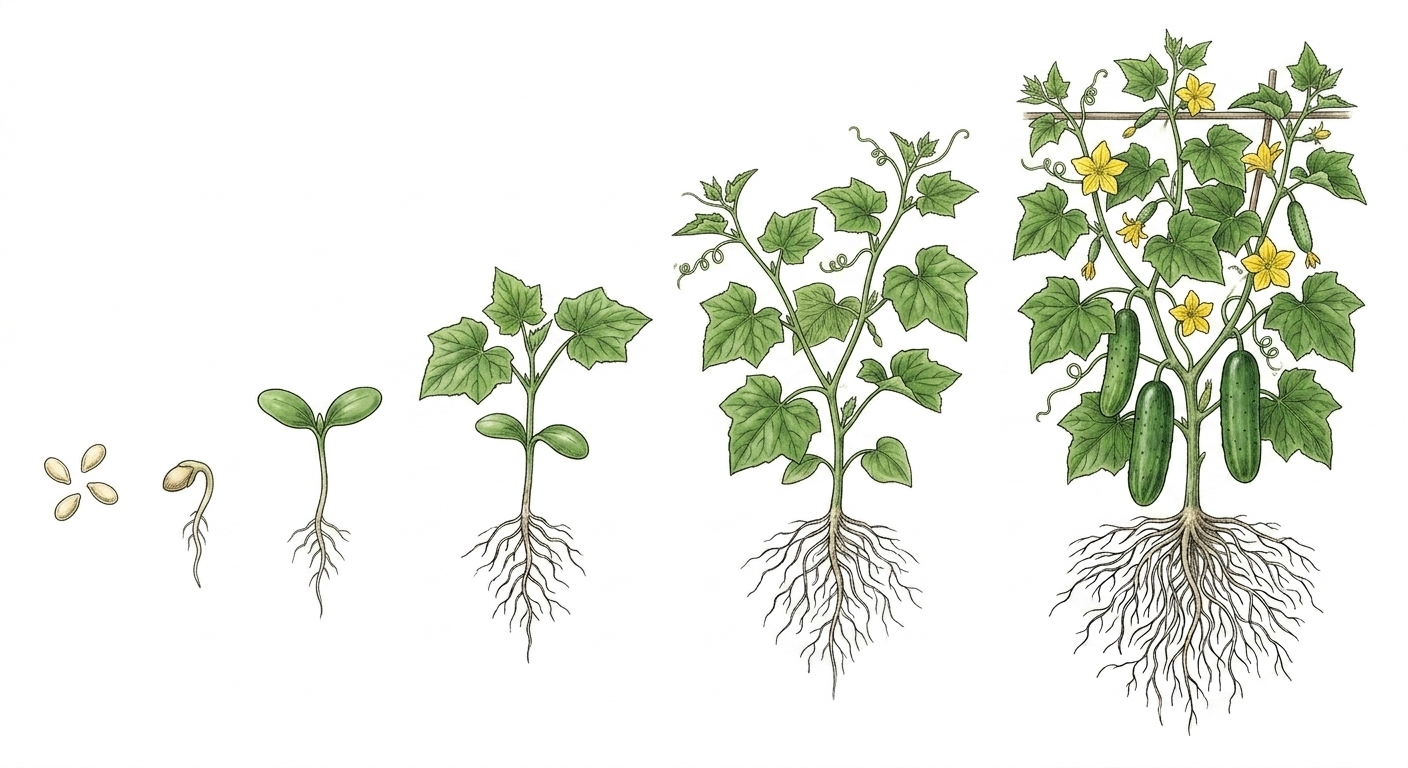
Guide
Growing Cucumbers: Starting, Supports and Harvest
Learn how to grow cucumbers successfully with indoor starting, transplanting, trellises, watering, and regular harvesting.
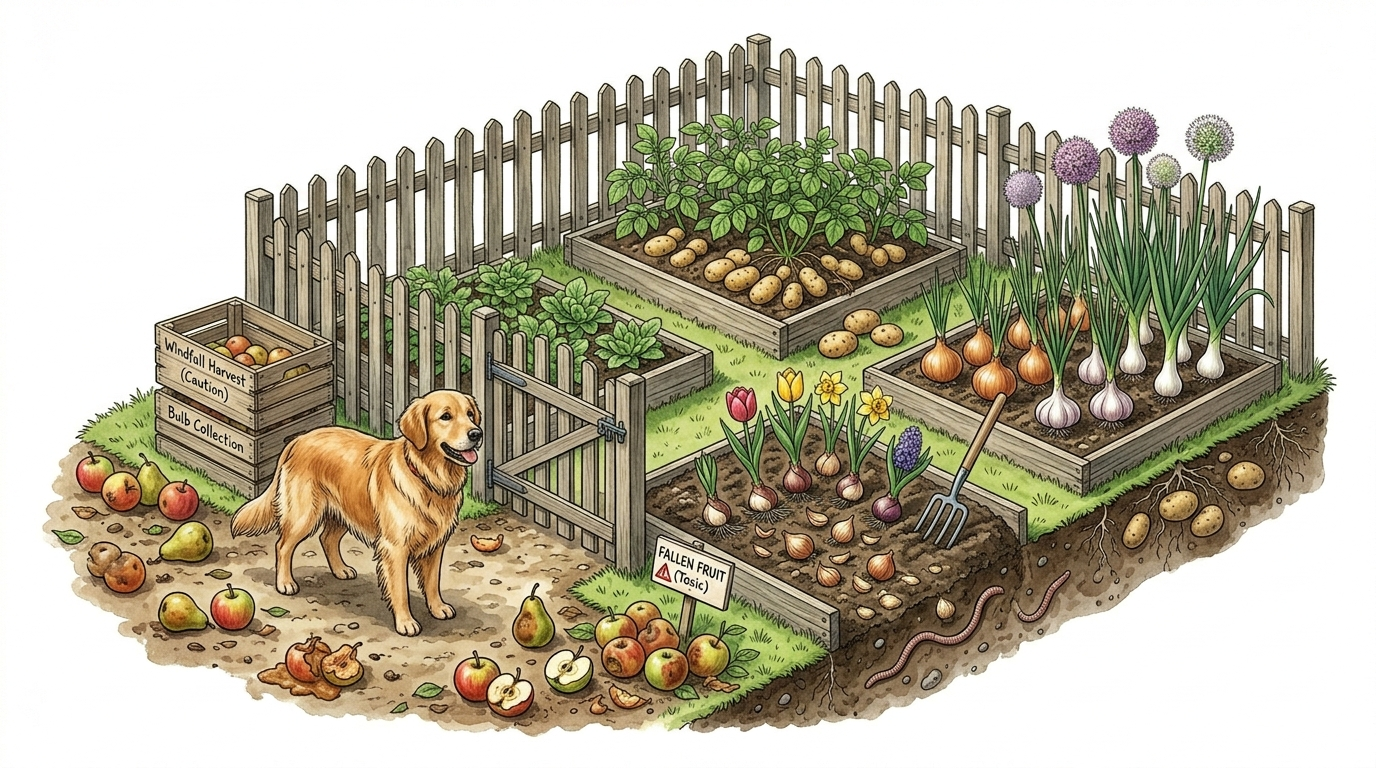
Guide
Dogs in the Garden: Windfall Fruit and Risks
Keep your garden dog-safe by managing windfall fruit, seeds, stored crops, and potentially problematic plant parts.
Guide
Horse Pastures and Garden Plants: Safety Checks
Learn how to identify risks near horse pastures, fences, turnout areas, fruit trees, and garden planting zones.
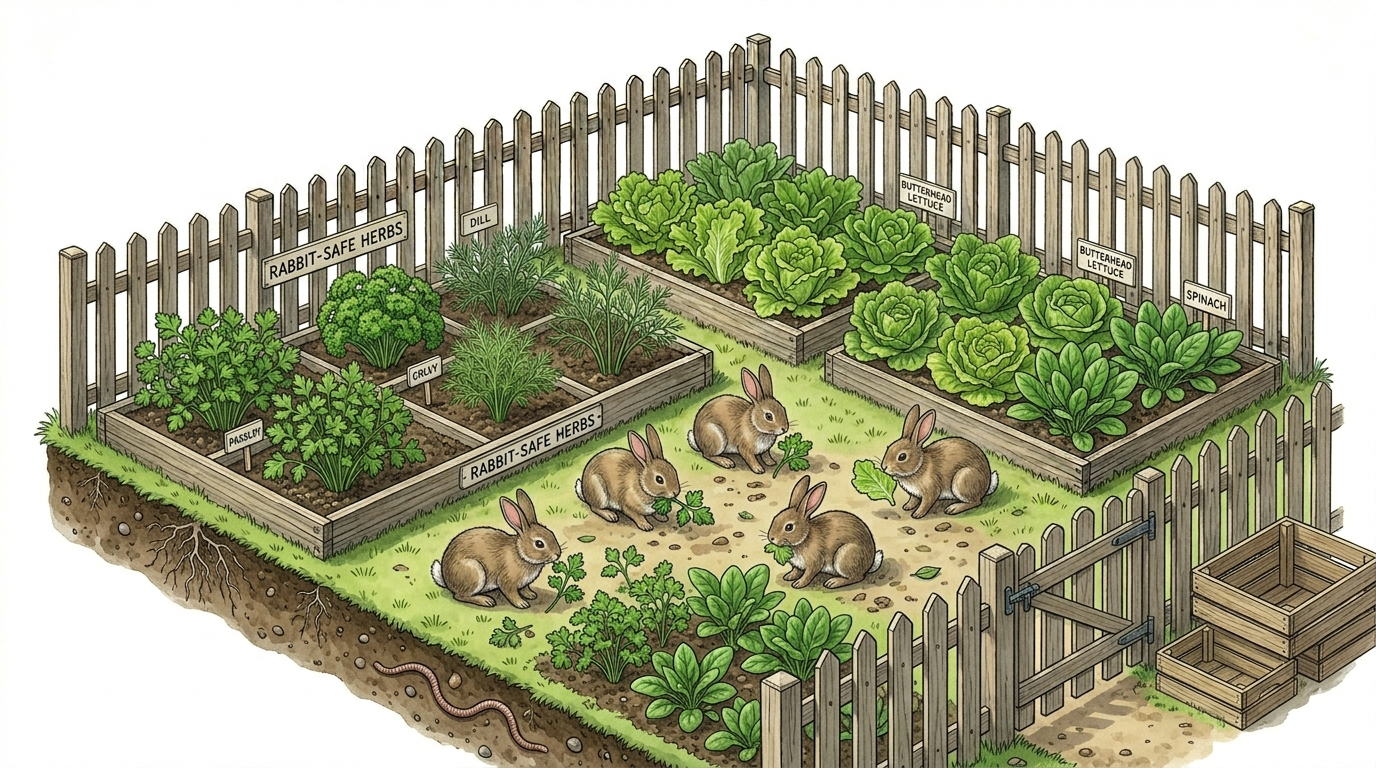
Guide
Rabbits in the Garden: Herbs and Vegetables
Learn how to choose suitable herbs and vegetables for rabbits, grow feeding plants, and plan a rabbit-friendly garden.
Internal links
Related plants
Sources
Public sources
- Wikidata entity
Wikidata · 2026-05-15
- GBIF species match
GBIF · 2026-05-15
- Deutschsprachige Wikipedia: Spaghettikürbis
Wikipedia · 2026-05-15
- English Wikipedia: Spaghetti squash
Wikipedia · 2026-05-15