Plant Profile
pattypan squashCucurbita pepo var. clypeata
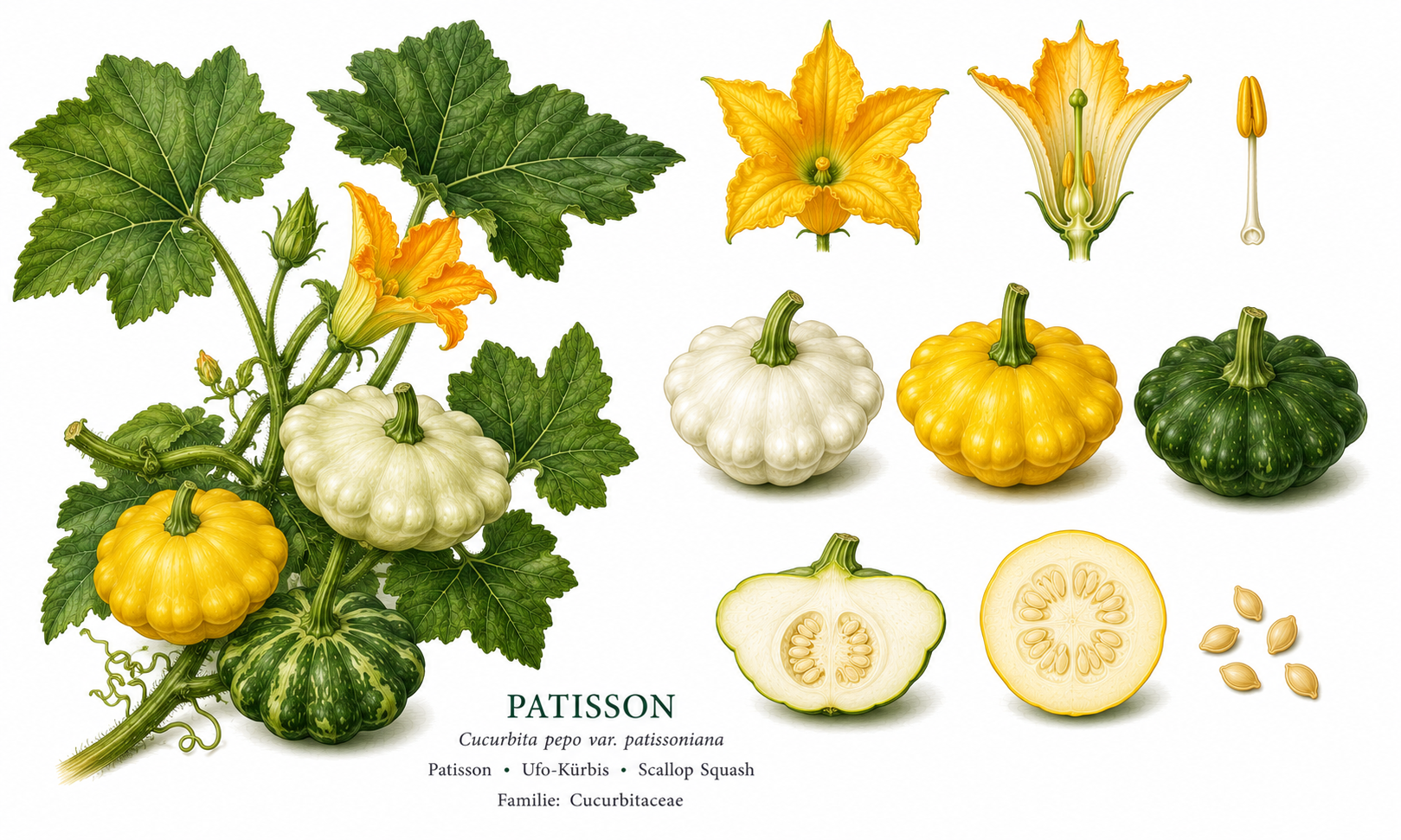
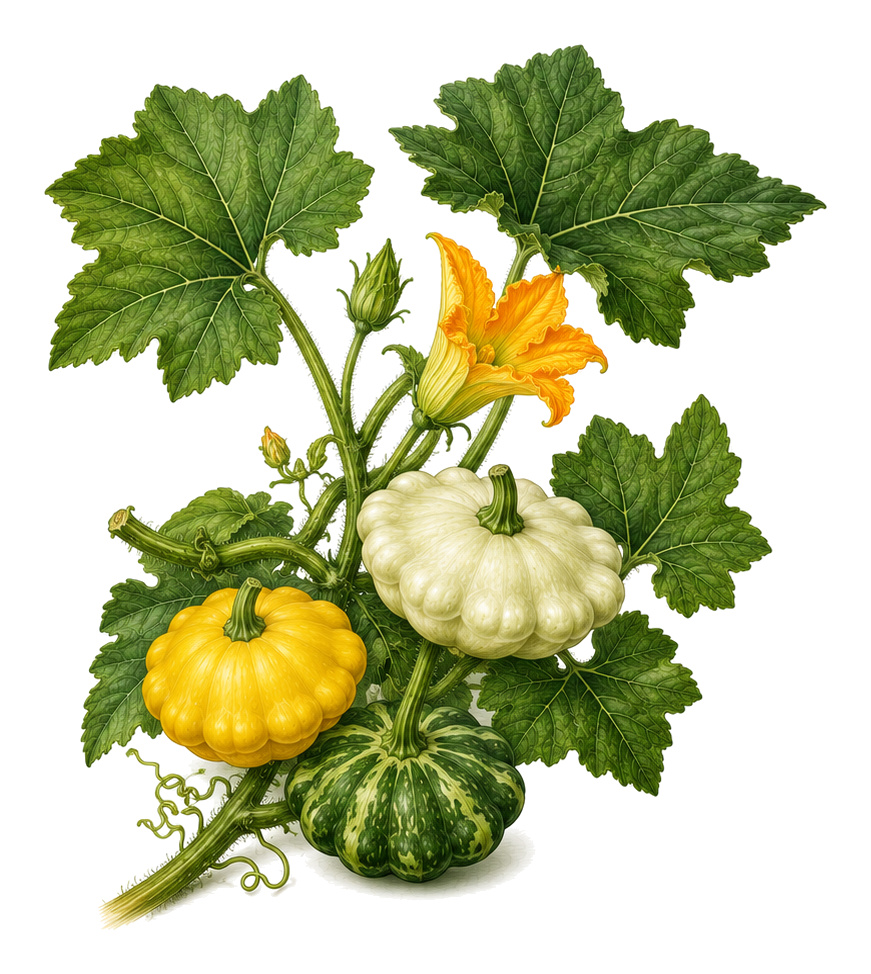
The Pattypan squash, often called 'UFO squash', is a fascinating summer squash with a characteristic scalloped shape. It grows in a compact, bushy habit, making it ideal for smaller gardens or large containers. The fruits should be harvested young when the flesh is most tender and the skin is still soft. In the kitchen, it impresses with its versatility – whether stuffed, grilled, or pickled.
Quick profile
Key data
Suitable growing locations:
Good neighbors
CornPole beanNasturtium
Avoid
Cucumber
Indoor & direct sowing
pattypan squash: Sowing and germination
Indoor pre-culture in pots shortens time to harvest and protects against slugs.
Direct sowing only after the last frost once soil has warmed up.
Planting & site
pattypan squash: Planting and spacing
Transplant after the last frost; handle the root ball with care.
Site & practical notes
Temperature & frost
pattypan squash: Temperature and site
Water & nutrients
pattypan squash: Water, nutrients and care
Container & growth
pattypan squash: Container, support and growth
Year plan
pattypan squash Calendar
In midsummer, you can discover new little 'UFOs' almost every day.
Recurring tasks
Relevant now
June
- No additional single task
Next up
July
- No additional single task
Monthly tasks
Single tasks from monthly data; repeated seasonal windows are shown in the overview above.
January
Quiet month
February
Quiet month
March
Quiet month
April
Direct sowing
- Indoor pre-cultureindoor: Sow one seed per pot (approx. 8-10 cm) deep.
May
Planting
- Planting outHardening off plants before transplanting is recommended.
June
No additional single task
August
No additional single task
September
No additional single task
October
No additional single task
November
Quiet month
December
Quiet month
Flowering & pollination
pattypan squash Flowering & pollination
Flowering period
June to September
Flower type
Monoecious (separate male and female flowers on the same plant)
Self-fertility
self-fertile
Pollinator needed
yes
Overview
Pollination is carried out by insects, primarily bees and bumblebees.
Notes
Hand pollination can be helpful if insect activity is low or for controlled seed saving (under isolation).
Pruning & care
pattypan squash Pruning & care
Pruning type
bush_management
Pruning timing
Yield optimization and plant health Regular cleaning prevents diseases and extends the harvesting period.
Remove
Preserve
Avoid
Tools and hygiene
Use sharp knives; disinfect after contact with mildew-infected plant parts.
Companion guide
pattypan squash Companion guide
Good neighbors
CornPole beanNasturtium
Avoid
Cucumber
Use & storage
pattypan squash Use & storage
Harvest fruits young (5-10 cm diameter) for the best flavor.
Storage
Short-term storage (summer squash)
Storage life
Lasts about 1 week in the refrigerator or a cool cellar.
Harvest
Harvest fruits young (5-10 cm diameter) for the best flavor.
Processing
After harvest
Cut with a sharp knife leaving a short stem. Do not wash if they are intended for storage.
Edibility & safety
pattypan squash Edibility & safety
For people
In brief: which parts are edible, which parts remain risky, and whether raw consumption makes sense.
Safety notes
Beware of bitter taste: Bitter squashes contain toxic cucurbitacins and must not be eaten. Never grow next to ornamental gourds.
Animal safety
This plant is not simply safe or unsafe for animals. 14 animal types have restrictions, so quantity, access, and plant part matter.
Each row shows which parts are more suitable and which parts are critical.
Companion animals
 Dog
DogFlesh, Skin (on young fruits)
Stem, Roots, Leaves
Flesh, Skin (on young fruits)
Stem, Roots, Leaves
Ingestion of bitter-tasting fruits (due to cucurbitacins), Ingestion of non-fruit plant parts (leaves, stems)
Vomiting, Gastrointestinal upset
contact a vet if symptoms appear
Pattypan squash (flesh, young skin, seeds, flowers) is generally considered non-toxic to dogs and can be offered in moderation as a treat. However, consumption of any plant material may cause mild gastrointestinal upset. Bitter-tasting fruits contain toxic cucurbitacins and must not be eaten. Leaves, stems, and roots should also be avoided.
Open animal page Cat
CatFlesh (non-bitter), Skin (on young, non-bitter fruits)
Stem, Roots, Leaves
Flesh (non-bitter), Skin (on young, non-bitter fruits)
Stem, Roots, Leaves
Ingestion of bitter-tasting fruits or plant parts, Ingestion of leaves or stems
Vomiting, Gastrointestinal upset, Diarrhea
contact a vet if symptoms appear
Pattypan squash is safe for cats in moderation as a treat, provided only the non-bitter flesh and skin (of young fruits) are offered. Bitter-tasting squashes contain toxic cucurbitacins, which can cause gastrointestinal distress. Leaves, stems, and roots should not be consumed.
Open animal page Rabbit
Fruit flesh, Skin (on young fruits)
Leaves, Stems, Roots
Fruit flesh, Skin (on young fruits)
Leaves, Stems, Roots
Access to leaves, stems, or roots, Consumption of bitter-tasting fruits, Overconsumption of fruit
Gastrointestinal upset (diarrhea), Abdominal pain, Lethargy
contact a vet if symptoms appear
Pattypan squash fruit can be offered in very small quantities as an occasional treat. Leaves, stems, and roots should not be fed. Special caution is advised for bitter-tasting fruits, as they may contain toxic cucurbitacins which can cause severe gastrointestinal issues. Never grow next to ornamental gourds to avoid cross-contamination.
Open animal page Guinea pig
Flesh (non-bitter), Skin (young, non-bitter)
Stem, Roots, Leaves
Flesh (non-bitter), Skin (young, non-bitter)
Stem, Roots, Leaves
Consumption of bitter-tasting fruits, Consumption of leaves, stems, or roots, Growing near ornamental gourds (cross-contamination possible)
Gastrointestinal upset, Diarrhea, Vomiting (rare in guinea pigs)
contact a vet if symptoms appear
Pattypan squash (flesh, young skin, seeds, flowers) can be offered in small amounts as an occasional treat for guinea pigs, provided it does not taste bitter. Bitter squashes contain cucurbitacins, which are toxic and can cause severe gastrointestinal upset. Leaves, stems, and roots are not suitable and should not be fed. Always perform a taste test before feeding squash.
Open animal page Hamster
Flesh (well-cooked or raw, in small amounts)
Leaves, Stem, Roots
Flesh (well-cooked or raw, in small amounts)
Leaves, Stem, Roots
Consumption of bitter fruits, Consumption of leaves, stem, or roots, Overconsumption
Gastrointestinal upset (vomiting, diarrhea), Lethargy, Loss of appetite
observe
Pattypan squash (Cucurbita pepo var. clypeata) is generally not toxic to hamsters, but consumption should be limited to small amounts of the flesh. Bitter fruits or other plant parts can cause gastrointestinal upset. It is important to ensure that offered fruits are not bitter and that no other plant parts are consumed. Seeds can have a laxative effect in large quantities.
Open animal page Budgie
Flesh, Squash seeds (cooked/dried)
Leaves, Stems, Roots
Flesh, Squash seeds (cooked/dried)
Leaves, Stems, Roots
Consumption of bitter fruits, Consumption of leaves or stems, Excessive consumption of flesh
Gastrointestinal upset (if bitter fruits or large quantities are consumed)
observe
Pattypan squash (Cucurbita pepo var. clypeata) is an edible variety of squash. The flesh of young fruits is generally safe and can be offered in small amounts as a treat. Bitter fruits or other plant parts may contain cucurbitacins, which are toxic. It is important to offer only ripe, non-bitter fruits and to do so in moderation. Caution is advised as birds can be more sensitive to certain compounds.
Open animal pageFarm animals
 Horse
HorseFlesh (in moderation), Seeds (in moderation)
Leaves, Stems, Roots
Flesh (in moderation), Seeds (in moderation)
Leaves, Stems, Roots
Consumption of leaves, stems, or roots, Excessive consumption of fruits, Consumption of bitter or less ripe fruits
Gastrointestinal upset (with excessive consumption or consumption of leaves/stems/roots), Colic (rare, with very large quantities)
observe
Pattypan squash (Cucurbita pepo var. clypeata) is generally safe for horses when fruits are fed in moderation. Leaves, stems, and roots should be avoided as they may contain cucurbitacins which can cause gastrointestinal upset. Bitter or unripe fruits can also be problematic.
Open animal page Chicken
Flesh, Skin (on young fruits)
Stem, Roots, Leaves
Flesh, Skin (on young fruits)
Stem, Roots, Leaves
Consumption of bitter varieties, Consumption of leaves, stems, or roots, Excessive consumption of flesh
Gastrointestinal upset (with excessive consumption or consumption of bitter varieties)
observe
Pattypan squash is generally safe for chickens when flesh and young skin are fed in moderation. Bitter varieties or other plant parts should be avoided. Excessive consumption can lead to gastrointestinal upset.
Open animal page Duck
DuckFlesh (young), Seeds (mature)
Leaves, Stem, Roots
Flesh (young), Seeds (mature)
Leaves, Stem, Roots
Consumption of bitter fruits, Consumption of leaves, stem, or roots, Overconsumption
Gastrointestinal upset (if bitter fruits or large quantities are consumed)
observe
Pattypan squash (Cucurbita pepo var. clypeata) fruit is safe in moderation for ducks, especially young fruits and mature seeds. Bitter fruits, leaves, stem, and roots should be avoided as they may contain cucurbitacins which can cause gastrointestinal upset. Classification as 'safe_in_moderation' is based on general safety of squash fruits for poultry and distinction between edible and potentially harmful plant…
Open animal page Goose
GooseFlesh (young), Seeds (ripe)
Leaves, Stems, Roots
Flesh (young), Seeds (ripe)
Leaves, Stems, Roots
Consumption of bitter fruits, Overconsumption
Gastrointestinal upset (if bitter fruits are consumed or in excess)
observe
Geese can consume the flesh of pattypan squash (Cucurbita pepo var. clypeata) in moderation, especially when young. Bitter fruits, leaves, stems, and roots should be avoided as they may contain cucurbitacins. Overconsumption can lead to gastrointestinal upset.
Open animal page Sheep
SheepFlesh (young fruits), Seeds (mature fruits)
Leaves, Stem, Roots
Flesh (young fruits), Seeds (mature fruits)
Leaves, Stem, Roots
Consumption of bitter or unripe fruits, Consumption of leaves, stem, or roots
Gastrointestinal upset (if bitter or unripe fruits are consumed)
observe
Pattypan squash is generally safe for sheep when only the mature fruits or the flesh of young fruits are fed in moderation. Bitter or unripe fruits, as well as leaves, stem, and roots, should be avoided as they may contain cucurbitacins which can cause gastrointestinal upset. Feeding should be limited to young fruits or mature seeds.
Open animal page Goat
GoatFlesh, Skin (on young fruits)
Stem, Roots, Leaves (hairy and rough)
Flesh, Skin (on young fruits)
Stem, Roots, Leaves (hairy and rough)
Consumption of bitter fruits or other non-recommended plant parts, Overconsumption
Gastrointestinal upset (if bitter parts or excessive amounts are consumed)
observe
Pattypan squash (Cucurbita pepo var. clypeata) is an edible squash variety. The fruit is generally safe for goats when not bitter and fed in moderation. Bitter fruits contain cucurbitacins, which can cause gastrointestinal upset. Non-recommended parts like leaves and stems should be avoided.
Open animal page Cattle
Flesh, Skin (on young fruits)
Stem, Roots, Leaves (hairy and rough)
Flesh, Skin (on young fruits)
Stem, Roots, Leaves (hairy and rough)
Consumption of bitter fruits, Consumption of large quantities, Consumption of leaves, stems, or roots
Gastrointestinal upset (if large quantities or bitter fruits are consumed)
observe
Pattypan squash (Cucurbita pepo var. clypeata) is a cultivated variety of the common gourd. The fruit is generally safe for cattle, especially young fruits with edible skin. However, bitter fruits or consumption of leaves, stems, and roots can lead to gastrointestinal issues. Seeds from mature fruits can be consumed in small amounts, but large quantities should be avoided. The classification is based on the general…
Open animal page Pig
PigFlesh (young), Seeds (mature)
Leaves, Stem, Roots
Flesh (young), Seeds (mature)
Leaves, Stem, Roots
Consumption of bitter fruits, Consumption of leaves, stem, or roots, Overconsumption
Gastrointestinal upset (if bitter fruits or large quantities are consumed)
observe
Pattypan squash is generally safe for pigs when only mature fruits or the flesh of young fruits are fed in moderation. Bitter fruits, leaves, stem, and roots should be avoided. Overconsumption can lead to gastrointestinal upset.
Open animal pageThese guidelines are for general information only and do not replace veterinary diagnosis. If critical plant parts were ingested or the animal shows unusual behaviour or symptoms, seek veterinary advice.
Max risk
unknown
Highest status
selected parts only
Urgency
contact a vet if symptoms appear
Saving seed
pattypan squash Saving seed
Seed viability
4 - 6 years
Practical tips
pattypan squash Practical tips
Common beginner mistakes
Success pattern
Generous compost application at planting leads to explosive growth starting in June.
High-impact tips
Mulching with straw keeps fruits clean and soil moist.
Grower observations
Yellow varieties are often easier to spot in the garden bed than white or green ones.
Plant Profile
Additional plant images
Health
Pests, Diseases
Pests
Slugs
Holes in young plants and small fruits.
Aphids
Curled leaves, honeydew.
Diseases
Powdery mildew
White, powdery coating on the upper leaf surface.
Downy mildew
Yellow spots on the upper leaf surface, grey fungal growth underneath.
Deficiencies
Nitrogen deficiency
Yellowing of older leaves, stunted growth.
Plant health
Diagnosis help
pattypan squash Diagnosis help
Pest groups
Disease groups
Prevention
Diagnosis
Common confusion: Natural silvery leaf patterns on some varieties are often mistaken for mildew.
Cultural prevention
Monitoring
Weekly inspection of leaf undersides
First response
Dispose of infested leaves in household waste
Diagnostic rules
Leaves become whitish-powdery
Possible causes: Powdery mildew
- Can the coating be wiped off?
- Is it on the upper side of the leaf?
FAQ
Do you need to peel pattypan squash?
No, for young fruits (up to approx. 10 cm), the skin is very tender and edible. The skin only becomes hard in very large, fully ripe fruits.
Why are the small fruits falling off?
This is usually due to lack of pollination or extreme stress (drought, cold). Attract more insects or try hand pollination.
Is pattypan squash safe for Dog?
pattypan squash is classified as selected parts only for Dog. Risk: unknown. Urgency: contact a vet if symptoms appear. Pattypan squash (flesh, young skin, seeds, flowers) is generally considered non-toxic to dogs and can be offered in moderation as a treat. However, consumption of any plant material may cause mild gastrointestinal upset. Bitter-tasting fruits contain toxic cucurbitacins and must not be eaten. Leaves, stems, and roots should also be avoided.
Is pattypan squash safe for Cat?
pattypan squash is classified as selected parts only for Cat. Risk: unknown. Urgency: contact a vet if symptoms appear. Pattypan squash is safe for cats in moderation as a treat, provided only the non-bitter flesh and skin (of young fruits) are offered. Bitter-tasting squashes contain toxic cucurbitacins, which can cause gastrointestinal distress. Leaves, stems, and roots should not be consumed.
Is pattypan squash safe for Rabbit?
pattypan squash is classified as selected parts only for Rabbit. Risk: unknown. Urgency: contact a vet if symptoms appear. Pattypan squash fruit can be offered in very small quantities as an occasional treat. Leaves, stems, and roots should not be fed. Special caution is advised for bitter-tasting fruits, as they may contain toxic cucurbitacins which can cause severe gastrointestinal issues. Never grow next to ornamental gourds to avoid cross-contamination.
Is pattypan squash safe for Guinea pig?
pattypan squash is classified as selected parts only for Guinea pig. Risk: unknown. Urgency: contact a vet if symptoms appear. Pattypan squash (flesh, young skin, seeds, flowers) can be offered in small amounts as an occasional treat for guinea pigs, provided it does not taste bitter. Bitter squashes contain cucurbitacins, which are toxic and can cause severe gastrointestinal upset. Leaves, stems, and roots are not suitable and should not be fed. Always perform a taste test before feeding squash.
Guides
Related guides
Guide
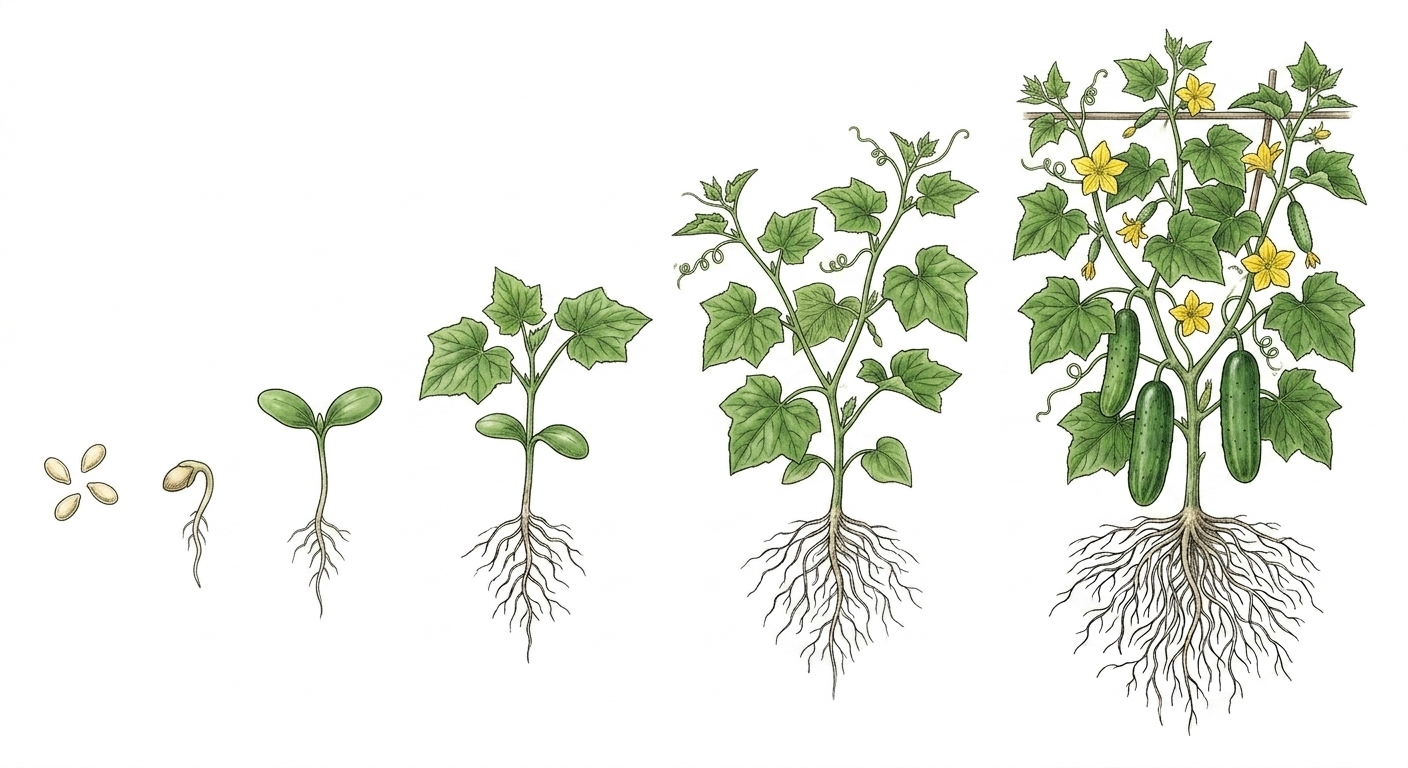
Growing Cucumbers: Starting, Supports and Harvest
Learn how to grow cucumbers successfully with indoor starting, transplanting, trellises, watering, and regular harvesting.
Guide
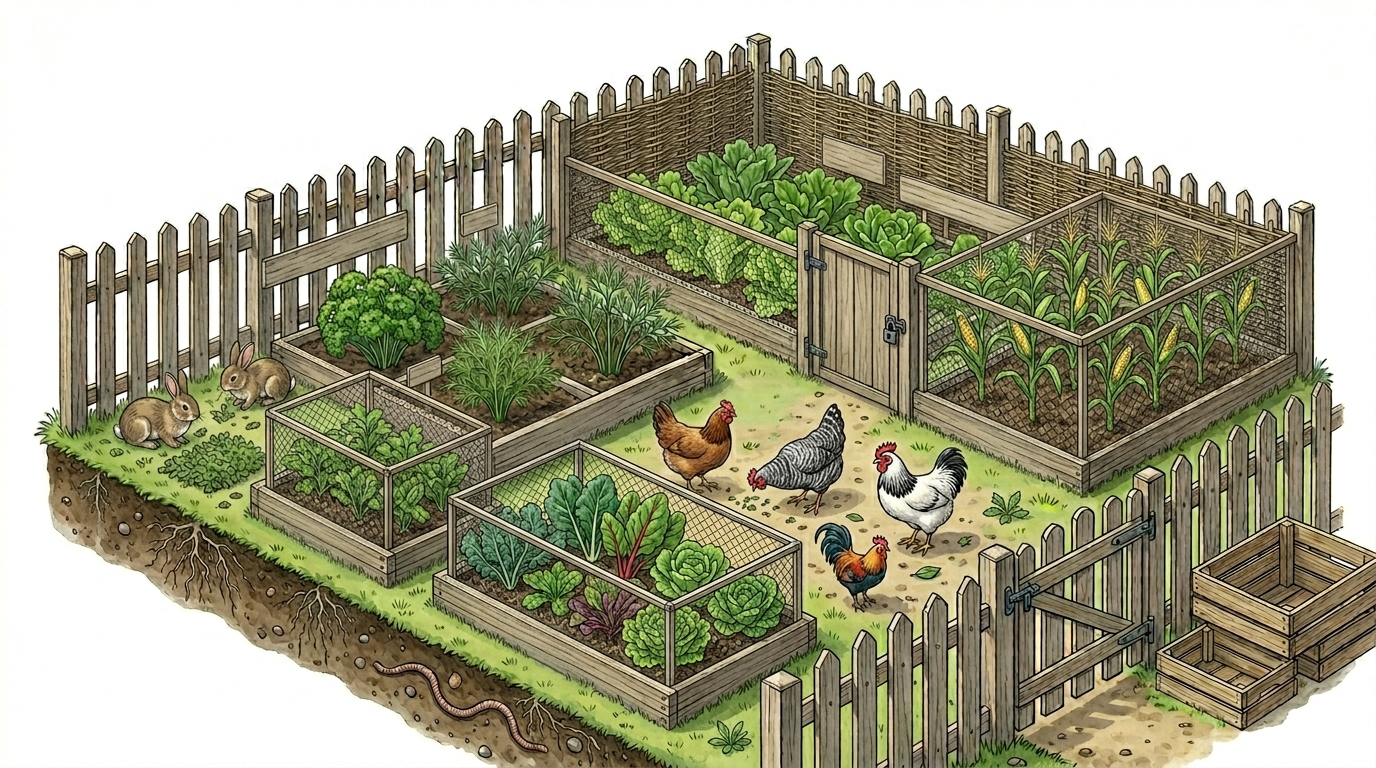
Chickens in the Garden: Safe Plants and Zones
Learn how to design a chicken-friendly garden with suitable plants, protected beds, and well-planned activity areas.
Guide
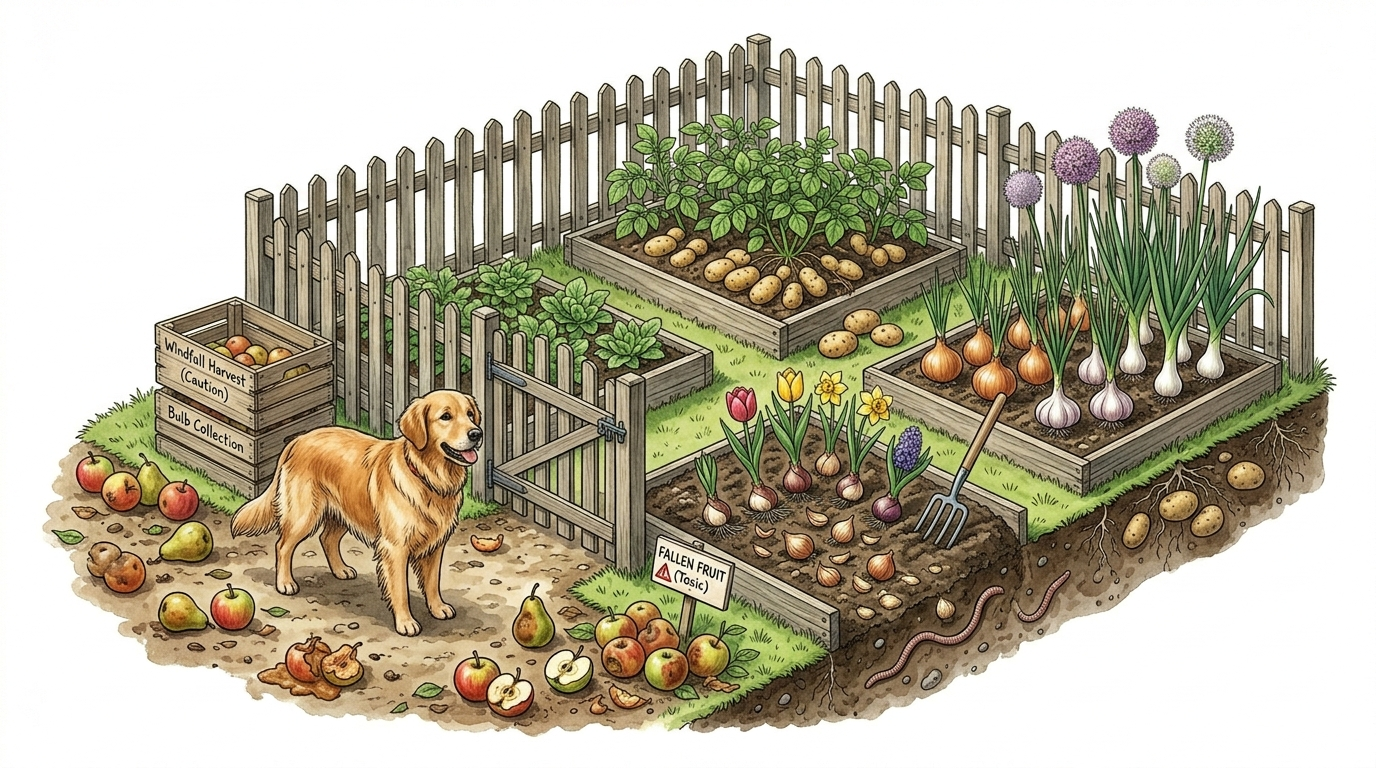
Dogs in the Garden: Windfall Fruit and Risks
Keep your garden dog-safe by managing windfall fruit, seeds, stored crops, and potentially problematic plant parts.
Guide
Horse Pastures and Garden Plants: Safety Checks
Learn how to identify risks near horse pastures, fences, turnout areas, fruit trees, and garden planting zones.
Internal links
Related plants
Cucumber
Both are Cucurbitaceae.
Both belong to the Cucurbitaceae family.
Zucchini
Both are harvested as summer squash in their immature state.
Both belong to Cucurbita pepo and are eaten immature as summer squash.
Powdery mildew
Typical disease for almost all cucurbits.
tomato
Both are heavy feeders with high nitrogen and potassium requirements.
Pumpkin
High water requirement due to large leaf surface area.
Eggplant
Similar use in stir-fries and for stuffing.
Turban squash
Shared common name 'Bishop's Hat' in some regions, though botanically distinct.
Sources
Public sources
- Wikidata entity
Wikidata · 2026-05-14
- GBIF species match
GBIF · 2026-05-14
- Deutschsprachige Wikipedia: Patisson
Wikipedia · 2026-05-14
- English Wikipedia: Pattypan squash
Wikipedia · 2026-05-14