Plant Profile
TatsoiBrassica rapa subsp. narinosa
Asian leafy green with spoon-shaped leaves, mild mustardy flavor.
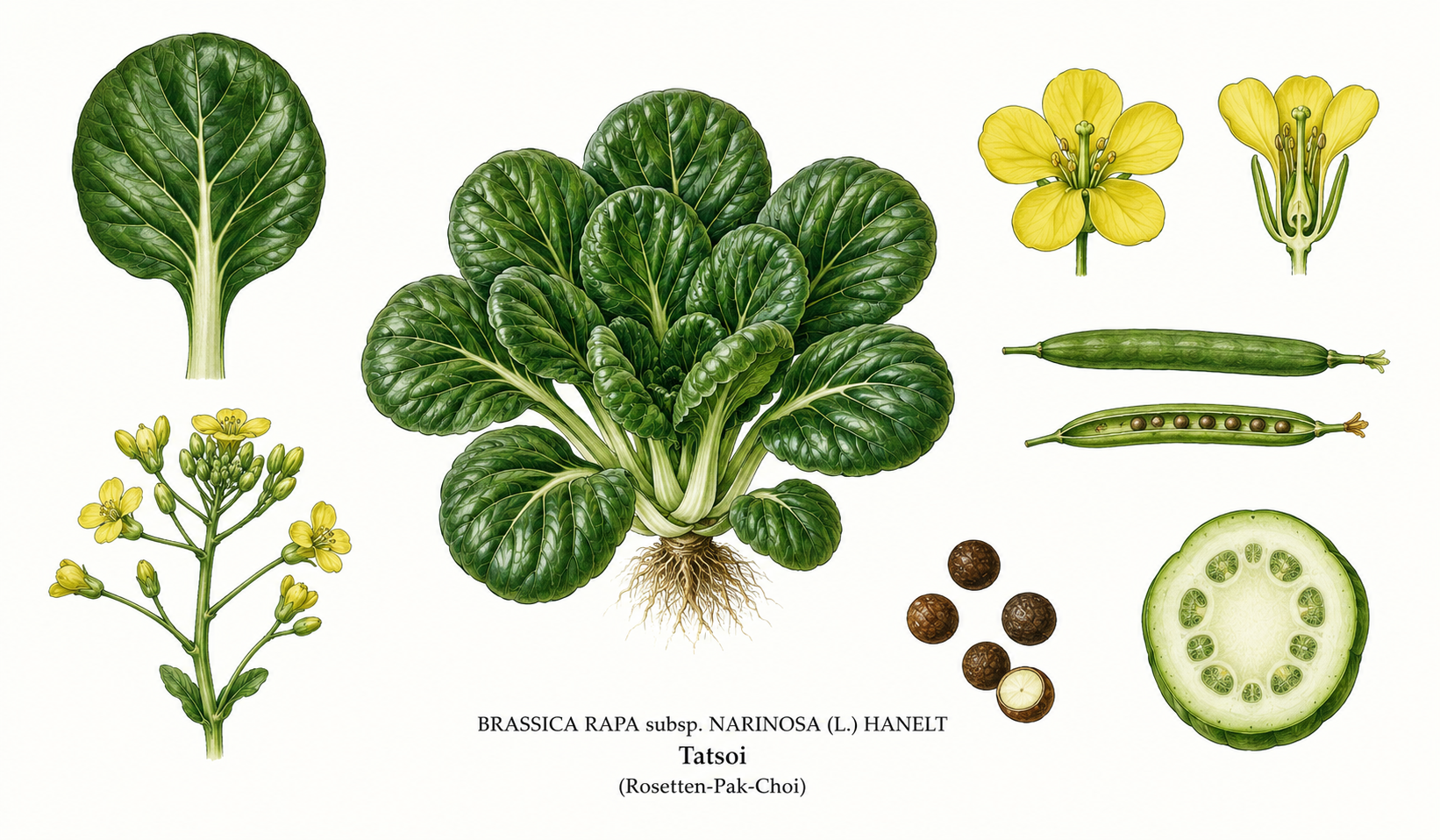
Quick profile
Key data
Suitable growing locations:
Indoor & direct sowing
Tatsoi: Sowing and germination
Pre-cultivation is not typical for tatsoi; direct sowing is preferred.
Sow from March to August; a late summer sowing in August can provide a fall harvest.
Planting & site
Tatsoi: Planting and spacing
Since direct sowing is common, transplanting is not necessary.
Site & practical notes
Beginner: Tatsoi is suitable for beginners because direct sowing is easy and the plant grows quickly. Ensure even moisture and protect young plants from flea beetles., Advanced: Sow every 2–3 weeks for a continuous harvest. Heat stress can cause bolting; choose a partially shaded site to avoid this.
Temperature & frost
Tatsoi: Temperature and site
Water & nutrients
Tatsoi: Water, nutrients and care
Container & growth
Tatsoi: Container, support and growth
Year plan
Tatsoi Calendar
A sowing in July/August yields a bountiful fall harvest.
Relevant now
June
- HarvestRegular harvesting encourages new growth.
- Wateringbei Trockenheit: Keep evenly moist, avoid waterlogging.
Next up
July
- Sowing for fallJuly sowing yields fall and early winter harvest.
- Pest controlbei Befall: Watch for flea beetles, use floating row cover if needed.
Monthly tasks
Single tasks from monthly data; repeated seasonal windows are shown in the overview above.
January
Quiet month
February
Quiet month
March
Direct sowing
- Prepare sowingPrepare the soil from mid-March if frost-free.
April
Direct sowing
- Direct sowingSow seeds 0.5 cm deep in rows.
Growing
- Thinningnach Auflauf: Thin to 20 cm spacing.
May
Direct sowing
- Succession sowingSow every 2–3 weeks for continuous harvest.
Harvest
- HarvestHarvest individual leaves or whole rosettes.
June
Harvest
- HarvestRegular harvesting encourages new growth.
Growing
- Wateringbei Trockenheit: Keep evenly moist, avoid waterlogging.
August
Direct sowing
- Final sowingSowing possible until August for late harvest.
Harvest
- HarvestHarvest leaves regularly.
September
Harvest
- Autumn harvestHarvest rosettes before hard frost.
Growing
- Frost protectionbei Frostgefahr: Cover with fleece during night frosts.
October
Harvest
- Final harvestComplete harvest before hard frost.
November
Growing
- Clear bedRemove remaining plants and prepare the bed for next season.
December
Quiet month
Flowering & pollination
Tatsoi Flowering & pollination
Flowering period
May to July, earlier if bolting occurs
Flower type
Brassica flower, yellow, four-petaled
Self-fertility
partial
Pollinator needed
no
Overview
Tatsoi is mainly insect-pollinated (bees, hoverflies). Cross-pollination is common, self-pollination is possible.
Notes
Flowering usually occurs in the second year after overwintering, or under heat stress in the first year.
Companion guide
Tatsoi Companion guide
Use & storage
Tatsoi Use & storage
Harvest whole rosettes or pick individual leaves from April to November.
Storage
Short-term storage (refrigerator)
Storage life
5 days in the refrigerator
Flavor
Mild, mustardy, slightly nutty, tender
Harvest
Harvest whole rosettes or pick individual leaves from April to November.
Processing
After harvest
Store or process harvested leaves immediately. Wash briefly in cold water and spin dry before storage.
Notes
Tatsoi is a versatile leafy green. Young leaves are excellent in salads. Older leaves are firmer and better cooked.
Edibility & safety
Tatsoi Edibility & safety
For people
In brief: which parts are edible, which parts remain risky, and whether raw consumption makes sense.
Safety notes
Non-toxic. Like other brassicas, tatsoi contains mustard oils (glucosinolates) which may mildly irritate digestion in large quantities, but are harmless in normal consumption.
Animal safety
For many animals, this plant is generally low-risk: 14 animal types are rated suitable or mostly suitable. Quantity, plant part, and individual tolerance still matter.
Each row shows which parts are more suitable and which parts are critical.
Companion animals
 Dog
DogLeaves, Leaf stalks
No risk parts listed
Leaves, Leaf stalks
No risk parts listed
Mild digestive upset if consumed in excess
observe
Tatsoi is generally safe for dogs when fed in moderation. Like other brassicas, it contains glucosinolates which can cause mild digestive upset if consumed in excess. Leaves and leaf stalks are the commonly consumed parts.
Open animal page Cat
CatLeaves, Leaf stalks
No risk parts listed
Leaves, Leaf stalks
No risk parts listed
Mild digestive upset if consumed in excess
observe
Tatsoi is generally safe for cats when fed in moderation. Like other brassicas, it contains glucosinolates which can cause mild digestive upset if consumed in excess. Leaves and leaf stalks are the commonly consumed parts.
Open animal page Rabbit
Leaves, Leaf stalks
No risk parts listed
Leaves, Leaf stalks
No risk parts listed
Overconsumption, Sudden introduction to diet, Consumption of wilted or spoiled material
Bloating, Gas, Diarrhea
contact a vet if symptoms appear
Tatsoi is a brassica and, like other plants in this family, contains glucosinolates (mustard oils). In moderate amounts, it is generally safe for rabbits and can be a good addition to their diet. However, overconsumption can lead to digestive upset such as bloating and diarrhea. Slow introduction and feeding in moderation are advisable.
Open animal page Guinea pig
Leaves, Leaf stalks
No risk parts listed
Leaves, Leaf stalks
No risk parts listed
Overconsumption
Mild gastrointestinal upset, Bloating (with overconsumption)
observe
Tatsoi, like other brassicas, contains glucosinolates which may cause mild digestive upset if consumed in large quantities. It is generally considered safe in moderation for guinea pigs as part of a varied diet. High amounts may also cause bloating.
Open animal page Hamster
Leaves, Leaf stalks
No risk parts listed
Leaves, Leaf stalks
No risk parts listed
Overconsumption, Sensitive individuals
Mild gastrointestinal upset (with overconsumption)
observe
Tatsoi is a brassica and contains glucosinolates (mustard oils), which in large quantities may cause mild gastrointestinal upset in hamsters with sensitive digestive systems. However, in small amounts as an occasional treat, the leaves and leaf stalks are likely safe. Not suitable as a primary feed.
Open animal page Budgie
Leaves, Leaf stalks
No risk parts listed
Leaves, Leaf stalks
No risk parts listed
Excessive consumption, Exclusive diet of brassicas
Mild gastrointestinal upset (with excessive consumption), Thyroid issues (with chronic, excessive consumption)
observe
Tatsoi belongs to the Brassica family. Like other brassicas, it contains glucosinolates (mustard oils) which, in very large quantities or as an exclusive diet, can potentially affect thyroid function (goitrogenic effect) and cause mild digestive upset. In moderation, as part of a varied diet, it is generally safe for budgies.
Open animal pageFarm animals
 Horse
HorseLeaves, Leaf stalks
No risk parts listed
Leaves, Leaf stalks
No risk parts listed
Overconsumption
Mild digestive upset if consumed in excess
observe
Tatsoi is generally safe for horses when fed in moderation. Like other brassicas, it contains glucosinolates which can cause mild digestive upset if consumed in excess. Leaves and leaf stalks are the commonly consumed parts.
Open animal page Chicken
Leaves, Leaf stalks
No risk parts listed
Leaves, Leaf stalks
No risk parts listed
Excessive consumption
Mild gastrointestinal upset with excessive consumption
observe
Tatsoi is generally safe for chickens when fed in moderation. Like other brassicas, it contains glucosinolates which can cause mild gastrointestinal upset if consumed excessively. The leaves and leaf stalks are the commonly consumed parts.
Open animal page Duck
DuckLeaves, Leaf stalks
No risk parts listed
Leaves, Leaf stalks
No risk parts listed
Excessive consumption
Mild gastrointestinal upset with excessive consumption
observe
Tatsoi is generally safe for ducks as it is a non-toxic plant. Like other brassicas, it contains mustard oils which can cause mild gastrointestinal upset if consumed in excess. Feed in moderation as part of a balanced diet.
Open animal page Goose
GooseLeaves, Leaf stalks
No risk parts listed
Leaves, Leaf stalks
No risk parts listed
Excessive consumption
Mild gastrointestinal upset (with excessive consumption)
observe
Tatsoi is generally safe for geese as it is a non-toxic leafy vegetable. However, like other brassicas, it can contain mustard oils (glucosinolates) which may cause mild gastrointestinal upset if consumed in excessive amounts. It should be fed in moderation as a supplement.
Open animal page Sheep
SheepLeaves, Leaf stalks
No risk parts listed
Leaves, Leaf stalks
No risk parts listed
Mild digestive upset if consumed in excess
observe
Tatsoi is generally safe for sheep when fed in moderation. Like other brassicas, it contains glucosinolates which can cause mild digestive upset if consumed in excess. Leaves and leaf stalks are the commonly consumed parts.
Open animal page Goat
GoatLeaves, Leaf stalks
No risk parts listed
Leaves, Leaf stalks
No risk parts listed
Mild digestive upset if consumed in excess
observe
Tatsoi is generally safe for goats when fed in moderation. Like other brassicas, it contains glucosinolates which can cause mild digestive upset if consumed in excess. Leaves and leaf stalks are the commonly consumed parts. No direct species-specific source was found for goats. This is a cautious inference from the sheep profile and the known plant-part risks.
Open animal page Cattle
Leaves, Leaf stalks
No risk parts listed
Leaves, Leaf stalks
No risk parts listed
Overconsumption
Gastrointestinal upset in large amounts
observe
Tatsoi is edible for cattle, but leaves and leaf stalks should only be fed in moderation due to glucosinolates, which can cause digestive irritation in high amounts. Flower stalks are edible if harvested for seed, otherwise use caution. No known severe toxicities documented for cattle. Like other brassicas, tatsoi is generally safe but not suitable as primary feed due to nutritional profile and potential bloat risk…
Open animal page Pig
PigLeaves, Leaf stalks
No risk parts listed
Leaves, Leaf stalks
No risk parts listed
Mild digestive upset if consumed in excess
observe
Tatsoi is generally safe for pigs when fed in moderation. Like other brassicas, it contains glucosinolates which can cause mild digestive upset if consumed in excess. Leaves and leaf stalks are the commonly consumed parts. No direct species-specific source was found for pigs. This is a cautious inference from the cattle profile and the known plant-part risks.
Open animal pageThese guidelines are for general information only and do not replace veterinary diagnosis. If critical plant parts were ingested or the animal shows unusual behaviour or symptoms, seek veterinary advice.
Max risk
unknown
Highest status
moderation only
Urgency
contact a vet if symptoms appear
Saving seed
Tatsoi Saving seed
Seed viability
3 - 5 years
Method
Let plants overwinter (frost tolerant); they will bolt and flower in spring. Allow seed pods to dry and harvest when brown.
Notes
Tatsoi cross-pollinates with other Brassica rapa species (bok choy, mizuna, turnip). For pure seeds, an isolation distance of at least 500 m is required.
Practical tips
Tatsoi Practical tips
Common beginner mistakes
Success pattern
Regular succession sowing every 2–3 weeks ensures a continuous harvest.
High-impact tips
Applying floating row cover immediately after sowing prevents flea beetle damage.
Grower observations
Plant Profile
Additional plant images

Health
Pests, Diseases
Plant health
Diagnosis help
Tatsoi Diagnosis help
Pest groups
Disease groups
Prevention
Diagnosis
The most common issues are flea beetle infestation and premature bolting in heat. Leaf discoloration usually indicates nutrient deficiency or fungal disease.
Cultural prevention
Monitoring
First response
Diagnostic rules
Yellow spots on upper leaf surface, grayish mold on lower surface
Possible causes: Downy mildew
- Check leaf undersides for mold
- Check humidity and plant spacing
Holes in leaves, especially on young plants
Possible causes: Flea beetles, Slugs
- Look for flea beetles (jumping beetles)
- Look for slime trails and slugs
FAQ
When should I sow tatsoi?
Direct sowing outdoors is possible from March to August. Sow in July or August for a fall harvest.
How can I control flea beetles on tatsoi?
Apply floating row cover immediately after sowing and keep the soil evenly moist as preventive measures. Use nematodes for heavy infestations.
Can I eat tatsoi raw?
Yes, young leaves are excellent for salads. Older leaves are firmer and better for cooking.
Is Tatsoi safe for Dog?
Tatsoi is classified as moderation only for Dog. Risk: unknown. Urgency: observe. Tatsoi is generally safe for dogs when fed in moderation. Like other brassicas, it contains glucosinolates which can cause mild digestive upset if consumed in excess. Leaves and leaf stalks are the commonly consumed parts.
Is Tatsoi safe for Cat?
Tatsoi is classified as moderation only for Cat. Risk: unknown. Urgency: observe. Tatsoi is generally safe for cats when fed in moderation. Like other brassicas, it contains glucosinolates which can cause mild digestive upset if consumed in excess. Leaves and leaf stalks are the commonly consumed parts.
Is Tatsoi safe for Rabbit?
Tatsoi is classified as moderation only for Rabbit. Risk: unknown. Urgency: contact a vet if symptoms appear. Tatsoi is a brassica and, like other plants in this family, contains glucosinolates (mustard oils). In moderate amounts, it is generally safe for rabbits and can be a good addition to their diet. However, overconsumption can lead to digestive upset such as bloating and diarrhea. Slow introduction and feeding in moderation are advisable.
Is Tatsoi safe for Guinea pig?
Tatsoi is classified as moderation only for Guinea pig. Risk: unknown. Urgency: observe. Tatsoi, like other brassicas, contains glucosinolates which may cause mild digestive upset if consumed in large quantities. It is generally considered safe in moderation for guinea pigs as part of a varied diet. High amounts may also cause bloating.
Guides
Related guides
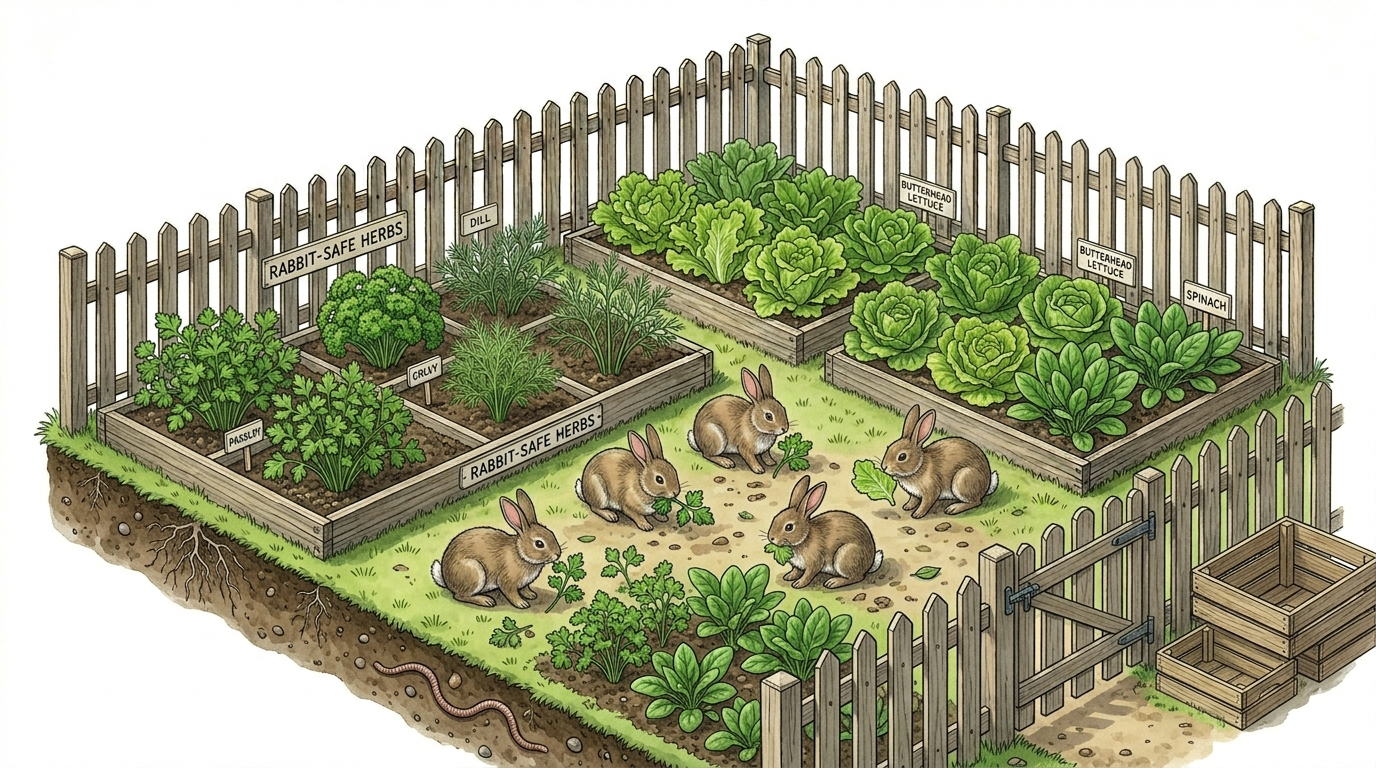
Guide
Rabbits in the Garden: Herbs and Vegetables
Learn how to choose suitable herbs and vegetables for rabbits, grow feeding plants, and plan a rabbit-friendly garden.
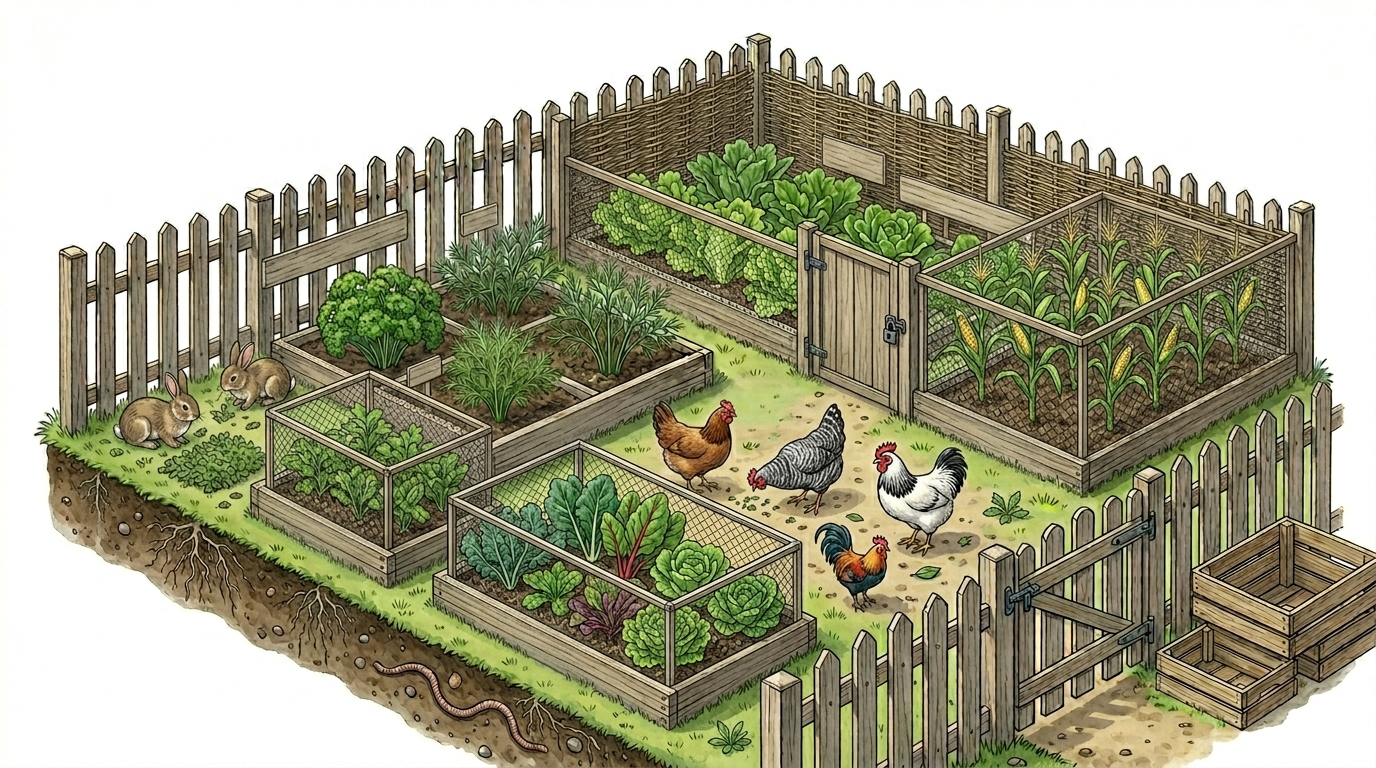
Guide
Chickens in the Garden: Safe Plants and Zones
Learn how to design a chicken-friendly garden with suitable plants, protected beds, and well-planned activity areas.
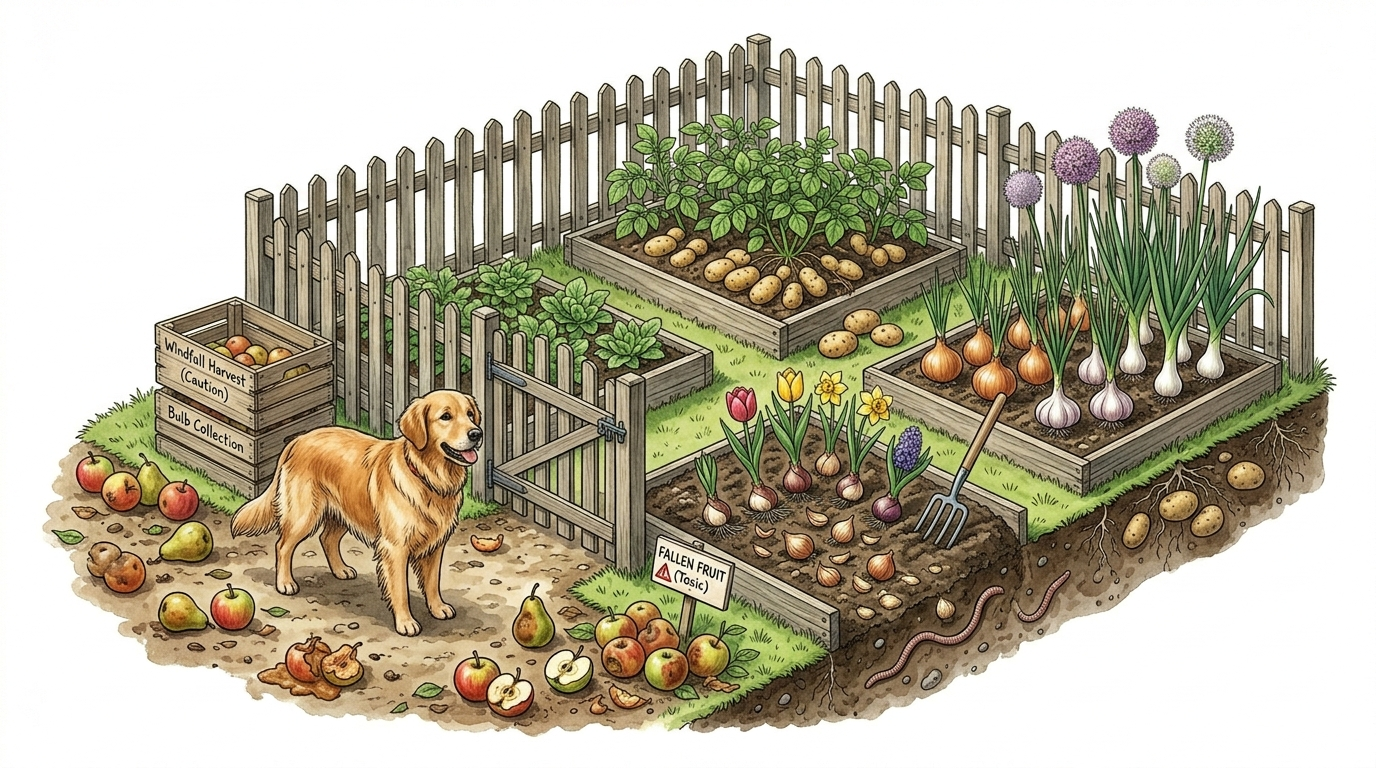
Guide
Dogs in the Garden: Windfall Fruit and Risks
Keep your garden dog-safe by managing windfall fruit, seeds, stored crops, and potentially problematic plant parts.
Guide
Horse Pastures and Garden Plants: Safety Checks
Learn how to identify risks near horse pastures, fences, turnout areas, fruit trees, and garden planting zones.
Internal links
Related plants
Sources
Public sources
- Wikidata entity
Wikidata · 2026-05-15
- GBIF species match
GBIF · 2026-05-15
- Deutschsprachige Wikipedia: Tatsoi
Wikipedia · 2026-05-15
- English Wikipedia: Tatsoi
Wikipedia · 2026-05-15