Plant Profile
Ground elderAegopodium podagraria
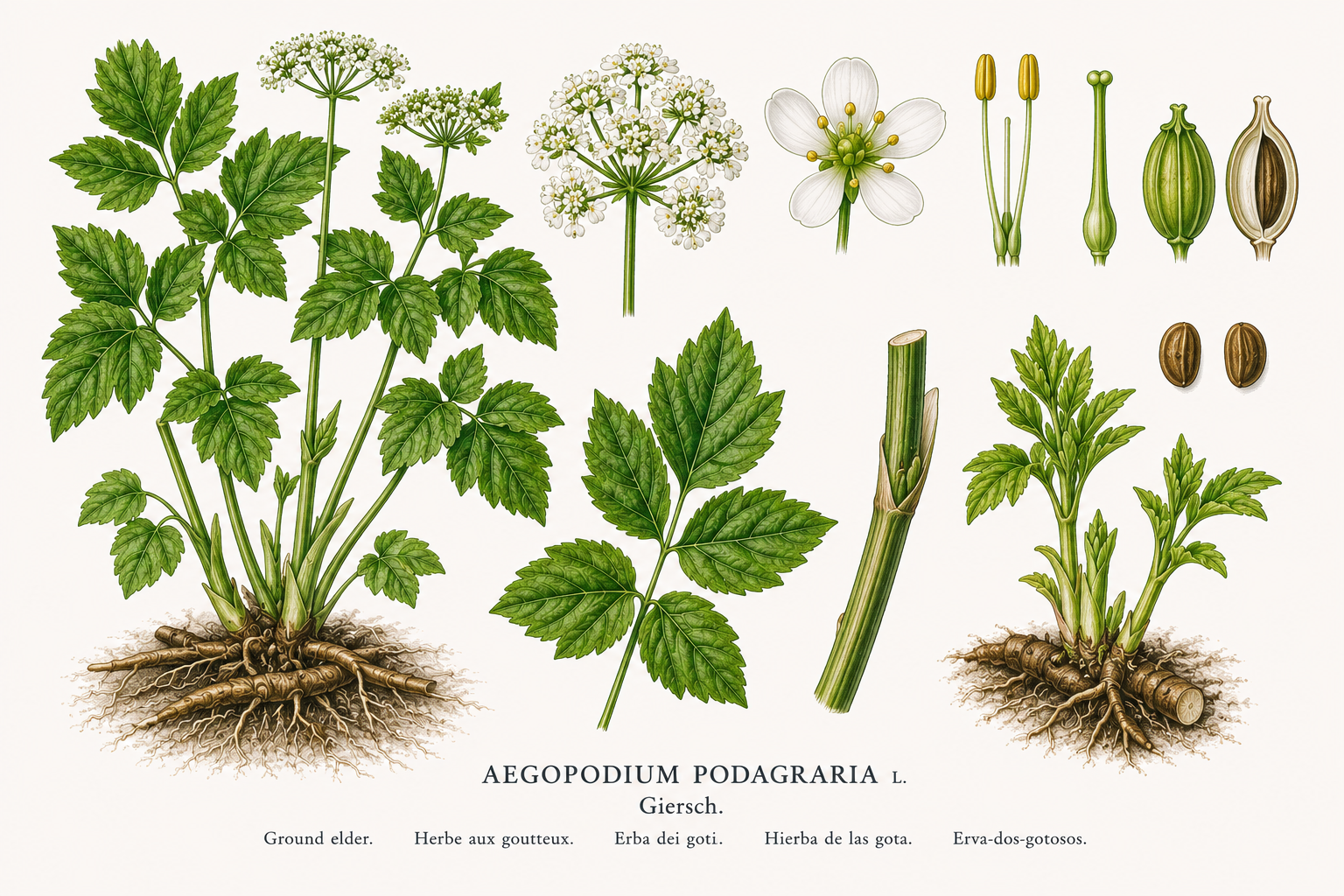
Ground elder is a nightmare for many gardeners, yet for those in the know, it is one of the most valuable wild vegetables. Its resilience is due to a dense network of underground rhizomes. Those who manage to contain it are rewarded with a permanent harvest that tastes like a blend of parsley and celery.
Quick profile
Key data
Suitable growing locations:
Good neighbors
ComfreyRhubarb
Avoid
Strawberry
Indoor & direct sowing
Ground elder: Sowing and germination
Pre-culture usually unnecessary as the plant spreads vigorously via rhizomes.
Direct sowing possible but rarely practiced; often germinates irregularly.
Planting & site
Ground elder: Planting and spacing
Planting of rhizome fragments possible any time during frost-free periods.
Site & practical notes
Never throw rhizome fragments on the compost unless it is a hot composting system.
Temperature & frost
Ground elder: Temperature and site
Water & nutrients
Ground elder: Water, nutrients and care
Container & growth
Ground elder: Container, support and growth
Year plan
Ground elder Calendar
Recurring tasks
Relevant now
June
- No additional single task
Next up
July
- No additional single task
Monthly tasks
Single tasks from monthly data; repeated seasonal windows are shown in the overview above.
January
Quiet month
February
Quiet month
March
No additional single task
April
No additional single task
May
No additional single task
June
No additional single task
August
No additional single task
September
No additional single task
October
No additional single task
November
No additional single task
December
Quiet month
Flowering & pollination
Ground elder Flowering & pollination
Flower type
Compound umbel
Flower color
White
Self-fertility
partially self-fertile
Pollinator needed
yes
Overview
Pollination is non-specific, carried out by various insects, particularly hoverflies and beetles.
Notes
The flowers provide easily accessible nectar for insects with short proboscises.
Pruning & care
Ground elder Pruning & care
Pruning type
cut-and-come-again
Pruning timing
Yield pruning Regular cutting encourages tender regrowth.
Prevention of seeding Removal of umbels before they turn brown.
Remove
Preserve
Avoid
Tools and hygiene
Clean tools thoroughly after digging to avoid carrying rhizome fragments to other garden areas.
Companion guide
Ground elder Companion guide
Good neighbors
ComfreyRhubarb
Avoid
Strawberry
Use & storage
Ground elder Use & storage
Best quality of young leaves in spring (March to May).
Storage
Short-term storage (fresh consumption)
Storage life
Fresh: 2-3 days; Dried: 12 months; Frozen: 6 months.
Flavor
A blend of parsley, carrot, and a hint of celery.
Harvest
Best quality of young leaves in spring (March to May).
Processing
After harvest
Wrap leaves directly in a damp cloth or keep fresh in a glass of water.
Edibility & safety
Ground elder Edibility & safety
For people
In brief: which parts are edible, which parts remain risky, and whether raw consumption makes sense.
Safety notes
Non-toxic, but there is a risk of confusion with poisonous Apiaceae like hemlock.
Animal safety
For many animals, this plant is generally low-risk: 14 animal types are rated suitable or mostly suitable. Quantity, plant part, and individual tolerance still matter.
Each row shows which parts are more suitable and which parts are critical.
Companion animals
 Dog
DogLeaves, Stems
No risk parts listed
Leaves, Stems
No risk parts listed
Risk of confusion with poisonous Apiaceae such as hemlock
usually no action needed
Ground elder (Aegopodium podagraria) is considered non-toxic to dogs. Young shoots, leaves, stems, and flowers can be fed in moderation. Roots are inedible and older leaves may be bitter. Confusion with poisonous Apiaceae must be ruled out.
Open animal page Cat
CatLeaves, Stems
No risk parts listed
Leaves, Stems
No risk parts listed
Risk of confusion with poisonous Apiaceae such as hemlock
usually no action needed
Ground elder is generally considered non-toxic for cats and can be fed in moderation. Young shoots are particularly palatable and nutritious. Due to the risk of confusion with poisonous Apiaceae, correct identification should be ensured. When in doubt, avoid feeding. Consumption of large amounts may cause mild gastrointestinal upset.
Open animal page Rabbit
Leaves, Stems
No risk parts listed
Leaves, Stems
No risk parts listed
Risk of confusion with poisonous Apiaceae such as hemlock
usually no action needed
Ground elder is edible for rabbits and valued as a forage plant. Young shoots are particularly suitable. Risk of confusion with toxic plants exists, so correct identification is essential.
Open animal page Guinea pig
Leaves, Stems
No risk parts listed
Leaves, Stems
No risk parts listed
Risk of confusion with poisonous Apiaceae such as hemlock
usually no action needed
No direct species-specific source was found for guinea pigs. This is a cautious inference from the rabbits profile and the known plant-part risks.
Open animal page Hamster
Leaves, Stems
Roots, Seeds
Leaves, Stems
Roots, Seeds
Risk of confusion with poisonous Apiaceae like hemlock
observe
Leaves, stems, and flowers are suitable for hamsters in small amounts as an occasional treat. Roots and seeds should be avoided due to potential digestibility issues and risk of confusion with toxic plants. Not for use as a main feed.
Open animal page Budgie
Leaves, Stems
Seeds
Leaves, Stems
Seeds
Excessive seed consumption, Risk of confusion with poisonous Apiaceae
Gastrointestinal upset, Diarrhea
observe
Leaves, stems, and flowers are suitable for budgies in moderation. Seeds contain furanocoumarins and should be avoided. Risk of confusion with poisonous plants like hemlock. Only feed verified safe parts. When in doubt, do not feed.
Open animal pageFarm animals
 Horse
HorseLeaves, Stems
No risk parts listed
Leaves, Stems
No risk parts listed
Risk of confusion with poisonous Apiaceae such as hemlock
usually no action needed
Ground elder (Aegopodium podagraria) is considered safe forage for horses. Young shoots are particularly palatable and nutritious. Confusion with poisonous Apiaceae must be ruled out.
Open animal page Chicken
Leaves, Stems
Seeds
Leaves, Stems
Seeds
Excessive seed consumption, Confusion with poisonous Apiaceae
Gastrointestinal upset, Diarrhea
observe
Leaves, stems, and flowers are suitable for chickens in moderation and are readily eaten. Seeds contain furanocoumarins and may cause gastrointestinal upset if consumed excessively. Risk of confusion with poisonous hemlock exists. Young shoots are particularly palatable and nutritious. Suitable as supplemental feed, not as main feed. Observe animal for symptoms and consult veterinarian if symptoms persist.
Open animal page Duck
DuckLeaves, Stems
Seeds
Leaves, Stems
Seeds
Excessive seed consumption, Risk of confusion with poisonous Apiaceae
Gastrointestinal upset, Diarrhea
observe
Leaves, stems, and flowers are edible for ducks and are occasionally eaten as a treat. Seeds contain furanocoumarins and may cause gastrointestinal upset if consumed in excess. Due to the risk of confusion with poisonous hemlock, proper plant identification is essential. Not suitable as a primary feed, but acceptable as occasional forage.
Open animal page Goose
GooseLeaves, Stems
Roots, Seeds
Leaves, Stems
Roots, Seeds
Risk of confusion with poisonous Apiaceae like hemlock
usually no action needed
Leaves, stems, and flowers of ground elder are edible for geese and valued as nutritious forage. Roots and seeds should be avoided due to potential digestibility issues. Risk of confusion with toxic look-alikes exists. Feed only young, tender parts.
Open animal page Sheep
SheepLeaves, Stems
No risk parts listed
Leaves, Stems
No risk parts listed
Risk of confusion with poisonous Apiaceae such as hemlock
usually no action needed
Ground elder is generally accepted as safe forage for sheep. Young shoots are particularly palatable and nutritious. Risk of confusion with poisonous Apiaceae exists, so ensure positive identification before feeding.
Open animal page Goat
GoatLeaves, Stems
No risk parts listed
Leaves, Stems
No risk parts listed
Risk of confusion with poisonous Apiaceae such as hemlock
usually no action needed
No direct species-specific source was found for goats. This is a cautious inference from the sheep profile and the known plant-part risks.
Open animal page Cattle
Leaves, Stems
Roots, Seeds
Leaves, Stems
Roots, Seeds
Risk of confusion with toxic Apiaceae (e.g. hemlock), Excessive consumption of roots or seeds
Mild gastrointestinal upset from excessive consumption of roots or seeds, Photosensitization from skin contact with root sap in sunlight
observe
Young leaves, stems, and flowers are generally safe for cattle as supplemental feed in moderation. Roots and seeds contain furanocoumarins that can cause gastrointestinal upset and photosensitization if consumed excessively. Due to risk of confusion with toxic Apiaceae, positive identification should be confirmed before feeding. Not suitable as a primary feed.
Open animal page Pig
PigLeaves, Stems
Roots, Seeds
Leaves, Stems
Roots, Seeds
Risk of confusion with poisonous Apiaceae like hemlock
observe
Leaves, stems, and flowers of ground elder are edible for pigs and are sometimes used as feed. Roots and seeds should be avoided due to possible intolerance. In case of confusion with toxic look-alike plants, symptoms may occur. Consult a veterinarian if uncertain.
Open animal pageThese guidelines are for general information only and do not replace veterinary diagnosis. If critical plant parts were ingested or the animal shows unusual behaviour or symptoms, seek veterinary advice.
Max risk
unknown
Highest status
moderation only
Urgency
observe
Saving seed
Ground elder Saving seed
Seed type
schizocarp
Seed viability
1 - 3 years
Practical tips
Ground elder Practical tips
Common beginner mistakes
Underestimating the regenerative power of small root fragments.
Success pattern
Regular harvesting results in increasingly tender leaves.
High-impact tips
Ground elder pesto is the fastest way to process the harvest.
Grower observations
Under dense shrubs, it is often the only green ground cover that survives.
Health
Pests, Diseases
Plant health
Diagnosis help
Ground elder Diagnosis help
Pest groups
Sap-sucking insects
Disease groups
Rust fungi
Prevention
Diagnosis
Ground elder is extremely robust; damage is usually purely aesthetic and rarely threatens the plant.
Cultural prevention
Regular mowing to weaken the rhizomes.
Monitoring
Check bed margins for invading runners.
First response
Manual digging with a garden fork.
Diagnostic rules
White, powdery coating on leaf surface
Possible causes: Erysiphales
- Check if coating can be wiped off the leaf surface.
FAQ
How do you get rid of ground elder permanently?
Through consistent starvation: weekly mowing for two years or meticulously sifting out all rhizome fragments.
Is Ground elder safe for Dog?
Ground elder is classified as suitable for Dog. Risk: unknown. Urgency: usually no action needed. Ground elder (Aegopodium podagraria) is considered non-toxic to dogs. Young shoots, leaves, stems, and flowers can be fed in moderation. Roots are inedible and older leaves may be bitter. Confusion with poisonous Apiaceae must be ruled out.
Is Ground elder safe for Cat?
Ground elder is classified as moderation only for Cat. Risk: unknown. Urgency: usually no action needed. Ground elder is generally considered non-toxic for cats and can be fed in moderation. Young shoots are particularly palatable and nutritious. Due to the risk of confusion with poisonous Apiaceae, correct identification should be ensured. When in doubt, avoid feeding. Consumption of large amounts may cause mild gastrointestinal upset.
Is Ground elder safe for Rabbit?
Ground elder is classified as suitable for Rabbit. Risk: unknown. Urgency: usually no action needed. Ground elder is edible for rabbits and valued as a forage plant. Young shoots are particularly suitable. Risk of confusion with toxic plants exists, so correct identification is essential.
Is Ground elder safe for Guinea pig?
Ground elder is classified as suitable for Guinea pig. Risk: unknown. Urgency: usually no action needed. No direct species-specific source was found for guinea pigs. This is a cautious inference from the rabbits profile and the known plant-part risks.
Guides
Related guides
Guide
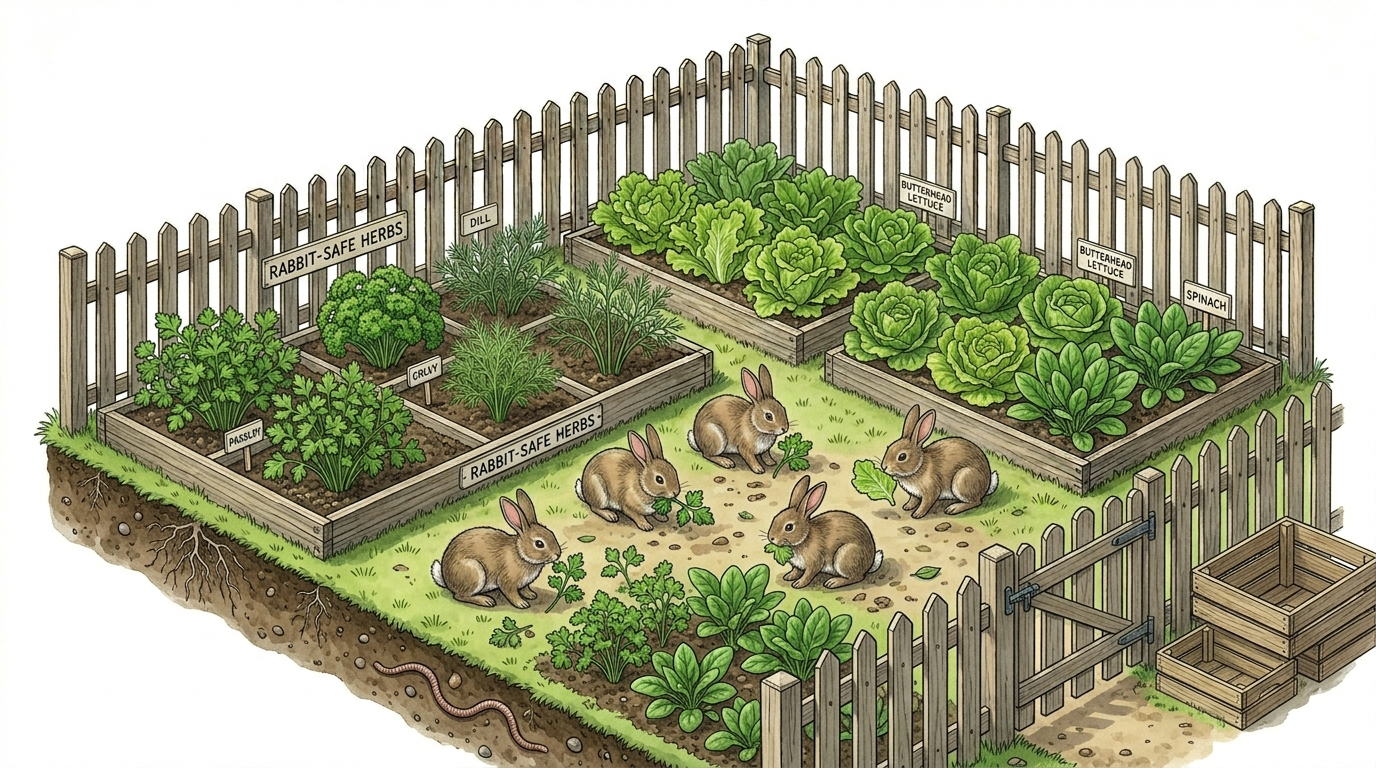
Rabbits in the Garden: Herbs and Vegetables
Learn how to choose suitable herbs and vegetables for rabbits, grow feeding plants, and plan a rabbit-friendly garden.
Guide
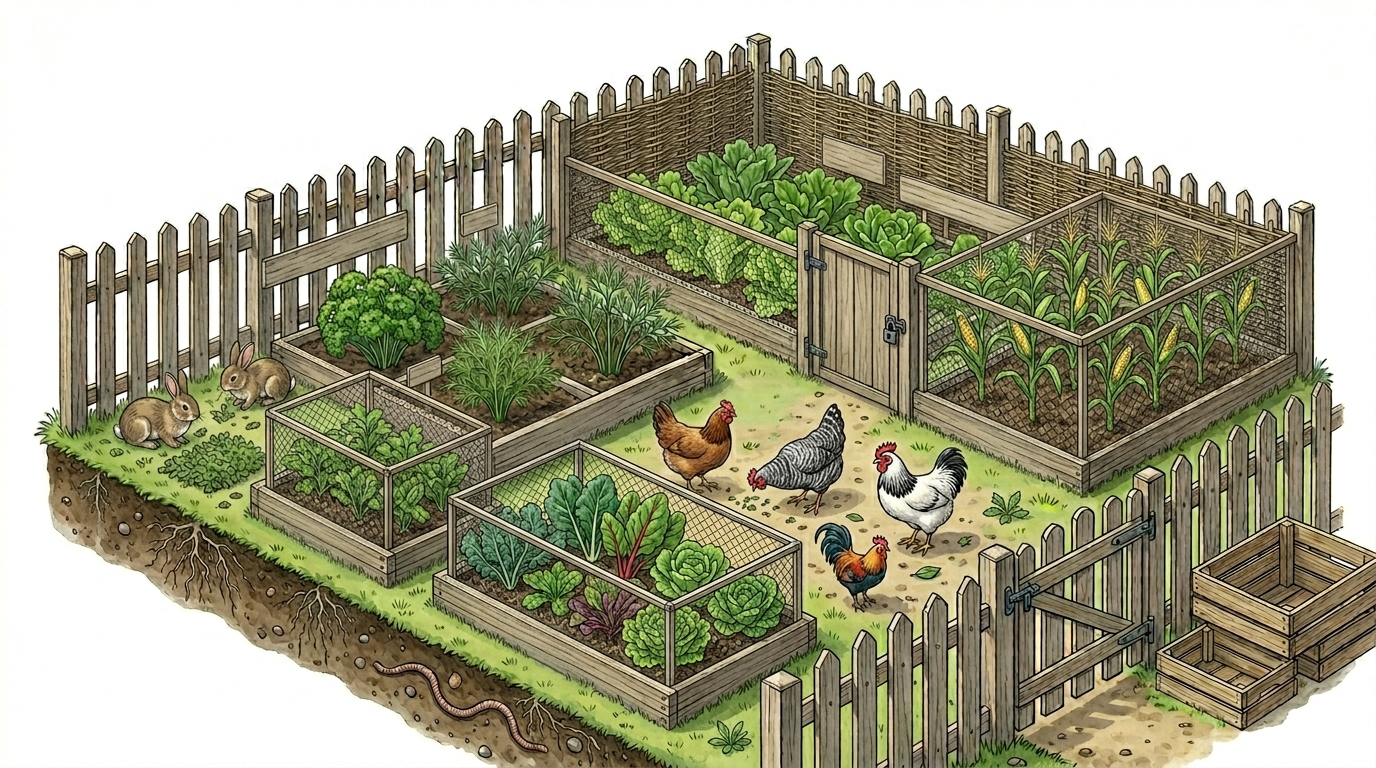
Chickens in the Garden: Safe Plants and Zones
Learn how to design a chicken-friendly garden with suitable plants, protected beds, and well-planned activity areas.
Guide
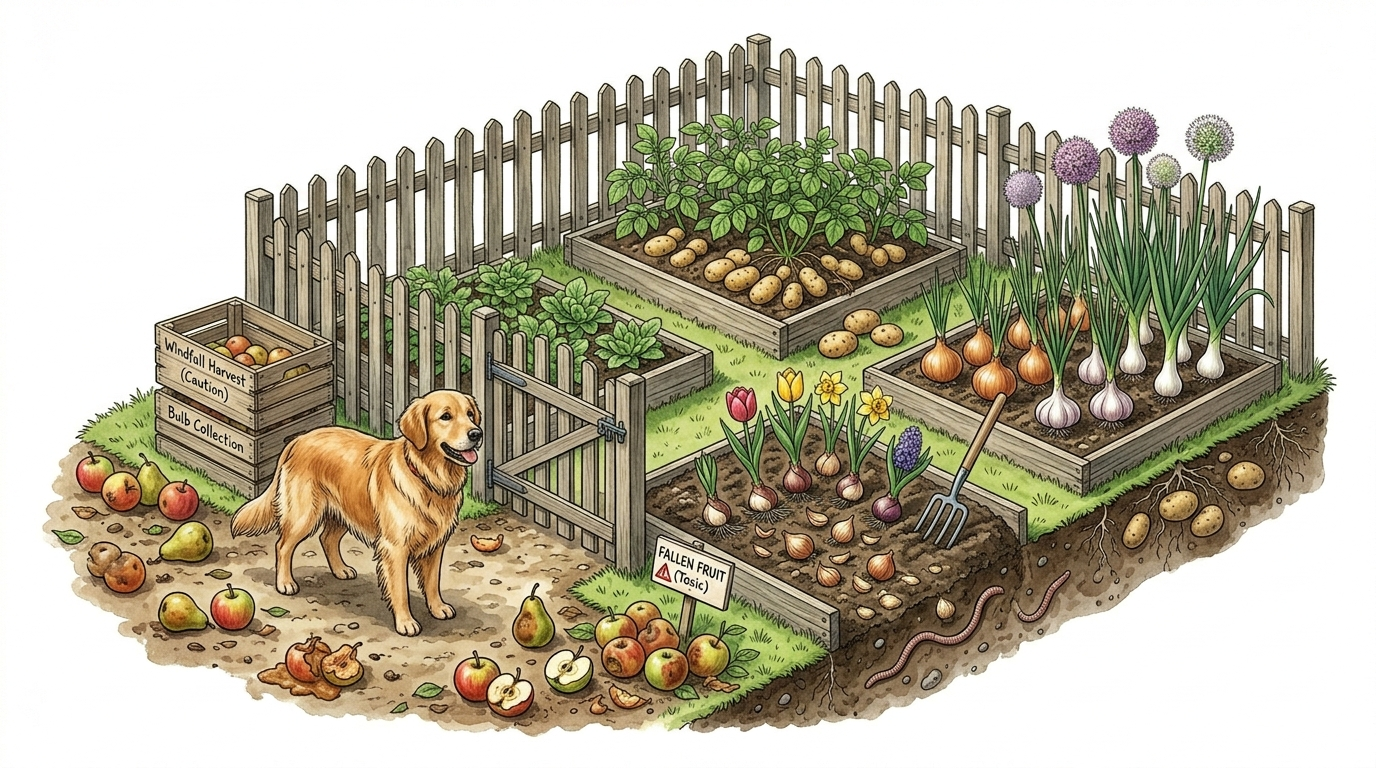
Dogs in the Garden: Windfall Fruit and Risks
Keep your garden dog-safe by managing windfall fruit, seeds, stored crops, and potentially problematic plant parts.
Guide
Horse Pastures and Garden Plants: Safety Checks
Learn how to identify risks near horse pastures, fences, turnout areas, fruit trees, and garden planting zones.
Internal links
Related plants
parsley
Both belong to the carrot family.
Spinach
Ground elder leaves can be prepared identically to spinach.
Poison Hemlock
Similar umbels, but hemlock is highly toxic and has spotted stems.
Sources
Public sources
- Wikidata entity
Wikidata · 2026-05-13
- GBIF species match
GBIF · 2026-05-13
- Deutschsprachige Wikipedia: Giersch
Wikipedia · 2026-05-13
- English Wikipedia: Aegopodium podagraria
Wikipedia · 2026-05-13