Guide
Autumn Harvest and Storage for Squash and Root Crops
Autumn is the most important season for storing vegetables from the garden. With careful harvesting and proper storage conditions, squash, potatoes, onions, and root crops can often keep for many weeks or even months.
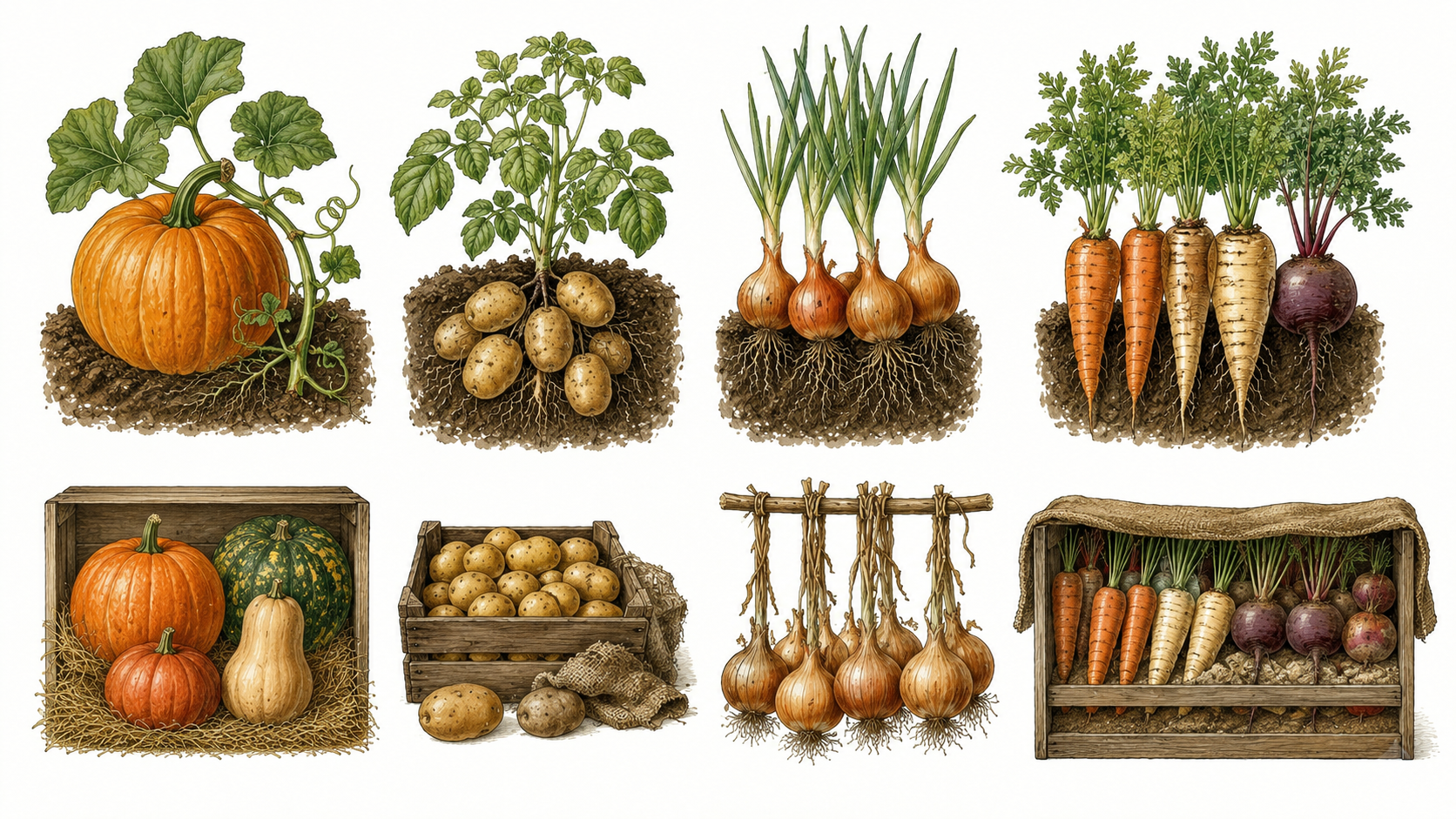
Why proper storage matters
Many autumn vegetables store well when harvested carefully and kept under suitable conditions. Damage and poor storage environments can greatly reduce shelf life.
- Undamaged vegetables usually store longer
- Dry conditions help reduce rot
- Cool temperatures slow aging
- Regular checks prevent problems from spreading
Harvesting squash correctly
Hokkaido and butternut squash are usually harvested in late summer or autumn. Mature fruits have firm skin and drier stems.
- Harvest fruits in dry weather if possible
- Leave the stem attached
- Handle squash carefully
- Sort out damaged fruits before storage
Harvesting and storing potatoes
Potatoes are best harvested during dry weather. A short drying period after harvest helps prepare the tubers for storage.
- Use damaged potatoes first
- Store tubers in darkness
- Choose cool and dry rooms
- Check regularly for rotting potatoes
Storing onions and root vegetables
Onions, carrots, and beetroot all need slightly different storage conditions. Stable, dry conditions are especially important.
- Allow onions to dry thoroughly
- Store carrots in cool conditions
- Handle beetroot carefully
- Use damaged roots sooner
Suitable storage places
Not every room is equally suitable for vegetable storage. Temperature, humidity, and airflow strongly affect storage life.
- Use cool cellars or pantry spaces
- Avoid direct sunlight
- Ensure good ventilation
- Do not stack vegetables too densely
Harvesting during dry weather
Dry harvesting conditions often improve storage quality. Wet soil and damp vegetables increase the risk of damage and rot.
- Avoid harvesting directly after rain
- Remove soil gently
- Do not wash vegetables unnecessarily
- Handle fruits and roots carefully
Preparing vegetables for storage
- 1
Harvest carefully
Avoid bruises and injuries during harvest.
- 2
Remove excess soil
Brush off loose soil gently or allow it to dry.
- 3
Sort vegetables
Remove damaged or unhealthy produce.
- 4
Store correctly
Keep vegetables cool, dry, and well ventilated.
- 5
Check regularly
Inspect stored vegetables for rot or spoilage.
Common mistakes to avoid
- Storing wet vegetables immediately
- Keeping damaged produce with healthy vegetables
- Storage rooms that are too warm
- Poor airflow
- Not checking stored vegetables regularly
Frequently asked questions
Why should squash be harvested with the stem attached?
An intact stem often improves storage life.
Should potatoes be washed before storage?
Potatoes are usually stored unwashed for longer keeping quality.
Why is regular storage inspection important?
Rotting vegetables can quickly affect other stored produce nearby.
Internal links
Related plants
Guides
Related guides
Guide
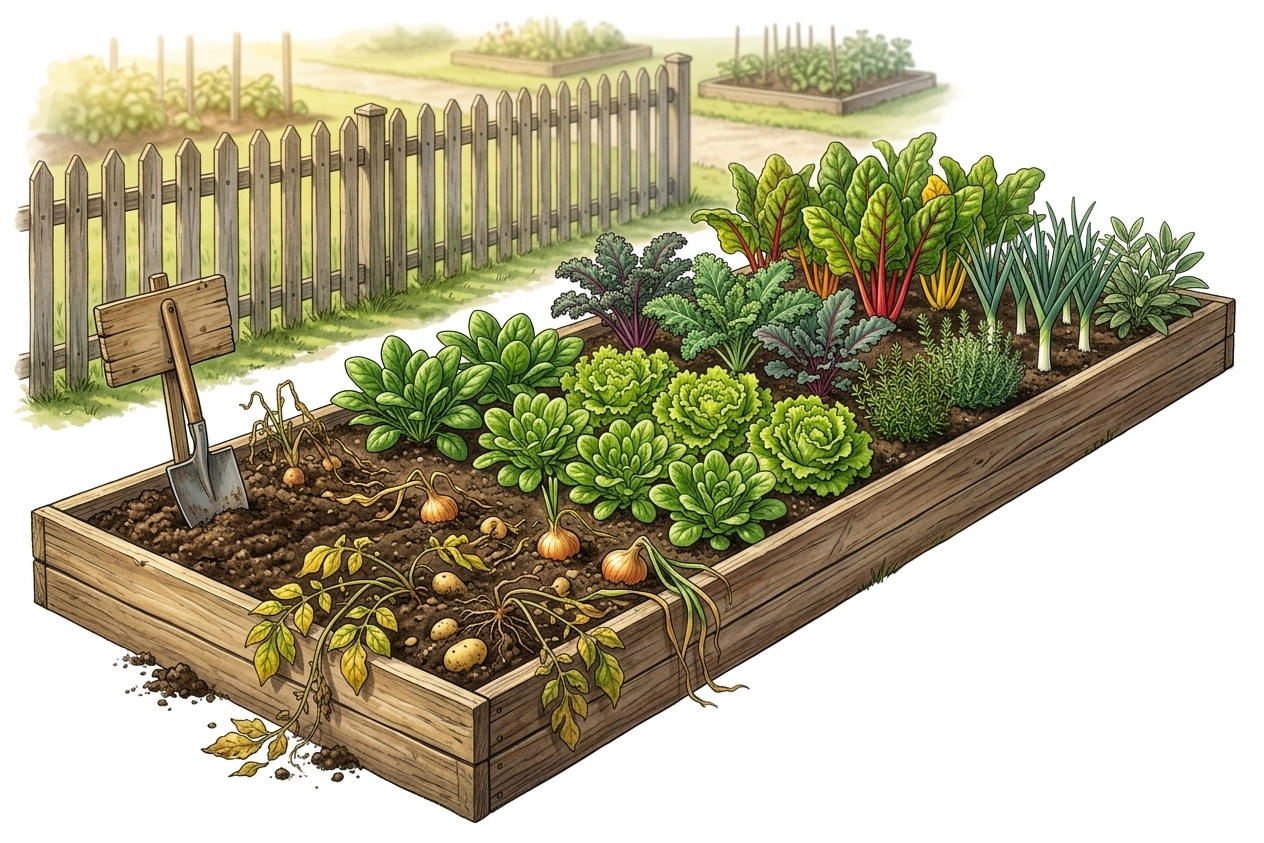
Replanting Raised Beds in Late Summer
After potatoes and onions, raised beds can stay productive. These follow-up crops provide fresh harvests into autumn and winter.
Guide
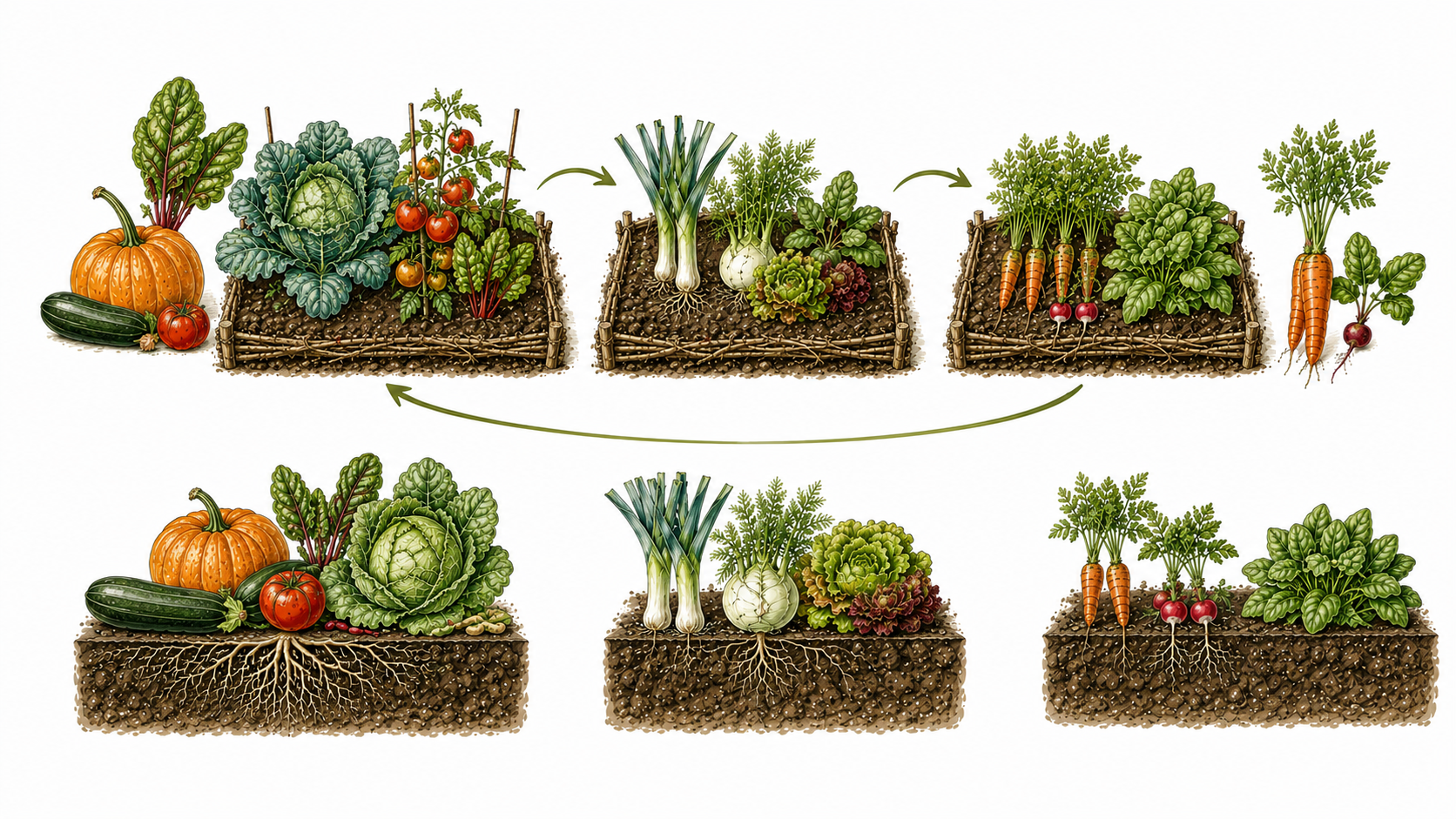
Crop Rotation in Vegetable Gardens Explained
Learn how to plan crop rotation with heavy, medium, and light feeders to keep vegetable beds productive and balanced.
Guide
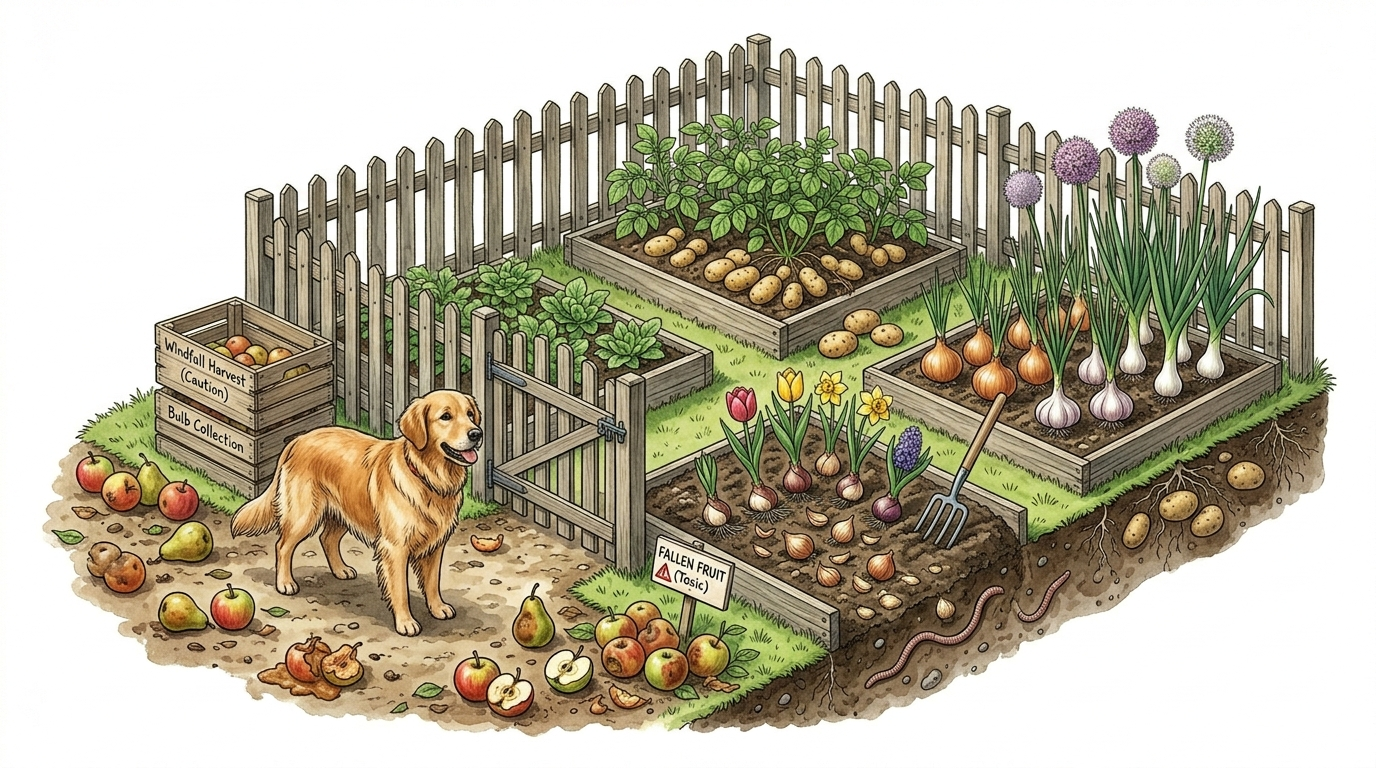
Dogs in the Garden: Windfall Fruit and Risks
Keep your garden dog-safe by managing windfall fruit, seeds, stored crops, and potentially problematic plant parts.
Guide
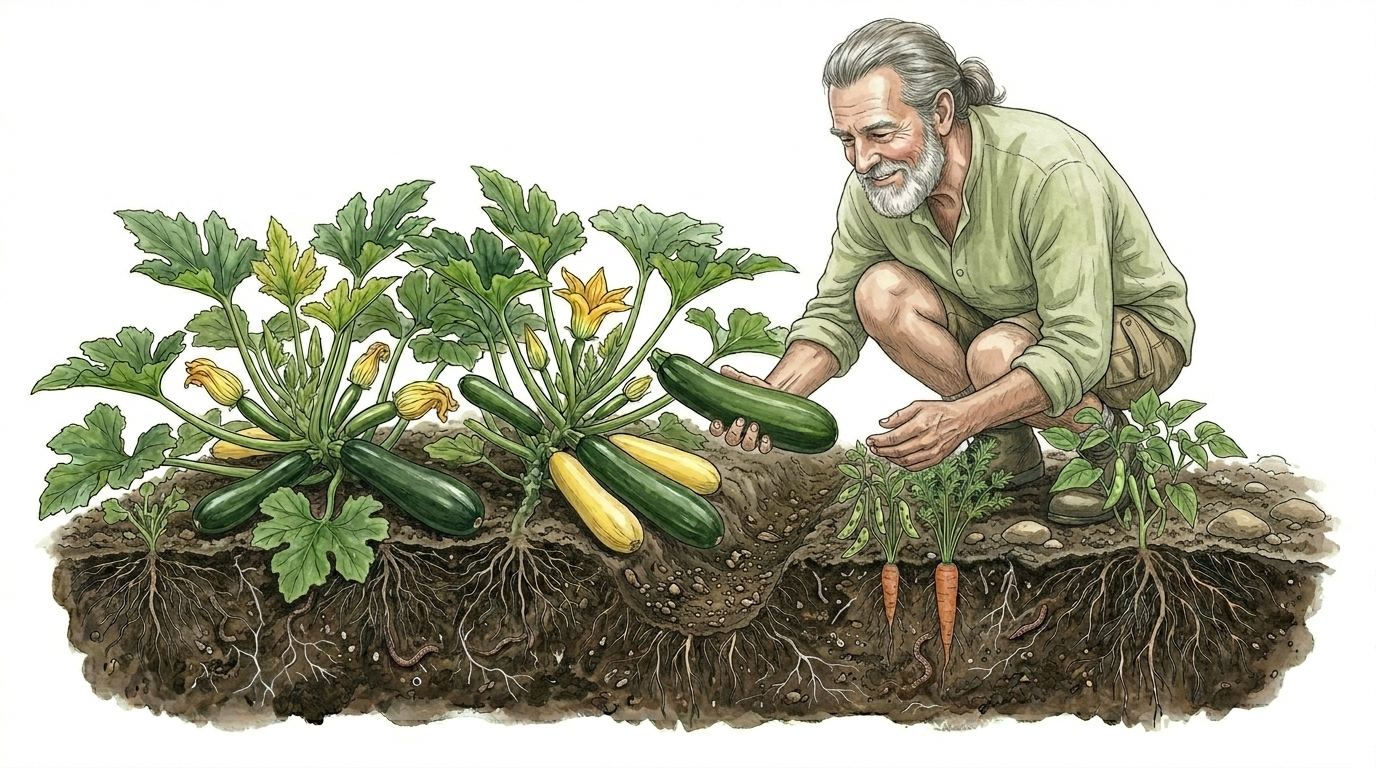
Growing Zucchini: Spacing, Pollination and Mildew
Learn how to grow zucchini with the right site, spacing, pollination support, and practical tips to prevent powdery mildew.