Guide
What to Sow in June: Succession Crops and Autumn Harvests
June is a busy growing month, but many garden beds still offer space for new crops. Succession sowing and fast-growing vegetables help fill gaps while preparing for harvests later in the season.
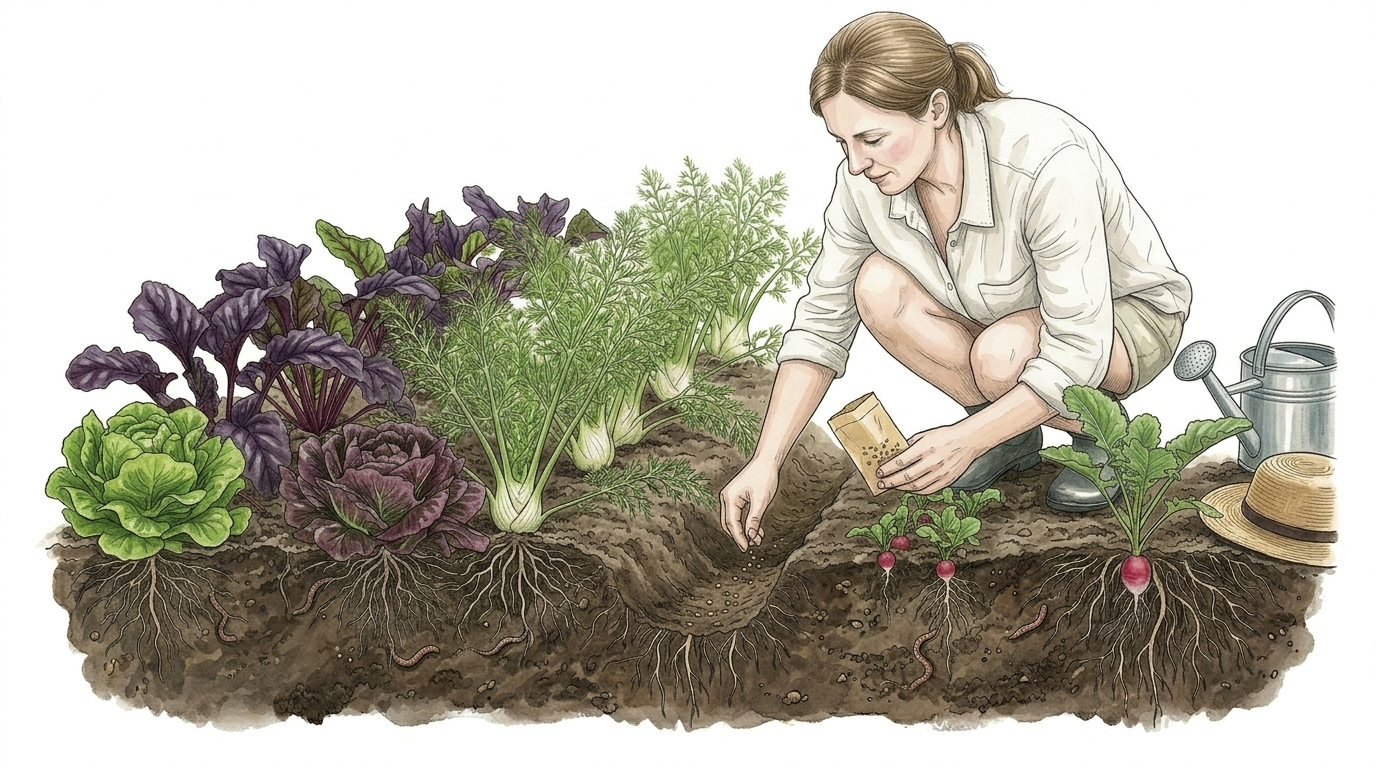
Why June is an important sowing month
Many early crops are harvested or slow down by June, creating open spaces in the garden that are ideal for new sowings.
- Warm soil supports fast germination
- Many crops grow quickly at this time of year
- Empty spaces can be replanted immediately
- Succession sowing extends harvests into autumn
Fast crops for succession sowing
Quick-growing vegetables are especially useful in June for making the most of free garden space.
- Radishes for fast summer harvests
- Cut-and-come-again lettuce for regular leaf harvests
- Head lettuce for fresh salads
- Beetroot for summer and autumn harvests
Gap fillers between larger crops
Small vegetables can be sown between slower-growing or widely spaced plants to use the bed more efficiently.
- Radishes between cabbage plants
- Leaf lettuce along bed edges
- Fast crops between young squash or zucchini plants
- Short rows instead of large sowing areas
Planning for autumn harvests
June is already the time to think ahead to autumn. Some vegetables need several months to mature and should be sown now.
- Kale for autumn and winter harvests
- Florence fennel for late summer and autumn
- Beetroot for storage and autumn meals
- Further lettuce sowings for continuous harvests
Sowing during warm weather
Soil often dries out more quickly in June than in spring. Consistent moisture is therefore especially important for successful germination.
- Keep freshly sown rows evenly moist
- Water in the morning or evening if possible
- Mulch helps reduce evaporation
- Use light shade during extreme heat
How to reuse beds after harvest
- 1
Remove the old crop
Clear harvested plants completely and lightly loosen the soil surface.
- 2
Prepare the soil
Add compost if needed and remove larger weeds.
- 3
Choose a new crop
Select fast-growing vegetables or crops suitable for autumn harvests.
- 4
Sow and water
Sow the seeds and keep the soil evenly moist during germination.
Common June gardening mistakes
- Leaving free beds unused
- Allowing seed rows to dry out
- Sowing too densely
- Not planning succession sowings
- Sowing heat-sensitive crops without protection
Frequently asked questions
Can vegetables still be sown in June?
Yes, many lettuces, radishes, beetroot, and autumn crops can still be sown successfully.
Which vegetables are good for succession sowing?
Fast-growing crops such as cut lettuce and radishes work especially well.
Why do seeds sometimes germinate poorly in June?
High temperatures and dry soil can reduce germination if watering is inconsistent.
Internal links
Related plants
Guides
Related guides
Guide
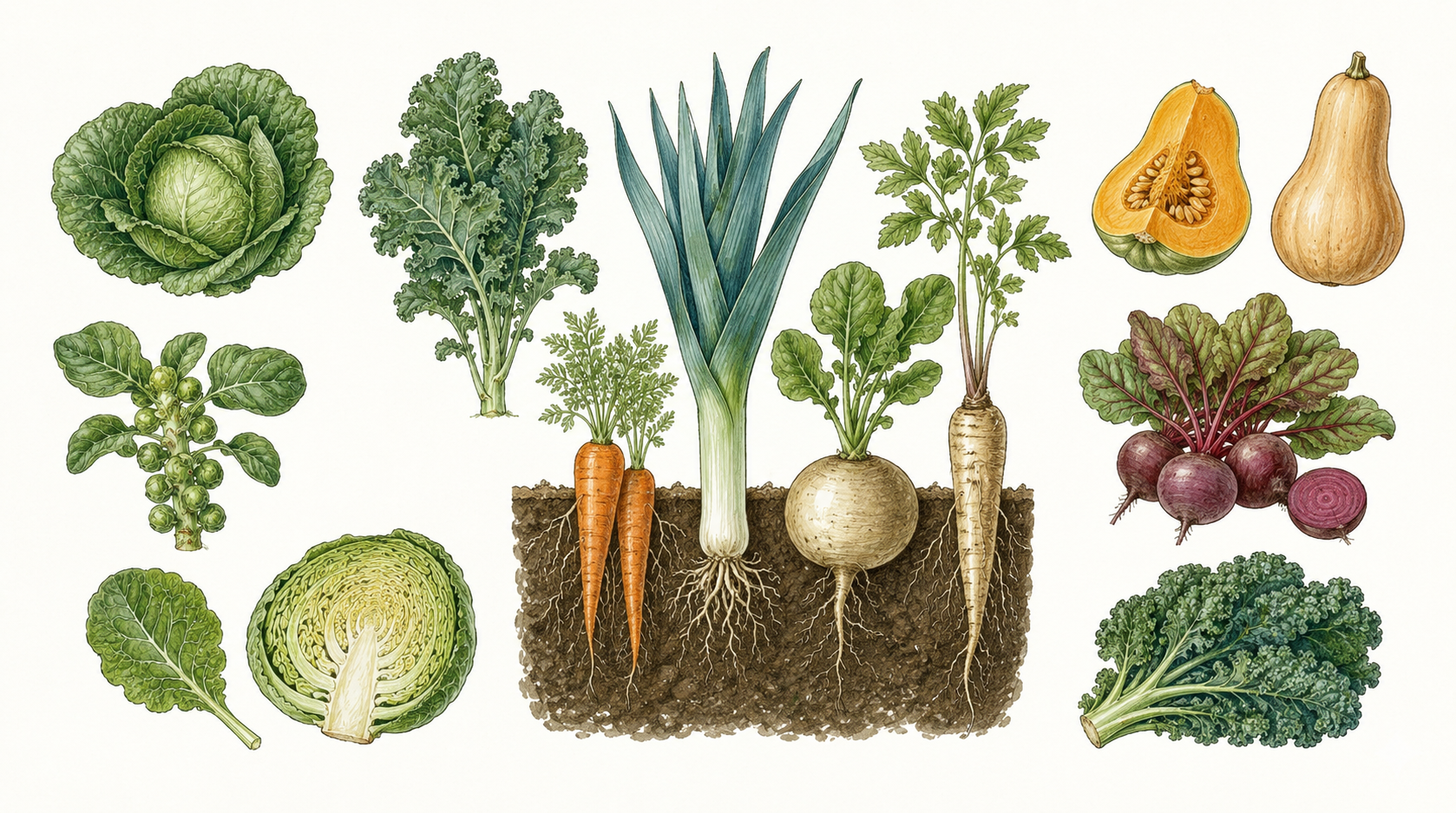
Growing Autumn Vegetables for Winter Harvests
Learn how to grow autumn vegetables such as kale, spinach, lamb's lettuce, and leeks for harvests into winter.
Guide
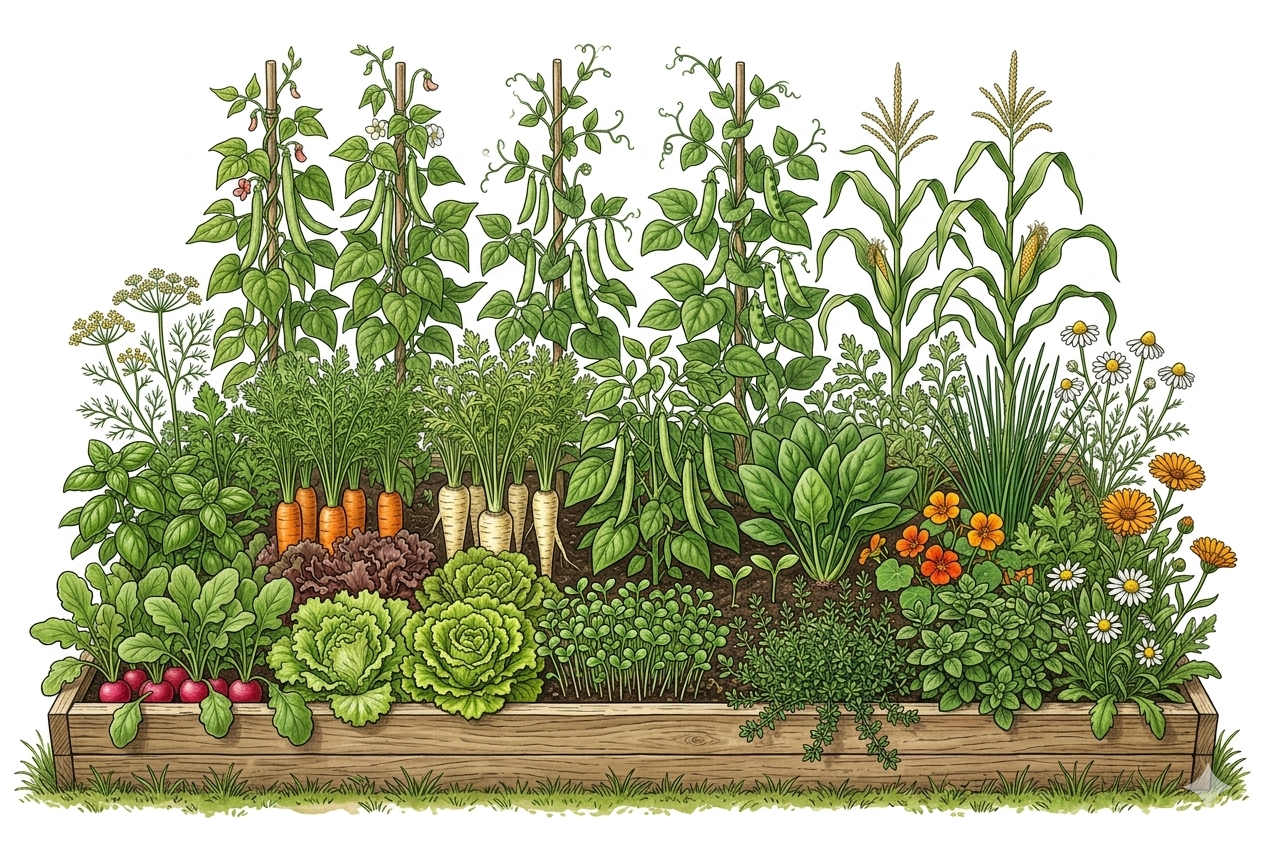
Small Garden Bed Planning: Combine 20 Crops Well
Use small beds efficiently by combining 20 vegetables and herbs, planning successions, and avoiding wasted gaps.
Guide
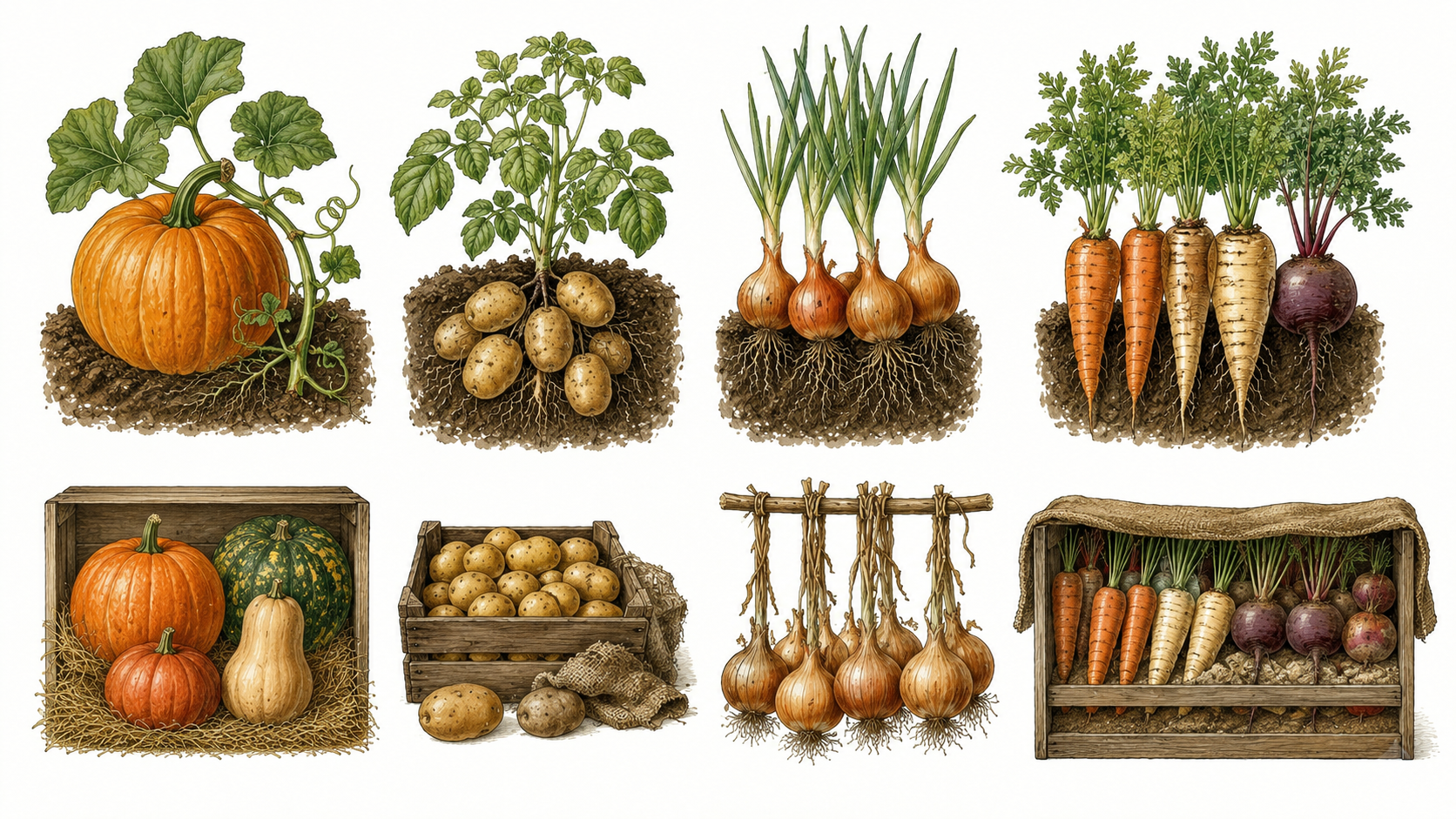
Autumn Harvest and Storage for Squash and Root Crops
Learn how to harvest and store squash, potatoes, onions, and root vegetables for longer freshness through autumn and winter.
Guide
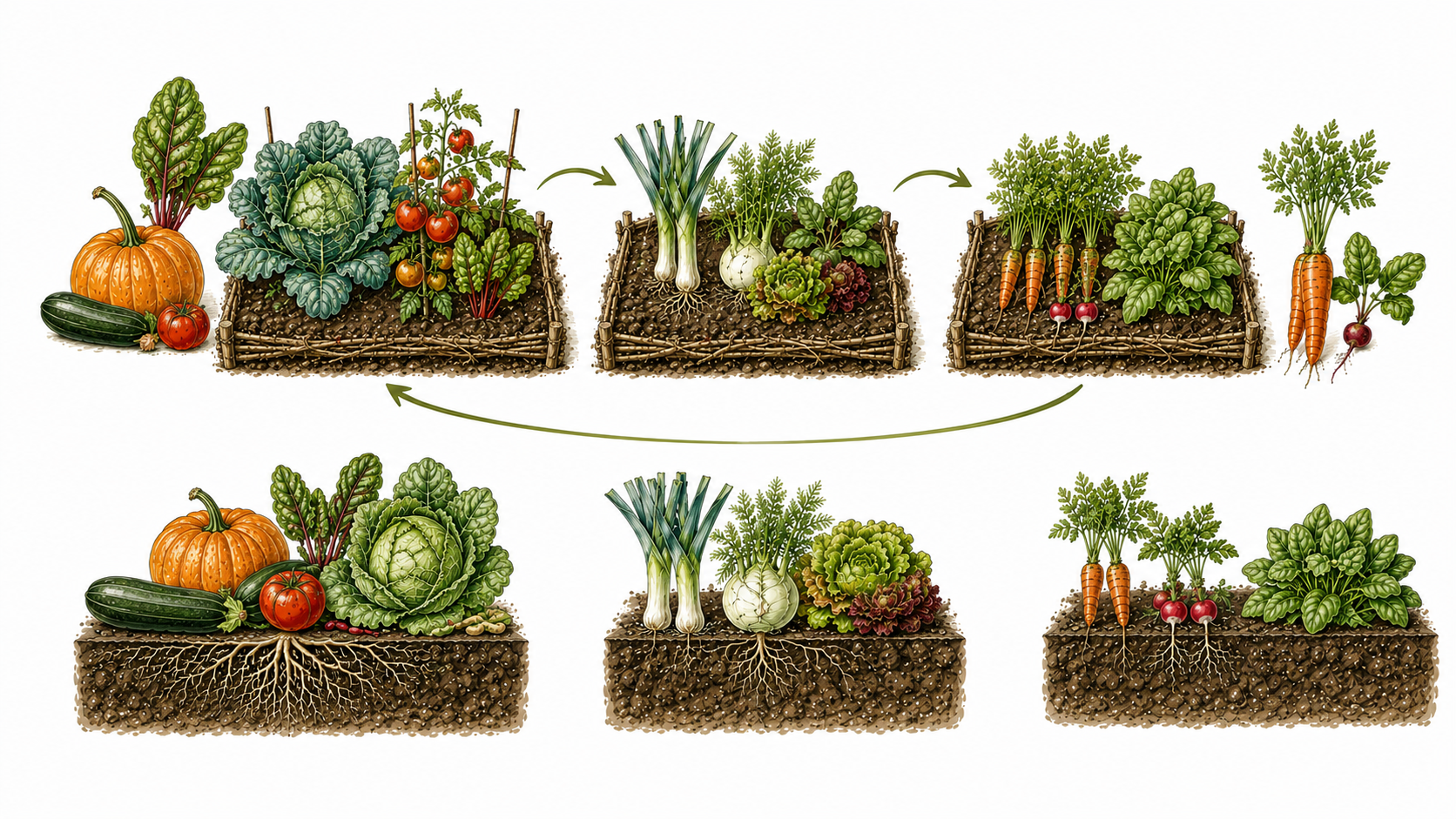
Crop Rotation in Vegetable Gardens Explained
Learn how to plan crop rotation with heavy, medium, and light feeders to keep vegetable beds productive and balanced.