Plant Profile
Mesembryanthemum crystallinumMesembryanthemum crystallinum
Iceplant, also known as Iceplant, is a fast-growing plant in the Morning Glory family.
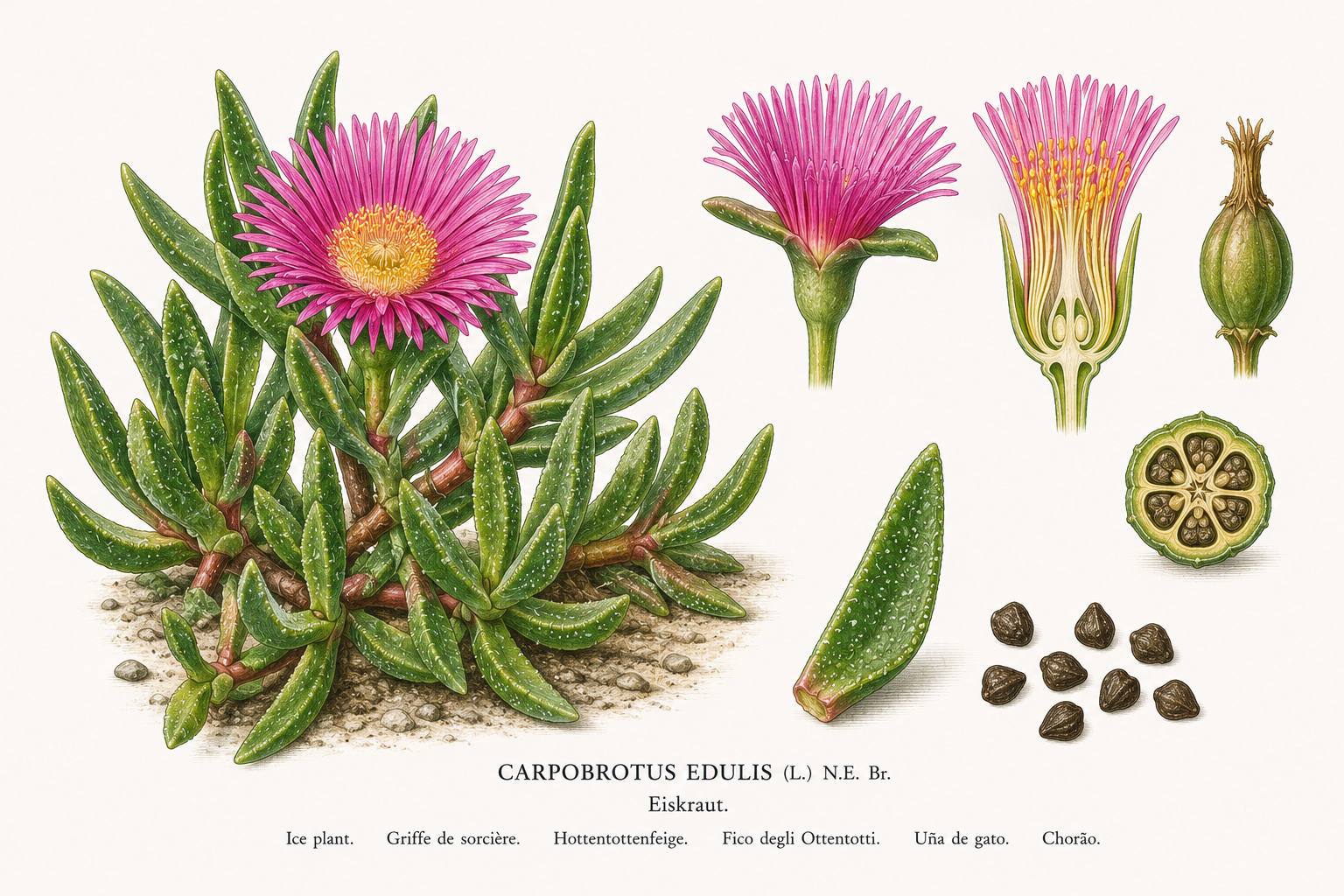
Quick profile
Key data
Suitable growing locations:
Good neighbors
tomato container edgesother drought-tolerant herbs
Avoid
high-water-demand crops
Indoor & direct sowing
Mesembryanthemum crystallinum: Sowing and germination
Start warm and bright.
Sow only into warm soil after frost risk.
Planting & site
Mesembryanthemum crystallinum: Planting and spacing
Transplant after frost with spacing.
Temperature & frost
Mesembryanthemum crystallinum: Temperature and site
Water & nutrients
Mesembryanthemum crystallinum: Water, nutrients and care
Container & growth
Mesembryanthemum crystallinum: Container, support and growth
Year plan
Mesembryanthemum crystallinum Calendar
Relevant now
June
- No additional single task
Next up
July
- No additional single task
Monthly tasks
Single tasks from monthly data; repeated seasonal windows are shown in the overview above.
January
Quiet month
February
Quiet month
March
No additional single task
April
No additional single task
May
No additional single task
June
No additional single task
August
No additional single task
September
No additional single task
October
Quiet month
November
Quiet month
December
Quiet month
Flowering & pollination
Mesembryanthemum crystallinum Flowering & pollination
Self-fertility
high
Pollinator needed
no
Overview
Iceplant does not require pollination by insects.
Notes
Iceplant is self-fertile and does not require pollination by insects.
Companion guide
Mesembryanthemum crystallinum Companion guide
Good neighbors
tomato container edgesother drought-tolerant herbs
Avoid
high-water-demand crops
Use & storage
Mesembryanthemum crystallinum Use & storage
Cut leaves and shoot tips continuously.
Storage
Cool, dry storage
Storage life
Ice flowers can be stored for about 1 week.
Harvest
Cut leaves and shoot tips continuously.
Processing
After harvest
Ice flowers should be used immediately after harvesting.
Edibility & safety
Mesembryanthemum crystallinum Edibility & safety
For people
In brief: which parts are edible, which parts remain risky, and whether raw consumption makes sense.
Safety notes
No known toxic effects.
Animal safety
For many animals, this plant is generally low-risk: 10 animal types are rated suitable or mostly suitable. Quantity, plant part, and individual tolerance still matter.
Each row shows which parts are more suitable and which parts are critical.
Companion animals
 Dog
DogFlowers, Leaves
Seeds
Flowers, Leaves
Seeds
Overconsumption, Consumption of seeds
Gastrointestinal upset, Vomiting
observe
Flowers and leaves of ice plant are safe for dogs in small amounts as an occasional treat. Seeds should be avoided as their safety profile is unclear and they may cause gastrointestinal upset if consumed in excess. If large amounts are ingested or symptoms occur, consult a veterinarian.
Open animal page Cat
CatNo suitable parts listed
No risk parts listed
No suitable parts listed
No risk parts listed
unknown
Flowers and leaves of ice plant are safe for cats and can be occasionally fed as a treat. Seeds should be avoided due to possible intolerance. Consumption of large amounts may cause mild gastrointestinal upset.
Open animal page Rabbit
Flowers, Leaves
Seeds
Flowers, Leaves
Seeds
Seed ingestion
usually no action needed
Flowers and leaves of ice plant can be given to rabbits as an occasional treat. Seeds should be avoided due to possible mucosal irritation. Overconsumption of leaves may lead to soft stool due to high water and salt content.
Open animal page Guinea pig
Flowers, Leaves
Seeds
Flowers, Leaves
Seeds
Seed ingestion
observe
Flowers and leaves can be fed in small amounts as a treat. Seeds should be avoided due to possible oxalic acid or other compounds. No specific poisoning symptoms documented in small mammals, but caution advised due to possible gastrointestinal irritation from overfeeding.
Open animal page Hamster
Flowers, Leaves
Seeds
Flowers, Leaves
Seeds
Seed ingestion
usually no action needed
No direct species-specific source was found for hamsters. This is a cautious inference from the rabbits profile and the known plant-part risks.
Open animal page Budgie
Flowers, Leaves
Seeds
Flowers, Leaves
Seeds
Seed ingestion
observe
Flowers and leaves of Mesembryanthemum crystallinum are suitable for budgies in small amounts as an occasional treat. Seeds should be avoided as their safety profile is unclear and they may be harmful. No known toxic compounds in the edible parts.
Open animal pageFarm animals
 Horse
HorseNo suitable parts listed
No risk parts listed
No suitable parts listed
No risk parts listed
unknown
Ice plant (Mesembryanthemum crystallinum) is suitable as forage for horses. Flowers and leaves can be fed raw. Seeds should be avoided due to potential oxalic acid. No known toxic effects observed with normal feeding.
Open animal page Chicken
No suitable parts listed
No risk parts listed
No suitable parts listed
No risk parts listed
unknown
Flowers and leaves of ice plant are suitable for chickens in small amounts as a treat. Seeds should be avoided as their safety profile is unclear. No known toxic compounds or symptoms observed with flower and leaf consumption. For seed ingestion, observe and contact vet if symptoms occur.
Open animal page Duck
DuckFlowers, Leaves
Seeds
Flowers, Leaves
Seeds
Avoid seed consumption
usually no action needed
Flowers and leaves of ice plant are edible for ducks in moderation and are occasionally consumed as a treat. Seeds should be avoided due to possible oxalates or other compounds, although no specific poisoning cases in ducks are documented. As a conservative classification, seed ingestion is considered a risk.
Open animal page Goose
GooseFlowers, Leaves
Seeds
Flowers, Leaves
Seeds
Avoid seed consumption
usually no action needed
No direct species-specific source was found for geese. This is a cautious inference from the ducks profile and the known plant-part risks.
Open animal page Sheep
SheepFlowers, Leaves
Seeds
Flowers, Leaves
Seeds
Seed ingestion
usually no action needed
Flowers and leaves of Mesembryanthemum crystallinum are suitable for sheep in small amounts as an occasional treat. Seeds should be avoided as their safety profile is unclear. No known toxic compounds or symptoms from leaf or flower consumption. For seed ingestion, observe and contact vet if symptoms occur.
Open animal page Goat
GoatFlowers, Leaves
Seeds
Flowers, Leaves
Seeds
Seed ingestion
usually no action needed
Flowers and leaves of Mesembryanthemum crystallinum are edible for goats in moderation with no known toxic effects. Seeds should be avoided as their safety profile is unclear.
Open animal page Cattle
Flowers, Leaves
Seeds
Flowers, Leaves
Seeds
Avoid seed consumption
usually no action needed
Flowers and leaves can be fed in small amounts as treats; seeds should be avoided due to possible oxalates or other compounds. No serious poisoning cases reported.
Open animal page Pig
PigNo suitable parts listed
No risk parts listed
No suitable parts listed
No risk parts listed
unknown
Flowers and leaves of ice plant can be fed in moderation as a treat, but seeds should be avoided due to possible oxalates or other compounds. Consumption of large amounts may cause gastrointestinal upset.
Open animal pageThese guidelines are for general information only and do not replace veterinary diagnosis. If critical plant parts were ingested or the animal shows unusual behaviour or symptoms, seek veterinary advice.
Max risk
unknown
Highest status
not established
Urgency
unknown
Saving seed
Mesembryanthemum crystallinum Saving seed
Storage
Seeds should be stored in a cool, dry place.
Method
Method: dry, Notes: Seeds should be stored dry.
Health
Pests, Diseases
Plant health
Diagnosis help
Mesembryanthemum crystallinum Diagnosis help
Pest groups
Disease groups
Prevention
Diagnosis
Assess symptoms together with site, weather, and growth stage.
FAQ
Is Mesembryanthemum crystallinum safe for Dog?
Mesembryanthemum crystallinum is classified as moderation only for Dog. Risk: unknown. Urgency: observe. Flowers and leaves of ice plant are safe for dogs in small amounts as an occasional treat. Seeds should be avoided as their safety profile is unclear and they may cause gastrointestinal upset if consumed in excess. If large amounts are ingested or symptoms occur, consult a veterinarian.
Is Mesembryanthemum crystallinum safe for Cat?
Mesembryanthemum crystallinum is classified as not established for Cat. Risk: unknown. Urgency: unknown. Flowers and leaves of ice plant are safe for cats and can be occasionally fed as a treat. Seeds should be avoided due to possible intolerance. Consumption of large amounts may cause mild gastrointestinal upset.
Is Mesembryanthemum crystallinum safe for Rabbit?
Mesembryanthemum crystallinum is classified as moderation only for Rabbit. Risk: unknown. Urgency: usually no action needed. Flowers and leaves of ice plant can be given to rabbits as an occasional treat. Seeds should be avoided due to possible mucosal irritation. Overconsumption of leaves may lead to soft stool due to high water and salt content.
Is Mesembryanthemum crystallinum safe for Guinea pig?
Mesembryanthemum crystallinum is classified as moderation only for Guinea pig. Risk: unknown. Urgency: observe. Flowers and leaves can be fed in small amounts as a treat. Seeds should be avoided due to possible oxalic acid or other compounds. No specific poisoning symptoms documented in small mammals, but caution advised due to possible gastrointestinal irritation from overfeeding.
Guides
Related guides
Guide
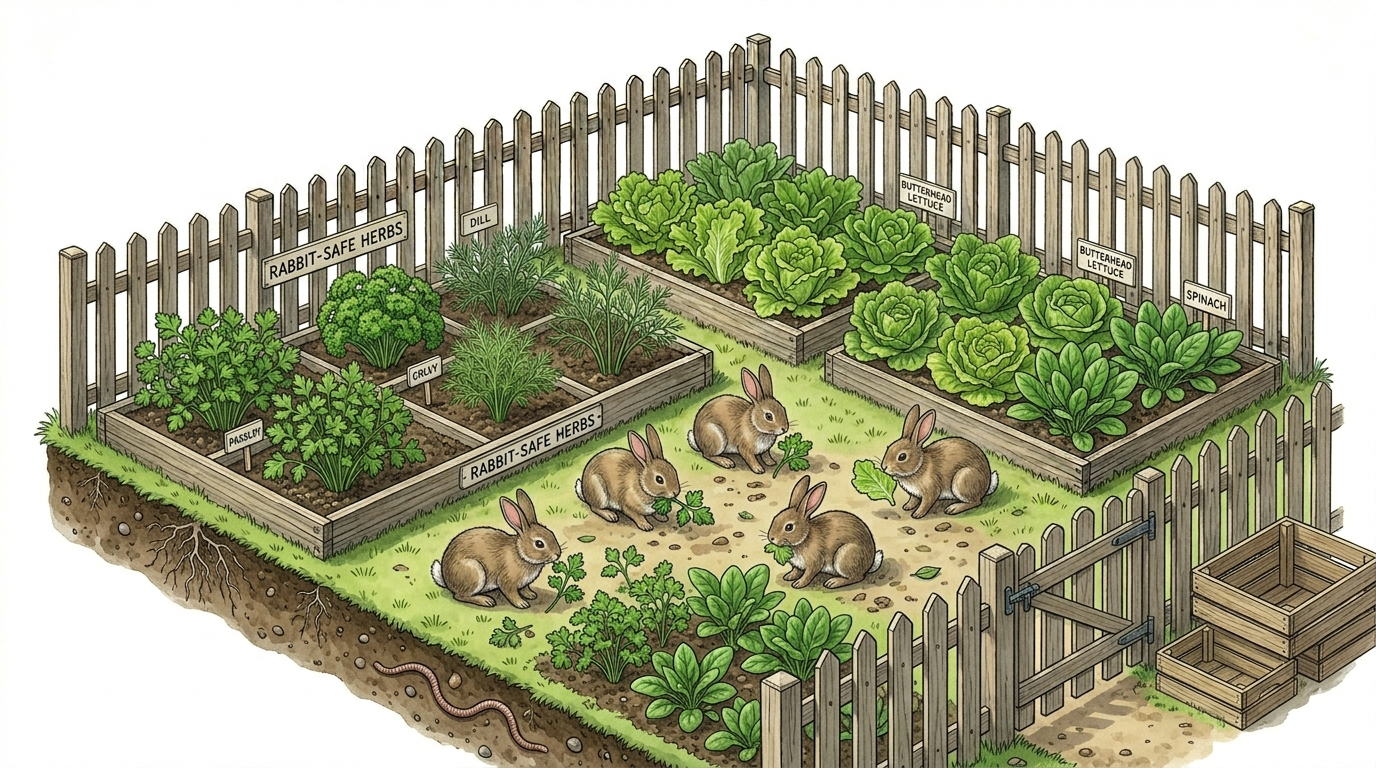
Rabbits in the Garden: Herbs and Vegetables
Learn how to choose suitable herbs and vegetables for rabbits, grow feeding plants, and plan a rabbit-friendly garden.
Guide
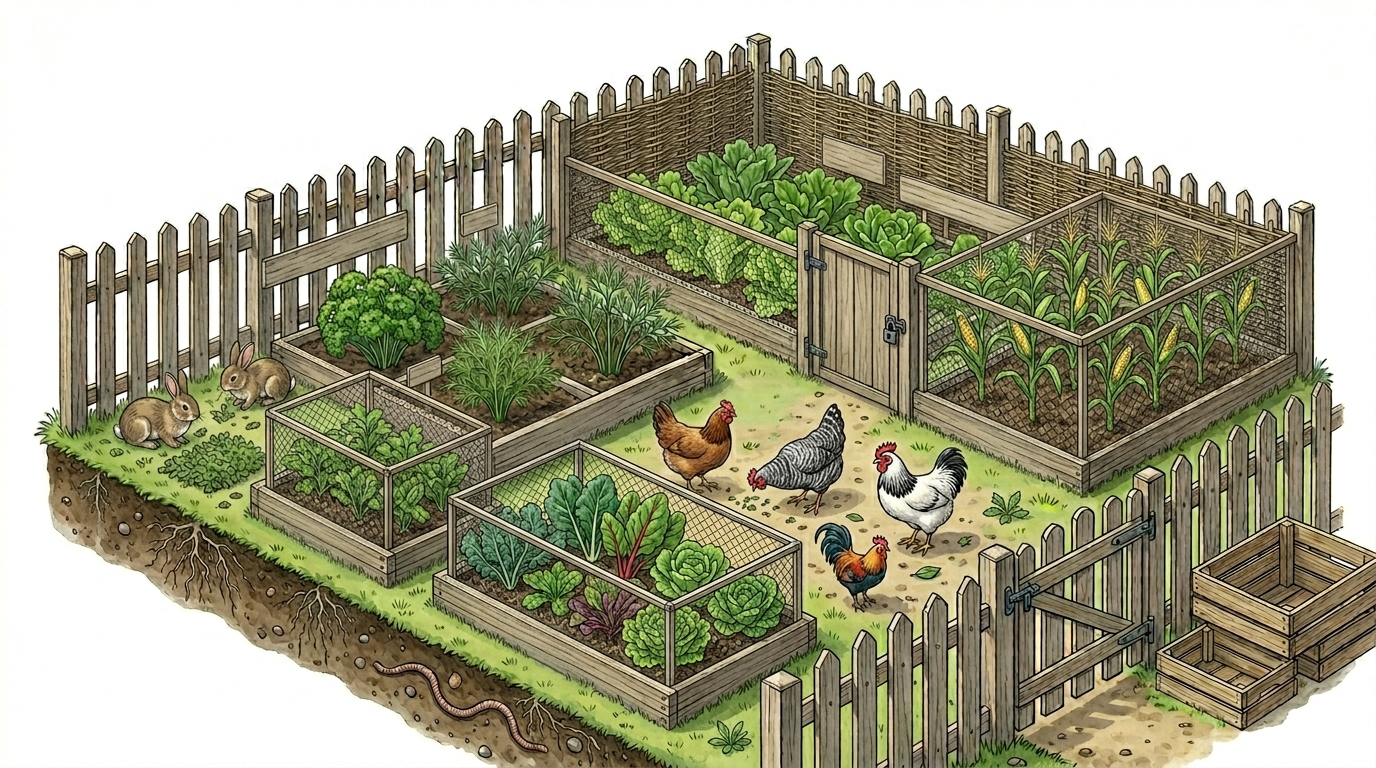
Chickens in the Garden: Safe Plants and Zones
Learn how to design a chicken-friendly garden with suitable plants, protected beds, and well-planned activity areas.
Guide
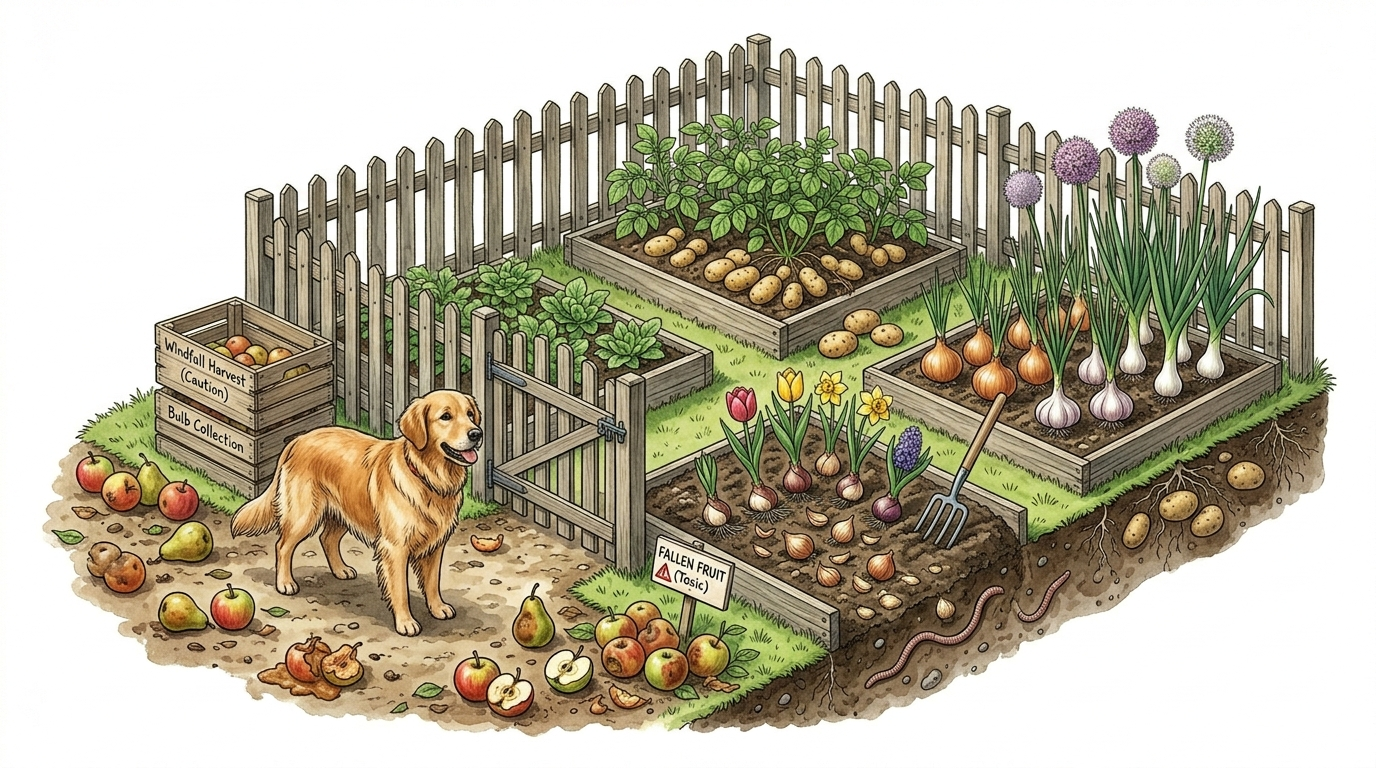
Dogs in the Garden: Windfall Fruit and Risks
Keep your garden dog-safe by managing windfall fruit, seeds, stored crops, and potentially problematic plant parts.
Guide
Horse Pastures and Garden Plants: Safety Checks
Learn how to identify risks near horse pastures, fences, turnout areas, fruit trees, and garden planting zones.
Internal links
Related plants
Sources
Public sources
- Wikidata entity
Wikidata · 2026-05-13
- GBIF species match
GBIF · 2026-05-13
- Deutschsprachige Wikipedia: Eiskraut
Wikipedia · 2026-05-13
- English Wikipedia: Mesembryanthemum crystallinum
Wikipedia · 2026-05-13