Guide
Chickens in the Garden: Safe Plants and Zones
Chickens and gardens can work extremely well together. Chickens help search for insects, scratch the soil, and make use of garden materials. At the same time, young crops, vegetable beds, and certain plant parts need protection. Good garden zoning benefits both plants and poultry.
Published
2026-05-28
Updated
2026-05-28
Author
Wild-Wuchs Redaktion
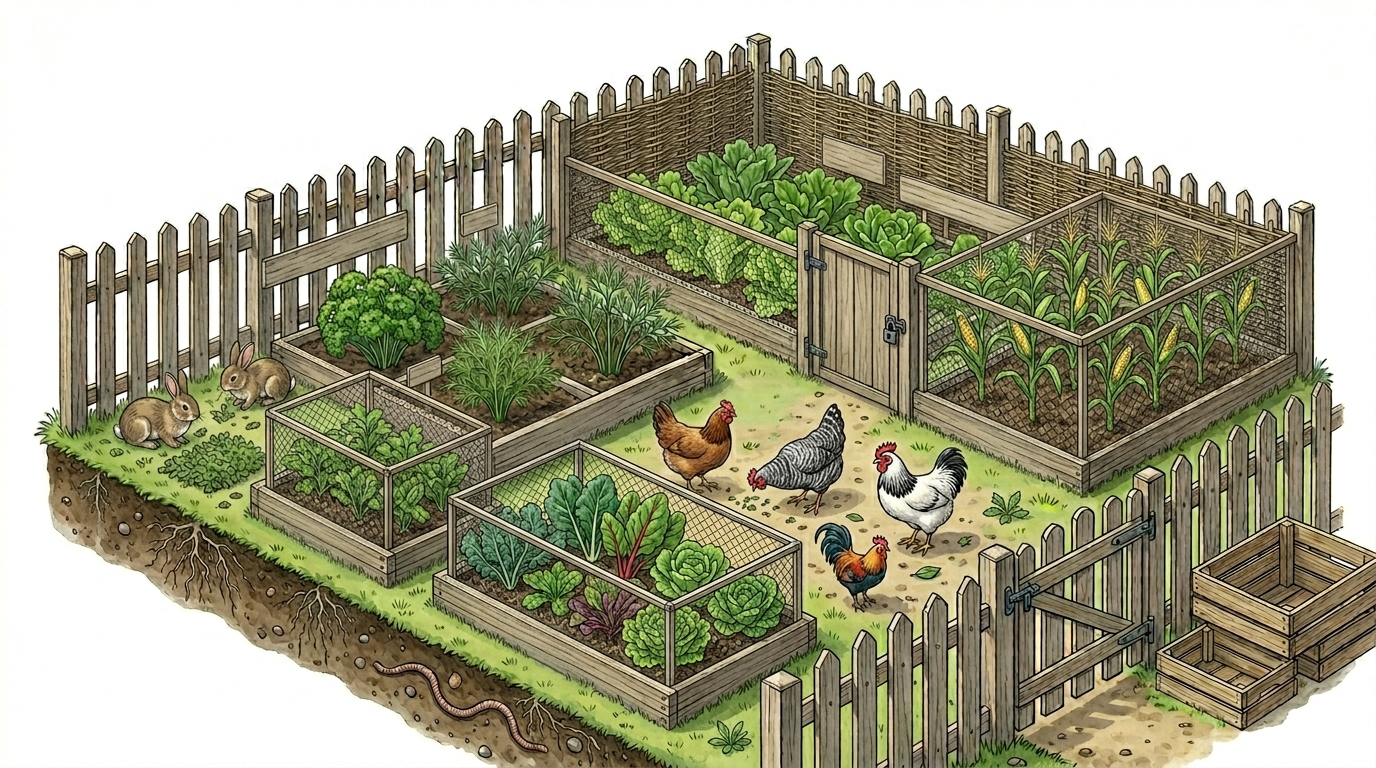
Divide the garden into zones
The simplest way to create a chicken-friendly garden is to divide it into clear zones. This allows chickens to use some areas while protecting sensitive crops.
- plan dedicated chicken run areas
- fence vegetable beds when necessary
- protect young plants carefully
- separate compost and feed storage
- provide shade and resting areas
Suitable plants for chicken gardens
Many vegetables and garden plants can be part of a chicken-friendly garden. Plants that provide shade, structure, or suitable harvestable parts are especially useful.
- sweet corn for seasonal shade and screening
- lettuce in protected feeding beds
- spinach and Swiss chard in managed harvest areas
- hardy herbs and companion plants
- plants placed away from heavy traffic routes
Identify risky areas
Not all plant parts are equally suitable for chickens. It is important to distinguish between edible harvest products and plant parts that are not intended as feed.
- do not treat tomato foliage and green plant parts as chicken feed
- secure potato foliage and green potato parts
- protect young plants from scratching and pecking
- do not leave cuttings unattended
- inspect compost regularly
Creating feeding beds
A dedicated feeding bed makes management easier while protecting main crops. Suitable plants can be grown and harvested in a controlled way.
- 1
Choose a location
Select an area close to the chicken run.
- 2
Grow suitable plants
Combine leafy vegetables with hardy companion plants.
- 3
Sow regularly
Use staggered sowings to maintain fresh growth.
- 4
Harvest deliberately
Harvest plants yourself rather than letting chickens graze unrestricted.
- 5
Maintain the planting
Remove damaged or unhealthy plants regularly.
Protecting seedlings and beds
Chickens scratch intensely and can damage newly planted crops very quickly. Seedlings and fresh sowings need special protection.
- use low protective barriers
- temporarily secure raised beds
- cover fresh sowings
- delay access to sensitive crops
- guide chicken movement where possible
Harvests, storage, and plant waste
Harvesting often creates plant waste. Not every plant part is automatically suitable for chickens, so materials should be sorted and managed carefully.
- collect plant waste regularly
- remove potato foliage and other unsuitable plant parts
- store harvest crates outside the run
- discard spoiled plant material
- secure compost areas
A safe and enriching chicken run
Chickens make intensive use of their surroundings. A structured run with shade, dust-bathing areas, and enrichment helps reduce unwanted pecking at plants.
- provide shaded areas
- offer dust baths
- add structures and hiding spots
- supply fresh water
- rotate enrichment opportunities
Frequently asked questions
Can chickens roam freely in a vegetable garden?
Yes, but not continuously in all areas. Young plants and fresh sowings usually need protection.
Why are separate garden zones useful?
They protect sensitive crops while still providing chickens with a varied environment.
Are tomatoes and potatoes problematic for chickens?
Certain plant parts such as tomato foliage and potato foliage should not be planned as chicken feed and should be managed carefully.
Is a dedicated feeding bed worthwhile?
Yes. It simplifies planning and helps protect other garden crops from damage.
Internal links
Related plants
Guides
Related guides
Guide
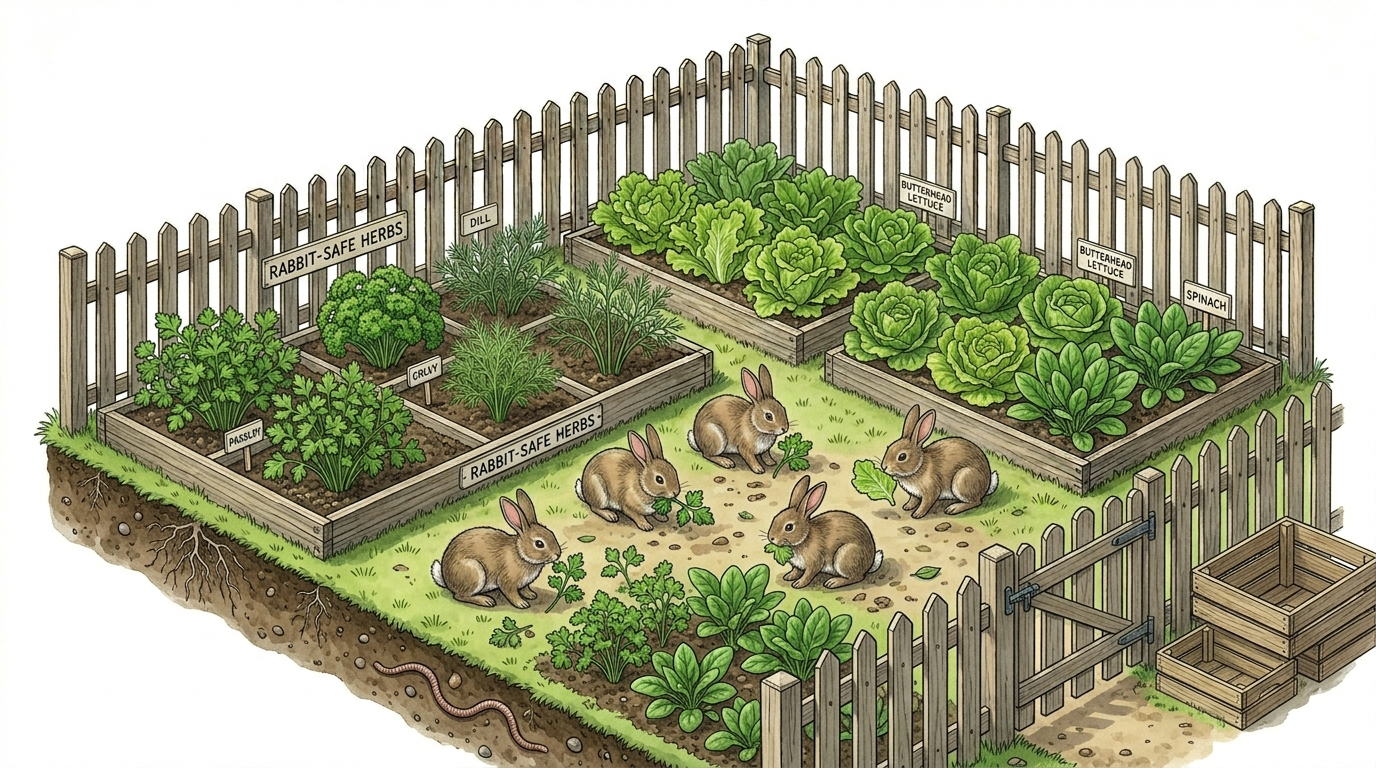
Rabbits in the Garden: Herbs and Vegetables
Learn how to choose suitable herbs and vegetables for rabbits, grow feeding plants, and plan a rabbit-friendly garden.
Guide
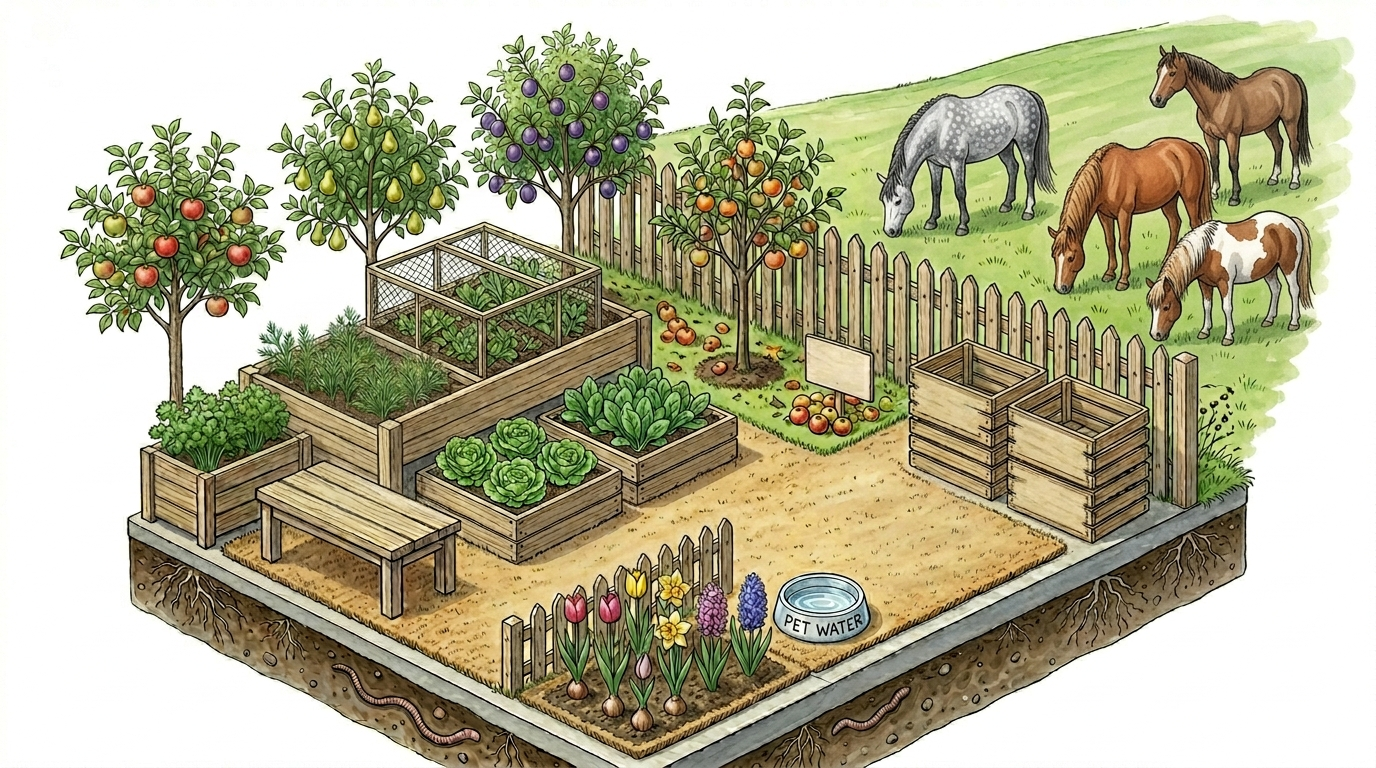
Horse Pastures and Garden Plants: Safety Checks
Learn how to identify risks near horse pastures, fences, turnout areas, fruit trees, and garden planting zones.
Guide
Pets and Nightshades: Tomatoes, Potatoes and More
Learn how to grow tomatoes, potatoes, peppers, and eggplants safely in pet-friendly gardens and understand plant-part risks.
Guide
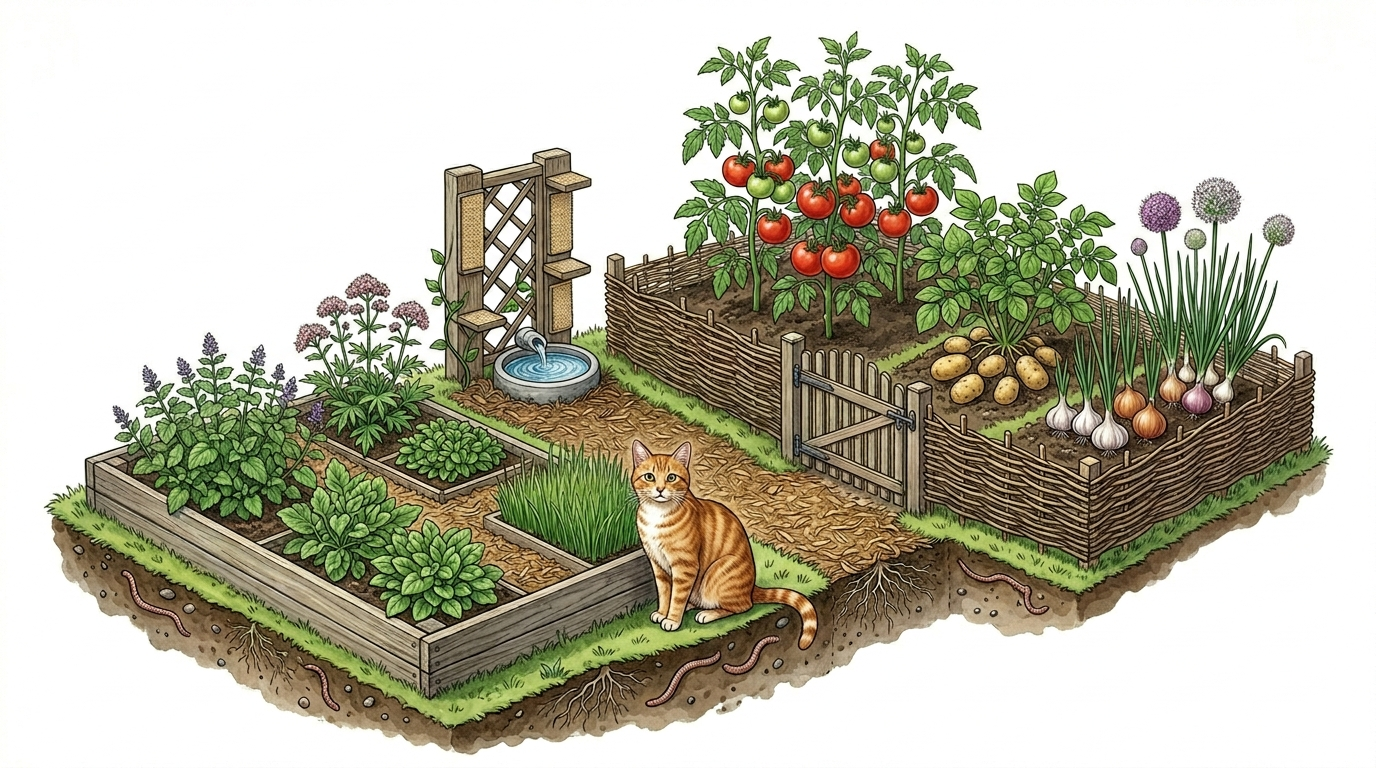
Toxic Garden Plants for Cats: Safer Planning
Learn which garden plants can be risky for cats, how to plan safer beds, and what to do if a cat eats a toxic plant.