Plant Profile
MuskmelonCucumis melo
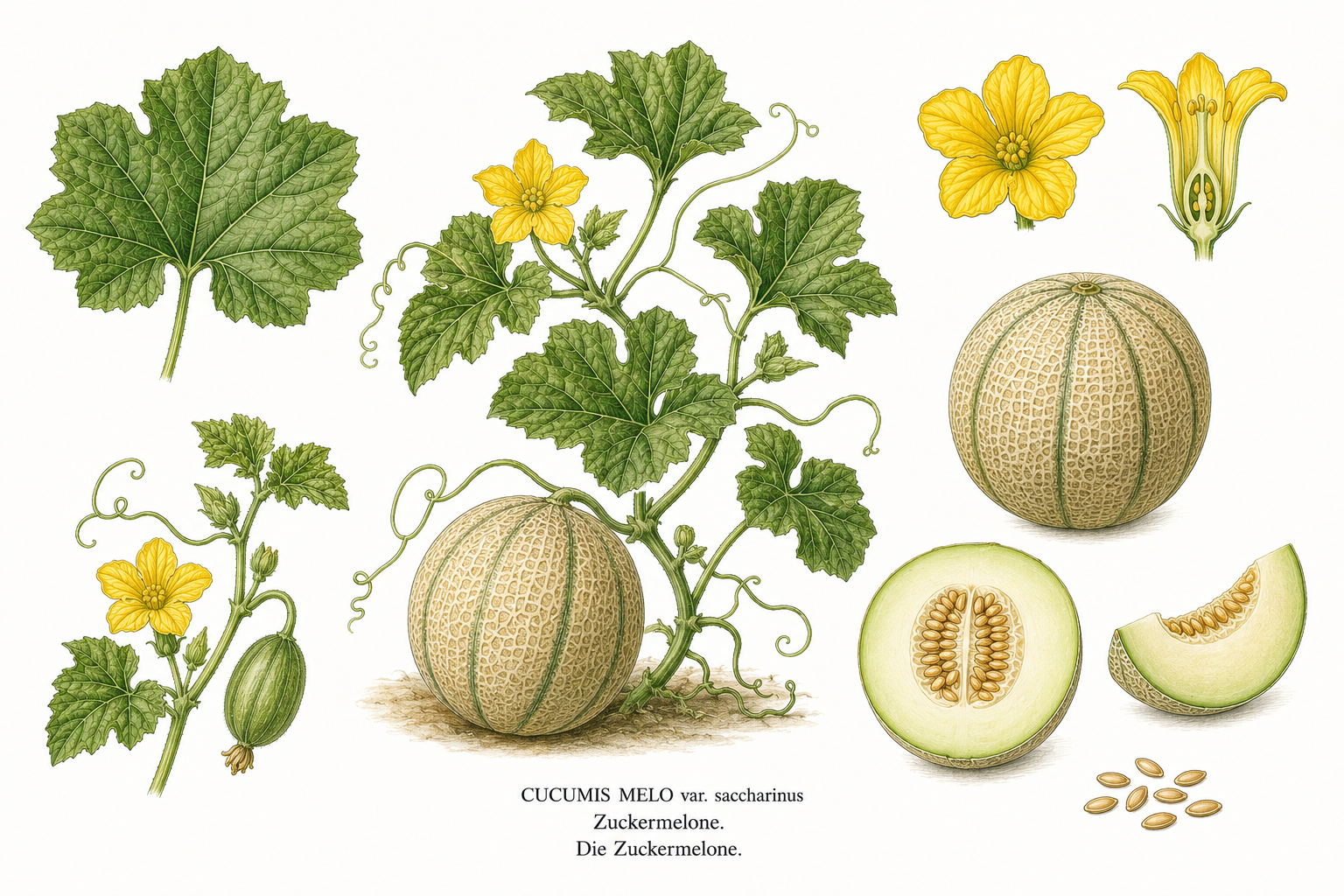
Annual, trailing or climbing herb producing sweet, exceptionally fragrant pepo fruits.
Quick profile
Key data
Suitable growing locations:
Good neighbors
LettuceSpinach
Avoid
Cucumbertomato
Indoor & direct sowing
Muskmelon: Sowing and germination
Sow in pots on a windowsill or in a heated greenhouse with consistent warmth.
Direct outdoor sowing is only recommended in warm wine-growing regions from mid-May after the last frost.
Planting & site
Muskmelon: Planting and spacing
Plant out into beds or the greenhouse from mid-May onwards, once the soil has warmed up sufficiently.
Site & practical notes
Id: moisture_protection, Title: Moisture Management, Text: Always apply water directly to the soil. Wet foliage within a greenhouse environment inevitably triggers mildew outbreaks.
Temperature & frost
Muskmelon: Temperature and site
Water & nutrients
Muskmelon: Water, nutrients and care
Container & growth
Muskmelon: Container, support and growth
Year plan
Muskmelon Calendar
During midsummer peaks, these thirsty, heavy-feeding vines demand daily applications of tepid water at their base.
Recurring tasks
Relevant now
June
- Pinch main shootPromotes the development of essential first-order lateral shoots for higher yields.
Next up
July
- Support setting fruitsProtects the delicate rind from direct contact with damp soil.
Monthly tasks
Single tasks from monthly data; repeated seasonal windows are shown in the overview above.
January
Quiet month
February
Quiet month
March
Quiet month
April
Direct sowing
- Sowing under glassConsistent germination temperatures are vital for uniform seedling emergence.
May
Planting
- Planting outdoorsMelons are highly sensitive to late cold snaps.
June
Pruning
- Pinch main shootPromotes the development of essential first-order lateral shoots for higher yields.
August
Harvest
- Main harvestCheck regularly for small cracks around the stem and an intense scent.
September
No additional single task
October
Quiet month
November
Quiet month
December
Quiet month
Flowering & pollination
Muskmelon Flowering & pollination
Self-fertility
self-fertile
Pollinator needed
yes
Overview
Monoecious. Male flowers appear first on the main shoots, while female flowers develop predominantly on lateral branches.
Notes
Pollination is primarily carried out by honeybees and bumblebees. Manual pollination using a small brush is often required in closed greenhouses.
Pruning & care
Muskmelon Pruning & care
Pruning type
main_shoot_pinching_with_lateral_selection
Pruning timing
Stimulate branching and optimize fruit set formation Initial pinching occurs in June during early growth stages. Continuous thinning follows in July.
Remove
Preserve
Avoid
Tools and hygiene
Sanitize sharp knives or pruners before moving to the next plant to prevent transmission of viruses and Fusarium wilt.
Companion guide
Muskmelon Companion guide
Good neighbors
LettuceSpinach
Avoid
Cucumbertomato
Use & storage
Muskmelon Use & storage
Ripe melons develop an intensely sweet aroma and yield slightly to gentle pressure near the stem base.
Storage
Short-term storage / fresh consumption
Storage life
Fully ripe harvested fruits keep in the refrigerator for about 3 to 5 days. Slightly immature netted varieties can ripen further at room temperature.
Harvest
Ripe melons develop an intensely sweet aroma and yield slightly to gentle pressure near the stem base.
Processing
After harvest
Carefully clip the fruit with a short piece of stem attached to minimize entry points for rot pathogens. Do not wash if intended for storage.
Edibility & safety
Muskmelon Edibility & safety
For people
In brief: which parts are edible, which parts remain risky, and whether raw consumption makes sense.
Safety notes
The plant and the ripe fruit are non-toxic. The seeds are difficult to digest raw, and the hard rind is unpalatable.
Animal safety
This plant is not simply safe or unsafe for animals. 12 animal types have restrictions, so quantity, access, and plant part matter.
Each row shows which parts are more suitable and which parts are critical.
Companion animals
 Dog
DogFruit flesh
Seeds, Rind
Fruit flesh
Seeds, Rind
Consumption of unripe fruit, Consumption of seeds in large amounts, Hard rind causes mechanical irritation
Gastrointestinal upset from excessive consumption of seeds or rind
observe
The ripe fruit flesh of muskmelon is safe for dogs in moderation and is commonly used as a treat. Seeds and rind should be removed as they can cause digestive issues. The plant itself is non-toxic.
Open animal page Cat
CatFruit flesh
Seeds, Rind
Fruit flesh
Seeds, Rind
Consumption of unripe parts, Consumption of seeds in large amounts, Indigestible rind
Gastrointestinal upset from excessive consumption of seeds or rind
observe
The ripe fruit flesh of muskmelon is safe for cats in small amounts as a treat. Seeds and rind should be avoided as they are difficult to digest and may cause gastrointestinal upset if consumed in excess. The plant itself contains no known toxic compounds for cats.
Open animal page Rabbit
Fruit flesh
Seeds, Rind
Fruit flesh
Seeds, Rind
Overfeeding, Consumption of unripe fruit, Consumption of seeds or hard rind
Gastrointestinal upset from excessive consumption of seeds or rind
observe
The flesh of ripe muskmelon is suitable for rabbits in small amounts as a treat. Seeds and hard rind should be avoided due to digestive issues and potential cucurbitacins. Do not use as a primary feed.
Open animal page Guinea pig
Fruit flesh
Rind, Seeds
Fruit flesh
Rind, Seeds
Digestive upset from overconsumption, Difficult-to-digest seeds, Intolerance of the rind
usually no action needed
The flesh of muskmelon is suitable for guinea pigs in small amounts as a treat. Seeds and rind should be avoided due to digestive burden. No known toxic compounds. Overconsumption may cause diarrhea due to high water and sugar content.
Open animal page Hamster
Fruit flesh
Seeds, Rind
Fruit flesh
Seeds, Rind
High sugar content, Indigestible seeds, Bitter fruit parts contain cucurbitacins
Digestive upset from excessive consumption of seeds or rind
observe
The flesh of muskmelon is suitable for hamsters in small amounts as an occasional treat. Seeds and hard rind should be removed as they are difficult to digest and may contain cucurbitacins in bitter fruits. Due to high sugar content, feed only occasionally.
Open animal page Budgie
No suitable parts listed
No risk parts listed
No suitable parts listed
No risk parts listed
unknown
The flesh of muskmelon is suitable for budgies in small amounts as a treat. Seeds and rind should be avoided due to digestive issues and potential cucurbitacins.
Open animal pageFarm animals
 Horse
HorseFruit flesh
Seeds, Rind
Fruit flesh
Seeds, Rind
Overfeeding, Consumption of unripe or bitter fruits, Rind and seed consumption
Gastrointestinal upset from excessive consumption of seeds or rind
observe
The flesh of muskmelon is safe for horses in moderation and can be offered as a treat. Seeds and hard rind should be removed as they are difficult to digest and may cause gastrointestinal upset. Bitter fruits may contain harmful cucurbitacins and should be avoided. Melon provides hydration and vitamins but is not a substitute for structured forage. If signs of digestive upset occur after feeding, a veterinarian…
Open animal page Chicken
No suitable parts listed
No risk parts listed
No suitable parts listed
No risk parts listed
unknown
The flesh of muskmelon is suitable for chickens in small amounts as a treat. Seeds and rind should be removed as they are hard to digest and can cause digestive upset if consumed excessively. Bitter varieties may contain cucurbitacins, which are toxic.
Open animal page Duck
DuckFruit flesh
Seeds, Rind
Fruit flesh
Seeds, Rind
Excessive seed consumption, Unripe fruit
Gastrointestinal upset, Diarrhea
observe
The flesh of ripe muskmelon is suitable for ducks in small amounts as a treat. Seeds and rind should be avoided due to digestive issues and potential cucurbitacins. No specific toxicity noted for ducks, but conservative classification based on general plant knowledge and similar poultry studies.
Open animal page Goose
GooseFruit flesh
Seeds, Rind
Fruit flesh
Seeds, Rind
Unripe fruit, Consumption of seeds or hard rind
Digestive upset, Diarrhea from excessive consumption of seeds or rind
observe
The ripe fruit flesh of muskmelon is suitable for geese in small amounts as a treat. Seeds and hard rind can cause digestive issues and should be removed. No known serious toxins in ripe fruit. Overconsumption of unripe parts or seeds may cause mild gastrointestinal irritation. Observation recommended if symptoms occur. Consult veterinarian if symptoms persist.
Open animal page Sheep
SheepFruit flesh
Seeds, Rind
Fruit flesh
Seeds, Rind
Overfeeding, Consumption of unripe fruit, Consumption of seeds or hard rind
Gastrointestinal upset from excessive consumption of seeds or rind
observe
No direct species-specific source was found for sheep. This is a cautious inference from the goats profile and the known plant-part risks.
Open animal page Goat
GoatFruit flesh
Seeds, Rind
Fruit flesh
Seeds, Rind
Overfeeding, Consumption of unripe fruit, Consumption of seeds or hard rind
Gastrointestinal upset from excessive consumption of seeds or rind
observe
The ripe fruit flesh of muskmelon is safe for goats in moderation and can be given as a treat. Seeds and hard rind should be avoided as they are difficult to digest and may cause gastrointestinal upset if consumed excessively. Unripe fruits may contain cucurbitacins, which can be toxic.
Open animal page Cattle
Fruit flesh
Seeds, Rind
Fruit flesh
Seeds, Rind
Overfeeding, Consumption of unripe fruit, Consumption of seeds or hard rind
Gastrointestinal upset from excessive consumption of seeds or rind
observe
No direct species-specific source was found for cattle. This is a cautious inference from the sheep profile and the known plant-part risks.
Open animal page Pig
PigFruit flesh
Seeds, Rind
Fruit flesh
Seeds, Rind
Unripe fruit, Seed consumption, Rind consumption
Gastrointestinal upset from excessive consumption of seeds or rind
observe
The ripe fruit flesh of muskmelon is suitable for pigs in small amounts as a treat. Seeds and hard rind are difficult to digest and may cause gastrointestinal upset. Unripe fruit may contain cucurbitacins.
Open animal pageThese guidelines are for general information only and do not replace veterinary diagnosis. If critical plant parts were ingested or the animal shows unusual behaviour or symptoms, seek veterinary advice.
Max risk
3 / 5
Highest status
not established
Urgency
unknown
Saving seed
Muskmelon Saving seed
Seed viability
4 - 6 years
Practical tips
Muskmelon Practical tips
Common beginner mistakes
Skipping the pinching process. The vine grows massive runners dominated by male flowers, bearing little to no fruit.
Success pattern
Strict vertical trellising inside a greenhouse combined with generous compost top-dressings delivers consistent peak performance.
High-impact tips
Place an old clay roof tile beneath each growing melon. It acts as a passive heat sink and isolates the rind from soil moisture.
Grower observations
In dry sandy soils, vines trialed against a heat-retaining brick wall out of the greenhouse produced remarkably sweet yields.
Plant Profile
Additional plant images


Health
Pests, Diseases
Pests
Aphids
Curled leaves, sticky honeydew, stunted growth at shoot tips.
Spider mites
Fine webs on leaves, yellow-white speckling on upper leaf surfaces, especially under glass.
Diseases
Powdery mildew
White, powdery coating on upper leaf surfaces, leaves eventually wither.
Downy mildew
Angular, yellowish spots on upper leaf surfaces, grey-purple fungal lawn underneath.
Fusarium wilt
Sudden wilting of individual shoots despite moist soil, brown discoloration of vascular bundles.
Deficiencies
Nitrogen deficiency
Uniform yellowing of older, lower leaves, stunted overall plant growth.
Potassium deficiency
Yellow to brown leaf margins, poor ripening and low sugar content in fruits.
Plant health
Diagnosis help
Muskmelon Diagnosis help
Pest groups
Disease groups
Prevention
Diagnosis
With wilting shoots, first check for water deficit. If the soil is moist, a root injury or vascular fungal infection is highly probable.
Cultural prevention
Monitoring
First response
Diagnostic rules
White coating on upper leaf surfaces
Possible causes: Powdery mildew
- Can the coating be wiped off?
- Are older leaves affected first?
Leaves wilt despite moist soil conditions
Possible causes: Fusarium wilt, Waterlogging damage
- Is the stem base brown or mushy?
- Is there waterlogging in the bed?
FAQ
Why is my muskmelon shedding all its small fruits?
This is typically triggered by sudden cold snaps below 12°C or inadequate greenhouse pollination. Use protective fleece in cold snaps, or a small brush to manually transfer pollen indoors.
How can I tell exactly when a netted melon is ready to harvest?
The fruit releases an intensely sweet aroma, fine circular cracks appear around the stem base, and the blossom end yields slightly to light pressure.
Is Muskmelon safe for Dog?
Muskmelon is classified as selected parts only for Dog. Risk: 3 / 5. Urgency: observe. The ripe fruit flesh of muskmelon is safe for dogs in moderation and is commonly used as a treat. Seeds and rind should be removed as they can cause digestive issues. The plant itself is non-toxic.
Is Muskmelon safe for Cat?
Muskmelon is classified as selected parts only for Cat. Risk: 3 / 5. Urgency: observe. The ripe fruit flesh of muskmelon is safe for cats in small amounts as a treat. Seeds and rind should be avoided as they are difficult to digest and may cause gastrointestinal upset if consumed in excess. The plant itself contains no known toxic compounds for cats.
Is Muskmelon safe for Rabbit?
Muskmelon is classified as selected parts only for Rabbit. Risk: unknown. Urgency: observe. The flesh of ripe muskmelon is suitable for rabbits in small amounts as a treat. Seeds and hard rind should be avoided due to digestive issues and potential cucurbitacins. Do not use as a primary feed.
Is Muskmelon safe for Horse?
Muskmelon is classified as selected parts only for Horse. Risk: 3 / 5. Urgency: observe. The flesh of muskmelon is safe for horses in moderation and can be offered as a treat. Seeds and hard rind should be removed as they are difficult to digest and may cause gastrointestinal upset. Bitter fruits may contain harmful cucurbitacins and should be avoided. Melon provides hydration and vitamins but is not a substitute for structured forage. If signs of digestive upset occur after feeding, a veterinarian…
Guides
Related guides
Guide
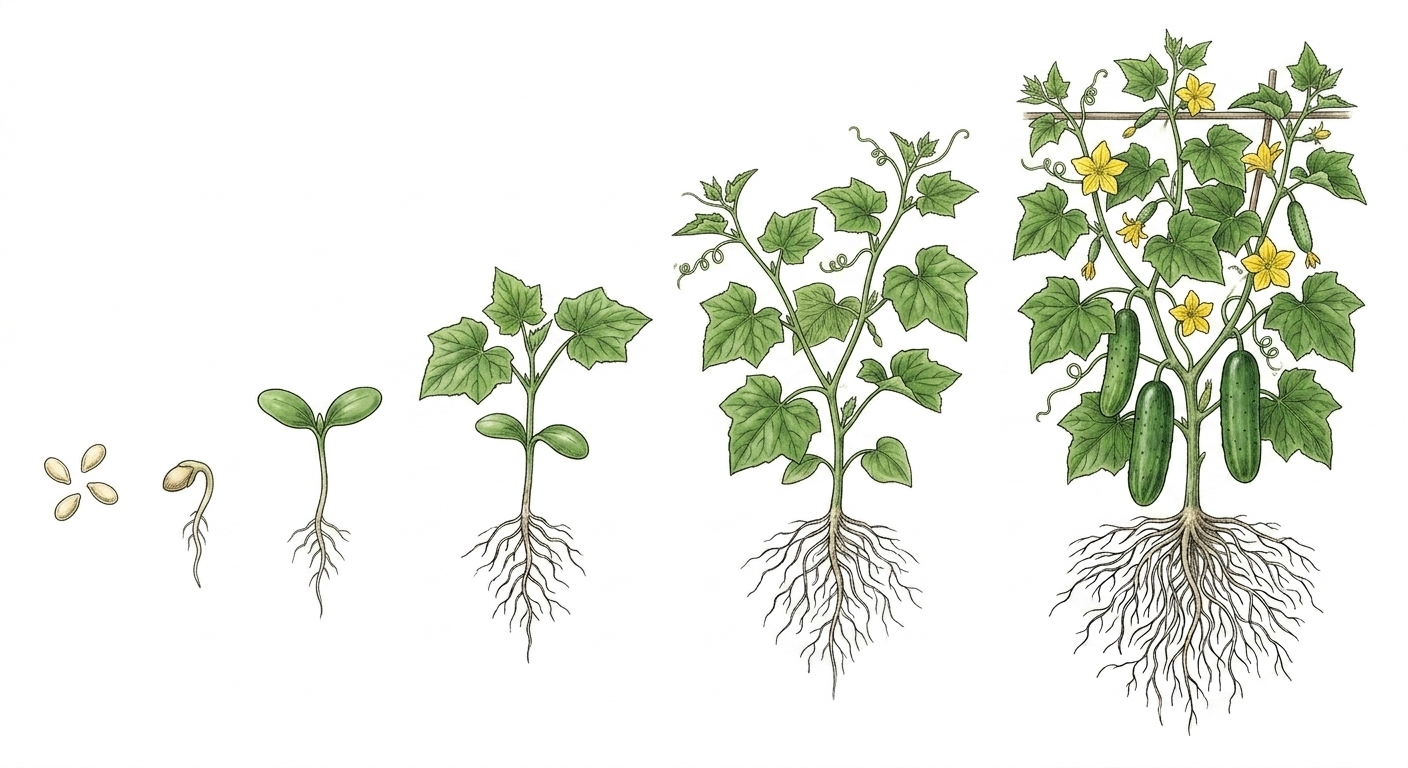
Growing Cucumbers: Starting, Supports and Harvest
Learn how to grow cucumbers successfully with indoor starting, transplanting, trellises, watering, and regular harvesting.
Guide
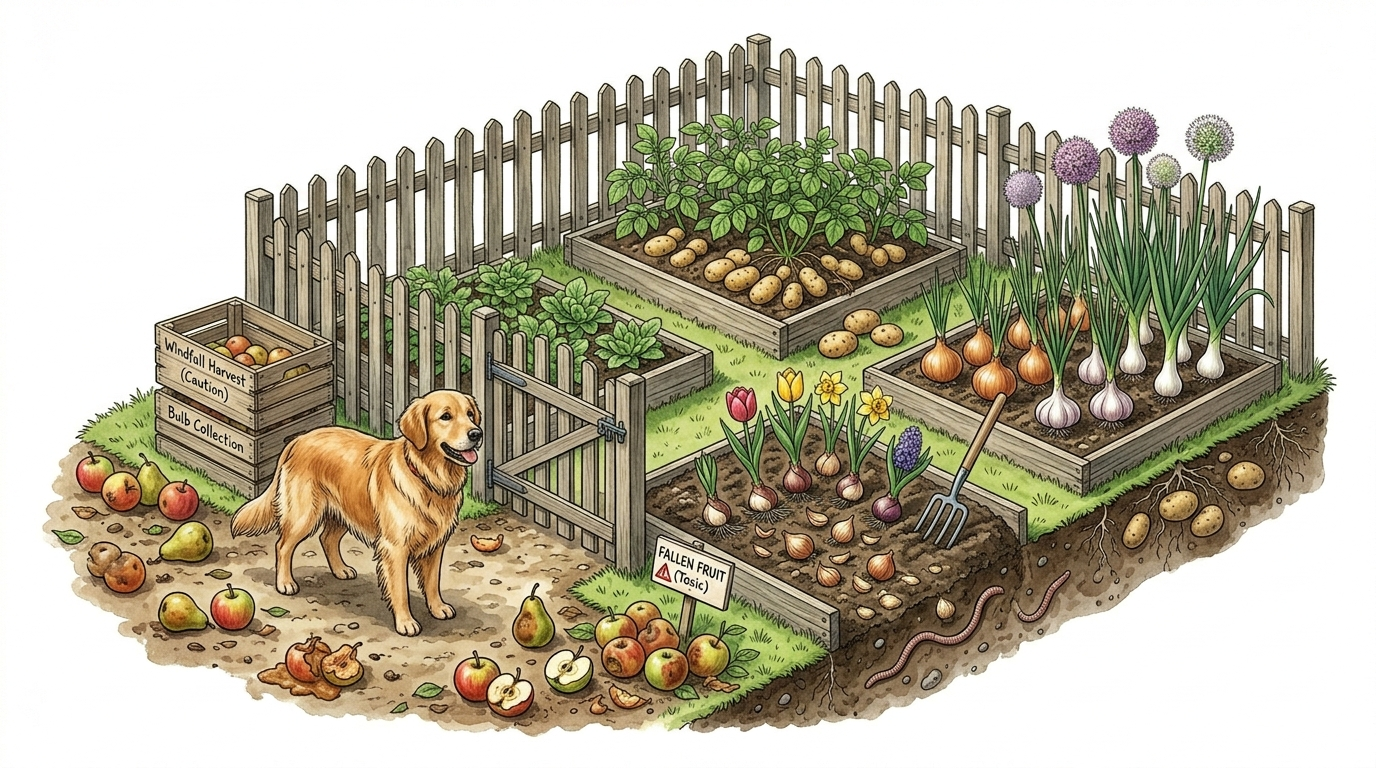
Dogs in the Garden: Windfall Fruit and Risks
Keep your garden dog-safe by managing windfall fruit, seeds, stored crops, and potentially problematic plant parts.
Guide
Horse Pastures and Garden Plants: Safety Checks
Learn how to identify risks near horse pastures, fences, turnout areas, fruit trees, and garden planting zones.
Guide
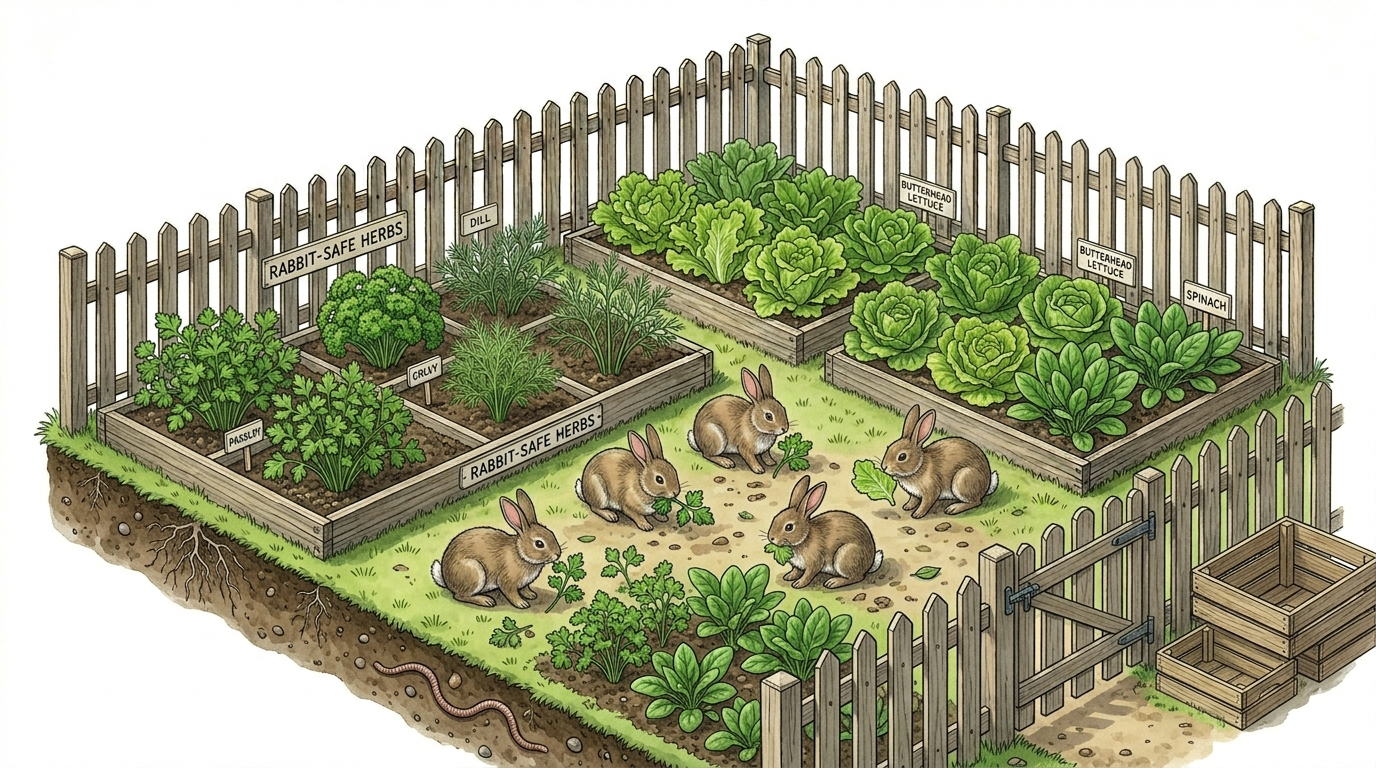
Rabbits in the Garden: Herbs and Vegetables
Learn how to choose suitable herbs and vegetables for rabbits, grow feeding plants, and plan a rabbit-friendly garden.
Internal links
Related plants
Zucchini
Belong to the same family; require extended crop rotations to mitigate wilt diseases.
Cucumber
Similar vertical training layouts and climate settings within protected cultivation.
Demands uniform soil moisture levels without waterlogging to prevent distorted fruit growth.
Watermelon
Both exhibit extreme susceptibility to soil-borne Fusarium wilt and powdery mildew strains.
Similar name and trailing habit, but belonging to a different botanical genus with entirely distinct foliage and fruit traits.
tomato
Classic heavy feeder demanding vast quantities of potassium during late fruiting phases.
Pumpkin
A fellow cucurbit with heavy feeding requirements and high susceptibility to powdery mildew.
Garden strawberry
Though botanically a vegetable, the sweet flesh is culinarically treated like fresh summer berry fruit.
Sources
Public sources
- Wikidata entity
Wikidata · 2026-05-16
- GBIF species match
GBIF · 2026-05-16
- Deutschsprachige Wikipedia: Zuckermelone
Wikipedia · 2026-05-16
- English Wikipedia: Cucumis melo
Wikipedia · 2026-05-16