Plant Profile
SorrelRumex acetosa
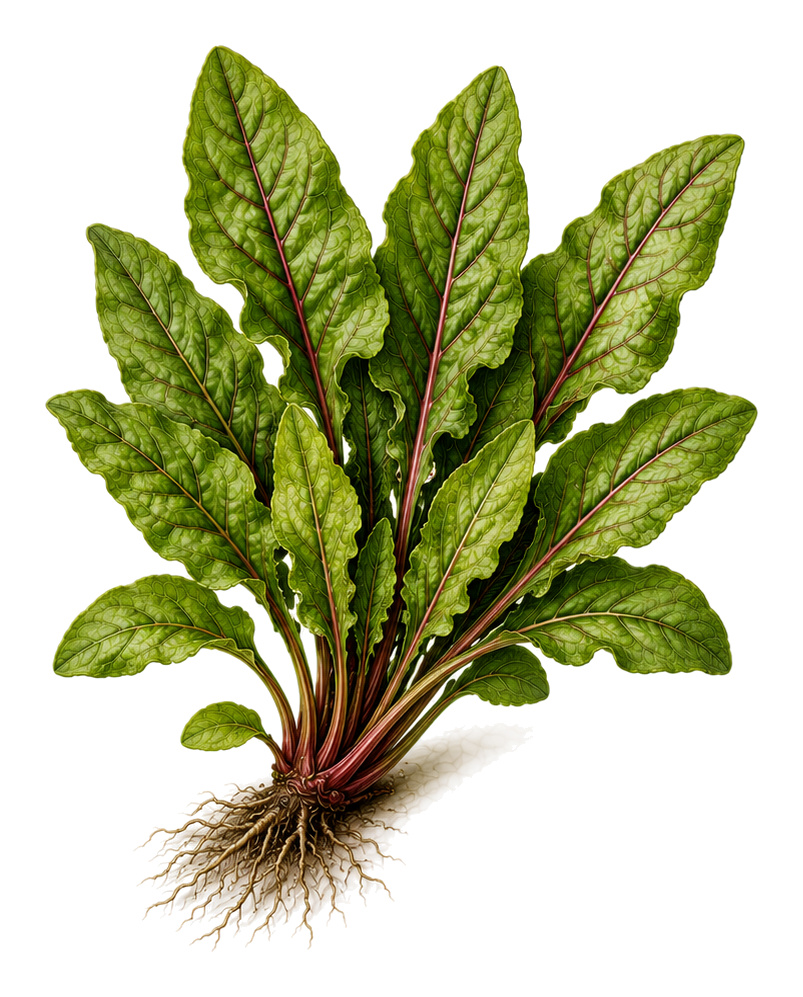
Sorrel (Rumex acetosa) is a perennial herbaceous plant valued for its sour, lemony leaves. Native to Europe and Asia, it grows wild in meadows and roadsides but is also commonly cultivated in gardens. The plant reaches a height of 20-60 cm and produces inconspicuous, reddish-green flower stalks in early summer. Sorrel is easy to care for, prefers a sunny to partially shaded location, and moist, humus-rich soil. Harvesting is continuous from spring to autumn, with young leaves being the most tender and aromatic. It is rich in vitamin C and iron but also contains oxalic acid, so it should be consumed in moderation. In the kitchen, it is used for soups, sauces, salads, and as a seasoning herb.
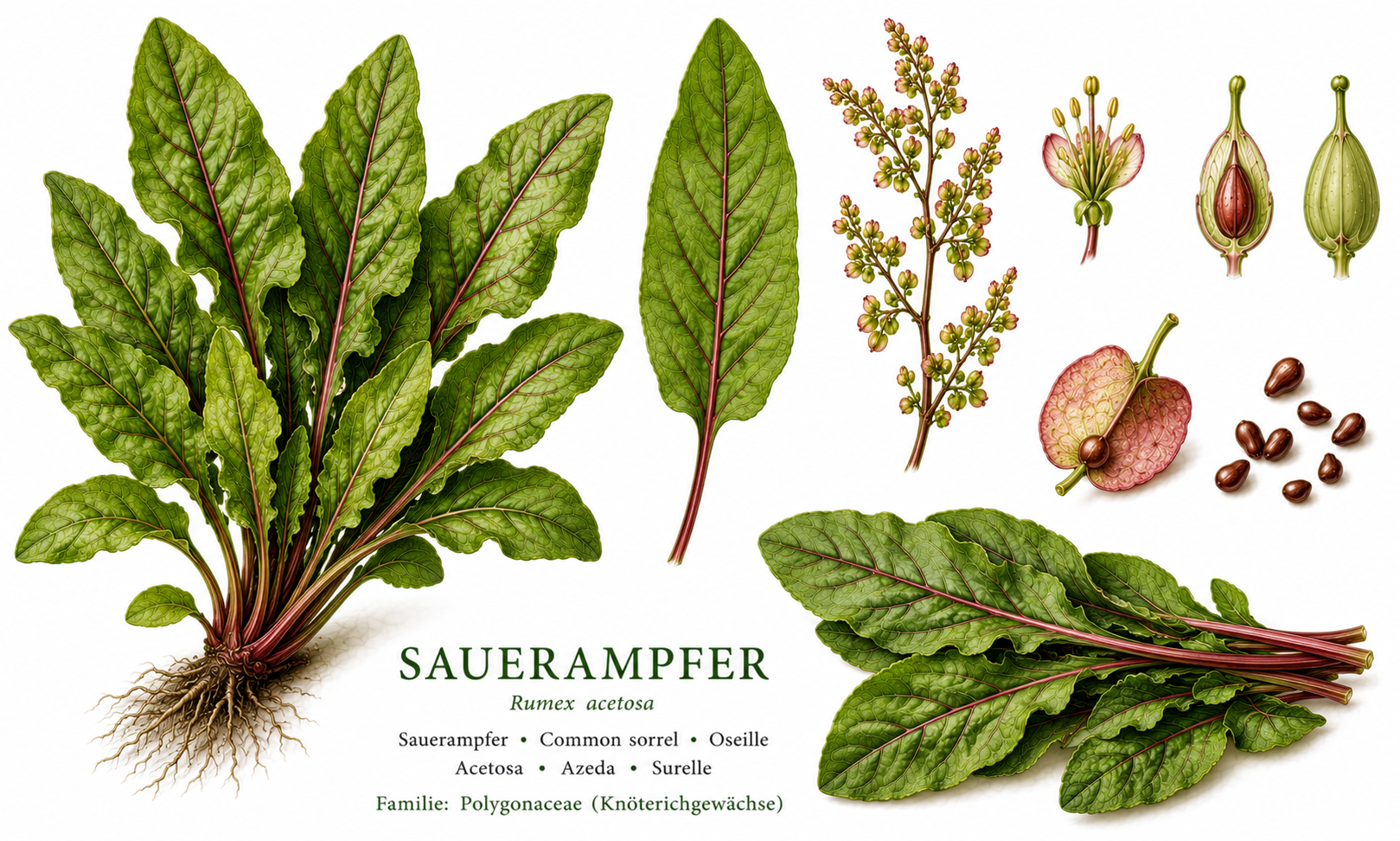
Quick profile
Key data
Suitable growing locations:
Good neighbors
StrawberryMintCabbage familyCarrot
Avoid
No data
Indoor & direct sowing
Sorrel: Sowing and germination
For an early harvest, sorrel can be pre-cultured indoors.
Direct sowing is possible from spring to late summer. For continuous harvest, sow every 4-6 weeks.
Planting & site
Sorrel: Planting and spacing
Plant out pre-cultured plants after the last frosts.
Site & practical notes
Sorrel is an easy-care perennial well-suited for beginners. Ensure adequate moisture and regularly remove flower stalks to maximize leaf harvest and prevent premature bolting. It is winter-hardy in mild regions.
Temperature & frost
Sorrel: Temperature and site
Water & nutrients
Sorrel: Water, nutrients and care
Container & growth
Sorrel: Container, support and growth
Year plan
Sorrel Calendar
In spring, sorrel sprouts vigorously, providing the tenderest leaves for early salads.
Recurring tasks
Relevant now
June
- Remove flower stalksif bolting occurs: Removing flower stalks promotes leaf growth and prevents self-seeding.
Next up
July
- No additional single task
Monthly tasks
Single tasks from monthly data; repeated seasonal windows are shown in the overview above.
January
Quiet month
February
Quiet month
March
Direct sowing
- Direct sow sorrel outdoorsfrost-free soil: As soon as the soil is workable and no hard frosts are expected.
- Pre-culture sorrel indoorsfor earlier harvest: For an earlier harvest, plants can be pre-cultured on a windowsill or in a greenhouse.
April
Direct sowing
- Direct sow sorrel outdoorsfrost-free soil: For continuous harvest, resow every 4-6 weeks.
Planting
- Plant out pre-cultured sorrel plantsafter last frost: Carefully transplant young plants into prepared soil.
Harvest
- Harvest first sorrel leavesleaves are large enough: Pick young, tender leaves from the outside in.
May
No additional single task
June
Growing
- Remove flower stalksif bolting occurs: Removing flower stalks promotes leaf growth and prevents self-seeding.
August
Direct sowing
- Last direct sowing of sorrelfor late autumn harvest: Later sowings may sprout next spring.
September
Planting
- Prepare plants for winterbefore first frost: Remove old or damaged leaves. A layer of mulch protects against frost.
Harvest
- Harvest sorrel leavesleaves are large enough: Harvest the last tender leaves before winter.
October
Harvest
- Final sorrel harvestbefore hard frosts: Harvest the last leaves before winter, before the plant goes dormant.
Growing
- Cut back sorrelafter last harvest: Cut back plants to about 5 cm to encourage spring growth.
Pruning
- Cut back after the last harvest to encourage spring growth and rejuvenate the plant.Cut back plants to about 5 cm above the ground.
November
Quiet month
December
Quiet month
Flowering & pollination
Sorrel Flowering & pollination
Flowering period
May to July
Self-fertility
not_self_fertile
Pollinator needed
yes
Overview
Sorrel is wind-pollinated and typically dioecious, meaning male and female flowers are on separate plants. Therefore, both male and female plants are required nearby for seed production.
Notes
Removing flower stalks promotes leaf growth and prevents self-seeding.
Pruning & care
Sorrel Pruning & care
Pruning type
No specific woody pruning system. Focus on harvesting and rejuvenation.
Pruning timing
Remove flower stalks to promote leaf growth and prevent bolting. Remove flower stalks early as soon as they become visible.
Cut back after the last harvest to encourage spring growth and rejuvenate the plant. Cut back plants to about 5 cm above the ground.
Remove
Preserve
Avoid
Tools and hygiene
Use clean garden shears or a sharp knife to ensure clean cuts and prevent diseases.
Companion guide
Sorrel Companion guide
Good neighbors
StrawberryMintCabbage familyCarrot
Avoid
No data
Use & storage
Sorrel Use & storage
Harvest young leaves continuously. Regular harvesting promotes new growth and delays bolting.
Storage
Fresh in the refrigerator, frozen, or processed.
Storage life
Fresh: 2-3 days in the refrigerator; Frozen: up to 6-8 months.
Primary use
Fresh consumption and short-term cooking.
Flavor
Fresh, lemony-sour, slightly tart.
Harvest
Harvest young leaves continuously. Regular harvesting promotes new growth and delays bolting.
Processing
After harvest
Wash and use harvested leaves immediately. If necessary, wrap briefly in a damp cloth and store in the refrigerator.
Notes
Use sparingly due to its intense flavor. Older leaves are tarter and contain more oxalic acid.
Edibility & safety
Sorrel Edibility & safety
For people
In brief: which parts are edible, which parts remain risky, and whether raw consumption makes sense.
Safety notes
Sorrel contains oxalic acid, which can be harmful in large quantities or for sensitive individuals (e.g., with kidney problems, gout). Moderate consumption is harmless. Cooking reduces oxalic acid content.
Animal safety
For animals, the specific plant part matters here: some parts may be suitable, while others should be avoided. At least one critical rating is listed for 14 animal types.
Each row shows which parts are more suitable and which parts are critical.
Companion animals
 Dog
DogNo suitable parts listed
leaves, stems
No suitable parts listed
leaves, stems
large amounts, chronic ingestion
gastrointestinal upset, weakness, muscle fasciculations
contact a vet if ingested
Sorrel contains soluble oxalates, which are toxic to dogs. Small amounts typically cause gastrointestinal upset; very large amounts can lead to weakness, muscle fasciculations, seizures, and secondary renal injury. No parts are considered safe for canine consumption.
Open animal page Cat
CatNo suitable parts listed
Leaves, Stems
No suitable parts listed
Leaves, Stems
Large amounts, Chronic ingestion
GI upset, Weakness, Muscle fasciculations
contact a vet if ingested
Sorrel contains soluble oxalates, which are toxic to cats. Small amounts may cause GI upset; very large amounts can lead to weakness, muscle fasciculations, seizures, and potential renal injury due to hypocalcemia. No parts of the plant are considered safe for consumption by cats.
Open animal page Rabbit
Leaves (young and tender)
No risk parts listed
Leaves (young and tender)
No risk parts listed
 Guinea pig
Leaves (young and tender)
No risk parts listed
Leaves (young and tender)
No risk parts listed
unknown
No direct species-specific source was found for guinea pigs. This is a cautious inference from the rabbits profile and the known plant-part risks.
Open animal page Hamster
Leaves (young and tender), Leaves (cooked)
No risk parts listed
Leaves (young and tender), Leaves (cooked)
No risk parts listed
 Budgie
Leaves (young and tender)
No risk parts listed
Leaves (young and tender)
No risk parts listed
Farm animals
 Horse
HorseNo suitable parts listed
leaves, stems
No suitable parts listed
leaves, stems
large amounts, chronic ingestion, kidney sensitivity
gastrointestinal upset, weakness, muscle fasciculations
contact a vet if ingested
Sorrel contains soluble oxalates that are toxic to horses. Large amounts can lead to serious symptoms.
Open animal page Chicken
Leaves (young and tender)
No risk parts listed
Leaves (young and tender)
No risk parts listed
 Duck
DuckLeaves (young and tender)
No risk parts listed
Leaves (young and tender)
No risk parts listed
 Goose
GooseNo suitable parts listed
Leaves, Stems
No suitable parts listed
Leaves, Stems
Large amounts, Chronic ingestion, Kidney sensitivity
GI upset, Weakness, Muscle fasciculations
contact a vet if symptoms appear
No reliable species-specific assessment is available.
Open animal page Sheep
SheepLeaves (young and tender)
No risk parts listed
Leaves (young and tender)
No risk parts listed
 Goat
GoatLeaves (young and tender)
No risk parts listed
Leaves (young and tender)
No risk parts listed
 Cattle
young leaves
older leaves, flower stalks, roots
young leaves
older leaves, flower stalks, roots
large quantities, chronic ingestion, kidney sensitivity
gastrointestinal upset, weakness, muscle fasciculations
contact a vet if symptoms appear
Young sorrel leaves can be used in small amounts as supplemental feed but contain soluble oxalates that may cause health issues if consumed excessively. Older plant parts have higher oxalic acid content and should be avoided. Consult a veterinarian if signs of poisoning appear.
Open animal page Pig
PigLeaves (young and tender)
No risk parts listed
Leaves (young and tender)
No risk parts listed
These guidelines are for general information only and do not replace veterinary diagnosis. If critical plant parts were ingested or the animal shows unusual behaviour or symptoms, seek veterinary advice.
Max risk
4 / 5
Highest status
toxic
Urgency
contact a vet if ingested
Saving seed
Sorrel Saving seed
Seed viability
3 - 4 years
Practical tips
Sorrel Practical tips
Common beginner mistakes
Success pattern
Regular harvesting of young leaves, sufficient watering, and a location with some shade in midsummer.
High-impact tips
Simply sow in spring and let the plant grow. Regular picking is the most important 'care'.
Grower observations
Plant Profile
Additional plant images

Health
Pests, Diseases
Plant health
Diagnosis help
Sorrel Diagnosis help
Pest groups
Disease groups
Fungal diseases (Rust, Downy Mildew)
Prevention
Diagnosis
Most problems with sorrel are due to environmental conditions (heat, drought) or lack of care (insufficient harvesting, unremoved flower stalks). True diseases and pest infestations are less common and usually manageable.
Cultural prevention
Monitoring
First response
Diagnostic rules
Holes or feeding damage on leaves
Possible causes: Slugs sorrel, Sorrel sawfly
- Check plants for slugs or larvae (especially in the evening)
- Examine undersides of leaves
Yellow, distorted leaves, sticky residue
Possible causes: Aphids sorrel
- Check young shoots and undersides of leaves for small insects
Plant forms a tall flower stalk, leaves become tough and bitter
Possible causes: Bolting sorrel
- Check ambient temperature
- Check soil moisture
- Consider plant age
Yellow-orange pustules on the underside of leaves
Possible causes: Rust sorrel
- Check humidity and air circulation
- Examine affected leaves closely
FAQ
When is the best time to sow sorrel?
Sorrel can be sown directly outdoors from spring to late summer. For an early harvest, pre-culturing indoors from March is possible.
How often does sorrel need to be watered?
Sorrel requires consistent soil moisture. Water regularly, especially during dry periods, to keep leaves tender and prevent bolting.
Can sorrel be grown in the shade?
Sorrel prefers sun to partial shade. In midsummer, a location with some afternoon shade can be beneficial to prevent premature bolting.
Why do the leaves become bitter?
Bitter leaves are often a sign of heat stress, drought, or when the plant begins to bolt (flower prematurely). Regular harvesting and sufficient water help.
Is sorrel winter-hardy?
Yes, sorrel is a perennial plant and is winter-hardy in most climates. Light winter protection (mulch) may be beneficial in very cold regions.
Is Sorrel safe for Dog?
Sorrel is classified as toxic for Dog. Risk: 4 / 5. Urgency: contact a vet if ingested. Sorrel contains soluble oxalates, which are toxic to dogs. Small amounts typically cause gastrointestinal upset; very large amounts can lead to weakness, muscle fasciculations, seizures, and secondary renal injury. No parts are considered safe for canine consumption.
Is Sorrel safe for Cat?
Sorrel is classified as toxic for Cat. Risk: 4 / 5. Urgency: contact a vet if ingested. Sorrel contains soluble oxalates, which are toxic to cats. Small amounts may cause GI upset; very large amounts can lead to weakness, muscle fasciculations, seizures, and potential renal injury due to hypocalcemia. No parts of the plant are considered safe for consumption by cats.
Is Sorrel safe for Rabbit?
Sorrel is classified as do not feed for Rabbit. Risk: unknown. Urgency: unknown. No reliable species-specific assessment is available.
Is Sorrel safe for Horse?
Sorrel is classified as toxic for Horse. Risk: 4 / 5. Urgency: contact a vet if ingested. Sorrel contains soluble oxalates that are toxic to horses. Large amounts can lead to serious symptoms.
Guides
Related guides
Guide
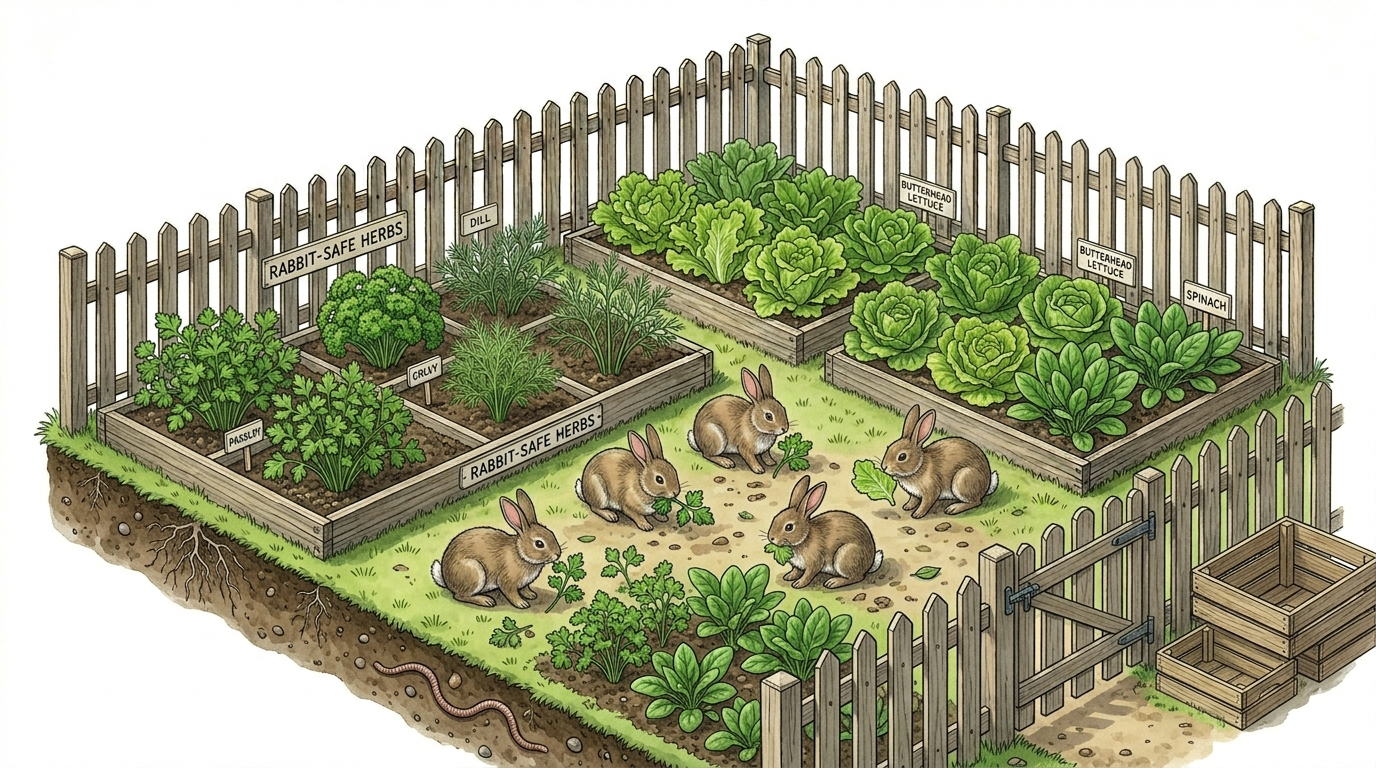
Rabbits in the Garden: Herbs and Vegetables
Learn how to choose suitable herbs and vegetables for rabbits, grow feeding plants, and plan a rabbit-friendly garden.
Guide
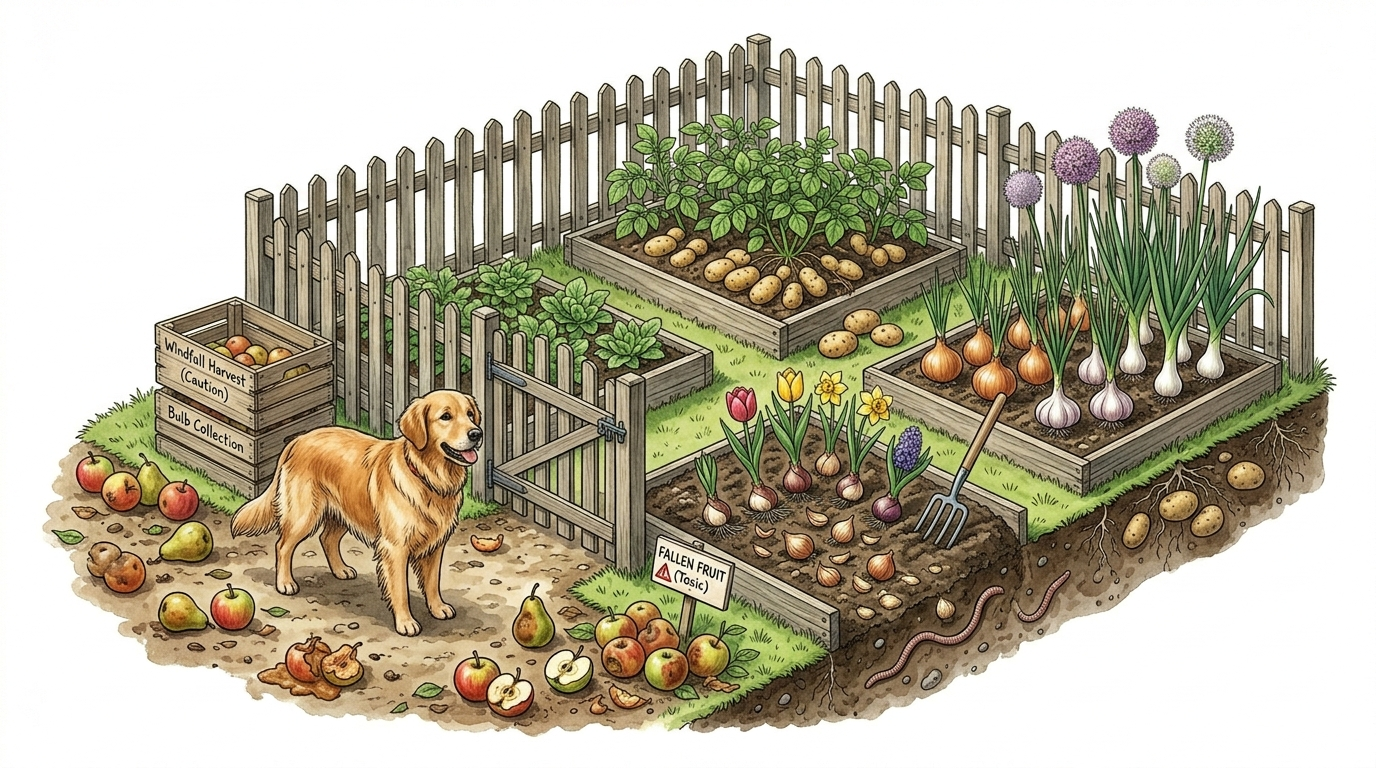
Dogs in the Garden: Windfall Fruit and Risks
Keep your garden dog-safe by managing windfall fruit, seeds, stored crops, and potentially problematic plant parts.
Guide
Horse Pastures and Garden Plants: Safety Checks
Learn how to identify risks near horse pastures, fences, turnout areas, fruit trees, and garden planting zones.
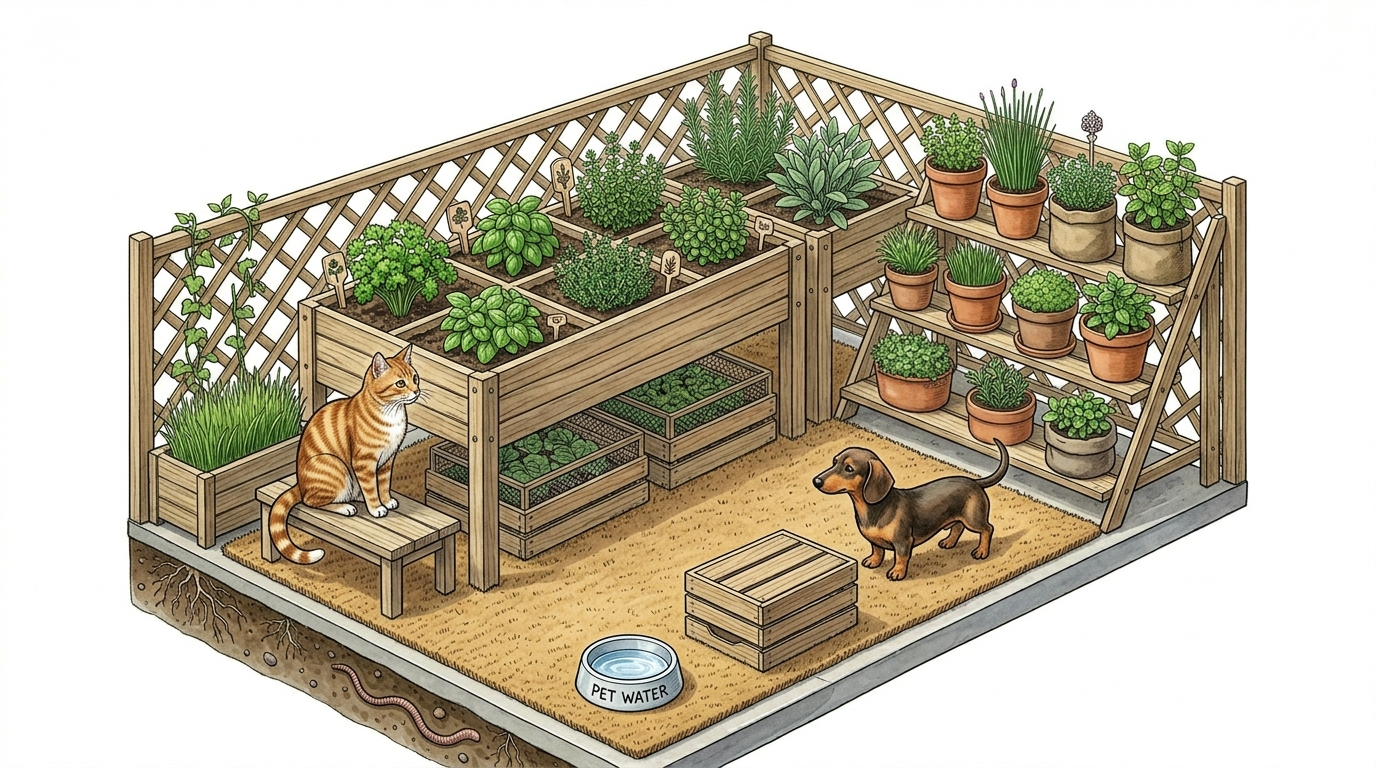
Guide
Pet-Safe Herb Gardens for Balconies and Beds
Learn how to create a pet-safe herb garden with suitable herbs, thoughtful layouts, and practical maintenance strategies.
Internal links
Related plants
Rhubarb
Both belong to the knotweed family (Polygonaceae) and have a sour taste.
Belongs to the knotweed family (Polygonaceae) and also has sour stalks.
Buckwheat
Belongs to the knotweed family (Polygonaceae).
Herbs
Sorrel is primarily used as a seasoning herb.
Leafy greens
The leaves are used like leafy greens.
Lettuce
Both prefer nutrient-rich soil and benefit from moderate fertilization.
Spinach
Both require consistent soil moisture and do not tolerate drought well.
Both are leafy greens with a slightly sour taste that can be used similarly.
Swiss Chard
Similar cultivation requirements and use as a leafy green.
Clover
Also used as an edible plant (flowers and leaves) with a slightly sour taste.
Sheep's sorrel
Similar name and sour taste, but smaller and often considered a weed.
Sources
Public sources
- Wikidata entity
Wikidata · 2026-05-15
- GBIF species match
GBIF · 2026-05-15
- Deutschsprachige Wikipedia: Wiesen-Sauerampfer
Wikipedia · 2026-05-15
- English Wikipedia: Sorrel
Wikipedia · 2026-05-15